

Turn recordings into transcripts and summaries in minutes
Upload audio or video for multilingual transcription, AI notes, and action items
I attend about 15 meetings a week—team stand-ups, progress reviews, 1-on-1s, cross-departmental coordination—they fill up my calendar. What used to bother me most wasn’t the meetings themselves, but what came after. Every meeting left a pile of decisions and action items, meaning my real work began when the meeting ended. I tried handwritten notes (couldn’t keep up), tried recording and listening back (too time-consuming), tried asking a colleague to take notes (they were busy too). Then I started using AI speech-to-text tools, and that’s when I finally saved the most mechanical part of the work.
There are plenty of free plans out there, but for someone like me who lives in meetings, what I need is "high accuracy, fast organization, and ideally the ability to ask AI about key points." In this article, I’m comparing two popular free solutions from a team-testing perspective: Tinrec (MiaoTing) and Otter.ai, to see which one turns your recordings into truly usable material.
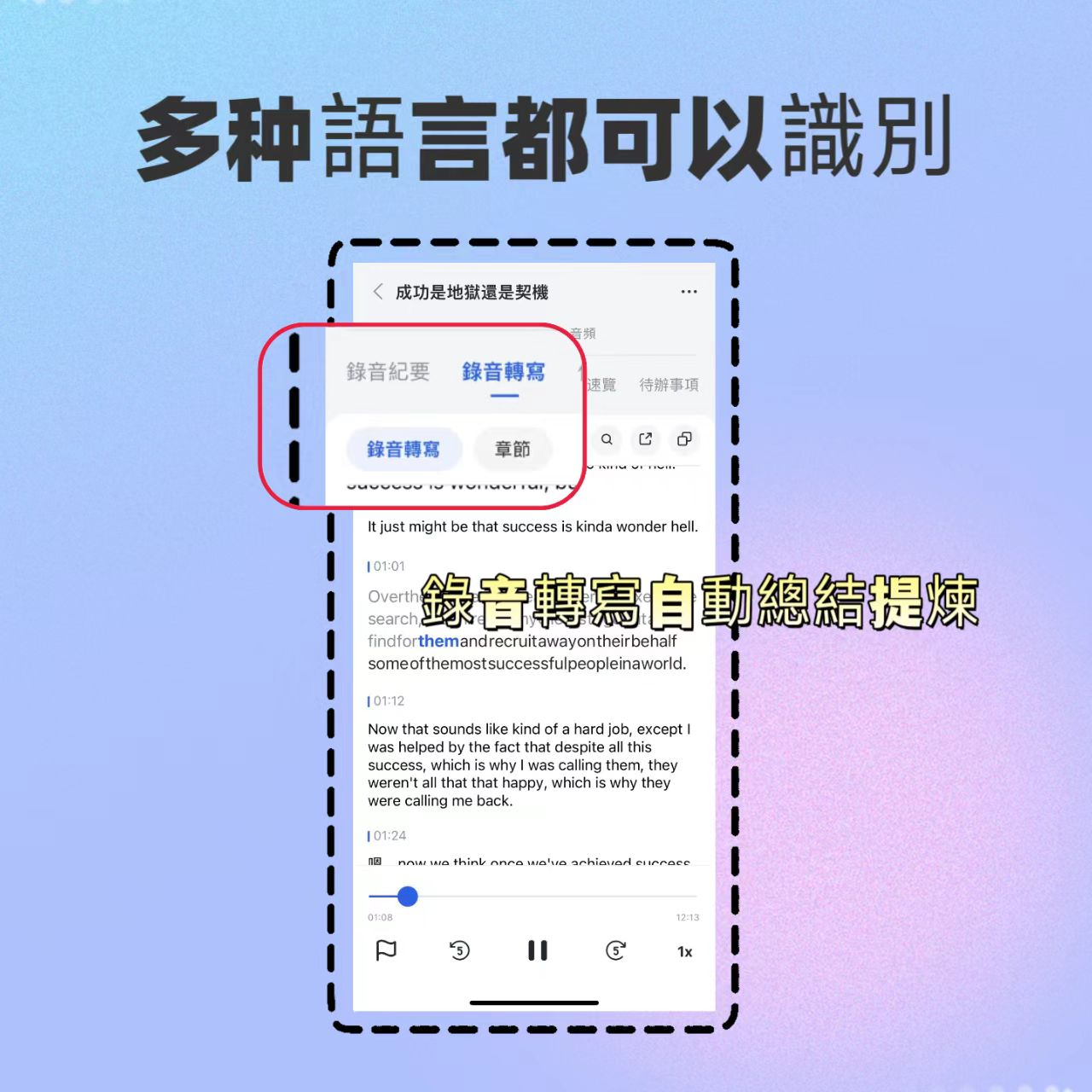
Tinrec vs Otter.ai: Quick Overview
Simply put, Otter.ai is a Silicon Valley-born veteran in AI meeting notes, strong in English business meetings and team collaboration. Tinrec, on the other hand, is more of a "turn audio/video into actionable knowledge" workspace—handling not just meetings but also lectures, interviews, and online videos. Both have free versions, but with different focuses.
| Tinrec | Otter.ai | |
|---|---|---|
| Positioning | AI recording & audio/video organization | AI meeting notes & collaboration |
| Free Plan | Monthly base transcription quota with full feature access | 300 minutes transcription/month with full features |
| Platforms | iOS, Android, Web | iOS, Android, Web |
| Key Difference | Supports online video link transcription, Chinese optimization, rich AI post-processing | Strong English meeting ecosystem, robust speaker identification |
Below, I break down four dimensions our team cares about most, so you can see the difference at a glance.
Dimension 1: Chinese Transcription Accuracy
Otter.ai Performance: Otter’s English transcription accuracy is solid, but when it comes to Chinese meetings—especially multi-speaker discussions with Taiwanese colloquialisms or code-switching between Chinese and English—the error rate increases noticeably. We tested the same 5-minute Chinese meeting recording (light background noise, two people talking). Otter transcribed “那個專案的 deadline 再延一週” (the deadline for that project is extended by one week) as “那個專案的 dead line 在演一週” (that project’s dead line is performing one week). With one keyword wrong, the whole meaning shifted.
Tinrec Performance: On the same recording, Tinrec’s verbatim transcript required almost no manual corrections. Conversational fillers, code-switching—all handled cleanly. We later tried a meeting clip with some Taiwanese Hokkien mixed in. While not perfect, Tinrec’s recognition and context recovery were clearly higher than Otter’s. For workplace needs, this means you don’t have to spend additional time listening back and proofreading—you can use it directly.
→ Winner: Tinrec. For professionals with primarily Chinese meetings, accuracy equals time saved.
Stop organizing recordings by hand
Upload audio or video and automatically get a transcript, summary, and action items
Dimension 2: Free Plan & Quota
Otter.ai Free Plan: 300 minutes of transcription per month, counting only the “speech-to-text” part. Other AI features like summaries and action item extraction are included. If you have moderate meeting hours, 300 minutes might be enough. But for someone like me who easily exceeds 5 hours of meetings per week, that’s over 1,000 minutes a month—the free tier runs out mid-month.
Tinrec Free Plan: Also offers a monthly base transcription quota (exact minutes subject to product updates; check the app). But the key is that Tinrec’s free version already includes “online video link transcription” and AI summaries, which is handy for people who need to organize online courses, YouTube meeting recordings, etc. Additionally, Tinrec offers flexible add-ons—week passes for heavy meeting periods—more aligned with real work rhythms than fixed monthly subscriptions.
→ Tie. Both have free limits; Otter’s minutes are transparent, while Tinrec’s flexibility and extra features suit multi-source organization better. For pure free-tier use, both satisfy light users.
Dimension 3: AI Features & Post-processing
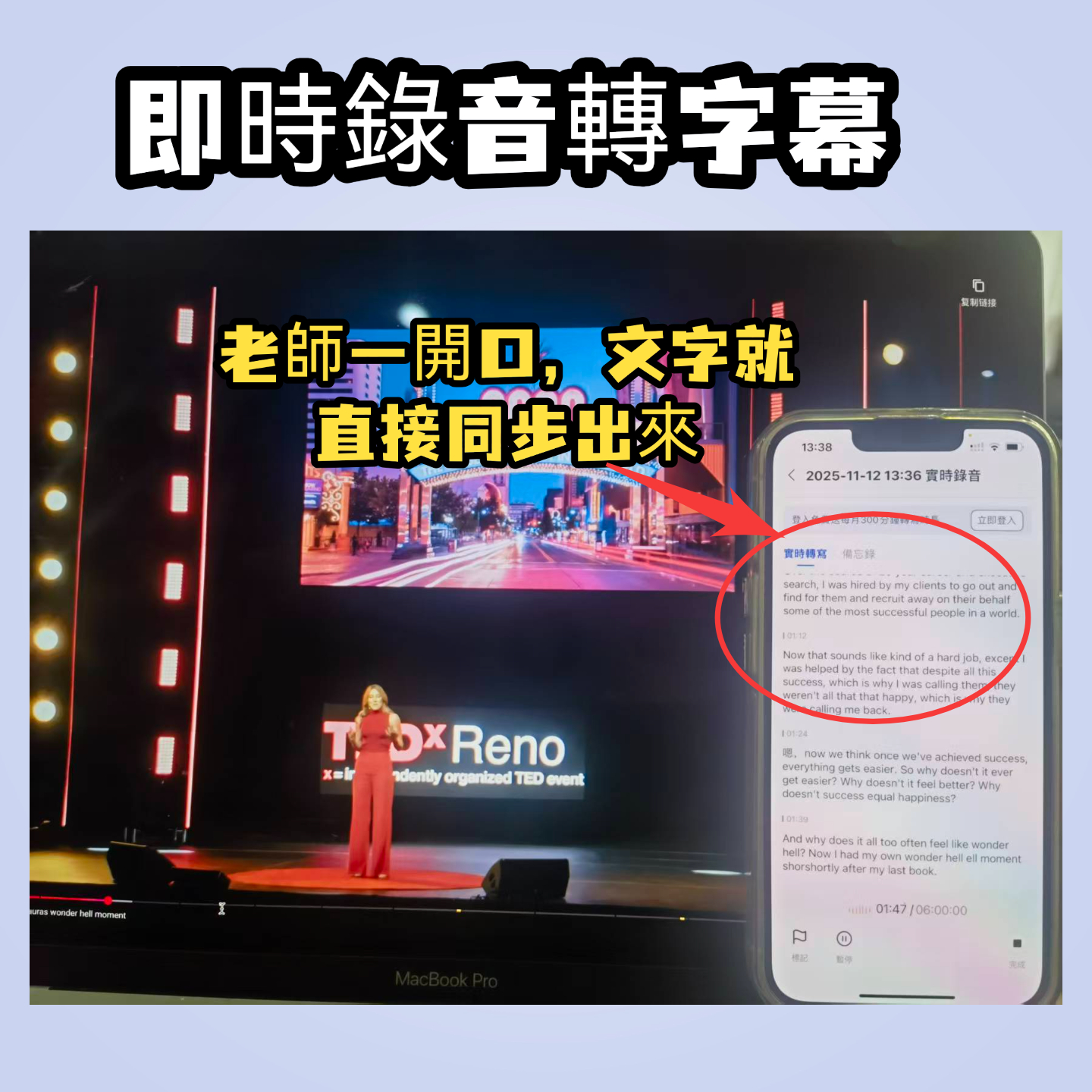
Otter.ai Post-processing: Otter’s auto summaries and action item extraction work well, especially in English where it integrates seamlessly with Slack, Zoom, etc. for team collaboration. But in Chinese, the AI summaries sometimes miss the mark, and you can’t ask questions about the recording—you only see the summary it generates, not "What was the budget figure discussed last time?"
Tinrec Post-processing: Beyond summaries, chapters, and to-do items, what really sold my team on Tinrec is its "AI conversation query". You can type questions about the recording, and the AI finds relevant passages from the transcript. For example, when my boss asks, "In last Friday’s meeting with the client, what were the shipping terms for the second batch?", I don’t need to listen to the whole recording—I open Tinrec, ask, and get the answer. Additionally, Tinrec can generate meeting minutes, reports, and even mind maps from the organized results, with direct export to Notion or Google Docs.
→ Winner: Tinrec. Otter’s AI stops at summarization; Tinrec goes further with dialog and re-generation, more useful for professionals who frequently need to look back and verify details.
Dimension 4: Cross-platform & Usability
Otter.ai: Supports iOS, Android, web. The interface is intuitive—just hit record and go. For English users, there’s almost no learning curve.
Tinrec: Also supports iOS, Android, web. The mobile app allows pausing and resuming during recording, handy for meetings that get interrupted. The web version can take a YouTube or Bilibili link and transcribe it directly—no need to download the video first.
→ Tie. Both cover the major platforms and offer smooth everyday operation with no significant gap.
Unique Strengths
Tinrec’s Unique Strengths
- Best for Chinese content: From meetings to courses to online videos, Chinese recognition and post-processing are notably more refined, especially for Taiwan workplace contexts with code-switching and Hokkien terms.
- AI conversation query: You can ask follow-up questions about recording content like a database—no more historical meetings getting lost.
- Diverse input sources: Besides live recording, it supports uploading audio/video files and directly parsing online video links, consolidating scattered material.
- Flexible payment options: Offers week, month, and year passes, so you don’t have to swallow a monthly fee during months with fluctuating usage.
Otter.ai’s Unique Strengths
- Complete English meeting ecosystem: If your meetings are primarily in English and your team is deeply integrated with Slack/Zoom, Otter’s collaboration experience is still the smoothest.
- Reliable speaker identification: In English environments, it accurately distinguishes multiple speakers, very helpful for fully English multi-person meetings.
Conclusion: Which One Should You Choose?
- If your meetings, courses, and interviews are primarily in Chinese, and you need quick post-meeting reference and AI Q&A → Tinrec; the Chinese accuracy and AI conversation query directly save you tons of organization time.
- If your meetings are fully in English, your team already uses Otter’s ecosystem, and you don’t need Chinese transcription → Otter.ai works fine.
- If you often need to organize content from public videos (YouTube, Bilibili, etc.) → Only Tinrec can directly paste a link to transcribe text.
In a nutshell: For most Chinese workplace environments, Tinrec is a more complete free starting point. Download Tinrec’s free version and test it with your own meeting recordings—you’ll see if it saves you that 1-2 hours of organization time every day.
Turn every recording into actionable outcomes
Get 60 free transcription minutes when you sign in. No credit card required.
Related Reading
You might also like

2026 Comparison of Two Speech-to-Text Apps: Tinrec vs Notta – Which One Understands Your Chinese Meetings Better?
If you're looking for an alternative to Notta, Tinrec might be a better choice for Chinese users. This article fully compares Tinrec and Notta from core experience, features, use cases to buying tips, helping you make the best purchase decision.

Best Multilingual Meeting Transcription Tool? 2026 Test of Two: Tinrec Suits Hong Kong Workers Best
We tested two multilingual meeting transcription solutions: Tinrec and Plaud Note. See which one helps you finish work earlier!

2026 Free Korean Speech-to-Text Solutions Roundup: 5 Tools at a Glance
2026 Free Korean Speech-to-Text Solutions Roundup: A curated selection of 5 tools, with a step-by-step guide using feature-rich Tinrec to convert Korean audio and video into transcripts, including recording, transcription, proofreading, and export.

Free Minority Language Speech-to-Text Plans in 2026: A Look at 2 Options
An in-depth comparison of Tinrec and Notta's free plans: Minority language users looking for a free transcription tool? We compare them across 5 dimensions—input sources, AI processing, Cantonese accuracy, free tier value, and cross-platform experience—to tell you which one is worth trying.

How to Use Tinrec for English Meeting Notes: Real-Time Transcription & AI Summarization (2026)
Struggling with English meetings? Tinrec not only transcribes in real time but also generates AI summaries, extracts action items, and handles mixed Chinese-English speech. This comprehensive guide shows you how to use Tinrec for English meeting minutes, with a comparison to Otter, Notta, and more, so you can choose the best tool.

2026 Complete Guide to Speech-to-Text: Features, Use Cases, and Tool Selection
As a senior college student, I used speech-to-text tools for an entire semester to organize lecture notes, group discussions, and YouTube study videos. This guide introduces you to Tinrec, from core features to real student scenarios, showing how AI turns audio and video into actionable knowledge.

2026 Tinrec Voice-to-Text Tutorial: No Hardware Needed, AI Organizes from Multiple Sources
How to choose voice-to-text software? This article compares Tinrec and Plaud Note, from hardware requirements, input sources, AI features to pricing, and tells you why you don't need to buy a voice recorder — your phone can handle meetings, lectures, and online video transcription.

2026 Hands-On Comparison of 5 Cross-Border Meeting Note Apps: Which AI Summary Saves the Most Time?
Dealing with cross-border meetings daily, mixing English, Mandarin, and Cantonese? Still transcribing recordings after meetings? We test 5 transcription apps to see which one can quickly organize multilingual meetings, saving you time and overtime.
2026 Free Chinese-English Real-Time Translation Solutions: 3 Tools Compared
A must-read for professionals: hands-on testing of Chinese-English real-time translation tools. From cross-border meetings to self-study, Tinrec not only translates in real time but also transcribes audio and generates AI summaries, truly solving the pain points of middle managers.