

Turn recordings into transcripts and summaries in minutes
Upload audio or video for multilingual transcription, AI notes, and action items
Why Do You Need Transcription?
After every meeting, class, or interview, there's the endless manual note-taking. I have 15 meetings a week, and just turning discussions into transcripts eats up half my work time. Not to mention the awkwardness of being grilled by the boss after missing key decisions or action items. AI voice-to-text tools can drastically shorten this process. This article reviews 5 free and paid options, from the most complete AI assistant to zero-budget alternatives, helping you find your transcription lifesaver.
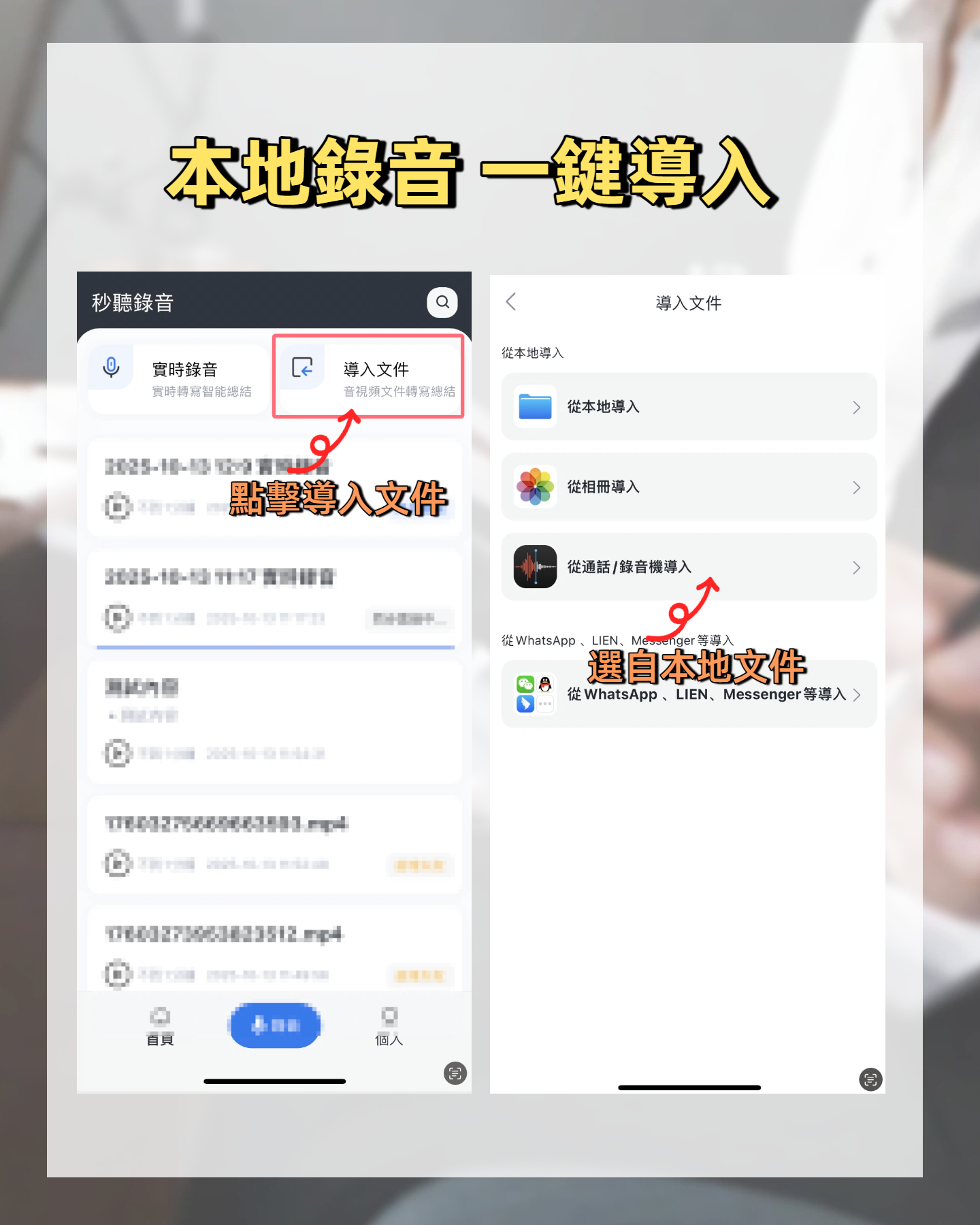
Option 1: Tinrec (Miao Ting Lu Yin) – The Most Complete AI Recording Assistant
If you're like me and want more than just a transcript—you want recordings turned into actionable data—Tinrec is a great first choice. It not only transcribes meetings, lectures, or online videos but also features AI summaries, chapter splitting, action item extraction, and conversational queries, turning a passive recording into an interactive knowledge base.
Our team found that Tinrec handles Chinese content particularly well, even with mixed Chinese-English jargon. The "AI Q&A" feature is especially useful—you can ask "What was the conclusion of the last meeting?" or "Where was the budget discussed?" and the system pulls the relevant section directly, saving you from re-listening to everything.
The free plan provides basic transcription credits for light testing. If you have more than 3 meetings per week, I recommend the Pro version (monthly or yearly subscription). It costs less than a few cups of coffee per month to save at least 1 hour of organizing time daily. Best for: mid-level managers and professionals who need multi-source audio/video processing (meetings, courses, online videos) and value AI post-processing capabilities.
Option 2: Notta – High Value Multilingual Transcription Tool
Notta is a direct competitor to Tinrec, supporting real-time recording, file transcription, and multi-platform use. Its strength lies in multilingual transcription and translation, with a clean interface that supports English, Japanese, and other languages. The free plan offers 120 minutes of transcription per month, suitable for occasional users; the Pro plan costs about NT$250 per month (annual billing), providing 1,800 minutes per month—a good value.
However, Notta's AI features are focused on transcription and summarization, lacking Tinrec's deep conversational Q&A and automatic action item extraction. It's more like a high-efficiency transcription machine. If you just need audio turned into text, Notta is sufficient; but if you need to turn text into working documents, you'll need supplementary tools. Best for: users who frequently handle foreign language meetings, have a limited budget, but need stable transcription quality.
Stop organizing recordings by hand
Upload audio or video and automatically get a transcript, summary, and action items
Option 3: Otter.ai – The Go-To for English Meeting Notes
When talking about AI meeting notes, Otter.ai is almost synonymous. It excels at automatically joining online meetings like Zoom and Google Meet, generating real-time transcripts and summaries, and recognizing different speakers. The free plan offers 300 minutes of transcription per month, very appealing for English-centric teams.
However, Otter's Chinese transcription is less stable than its English, and its strength lies in meeting collaboration, with limited support for classroom recordings or online video processing. If your work language is primarily English, Otter is a powerful assistant; if you deal with a lot of Chinese content, Tinrec or Notta are more practical. Best for: multinational teams, cross-border meetings, heavy English users.
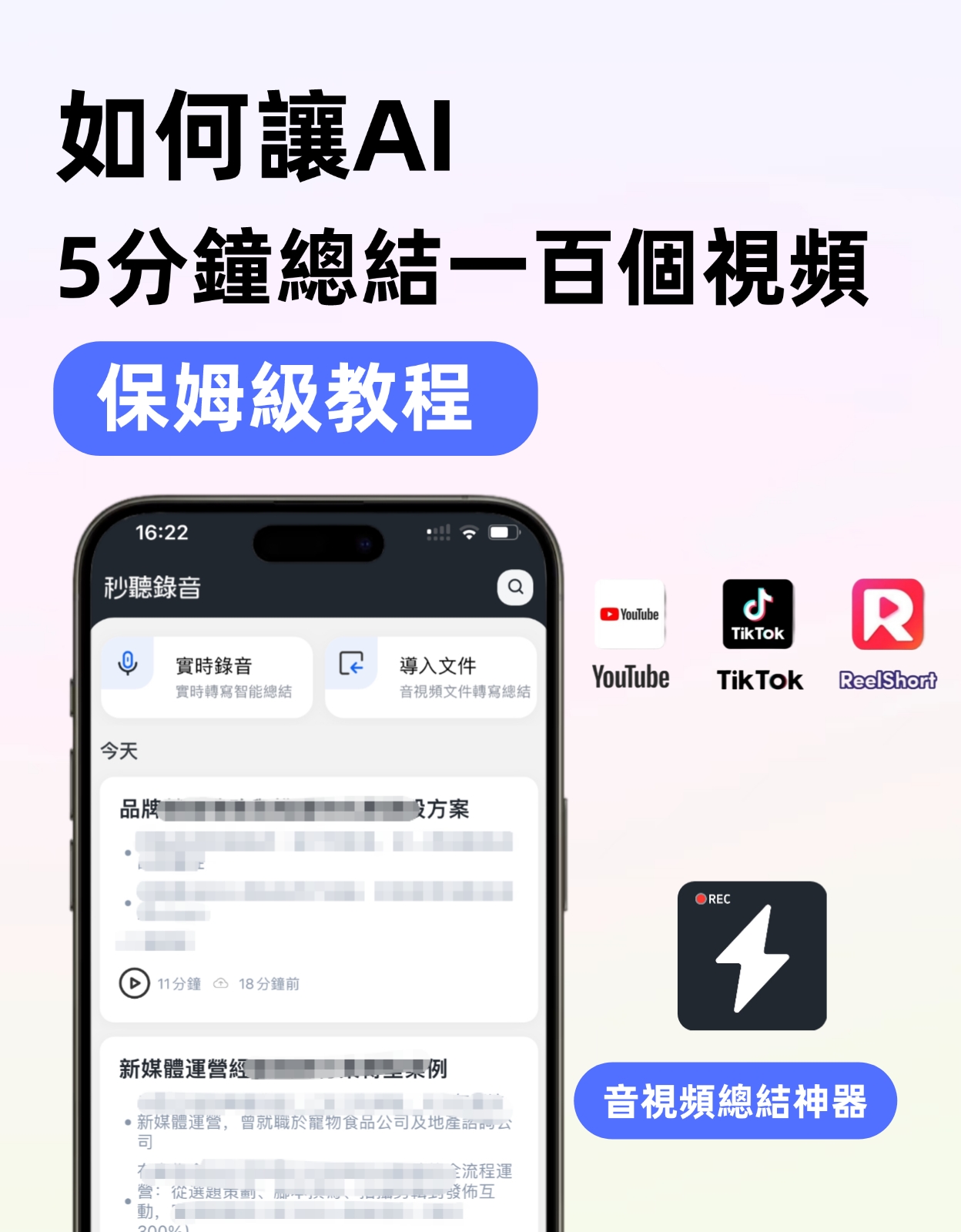
Option 4: TurboScribe – Efficient for Bulk Document Transcription
If your need is to batch upload audio/video files and quickly generate subtitles or transcripts, TurboScribe is an efficiency-oriented choice. The free plan allows 3 files per day (each up to 30 minutes), while the paid Unlimited plan at about NT$300/month (annual billing) supports large files, batch conversion, and multilingual translation.
Its positioning is simple: drop in a file, get text out—no AI summaries, Q&A, or advanced features. It's great for researchers or content creators who process large volumes of recordings at once, but not for professionals who need to summarize meeting highlights. Best for: academic interview processing, subtitle creation, one-time bulk transcription needs.
Option 5: Zero Budget – Phone Voice Memo + Manual Note-Taking
If your budget is zero, using your phone's voice memos with Google Docs for manual transcription is still the most basic solution. It's completely free and requires no new tools. The downside is obvious: a one-hour meeting takes three hours to relisten, type, and proofread—extremely time-consuming and error-prone. Suitable for occasional use, but not for professionals who regularly need notes.
How to Choose Among These Options?
- Want the most complete AI features (transcription + smart Q&A + auto summaries)? → Tinrec, the only one covering all these functions simultaneously.
- Need multilingual transcription on a limited budget? → Notta, with 120 free minutes and a high-value paid plan.
- Team primarily uses English meetings with a need for meeting bots? → Otter.ai, best for automatically joining online meetings.
- Only need bulk transcription without further processing? → TurboScribe, the Unlimited plan is most cost-effective for long files.
- Truly zero budget and very low frequency? → Phone recording + manual notes, but be prepared for the time cost.
3 Things to Know Before Using Transcription Tools
- Accuracy depends on recording quality: Background noise, overlapping speech, and strong accents all affect results. Using an external microphone or staying close to the audio source makes a significant difference. Tools like Tinrec offer "speaker differentiation" in meeting mode, but the recording environment is still critical.
- Free plans have hidden ceilings: Most free versions limit transcription minutes or file count and exclude advanced features. For example, Tinrec's free plan is good for evaluation, but if it becomes part of your daily workflow, upgrading to the paid version unlocks full organizational capabilities.
- AI output still requires human review: AI-generated summaries and action items may misinterpret or miss details. Always cross-check important decisions and data against the original text to avoid communication errors. This isn't a tool flaw—it's a reasonable division of labor in human-AI collaboration.
Conclusion
Transcription tools have evolved from "turning audio into text" to "turning data into action." When choosing, don't just compare price and minutes—consider how much post-processing time they save. In my own team, Tinrec is currently the best solution for meeting, course, and video processing, especially with its AI Q&A feature that drastically reduces the pain of searching through history. If your work involves constant meetings and note-taking, start with the free trial to see how it can reclaim your after-hours from endless transcription.
Turn every recording into actionable outcomes
Get 60 free transcription minutes when you sign in. No credit card required.
Related Reading
You might also like

Tutorial: 2026 Real-Time Translation App – No Headphones Needed, Multilingual, Use Tinrec
Real-time translation earbuds are popular, but you don't need to buy extra hardware – a mobile app can do the same. This tutorial shows how to use Tinrec's instant recording feature for real-time voice translation, supporting multilingual mutual translation and speak-and-translate, great for travel, meetings, and online classes.

How to Write Meeting Minutes in 2026? 5 Steps from Recording to AI Summary
I attend 15 meetings a week, and organizing meeting notes used to take half my time—until I found AI tools. This article shares a middle manager's practical perspective, teaching you 5 steps from recording to AI summary, so you can choose the right tool and never fear your boss asking about last meeting's conclusions again.

2026 Tinrec vs Meeting Minutes Templates: A 5-Dimension Showdown – Which is Better for Students?
Still filling out meeting minutes with Word templates? Here's my experience using Tinrec to auto-generate meeting notes. A 5-dimension comparison shows why AI tools save more time and effort than traditional templates.

2026 Review of 5 AI Meeting Minutes Generators: Which Saves the Most Time?
Still manually organizing meeting notes? This article compares 5 AI meeting minutes tools, from free to paid, to help you find the best solution for automated meeting minutes, saving up to 80% of your time.

2026 Speech-to-Text Tool Showdown: Tinrec vs Otter.ai – Which is Better for Chinese Meetings and Learning?
Stuck choosing between Otter.ai and Tinrec for meetings, classes, or interview transcription? This head-to-head comparison covers input sources, Chinese accuracy, AI post-processing, and pricing to tell you which one is worth paying for.

2026 Comparison of 3 Meeting Transcription Tools: Which One Is Best for Chinese Meetings?
Still manually taking meeting minutes? We tested 3 mainstream tools, from free credits to AI summaries and Chinese accuracy, to help you find the best option for Chinese meetings.
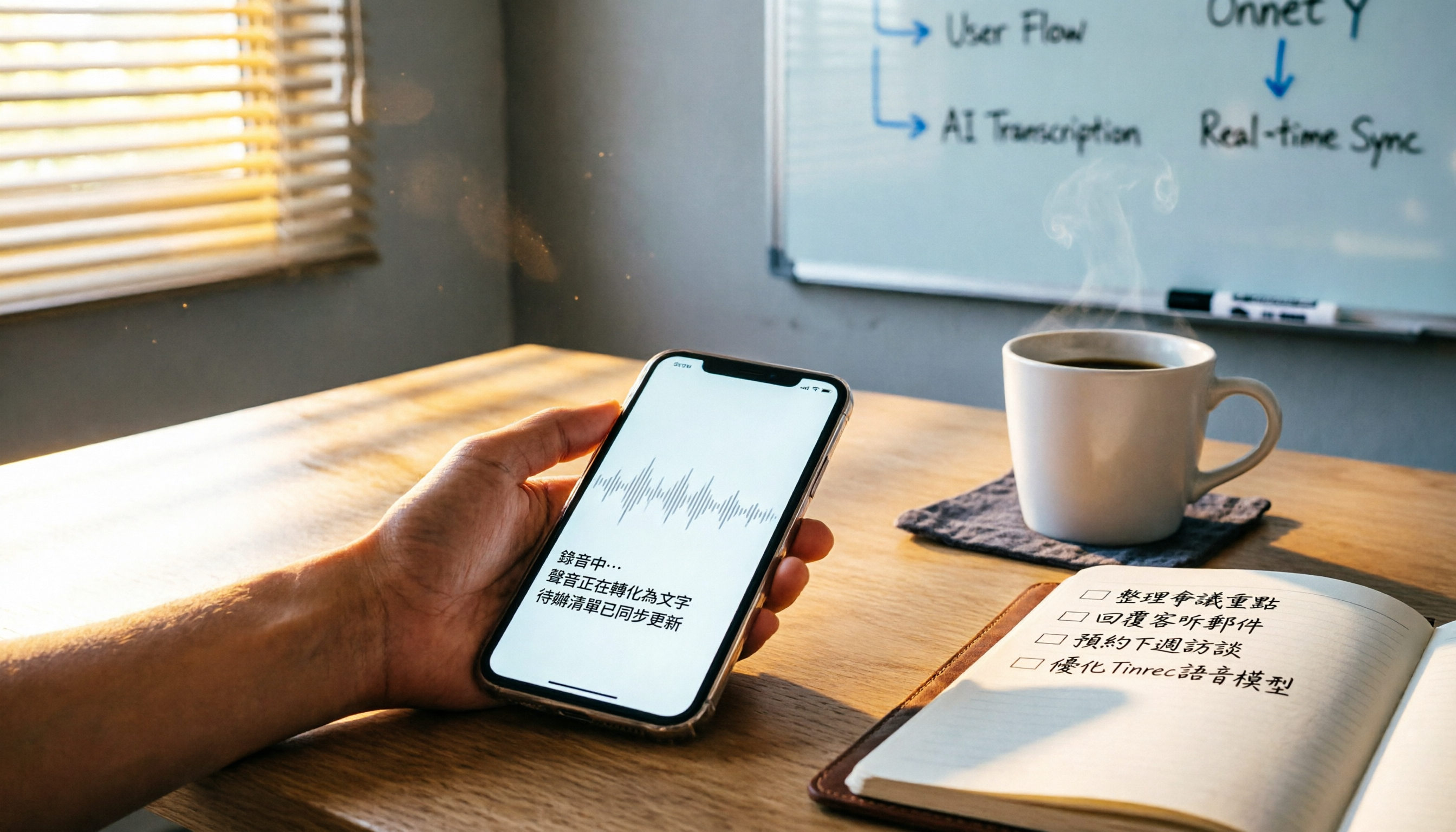
How to Take Meeting Minutes in 2026? A Complete Guide from Recording to AI Meeting Notes in 4 Steps
Tired of marathon meetings? Our test recommends Tinrec – an app that handles Cantonese audio transcription, AI summaries, and to-do lists. Say goodbye to overtime on meeting minutes.

2026 Side-by-Side Comparison: 2 Best Speech-to-Text Tools for Busy Professionals
A mid-level manager puts Tinrec and Plaud Note head-to-head across five dimensions — input sources, AI summarization, cross-platform convenience, cost, and Chinese accuracy — to help you decide whether to buy hardware or just use your phone for meeting notes.

2026 Tinrec vs Otter.ai: 5-Aspect Showdown – Which Transcription Tool Suits You Best?
Tinrec is an AI recording and audio/video transcription tool, while Otter.ai is an AI meeting note tool. This article compares the two across five dimensions to help you choose the best fit for transcription management.