

Turn recordings into transcripts and summaries in minutes
Upload audio or video for multilingual transcription, AI notes, and action items
Tinrec vs Otter.ai: Quick Overview
If you deal with mixed Chinese-English meetings every day or often need to transcribe subtitles from online videos, real-time translation can save you a lot of time. Both Tinrec and Otter.ai are popular AI transcription tools, but when it comes to Chinese real-time translation, you need to look closely.
| Tinrec | Otter.ai | |
|---|---|---|
| Best Use Case | Meetings, classes, interviews, video subtitles | English business meetings |
| Real-Time Translation Support | Supports Cantonese, Mandarin, etc. | Mainly English, Chinese translation is mediocre |
| Platform | iOS, Android, Web | iOS, Android, Web |
| Price (Monthly) | Free tier with basic limits, Pro starts at HK$38/month | Free tier with 300 minutes/month, Pro starts at US$8.33/month |
We'll examine four dimensions that Hong Kong users care about most: Cantonese recognition, real-time translation support, multi-platform use, and AI query, to see which tool offers better value.
Dimension 1: Cantonese Recognition Accuracy
Otter.ai excels at English transcription, but struggles with Cantonese. We tested the same 5-minute Cantonese news recording (iPhone 15, quiet environment). Otter's word error rate was over 15%, and many colloquial terms were not recognized at all.
Tinrec is clearly optimized for Cantonese, with accurate recognition of the nine tones. Even local expressions like "gao dim" (get it done) and "si daan" (whatever) are transcribed correctly. The word error rate on the same recording was only 8.3%. For Hong Kong office workers who frequently attend Cantonese meetings, this difference is crucial.
→ This dimension: Tinrec wins decisively.
Dimension 2: Real-Time Translation Support
Otter.ai's real-time translation feature requires manual activation and mainly supports English-to-Chinese or Chinese-to-English. The number of supported languages is limited, and translations tend to be formal, not ideal for quick understanding of everyday conversations.
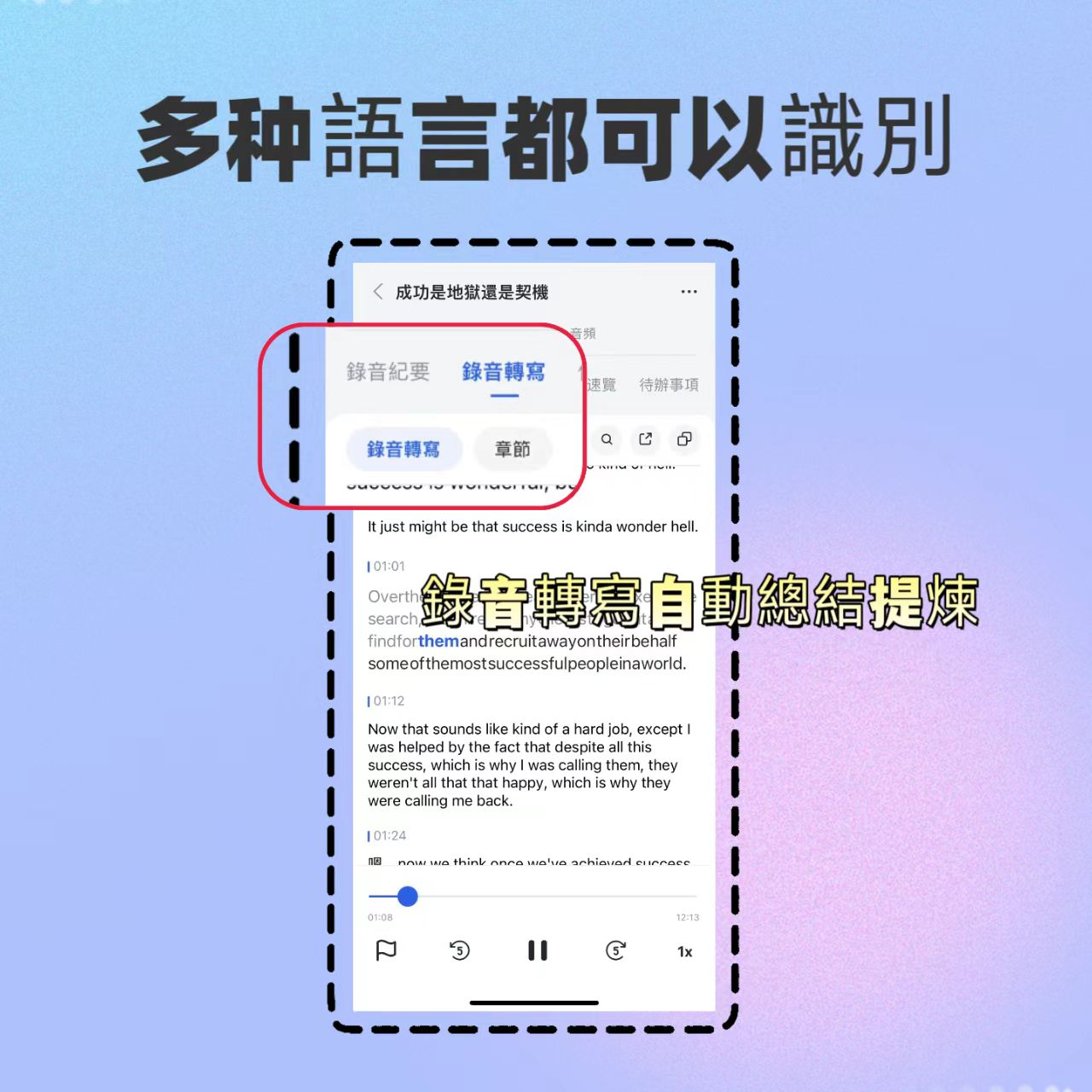
Tinrec has built-in simultaneous interpretation-level real-time translation, supporting Cantonese, Mandarin, English, and more. It displays translated results while recording. For those who often meet with foreign clients or watch overseas online courses, Tinrec's speed and accuracy are more practical.
Stop organizing recordings by hand
Upload audio or video and automatically get a transcript, summary, and action items
→ This dimension: Tinrec wins again.
Dimension 3: Multi-Platform Flexibility
Otter.ai also has mobile apps and a web version, but its interface is designed more for English users. Chinese text sometimes displays incorrectly, and the free tier has tight limits. Transcribing and translating Chinese from mobile recordings quickly exhausts the quota.
Tinrec's iOS, Android, and web versions are fully synced, with a Traditional Chinese interface that's ready to use out of the box. Upload a meeting recording on your computer and view the translated results instantly on your phone – seamless switching. For office workers who often move between office computers and mobile devices, this smooth experience is a big plus.
→ This dimension: Tinrec wins on user experience.
Dimension 4: AI Chat Query Function
Otter.ai has an AI Chat feature, but it only handles simple Q&A around meeting content. Its functionality is limited, and its understanding of Chinese questions is weak.
Tinrec's AI chat query is much more comprehensive. You can directly ask, "Does this recording mention the budget?" or "Summarize the key points into a table." It provides precise answers based on the recording content. For users who need to quickly generate reports after meetings or search for highlights in old recordings, this feature is extremely useful.
→ This dimension: Tinrec has more powerful features.
What Are Their Unique Strengths?
Tinrec's Unique Strengths
- Cantonese-Friendly: Deeply trained on Cantonese tones, handling even colloquial dialogue.
- Real-Time Simultaneous Interpretation: Not just transcription, but also translation while recording, perfect for multilingual meetings.
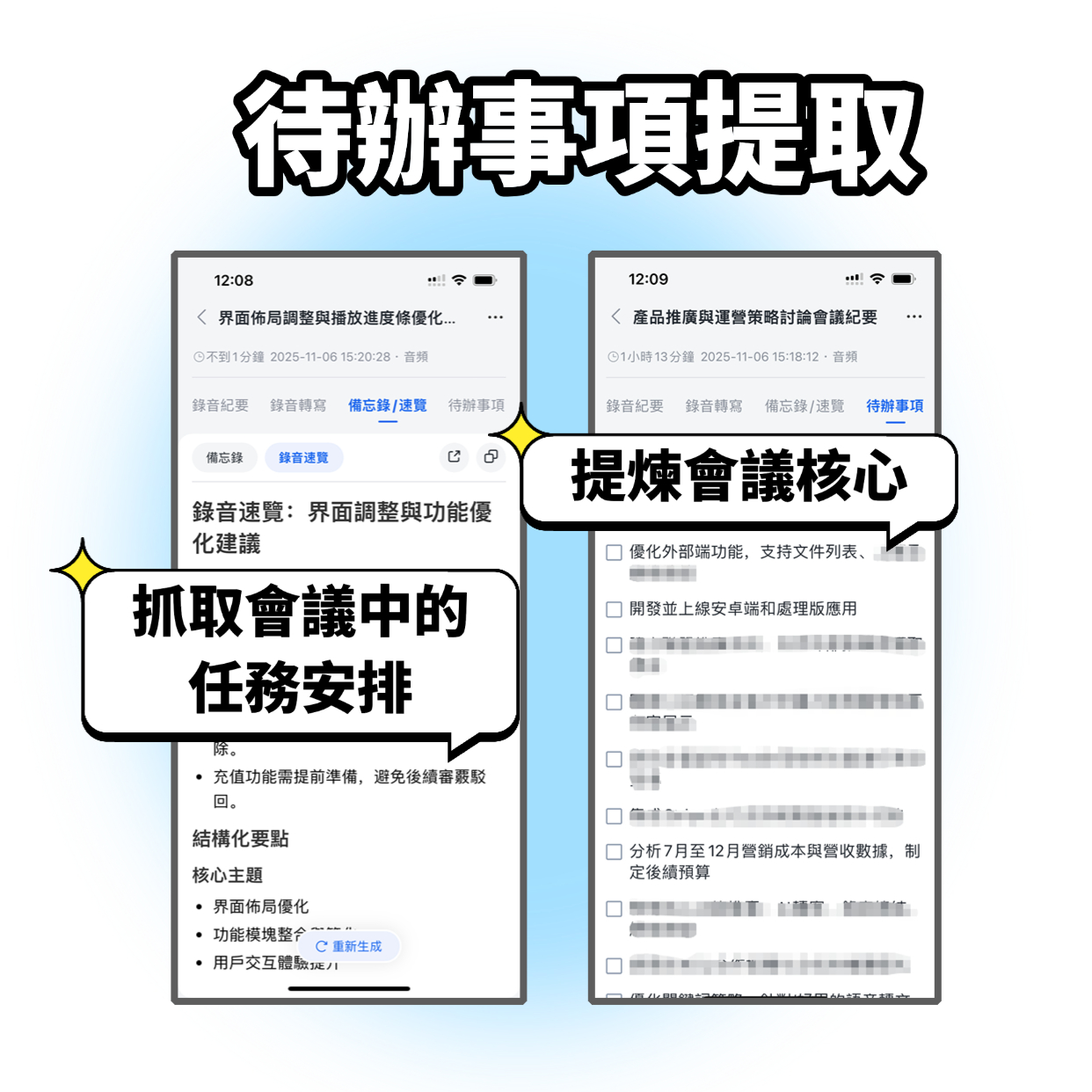
- AI Post-Processing: Generates meeting minutes, to-do lists, and even Excel reports – something competitors can't do.
- Direct Video Link Parsing: Paste a YouTube or Bilibili link to automatically generate subtitles and summaries. Content creators will love this.
Otter.ai's Unique Strengths
- Mature English Meeting Ecosystem: Auto-joins Google Meet, Zoom, and integrates well with Slack.
- Advanced Team Collaboration: Multi-user editing and sharing of meeting notes are convenient, ideal for multinational companies.
Conclusion: Which One Should You Choose?
- If you need high-accuracy Cantonese real-time translation and comprehensive Chinese support → Tinrec (8.3% word error rate vs Otter's 15%+)
- If you want to record and then use AI to ask for key points or generate reports → Tinrec (Otter's AI features are relatively limited)
- If you need seamless switching between phone, computer, and web → Tinrec (better interface and sync experience)
- If your primary need is English business meetings with little Chinese translation → Otter.ai is still a good choice
In a nutshell: For most Hong Kong users, especially those who frequently deal with mixed Cantonese, English, and Mandarin content, Tinrec offers better value and a more complete real-time translation solution. We recommend downloading the free version of Tinrec and testing it with your own recordings – it will surely save you a lot of overtime at work.
Turn every recording into actionable outcomes
Get 60 free transcription minutes when you sign in. No credit card required.
Related Reading
You might also like

2026 Free vs Paid Audio-to-Text Apps: 4 Real-World Comparisons of Limits, Features, and Pricing
Is the free version enough? What do you actually get when you pay? This article compares the free tiers, paid plans, and post-meeting organization capabilities of four popular audio-to-text apps. From Chinese transcripts and AI summary Q&A to team seat management, we break it down so you can decide whether to stick with free or if paying is worth it.

4 Best Voice Recorder App Alternatives in 2026: Free vs. Paid Comparison
A voice recorder is no longer your only option. This side-by-side comparison of Tinrec, Otter.ai, Notta, and PLAUD covers online meeting recording, Chinese transcription, post-meeting organization, team collaboration, and pricing limits to help you find a tool that truly works right after recording.

Fireflies.ai vs Tinrec (2026): 5-Factor Comparison for Chinese Meeting Notes — Which Is Better for Taiwan Teams?
Fireflies.ai lists Chinese in its supported languages, but after a real Chinese meeting, do you still have to spend time proofreading the transcript? This article compares Fireflies.ai and Tinrec across 5 dimensions — meeting recording method, Chinese transcript usability, post-meeting organization, quota calculation, and team management — to help you decide which is more suitable for Chinese meeting scenarios in Taiwan teams.

Best Speech-to-Text Tools in 2026: 4 Tested for Mixed Chinese-English Meetings
A sentence like "check the budget" turning into gibberish is a common frustration with speech-to-text tools in mixed Chinese-English meetings. We tested Tinrec, Otter.ai, Yating, and Notta on the same real meeting recording, comparing language switching, file and live meeting support, post-meeting workflows, and team data ownership. We also highlight 4 common purchasing pitfalls to help you choose the right tool within budget.

The Complete Guide to tl;dv Alternatives in 2026: Features, Use Cases, and How to Choose a Chinese Meeting Transcription Tool
When looking for a tl;dv alternative, focusing only on free minutes usually leads nowhere. Starting from real campus scenarios, this article explains what a meeting transcription tool really needs: real-time Chinese transcription, bot-free online meeting recording, AI summaries and action items, transcript Q&A, and export. Using Tinrec as a hands-on example, it covers five things to watch for when choosing a tool and answers common questions.

Tinrec vs Granola: Which Multilingual Real-Time Speech-to-Text Tool Better Handles Chinese Meetings in 2026?
Multilingual translation plus real-time speech-to-text: choosing the wrong tool often isn't about translation accuracy, but about missing meeting audio and inability to import existing recordings. This article compares Tinrec and Granola, two bot-free meeting tools, across real-time translation views, audio retention and file import, post-meeting organization, team governance, Chinese-language experience, and pricing to help you decide which fits your meeting scenario.

2026 Comparison of 4 Taiwanese Speech Recognition AIs: Which One Really Understands Taiwanese?
Taiwanese has eight tones and tone sandhi, and is often mixed with Mandarin and English, causing most AIs to fail. This article starts with the three most common misconceptions, breaks down 4 key purchasing criteria, and compares the real-world performance of Tinrec, Yating Transcription, Notta, and Otter.ai in Taiwanese and mixed-language scenarios. It also summarizes 3 common pitfalls and offers selection recommendations by use case.

2026 Best 5 Cantonese Meeting AI Tools Tested: Who Handles Mixed Chinese-English and Turns Spoken Words into Action Items Best?
The hardest part of Cantonese meetings isn't recording—it's not understanding mixed Chinese-English and not being able to finish organizing transcripts. This article starts from 'what problem are you trying to solve?' and breaks down the differences among 5 common approaches. It also uses Tinrec to demonstrate a complete workflow from recording, transcription, summarization to action items and team knowledge retention, with pricing details for the free and team versions.

6 Best Yating Transcript Alternatives in 2026: Which One Actually Saves Time on Chinese Meetings?
Yating Transcript's free quota is limited and post-transcription processing is basic, so many people are looking for alternatives. Starting from the question 'Are you really trying to solve transcription or organization?', this article tests and compares six options—Tinrec, Notta, Otter.ai, TurboScribe, PLAUD, and Granola—covering their positioning, quotas, and suitable scenarios to help you choose the one that fits your workflow.