

Turn recordings into transcripts and summaries in minutes
Upload audio or video for multilingual transcription, AI notes, and action items
2026 Free vs Paid Audio-to-Text Apps: 4 Real-World Comparisons of Limits, Features, and Pricing
Free or Paid? Ask Yourself These Three Questions First
"Should I just use the free version of an audio-to-text app, or should I pay?" This is one of the most common questions I get in the comments. Honestly, the answer isn't about the price—it's about whether you're hitting three specific roadblocks.
First, is the free quota enough to cover your actual work? Many free plans have a trap that isn't about "fewer minutes" but about "per-recording length limits"—a 90-minute meeting might not even transcribe fully.
Second, what do you actually get when you pay? If it's just more minutes, that's just more quantity. But if you get summaries, action items, AI Q&A, and exports, that's a whole new workflow.
Third, who ultimately holds the data? With a personal free version, the files stay on your phone. Teams need a database that can be shared, handed over, and searched for historical records.
Once you've thought through these three questions, whether to use free or paid becomes clear. Below, we'll break down the key points for choosing, then compare four popular tools one by one.
Before Choosing an Audio-to-Text App, Understand These 5 Key Points
1. How the free quota is calculated. There are three methods: total minutes per month, maximum length per recording, and number of files uploadable per day. Watch out for plans that limit "3 minutes per recording"—even if they give you 120 minutes a month, you can't organize a formal meeting.
2. Recognition experience with Chinese and mixed Chinese-English. Meetings in Taiwan are rarely pure Chinese; they usually mix Mandarin with English terms. Rather than looking at official accuracy claims, try it with a real recording of your own meeting. Actual performance is affected by audio quality, accents, air conditioning noise, and people talking over each other.
3. Can you use it directly after transcription? Tools that only give you a transcript still require you to read the whole thing yourself. Tools with summaries, chapters, action items, and AI Q&A truly save you that post-meeting time.
4. How to record online meetings. One way is to send a meeting bot to join the meeting; another is to capture computer system audio directly via a desktop app. The former is convenient but shows up in the participant list; the latter doesn't disturb the meeting but you have to remember to start it.
5. For team use, look at roles and seats. A team plan isn't "multiple people sharing one account." You need to distinguish who can manage (roles), who can record/upload/edit (seats), and who owns the data when a member leaves. Few people ask this upfront, but it hurts the most when problems arise.
Tinrec: Try Free First, Pay for "No Redoing After the Meeting"
Tinrec is an AI meeting notes and collaboration tool for individuals and teams, available on web, desktop, and mobile. Its one-line positioning: turn meetings into searchable, collaborative, actionable team data.
Start with the free version to see if the workflow fits. Currently, you can get 60 minutes of free transcription upon login without a credit card (actual quota and promotions subject to official website). For someone who only organizes one or two recordings a week, this is enough to run through a complete workflow: record, get transcript, view summary, export.
Core features are designed around real meeting scenarios. For in-person meetings, use real-time recording to transcribe as you go; for online meetings, use the desktop app to capture computer system audio directly, handling meetings on Zoom, Google Meet, Microsoft Teams, Webex, etc., without pulling an extra meeting bot into the room. This is especially practical for client meetings—you don't want an unfamiliar name on the participant list.
After transcription is where the real value is. Tinrec automatically generates summaries, chapters, and action items, so long meetings can be browsed by section without reading from start to finish. Even better is AI Q&A: after recording, just ask "Who mentioned the budget in the last meeting? What was the conclusion?" and it answers based on semantics, not by dumping keywords for you to search. For those who need to look back at historical meetings, the time saved is significant.
There's also real-time translation and bilingual view, so cross-language meetings can be viewed with original and translation side by side; when you need deliverables, you can generate reports, tables, and documents, and export to Notion, Google Docs, OneNote, Dropbox, etc. for further processing.
Choose a paid plan by task, not by price. The personal version is divided into Free, Weekly Pass, Pro Monthly, and Pro Annual. For occasional interview transcription, the free version is enough; during a project sprint with daily meetings, the weekly pass is more cost-effective; for regular weekly use, Pro Monthly is reasonable; to build a long-term recording database, the annual plan has a lower monthly cost.
Stop organizing recordings by hand
Upload audio or video and automatically get a transcript, summary, and action items
The team version solves the problem of "data leaving when people leave." The team version isn't a shared account but an independent team space: you can create multiple spaces, invite members via link, set owners/admins/regular members, and assign or revoke seats. Meeting data belongs to the team; when a member exits or is removed, their responsible resources must be handed over to other active members.
Note the difference between roles and seats: members without a seat can still view, play, and read team data, but to record, upload, edit, and export, they need a seat. Currently, the team version focuses on team-level sharing, not file-level granular permissions—confirm whether this meets internal policies before purchasing.
The current team plan details: eligible teams can try free for 7 days, 1 free seat, 300 minutes of team shared import quota; monthly payment USD 29.80 per paid seat per month, annual payment USD 199 per paid seat per year (about USD 16.58 per month), each paid seat provides 2,000 minutes of team shared import quota per month. Real-time recording under an active plan is currently not deducted by minutes; file and web imports use the team shared quota. Prices and promotions are subject to the official purchase page.
Limitations, honestly. Once the free quota is used up, you need to pay; desktop recording requires you to start it manually—it's not a bot that automatically joins all calendar meetings; the official accuracy rate is not guaranteed, so for important content, cross-check with transcript timestamps and recording playback; team audio can be restored from the 30-day recycle bin after deletion, but action items are not covered by the recycle bin.
Who is it for? People who frequently hold Chinese meetings, want summaries and action items right after meetings, need to query historical meeting content, or want to turn meeting data into team assets.
Besides Tinrec, What Other Free or Paid Options Are There?
Notta. A veteran choice for multi-platform transcription and translation. The free version offers 120 minutes per month, but each recording is limited to 3 minutes, so long meetings need to be split. Pro annual payment is about USD 8.17 per month with 1,800 minutes per month. Its file transcription is mature, but it lacks Tinrec's desktop bot-free online meeting recording workflow, and team governance and seat design are simpler.
Otter.ai. One of the top choices for English meetings. The free version offers 300 minutes per month, which is quite generous, and Pro annual payment is about USD 8.49 per user per month. If your recordings are mainly in English, it's a cost-effective option; but for Chinese meetings and mixed Chinese-English organization, as well as local needs like team hotwords, Tinrec is more aligned.
TurboScribe. A high-value file transcription tool. Free version allows 3 files per day with a 30-minute limit per file; Unlimited annual payment is USD 120, with a maximum of 10 hours per file and up to 50 files uploaded at once. Suitable for batch processing of large long audio files, but it's not designed for real-time meetings and post-meeting Q&A—Tinrec fills that gap with AI Q&A and team meeting spaces.
Pitfall Guide: The 4 Most Common Mistakes When Choosing an Audio-to-Text App
Pitfall 1: Only looking at monthly minutes, ignoring per-recording limits. 120 minutes per month sounds enough, but if each recording is limited to 3 minutes, you'll have to manually split files for every meeting—just organizing them is a full-time job.
Pitfall 2: Treating the free version as a long-term solution. The free version is for validating workflows, not for daily use. Instead of worrying about running out of quota at the end of each month, calculate how many minutes you actually record per week.
Pitfall 3: Assuming paying means all meetings are automatically recorded. Most desktop tools require you to manually press record. Adding "start recording" to your pre-meeting checklist is more useful than regretting later.
Pitfall 4: Buying for the team but not assigning seats. Admins think everyone is covered, but members without seats can only view, not edit. Clarify roles, seats, and data ownership before purchasing to avoid arguments later.
Conclusion: Should You Use Free or Paid?
Simply put, the free version is for validating "whether this tool feels right," while the paid version is for solving "I need to use it every day."
If you only organize one or two recordings a week and don't need team sharing, just try the free quota. If meeting content needs to become action items, be queryable later, and export to your existing workflow, the value of paying isn't in minutes but in that post-meeting organization time.
If you need Chinese meeting transcripts plus AI Q&A and don't want a bot joining meetings, check out Tinrec first; if you want to build team data and need seat and usage management, evaluate the team version directly; if English meetings are primary, Otter.ai is cost-effective; if you purely need batch processing of many long audio files, TurboScribe is more suitable; if your budget is zero and you need Chinese long meetings, honestly there aren't many options—we recommend running your own recordings through each free tier once before deciding whether to pay.
Choosing an audio-to-text tool isn't hard; what's hard is first clarifying whether you want a transcript or a workflow that saves you from redoing work after meetings.
References
- [Audio-to-Text App] 8 Free vs Paid Comparisons: How Students and Professionals Choose Meeting Notes (incl. Tinrec) - Tinrec Blog
- [AI Voice Notes] 5 Highly Recommended AI Transcription Tools! Generate Transcripts and Meeting Notes Highlights, Free vs Subscription, Pros and Cons | 104 Career Power
- Android Audio-to-Text App Recommendations/Speech-to-Text/Transcripts: 2026 Comparison of 7 Free Tools - Tinrec Blog
- [Audio-to-Text Files] 5 AI Tools Free vs Paid Comparison: How to Choose for Meeting and Interview Transcripts? - Tinrec Blog
- Meeting Speech-to-Text, Transcripts: Which AI Tool to Use? Free vs Paid Feature Comparison | Manager Today
Turn every recording into actionable outcomes
Get 60 free transcription minutes when you sign in. No credit card required.
Related Reading
You might also like

2026 Comparison of 5 Multilingual Meeting Transcription Tools: Which Handles Mixed Chinese, English, Japanese, and Korean Best?
In multinational meetings with mixed Chinese, English, Japanese, and Korean, organizing transcripts and action items afterward takes the most time. Using Tinrec as an example, this article walks you through recording, transcription, proofreading, AI meeting summaries, and exporting/sharing to complete multilingual meeting notes step by step, and also covers tool selection criteria and common questions.

4 Best Granola Alternatives for Meeting Notes in 2026: Which One Keeps Recordings and Chinese Transcripts at the Best Value?
Granola excels at making meeting notes smarter, but it doesn't save meeting audio or support uploading pre-recorded files. This article compares Tinrec, Granola, Otter.ai, and Notta on recording retention, Chinese transcription, post-meeting organization, and team management to help you find the alternative that truly handles post-meeting work.

Best Korean Speech-to-Text Translation Tools? 2026 Test of 4 Picks, Tinrec Tops Post-Meeting Organization
From Korean interviews and classes to cross-border meetings, speech-to-text is just the first step. What really sets tools apart is translation, summarization, action items, and team sharing. This article tests 4 tools across four buying criteria to help you decide which fits your Korean workflow.

Good Tape Traditional Chinese Alternative 2026: Tinrec + AI Meeting Minutes Workflow
Good Tape supports 40+ languages and .SRT subtitle output, but Traditional Chinese punctuation, post-meeting organization, and team collaboration are often cited as shortcomings. This article addresses three common misconceptions, breaks down 4 key purchasing criteria, explains Tinrec's bot-free meeting recording, AI summaries and action items, AI Q&A, and team spaces, and compares Good Tape, Notta, and TurboScribe for their suitable scenarios.
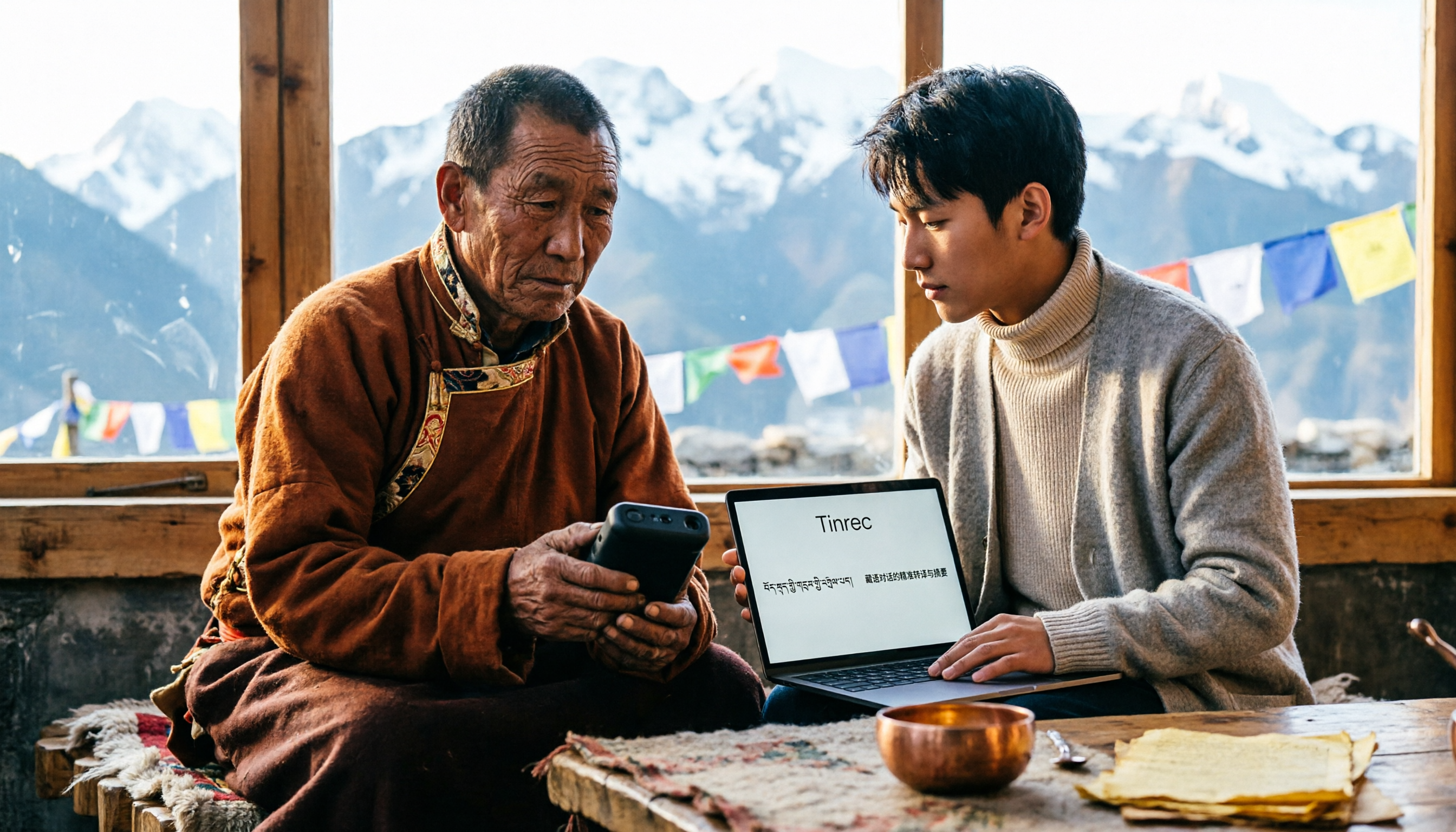
5 Tibetan Speech-to-Text Tools Tested: Which One Actually Understands Tibetan? (2026)
How to choose a Tibetan speech-to-text tool? This article starts with the real limitations of Tibetan speech recognition, outlines 4 key buying factors, and compares Tinrec, Tibetan Translator, Whisper local solution, Notta, and Yating Transcription. It also includes a pitfalls guide and scenario-based recommendations.

4 Best Voice Recorder App Alternatives in 2026: Free vs. Paid Comparison
A voice recorder is no longer your only option. This side-by-side comparison of Tinrec, Otter.ai, Notta, and PLAUD covers online meeting recording, Chinese transcription, post-meeting organization, team collaboration, and pricing limits to help you find a tool that truly works right after recording.

Fireflies.ai vs Tinrec (2026): 5-Factor Comparison for Chinese Meeting Notes — Which Is Better for Taiwan Teams?
Fireflies.ai lists Chinese in its supported languages, but after a real Chinese meeting, do you still have to spend time proofreading the transcript? This article compares Fireflies.ai and Tinrec across 5 dimensions — meeting recording method, Chinese transcript usability, post-meeting organization, quota calculation, and team management — to help you decide which is more suitable for Chinese meeting scenarios in Taiwan teams.

Best Speech-to-Text Tools in 2026: 4 Tested for Mixed Chinese-English Meetings
A sentence like "check the budget" turning into gibberish is a common frustration with speech-to-text tools in mixed Chinese-English meetings. We tested Tinrec, Otter.ai, Yating, and Notta on the same real meeting recording, comparing language switching, file and live meeting support, post-meeting workflows, and team data ownership. We also highlight 4 common purchasing pitfalls to help you choose the right tool within budget.

The Complete Guide to tl;dv Alternatives in 2026: Features, Use Cases, and How to Choose a Chinese Meeting Transcription Tool
When looking for a tl;dv alternative, focusing only on free minutes usually leads nowhere. Starting from real campus scenarios, this article explains what a meeting transcription tool really needs: real-time Chinese transcription, bot-free online meeting recording, AI summaries and action items, transcript Q&A, and export. Using Tinrec as a hands-on example, it covers five things to watch for when choosing a tool and answers common questions.