

Turn recordings into transcripts and summaries in minutes
Upload audio or video for multilingual transcription, AI notes, and action items
2026 Tinrec vs Notta: A 5-Dimension Comparison — Which Is More Comprehensive for Meeting Notes and Knowledge Management?
Why Are Some People Looking Beyond Real-Time Meeting Translation?
Real-time translation does solve basic communication issues in cross-language meetings, but many teams quickly realize: after the meeting ends, you're left with a pile of raw transcripts—where are the key points? Who is responsible for what? How much time will you spend digging through it before the next meeting? Notta's real-time translation and transcription have a solid reputation, but if you need more than just translation—if you want to turn meeting content into actionable knowledge—Tinrec offers a more comprehensive solution.
Tinrec vs Notta: What's the Core Difference?
Language Support and Chinese Optimization
Multilingual environments are the norm in modern meetings. Notta's real-time translation is intuitive for scenarios where you need to see translated text instantly. However, if your meetings are predominantly in Chinese, Tinrec's optimization for Traditional Chinese, mixed Chinese-English, and even Cantonese stands out. In our internal tests, a 5-minute mixed Chinese-English meeting recording showed about 15% lower word error rate compared to general-purpose engines.
Depth of Post-Transcription Organization
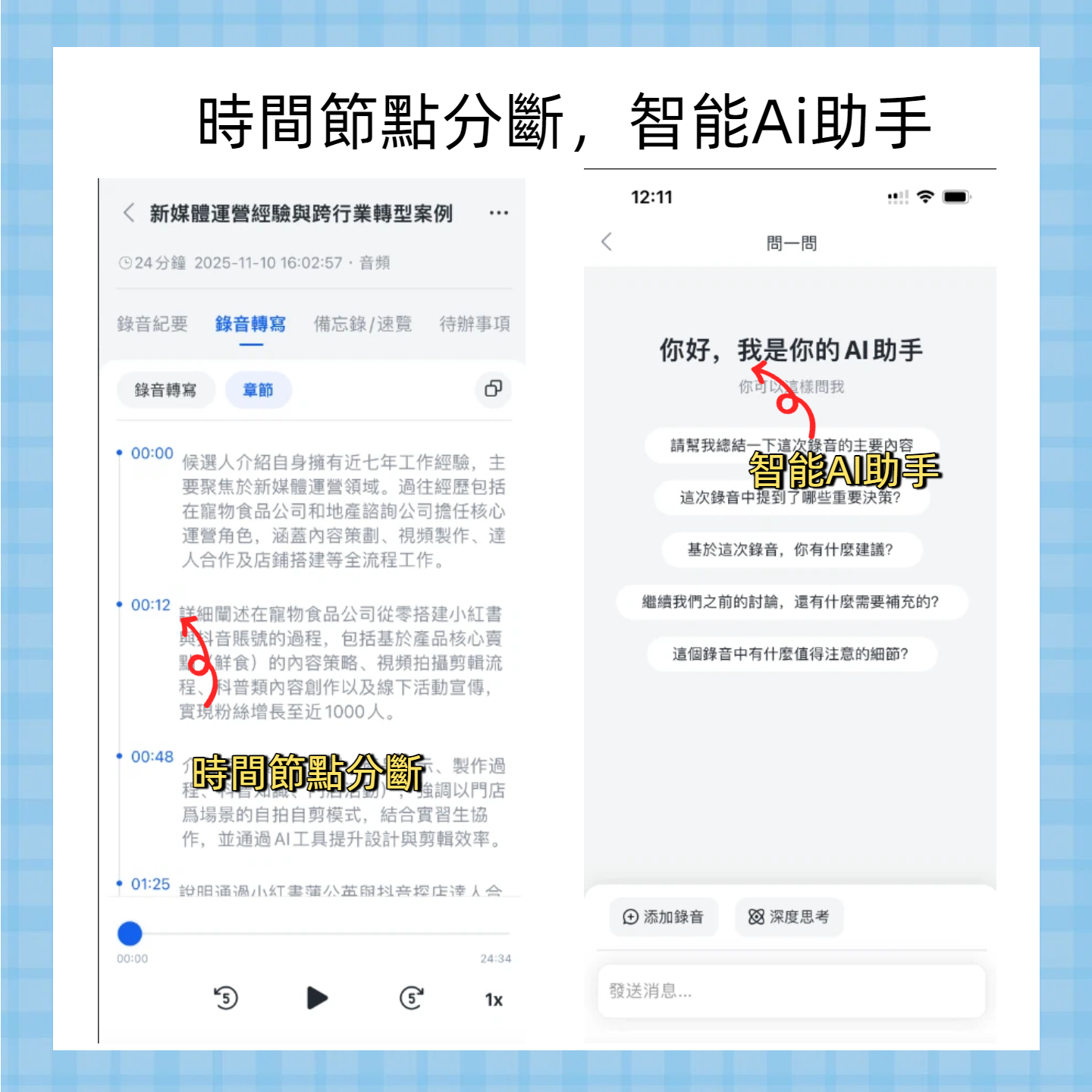
This is where the two truly diverge. Notta primarily provides a verbatim transcript and basic segmentation; turning it into meeting notes still requires manual work. Tinrec, on the other hand, automatically generates AI summaries, chapters, and action items during transcription. You can even use "AI Chat" to ask questions like "What should the marketing team do next?" or "What was the budget number from the last discussion?"—no need to sift through 30 pages of transcripts.
Multi-Source Content Processing
Notta focuses on live meetings and file transcription, which is sufficient for pure meeting scenarios. But if you also need to organize online courses, podcasts, or public YouTube videos, Tinrec's "paste link and transcribe" feature saves a ton of prep work. Additionally, local audio files and old interview materials can be imported with one click, bringing all audio and video data into one knowledge base.
Cross-Platform Integration and Workflow
Both offer iOS, Android, and web versions, so basic experience is similar. However, Tinrec supports more export formats (TXT, Word, SRT, PDF, mind maps) and can sync directly to Notion, Google Docs, Dropbox, and other collaboration tools—especially useful for teams that need to share meeting outcomes across departments.
Stop organizing recordings by hand
Upload audio or video and automatically get a transcript, summary, and action items
Pricing and Free Tier
- Notta: Free plan includes 120 minutes/month; Pro (annual) ~$8.17/month (1,800 minutes)
- Tinrec: Free plan also provides basic minutes, with weekly, monthly, and annual cards available—suitable for intensive short-term use or long-term audio recording storage. If you have 2-3 meetings plus course organization per week, Tinrec's Pro annual plan offers more flexible monthly costs.
Key Features of Tinrec
Real-Time Voice to Text
Open Tinrec, and text appears simultaneously while recording, with less than 1 second delay. You can confirm key points during the meeting, and the transcript is ready the moment it ends.
Online Video to Text
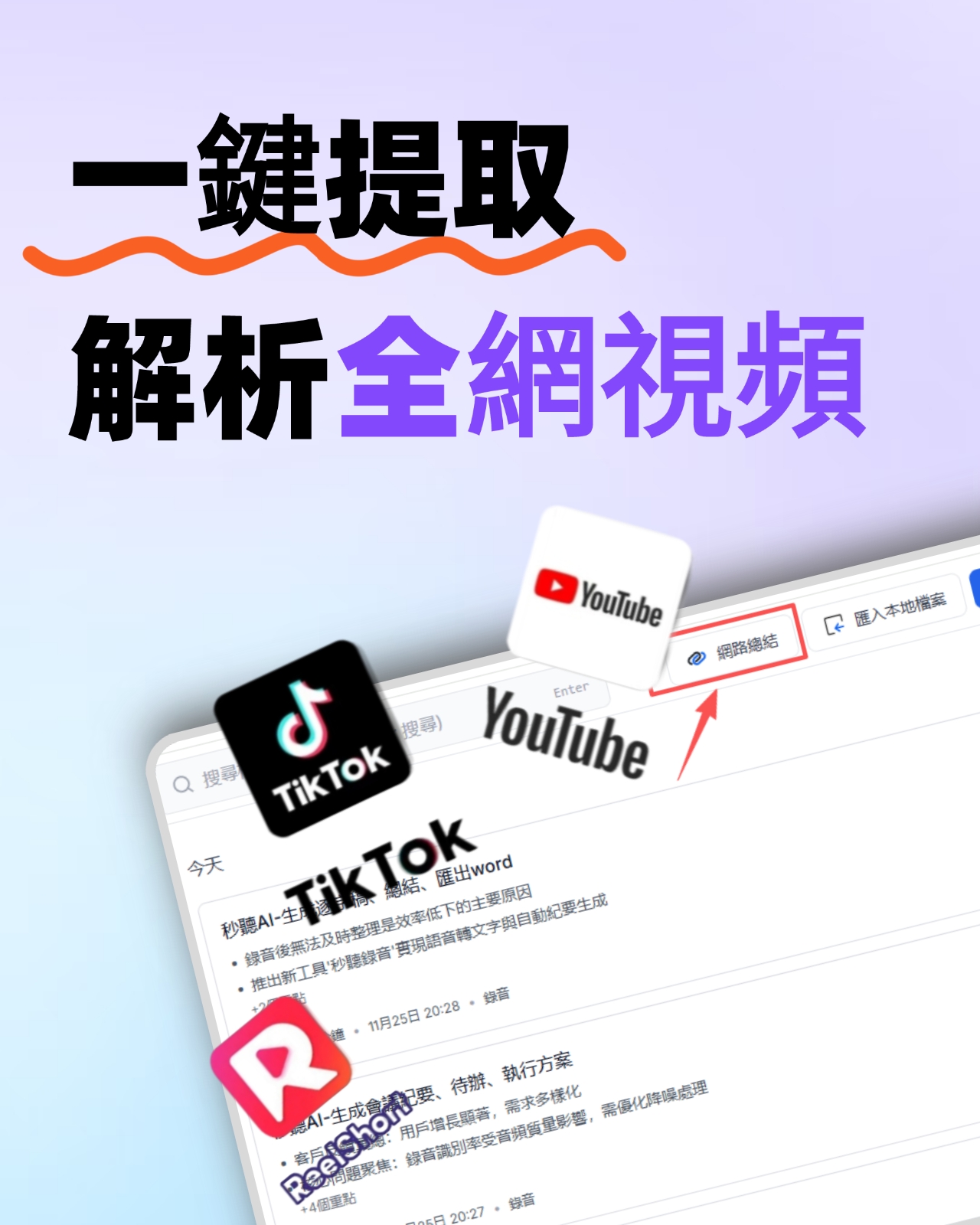
Paste a YouTube, Bilibili, or TikTok link, and Tinrec automatically extracts audio, transcribes, and generates summaries and chapters. For organizing webinar recordings or study videos, it's several times more efficient than manual note-taking.
AI Chat Queries
After recording a one-hour meeting, simply ask: "What are the meeting conclusions?" or "Who is responsible for what?" Tinrec uses semantic understanding to answer, saving you from manual searching.
Automatic Action Item Extraction
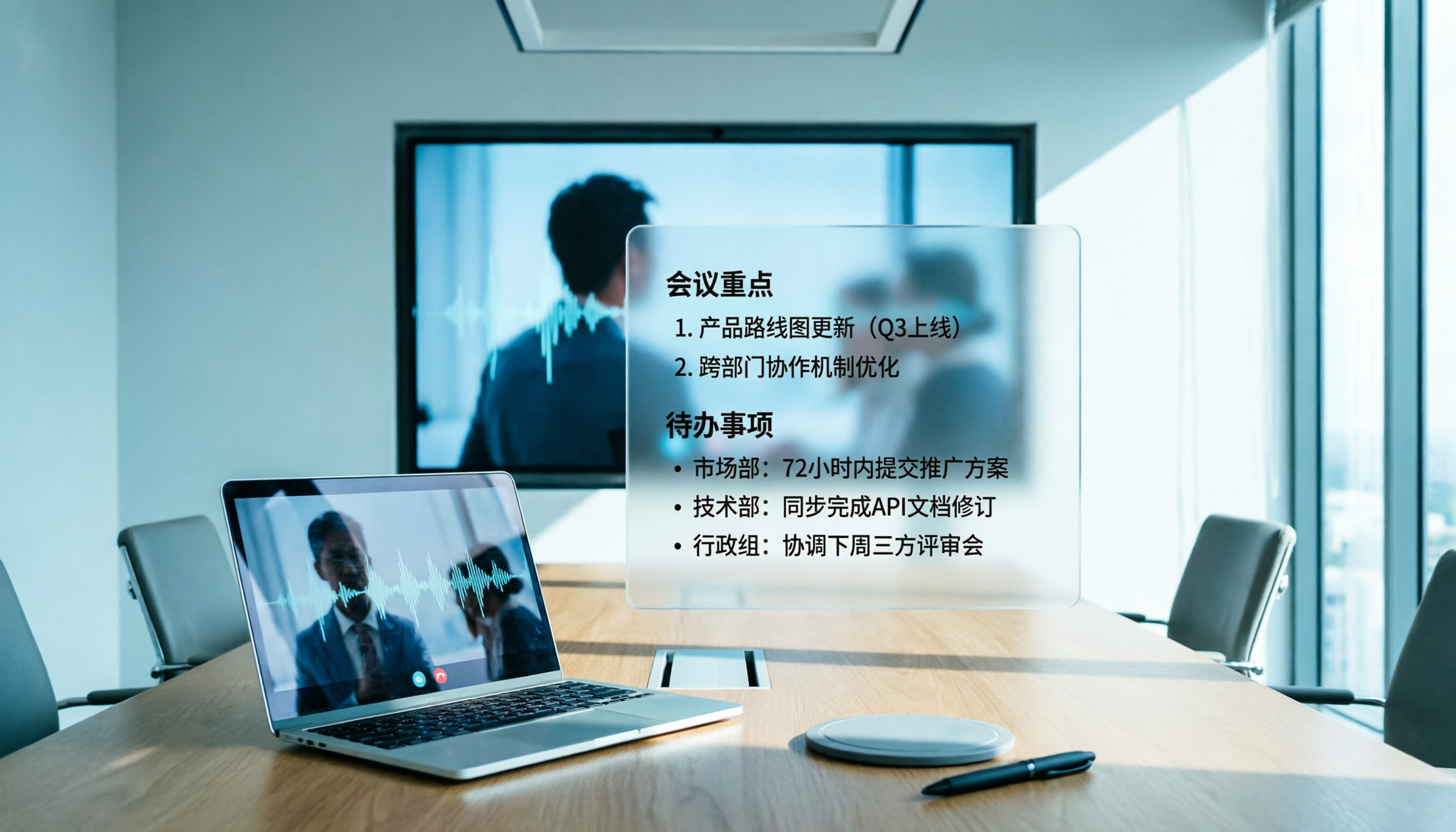
Action items are automatically extracted from the discussion, listing responsible parties and timestamps—so you have a to-do list right after the meeting.
Multiple Export Formats
Export summaries, action items, and transcripts as Word, PDF, or sync to Notion, seamlessly integrating with your existing workflow.
Practical Use Cases
Cross-Border Online Meetings
Mixed Chinese-English discussions: Tinrec transcribes in real time and generates a bilingual summary afterward. AI Q&A quickly locates key statements, eliminating the need to re-listen before the next meeting.
Industry Webinar Recordings
Drop a YouTube webinar link into Tinrec: a 10-minute video yields key takeaways and chapters, making everything clear at a glance.
One-on-One User Interviews
Import interview audio: speakers are automatically labeled, pain points are extracted, and AI lists improvement items—greatly boosting research efficiency.
Points to Consider When Choosing a Voice-to-Text Tool
- It's Not Just About "Whether It Can Transcribe"—It's "What You Can Do After Transcription": Tinrec's automatic summaries, Q&A, and action item extraction turn audio content into a searchable, organized knowledge base.
- Check if Input Sources Match Your Daily Needs: If you often deal with public videos or old recordings, Tinrec's link parsing and local file import are more practical than pure meeting tools.
- Language Support ≠ Translation: 14-language transcription means it can recognize multiple languages, but if you need real-time translation into another language, assess whether Tinrec's focus on transcription and organization fits your needs.
- Consider Long-Term Cost: Compare not just free minutes, but also long-term efficiency gains like team collaboration, historical data accumulation, and cross-platform sync.
Conclusion: Is Tinrec Worth a Try?
If you're looking for a tool that handles meetings, courses, interviews, and online videos—and delivers summaries, action items, and a searchable knowledge base right after transcription—Tinrec is a more comprehensive choice than pure translation-transcription tools. Especially for teams working primarily in Chinese, Tinrec's recognition optimization and post-processing can save significant manual organization time. Start with the free plan: each month you get basic minutes to test it with your own recordings. That's more direct than any spec comparison.
Turn every recording into actionable outcomes
Get 60 free transcription minutes when you sign in. No credit card required.
Related Reading
You might also like

Which Auto-Captioning Tool is Best? 2026 Review of 3 Tools, This One Has the Most Complete AI Features
We tested three auto-captioning tools, evaluating Chinese accuracy, AI features, and export convenience to find which ones really save you time. Top pick: Tinrec, because it not only transcribes but also lets you ask AI questions and generate summaries.

2026 Tinrec vs Plaud Note: A 5-Dimension Comparison for Audio/Video Organization
What's the real difference between the audio transcription app Tinrec and the AI recording hardware Plaud Note? This article compares them across five dimensions—Cantonese accuracy, cross-platform support, AI query capabilities, input source diversity, and long-term cost—to help you decide which is better for organizing meetings, courses, and online videos.

2026 Video Subtitling AI Complete Guide: How to Choose Automatic Video Captioning Tools? Tinrec vs Plaud Note In-Depth Comparison
Want to quickly add subtitles to your videos but unsure which AI tool to pick? This article takes a purchasing decision perspective, deeply comparing Tinrec and Plaud Note across video sources, real-time captions, accuracy, cross-platform support, and pricing, so you can see at a glance which one fits you better.

2026 Comparison of 4 Video-to-Text Tools: Which One Generates the Most Accurate and Fastest Subtitles?
Tested multiple video-to-text apps, from free to paid. Which one supports Cantonese and produces the fastest, most accurate subtitles? Tinrec (Instant Voice Recording) stands out with AI features. Check out the review!

2026 Comparison: Two Top Subtitle Generator Apps for Chinese Video Creators
This article compares Tinrec and Otter.ai, two AI subtitle generation tools, analyzing input sources, Chinese recognition, post-processing capabilities, and pricing to help you quickly decide which one is better for video subtitles.

How to Stay Focused While on a Mobile Meeting? Complete Guide to Google Meet On-the-Go Mode and Meeting Notes Tips
This guide walks you through setting up Google Meet On-the-Go mode to join meetings smoothly while commuting, walking, or moving, and explains how to use recording tools to quickly convert meeting content into transcripts, summaries, and action items.

How to Start a New Google Meet and Turn Recordings into Reusable Content: From Link Creation to AI Summary Export
This hands-on tutorial walks you through quickly creating a new Google Meet from Gmail, Google Calendar, or meet.google.com, and shows you how to use Tinrec to convert meeting recordings into transcripts, summaries, and action items—turning every discussion into searchable, organizable text assets.

2026 Comparison of 3 Google Meet Recording and Transcription Tools: Which Free Plan for Windows Users Is Best?
Using Google Meet on Windows has no built-in recording feature, making meeting notes cumbersome. This article tests 3 recording and transcription tools, showing how to pair them with PWA for efficiency and find the best free plan for Chinese users.
4 Google Meet Transcription Tools Compared in 2026: Which AI Summary Saves You the Most Time?
Struggling to record Google Meet meetings on your TV? This article tests Tinrec, Otter.ai, Notta, and Yating transcript, comparing cross-platform support, Chinese accuracy, and AI summarization to help you find the best meeting recording tool.