
Turn recordings into transcripts and summaries in minutes
Upload audio or video for multilingual transcription, AI notes, and action items
Facing hours of meeting or interview recordings, the most frustrating part is often not the typing itself, but not knowing who said what. When multiple people talk simultaneously or over each other, traditional recorders or phone memos usually output a large chunk of text without paragraph breaks, forcing you to replay repeatedly—taking over 3x the recording time to organize.
This article breaks down the key criteria for choosing "transcription tools" in 2026, focusing especially on speaker diarization capabilities. We'll compare multiple dimensions and use Tinrec as an AI tool example to show how you can free yourself from tedious manual transcription.
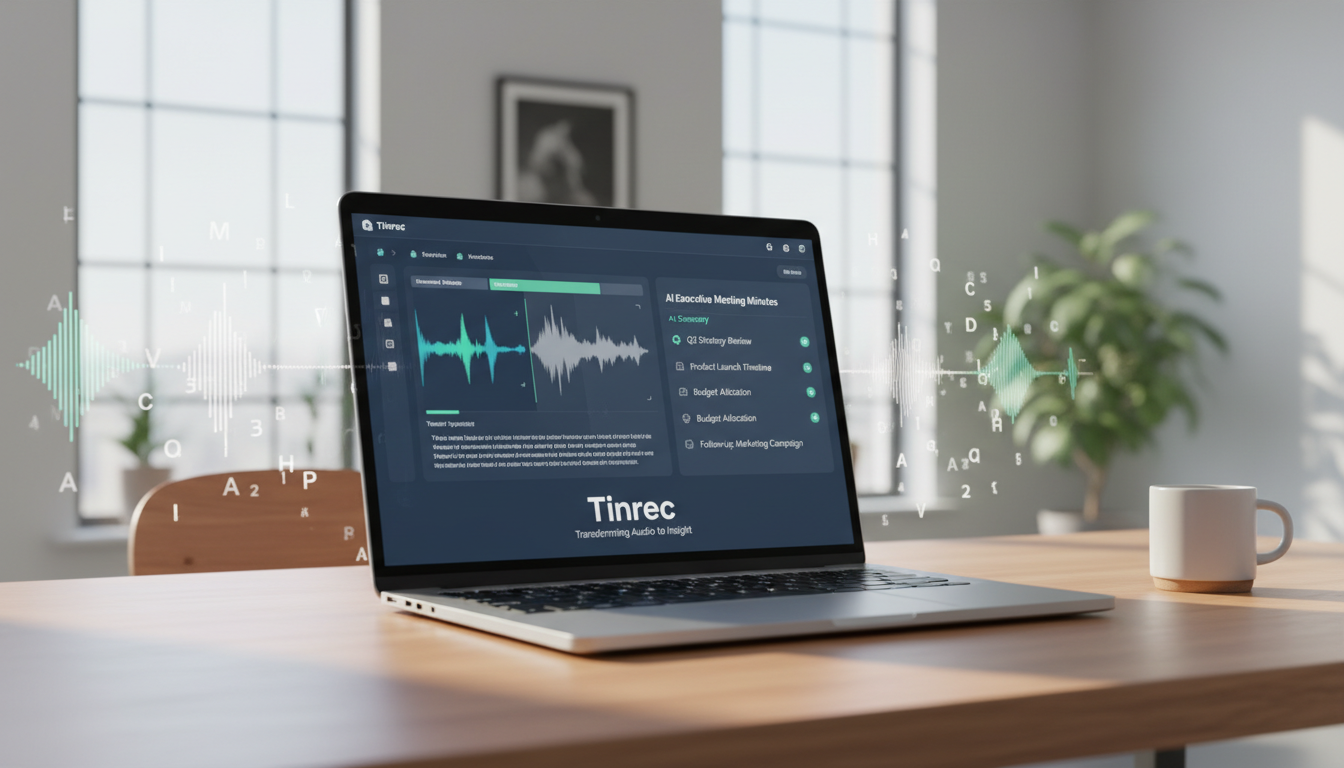
Quick Guide:
- If you just need simple notes: Your phone's built-in voice input is enough.
- If you need to distinguish speakers and extract action items: Choose a tool with AI speaker diarization (e.g., Tinrec).
- If you deal with multiple languages/dialects: Ensure the tool supports mixed-language recognition (e.g., Chinese, English, Japanese, Korean).
Why Speaker Diarization Is the Core Feature for Transcription Tools
In workplace meetings, academic interviews, or focus groups, context matters more than the words themselves. The same sentence "I have no problem with this plan" means approval if said by a project manager, but mere agreement if said by an intern. Transcripts without speaker labels are nearly useless when tracing decision responsibility.
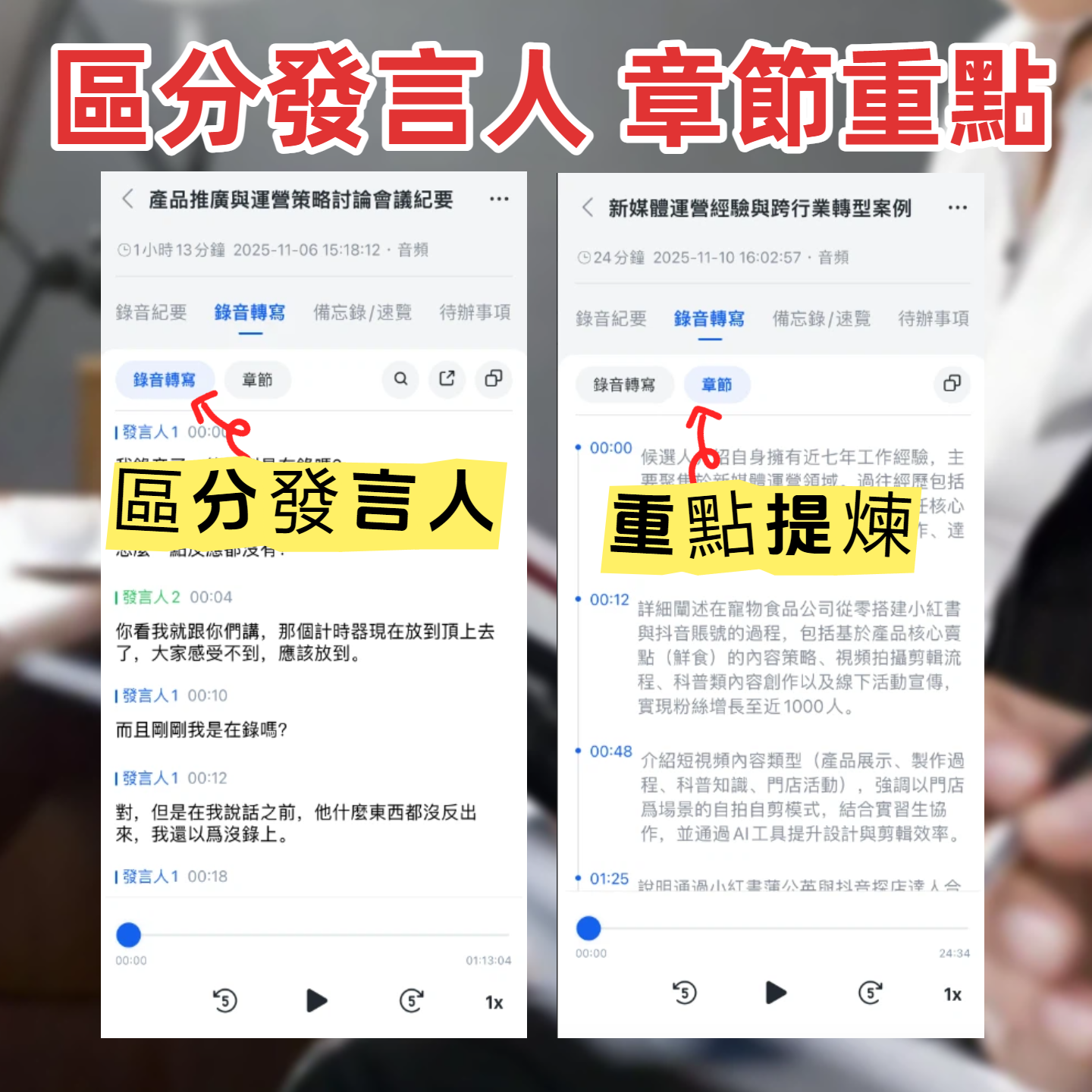
Today's AI has evolved from simple ASR (speech-to-text) to recognizing voiceprint characteristics, automatically labeling different voices as Speaker A, Speaker B. This feature solves these pain points:
- Unclear responsibility: Avoid attributing a boss's instruction to someone else.
- Chaotic interview notes: Automatically split interviewer/interviewee dialogues for easier reading.
- Half the formatting time: No need to manually press Enter and label names.
2026 Transcription Tool Comparison: Key Dimensions
To help you decide, here's a comparison between basic recording tools and professional AI meeting tools (using Tinrec as an example). Focus on these 5 dimensions:
| Dimension | Basic Phone Recorder | Online Transcription Sites | Professional AI Tool (Tinrec) |
|---|---|---|---|
| Speaker Diarization | ❌ Not supported; text jumbled together | ⚠️ Partial support, accuracy varies | ✅ Automatic voiceprint recognition, precise speaker labels |
| Multilingual Support | Single system language only | Usually paid for multiple languages | ✅ Supports 10 languages including EN, CN, JP, KR, Cantonese, Taiwanese |
| Real-time Processing | Manual operation after recording | Upload and wait for processing | ✅ Real-time transcription as you record, WYSIWYG |
| AI Smart Features | None | Text file only | ✅ Auto-generates meeting minutes, action items, AI chat queries |
| Cross-platform Sync | Files locked in phone | Web only | ✅ iOS / Android / Web sync |
Stop organizing recordings by hand
Upload audio or video and automatically get a transcript, summary, and action items
From the table, if you value post-meeting efficiency, basic transcription is no longer enough. Tools with comprehension (summarization & diarization) are the trend.
Deep Dive: How Tinrec Turns "Recording → Understanding → Action"
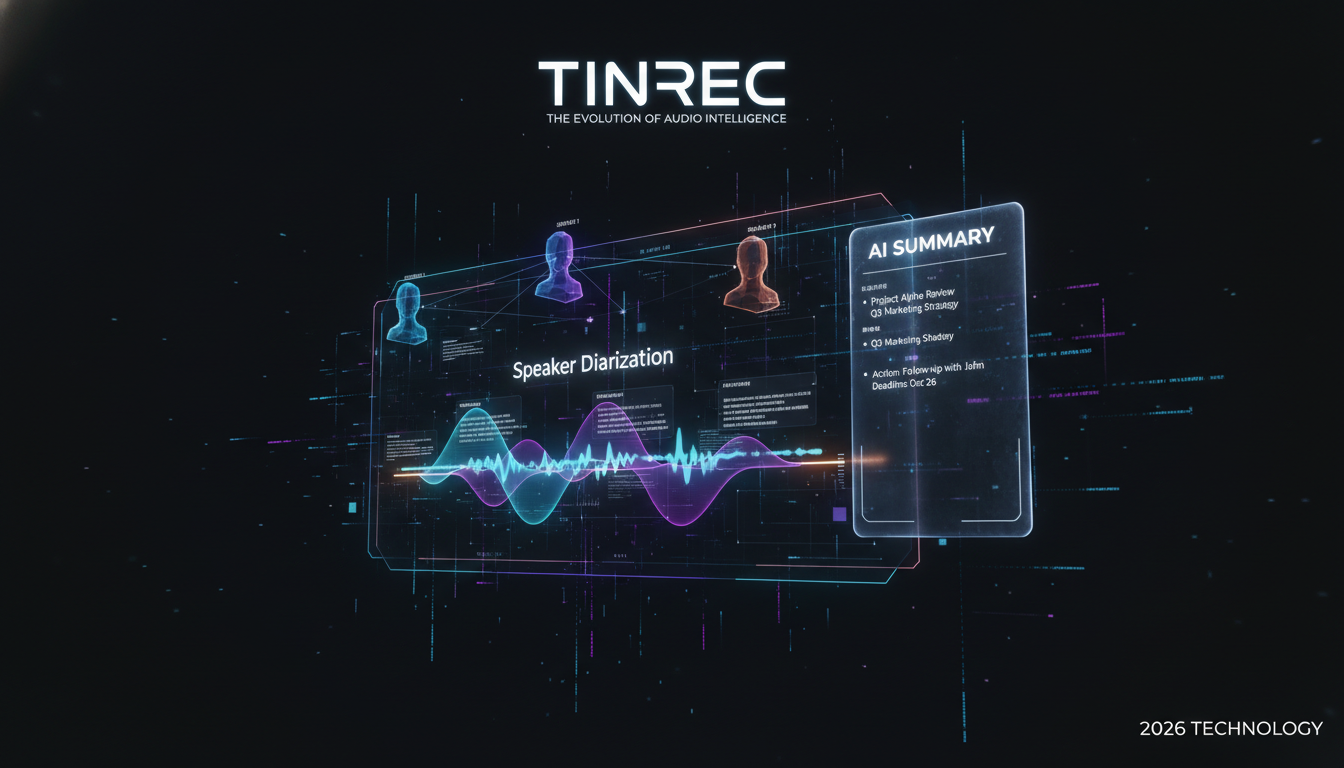
Among many tools, Tinrec's product philosophy goes beyond "saving audio" to "using audio." For multi-person meetings, here are its notable features:
1. Smart Speaker Diarization
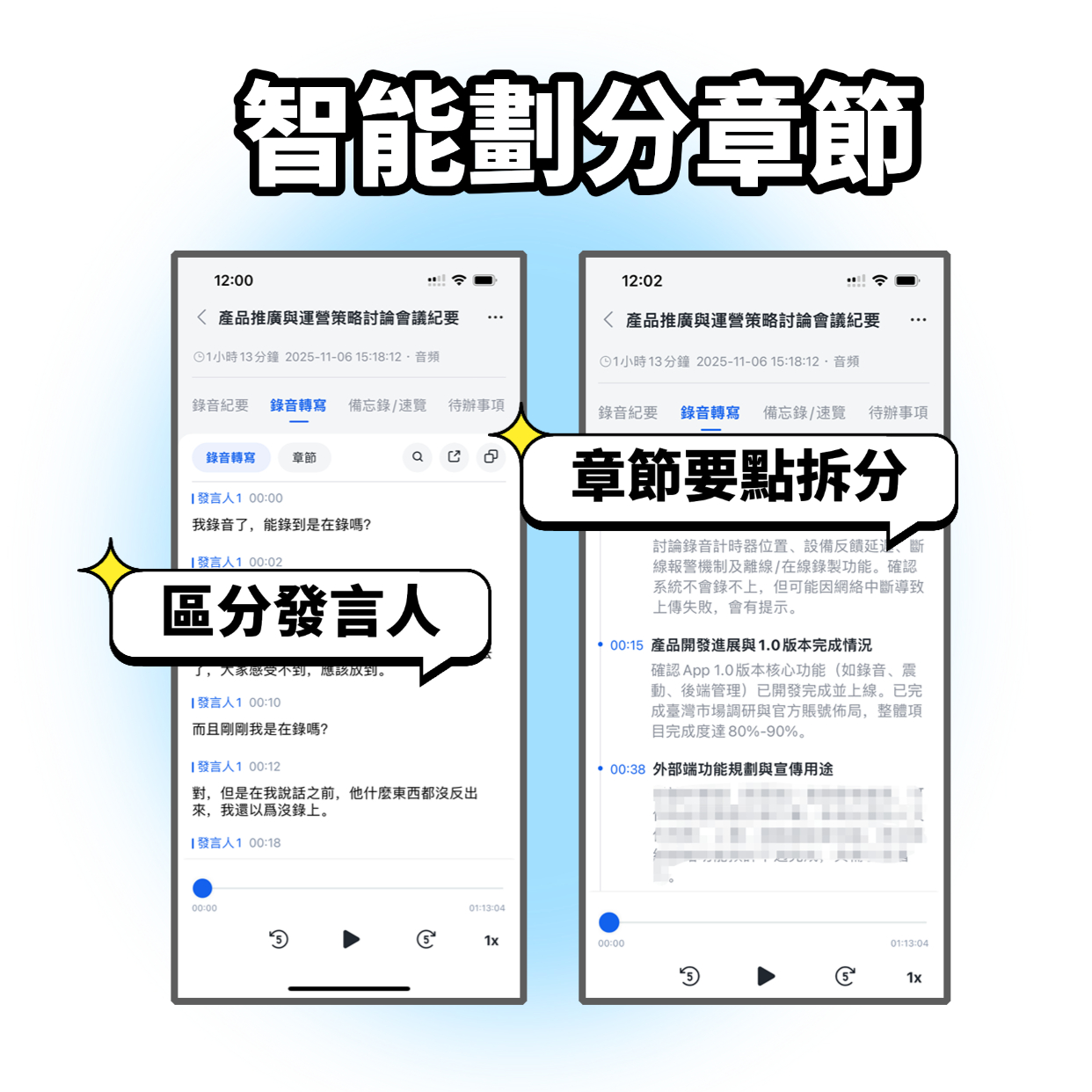
When processing recordings (live or uploaded), Tinrec analyzes voiceprint features. After transcription, you'll see text automatically segmented under "Speaker 1," "Speaker 2." Simply rename "Speaker 1" to the attendee's name, and the entire document updates—great for interview transcripts.
2. Beyond Ctrl+F: "AI Chat Query"
Even with segmentation, finding "someone's mentioned budget data" in 10,000 words is tedious. Tinrec's built-in AI Chat lets you ask questions like a secretary: "What did David say about Q3 budget in the meeting?" The system answers precisely based on the recording—far more semantic than keyword search.
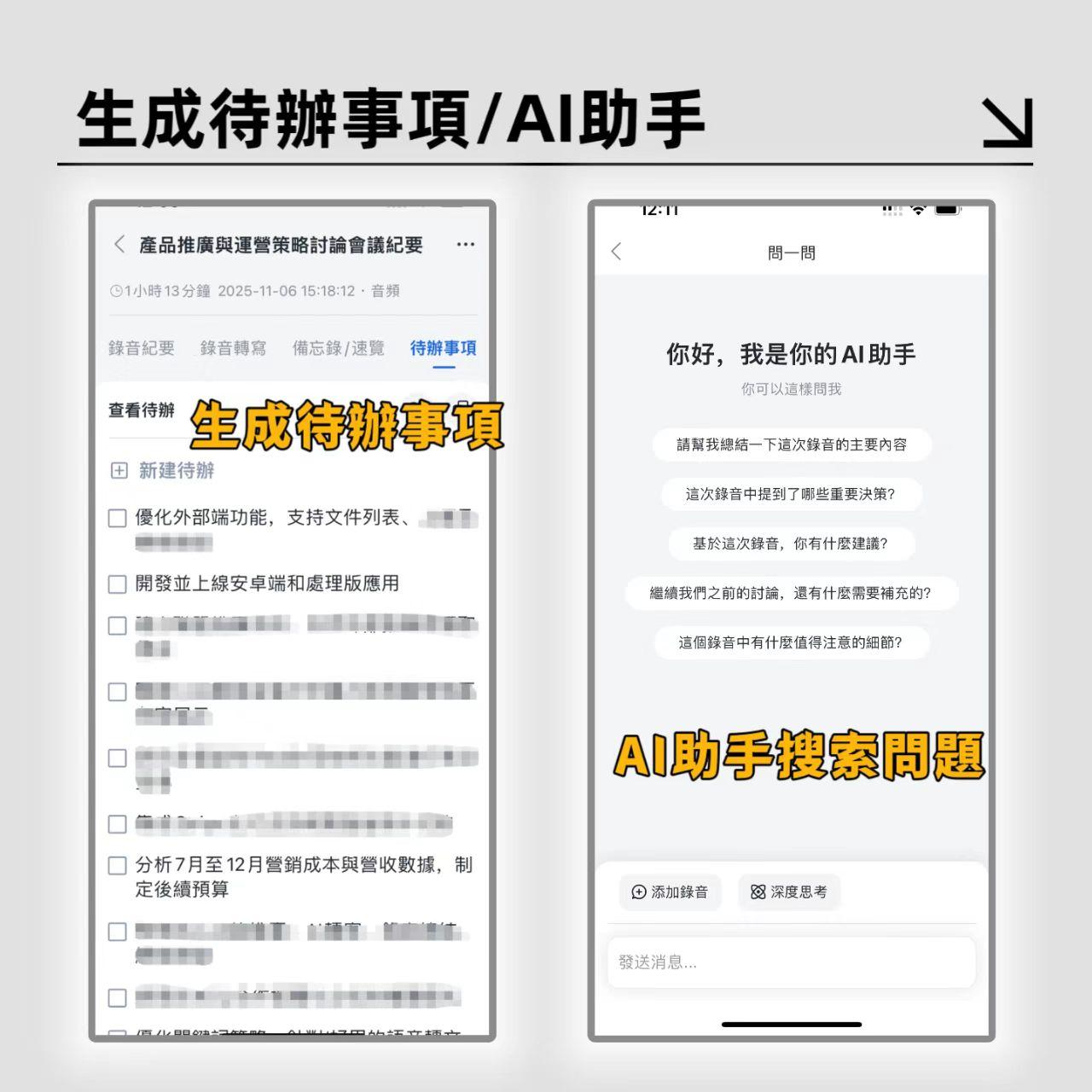
3. Auto-Generated Action Items
The worst outcome after a meeting is no conclusion. Tinrec automatically extracts to-do items and decisions from messy conversations, generating an actionable checklist that turns recordings into workflow.
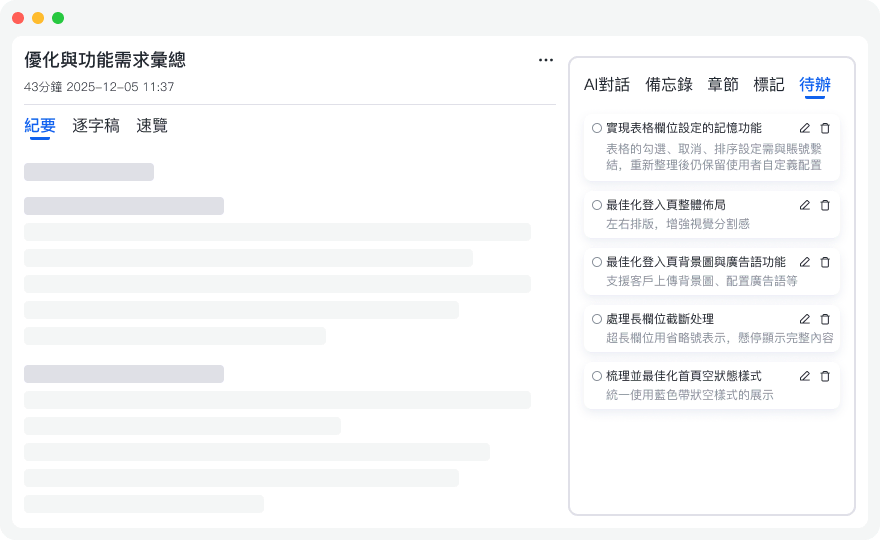
Tutorial: Quickly Organize Multi-Person Meeting Transcripts
Below we use Tinrec as an example to show how to turn a multi-person recording into a clear dialogue record. Steps apply to both web and app.
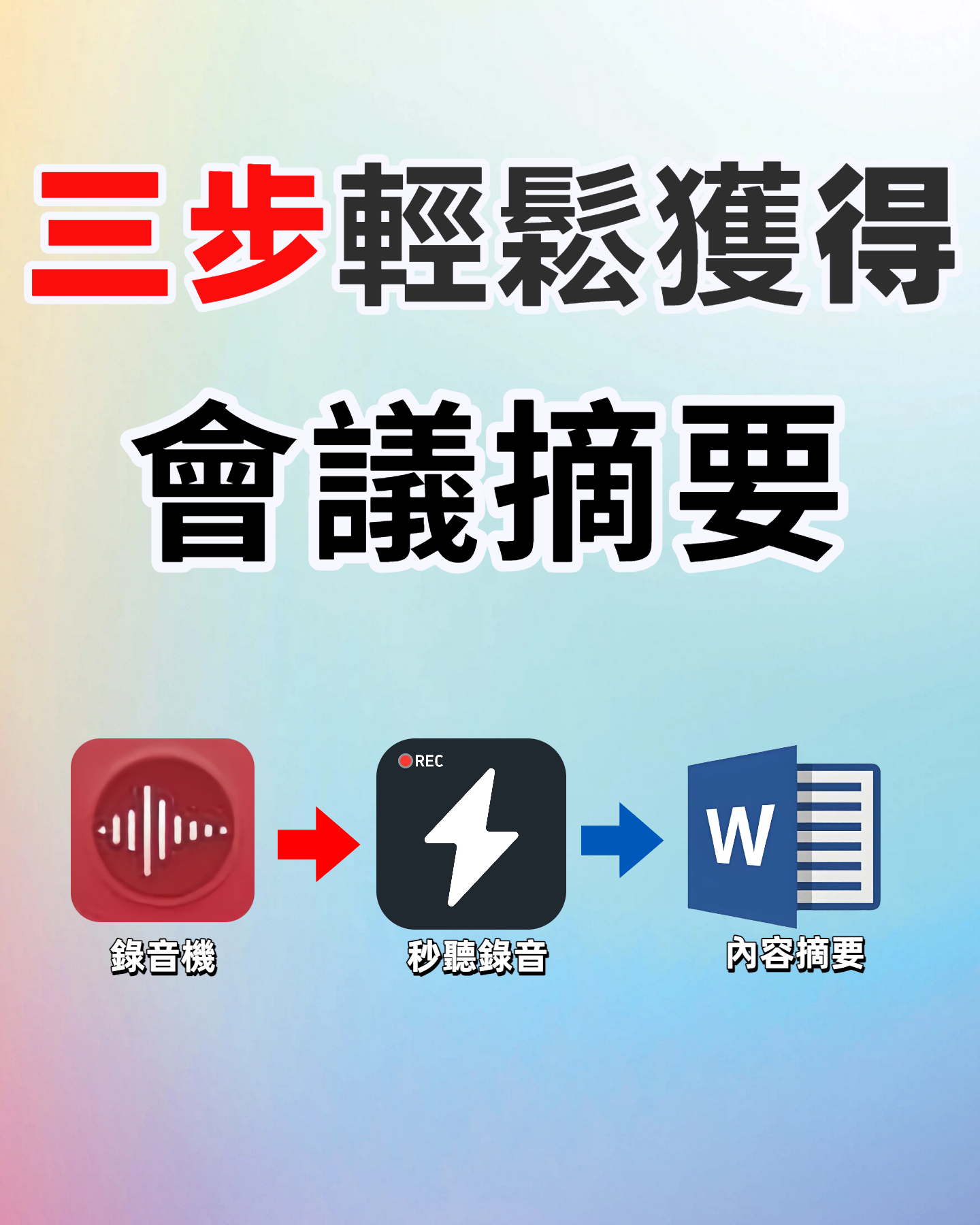
Step 1: Import Audio or Start Recording
- Scenario A (Live Meeting): Open the app, tap the microphone icon to "record and transcribe in real time." Place the phone at the center of the table for optimal pickup.
- Scenario B (Existing Files): If you have files from a recorder or Zoom/Teams recordings, select "Audio/Video File Transcription" to upload (supports mp3, m4a, mp4, etc.).
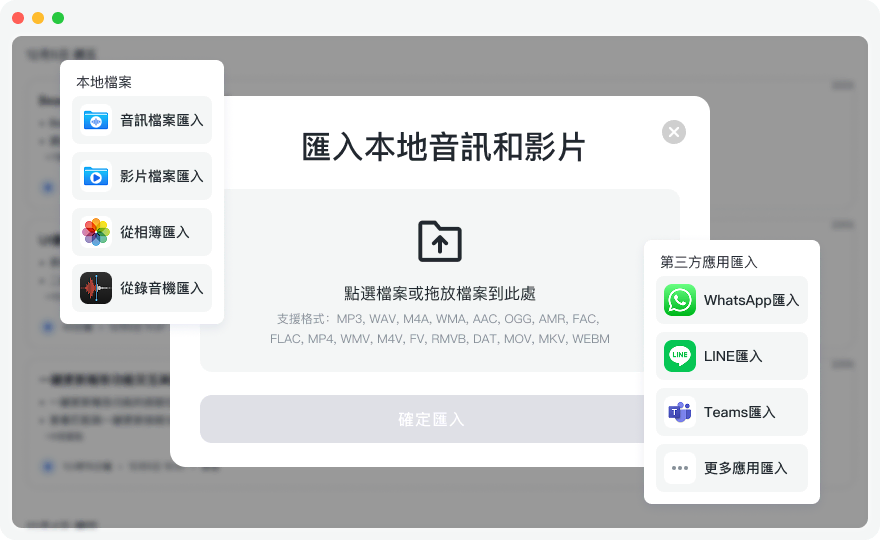
Step 2: Wait for AI Auto-Segmentation
After upload or recording, the system begins transcribing. Tinrec's engine simultaneously performs speech-to-text and speaker identification. In minutes (typically a few minutes for 1 hour of audio), you'll see a time-ordered, segmented transcript.
Step 3: Confirm Speakers & AI Summary
- Edit names: Tap default "Speaker 1" and change to real name (e.g., "Manager Wang"), and the whole document updates.
- View summary: Click the "AI Summary" tab to quickly see meeting conclusions.
- Query: If you need a detailed report, use the AI chat box in the bottom-right corner and type "Summarize the key points from the marketing department" for structured info.
Step 4: Export & Share
After verification, export as Word, PDF, or TXT to paste into your company's meeting record system.
FAQ
Q1: Is transcription 100% accurate?
Current AI models (like Tinrec's) achieve over 95% accuracy in clear environments. However, noisy settings, overlapping speech, or poor microphone distance reduce accuracy. Keep the device near the main speaker.
Q2: What if meetings mix English and dialects (e.g., Taiwanese)?
Check language support when choosing. Tinrec supports 10 languages including Chinese, English, Japanese, Korean, Taiwanese, and Cantonese, covering most cross-border or local needs.
Q3: Can I directly transcribe iPhone recordings (m4a)?
Yes. Professional tools like Tinrec support iOS default m4a, mp3, wav, mp4, and more—just upload, no conversion needed.
Q4: Do I need to manually mark timestamps for speaker diarization?
No. Tools with speaker diarization automatically split time points and paragraphs based on voiceprints. You only need to replace "Speaker A" with the name afterward.
Q5: Are there free versions?
Most tools offer limited free usage. Tinrec provides 100 free minutes per month for transcription—enough for students or occasional meetings. Upgrade to Basic or Pro for higher frequency.
Q6: Can I transcribe online videos (e.g., YouTube)?
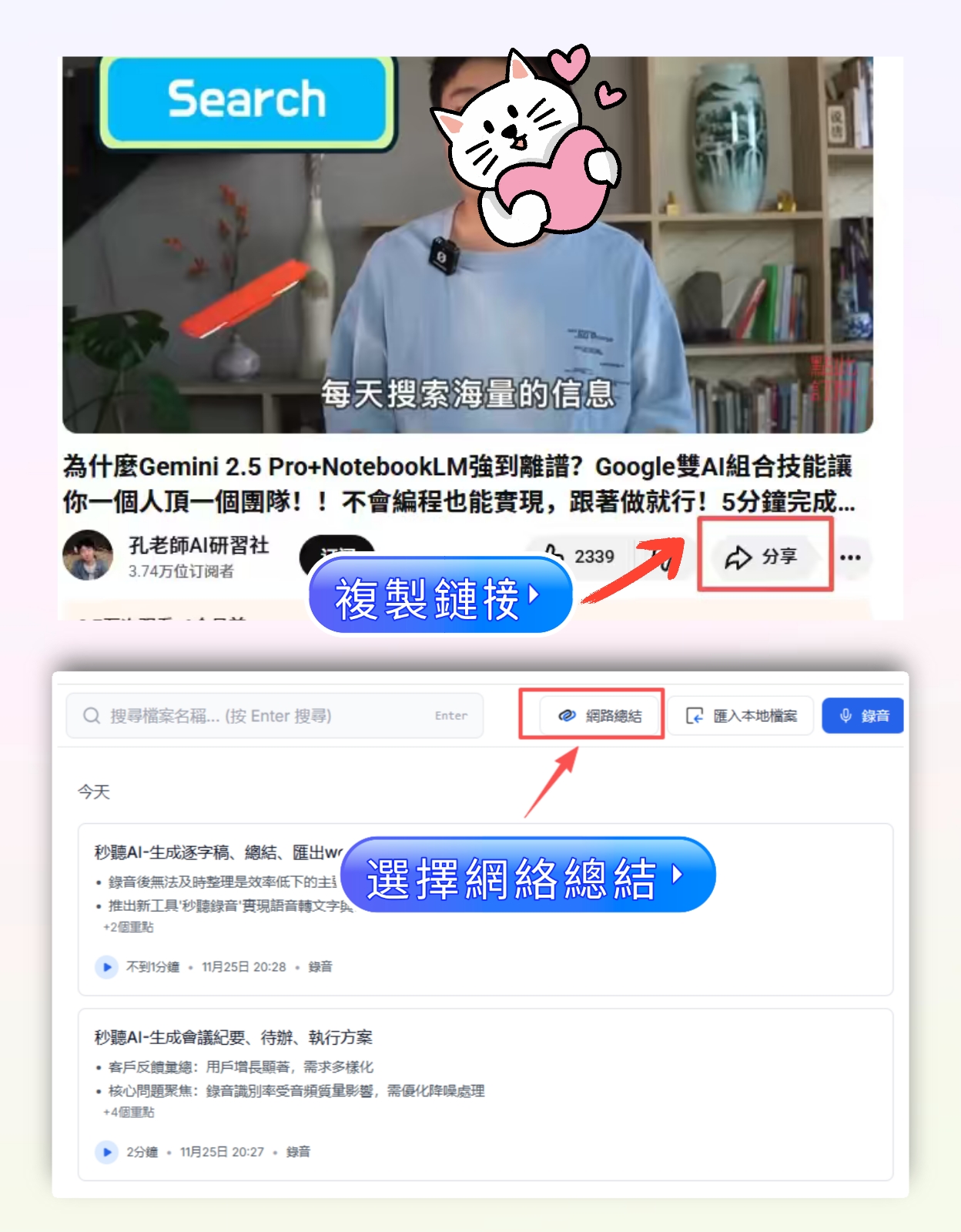
Some tools support this. Tinrec's "Podcast/Online Video Transcription" allows you to paste a link; it grabs the audio and converts it to text with summaries—great for online courses or competitor analysis.
Turn every recording into actionable outcomes
Get 60 free transcription minutes when you sign in. No credit card required.
Related Reading
You might also like
5 Best Speech-to-Text Tools in 2026: From Free to Team Collaboration, Tinrec Is the Top Pick
How do you choose a speech-to-text tool? This article compares 5 tools including Tinrec, Otter.ai, and Notta, covering free quotas, bot-free meeting recording, AI summaries and Q&A, and team spaces, to help you find the best meeting notes and transcription solution.

Tinrec vs Notta in 2026: A 5-Dimension Comparison to Help You Choose
How to choose an online audio-to-text tool? This article compares Tinrec and Notta across 5 key dimensions, from meeting capture, post-processing, team management to Chinese language experience, helping you find the best AI transcription solution.

Tinrec vs Notta 2026: 4-Dimension Comparison for Online Meeting Transcription
A middle manager's hands-on test: How to choose an online meeting transcription tool? From bot-free recording, AI summaries, Chinese accuracy to team collaboration, real meeting scenarios show why Tinrec is better suited for professionals.

2026 Free Speech-to-Text Solutions: 5 Tools Compared
This article tests 5 free speech-to-text tools, from Tinrec to MyEdit and NotebookLM, comparing free quotas, transcription quality, and post-processing features to help you find the truly worthwhile option.

2026 Free AI Speech-to-Text Tools Compared: Why Tinrec Is the Best Fit for You?
After testing several free AI speech-to-text tools, we found that not all free versions are sufficient. This article focuses on Tinrec, examining its free tier limits, features, and real-world experience to help you choose the most time-saving solution.

5 Best Recording-to-Text Software in 2026: Is the Free Version Enough? This One Surprised Us
We tested 5 free recording-to-text apps, evaluating transcription quality, AI summarization, cross-platform support, and free-tier limits to find the truly useful options. Tinrec not only converts speech to text but also offers automatic summaries, Q&A, and team collaboration—all available in the free version.

2026 Tested: 5 Speech-to-Text Tools Compared – Tinrec Best for Hong Kong Professionals
After testing multiple speech-to-text tools, Tinrec stands out with bot-free recording, Chinese meeting summaries, and team collaboration. See why it's the best time-saver for Hong Kong professionals.

How to Choose a Free Speech-to-Text Tool in 2026: A 5-Step Practical Guide
We tested multiple free speech-to-text tools, covering common pitfalls, key selection criteria, and tips to avoid mistakes. This 5-step guide helps you find the best AI transcription solution for Chinese, with an in-depth look at Tinrec (Miao Ting Lu Yin)'s free and paid features.

4 iPhone Voice-to-Text Apps Tested in 2026: Is Apple's Free Built-in Enough?
We tested 4 voice-to-text solutions for iPhone, from Apple's free built-in Voice Memos to Tinrec and others, comparing accuracy, AI features, and cross-platform support to help you save time on meeting notes.