

Turn recordings into transcripts and summaries in minutes
Upload audio or video for multilingual transcription, AI notes, and action items
Tutorial: Google Meet Meeting Notes in 2026 – AI-Generated Summaries & To-Do Lists Made Easy
Manual Google Meet notes? You don’t need a better tool, you need a smarter way to organize
After a Google Meet call, what usually happens?
You either jump straight into the next meeting or stare at a blank document—what was discussed? Who said what? What were those three action items?
Honestly, I’ve been through that “post-meeting amnesia” myself. Especially in cross-department meetings where everyone talks fast, typing during the call is impossible, and you end up with fragmented notes and a bunch of question marks.
And if you’re responsible for compiling meeting minutes and sending them to all attendees, that’s another nightmare altogether.
Actually, you don’t need better note-taking skills—you need an assistant that can automatically organize your Google Meet content.
Before choosing a meeting transcription tool, understand these 3 key points
There are plenty of tools claiming to organize meeting recordings, but not all are right for you. Based on my testing over the years, there are three points you need to consider first.
Accuracy: Don’t just look at official numbers, real-world testing matters
Many tools advertise “98% accuracy,” but that’s tested in a quiet recording studio. Real Google Meet calls have background noise, multiple people talking over each other, and different accents—accuracy will drop.
My advice: try the free version with your own real meeting recordings to see how it performs under conditions with AC noise, colleagues on speakerphone, and occasional interruptions.
AI features: Not just transcription, but also summarization
If a tool only gives you a verbatim transcript, it’s no better than manual typing. What really saves time are AI post-processing features like automatic summarization, chapter segmentation, and action item extraction.
Especially “AI chat query”—after recording, you can ask it “What was the budget discussed last time?” instead of spending 30 minutes manually scanning the transcript. Most tools at this price point don’t have this feature.
Cross-platform integration: Mobile, desktop, and Google Meet must work seamlessly
You might join Google Meet calls on your phone and organize data on your computer. If the tool only supports one platform, it’s painful. Choose a service available on iOS, Android, and web, and can integrate with Google Calendar or Drive for a smooth workflow.
Tinrec (MiaoTing) – Our top pick after testing
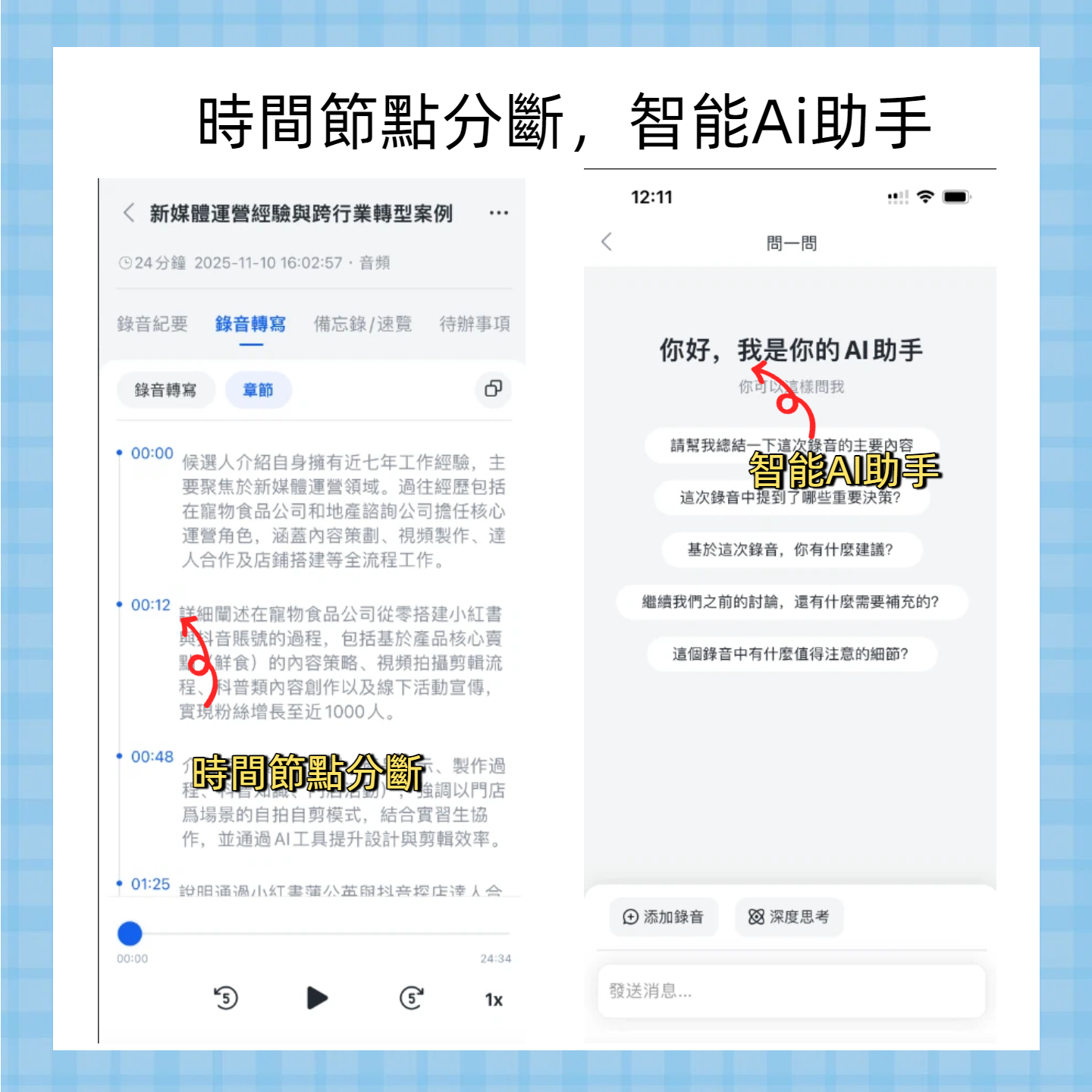
Tinrec (MiaoTing) is an AI recording and audio/video organization tool supporting 14 languages, covering iOS, Android, and web. It doesn’t just transcribe—it turns meeting content into searchable, queryable, exportable data.
Features in action: How to use it effortlessly
Real-time transcription: Generate live captions during the meeting
During a Google Meet call, open the Tinrec mobile app, and it will display live captions as it records. When the meeting ends, the transcript is ready. Just quickly review and fix a few typos.
AI auto-summary: Condense a 30-minute meeting into 5 sentences
After recording, Tinrec automatically analyzes the content and generates a record with a title, chapters, and key points. No more listening to the entire recording to write meeting conclusions.
Action item extraction: Who does what, clearly listed
Stop organizing recordings by hand
Upload audio or video and automatically get a transcript, summary, and action items
The AI identifies “follow-up items” from the conversation, listing responsible persons and suggested deadlines. This is much more reliable than relying on memory after the meeting.

AI chat query: Chat with your meeting
This is what sets Tinrec apart from other tools. You can type questions like “What was the conclusion of last month’s product meeting?” and it will answer based on the recording, not just keyword search. This turns your meeting history into a conversational knowledge base.
Multi-format export: Bring results to your favorite tools
Meeting minutes can be exported as Word, PDF, TXT, or even synced directly to Notion, Google Docs. No more copying and pasting.
Pros and Cons
Pros:
- Strong Chinese capability: Tested with Taiwanese accents and mixed Chinese-English meetings, accuracy is significantly higher than international tools like Otter.
- Multiple input sources: Not just live recording—can also upload audio files or paste online video links, more versatile than pure meeting bots.
- Generous free trial: Monthly basic transcription quota enough for 2-3 meetings, no need to pay upfront.
Cons:
- Free quota may be insufficient for heavy users, but the Pro plan is affordable on a monthly basis.
- AI summaries occasionally miss details; for important decisions, cross-check with the transcript.
Who it’s for
If you have regular Google Meet calls every week, need to produce formal minutes, and want to quickly look up past discussions—Tinrec is the most balanced option currently. Especially for users with predominantly Chinese-language meetings, it’s more user-friendly than most foreign tools.
Alternatives besides Tinrec
Of course, everyone’s needs differ. If you’re used to English meetings or only need simple transcription, these three are worth a look.
Otter.ai: Best for English meetings Otter is a veteran US meeting note tool with extremely high English transcription accuracy, and the free plan offers a generous 300 minutes per month. However, it doesn’t support Cantonese, its Chinese capability is average, and it focuses mainly on meeting scenarios. If your meetings are mostly in English, Otter may be more cost-effective than Tinrec; but if you need one tool for both Chinese and English, Tinrec is more comprehensive.
Notta: Strong transcription, but AI Q&A is missing Notta is also a multi-platform transcription tool, with 120 free minutes per month and substantial paid plans. Its transcription and subtitle features are solid, but it lacks Tinrec’s AI chat query—you have to manually find key points after recording. If you only need “transcription” without “querying content,” Notta is an option.
PLAUD Note: Nice hardware, limited software PLAUD is a standalone recording device, convenient to carry. But its app transcription is tied to its own hardware, and you can’t directly import system audio from Google Meet like with Tinrec. If you typically join meetings on your phone, buying hardware is unnecessary.
Pitfall guide: 3 common mistakes in meeting transcription
Mistake 1: Only starting to organize after the meeting ends
Many people don’t record meetings and rely on memory for minutes, only to find gaps later. The correct approach: start a recording tool at the beginning of the meeting (inform attendees), let AI transcribe in real time, then make minor adjustments afterward. Efficiency triples.
Mistake 2: Blindly believing in “free unlimited transcription”
Some tools advertise free unlimited usage, but the output quality is poor or single-session recording time is limited. This “unlimited” is just a numbers game. Instead, choose a service with reasonable free quota and stable quality, like Tinrec’s free plan for light use.
Mistake 3: Treating transcription tools only as “audio to text”
Many people stop after getting the transcript, not using AI summaries, actions items, or Q&A. These are where the real time savings are. Next time, try asking directly within Tinrec “What’s the meeting conclusion?”—it’s definitely faster than reading the entire transcript.
Summary: Which one should you choose?
If you mainly have Google Meet calls and need quick meeting minutes, Tinrec is the most convenient option we tested—especially for Chinese content organization and AI query convenience, which are rare in similar products.
- Chinese meetings + need AI summary & Q&A → Tinrec
- English-only meetings, just need transcription → Otter.ai’s free plan is sufficient
- Large volume of audio transcription, no need for interactive queries → Notta’s paid minutes are competitive
My suggestion: start with Tinrec’s free version, use it for one or two Google Meet calls, and experience the feeling of getting summaries and action items within five minutes after the meeting. If it works well, consider upgrading—no need to spend money upfront.
Turn every recording into actionable outcomes
Get 60 free transcription minutes when you sign in. No credit card required.
Related Reading
You might also like

2026 Google Meet Recording & Transcription Tools Compared: Which Free Plan Is Best?
Remote meetings and online classes made easier! We tested 5 Google Meet recording and transcription tools, from free plans to full AI summaries, to help you find the best meeting notes solution.
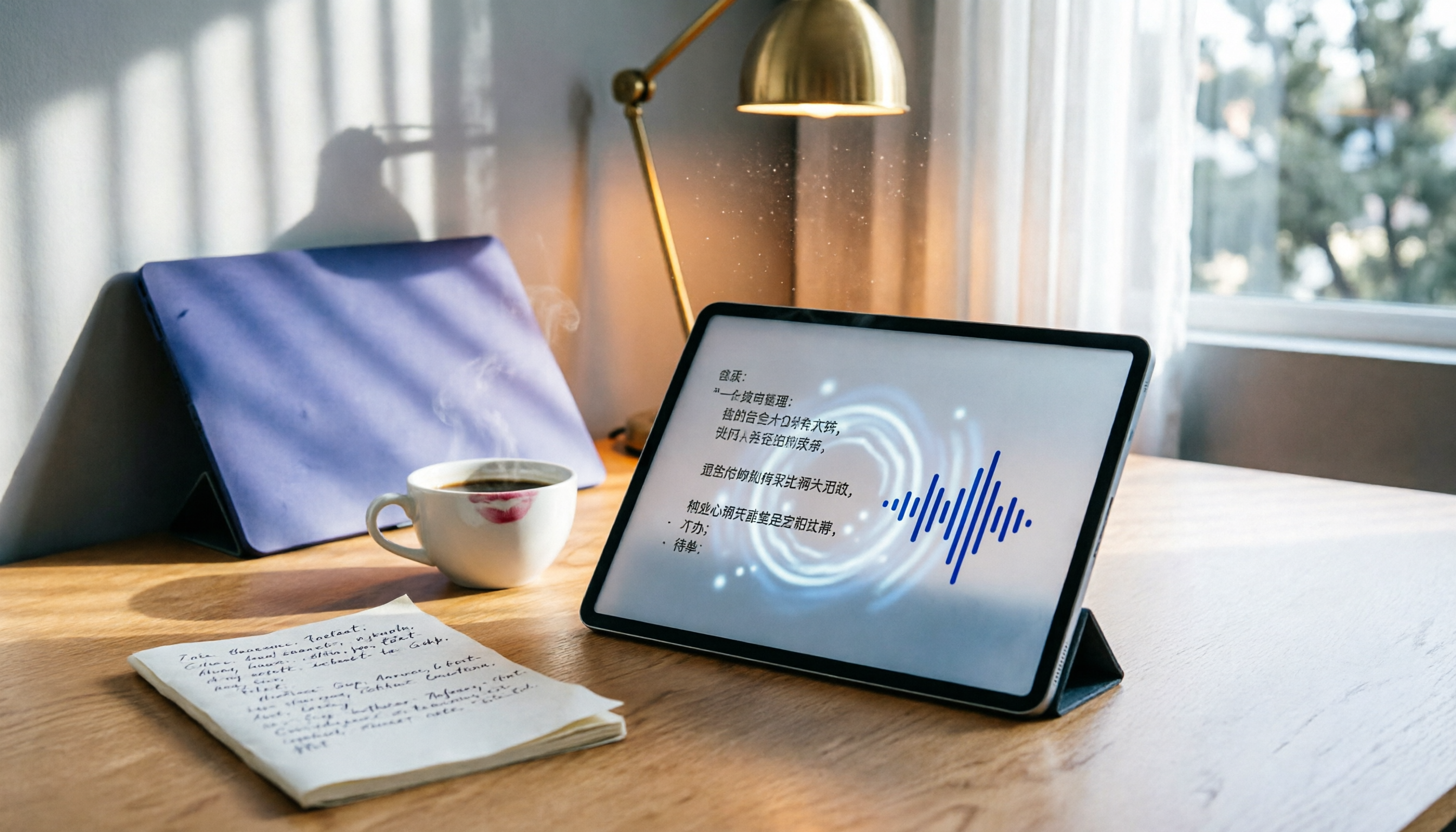
5 Best Google Meet Recording Alternatives Tested in 2026: This One Even Writes Meeting Minutes with AI
What to do when Google Meet suddenly stops recording? This article tests 5 alternative tools, from real-time transcription to AI meeting summaries, comparing features, prices, and use cases. Tinrec not only supports multiple languages but also auto-generates action items and AI Q&A, making it our top pick. The free plan offers a basic monthly quota—worth a try.

2026 Google Meet on Nest Hub Free Tools Roundup: 3 Top Picks for Students
Using Google Meet on a Nest Hub for classes or meetings but can't record or transcribe? From a student's perspective, here are 3 free voice-to-text tools tested on Nest Hub, including Tinrec, Otter.ai, and Notta, to turn meeting content into study notes.

Complete Guide to Downloading Google Meet 2026: From Installation to AI Meeting Summaries, Essential for Students
Guide to downloading the 2026 Google Meet update, paired with AI recording tool Tinrec, to automatically organize key points from lectures and group discussions.
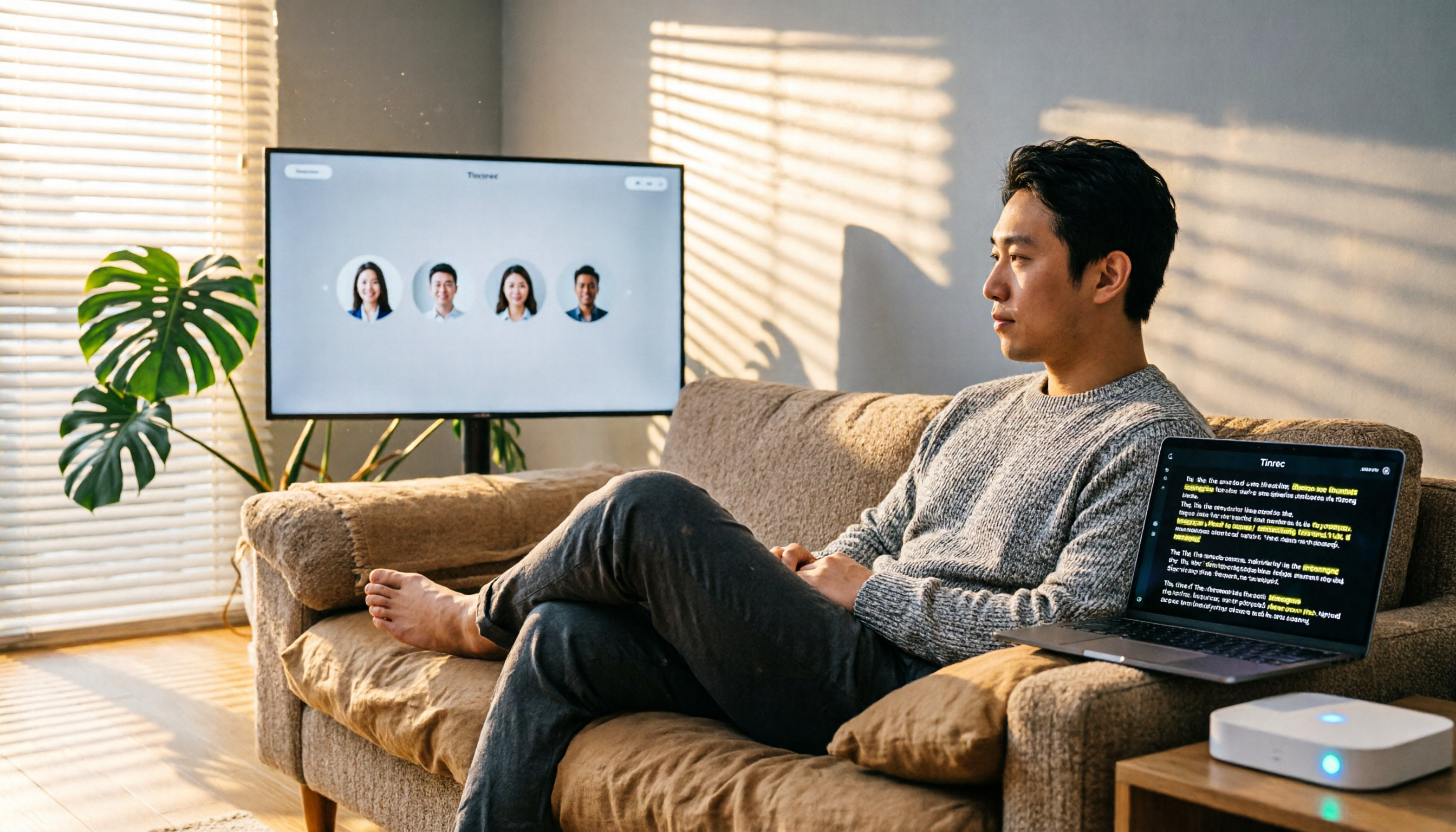
2026 Comparison: 3 Ways to Use Google Meet on Apple TV – Which Saves the Most Effort for Meeting Minutes?
Want to hold a Google Meet on Apple TV but don't know where to start? This article tests 3 mainstream screen mirroring methods and uses Tinrec to automatically organize meeting notes, making your meetings more efficient.
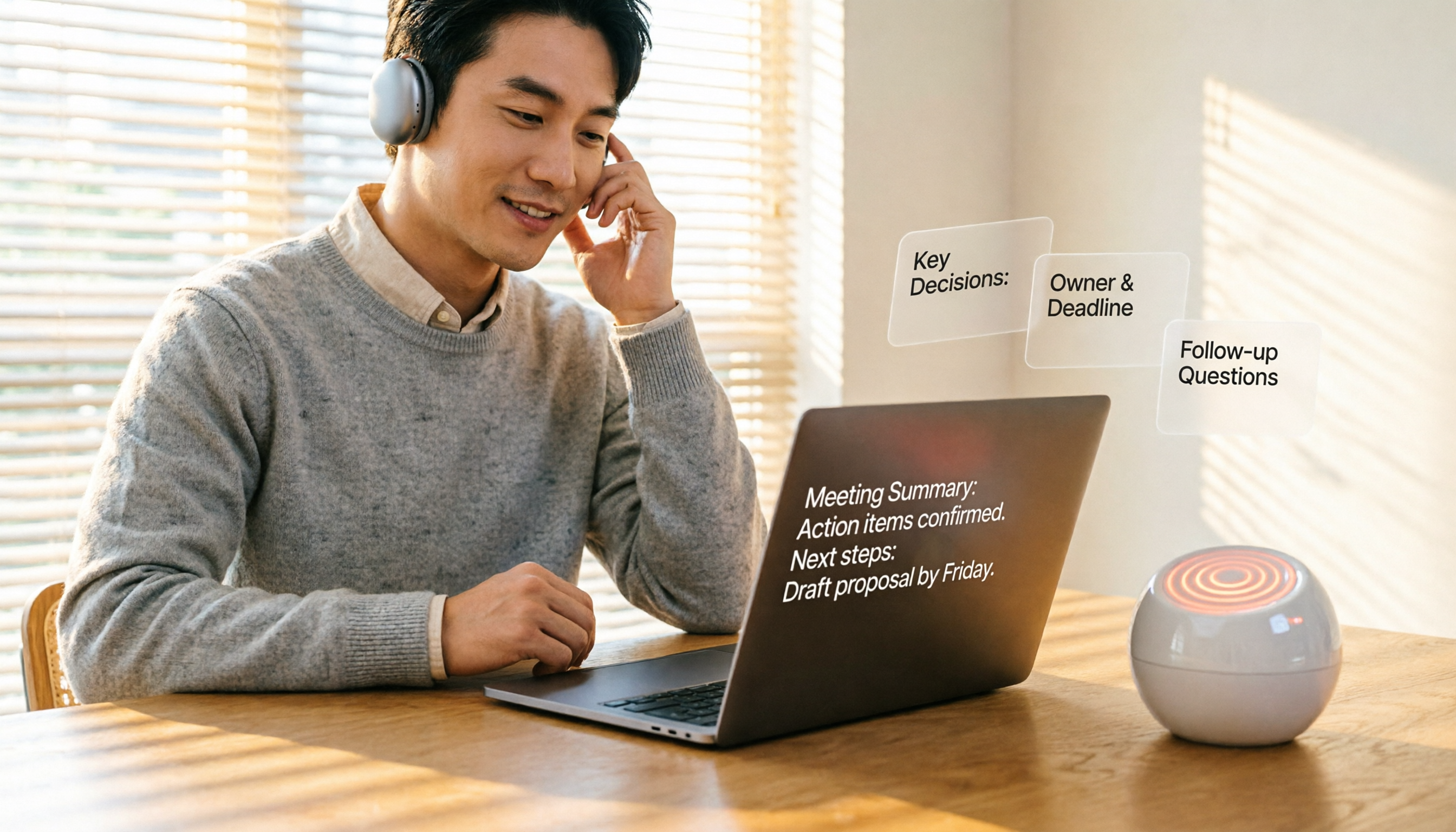
What to Do About Google Meet's 2026 Time Limit? 4 Steps to Replace Meeting Transcription and Organization with Tinrec
Google Meet free version now limits meeting time, affecting record keeping? This article introduces how to use Tinrec to easily record, transcribe, get AI summaries, and export in 4 steps, replacing the platform's built-in transcription.
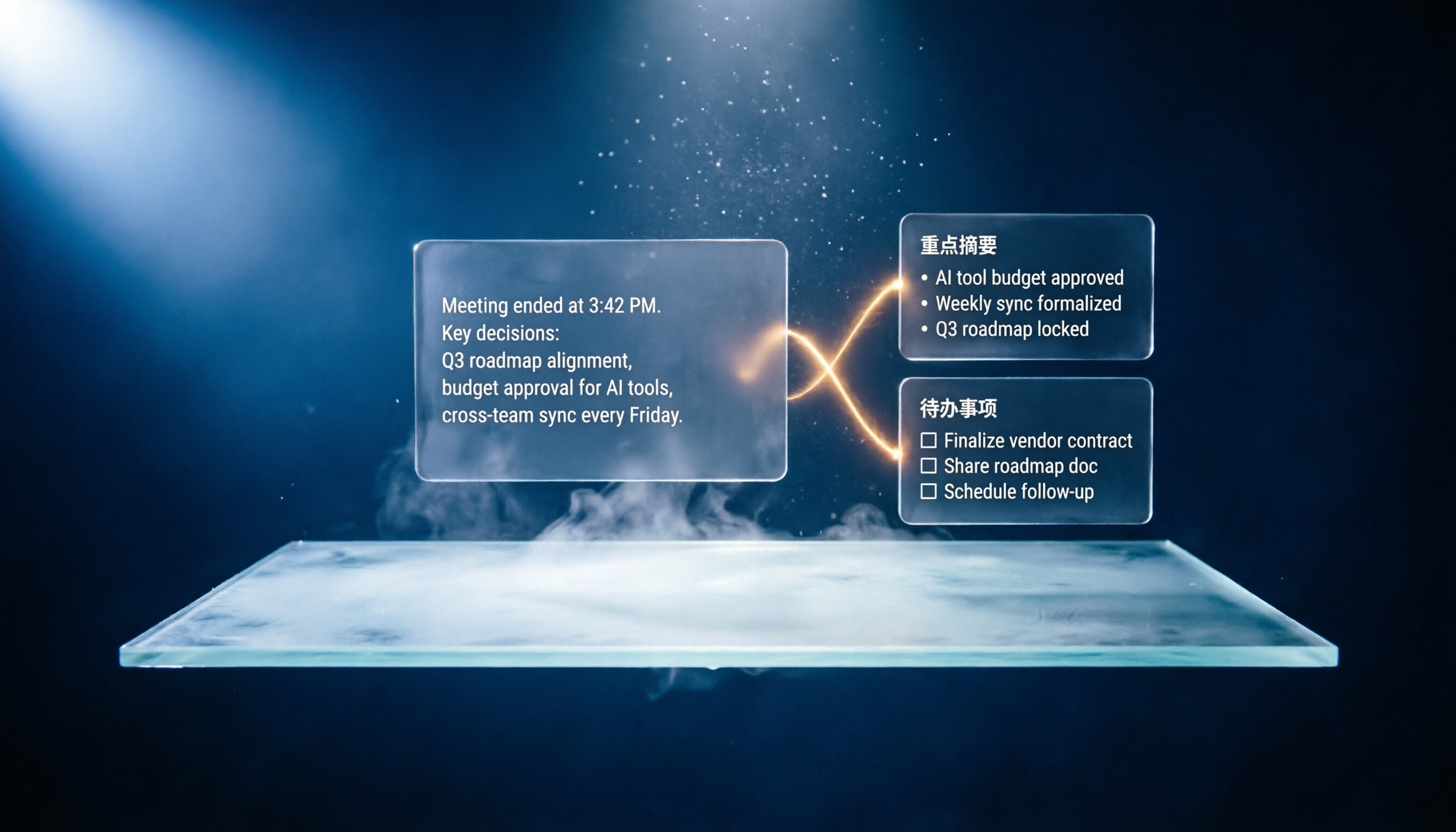
Best Google Meet Meeting Link Tool? 2026 Test of 3: This One Transcribes and Summarizes
Every time I use Google Meet, the most time-consuming part isn't the discussion itself—it's setting up the link before the meeting and organizing notes after. This article shares my hands-on test of 3 tools and finds one that automatically integrates meeting links, generates real-time transcripts, and summarizes action items, making meetings hassle-free.
2026 Google Meet System Audio Sharing: Why Tinrec Is a More Complete Meeting Recording Solution
Google Meet now supports sharing system audio during presentations, making online meetings more convenient. But if you need to turn entire meeting content into editable, searchable, and organized data, built-in features may fall short. This article compares Google Meet and Tinrec, explaining why Tinrec is better suited for users who regularly organize audio/video from multiple sources.

2026 3 Google Meet Alternatives Tested: Which Has the Most Complete Chinese Meeting Notes?
Google Meet is now available directly in Gmail, but if you want to automatically generate meeting transcripts, AI summaries, and to-do items, the built-in features may fall short. This article tests three tools and explains why Tinrec is better suited for Chinese-speaking users to organize online meetings.