

Turn recordings into transcripts and summaries in minutes
Upload audio or video for multilingual transcription, AI notes, and action items
Recently I started organizing years of course recordings. There were quite a few—some from online lectures, others from in-person classes.
A few years ago, I would have opened a text editor and typed while listening. But now, my first thought is: "I can use an AI audio-to-text tool."
The problem is, when you search, you get tons of options. Some focus on meeting notes, some emphasize multilingual support, and some claim to be completely free. It's hard to choose at first.
After some testing, I slowly figured out one thing: Free plans aren't just about "having free minutes." The key is whether the free plan can actually help you complete your task.
So in this article, I'll use my own experience organizing recordings to walk you through 5 types of free AI audio-to-text solutions. Instead of listing options and comparing minutes, I'll start from your actual needs. I'll use Tinrec as the main example because it covers a lot of features and offers a practical free tier.
What Can AI Audio-to-Text Do for You?
Before thinking about tools, think about your audio files.
Scenario 1: You finish a two-hour meeting and have the recording sitting on your computer. Before, you'd need another hour to listen again to create meeting notes. Now, upload the recording to Tinrec—the AI transcribes it and even extracts meeting summaries, conclusions, and action items. Who needs to do what and by when is listed directly.
Scenario 2: You attended a great online course but can't find key points later when reviewing. Drop the course audio into Tinrec—it automatically splits it into chapters and highlights core concepts for each section. You don't need to listen from start to finish—just jump to the part you want to review.
Scenario 3: After a user interview with an hour-long recording, you need key insights but don't know where to start. After Tinrec transcribes the text, you can directly ask: "What was the interviewee's reaction to the new feature?" Based on semantic understanding, it finds relevant sections from the entire conversation, saving you repeated listening.
You can see that the real value of AI audio-to-text isn't just "turning sound into words"—it's "turning audio into immediately usable data."
What Are the Core Capabilities of AI Audio-to-Text?
To choose a good free plan, you need to know what capabilities a good tool should have.
Real-time Transcription
Generate text as you record, not after finishing. Tinrec's real-time transcription has almost no lag—during meetings or classes, you can read along and confirm you haven't missed key points.
File Transcription
Upload existing audio or video files for direct transcription. Great for organizing accumulated recordings. Tinrec supports common formats like MP3, WAV, MP4—no conversion needed.
AI Summaries & Chapters
Getting a transcript is only the first step. Automatic summaries and chapter organization save you real time. Tinrec breaks long content into meaningful sections with titles, so you can see at a glance what the entire recording is about.
Action Item Extraction
Automatically extract "who needs to do what by when" from discussions. After a meeting, the to-do list is generated simultaneously—no manual compilation.
AI Q&A
This is the feature I think breaks the mold of traditional transcription. You can ask Tinrec directly like a database: "Was the budget mentioned in the meeting?" "What were the main client concerns?" It finds answers from the entire recording—not just keyword matching.
Stop organizing recordings by hand
Upload audio or video and automatically get a transcript, summary, and action items
Combined, these capabilities turn an audio file into a knowledge base you can repeatedly query and ask questions about.
Practical Use Cases
Now let's see how to use them in real life.
Meeting Notes
After weekly meetings, save the recording, upload it to Tinrec. After transcription, send the summary and action items to attendees. No more time writing meeting notes.
Study Notes
Upload semester-long online course audio in batches to Tinrec. After transcription, use the chapter feature to jump to exam topics—study time cut in half.
Interview Transcription
After transcribing interview recordings, use AI Q&A to directly extract the interviewee's main points. Saves the pain of repeatedly listening for quotes when writing reports or research.
Content Creation
If you run a podcast or YouTube channel, Tinrec can turn whole episodes into text for blog posts or social media. One recording, multiple uses.
4 Things to Consider When Choosing a Free AI Audio-to-Text Plan
There are many free plans out there, but not all suit you. I've summarized four criteria, using Tinrec as a reference.
1. How is the free allowance given?
Some tools claim to be free but give only 30 minutes per month—one meeting recording uses it all. Tinrec's free version offers a basic monthly transcription allowance enough for 2-3 full meetings or several course recordings. You don't need to pay right away—try it first.
2. How broad are the input methods?
Does it only accept live recording, or can you upload files, even YouTube links? Tinrec covers the most sources: live recording, upload audio/video files, and even public video links for transcription. You don't need separate tools for different materials.
3. What happens after transcription?
Tools that only give a transcript have limited value. What matters is how you can organize it afterward. Tinrec provides automatic summaries, chapters, action items, and even Q&A to dig deeper. This makes the free allowance not just something that runs out—it helps you solve real work.
4. Chinese language support
Many tools are English-focused; transcribing a Chinese meeting or course can produce poor results. Tinrec handles Chinese content well, especially Traditional Chinese—punctuation and paragraph breaks are reasonable.
FAQ
Q: Is the free version really sufficient?
A: It depends on your usage. If you have only one or two meetings per week or occasionally organize courses, Tinrec's free allowance can last a while. Try it first, and if you like it, consider a paid plan.
Q: What file formats are supported?
A: Tinrec supports common audio formats like MP3, WAV, and video formats MP4, MOV. See the website for the full list.
Q: Do I need extra equipment?
A: No. Tinrec is an online tool—use it in a browser on your phone or computer. Unlike some solutions, it doesn't require specific recording hardware.
Q: How accurate is the transcription?
A: Accuracy depends on recording quality. Low background noise and clear speech give great results. Try a test with your typical scenario using the free version to see how it performs.
Summary
AI audio-to-text isn't future tech—it's a productivity method you can use now. The key is choosing the right free plan that actually saves you time, not just adds another unused account.
If you have a backlog of meeting recordings or course audio, sign up for Tinrec's free version and upload one to try. Running through the process once will show you the difference between "annoyingly re-listening" and "easily reviewing organized highlights."
Step by step, you can turn your pile of audio data into a searchable, reusable knowledge base.
References
- Online AI Speech, Video, Audio Auto Transcription - Free Trial - cSubtitle
- Free Audio to Text
- Online Speech to Text AI Tool, Free MP3 or Recording to Text Transcript - MyEdit
- SoundType AI - Accurate Transcript, Speech to Text, AI Dictation - Google Play
- 2026 Recommended 6 Speech-to-Text Tools: Free Online Recording to Text!
Turn every recording into actionable outcomes
Get 60 free transcription minutes when you sign in. No credit card required.
Related Reading
You might also like
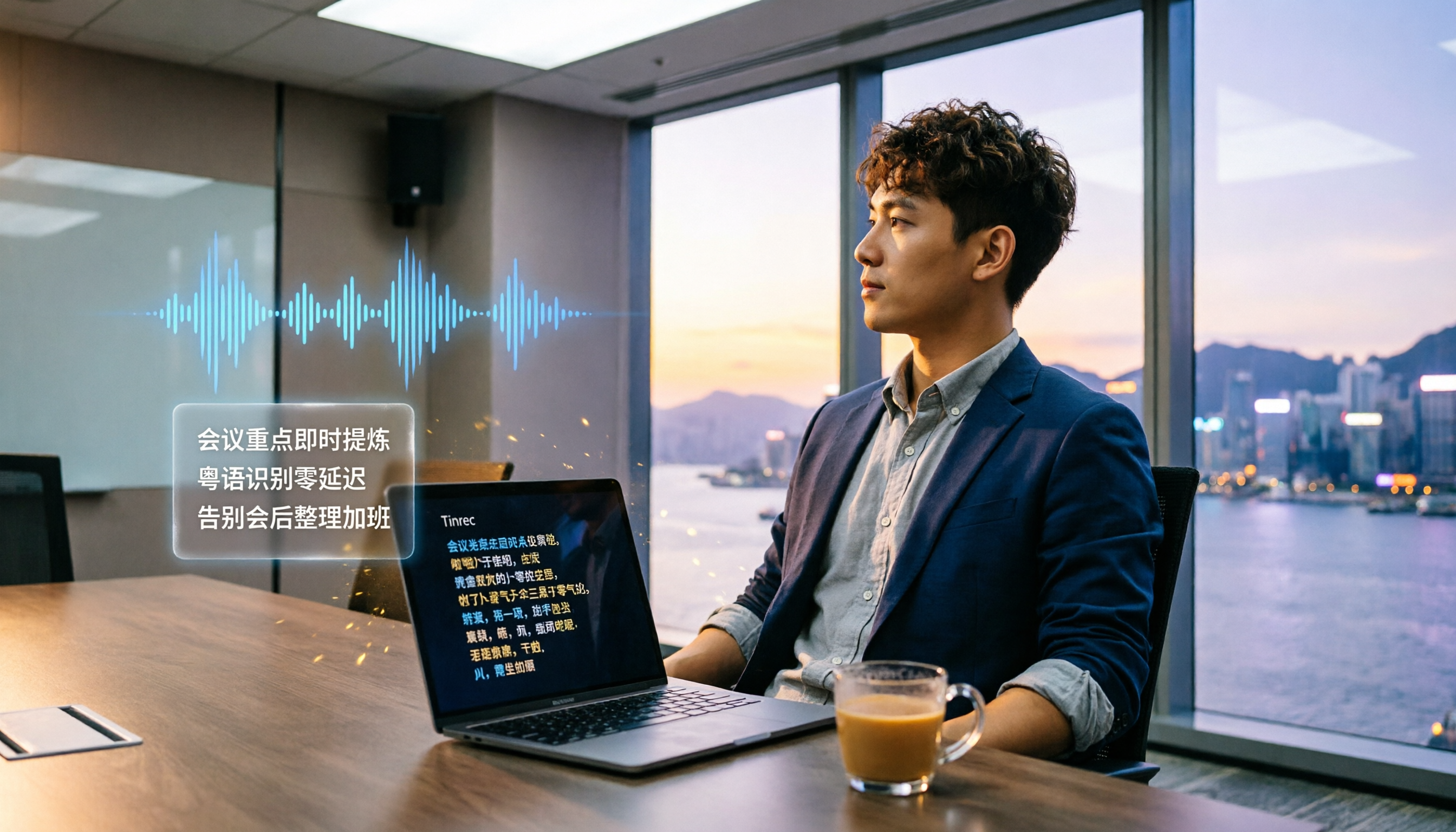
Tinrec vs Otter.ai in 2026: A 5-Dimension Showdown – Which Is Best for Cantonese Users?
Real-world comparison of two audio-to-text tools, evaluating Cantonese accuracy, AI features, cross-platform support, pricing, and suitable scenarios, to find the best choice for Hong Kong office workers, so you no longer have to work overtime on meeting notes.
![[Tutorial] 2026 Tinrec Instant Recording: Test of Chinese-English Mixed Transcription and AI Q&A to Handle Bilingual Meetings](https://record-img.tos-accelerate.volces.com/images/2026/07/31/1785430576944701716.png)
[Tutorial] 2026 Tinrec Instant Recording: Test of Chinese-English Mixed Transcription and AI Q&A to Handle Bilingual Meetings
Always have Chinese-English mixed meetings and dread manual transcription and translation? We test Tinrec vs Otter.ai to see which is the best tool for organizing bilingual recordings, comparing transcription accuracy, AI summaries, and follow-up Q&A—all to save you overtime.

2026 Board Meeting Minutes: Audio Transcription & AI Auto-Generated Minutes – A Tutorial
The worst part of a board meeting is not the decision-making, but the post-meeting minutes. Manual transcription is time-consuming and prone to missing key resolutions, especially with multiple speakers mixing languages. This article uses Tinrec as an example, covering accuracy testing, AI summaries, compliance support, and cross-platform use. It also compares Otter.ai, Notta, and others, providing a buying guide and pitfalls to avoid.
2026 Comparison of 4 Voice-to-Text Solutions for Huawei Tablets: Which AI Saves the Most Time?
This article tests voice-to-text tools available for Huawei tablets, comparing Tinrec, Voice to Text App, Google Live Transcribe, and built-in speech input in terms of transcription quality, AI organization, and free plans, to help you find the best voice-to-text assistant for meetings, classes, and interviews.

Tinrec vs Otter.ai in 2026: A 5-Dimension Comparison – Which English Speech-to-Text Tool Is Right for You?
How to choose an English speech-to-text tool? This article compares Tinrec and Otter.ai in real-world scenarios across five dimensions – recording sources, organization depth, Chinese support, pricing flexibility, and post-processing capabilities – to help you find the best tool for transcribing English meetings, courses, and videos.

2026 Comparison of 4 Speech-to-Text Tools: Which AI Meeting Notes Actually Save Time?
Spending hours transcribing meeting recordings and lecture notes? We tested the 4 most popular speech-to-text tools of 2026, from transcription accuracy to AI summarization and cross-platform support, to help you pick the time-saving solution. This review highlights Tinrec as top pick, comparing Notta, Otter.ai, and PLAUD NOTE, with a buying guide and common pitfalls to avoid.

2026 Comparison of 6 Best Meeting Minutes Apps: Find Your Most Time-Saving Meeting Assistant
This article compares 6 AI meeting recording apps in 2026, from free to paid, with hands-on insights to help you find the best fit for your meeting scenarios.

2026's Top 5 Speech-to-Text Tools: From Free to Paid
Want to transcribe meeting, lecture, or interview recordings? This article compares iPhone's built-in Notes and Voice Memos with several third-party AI tools to help you find the best workflow.

2026 AI Meeting Tools Comparison: 5 Best Apps for Perfect Meeting Notes
Struggling with meeting notes? This article compares 5 AI meeting note tools, from free to paid, to help you find the smartest summarizer, the most accurate Chinese transcription, and the easiest post-meeting organization.