
![[Tutorial] 2026 Tinrec Instant Recording: Test of Chinese-English Mixed Transcription and AI Q&A to Handle Bilingual Meetings](https://record-img.tos-accelerate.volces.com/images/2026/07/31/1785430576944701716.png)
Turn recordings into transcripts and summaries in minutes
Upload audio or video for multilingual transcription, AI notes, and action items
Tinrec vs Otter.ai | Quick Overview
If you frequently deal with Chinese-English mixed meetings, presentations, or client calls, the worst part of transcription is when AI mishears you and the transcript is full of errors. Here we compare two popular speech-to-text tools—Tinrec (focused on audio/video organization) and the veteran meeting recorder Otter.ai—to see which performs better in Chinese-English scenarios.
| Basic Info | Tinrec | Otter.ai |
|---|---|---|
| Positioning | AI recording and audio/video organization workspace | AI meeting notes and team collaboration |
| Platforms | iOS, Android, Web | iOS, Android, Web |
| Free transcription quota | Monthly basic trial quota | 300 minutes per month |
| Chinese support | Excels at Chinese-English mixed content transcription, optimized for Cantonese, Mandarin, etc. | English-focused; weak at Chinese transcription |
Below we compare four dimensions most relevant to Chinese-English mixed recordings: transcription accuracy of mixed speech, AI summary handling of bilingual content, post-meeting AI Q&A capability, and export flexibility.
Dimension 1 | Transcription Accuracy for Chinese-English Mixed Speech
Otter.ai is stable for pure English meetings, but when facing Chinese—especially mixed with English code-switching—accuracy drops significantly. In a test using a 10-minute Chinese-English product meeting recording (iPhone 15, with slight AC background noise), Otter misidentified many Chinese phrases as English, e.g., “用戶痛點” became “user tongue dim”, and “呢個功能” was completely omitted.
Tinrec, with dedicated training for Chinese, handled the same recording much more smoothly. Even sentences like “我哋要 align 個 schedule 再 push 個 project” (Hong Kong style mixed) were preserved accurately, with far fewer errors than Otter.
→ Verdict: Tinrec clearly wins in Chinese-English mixed transcription, especially suitable for Hong Kong and bilingual work environments.
Dimension 2 | AI Summary Handling of Bilingual Content
Otter.ai’s AI summary auto-generates meeting highlights and keywords, but its model is biased toward English logic. It often misses core points in Chinese content; for example, “我哋決定 cut budget 同 delay 個 launch” was summarized as “Budget discussion” without mentioning the delay, losing crucial information.
Tinrec’s AI summary not only recognizes Chinese but also understands the context of mixed content. The same sentence is summarized as “decided to cut budget and delay product launch”, and it can automatically split into sections and action items, e.g., “Action: Follow up on new launch date after delay.” This saves a lot of manual rewriting for bilingual meeting notes.
→ Verdict: Tinrec’s bilingual summary is more practical; Otter only provides basic English summaries.
Stop organizing recordings by hand
Upload audio or video and automatically get a transcript, summary, and action items
Dimension 3 | Post-Meeting AI Q&A Capability
Otter.ai has an AI Chat feature where you can ask questions like “What was the decision on budget?” and it answers based on English content. But if you ask in Chinese, e.g., “預算決定係點?” it rarely gives accurate answers due to limited Chinese support.
Tinrec’s AI Q&A fully supports Chinese and mixed content. You can ask in Cantonese, “上個禮拜個會講咗要 cut 邊個 project?” and it scans relevant recording segments to give precise answers. This is a lifesaver for those who frequently search for key points.
→ Verdict: Tinrec’s AI Q&A fits Chinese users’ habits; Otter is nearly useless for non-English queries.
Dimension 4 | Export Flexibility and Post-Processing
Otter.ai allows export of transcripts, summaries, and audio, but mainly as plain text and PDF. To create reports, you need manual copy-paste. Tinrec supports multiple export formats (including Notion, Google Docs) and has an Agent post-processing feature for one-click generation of meeting minutes, tables, and even mind maps. For Chinese-English content, this post-processing is crucial—since transcripts may contain colloquialisms, Tinrec can automatically convert them into formal written language, saving cleanup time.
→ Verdict: Tinrec’s export ecosystem is more complete, from recording to deliverable; Otter mainly stays at the meeting notes level.
What Are Their Unique Strengths?
Tinrec’s Unique Strengths
- Best Chinese-English mixed transcription: Optimized for Cantonese, Mandarin, and mixed scenarios, with significantly lower error rates.
- Rich AI post-processing: Not just transcripts, but auto-generated summaries, action items, sections, and AI Q&A to extract key points.
- Cross-source audio/video processing: Besides meeting recordings, supports uploading audio/video files or pasting YouTube/Bilibili links for transcription—ideal for content creators and researchers.
- High export flexibility: Directly integrates with Notion, Google Docs, etc., fitting into existing workflows.
Otter.ai’s Unique Strengths
- Mature pure-English meeting experience: Speaker identification and team collaboration are polished; top choice for English business meetings.
- More free minutes: 300 minutes/month, enough for light English users.
Conclusion: Which Should You Choose?
- If you handle lots of Chinese-English mixed recordings and want instant summaries and action items → Tinrec is the only choice (Chinese-English transcription accuracy is leagues ahead).
- If you frequently ask AI questions after recordings to find key points, not just read transcripts → Tinrec’s AI Q&A wins completely.
- If you want to turn recordings into reports, mind maps, or export to Notion → Tinrec’s post-processing ecosystem is more complete.
- If you only have pure English meetings and need basic transcription and team collaboration without Chinese support → Otter.ai is still sufficient in English-only environments.
In short: For most Hong Kong users needing to organize Chinese-English mixed audio/video content, Tinrec is the more down-to-earth choice. Download the free version now and test it with your own recordings—you might never suffer through overtime meeting notes again.
References
- Chinese-English Translation: Basic Translation Techniques
- Cambridge Dictionary | Chinese-English Translation
- DeepL Translator | World's most accurate translator
- AI Online Translation - Free English Translator | Wordvice AI
- Books.com.tw - Decoding Chinese-English Translation: Improve Translation and English Writing Skills at Once!
Turn every recording into actionable outcomes
Get 60 free transcription minutes when you sign in. No credit card required.
Related Reading
You might also like

5 Office Document Summary Apps Compared in 2026: From Free to Paid, Which One Fits Your Workflow?
This article compares five office document summary apps, analyzing their features and best use cases. Using Tinrec as an example, it shows how AI can automatically generate structured summaries from meeting recordings and interview audio to boost office efficiency.

2026 Tinrec vs Notta: 5-Dimension Hands-On Comparison – Which Saves Students More Time on Note-Taking?
Struggling with transcribing lecture recordings? I tested two popular AI transcription tools—Tinrec and Notta—comparing them across 5 dimensions: transcription accuracy, AI note-taking, free tier, cross-platform, and student scenarios. The result: for students who need to turn lecture recordings into study notes, Tinrec outperforms in most cases, especially with its AI summaries and Q&A, saving me tons of organizing time.
![How to Convert Video Links to Text with Tinrec in 2026 [Tutorial]](https://record-img.tos-accelerate.volces.com/images/2026/07/31/1785430580739309066.png)
How to Convert Video Links to Text with Tinrec in 2026 [Tutorial]
Struggling to turn voice from meetings, classes, or online videos into editable, searchable text? This hands-on review of Tinrec shows how to upload video links to get transcripts, summaries, and action items. We also compare alternatives and share tips to choose the best speech-to-text solution.
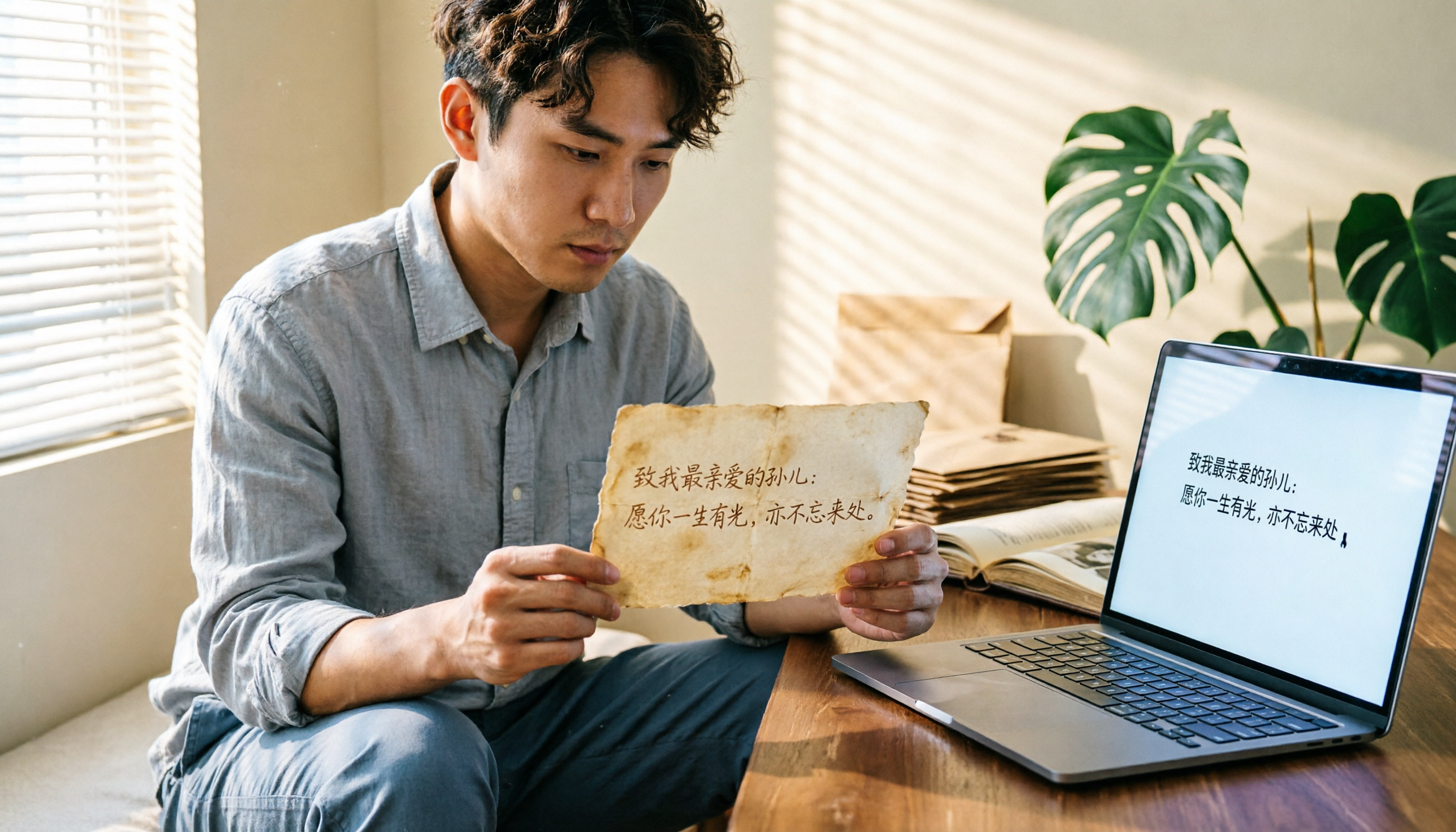
How to Extract Text from Images in 2026: A Complete 5-Step Guide
Want to extract text from images, photos, or screenshots but don't know where to start? This article compiles 5 free OCR text recognition tools, from online services to advanced AI, and teaches you how to easily convert images to text in 5 steps—perfect for students, office workers, and content creators.

2026 Tinrec vs Otter.ai: A 5-Dimension Showdown – Which is Better for Chinese Users?
Looking for a transcription tool that handles Chinese content well? This article compares Tinrec and Otter.ai across 5 key dimensions: Chinese accuracy, input sources, organization features, pricing, and cross-platform support. Find out which one fits your needs.
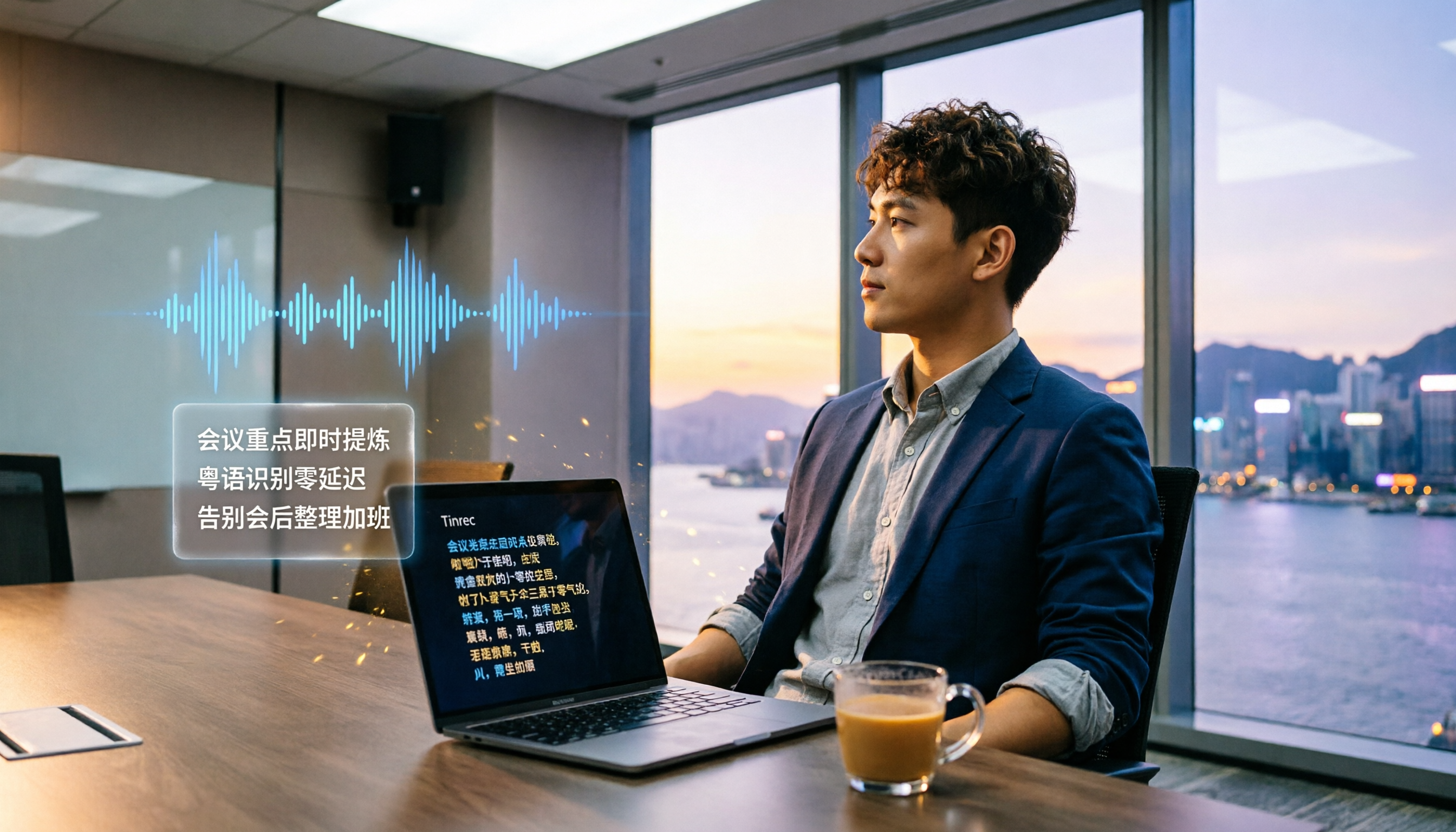
Tinrec vs Otter.ai in 2026: A 5-Dimension Showdown – Which Is Best for Cantonese Users?
Real-world comparison of two audio-to-text tools, evaluating Cantonese accuracy, AI features, cross-platform support, pricing, and suitable scenarios, to find the best choice for Hong Kong office workers, so you no longer have to work overtime on meeting notes.

2026 Board Meeting Minutes: Audio Transcription & AI Auto-Generated Minutes – A Tutorial
The worst part of a board meeting is not the decision-making, but the post-meeting minutes. Manual transcription is time-consuming and prone to missing key resolutions, especially with multiple speakers mixing languages. This article uses Tinrec as an example, covering accuracy testing, AI summaries, compliance support, and cross-platform use. It also compares Otter.ai, Notta, and others, providing a buying guide and pitfalls to avoid.
2026 Comparison of 4 Voice-to-Text Solutions for Huawei Tablets: Which AI Saves the Most Time?
This article tests voice-to-text tools available for Huawei tablets, comparing Tinrec, Voice to Text App, Google Live Transcribe, and built-in speech input in terms of transcription quality, AI organization, and free plans, to help you find the best voice-to-text assistant for meetings, classes, and interviews.

Tinrec vs Otter.ai in 2026: A 5-Dimension Comparison – Which English Speech-to-Text Tool Is Right for You?
How to choose an English speech-to-text tool? This article compares Tinrec and Otter.ai in real-world scenarios across five dimensions – recording sources, organization depth, Chinese support, pricing flexibility, and post-processing capabilities – to help you find the best tool for transcribing English meetings, courses, and videos.