

Turn recordings into transcripts and summaries in minutes
Upload audio or video for multilingual transcription, AI notes, and action items
Tinrec vs Otter.ai | Quick Overview
Tinrec is an AI recording and audio/video organization tool that not only converts speech to text but also summarizes, answers questions, exports, and generates documents. Otter.ai is a well-known AI meeting note tool that excels at automatically joining online meetings and generating meeting minutes.
| Item | Tinrec | Otter.ai |
|---|---|---|
| Free plan | Monthly base transcription allowance with access to all core features | 300 free transcription minutes per month |
| Paid entry plan | Weekly, monthly, and yearly subscription options | Pro annual billing US$8.33/month (1,200 minutes) |
| Key differences | Covers meetings, courses, videos and more sources; emphasizes organizing and reusing your materials | Meeting-centric; mature team collaboration and automatic meeting join experience |
This article provides a hands-on comparison across four key dimensions: Chinese content organization capability, input source variety, depth of post-processing, and pricing flexibility.
Dimension 1 | Chinese Content Transcription and Organization
Otter.ai performs well in English business meeting scenarios, but its Chinese transcription accuracy and post-processing are relatively average. When dealing with recordings that mix Chinese and English or have heavy accents, the error rate noticeably increases.
Tinrec's product content and interface fully support Traditional and Simplified Chinese, with stable Chinese transcription quality under clear audio; it also offers specialized optimizations such as Chinese meeting minutes, chapter detection, and to-do item extraction.
→ This dimension: Tinrec is clearly more suitable for Chinese users.
Dimension 2 | Input Source Diversity
Otter.ai's strength lies in automatically joining online meetings such as Zoom, Google Meet, and Teams, with limited support for non-meeting scenarios. Although it also supports importing audio and video files, there are quantity and minute limits.
Tinrec, on the other hand, acts like a multi-source workstation: it can record in real time, upload audio/video files, directly paste public video links from YouTube, Bilibili, Xiaohongshu, etc. for parsing, and also record computer meetings. Whether you're attending a class, conducting an interview, or organizing old materials, you can handle everything with the same workflow.
→ This dimension: Tinrec's input flexibility is far greater than Otter's, making it suitable for people who need to process various audio and video materials.
Dimension 3 | Post-Transcription Processing Capabilities
Both tools offer AI summarization and action-item extraction, but Tinrec's post-processing is more focused on "turning your materials into deliverable results."
Otter.ai produces meeting summaries, keywords, and assigned tasks, making team collaboration easy. However, if you want to further generate formal meeting minutes, reports, or tables, you'll need to reorganize the content yourself.
In addition to summaries and to-dos, Tinrec offers chapter splitting, mind maps, multi-format export (Notion, Google Docs, etc.), and can directly generate reports, tables, and other deliverables through Agent post-processing. After transcription, you can even ask questions about past recordings as if querying a database.
→ This dimension: Tinrec excels in post-processing and material reuse.
Dimension 4 | Pricing and Plan Flexibility
Otter.ai's free version offers 300 minutes per month, which is friendly for light users. However, to unlock more transcription time and file imports, you must subscribe to Pro or Business, with pricing centered around team collaboration features.
Stop organizing recordings by hand
Upload audio or video and automatically get a transcript, summary, and action items
Tinrec offers a free version that lets you experience core features; if you have a period with particularly many meetings, courses, or interviews, you can purchase a weekly card for temporary upgrades; for long-term stable use, there are monthly and yearly plans. This flexibility matches the irregular needs of typical office workers or students, without being tied to a subscription.
→ This dimension: Tinrec is more flexible than Otter in plan options, making it suitable for users with fluctuating usage.
What Unique Advantages Does Each Offer?
Tinrec's Unique Strengths
- Online video to text: Paste a public video link and get key points and summaries, ideal for content creators and learners.
- Multi-format export and Agent post-processing: Output the organized content to your favorite tools, or even generate formal documents directly.
- Better for organizing Chinese audio/video: From recordings and courses to interviews, a more complete Chinese experience.
- Flexible payment: Combine weekly, monthly, and yearly cards to avoid paying a long-term monthly fee for occasional high usage.
Otter.ai's Unique Strengths
- Automatic online meeting joining: Once set up, it automatically records meetings from Zoom, Teams, etc., ideal for teams that record a high volume of meetings.
- Team collaboration features: Share notes with multiple people, assign tasks, and hand off action items right after the meeting.
Conclusion: Which One Should You Choose?
- If you need to process large amounts of Chinese recordings, courses, interviews, or online videos → Tinrec is closer to your daily tasks.
- If you want to directly generate reports, summaries, and export to Notion after recording → Tinrec's one-stop post-processing saves a lot of time.
- If your work mainly involves English online meetings and requires real-time team collaboration → Otter.ai offers a more mature meeting automation experience.
- If you record only occasionally and want to try it out → both have free versions, and Tinrec's free version lets you experience exclusive features like online video parsing.
In one sentence: For most Chinese users who need flexible organization of various audio and video materials, Tinrec is a more complete solution. We recommend starting with the free version and testing it with your own recordings to see the actual results.
Frequently Asked Questions
Q: Can Tinrec do text-to-speech? A: Tinrec's main functions are recording, video-to-transcription, and data organization; it is not a text-to-speech tool. If you need to convert text to speech, you can use free online TTS services like Luvvoice or TTSMaker.
Q: Is the free version sufficient? A: The Tinrec free version includes a monthly basic transcription allowance, enough to experience core features like real-time recording, file import, and web parsing. If you only organize clips occasionally, the free version is enough.
Q: Which languages are supported? A: Tinrec supports Chinese (Traditional/Simplified) well and also covers multiple other languages. Actual results may be affected by audio quality and accent.
Q: Can Otter.ai handle Chinese? A: Otter.ai supports Chinese transcription, but its core strength is English. The Chinese content organization experience is not as good as specialized Chinese tools.
Q: How accurate is Tinrec's transcription? A: Under clear audio conditions, Tinrec can provide high-quality Chinese transcription, but we do not recommend claiming a fixed accuracy of 99%. If you need it for formal documents such as legal or medical records, manual verification is advised.
Q: Can I try Tinrec? A: Yes, just sign up to get free version credits without needing to bind a credit card. You can upload a recording of your own to test the transcription and summarization results.
References
Turn every recording into actionable outcomes
Get 60 free transcription minutes when you sign in. No credit card required.
Related Reading
You might also like

2026 Comparison of 4 AI Meeting Notes Apps: Which One Has the Most Useful Summaries and Action Items?
We tested four meeting recorder tools and compared transcription, AI summaries, action items, and pricing to help you find the most time-saving meeting notes solution. Tinrec stands out in Chinese-language organization and AI Q&A, making it suitable for many use cases.

2026 Comparison of 3 Video-to-Text Tools: Which One Turns Videos Into Truly Usable Data?
Want to quickly convert meeting recordings, course videos, or online videos into text? We tested Tinrec, Notta, and TurboScribe across transcription accuracy, media source support, post-processing capability, and AI Q&A features to show you which one can actually turn video content into searchable, editable, actionable knowledge.

2026 Speech-to-Text App Comparison: 3 Apps Tested for Cantonese Recognition & AI Q&A — Which Saves the Most Time?
Do you spend hours re-listening to meeting recordings to write them up? We tested 3 popular audio-to-text apps and found that Tinrec's Cantonese recognition and AI Q&A features help the most. Check out the full report now.
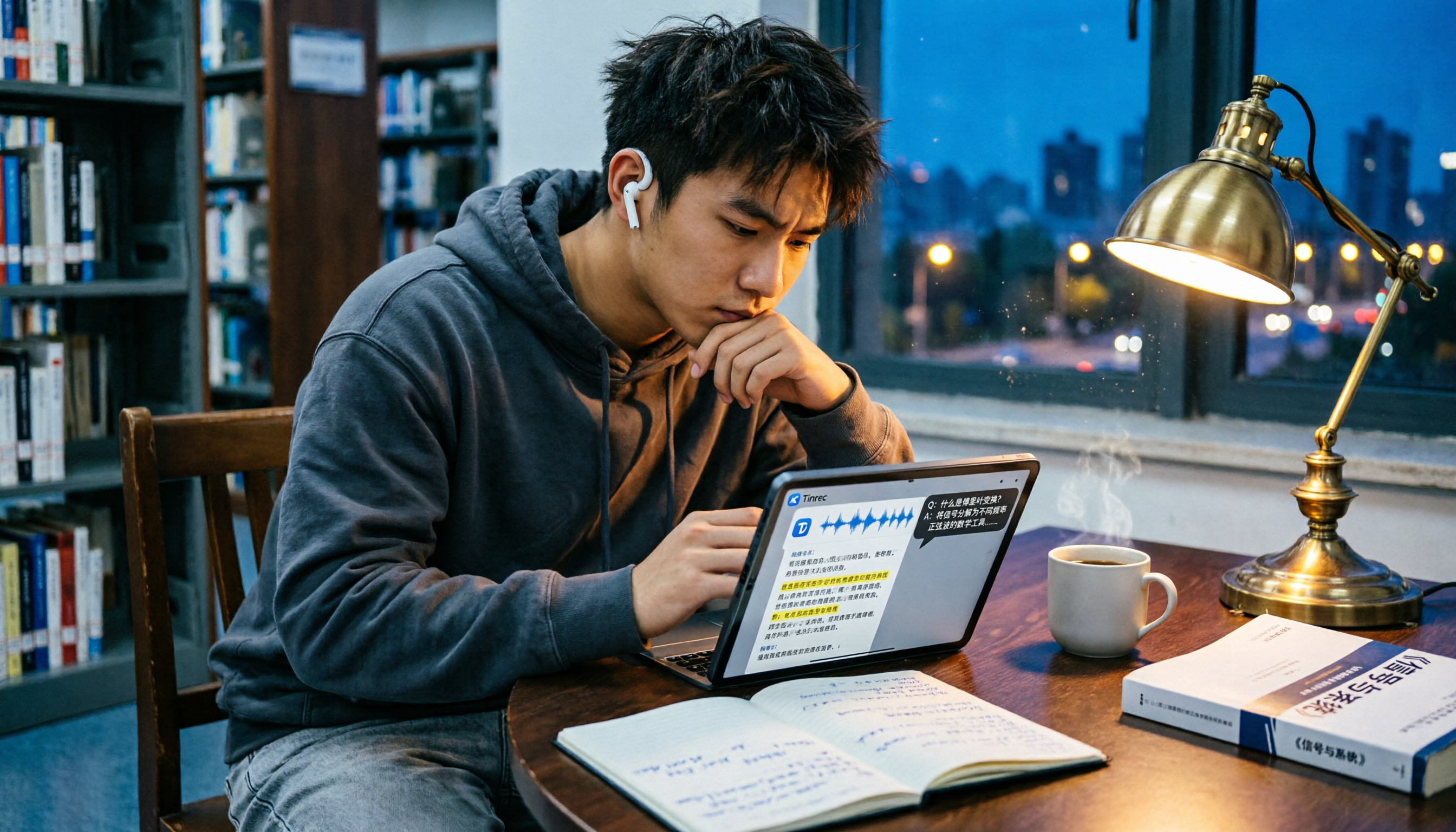
Tinrec vs Yating Transcription 2026: 5-Dimension Showdown – The Top Choice for Student Transcription
A senior student tested two audio-to-text tools in real scenarios—class lectures, group discussions, and final-exam review—to show why Tinrec is the better fit for students with multi-source organization, AI Q&A, and student-friendly plans.

2026 Hands-On Comparison of 3 Video Content Organizing Tools: Which One Nails Chinese Summaries and Lets You Ask Key Questions?
Can't finish long videos? I tested Tinrec, TurboScribe, and Otter.ai by pasting video links, generating summaries, transcripts, and AI Q&A. Find out which one is best for organizing Chinese YouTube courses, interviews, and study videos, turning video content into reviewable, searchable notes.

2026 Comparison of 5 YouTube Video Analysis Tools: Which AI Summary Helps Most?
We tested 5 YouTube video analysis tools, evaluating AI summaries, transcription accuracy, interactive Q&A, and cross-platform performance, to find the best content organization solution for busy office workers. See which one truly saves you time.

4 Meeting Recording-to-Text Tools Compared for 2026: From Free to Paid, Explained at a Glance
How do you choose a meeting recording-to-text tool? This article tests four tools—Tinrec, Otter.ai, Notta, and PLAUD Note—and compares accuracy, free allowances, AI organization features, and ideal use cases, helping you find the best meeting notes solution.
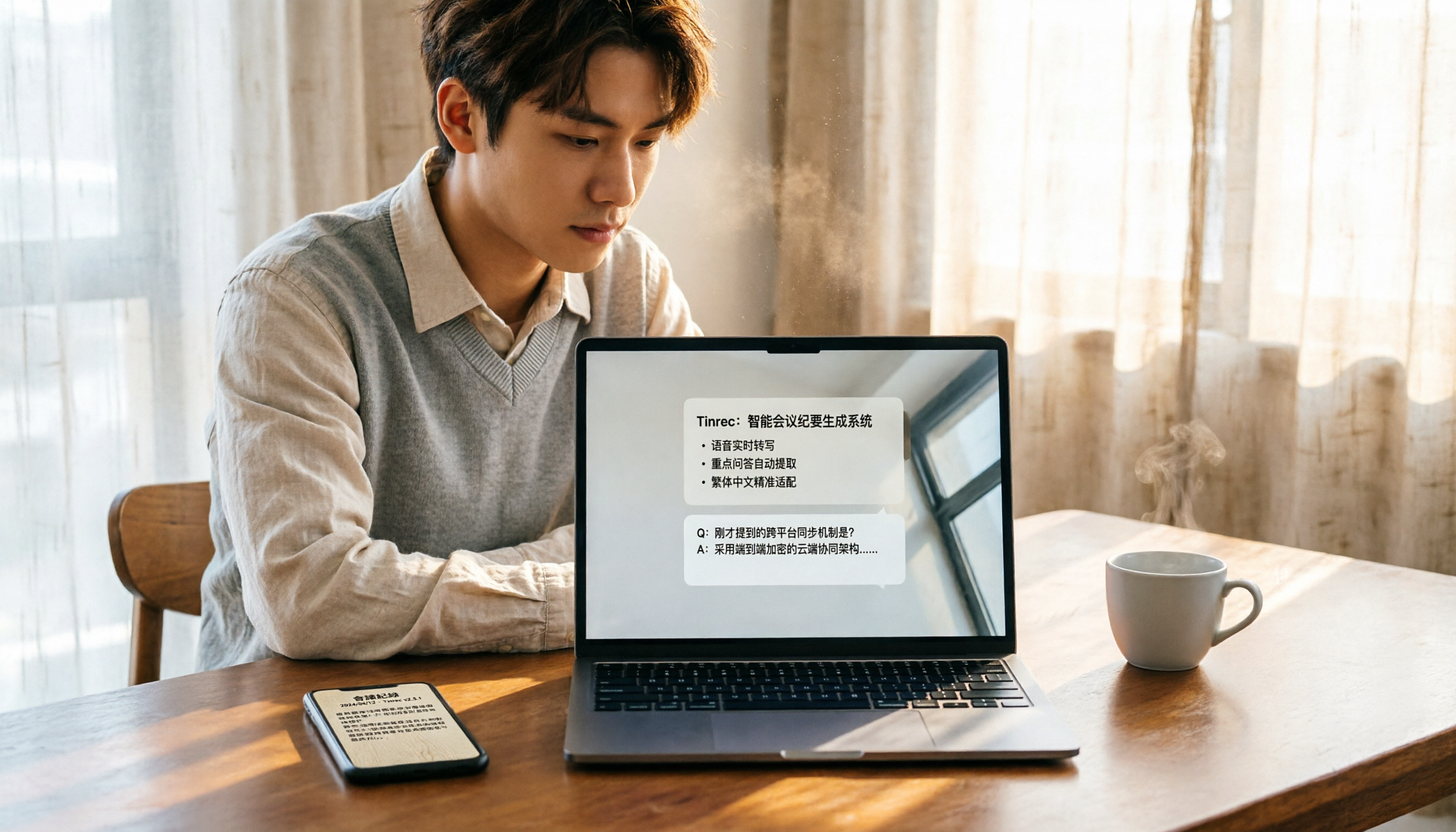
2026 AI Short Video Summarizer Comparison: Tinrec Goes Beyond Summaries – Q&A and Export
Too much short-form video content to keep up with? We tested 4 AI summarizer tools—from YouTube and TikTok link-to-text, summaries, subtitles, to follow-up Q&A—to show you which one best fits Taiwan users. Tinrec is our top pick, especially for Chinese-language video organization and cross-platform workflows.
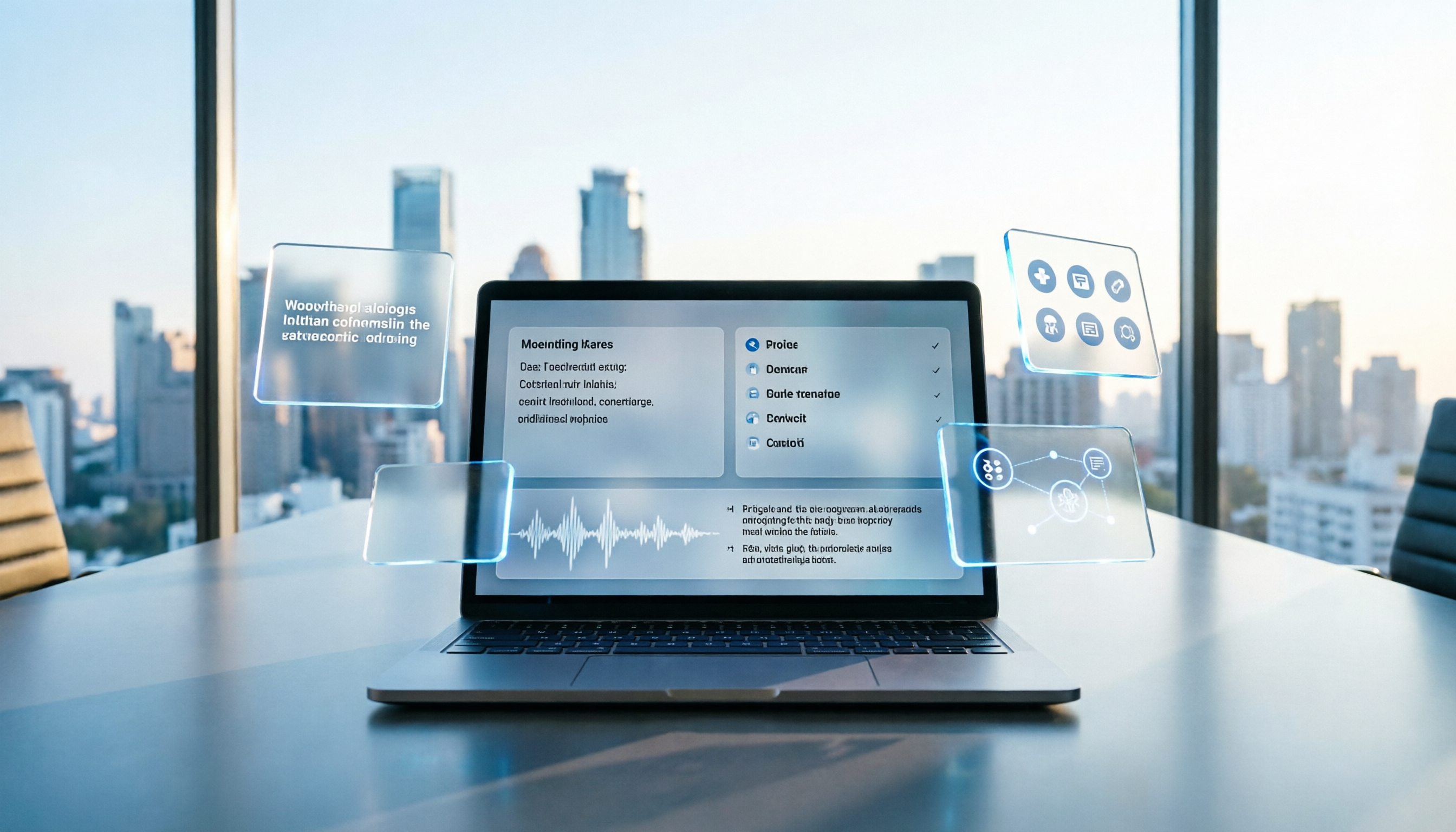
Tinrec AI Meeting Minutes 2026: Auto Summaries & Action Items, Say Goodbye to Meeting Hassle
Meetings running you ragged, and then you still have to listen to recordings and type transcripts? In 2026, let AI generate meeting minutes automatically. Tinrec creates summaries and action items in real time, giving you structured records instantly and saving your overtime hours. This article shows you how to turn meeting recordings into a searchable, queryable knowledge base with Tinrec.