
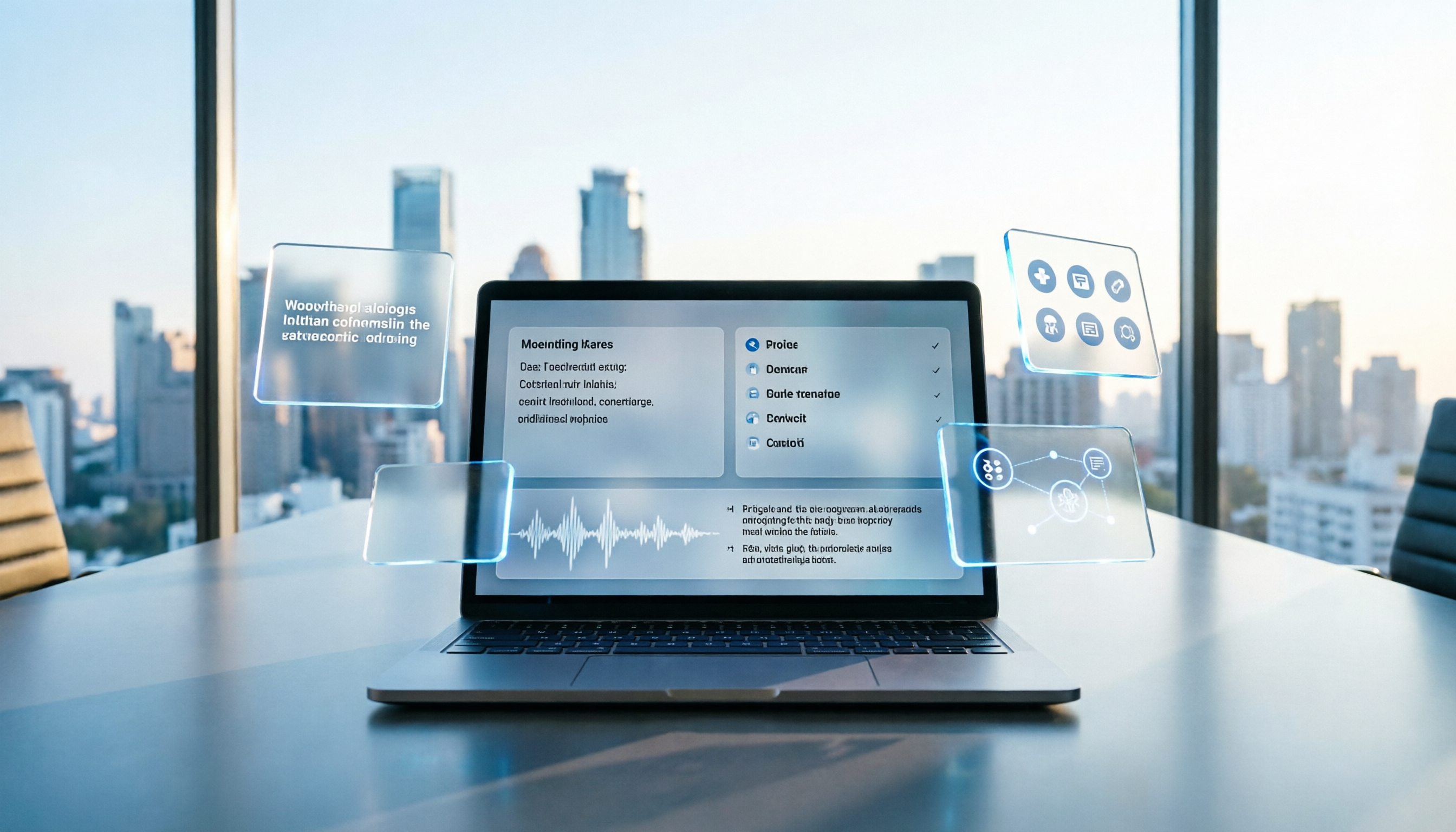
Turn recordings into transcripts and summaries in minutes
Upload audio or video for multilingual transcription, AI notes, and action items
Meetings every day until knock-off time—the worst part isn't the meeting itself, it's writing the minutes afterward. Now with AI assistance, Tinrec can automatically record, transcribe, and summarize the entire session, so you have all the info right when the meeting ends—no more overtime listening to recordings and typing transcripts.
What Can AI-Generated Meeting Minutes Do for You?
Scenario 1: Get the record 5 minutes after the meeting
After a two-hour meeting, you might previously spend another hour organizing the minutes. Now with Tinrec, the moment the meeting ends, AI has already generated the summary, conclusions, and action items. Who is responsible for what, and when deadlines are due—everything is clear at a glance.
Scenario 2: No missed points in long meetings
In meetings over an hour, the human brain is bound to miss something. Tinrec records the entire session and transcribes it in real time. Afterward, you can search directly for keywords or even ask AI questions like "Who mentioned the budget?" or "What did the client ask for?"—it instantly finds the relevant passages for you.
Scenario 3: Team collaboration without waiting
No need to type the minutes yourself. Tinrec's transcription and summary can be shared with colleagues via a one-click link, or exported to Notion or Google Docs, so the whole team stays in sync and no one can claim they didn't know about the action items.
Core Capabilities of Tinrec AI Meeting Minutes
Real-time transcription: text as it records
Tinrec doesn't transcribe after recording; it outputs text as the meeting happens, with less than 1 second of delay. You can watch the screen to confirm no key points are missed, which is especially useful during multi-person discussions.
AI semantic summary: not just random condensation
Many tools simply shorten the transcript. Tinrec's AI summary is structured organization—meeting topic, discussion conclusions, action items, and owners are listed separately, truly helping you understand the content instead of leaving you confused.
Automatic action item extraction: clear on who does what
In meetings, people often say "I'll follow up," but on what exactly? Tinrec automatically catches action items from the discussion, tags the person responsible, and suggests deadlines—no more chasing people afterward.
AI conversational query: like having an assistant find information for you
After transcription, you can type questions to Tinrec directly—"Who mentioned the marketing budget in the meeting?" "What feedback did the client give?"—it's not keyword search, but semantic understanding that gives direct answers.
Multi-format export: take it anywhere
Your organized records can be exported as Word, PDF, or TXT, and even synced to Notion, Google Docs, or OneNote. Use them however you like—you're not locked into one platform.
Practical Use Cases
Company weekly meetings: auto-generate to-do lists
Every weekly meeting involves status updates plus a pile of new tasks. Record with Tinrec, and the AI summary will list everything each person needs to do the following week. Share directly to team Slack or Notion, saving the PM half an hour of organizing time.
Client meetings: never miss key requirements
The biggest fear in client meetings is missing the client's requirements. Tinrec records and transcribes simultaneously, so you can focus on the conversation. Afterward, ask AI "When is the client's required delivery date?" or "Any special instructions?" and get answers instantly—even your proposal writing goes faster.
Stop organizing recordings by hand
Upload audio or video and automatically get a transcript, summary, and action items
Online lectures/courses: organize study notes
Attending an online talk or course? Just turn on Tinrec to record system audio. It automatically separates chapters, generates summaries, and can even export key points as a mind map—super convenient for studying.
Brainstorming sessions: capture every idea
In creative meetings where everyone talks at once, many great ideas are often forgotten moments later. Tinrec's transcript and AI query can help you revisit any part of the discussion afterward, then use AI to distill a few feasible directions.
5 Things to Look For When Choosing an AI Meeting Minutes Tool
1. Accuracy is essential, but don't blindly trust official numbers
Many tools claim 9x% accuracy, but fall apart in noisy environments or with mixed languages. In real-world testing, Tinrec's Chinese transcription is quite stable in normal meeting environments and can handle moderate background noise. It's recommended to test with your own recordings before deciding.
2. AI features are the game changer
Transcription is just the first step. The real value lies in post-transcription organization. Tinrec's AI conversational query and action item extraction offer value that other pure transcription tools can't provide—don't just compare minute counts.
3. Language support should fit your daily use
If your company often uses Chinese or even a mix of Chinese and English, note that some tools focus on the English market, and their Chinese transcription quality suffers. Tinrec handles Chinese content well, and works reasonably well with both Cantonese and Mandarin meetings.
4. Cross-platform and integration capabilities
You don't only have meetings on your computer—sometimes you need to quickly sync on your phone. Tinrec has iOS, Android, and web versions, with cross-device syncing for recordings, and supports exporting to common note-taking tools, so you're not locked into a single platform.
5. Free trial and price transparency
No need to pay upfront. Tinrec's free plan includes a monthly basic transcription quota, enough to try two or three meetings. The Pro plan has a reasonable monthly fee with no hidden charges. Upgrade only when it suits you, with no forced annual contract.
FAQ
Q: Is Tinrec's accuracy 100%?
A: No, and no tool can achieve 100%. Accuracy is affected by recording quality, background noise, accents, and overlapping speech. Tinrec's Chinese transcription performs very well with clear recordings, but for important documents, it's recommended to verify against the original recording.
Q: Do other participants need to install an app to record meetings with Tinrec?
A: No. As long as Tinrec is recording on your device, it captures the room audio via microphone or system audio (for online meetings). Other participants don't need to install anything.
Q: How long are recordings kept? How is privacy protected?
A: Recordings and transcriptions are securely stored in your account, and you can delete them at any time. Tinrec has strict data protection measures and does not use your content to train models or share it with third parties.
Q: Can I upload old recordings for transcription?
A: Yes. Tinrec supports uploading audio or video files (e.g., MP3, WAV, MP4), and can generate summaries and action items as well—useful for organizing old meeting records.
Q: What are the limitations of the free plan?
A: The free plan includes a fixed number of transcription minutes per month, enough to experience the core features. If you have frequent meetings, consider the Pro monthly or yearly plan, which offers significantly more minutes and unlocks advanced AI features.
Conclusion
AI-generated meeting minutes are no longer future technology—they're a tool you can use right now to genuinely save time. If you have more than three meetings a week, instead of staying late every night to type up meeting minutes, why not try Tinrec? The free plan includes a monthly basic quota, enough to experience several meetings and find out how great it feels to have structured records and automatically listed action items the moment the meeting ends. From now on, no more meeting anxiety—AI has everything covered for you.
References
Turn every recording into actionable outcomes
Get 60 free transcription minutes when you sign in. No credit card required.
Related Reading
You might also like

4 Speech-to-Text Tools Compared for 2026: Which Turns Audio and Video into Actionable Knowledge?
A side-by-side look at four speech-to-text tools in 2026, from free to paid, to help you pick the best meeting recorder and knowledge organizer. We cover the pros, cons, and buying considerations for Tinrec, Otter.ai, Notta, and Plaud Note.

2026 Speech Recognition Tools Compared: Which One Saves You the Most Time on Chinese Meeting Notes?
We put Tinrec, Notta, Otter.ai, and PLAUD head-to-head, evaluating speech-to-text accuracy, AI organization, and pricing to find the best option for Chinese-language users.

2026 YouTube Video Analysis Guide: Paste a Link to Get Transcripts, AI Summaries and Q&A
Want to turn YouTube videos into searchable text notes? This guide shows how to use online tools to analyze video content—from transcripts and chapter summaries to AI Q&A. We recommend Tinrec (Miao Ting Lu Yin) for its free plan and compare other options to help you quickly find the right YouTube analysis tool.

2026 Video-to-Link Tools Compared: More Than Playback Links—Turn Videos into Highlights
A college senior tested 4 online video-to-link tools, from free uploads to AI organization, to help you find the best option for group projects and lecture recordings—without ads or privacy issues.

2026 AI Meeting Minutes Tool Buying Guide: 5 Hands-On Tests and Recommendations
Meetings and meeting notes are a pain point for many office workers. This article tests 5 AI recording-to-meeting-minutes tools, from free to paid, comparing transcription accuracy, AI summaries, language support, and pricing, with Tinrec (MiaoTing) as our top pick to help you find the best automated meeting notes solution.

2026 Comparison of 4 AI Meeting Notes Apps: Which One Has the Most Useful Summaries and Action Items?
We tested four meeting recorder tools and compared transcription, AI summaries, action items, and pricing to help you find the most time-saving meeting notes solution. Tinrec stands out in Chinese-language organization and AI Q&A, making it suitable for many use cases.

2026 Comparison of 3 Video-to-Text Tools: Which One Turns Videos Into Truly Usable Data?
Want to quickly convert meeting recordings, course videos, or online videos into text? We tested Tinrec, Notta, and TurboScribe across transcription accuracy, media source support, post-processing capability, and AI Q&A features to show you which one can actually turn video content into searchable, editable, actionable knowledge.

2026 Speech-to-Text App Comparison: 3 Apps Tested for Cantonese Recognition & AI Q&A — Which Saves the Most Time?
Do you spend hours re-listening to meeting recordings to write them up? We tested 3 popular audio-to-text apps and found that Tinrec's Cantonese recognition and AI Q&A features help the most. Check out the full report now.
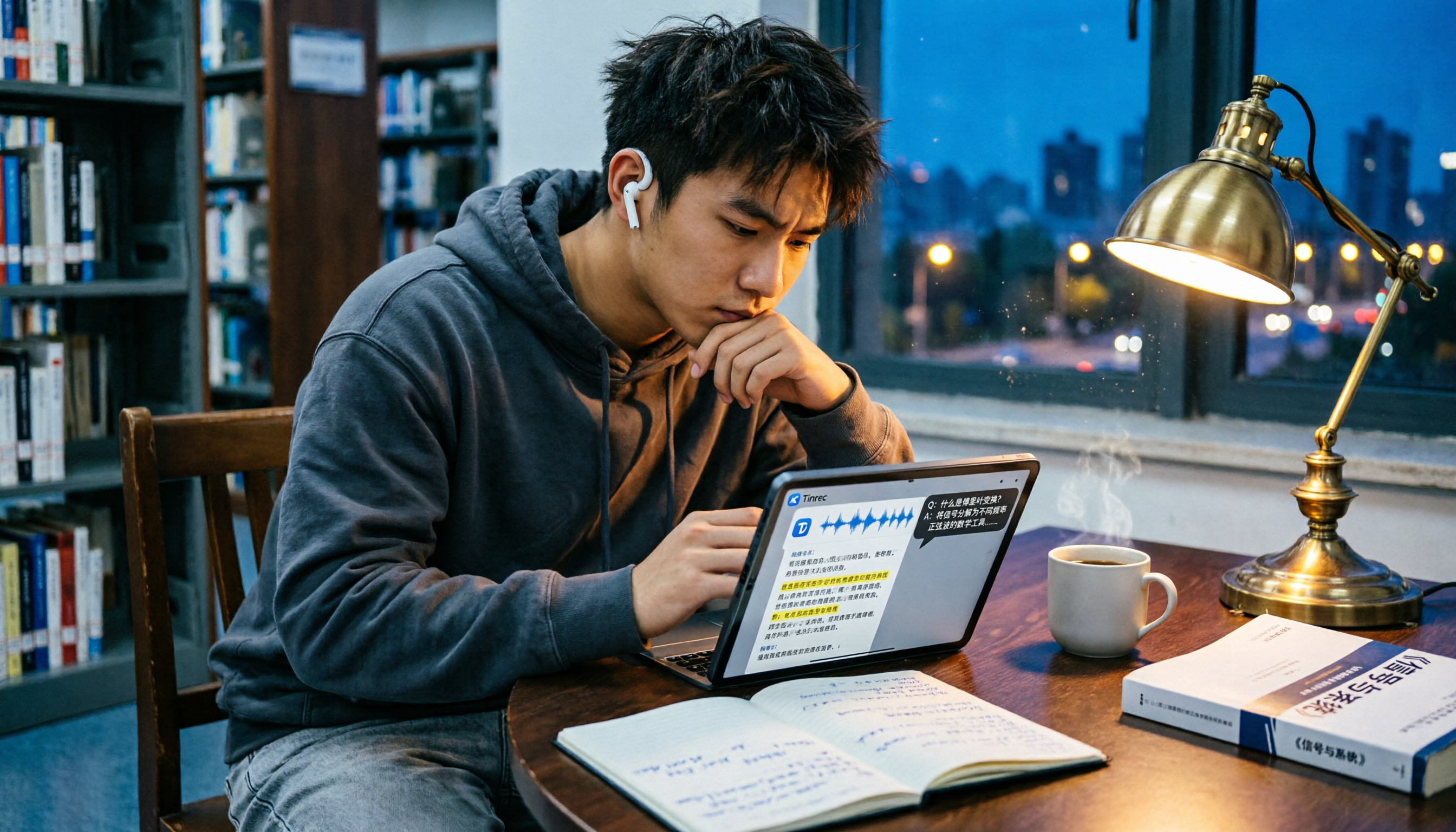
Tinrec vs Yating Transcription 2026: 5-Dimension Showdown – The Top Choice for Student Transcription
A senior student tested two audio-to-text tools in real scenarios—class lectures, group discussions, and final-exam review—to show why Tinrec is the better fit for students with multi-source organization, AI Q&A, and student-friendly plans.