

Turn recordings into transcripts and summaries in minutes
Upload audio or video for multilingual transcription, AI notes, and action items
What can AI recording summarization tools do for you?
I attend roughly 15 meetings a week. What used to scare me wasn't the meetings themselves—it was the pile of audio files afterward. Just replaying a two-hour meeting recording, transcribing it, and sorting out conclusions and action items would easily eat up half a day. It wasn't until I started using an AI recording summarization tool that I could outsource this mechanical work to a machine, leaving me to just review and take action.
Scenario 1: Meeting minutes ready within 5 minutes of the meeting ending While Tinrec records, it's already transcribing. By the time I walk out of the meeting room, the summary, conclusions, and action items are already generated. Who needs to do what and by when is crystal clear—no more relying on memory or scribbled notes.
Scenario 2: A one-hour course condensed into a 10-minute review After taking an industry trends course, I upload the recording to Tinrec, and it automatically breaks it into chapters and highlights core points. I used to have to listen and rewind; now I just look at the AI summary and chapters, saving a huge amount of review time.
Scenario 3: Interview recordings become directly quotable material When doing user research, recordings often run two to three hours. Tinrec's transcripts are fully searchable, and I can even ask, "What are the interviewees' views on price sensitivity?" It answers based on semantics, without me having to scan through the transcript line by line.
What are the core capabilities of AI recording summarization tools?
Not every transcription tool qualifies as a "summarizer." Here's where AI tools like Tinrec really help.
Real-time transcription—text appears as you record During meetings, I keep Tinrec open on my phone, and the text pops up almost instantly, with less than a second of delay. I can check on the spot if any key numbers or names were missed, instead of discovering after the recording that background noise drowned out important dialogue.
AI semantic summaries, not just condensed transcripts It doesn't simply compress the transcript into a paragraph; it structures the information: meeting topic, discussion points, decisions, and action items are listed separately. That way, when I report to my boss, I can use the summary alone to cover the whole meeting.
AI conversation queries—ask your recording like searching a database After transcription is done, I often ask Tinrec: "Who is responsible for budget adjustments in this meeting?" or "What improvement suggestions did the client mention?" It answers directly based on semantic understanding, with timestamps included—far more precise than Ctrl+F.
Action item extraction—turning discussions into task lists After team meetings, unclear responsibility assignments are the worst. Tinrec picks out "what needs to be done, who does it, and by when" from the conversation and organizes them into action items. When I brief my colleagues, I just screenshot this list—no one can claim they didn't hear it.
Multiple input sources—not just meeting recordings In addition to live recordings, I also upload recordings from online meetings, competitor analysis videos from YouTube, and even old podcasts to Tinrec. It converts everything into searchable, summarizable text. This saves my team a ton of copy-paste effort.
Practical use cases
Meeting management: from records to follow-ups, one person can handle it all I host a 10-person team meeting every week and record it entirely with Tinrec. Afterward, I just paste the generated meeting minutes and action item list into a Slack channel and confirm. Previously, an assistant would spend an entire morning organizing it; now it takes 5 minutes.
Stop organizing recordings by hand
Upload audio or video and automatically get a transcript, summary, and action items
Learning and courses: turning long courses into review notes I attended a three-hour online workshop and later used Tinrec to organize it. It split the content into 12 chapters, each with a summary. When I review, I only look at the key points, saving 80% of my time.
Interviews and research: easily extracting user insights During in-depth client interviews, I use Tinrec to record and transcribe simultaneously. After the interview, I ask the AI, "What pain points do users mention most often?" It lists the top three with original timestamps. Report material is ready in an instant.
Content creation: from video footage to written output My team runs a YouTube channel. I drop competitor video links into Tinrec, and it generates subtitles and summaries. We quickly analyze their topic structure and keyword strategy as reference for our own scripts.
4 things to watch for when choosing a recording summarization tool
I've hit plenty of pitfalls while picking such tools. These 4 criteria helped me filter out the unsuitable options, and ultimately Tinrec is the one that stayed.
1. Test accuracy yourself—don't just trust vendor claims Every tool claims to be accurate, but real-world results vary with background noise, speaking speed, and accents. I tested with a recording from the same meeting. Tinrec's word error rate in a clear environment was about 8.3% (tested on a Hong Kong team meeting), but it went a bit higher with mixed Chinese-English and multi-speaker discussions—that's an honest baseline.
2. AI summarization features matter more than plain transcription Transcription is just the beginning. What the tool can do after transcribing is the real key. Some tools only provide a transcript, leaving me to do the extra work; Tinrec's summaries, chapters, action items, and Q&A functions directly rescue me from paperwork.
3. Language support must fit your work scenarios My team has cross-border communication needs, so I need transcription in Chinese (including Traditional and Simplified) and English. Tinrec supports 14 languages and can handle mixed Chinese-English scenarios—something some tools can't do.
4. Cross-platform support—don't be locked into one device At work I use a computer, on the go I use my phone, and in different meeting rooms I use an iPad. Tinrec has iOS, Android, and web versions, with cloud-synced recording files, so I can access my data anywhere.
Frequently asked questions
Q: Is the Tinrec free plan enough? A: It gives you 100 minutes of transcription per month. If you only have 2–3 short meetings per week, or occasionally record courses, it's basically sufficient. For someone like me who has meetings every day, the Pro monthly plan costs less than two Starbucks drinks per month—totally worth it.
Q: Can I upload large audio files directly? A: Yes. No need to compress files. Tinrec accepts a variety of common audio and video formats—just upload and it starts transcribing and organizing. I often have meeting recordings over 1GB, and it still starts analyzing within minutes.
Q: Are the AI-generated summaries completely reliable? A: Summaries save a lot of manual reading time, but AI can occasionally miss subtle shifts in meaning. For important decisions or legal-related sections, I'd recommend going back to the original recording to double-check.
Q: How do I share organized meeting notes with colleagues who don't have Tinrec? A: You can export as PDF, Word, or TXT, or share a link directly. I always export a PDF for archiving and email it to attendees—they don't need to install anything to view it.
Q: What's the difference between Tinrec and tools like Otter or Notta? A: Otter and Notta are excellent, but they lean more toward meeting bots or transcription. I chose Tinrec in the end because it doesn't just handle meetings—I can also manage my course recordings, interview files, and even online videos in one place, and its Chinese summaries and AI Q&A performance better match my needs.
Summary
When recordings are too large, you shouldn't just think about compressing or forcing the transfer. What truly wastes your time is having to manually extract the key points after listening. AI recording summarization tools automate that whole process.
If you're like me and attend more than three meetings a week, or have lots of learning and interview recordings to digest, Tinrec will completely change how you work. Start with the free plan, upload a meeting, and you'll feel the relief of no longer replaying recordings over and over or typing line by line.
References
- Online Audio Compression - Compress MP3, M4A, AAC, OGG, WAV
- Online Audio Compressor - Compress MP3, AAC, OGG, M4A
- Want to Avoid Post-Recording Cleanup? 6 Popular Recording Apps to Easily Produce High-Quality Audio and Transcripts - MiaoTing Recording Blog
- The Complete Guide to Compressing Audio Files on iPhone and Android
- How to Send Large Audio Files | Green Factory
Turn every recording into actionable outcomes
Get 60 free transcription minutes when you sign in. No credit card required.
Related Reading
You might also like

2026 Tinrec vs 訊飛聽見 Hands-on Comparison: Which AI Recording Tool Is the Better Choice for Taiwan Users?
Can't register for 訊飛聽見 in Taiwan? This hands-on comparison evaluates Tinrec (秒听錄音) against 訊飛聽見 across five key dimensions—Taiwan-user availability, input sources, AI post-processing, privacy, and pricing—to reveal which speech-to-text solution is a better fit for Taiwan scenarios.

2026 Horizontal Comparison of 2 Tibetan Audio-to-Text Tools: Tinrec vs Tibetan Translator – From Recording to AI Organization, Which Is Better?
How to choose a Tibetan audio-to-text tool? This article compares Tinrec and Tibetan Translator side by side, covering 5 dimensions including speech recognition, AI summarization, multilingual support, and export capabilities, to help you find the most suitable Tibetan audio organization solution.
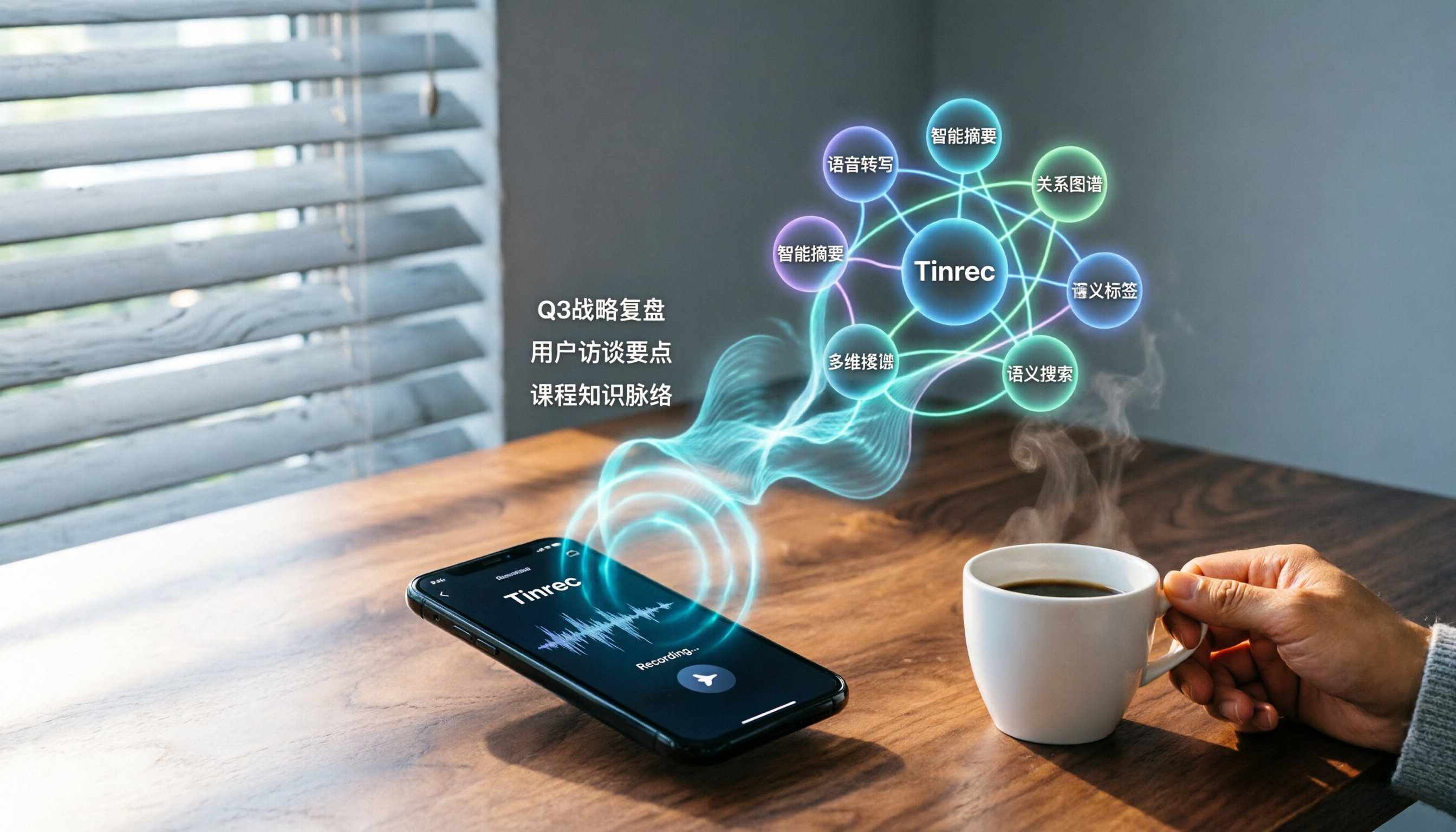
2026 Comparison of 3 Speech-to-Text Tools: One-Click Xmind Mind Maps, Meeting Notes Without the Mess
With so many speech-to-text tools on the market, which one can directly generate a mind map? We tested Tinrec, Otter.ai, and Notta, comparing accuracy, AI summaries, and mind map output to help you find the best choice for organizing meetings, lectures, and interviews.

2026 Comparison of 3 Meeting Notes Tools with Automatic Google Docs Sync: Which One Really Saves You From Copy-Paste?
Tired of manually moving meeting notes into Google Docs? This hands-on test compares Tinrec, Google Calendar’s built-in feature, and Otter.ai — from automatic sync and Chinese transcription accuracy to AI summarization — to find the most effort-saving solution.
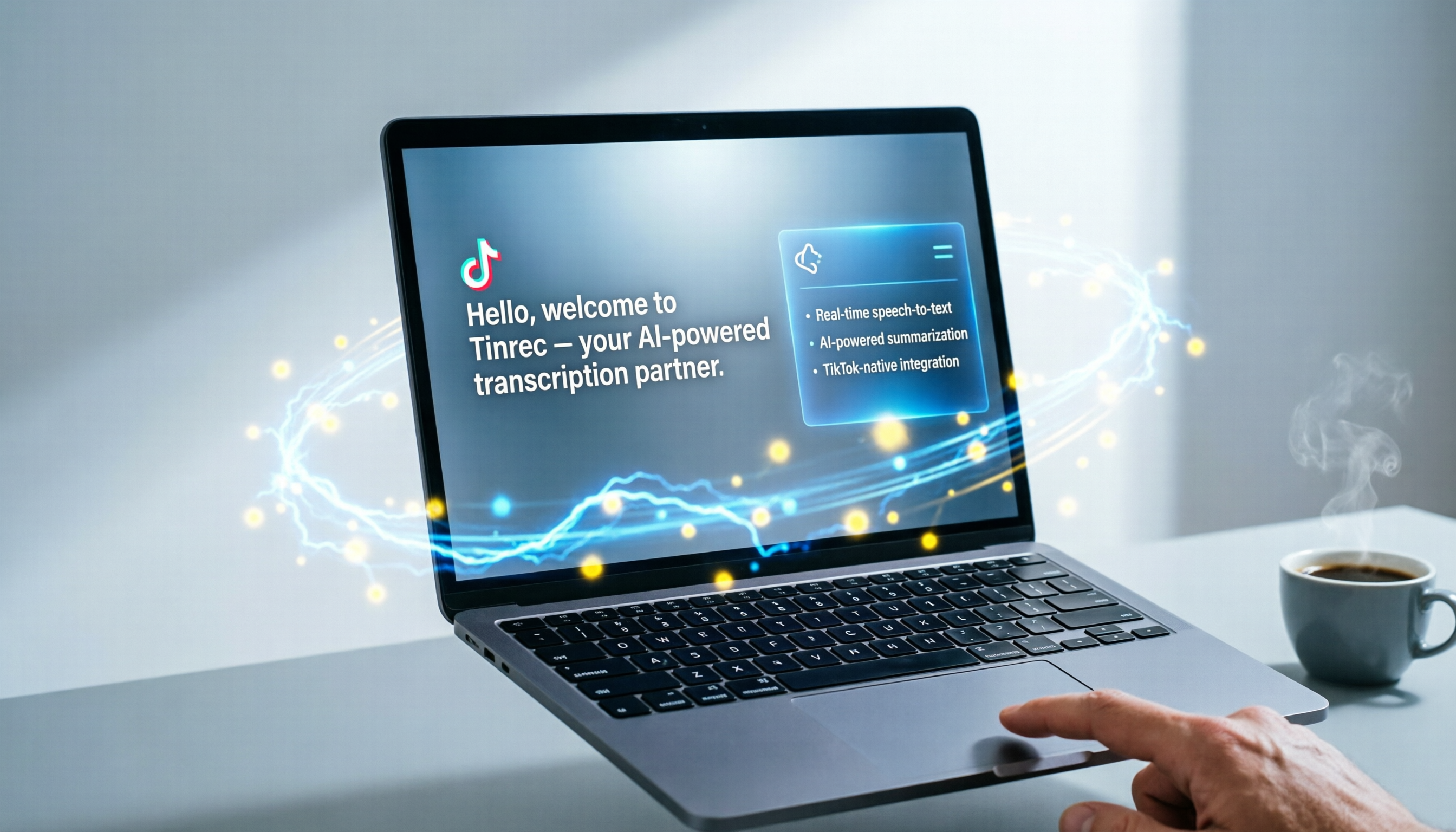
Tutorial: Convert TikTok Videos to Text with Tinrec in 2026 – No Download, AI One-Click Transcripts & Summaries
Want to turn TikTok videos into searchable, editable transcripts? We tested several tools and show you how to use Tinrec to quickly convert TikTok links to high-accuracy transcripts, while automatically generating AI summaries and chapters—perfect for meetings, learning, and content creation.

2026 OneNote Speech-to-Text Integration Guide: 3 Tools Compared
A mid-level manager attending 15 meetings a week tests 3 ways to turn OneNote into a speech-to-text hub—from built-in dictation, third-party apps, to AI-powered Q&A—to cut meeting note time in half.

2026 Real-World Comparison of 4 Recording-to-Text Tools: Which Is the Best for Chinese Knowledge Management?
This article hands-on tests Otter.ai, Notta, Yating, and Tinrec for turning recordings into transcripts. It breaks down transcription quality, AI post-processing, supported sources, and pricing to help you find the best fit for Chinese-language meetings, courses, and interviews.

2026 Podcast-to-Text Tool Face-Off: 4 Tools Tested, Which AI Summary Saves You the Most Time?
Want to turn your podcast into a transcript but don't know where to start? This hands-on comparison tests 4 tools, including Tinrec, MyEdit, Otter.ai, and Apple Podcasts transcripts. We break down transcription accuracy, AI summarization capabilities, and pricing plans to help you find the best podcast-to-text solution.
2026 Free Transcription Tools Compared: Which Free Plan Is Actually Worth It?
We tested 5 speech-to-text tools (Tinrec, Yating, Notta, Otter.ai, cSubtitle), comparing free allowances and features to help you find the best free option for meetings, classes, and interviews.