
Turn recordings into transcripts and summaries in minutes
Upload audio or video for multilingual transcription, AI notes, and action items
Facing online courses that last an hour, YouTube tutorials, or podcast interviews, do you often feel that "re-listening takes too much time, but not listening means missing key points"? That's the purpose of "video link to text AI tools." These tools instantly convert low-density video information into searchable, readable high-density text notes.
This article will review the mainstream AI solutions available in 2026 and provide a detailed purchasing and hands-on guide:
- In-depth comparison: Analysis of pros and cons from general-purpose AI (Gemini/ChatGPT) to specialized tools (Tinrec/NotebookLM).
- Hands-on tutorial: How to get a full transcript and action items in just 3 minutes using only a link.
- Decision advice: Choose NotebookLM if you value multi-source integration; choose Tinrec if you value one-stop management of recordings/links and precise summaries—it's a candidate worth considering.
Why Do You Need "Video Link to Text" Tools? Three Core Pain Points
Before diving into tool recommendations, let's clarify the workplace and learning pain points these tools address. According to 2026 digital work trends, simple "transcription" is no longer sufficient; users care more about "comprehension efficiency."
1. Video Content Cannot Be Searched with "Ctrl+F"
The biggest drawback of video is linear playback. If you want to find "the part where the speaker mentions the budget," without a transcript you can only drag the progress bar and guess the location. AI tools structure the video, making keyword search possible.
2. Low Information Density, Time-Consuming to Organize
Humans read text much faster (about 400-800 words per minute) than they speak (about 150-200 words per minute). With AI summaries, you can grasp the key points of a 1-hour video in 5 minutes—a huge leverage in time management.
3. Multilingual Barriers and Note-Taking Gaps
When watching foreign-language (English/Japanese/Korean) videos, your brain has to process translation and understanding simultaneously, making it hard to take notes. Tools that support multilingual recognition can directly produce translated summaries, eliminating language barriers.
2026 Popular AI Tools for Video-to-Text: In-Depth Comparison
We selected 4 of the most representative tools in 2026 for a side-by-side evaluation, including Google ecosystem heavyweights, general-purpose leaders, and vertical tools focused on speech-to-text.
1. Tinrec (秒聽錄音): A One-Stop Assistant Specializing in "Recording/Link → Action"
Tinrec is a vertical AI tool designed specifically for "audio content." Unlike general-purpose chatbots, it is optimized for long audio and video links.
- Key Features: Supports direct parsing of YouTube/Podcast links and distinguishes speakers. It doesn't just provide a transcript; it automatically generates meeting minutes and to-do action items, ideal for users who need to extract work tasks from videos.
- Best For: Online meeting notes, YouTube study notes, podcast content organization.
2. NotebookLM: Google's AI Note-Taking Powerhouse
- Key Features: Excels at handling "multi-source" data. You can upload PDFs, paste web links, and YouTube links simultaneously, and it generates notes by synthesizing these sources. Its strength lies in building a "knowledge base."
- Best For: Academic research, deep learners who need to synthesize multiple videos and papers.
3. Gemini: Deep Integration with the Google Ecosystem
- Key Features: As Google's flagship, Gemini has excellent YouTube reading capabilities (especially for English content). If you just need a simple "what is this video about?" summary, asking Gemini is the fastest way.
- Best For: Quick and light video content queries.
4. ChatGPT: The Most Mature General-Purpose Assistant
- Key Features: Although ChatGPT itself doesn't directly "watch" videos (requires plugins or GPTs), its powerful text analysis allows it to provide very insightful analysis when users manually paste transcripts.
- Best For: When you already have transcript text and need deep rewriting or creative brainstorming.
Stop organizing recordings by hand
Upload audio or video and automatically get a transcript, summary, and action items
Tool Feature Comparison Table
| Dimension | Tinrec (秒聽錄音) | NotebookLM | Gemini | ChatGPT |
|---|---|---|---|---|
| Video Link Parsing | Supported (YT/Podcast/Web) | Supported (mainly YT) | Supported (YT) | Requires plugin/GPTs |
| Transcript Completeness | High (with timestamps/speaker labels) | Medium (summary-focused) | Low (conversation-focused) | Depends on input |
| Summary Type | Structured (minutes/action items/mind map) | Notes/study guide/audio summary | Conversational summary | General text summary |
| Multilingual Support | 10+ languages (CN/EN/JP/KR/Taiwanese, etc.) | Depends on source | Strong | Strong |
| Post-Processing | AI chat to query recording content | Knowledge base Q&A | General Q&A | Text generation/rewriting |
| Free Tier | 100 minutes/month | Free (during beta) | Free/Advanced | Free/Plus |
Deep Dive: Tinrec's Differentiated Advantages in Video Organization
Among the many tools, Tinrec takes a path of "high real-time + high usability." It's not just a transcription tool; it's more like an assistant that helps you "understand" the content.
1. From "Preservation" to "Action"
Traditional tools output transcripts that can be tens of thousands of words, creating huge reading pressure. Tinrec emphasizes "structured output." After parsing an audio or video, the system automatically generates:
- Full Summary: Understand one hour of content in one minute.
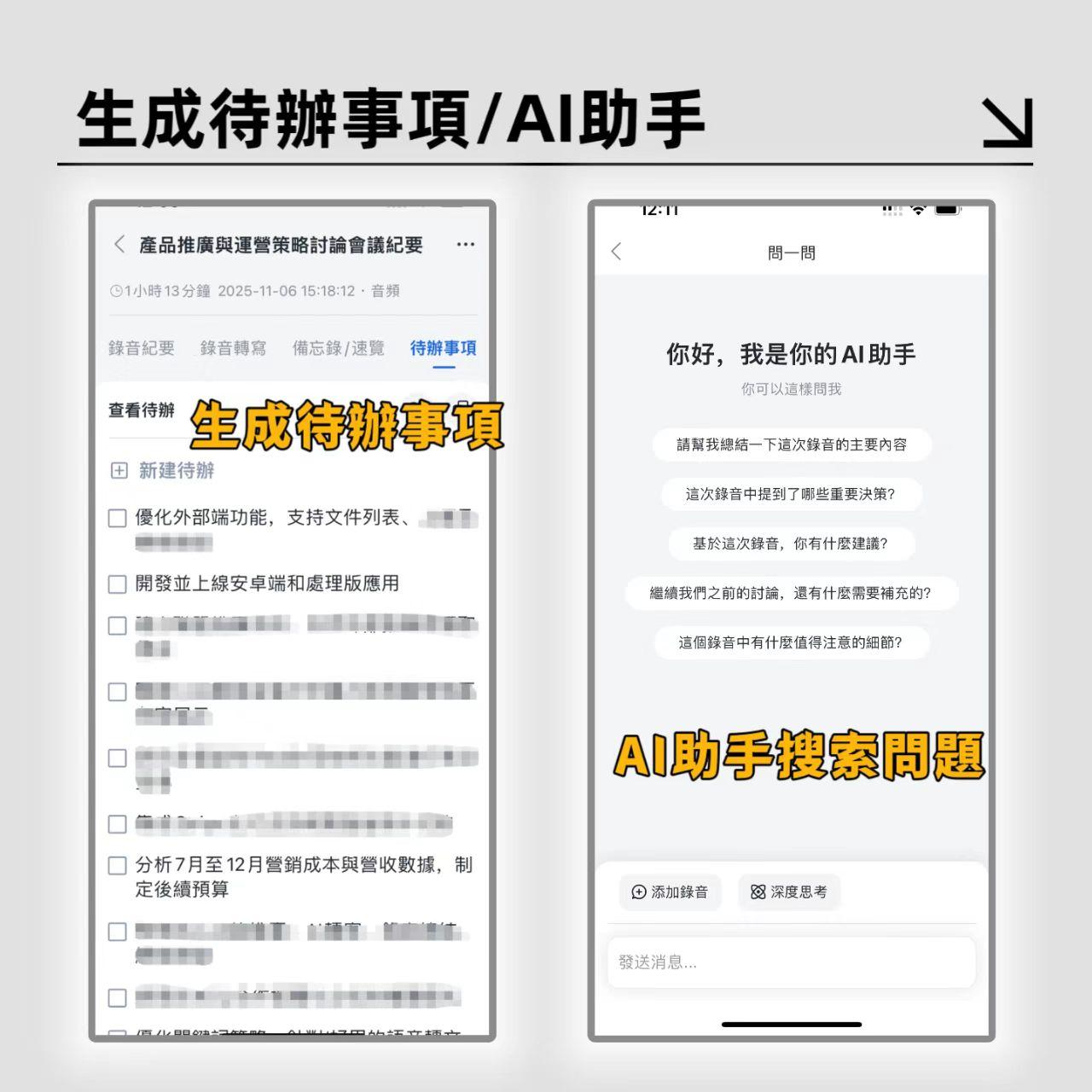
- To-Do List: Automatically extract tasks or suggestions mentioned in the video.
- Mind Map: Visualize the logical structure (great for learning).
2. Solving the "Only Caught Fragments" Problem
For learning foreign languages or watching overseas product launches (e.g., Apple/Google events), Tinrec supports recognition of 10 languages including Chinese, Japanese, English, Korean, German, Taiwanese, and Cantonese. This means you can paste a full English interview link and get an accurate Chinese summary and bilingual transcript.
3. AI Chat Query: Ask Questions Like Talking to a Person
This is a very practical Tinrec feature. After parsing a video, you don't need to read from start to finish. You can directly type in the AI chat box on the right: "What is the conclusion of this video regarding SEO trends?" The AI will answer based on the video content and mark the source timestamp.
Hands-On Tutorial: How to Quickly Turn a Video into Notes with AI
Below, using Tinrec as an example, we demonstrate how to turn a YouTube tutorial video into editable notes and an action list.
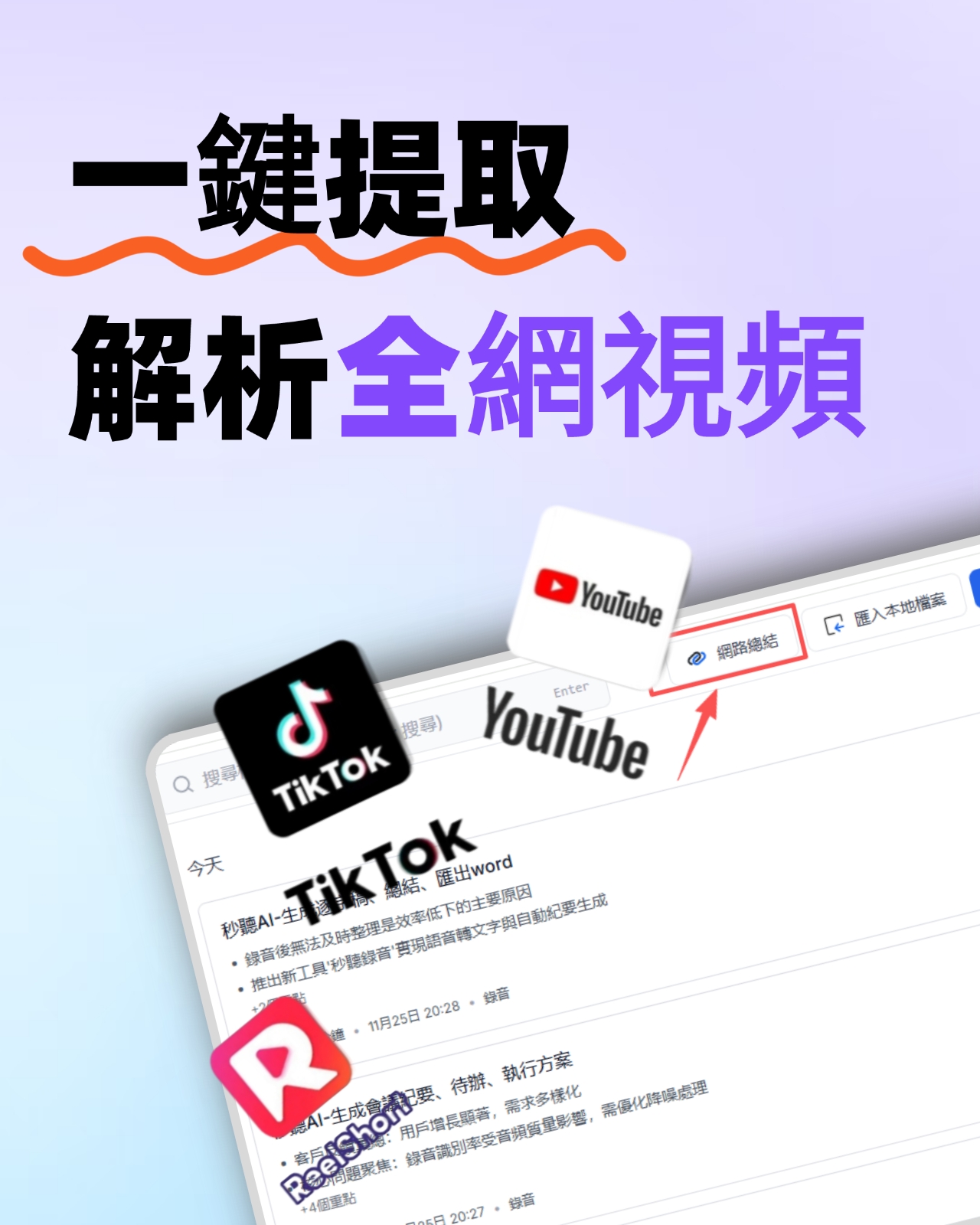
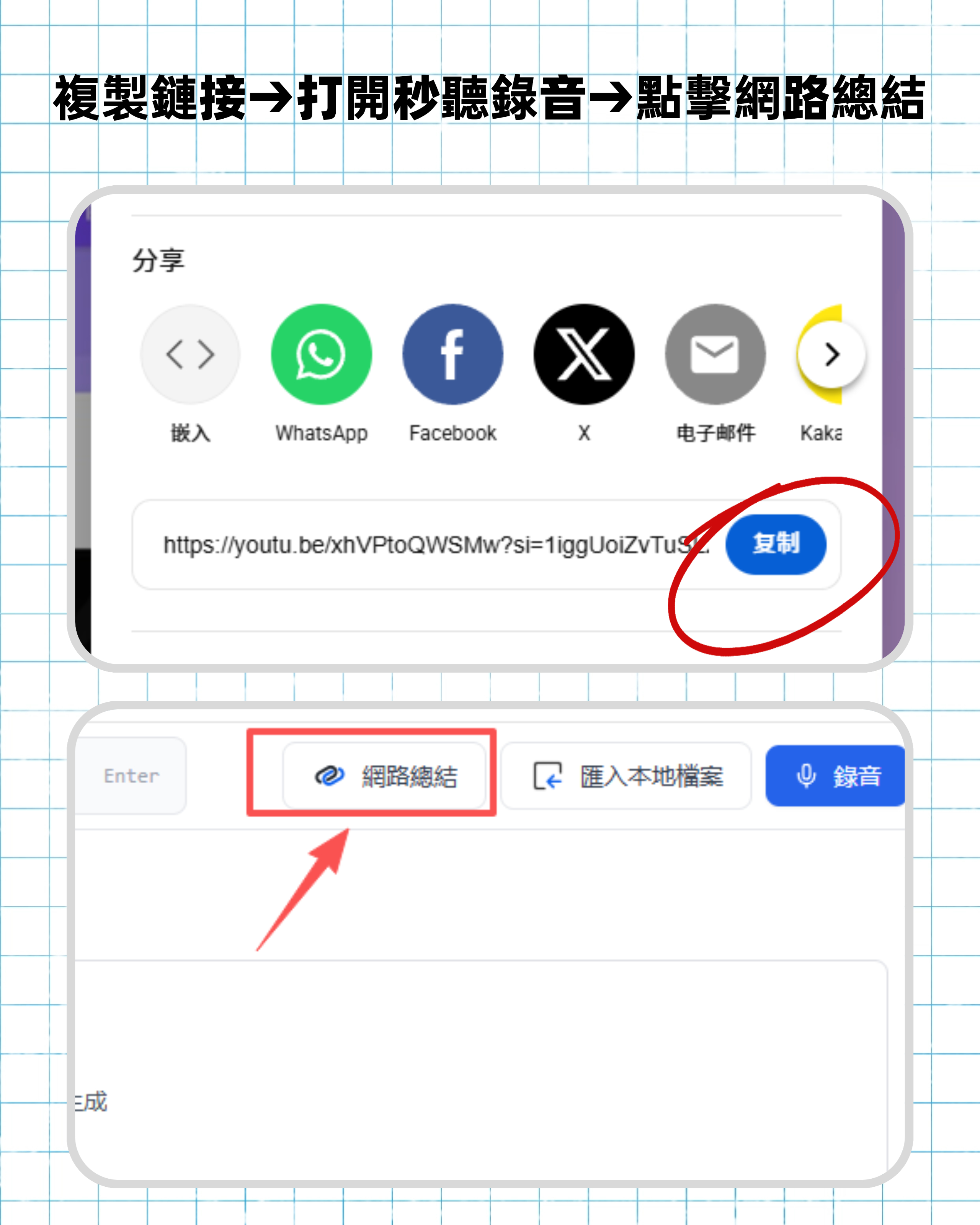
Step 1: Get the Video Link
Go to YouTube or a podcast platform and copy the URL of the content you want to organize.
Step 2: Use the "Podcast/Online Video to Text" Feature
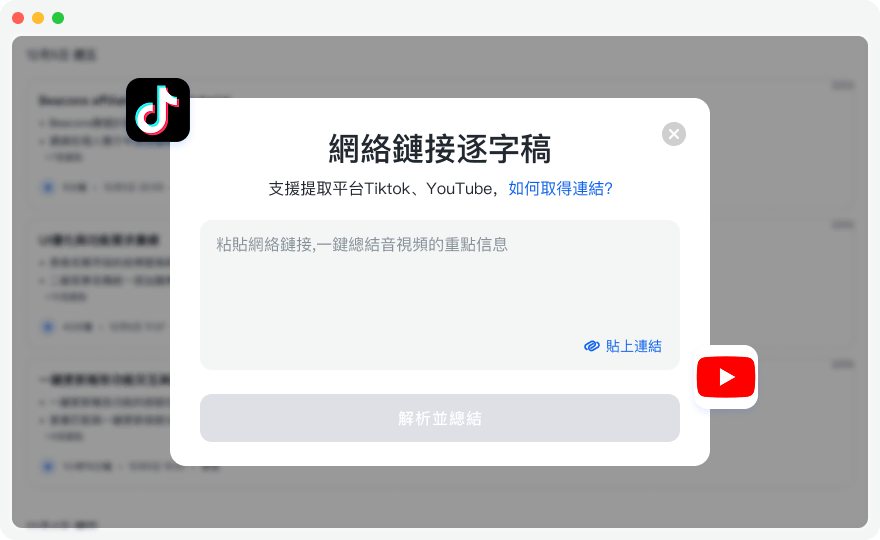
Enter the Tinrec platform and select the "Podcast/Online Video to Text" feature entry.
Step 3: Paste the Link and Select Language
Paste the link into the input box. If the video is in English, it's recommended to confirm the recognition language in the language settings (automatic detection is usually supported, but specifying the language can improve accuracy). Click to start parsing.

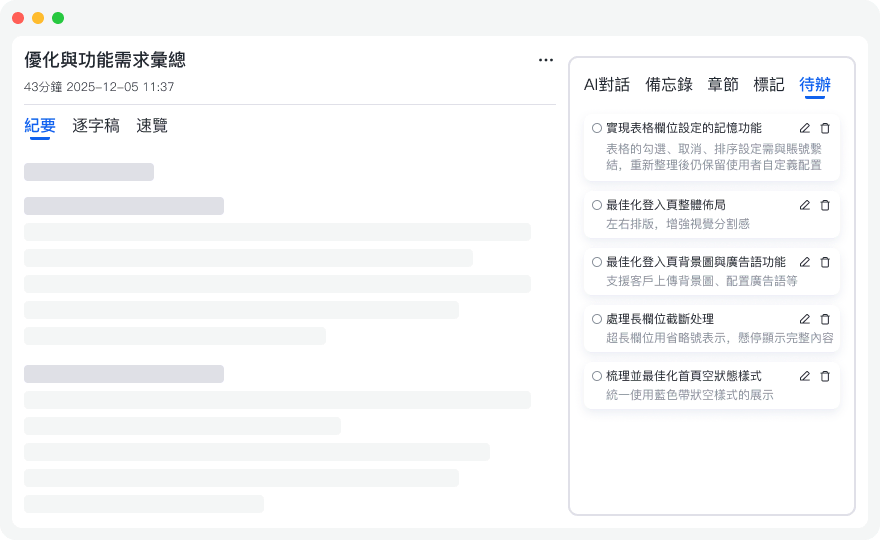
Step 4: View Summary and Transcript
After parsing (usually taking 1/10 of the video length), you'll see a timestamped transcript on the left and an AI-generated summary and chapter highlights on the right.
Step 5: Extract Action Items with AI
If the video contains tutorial steps or meeting decisions, click the "To-Do List" tab; the system will automatically list the next steps you need to take. You can directly copy these into your Notion or to-do app.
Frequently Asked Questions (FAQ)
Q1: Can these tools recognize recordings from my phone? Most tools support file upload. Tinrec specifically supports iOS and Android apps, allowing you to record directly on your phone or import files, with data synced to the web version.
Q2: How accurate is video-to-text conversion? Current mainstream AI (e.g., Tinrec, Gemini) can typically achieve over 95% accuracy with clear audio. Accuracy may drop with background noise or multiple speakers talking at once, but Tinrec's speaker differentiation feature improves readability.
Q3: What are the typical limitations of the free version? Most have time limits. For example, Tinrec's free version offers 100 minutes per month, sufficient for occasional short videos. For heavy meetings or courses, consider paid plans for more hours.
Q4: Can I use these tools to organize Zoom or Google Meet meetings? Yes. For live meetings, use Tinrec's "Real-Time Audio-to-Text" feature; for recorded files, upload via "Audio/Video File to Text."
Q5: Do the tools support Taiwanese or Cantonese videos? Not all international tools support dialects. Tinrec has broader support, explicitly recognizing Taiwanese and Cantonese, making it more friendly for local content creators and users.
Q6: Are there any limitations for iPhone users? Due to iOS system restrictions, call recording is not supported. However, for "live recording" or "importing video files/links," Tinrec's iOS app works normally without being affected by system call privacy restrictions.
Turn every recording into actionable outcomes
Get 60 free transcription minutes when you sign in. No credit card required.
Related Reading
You might also like

2026 Review of 3 Transcription Tools: How Tinrec Saves Hours on Dcard Users' Biggest Pain Point
Struggling to choose a transcription tool? This article starts with common pain points from Dcard users and tests Tinrec's real-time transcription, AI summaries, and team collaboration to help you save hours of manual transcription.

Tinrec Recording-to-Text in 2026: Cantonese Transcription + Auto Meeting Minutes
Hands-on test of Tinrec recording-to-text: Cantonese transcription, AI meeting minutes, and bot-free recording. See how it compares and where it fits.

2026 iPhone Recording-to-Text Test: Built-in Voice Memos vs Tinrec, 3-Dimension Comparison, Which Is Worth It?
How to choose iPhone recording-to-text tools? This article tests the built-in Voice Memos and Tinrec, comparing accuracy, language support, and post-processing, and shares pitfalls to avoid and buying advice.

The Complete Guide to Recording-to-Text in 2026: Hands-On Free Tools and Time-Saving Tips for Students
A senior student tests multiple recording-to-text tools, sharing how to choose and use free versions, leverage AI to organize transcripts, and why Tinrec is the top choice for Chinese-language courses and meetings.
2026 Hands-On Comparison of 2 Recording-to-Text Tools: Tinrec vs Yating, Which Free Version Is More Useful?
This article compares Tinrec and Yating in 5 dimensions: free plans, post-transcription processing, meeting recording methods, team collaboration, and multi-device support. If you need more than just transcripts—an AI meeting assistant that can organize to-dos, summaries, and team data—Tinrec is the more complete choice.

3 Speech-to-Text Tools Tested in 2026: Is the Free Version Enough? Tinrec Offers the Best Value
This tutorial reviews free speech-to-text tools, focusing on Tinrec, and shows how to use the free version to quickly convert meetings, interviews, and course recordings into transcripts and summaries. It also includes buying tips and FAQs.

2026 Tested: 4 Best Free Speech-to-Text Tools Compared – Which Free Plan Is Most Practical?
We tested 4 popular free speech-to-text tools, comparing free quotas, accuracy, and AI features to help you find the best option for meeting notes and transcripts.

2026 Hands-On Comparison of 4 Speech-to-Text Tools: Which AI Meeting Notes Really Save Time?
How do you choose a speech-to-text tool? This article tests Tinrec, Otter, Notta, and PLAUD, covering accuracy, AI summarization, cross-platform support, and team collaboration to help you find the best meeting notes solution.

4 iOS Voice-to-Text Apps Tested in 2026: Tinrec's AI Meeting Notes Save You Hours of Organizing
This article tests 4 iOS voice-to-text tools, comparing the built-in Voice Memos, Tinrec, PLAUD NotePin, and Yating Transcript, and tells you when to use the free built-in option and when to upgrade to Tinrec with AI meeting notes and team collaboration.