
Turn recordings into transcripts and summaries in minutes
Upload audio or video for multilingual transcription, AI notes, and action items
Why Is Recording Easy but Organizing So Hard?
Have you ever experienced this: after a two-hour marathon meeting or recording an entire lecture, you look at the "02:15:33" file on your phone and can't bring yourself to listen again?
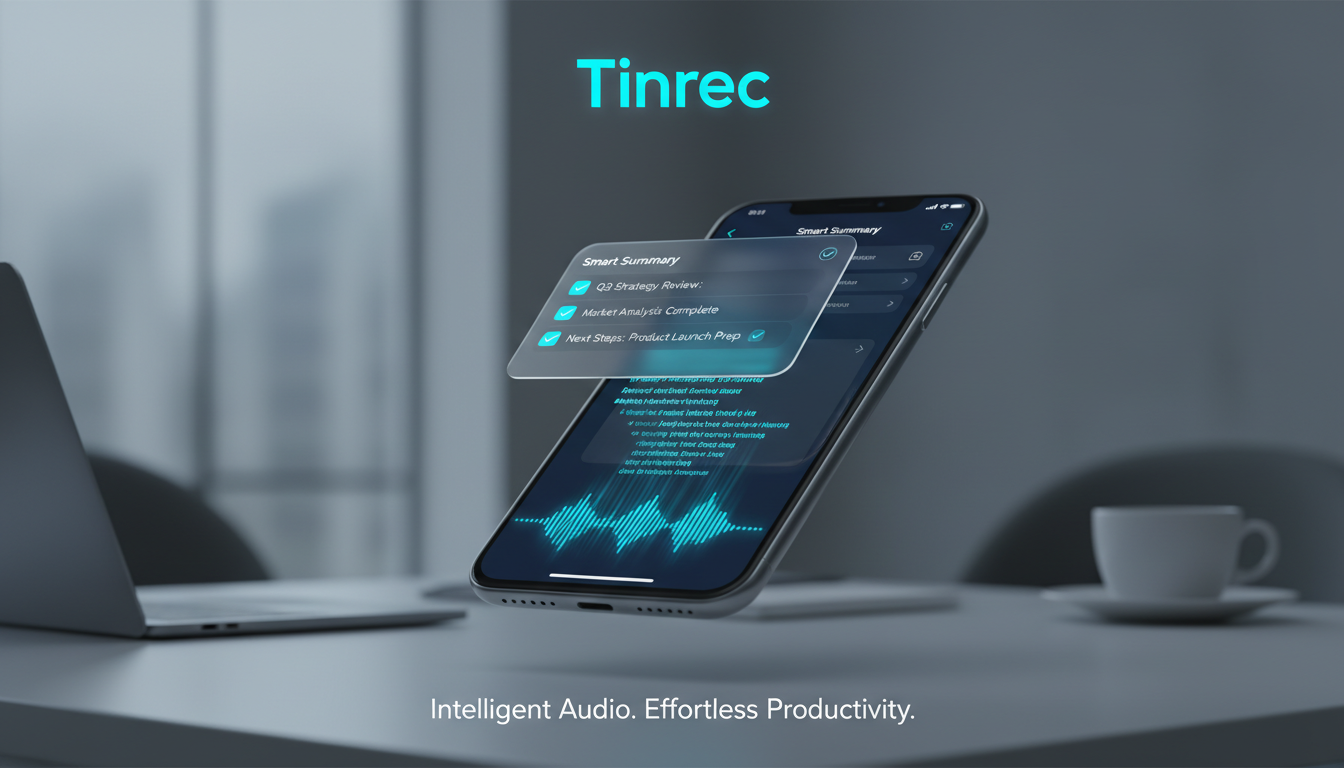
"Recording" only preserves sound, not information. Traditional recording has three major pain points:
- Extremely low information density: To find one sentence, you might have to fast-forward 10 times.
- Not searchable: You remember a decision was mentioned, but you don't know if it was at minute 20 or minute 50.
- No action items: After listening, you still have to manually create a to-do list—the workflow is broken.
In 2026, the criteria for choosing a recording tool has evolved from simply "record clearly" to "understand" and "help you organize." This article reviews three tools suitable for the Chinese language environment and teaches you how to build an efficient note-taking workflow.
2026 Hot Voice-to-Text Tool Comparison: Which One Understands Chinese Best?
Market tools mainly fall into "built-in phone," "pure transcription," and "AI workflow." The following compares dimensions most important to Chinese users:
Tool Specifications Comparison Table
| Dimension | Built-in Recording (Apple/Google) | Yating / Good Tape | Tinrec (Seconds Recording) |
|---|---|---|---|
| Main Positioning | Quick notes, free | Media interviews, dedicated transcription | Full-process AI assistant for meetings/learning |
| Chinese Support | Basic (varies by OS version) | Good (Yating great for Taiwanese accent) | Excellent (multi-language recognition + Chinese output) |
| Real-time Transcription | Partial support | Supported | Supported (visual waveform) |
| AI Summary/Action Items | None (plain text only) | Basic summary | Full (meeting minutes/to-do list) |
| Online Video to Text | Not supported | Partial support | Supported (YouTube/podcast link parsing) |
| AI Conversation Query | No | No | Supported (ask questions about recordings) |
| Recommended Use Cases | Simple memos | Journalist interviews, transcripts | Meeting notes, class notes, video organization |
Selection Advice
- If you just need a quick note of an idea: Use your phone's built-in dictation—it's fastest.
- If you need to process a lot of Taiwanese-accent interviews: Yating's local flavor is excellent.
- If you need "results immediately after a meeting" or "organize online videos": Tinrec's complete workflow (record → transcribe → summarize → chat) saves more post-processing time.
Stop organizing recordings by hand
Upload audio or video and automatically get a transcript, summary, and action items
Deep Dive: How Tinrec Solves the "Record and Forget" Problem

Among many tools, Tinrec (Seconds Recording) differentiates itself by being not just a "transcription tool" but an "understanding tool." It automates the post-recording process, ideal for professionals and students who need high efficiency.
1. Not Just Text, But Key Points
Traditional tools output a dense wall of text that's tiring to read. While transcribing, Tinrec uses AI for semantic analysis, automatically generating Meeting Minutes and Action Items. This means you don't need to reread the entire transcript—you can directly copy action items into your task management software.
2. Don't Understand? Ask the AI
This is Tinrec's biggest difference from traditional transcription software. Facing a 3-hour lecture recording, you can use the AI Conversation Query feature to ask questions like:
"What were the key points the instructor mentioned about the final exam?"
"What decision was made about the budget in this meeting?"
AI will answer based on the recording content and timestamp the original audio, reducing the time cost of "finding information" to almost zero.
3. Videos and Podcasts Too
Besides live recording, Tinrec also supports Video Link to Text. For content creators or students who need to organize YouTube tutorials or podcast interviews, just paste the URL to get a timestamped transcript and summary—no need to pause and type while watching.
Hands-On Tutorial: 3 Steps to Complete Meeting Minutes with AI
Here's how to use Tinrec to quickly turn a physical meeting into shareable minutes:
Step 1: Start Recording or Import File
- Live Meeting: Open the app and tap Real-Time Voice to Text; your phone will start recording and display the transcription on screen. Place the phone in the middle of the conference table for best audio.
- Online Meeting/Old File: If you have a Zoom or Teams recording, use the Audio File to Text feature to upload.
Step 2: Let AI Organize Structure
After recording, the system processes the transcription automatically. After a few minutes (depending on length), you'll see three tabs:
- Transcript: Complete conversation log with speaker differentiation.
- AI Summary: System-generated meeting digest.
- To-Do Items: Extracted to-do list.

Step 3: Interactive Query & Export
After reviewing the summary, use AI Conversation Query to clarify any details. Finally, tap the export button to export the text or summary as Word, PDF, or Notion format. Polish slightly and send to team members.
FAQ
Q1: Can I transcribe phone calls on iPhone?
Due to iOS privacy restrictions, most apps cannot record internal audio during calls. It's usually recommended to use speakerphone with another device, or use a desktop tool for side-recording. Tinrec supports multi-device login, so you can flexibly switch devices.
Q2: How accurate is Chinese transcription? Are there many errors?
Current AI models (like Whisper or Tinrec's engine) typically achieve over 95% accuracy for standard Mandarin. However, proper nouns, strong accents, or overlapping speech may cause errors. Keep the environment quiet and use the editing feature for adjustments.
Q3: Are there usage limits on the free version?
Due to computing costs, most AI transcription services have limits. For example, Tinrec's free version offers 100 minutes of transcription per month—sufficient for occasional short meetings. For heavy use, consider Basic or Pro plans.
Q4: Is my uploaded recording secure?
Check the privacy policy when choosing a tool. Professional paid tools encrypt data and do not use it to train public models. Tinrec offers a 30-day refund policy and clear privacy protections, suitable for enterprise and personal use.
Q5: Can it handle English or mixed Chinese-English content?
Yes. Modern AI note-taking tools have multi-language recognition. Tinrec supports 10 languages including Chinese, English, Japanese, and Korean, making it useful for foreign language courses or international meetings.
Q6: Which platforms does video-to-text support?
Tinrec's Video to Text feature supports YouTube and common public video links. As long as the video has clear audio, AI can parse it into a transcript and summary—great for organizing online learning resources.
Turn every recording into actionable outcomes
Get 60 free transcription minutes when you sign in. No credit card required.
Related Reading
You might also like

How to Choose the Best Recording-to-Text Tool in 2026: A Complete Guide from Transcripts to Actionable Meeting Minutes
This article compares the leading recording-to-text tools in 2026, covering capture methods, Chinese language support, post-meeting outputs, and team collaboration. It helps sales, business, and product development professionals select the most suitable tool based on meeting type and team size, and master the complete workflow from recording to actionable meeting minutes.
Which Speech-to-Text Tool Is Easiest to Learn? Choosing the Most Beginner-Friendly Option Based on Learning Cost
Looking for an easy-to-learn speech-to-text tool? This article starts from learning cost, compares the ease of learning of mainstream tools, breaks down the key steps to get started quickly, and provides recommendations for different groups such as sales, product R&D, and government employees, helping you learn and start using a tool in the least amount of time.

How to Choose the Best Recording-to-Text Tool in 2025: From Transcripts to Actionable Meeting Minutes
Meeting recording-to-text tools are no longer just about transcription. This article compares Tinrec, Otter, Fireflies, Notta, Granola, and other mainstream tools in terms of capture methods, Chinese language support, and post-meeting outputs, and explains how to generate action items from transcripts and build team knowledge, helping you choose the right tool for your meeting scenarios.

2026 Free Speech-to-Text Solutions: 5 Tools Compared
PTT hotly discusses speech-to-text apps. We tested Tinrec and 4 other tools, comparing free quotas, Cantonese accuracy, and AI features to help you save time on meeting notes.

4 Best Recording-to-Text Tools in 2026: How to Choose Based on Free Credits and AI Features
We tested the latest 4 recording-to-text tools in 2026, from free credits to AI Q&A and bot-free recording, to help you find the most time-saving option.

Tinrec vs Otter.ai in 2026: A 5-Dimension Comparison for Chinese Users
We tested Tinrec and Otter.ai for Chinese meetings, bot-free recording, AI Q&A, cross-platform support, and team collaboration to help you choose the right transcription tool and save overtime hours.

5 Best Recording-to-Text Tools in 2026 Compared: Tinrec vs MyEdit, Yating, and More
After testing multiple free recording-to-text tools, here's why Tinrec became my go-to for meeting notes from a mid-level manager's perspective—and whether the free plan is enough.

4 Best Speech-to-Text Tools in 2026: Free vs Paid Compared for US Users
We tested the most talked-about speech-to-text tools on Dcard and PTT, from free to paid, comparing Tinrec, Yating, Otter.ai, and Notta on features, pricing, and use cases to help you find the time-saving choice.

5 Best Speech-to-Text Tools Tested in 2025: AI Transcripts & Meeting Notes Compared
With countless speech-to-text tools available, this article tests Tinrec, MyEdit, SoundType AI, iPhone Voice Memos, and OpenAI Whisper across three dimensions—Traditional Chinese recognition, recording sources, and post-processing—to help you choose the right one for your needs.