

Turn recordings into transcripts and summaries in minutes
Upload audio or video for multilingual transcription, AI notes, and action items
Hard as it is to believe, another year has come and gone, and a new one is upon us. As the holidays wind down, it's time for the annual New Year's resolution season. People around the world are setting goals for 2026. If you want to make this your most productive year yet professionally, here are 10 recommended resolutions from TinRec to help you succeed in 2026.
Resolution #1: Cut Down on Social Media Time
You've probably thought about it before, but with the New Year, now is the perfect time to act. While social media can be productive in certain contexts (e.g., marketing or networking), overuse eats up valuable time needed for work and life.
To successfully achieve this goal, start by tracking how much time you currently spend on social platforms daily. Then set a specific reduction target. Fortunately, there are many apps for computers and phones (like Forest and StayFree) to help monitor your usage.
After establishing a baseline, set a clear goal like "reduce by 30 minutes per day." Remember, goals must be specific — "use social media less" is too vague to measure success.
Resolution #2: Set S.M.A.R.T. Goals
"Reduce by 30 minutes" from the previous resolution is an example of a S.M.A.R.T. goal — one that is Specific, Measurable, Attainable, Realistic, and Time-bound.
In other words, instead of vague goals like "find a better job," try "contact three new people in my industry per week." With the S.M.A.R.T. principle, you can clearly track progress and adjust strategy as needed.
Resolution #3: Practice Delayed Gratification
Years of scientific research show that the ability to delay gratification and resist impulsive temptations is crucial for success in all areas of life. Fortunately, this skill is not innate but can be cultivated through practice.
The famous "Marshmallow Test" is a representative study in this field. But practicing delayed gratification doesn't mean giving up dessert. You can start small — when craving a snack, tell yourself to wait 10 minutes before getting up; or require yourself to complete an important task before checking social media.
These steps may seem small, but over time they build the self-discipline needed to achieve your goals for 2022 and beyond.
Resolution #4: Maintain a Consistent Sleep Schedule
Whether you're a morning person or a night owl, getting enough sleep and having a fixed bedtime and wake-up time are key to staying productive. Irregular sleep patterns disrupt your internal clock, leading to fatigue, reduced focus, and difficulty planning your daily schedule.
When creating a sleep plan, consider your most productive hours and work schedule. Once you set a consistent bedtime, turn off all electronic devices an hour before bed and avoid scrolling on your phone in bed to help stick to the routine.
Resolution #5: Give Yourself Some Space in the Morning
How you start your morning often sets the tone for the entire day. Yet many people immediately check their phones and scroll social media upon waking, inadvertently disrupting their brain's startup process.
Stop organizing recordings by hand
Upload audio or video and automatically get a transcript, summary, and action items
To avoid this mindless browsing from ruining your day's efficiency, set a small goal like "don't look at your phone before going to the bathroom" — a tip heavily recommended in the documentary The Social Dilemma. If you're more ambitious, wait until after breakfast to use your phone.
Whatever approach you choose, the key is to protect this golden time and avoid being flooded by external stimuli too early.
Resolution #6: Create a More Effective To-Do List
A to-do list not only ensures tasks are completed but also provides a sense of accomplishment and triggers dopamine release in the brain. After all, what's more satisfying than seeing every item checked off?
If you've tried making lists before but couldn't stick with it, consider making "improve your list method" a new resolution. With countless to-do apps, paper planners, and management systems available, you're sure to find one that works for you.
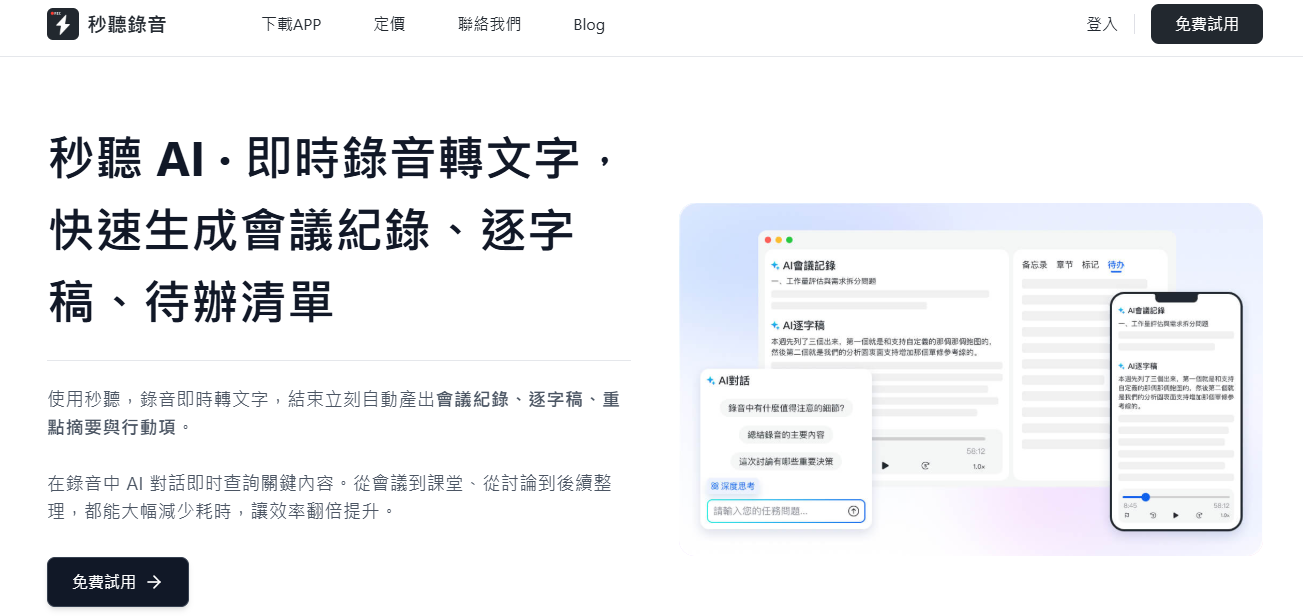
For example, TinRec can automatically generate meeting action items, helping you quickly organize tasks and improve follow-up efficiency.
Resolution #7: Turn Off Notifications
While we always want to be in the know, notifications are often the biggest productivity killers. In fact, most notifications aren't that important — do you really need to know right away that an old high school classmate posted an Instagram story?
Try turning off notifications during work hours or setting your phone to "Do Not Disturb" mode to maintain focus and significantly boost output.
Resolution #8: Build Habits and Stick to Them
Humans are creatures of habit: once you start doing something, it's hard to stop; unfortunately, the reverse is also true — not doing something makes it hard to start.
Building efficient daily workflow routines is not easy but highly rewarding. First, plan your daily framework, e.g., arrive at 8:30 AM, lunch at 12:00 PM, leave at 5:00 PM. After subtracting fixed meetings, you'll have main work blocks (e.g., 8:30–12:00 and 1:00–5:00).
Based on your energy curve, choose a suitable work rhythm: some prefer the 25-minute Pomodoro Technique, others use 52 minutes work / 17 minutes rest, or follow Cal Newport's 90-minute deep work blocks from Deep Work.
Experiment to find what suits you best, then challenge yourself to stick with it (using the "Don't Break the Chain" method to boost motivation).
Resolution #9: Improve Your Note-Taking
Note-taking skills are often overlooked in the workplace, but a good recording system is key to preserving information and applying it later.
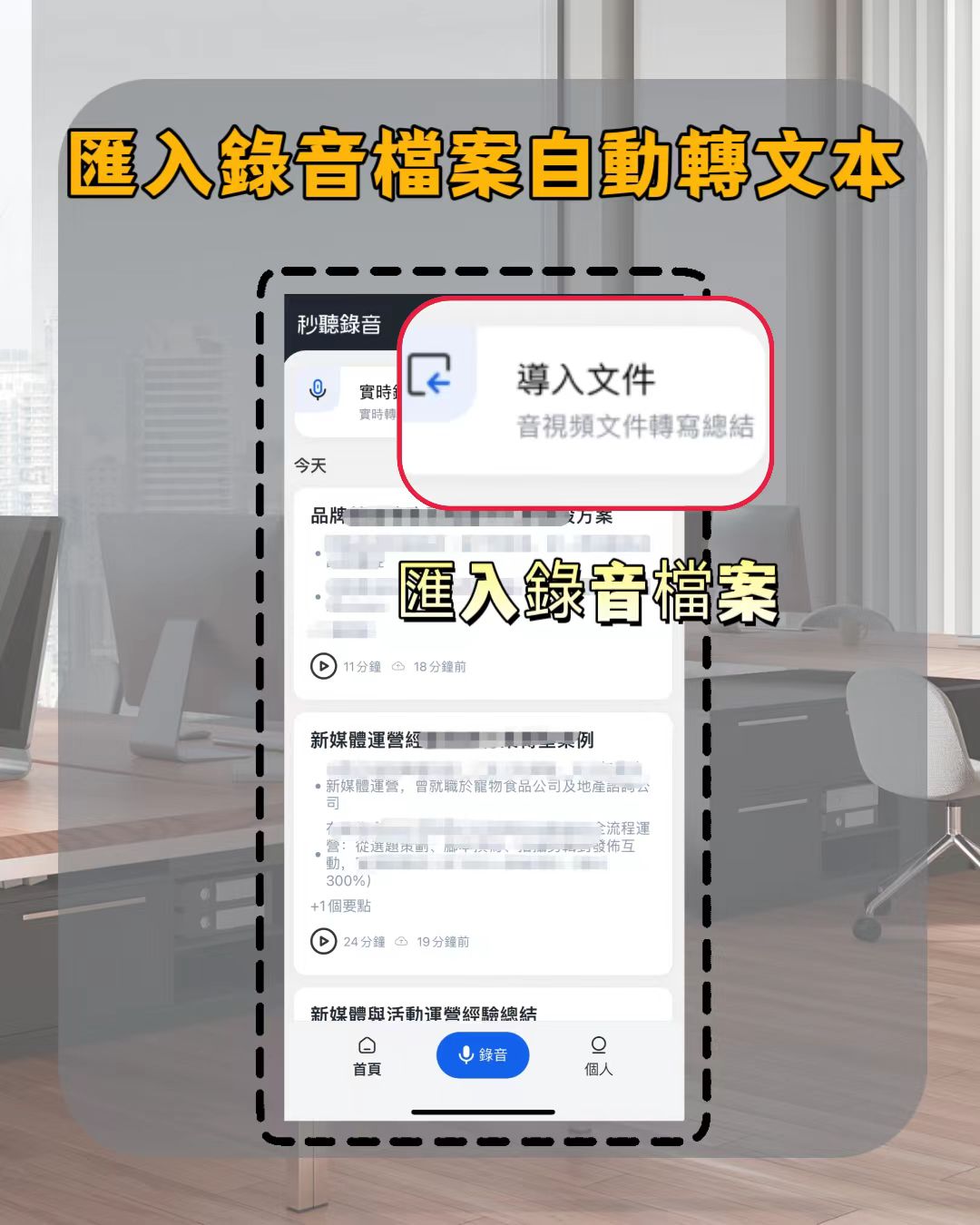
TinRec supports real-time speech-to-text, automatically recording and transcribing meetings, with support for multiple languages including Chinese, English, Japanese, Cantonese, and Taiwanese, so you can focus on participating rather than scribbling.
Additionally, optimize your note-taking process: ensure clear key points, proper categorization, and proper storage for future reference. Your work efficiency will greatly benefit.
Resolution #10: Start a Meditation Practice
Neuroscience continues to discover the many benefits of meditation. Besides relaxation, meditation promotes mental health, emotional stability, and improved focus, thereby boosting work efficiency.
Even better, meditation pairs perfectly with other resolutions. When you feel an impulse, try telling yourself to sit and meditate for a few minutes; or after waking up, meditate before checking your phone. This creates mental space, clears your mind, and prepares you for the day.
Conclusion
Whatever New Year's resolutions you choose, be realistic. Productivity gains don't happen overnight. But with steady, incremental steps, the long-term positive impact on your career will be significant.
Experience TinRec now
300 minutes of speech-to-text per month
Up to 30 minutes per meeting
Upload 3 audio or video files
Enterprise users are welcome to apply for custom plans
Industry-leading speech recognition technology
Powerful AI summaries and to-do generation
Custom integration and workflow support
Turn every recording into actionable outcomes
Get 60 free transcription minutes when you sign in. No credit card required.
Related Reading
You might also like

2026 Audio Summarizer Guide: Auto Summaries + AI Q&A to Find Key Points
How do you choose an audio summarizer? This guide covers common pitfalls and key factors like summary quality, AI Q&A, and cross-platform export. We recommend Tinrec, which supports bot-free online meeting recording, automatic summaries, action item extraction, and team spaces. Also includes alternatives like Granola and PLAUD, plus tips to avoid mistakes.

5 Best AI Transcription Tools in 2026: Which One Saves the Most Time?
We tested 5 recording-to-transcript tools, comparing Chinese recognition, post-meeting organization, AI Q&A, and team collaboration. See how Tinrec stacks up against Otter.ai, Notta, and TurboScribe, plus key buying tips and pitfalls to avoid.
Tinrec vs Otter.ai: Which AI Meeting Summary Tool Is Better for Chinese-Speaking Teams in 2026?
Many people think a transcript means the meeting notes are done, but the real time sink is post-meeting organization. This hands-on comparison of Tinrec and Otter.ai—two tools that automatically generate meeting summaries from recordings—evaluates them across six dimensions: Chinese-language meeting experience, recording method, post-meeting outputs, audio retention, team governance, and pricing/quotas, helping Chinese-speaking teams decide which tool better fits their workflow.

4 Best Meeting Transcription Tools in 2026: Free Tiers, Chinese Accuracy, and Post-Meeting Efficiency Compared
Tired of spending hours writing meeting minutes? This article compares Tinrec, Notta, Granola, and PLAUD Note across four key areas: how they record online meetings, Chinese and mixed-language transcription accuracy, post-transcription summarization and AI Q&A, and team data ownership. It also includes a pitfalls guide and selection advice.

How to Auto-Generate Transcripts in 2026: Tinrec vs Yating + Bot-Free Meeting Recording
Auto-generating transcripts isn't a one-click job. This article breaks down the three most common pitfalls, then compares Tinrec and Yating Transcript across five dimensions to clarify how to choose for Hong Kong office scenarios.

2026 AI Meeting Notes Tools Compared: 5 Top Picks for Transcription & Team Collaboration
Tired of spending hours after meetings organizing transcripts? This article reviews 5 AI meeting notes tools based on real testing, breaking down 5 key dimensions: audio capture methods, post-meeting outputs, audio retention, and team governance. It focuses on Tinrec as the primary example, comparing its use cases with Notta, Otter.ai, Granola, and TurboScribe, and includes a pitfalls guide and selection advice.

2026 AI Meeting Summary Comparison: 5 Common Misconceptions and Tinrec in Practice
Many people think having a transcript means having a meeting summary, but after the meeting they still have to read through it themselves. This article examines 5 common misconceptions to explain where AI meeting summaries truly help, their core capabilities, practical use cases, and key purchasing considerations, using Tinrec as a concrete example.

How to Summarize Meeting Highlights in 2026: 5 Steps from Recording to AI Summary
The problem with meeting notes usually isn't slow typing—it's trying to capture and organize at the same time. This article breaks down a 5-step workflow from recording, transcription, AI summarization, to action item tracking, and explains how Tinrec (秒听录音) uses desktop bot-free recording, AI Q&A, and multi-format export to turn meetings into searchable, collaborative team data.

Tinrec Audio to Text Tutorial 2026: Chinese Transcripts + AI Meeting Notes in One Go
How to choose an audio-to-text tool? This article compares Tinrec and Yating Transcript across five dimensions: Chinese and multilingual transcription, bot-free online meeting recording, post-transcription summaries and action items, cross-platform export, and team seats and usage management. It then tells you directly which one to choose for which situation.