
Turn recordings into transcripts and summaries in minutes
Upload audio or video for multilingual transcription, AI notes, and action items
For students, content creators, or anyone who needs to organize meeting notes, YouTube is a vast knowledge base. But the biggest headache is often: "The content is valuable, but turning it into text takes too much time." If a video doesn't have CC subtitles, or its auto-generated captions are full of errors, manual transcription is nearly impossible.
You might be searching for a "YouTube subtitle downloader" to quickly convert videos to text. This article takes a practical approach, analyzing common subtitle download tools and the new generation of AI speech-to-text services, providing a detailed guide and step-by-step tutorial.
Quick Navigation Summary:
- If you only need a raw .srt subtitle file (for video editing or media player overlay): Use traditional online subtitle download sites (e.g., DownSub-like tools).
- If you need to "understand" the video content (making notes, article material, meeting summaries): Choose an AI transcription and summarization tool (like Tinrec), which converts audio into structured notes.
Why Traditional Subtitle Downloaders Still Fall Short: Current Pain Points
When you search for "YouTube subtitle download," you'll typically encounter these scenarios and limitations—issues that simple subtitle file downloads can't fully solve:
- Video Has No Subtitles: Many live streams or non-English videos don't have CC subtitles uploaded by the creator; traditional downloaders fail.
- Fragmented Timeline: Downloaded .srt files are filled with timestamps, making them hard to read and not directly usable in note apps.
- No Key Point Extraction: Even with a tens-of-thousands-word transcript, you still have to manually re-read to find highlights, conclusions, or to-dos.
- Language Barrier: For foreign-language videos, downloading the original subtitles doesn't help with translation or understanding.
Therefore, the trend in tool selection has shifted from "downloading files" to "AI content extraction."
2026 Tool Comparison: Traditional Downloaders vs. AI Smart Transcription
Before choosing a tool, we've categorized common solutions into "Subtitle Download Only" and "AI Transcription & Notes" types, using Tinrec as a representative of the AI category for comparison, to help clarify your needs.
| Dimension | Traditional Online Subtitle Downloaders | AI Speech-to-Text Assistant (e.g., Tinrec) |
|---|---|---|
| Core Principle | Extracts existing subtitle files (.srt/.vtt) from YouTube servers | Re-identifies video audio via AI to generate transcripts |
| Best Use Case | Video editing subtitle overlay, simple subtitle backup | Study notes, meeting records, content creation material |
| No Subtitles | Cannot download (fails if original video lacks subtitles) | Works (directly transcribes audio to text) |
| Output | Fragmented text with timestamps | Full transcript + AI summary + action items |
| Interactivity | None (static file only) | High (supports AI chat query to ask about content) |
| Reading Experience | Low (must manually remove timestamps and line breaks) | High (auto-paragraphing, speaker identification, structured) |
Stop organizing recordings by hand
Upload audio or video and automatically get a transcript, summary, and action items
In-Depth Review: How Tinrec Transforms the "Subtitle Download" Experience
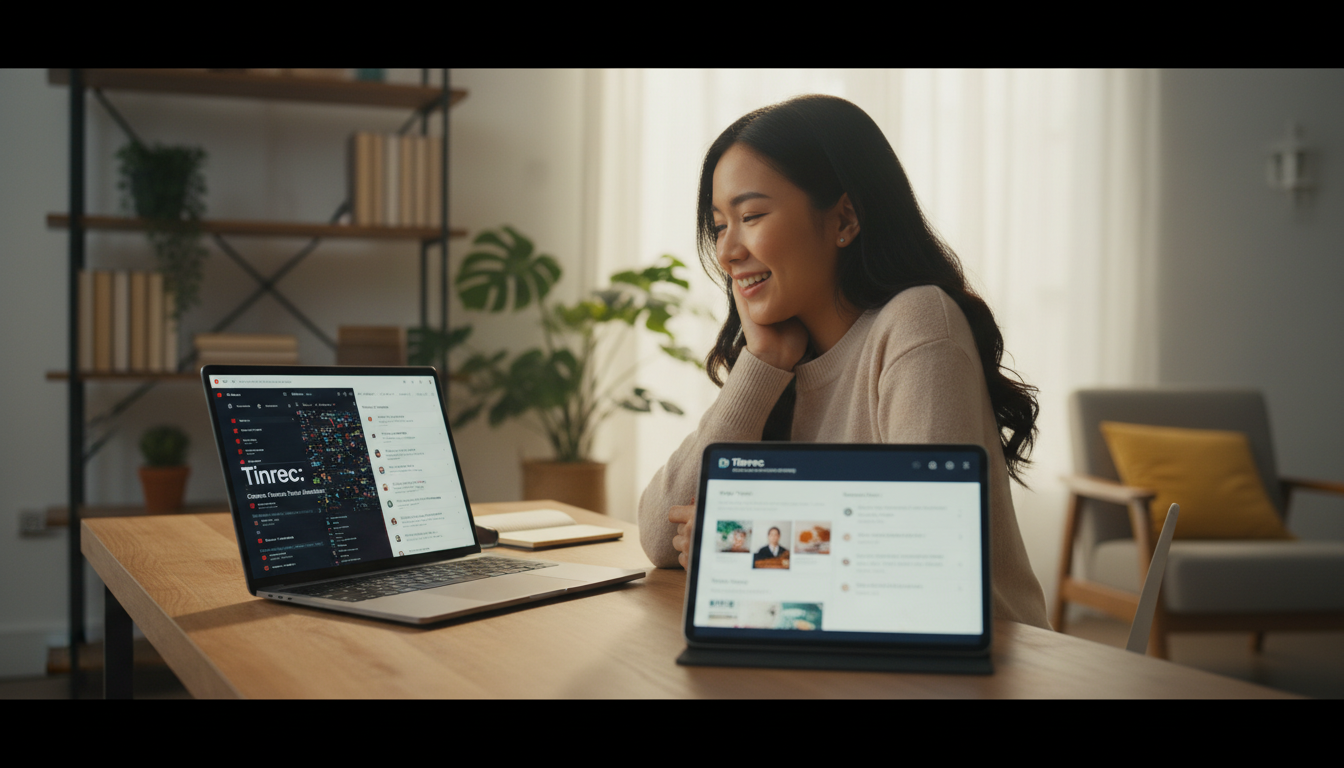
Tinrec is essentially an AI recording assistant, but its "Online Video to Text" feature solves the advanced needs of subtitle downloading. It doesn't just "grab" text; it "reads" and organizes the video content for users.
1. Independent of Original Subtitles, AI Rewrites Speech
Many YouTube videos (especially livestreams or older ones) may only have low-quality auto-captions or none at all. Tinrec extracts the audio and performs AI recognition, supporting Chinese, English, Japanese, Korean, and 10 other languages. This means even if the creator didn't upload subtitles, you can still get high-accuracy transcripts.
2. From "Text" to "Insights" – Structured Organization
Traditional downloaders give you raw data; Tinrec gives you a finished product. It automatically generates:
- Full Summary: Quickly grasp the video's core topic.
- Chapter Sections: Auto-segments by topic.
- Action Items: For tutorials or meetings, AI extracts next steps.
3. "Chat" with the Video Content
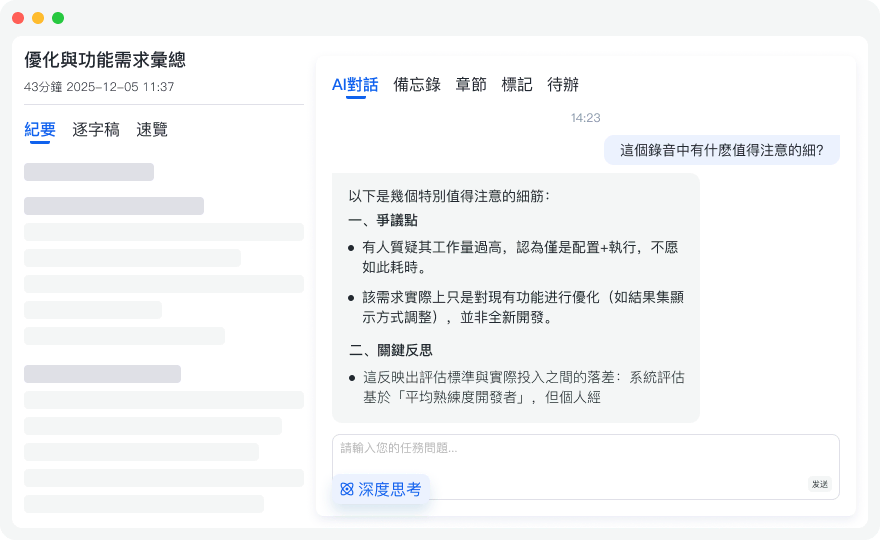
This is the biggest difference between Tinrec and traditional tools. For a 1-hour interview video, you don't need to search for keywords; you can directly use the AI Chat Query feature to ask questions like "What is the speaker's view on AI development?" and the system will answer based on the recording.
Hands-On Tutorial: How to Convert a YouTube Video into Notes Quickly
Below is an example using Tinrec's web version, showing how to extract video content using only a browser, without installing software.
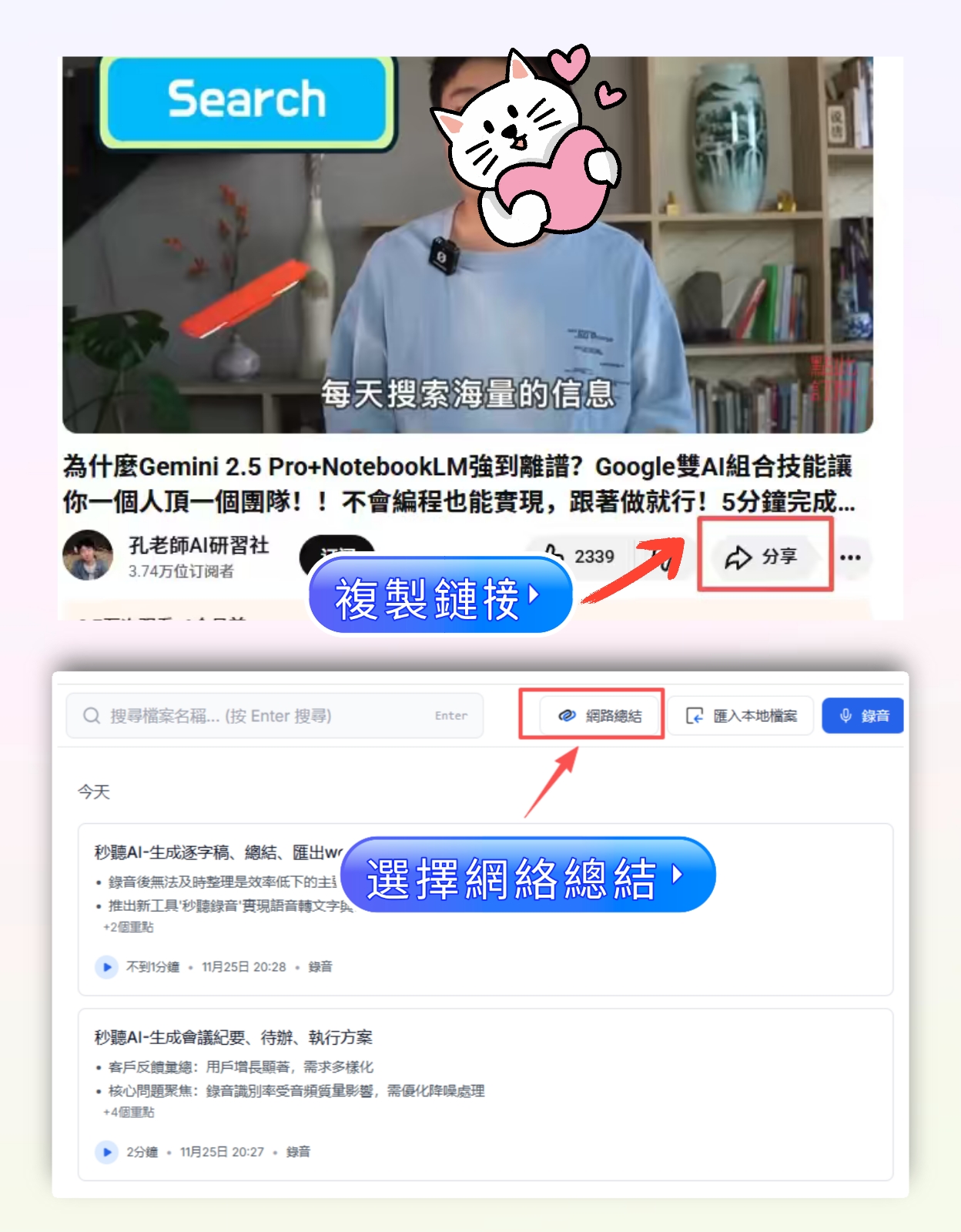
Step 1: Get the Video Link
Go to YouTube and copy the URL of the video you want to transcribe. It can be a course, podcast recording, or news interview.
Step 2: Use the Video-to-Text Feature
Access the Tinrec Video/Audio to Text feature:
- Log in to your Tinrec account.
- Select "Link Parsing" or a similar option.
- Paste the YouTube link into the input box.
- Select the video's main language (e.g., English) for better recognition accuracy.
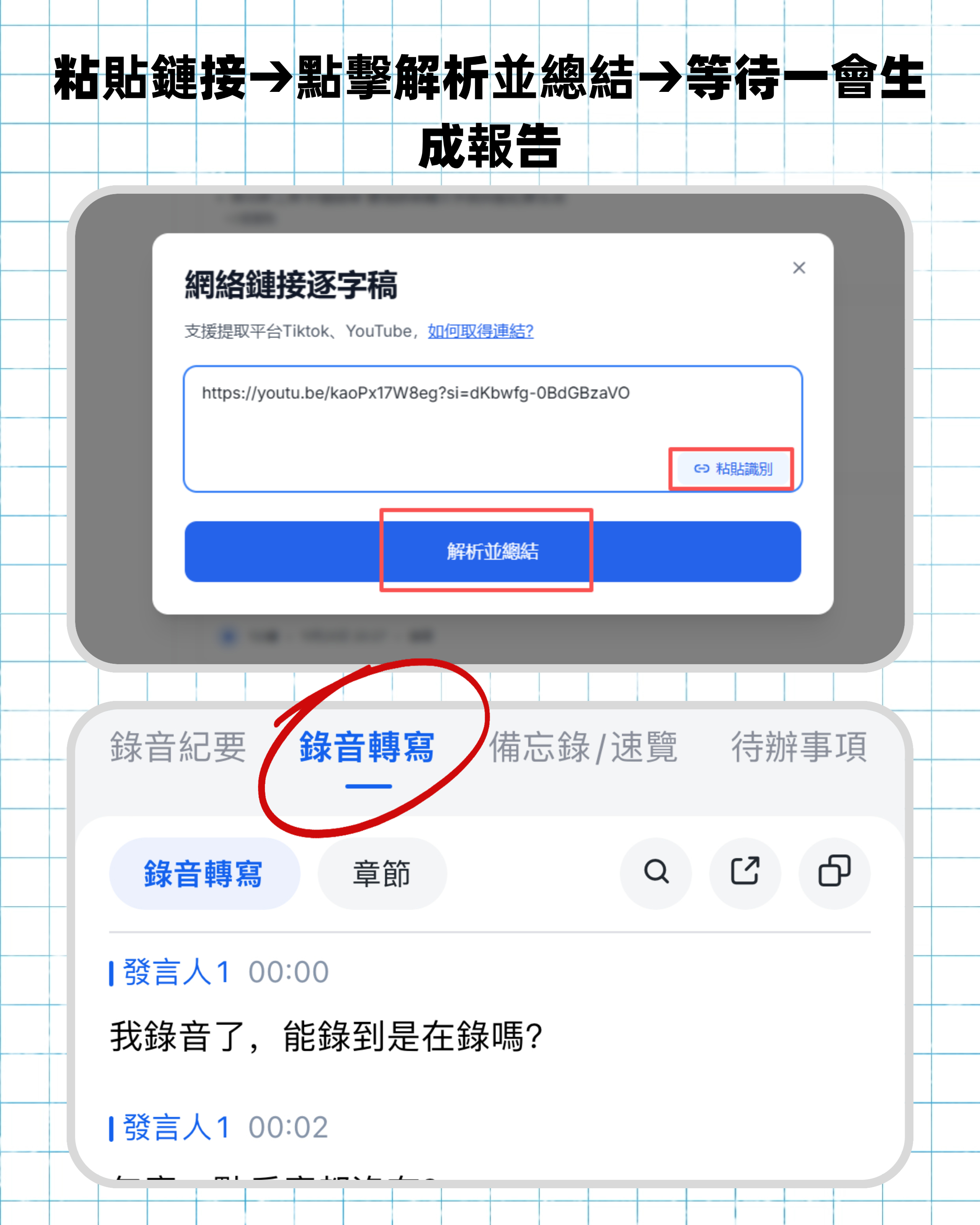
Step 3: Wait for AI Parsing and Generation
The system processes the audio in the cloud. Processing time is usually shorter than the video length. Once done, you'll see a side-by-side interface:
- Left/Top: AI-generated structured summary, mind map, or bullet points.
- Right/Bottom: Full transcript; clicking text jumps to the corresponding playback time.
Step 4: Export and Use
After verifying the content, you can:
- Copy Summary: Paste directly into Notion or other note apps.
- Export File: Supports Word, PDF, or Markdown for further editing.
- Ask AI: If you don't want to read the full text, just ask details in the chat box.
FAQ
Q1: Why can't I download subtitles with a regular downloader? Usually it's because the YouTube video itself doesn't have CC subtitles. Traditional downloaders can only fetch existing files; if the creator didn't provide them, they can't be downloaded. In that case, use a tool like Tinrec with ASR (automatic speech recognition) to generate text yourself.
Q2: How accurate is video-to-text conversion? Accuracy depends on audio quality. If the video is clear with little background noise, AI recognition can reach over 95%. Tinrec is optimized for mixed Chinese/English workplace and everyday language, and is often more accurate than YouTube's auto-captions.
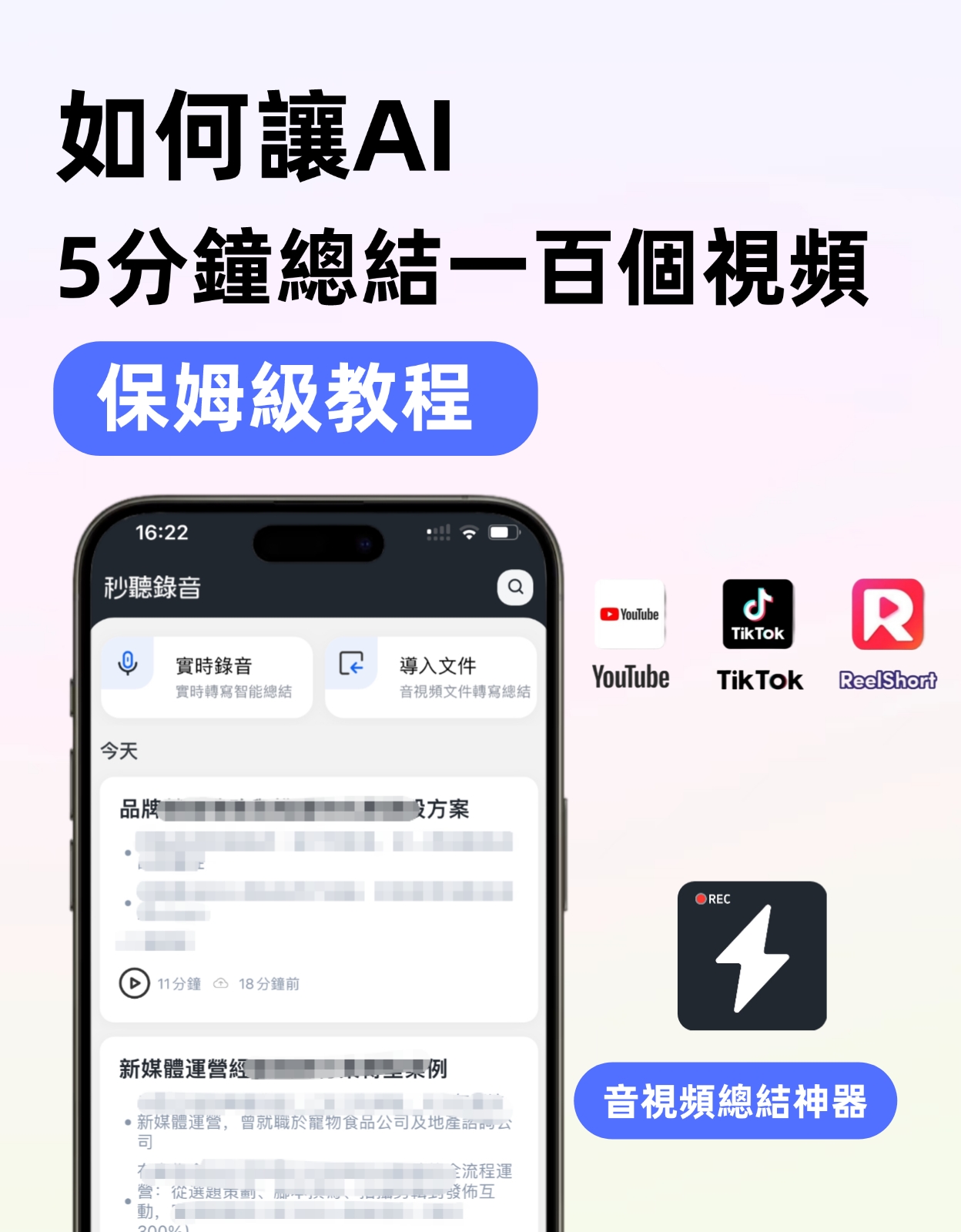
Q3: Can I use it on mobile? Yes. Tinrec supports iOS, Android, and Web. You can copy a YouTube link on your phone, open the Tinrec app to parse it, and read key points during your commute.
Q4: Is there a free version limit? Most AI tools use a "free quota + paid subscription" model. For Tinrec, the free plan offers 100 minutes of recording/transcription per month, which is enough for occasional short videos. For heavy coursework or meetings, consider upgrading to Basic or Pro.
Q5: Can I edit the transcript? Yes. In Tinrec's editor, you can correct specific terms or misrecognized words at any time. Edits sync automatically, making it easy to export perfect meeting notes.
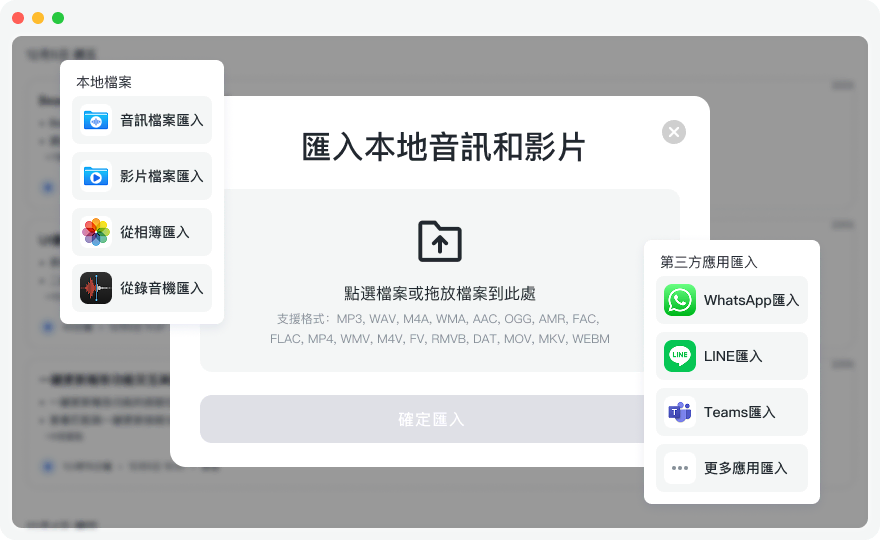
Q6: Does it support platforms other than YouTube? Tinrec's link parsing mainly supports YouTube, but it also supports uploading local audio files (mp3, m4a, wav) and video files (mp4, mov). For TikTok or podcast original files, you can use the "Audio File to Text" feature.
Turn every recording into actionable outcomes
Get 60 free transcription minutes when you sign in. No credit card required.
Related Reading
You might also like
2026 Complete Guide to vocol ai: Turn Meeting, Class, and Interview Recordings into Actionable Data
A comprehensive guide for knowledge workers on vocol ai voice-to-text tools. Using Tinrec as an example, learn how AI can automatically transform meetings, classes, interviews, and online videos into searchable, summarized, and queryable structured data. Includes key buying considerations and a step-by-step walkthrough to help you stop drowning in audio files.
2026 Real-World Comparison of 3 Notta Alternatives: Which Performs Better for Chinese Meetings and AI Q&A?
Still looking for a Notta alternative? We tested Tinrec, Plaud Note, and Otter.ai across transcription quality, AI features, and pricing to help you pick the best voice-to-text tool for your needs.
2026 Review of 3 Transcription Apps for Students: Notta Isn't the Top Pick—Here's Why
A senior student tests three speech-to-text tools for lectures and group discussions, comparing free minute limits, Chinese accuracy, and AI features of Notta, Otter.ai, and Tinrec to find the best fit for students.
2026 Real-World Comparison of 4 Notta Alternatives: Which Saves the Most Time for Chinese Meeting Minutes?
What are the alternatives to Notta? This article tests 4 recording-to-text tools including Tinrec, evaluating Chinese transcription, AI summaries, multi-platform support, and pricing to help you choose the best app for meetings, classes, and interviews.
2026 Hands-on Comparison of 3 AI Recording & Transcription Tools: Which Works Best for Chinese Meetings and Learning?
It's not just about transcribing audio to text; it's about organizing it into usable knowledge. This article hands-on tests three tools: Tinrec, Notta, and Fireflies, evaluating them on Chinese accuracy, AI summarization, multi-source support, and real-world experience to help you find the best AI recording assistant for meetings, courses, and online videos.

2025 Hands-On Review of 3 AI Recording Tools for Students: Tinrec's Free Tier Is the Most Surprising
A senior student tested these tools for a semester, comparing Tinrec, Notta, and Otter.ai on free tiers, AI summarization, cross-platform support, and student plans. Find out which one is best for lecture recording and exam review.
2026 Four Transcription Tools Tested and Compared: From Plaud Note Pro to Tinrec, My Journey to Choosing the Right One
After seeing heated discussions about Plaud Note Pro on Dcard, I actually tested four transcription tools. This article shares my trial journey from hardware recorders to software solutions, and why I ultimately chose Tinrec as my productivity core.

2026 Hands-On Comparison of 3 Speech-to-Text Apps: A Time-Saving Tool for Recording Natural Gas and Propane Prices in Nottawa
When comparing natural gas and propane prices in Nottawa, the most time-consuming part is recording calls and organizing quotes. This article tests three speech-to-text apps—Tinrec, Otter.ai, and Notta—evaluating Chinese recognition, AI summaries, cross-platform use, and free tiers to help you choose the best tool for recording supplier quotes and service details.
2026 Comparison of 4 Speech-to-Text Apps: Notta AI Not the Best? This App is the Top Pick
Hong Kong office workers test 4 speech-to-text tools including Notta and Tinrec to see which one offers the best Cantonese recognition, most useful AI features, and biggest time savings. Read this review before deciding.