
Turn recordings into transcripts and summaries in minutes
Upload audio or video for multilingual transcription, AI notes, and action items
Facing a one-hour meeting recording, an all-English YouTube tutorial, or an interview without subtitles, "how to extract video subtitles" is a headache for many professionals and content creators. Manual transcribing is not only time-consuming but often takes 3 to 5 times the video length to organize, making it highly inefficient.
In 2026, with the maturity of AI speech recognition technology, we no longer need to "listen and type sentence by sentence." This article reviews common video-to-text solutions on the market and provides practical tutorials to help you choose the right tool based on your needs (e.g., simply needing subtitle files or requiring content summaries). If you want to extract text while getting key takeaways, prioritize productivity tools with AI summarization; if you only need visual subtitles, consider editing software.
Why Do You Need Professional Video Subtitle Extraction Tools?
Before choosing a tool, clarify your core needs. Typically, "subtitle extraction" falls into two categories:
- Video Editing and Subtitling: Need SRT subtitle files to help viewers understand the video (e.g., CapCut).
- Information Acquisition and Organization: Need transcripts and key summaries for learning, meeting notes, or content repurposing (e.g., Tinrec).
Traditional editing software can generate subtitles but often cannot export editable note documents and lack deep understanding of the content. New-generation AI note-taking tools solve the problems of "low information density" and "high re-listening costs."
2026 Popular Video-to-Text Tools Comparison
To help readers make quick decisions, we selected representative solutions on the market for a dimensional comparison. This review highlights the differences between Tinrec (Quick Audio to Text) (focused on information organization) and general "editing" or "single-function" tools.
| Dimension | Tinrec (Quick Audio to Text) | Common Editing Software (e.g., CapCut) | Traditional Transcription Services |
|---|---|---|---|
| Core Use | Content understanding, note-taking, summarization | Video editing, visual subtitles | Pure text transcription |
| Input Sources | Audio files, video files, URL links (YouTube/TikTok) | Video files | Audio/video files |
| Real-time Transcription | Supported (real-time audio to text) | Not supported (requires file import) | Depends on tool |
| AI Smart Summarization | Supported (meeting minutes, action items, conclusions) | No | Some support |
| AI Chat Query | Supported (ask questions about content) | No | No |
| Multi-language Recognition | Chinese, English, Japanese, Korean, etc. (10 languages) | Depends on software version | Usually single language |
| Output Formats | TXT, Word, PDF, Markdown | SRT, video output | TXT, Word, SRT |
In-depth Analysis: Tinrec (Quick Audio to Text) Differentiation Advantages
Among many tools, Tinrec (Quick Audio to Text) is not just a simple "transcription tool" but an AI assistant designed for "work and learning flows." For users needing to extract information from videos (e.g., students organizing courses, PMs compiling meeting recordings), Tinrec provides a complete workflow from "recording/video" to "understanding."
Stop organizing recordings by hand
Upload audio or video and automatically get a transcript, summary, and action items
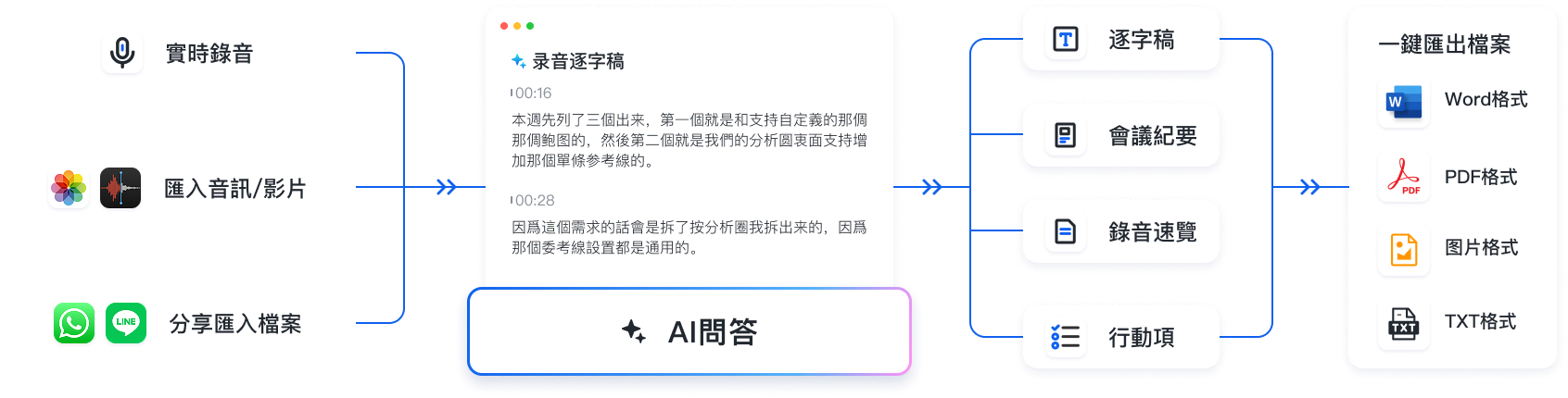
- More Than Transcript: Tinrec can automatically identify speakers and generate structured meeting minutes and action items, solving the problem of "having thousands of words but no time to read."
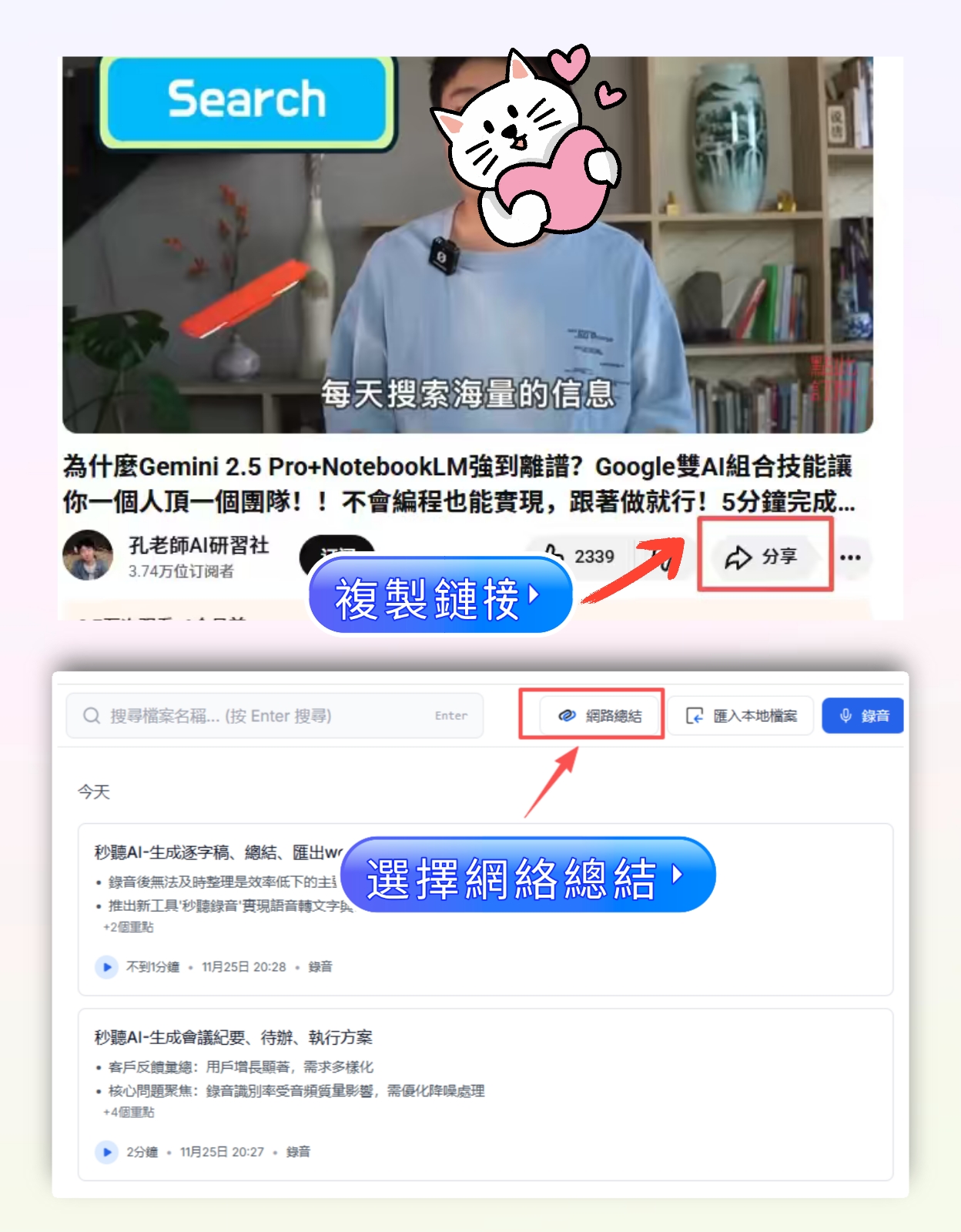
- Supports Online Video Links: A feature many competitors lack. Users simply paste a YouTube or Podcast link without downloading large video files to generate transcripts directly.
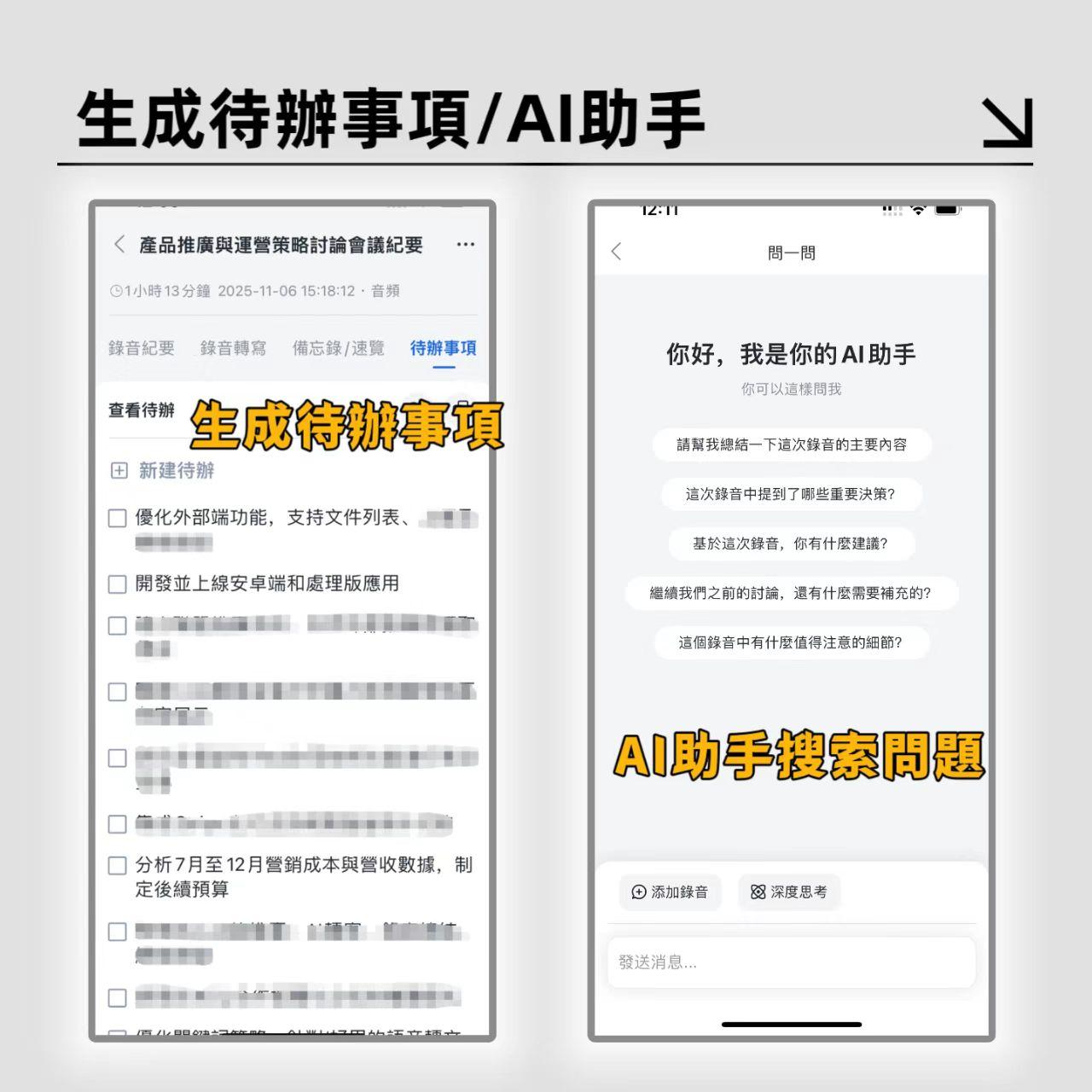
- AI Chat Query: Retrieve content through "Q&A" (e.g., "What is the marketing budget mentioned in this video?"), replacing traditional Ctrl+F keyword search and greatly improving information retrieval efficiency.
Practical Tutorial: How to Extract Video Subtitles in 3 Steps
Below, using Tinrec as an example, we demonstrate how to quickly convert a video file or online video into editable text and summaries.
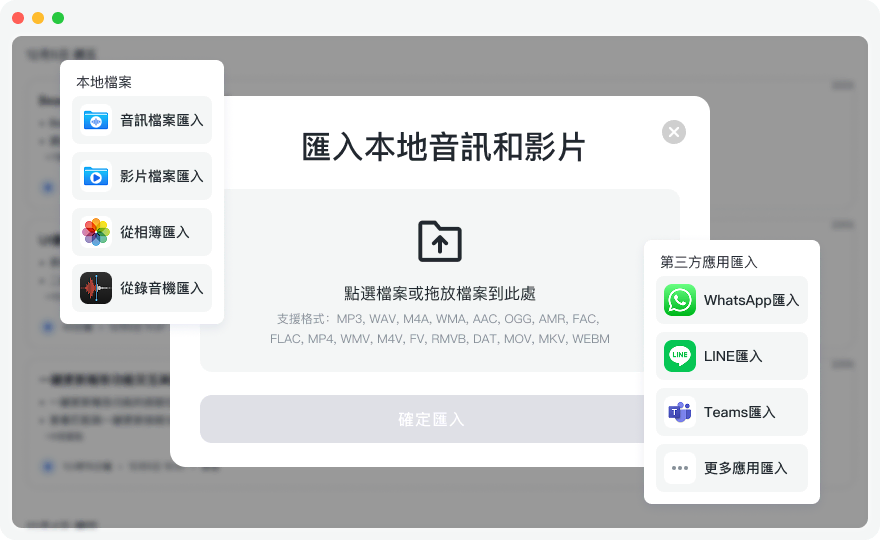
Step 1: Choose Import Method
Log into Tinrec (supports web and app), and select the corresponding entry based on your source:
- If you have a video file (e.g., MP4, MOV): Click Audio File to Text.
- If the video is online (e.g., YouTube, TikTok): Click Podcast/Online Video to Text.
Step 2: Set Language and Start Transcription
After uploading the file or pasting the link, the system will ask for the video's primary language (supports mixed recognition of Chinese, English, Japanese, etc.). Confirm and click start; the AI processes in the cloud. Typically, a 1-hour video takes only a few minutes to transcribe, without using your phone or computer's performance.
Step 3: Review Transcript and AI Summary
Once transcription is complete, you will get a transcript with timestamps. You can then:
- View AI Summary: The right panel will automatically generate a "full summary," "chapter highlights," and "to-do items."
- Conduct AI Chat: If you have questions about the content, simply type your question in the chat box, and the AI will answer based on the video content.
- Export File: Click the export button to copy text or download as Word/PDF, making it easy to paste into note-taking software or use as a subtitle draft.
Frequently Asked Questions (FAQ)
Q1: How accurate is video-to-text conversion? Modern AI tools like Tinrec achieve over 95% accuracy in clear audio environments. Background music or overlapping speech may slightly affect recognition; it's recommended to use tools with speaker differentiation for better results.
Q2: Can I extract subtitles directly from YouTube? Yes. Using Tinrec's Online Video to Text feature, simply paste a YouTube URL to extract content without downloading the video—ideal for long tutorials or lecture videos.
Q3: Can I use it on iPhone or Android? Yes, Tinrec supports multi-device sync (iOS, Android, Web). You can record or upload videos on your phone, then edit and organize them on the web version; data syncs automatically.
Q4: Are there limitations on the free version? Most professional tools use a freemium model. Tinrec offers free users 100 minutes of recording/transcription per month, sufficient for occasional meeting or short video needs. For heavy use, consider upgrading to Basic or Pro for more hours.
Q5: Can the extracted text be turned into SRT subtitle files? While Tinrec focuses on notes and summaries, its transcripts include timestamps. You can export the text and adjust it slightly to convert to SRT format, or use it directly as video script reference.
Q6: Does it support dialects or multiple languages? Currently, Tinrec supports automatic recognition of 10 languages, including Chinese (including Taiwanese and Cantonese), English, Japanese, Korean, German, etc., making it especially useful for international meetings or foreign language materials.
With the right tools, converting "video" to "text" is no longer a laborious task. Whether for work efficiency or study notes, leveraging AI automation tools can save you a significant amount of time.
Turn every recording into actionable outcomes
Get 60 free transcription minutes when you sign in. No credit card required.
Related Reading
You might also like

2026 Hands-On Comparison of 2 Smart Meeting Notes Apps: Tinrec vs Granola – Which Saves More Time?
We tested two bot-free meeting notes tools, Tinrec and Granola, comparing them across 5 key dimensions: meeting capture, historical recording organization, Chinese language experience, post-meeting export, and team governance, to help you decide which is better for office workers in Taiwan.
Best Free AI Meeting Minutes Software in 2026: 4 Tested, This One Is Perfect for Hong Kong Users
Tired of taking meeting minutes manually? We tested 4 free AI meeting minutes tools. Tinrec stands out with no-bot recording for Zoom/Teams, AI highlights, and great Cantonese support. Save your overtime hours. A must-read for Hong Kong professionals.
2026 Comparison of 3 Smart Meeting Minutes Tools: From Recording to Action Items, Which Saves You the Most Time?
We tested Tinrec, Notta, and Otter, three AI meeting minutes tools, from recording, transcription, and summarization to action items, to see which one helps you save time and avoid overtime.

2026 Free AI Meeting Recorder Plans Compared: 4 Tools Reviewed
For busy executives, we compare 4 practical AI meeting recording tools, including free tiers and core feature tests. Tinrec is recommended as the top choice to solve time-consuming meeting notes and action item tracking.
Tinrec vs Otter.ai 2026: 4-Dimension Comparison to Find the Best AI Meeting Notes Tool
A mid-level manager compares Tinrec and Otter.ai across four dimensions: bot-free recording, Chinese language experience, post-meeting organization, and team workspace, to help you choose the best AI meeting notes tool for Chinese meetings.

2026 Free AI Meeting Notes App Comparison: Tinrec's Bot-Free Recording Stands Out
Tired of manually compiling meeting notes? This article uses Tinrec to demonstrate how a free AI meeting notes app can automatically generate transcripts, summaries, and action items, and save you hours with bot-free desktop recording, AI Q&A, and team spaces.

Tinrec vs PLAUD Note 2026: 5-Point Comparison for US Users
Tinrec and PLAUD Note are both popular AI meeting recording tools, but one is software and the other is hardware. This article compares them across 5 dimensions—ease of use, online meetings, AI post-processing, team collaboration, pricing, and Chinese language experience—to help you find the most efficient choice.
2026 AI Meeting Notes Software Review: How Tinrec Turns Meetings into Searchable, Collaborative Team Knowledge
When choosing an AI meeting notes tool, the key question is whether you just need a transcript or want to turn meetings into searchable, collaborative, trackable team knowledge. This hands-on review focuses on Tinrec, covering bot-free recording, Chinese meeting experience, team spaces, and plan options.
5 Best AI Meeting Recorder Apps in 2026: Which Free Plan Is Worth It?
We tested 5 AI meeting recorder apps in 2026—Tinrec, Notta, Vocol.ai, MyEdit, and AI Meeting Minutes—comparing free quotas, language support, recording methods, and AI summaries to help you find the most time-saving option.