
Turn recordings into transcripts and summaries in minutes
Upload audio or video for multilingual transcription, AI notes, and action items
Common Pain Points in Video Subtitle Extraction: Why Can't You Get the Text?
When organizing video materials, translating foreign content, or taking course notes, one of the biggest frustrations is seeing text on screen but not being able to copy it. Many creators and office workers have faced this: you want to save dialogue or subtitles from a video, but they're "hard subtitles," or the video has no subtitle file at all—only audio.
If you're looking for "video subtitle extraction" methods, you'll typically face two different technical needs:
- Extract text from the video frame (OCR): Subtitles are "burned" into the video and cannot be turned off; you need to recognize the text like scanning an image.
- Extract audio content into text (ASR): The video has no subtitle file, or you want to convert speech directly into a transcript.
This article addresses both scenarios, presenting the latest tool selection strategies for 2026 with detailed comparisons and hands-on tutorials, so you can choose the best solution for your needs.
Want a quick answer?
- If you need to extract hard subtitles embedded in the video → choose Video Subtitle Extractor (OCR technology).
- If you need to convert video speech into text/summary → choose Tinrec (AI speech recognition).
Understand Subtitle Types: Hard Subtitles, Soft Subtitles, and External Subtitles
Before choosing a tool, you must know which type of subtitle your video has—this determines the success rate of your "extraction."
1. Hard Subtitles (Embedded Subtitles)
These are the toughest to handle. The subtitles have become part of the video frame (pixels), like a watermark—they cannot be turned off or deleted separately. Extracting them is essentially an OCR (Optical Character Recognition) problem. The tool needs to "look" at each frame and pull out the text.
- Pros: Highest compatibility—any player can display them.
- Cons: Cannot be modified or hidden; extraction is difficult.
2. Soft Subtitles (Muxed Subtitles)
Subtitle streams are packed inside the video container (e.g., MKV) but separate from the video stream. These are the easiest to extract—usually you just need a video editing software or a specific player to export them.
- Pros: Freely switch languages, show/hide, lossless extraction.
- Cons: Some older devices may not support them.
3. External Subtitles
Subtitles exist as separate .srt or .ass files stored outside the video. No extraction needed—just open the file with a text editor and copy the text.
Tool Recommendations & Comparison: OCR vs. AI Speech Transcription
For the different needs above, here are two representative tools, one for "screen text extraction" and one for "speech content transcription."
Tool 1: Video Subtitle Extractor (Hard Subtitle Extraction Powerhouse)
This is a deep learning-based OCR tool designed specifically for extracting "hard subtitles." It works by detecting subtitle regions in the video, capturing screenshots, and then recognizing text via an OCR engine (like Tesseract).
- Core Features: Subtitle region detection, screen text recognition, SRT file generation.
- Advantages: No need for third-party APIs; runs locally to protect privacy; ideal for movies or shows with baked-in subtitles.
- Limitations: Depends on video clarity; recognition rate drops with complex backgrounds or unusual fonts; mainly desktop software, not a pure online tool.
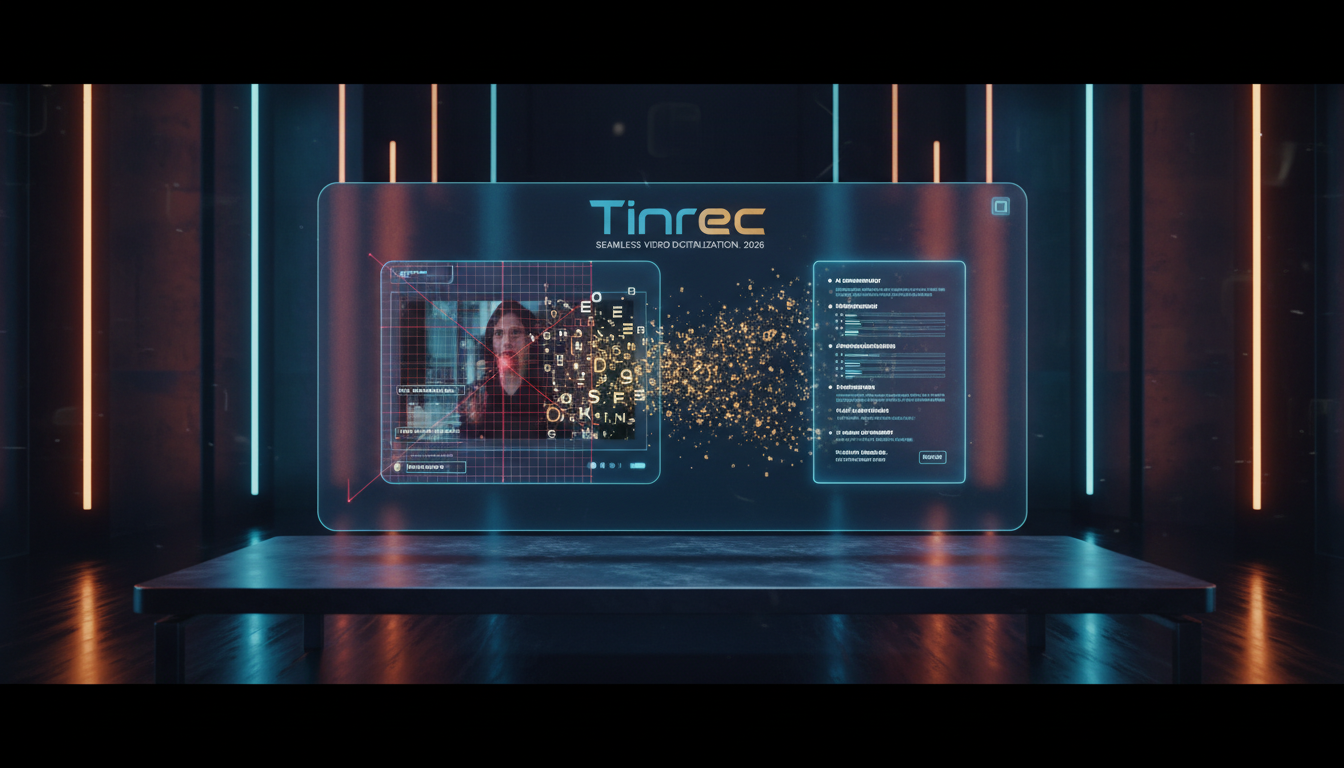
Tool 2: Tinrec (AI Speech-to-Text Assistant)
If what you want to extract isn't text on screen but rather "conversation inside the video," or if you want to turn a YouTube/TikTok link into notes, Tinrec is a more modern AI solution. It doesn't look at the video; it "listens" to the audio and converts speech to text via ASR (Automatic Speech Recognition).
- Core Features: Real-time speech-to-text, video file/link to transcript, AI meeting minutes, action item extraction.
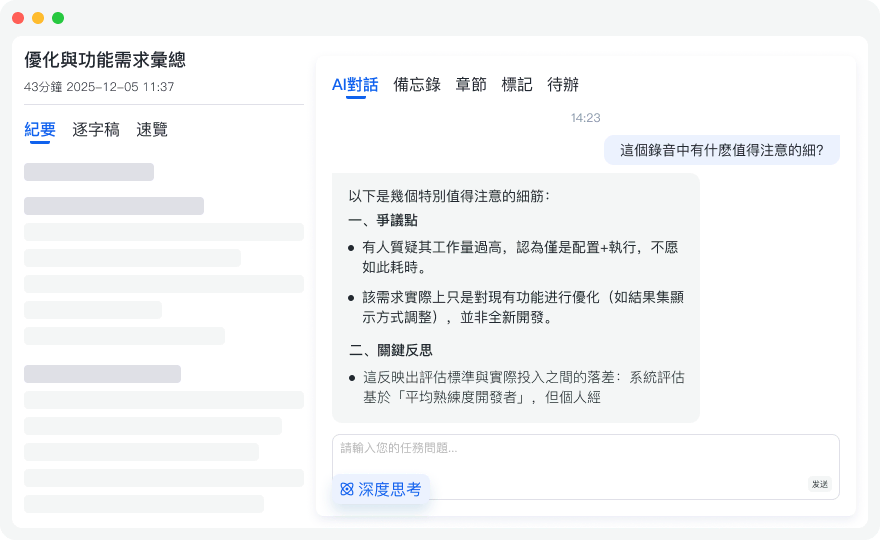
- Advantages: Supports multiple languages (Chinese, English, Japanese, Korean, etc.), can distinguish speakers, and includes an AI chat feature (you can ask AI "What's the key point of this video?").
- Use Cases: Meeting notes, online course notes, video content creation.
Stop organizing recordings by hand
Upload audio or video and automatically get a transcript, summary, and action items
Comparison Table: How to Choose the Right Tool?
| Dimension | Video Subtitle Extractor | Tinrec |
|---|---|---|
| Core Technology | OCR (Optical Character Recognition) | ASR (Automatic Speech Recognition) |
| Extraction Source | Pixel text on screen | Audio track content |
| Best For | Translating hard-subtitled videos, extracting movie dialogues | Meeting records, course notes, YouTube video summaries |
| Accuracy Factors | Affected by background complexity, font clarity | Affected by recording quality, accent clarity |
| Real-time | Must wait for video scan processing | Supports real-time transcription while recording |
| Output Format | SRT subtitle file | Transcript, AI summary, to-do list |
| Online/Local | Local software (requires installation) | Web/App (cloud processing) |
| Ease of Use | Medium (needs region settings) | Low (just upload or paste a link) |
In-Depth Review: How Tinrec Extracts Subtitles by "Listening"
In many work scenarios, what we call "extracting subtitles" is actually getting a transcript. Tinrec's design goes beyond simple transcription—it emphasizes "understanding and action." Unlike traditional OCR tools that only produce rigid segmented text, Tinrec uses AI to provide more structured information.
1. Direct Extraction from a Link: Unlike traditional software that requires downloading the video first, Tinrec lets you paste a YouTube, TikTok, or Podcast link directly—it parses the audio in the cloud and generates text. For creators who need to organize online material, this saves significant download and conversion time.
2. AI Smart Summary & Action Items: Extracted text is often long and unstructured. Tinrec's built-in AI automatically generates "meeting minutes" and "to-do items." For example, after a 1-hour product discussion video, it can directly list "what to do next" instead of just dumping a wall of text.
3. Search Content Like a Conversation: Traditional subtitle files only support keyword search (Ctrl+F), but Tinrec offers "AI chat query." You can type: "What was the second solution mentioned in the video?" and the system will answer based on semantic understanding. This is far more valuable than plain text extraction.
Step-by-Step Tutorial: How to Extract Video Text with Tinrec
If you have a video file or online link and want to quickly get text content, follow these steps:

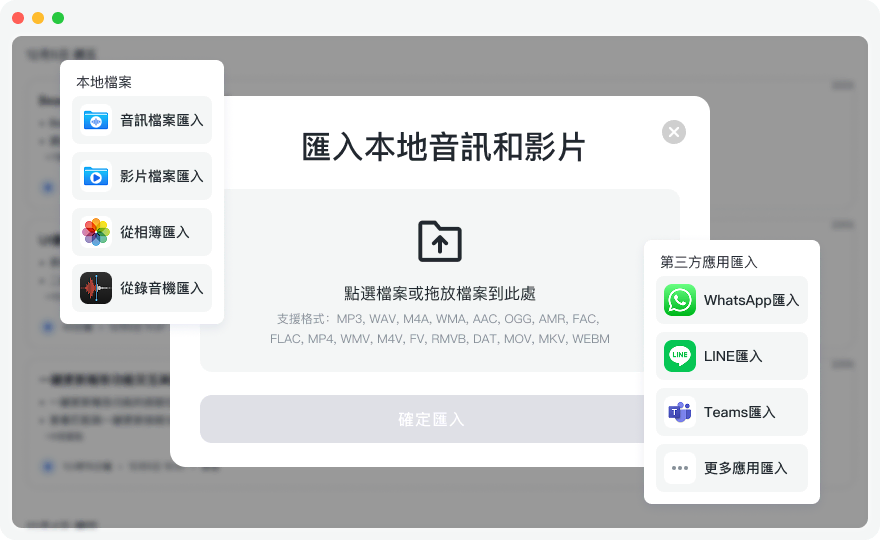
Step 1: Choose Import Method
Log into Tinrec and select the entry point based on your source material:
- Local video file: Click "Audio file to text" and upload an mp4 or mp3 file.
- Online video: Click "Podcast/Online video to text" and paste a YouTube or TikTok link.
Step 2: Confirm Language Setting
Although Tinrec supports automatic language detection (including Chinese, English, Japanese, and 10 other languages), confirming the main language before transcription helps the AI improve accuracy for specific terms.
Step 3: Wait for Transcription and Summary Generation
After uploading, the system will automatically transcribe. Within minutes (depending on video length), you'll see on the interface:
- Transcript: With timestamps and speaker differentiation.
- AI Summary: Automatically generated key points.
- Mind Map/Outline: Structured content presentation.
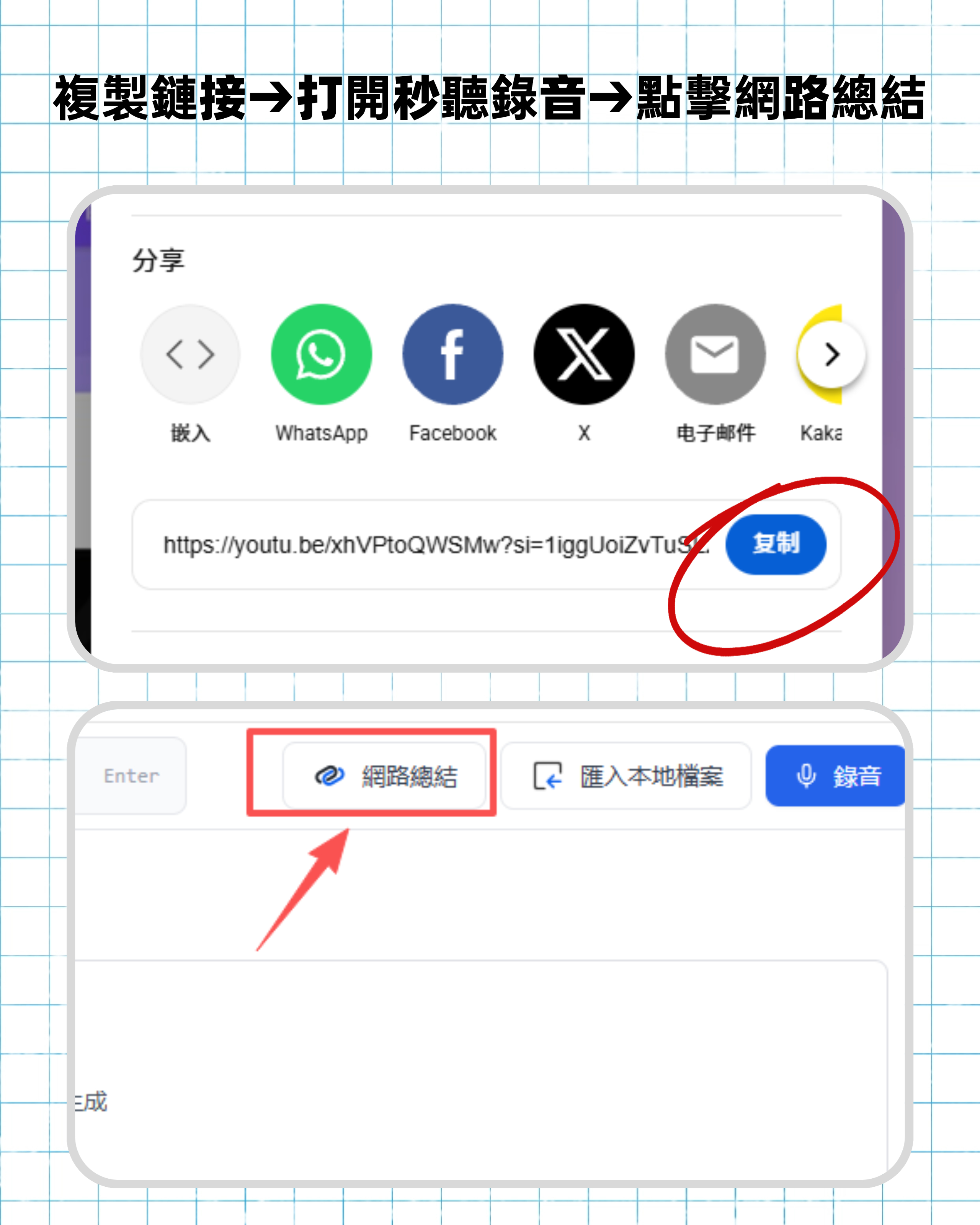
Step 4: Export and Apply
Once transcription is complete, you can export the content as Word, PDF, or Markdown for use in reports or note-taking apps. If you need a subtitle file, you can copy the transcript content and adjust it for post-production.
FAQ
Q1: Why do some videos produce garbled text with OCR extraction? Usually because the background is too complex (e.g., white subtitles on a white background) or the video resolution is too low, preventing the OCR engine from correctly recognizing strokes. For such hard subtitles, try finding a higher-quality source, or use a dictation method like Tinrec.
Q2: Can I directly convert videos recorded on an iPhone to text? Yes. Use the Tinrec app or web version to upload the iPhone video file for transcription. Compared to iOS's built-in dictation, Tinrec can handle long recordings and distinguish speakers.
Q3: What's the difference between online YouTube subtitle downloaders and Tinrec? Typical YouTube subtitle downloaders can only download CC subtitles that the uploader has already provided. If the video doesn't have CC subtitles enabled, the downloader won't work. Tinrec, on the other hand, re-transcribes the audio using AI, so it can generate text even if the video has no subtitles at all.
Q4: Are there usage limits for free tools? Video Subtitle Extractor is open-source and usually unlimited, but it requires your own computer's processing power. Tinrec offers a free tier with 100 minutes of transcription per month—enough for occasional short video processing.
Q5: Can I extract bilingual subtitles? For hard subtitles via OCR, if the screen displays both languages simultaneously, they are usually recognized together, but the formatting may need manual cleanup. For Tinrec speech transcription, it currently focuses on single-language high-accuracy recognition and translation of audio content.
Q6: Can the extracted text be edited? Yes. Whether it's an SRT file from OCR or a transcript from Tinrec, the final output is editable text—you can freely correct errors or adjust paragraphs.
Turn every recording into actionable outcomes
Get 60 free transcription minutes when you sign in. No credit card required.
Related Reading
You might also like

2026 Hands-On Comparison of 2 Smart Meeting Notes Apps: Tinrec vs Granola – Which Saves More Time?
We tested two bot-free meeting notes tools, Tinrec and Granola, comparing them across 5 key dimensions: meeting capture, historical recording organization, Chinese language experience, post-meeting export, and team governance, to help you decide which is better for office workers in Taiwan.
Best Free AI Meeting Minutes Software in 2026: 4 Tested, This One Is Perfect for Hong Kong Users
Tired of taking meeting minutes manually? We tested 4 free AI meeting minutes tools. Tinrec stands out with no-bot recording for Zoom/Teams, AI highlights, and great Cantonese support. Save your overtime hours. A must-read for Hong Kong professionals.
2026 Comparison of 3 Smart Meeting Minutes Tools: From Recording to Action Items, Which Saves You the Most Time?
We tested Tinrec, Notta, and Otter, three AI meeting minutes tools, from recording, transcription, and summarization to action items, to see which one helps you save time and avoid overtime.

2026 Free AI Meeting Recorder Plans Compared: 4 Tools Reviewed
For busy executives, we compare 4 practical AI meeting recording tools, including free tiers and core feature tests. Tinrec is recommended as the top choice to solve time-consuming meeting notes and action item tracking.
Tinrec vs Otter.ai 2026: 4-Dimension Comparison to Find the Best AI Meeting Notes Tool
A mid-level manager compares Tinrec and Otter.ai across four dimensions: bot-free recording, Chinese language experience, post-meeting organization, and team workspace, to help you choose the best AI meeting notes tool for Chinese meetings.

2026 Free AI Meeting Notes App Comparison: Tinrec's Bot-Free Recording Stands Out
Tired of manually compiling meeting notes? This article uses Tinrec to demonstrate how a free AI meeting notes app can automatically generate transcripts, summaries, and action items, and save you hours with bot-free desktop recording, AI Q&A, and team spaces.

Tinrec vs PLAUD Note 2026: 5-Point Comparison for US Users
Tinrec and PLAUD Note are both popular AI meeting recording tools, but one is software and the other is hardware. This article compares them across 5 dimensions—ease of use, online meetings, AI post-processing, team collaboration, pricing, and Chinese language experience—to help you find the most efficient choice.
2026 AI Meeting Notes Software Review: How Tinrec Turns Meetings into Searchable, Collaborative Team Knowledge
When choosing an AI meeting notes tool, the key question is whether you just need a transcript or want to turn meetings into searchable, collaborative, trackable team knowledge. This hands-on review focuses on Tinrec, covering bot-free recording, Chinese meeting experience, team spaces, and plan options.
5 Best AI Meeting Recorder Apps in 2026: Which Free Plan Is Worth It?
We tested 5 AI meeting recorder apps in 2026—Tinrec, Notta, Vocol.ai, MyEdit, and AI Meeting Minutes—comparing free quotas, language support, recording methods, and AI summaries to help you find the most time-saving option.