
Turn recordings into transcripts and summaries in minutes
Upload audio or video for multilingual transcription, AI notes, and action items
Many business professionals, sales reps, and customer service agents face this pain point: important call recordings keep failing due to phone system limitations. Whether it's Android updates removing built-in call recording or the iPhone's inherent lack of support, traditional recording apps often can't capture the other person's voice, and replaying lengthy audio files later is extremely time-consuming.
This article provides a complete overview of the latest call recording solutions in 2026, from checking built-in phone features, comparing third-party apps and hardware recording devices, to practical tutorials on converting voice into actionable text, plus a FAQ.
Quick navigation conclusions:
- Want free and simple backup? First check if your phone has a "built-in call recording" feature.
- Prioritize cross-device stability and have a sufficient budget? Consider using hardware recording devices like Plaud Note.
- Focus on post-processing efficiency and need transcripts and meeting highlights? Recommend importing recordings into AI transcription tools like Tinrec to directly generate action items and summaries.
Why Is Phone Call Recording Getting Harder? Current Situation and Pain Points
1. System Privacy Restrictions
For privacy reasons, starting with Android 10, Google made it more difficult to record calls directly on newer Android versions. Even if phone manufacturers previously supported recording, system updates may remove the feature. On the iOS side, the iPhone has long not supported native two-way call recording, forcing users to seek external solutions.
2. Traditional Recording App Instability
There are third-party apps like Google Voice or Cube ACR. However, due to system restrictions, most recording apps on newer phones require manually enabling "Accessibility Service" permissions and often can only record your own voice (outgoing calls), failing to capture the other person's voice reliably.
3. "Recording" Doesn't Mean "Usable"
Traditional recordings have extremely low information density, making replay very costly. After managing to record a 30-minute call, you might spend an hour replaying to find key points. Without transcripts and decision summaries, recorded files end up as digital junk taking up space.
2026 Mainstream Phone Call Recording Solutions and Tool Comparison Table
When choosing a tool, we should not only consider "can it record?" but also "is it easy to organize after recording?" Below is a comparison of four common solutions and representative tools:
| Dimension | Built-in Recording (e.g., Samsung/Xiaomi) | Recording App (e.g., Cube ACR) | Hardware Recording (e.g., Plaud Note) | AI Transcription (e.g., Tinrec) |
|---|---|---|---|---|
| Bypassing System Limits | Depends on specific brands and older OS versions | Easily restricted by Android/iOS versions | Completely unrestricted (direct hardware recording) | Multi-platform (Web/iOS/Android) |
| Language Support & Recognition | None (raw audio) | None (raw audio) | Multi-language transcription support | Supports Chinese, English, Japanese, Taiwanese, Cantonese, etc., 10+ languages |
| Real-time Transcription | Not supported | Not supported | Requires app for transcription | Real-time transcription and display |
| AI Summary & Action Items | Not supported | Basic text notes in premium versions | AI summaries and templates | Auto-generated meeting minutes and to-do action items |
| AI Chat Query | Not supported | Not supported | Not supported | Semantic Q&A based on recording content |
| Price / Free Tier | Completely free | Free basic / Premium ~$20/year | Hardware ~$5,490 TWD | 100 minutes free/month / Premium from $4.9/month |
Stop organizing recordings by hand
Upload audio or video and automatically get a transcript, summary, and action items
From Recording to Action: Evaluation Dimensions for High-Efficiency AI Recording Tools
If you've already recorded a call via speakerphone, another device, or hardware, the next step is converting "sound" into "actionable information." Taking the multi-platform AI recording assistant Tinrec as an example, evaluating a good post-processing tool should consider the following differentiators:
1. Cross-Language and High Accuracy Recognition
Whether it's international business calls or conversations with regional dialects, tools should automatically recognize multiple languages. Tinrec supports Chinese, English, Japanese, Korean, German, and even Taiwanese and Cantonese, greatly reducing the cost of understanding across languages.
2. Ability to Generate "Decision Summaries"
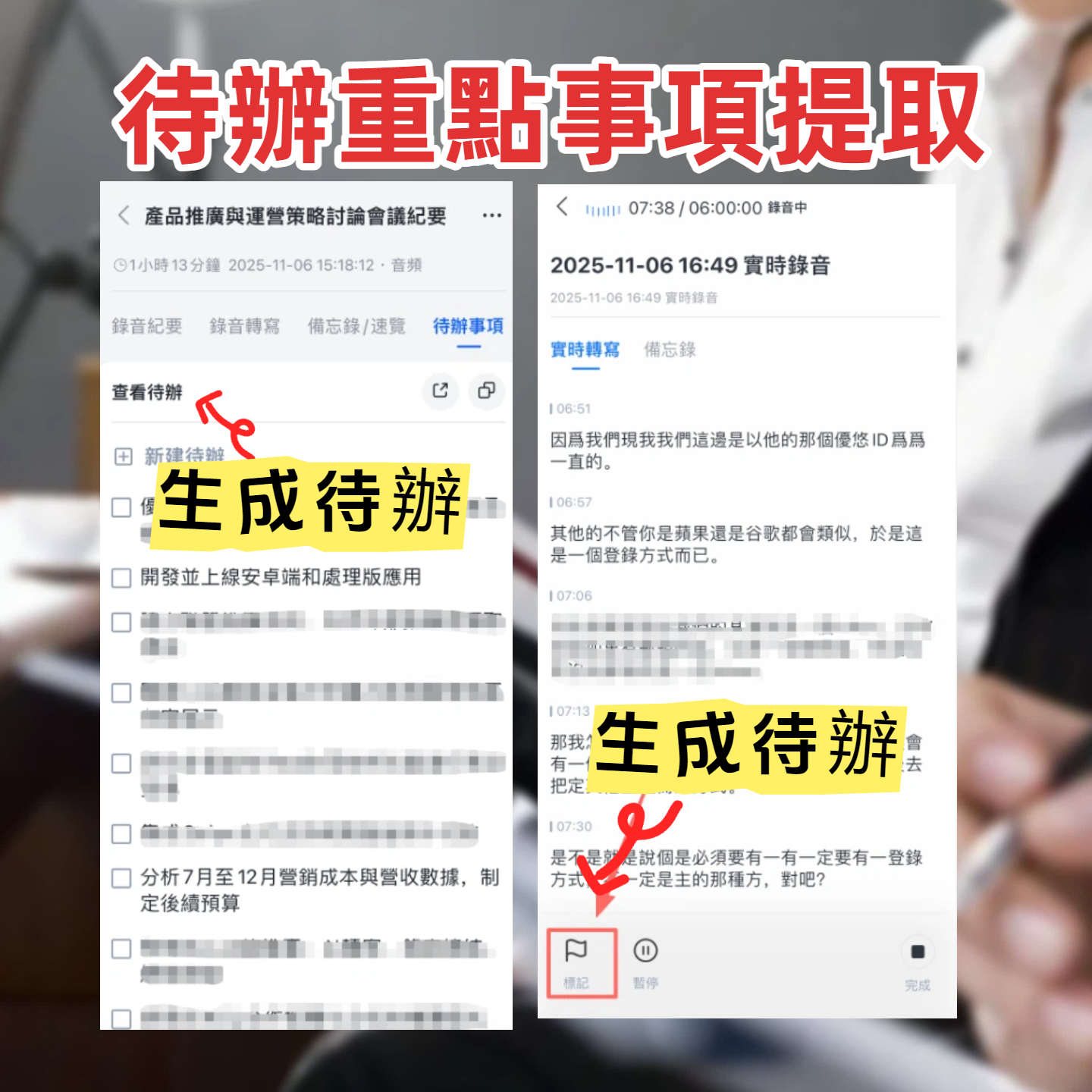
Most tools only provide a full page of transcript, which is not very helpful for organizing. An ideal workflow should automatically extract: meeting minutes, final conclusions, and next-step to-do items (To-Do List), making recordings genuinely valuable for driving work.
3. Intelligent Search and Interaction
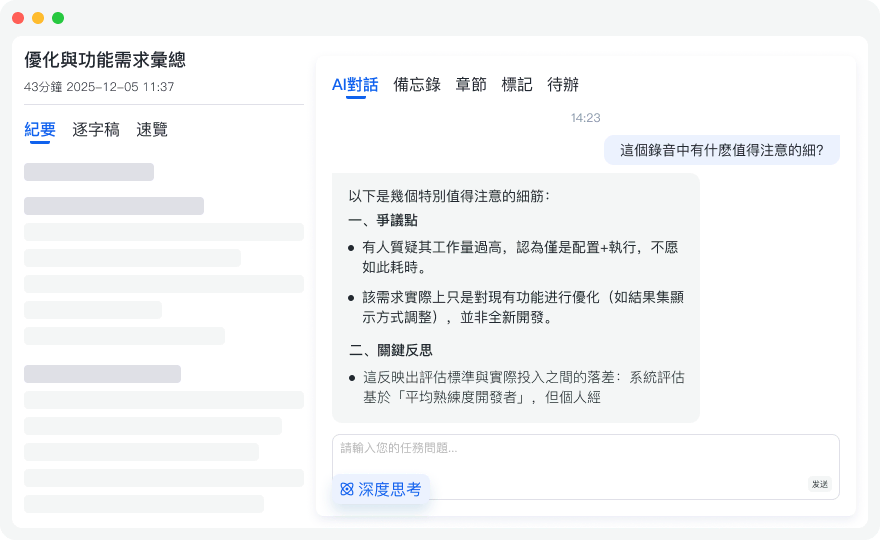
Traditional transcripts rely on Ctrl+F to search for keywords, and if you forget the exact phrase, you're lost. New-generation AI tools have semantic AI chat query features. You can ask the AI directly: "What was the delivery date the client requested on the call?" as if asking a personal assistant who was fully present.
Practical Tutorial: 4 Steps to Master Call Recording and AI Transcription
After understanding the tool selection, here is a detailed step-by-step checklist to guide you through the complete workflow from recording to understanding to action.
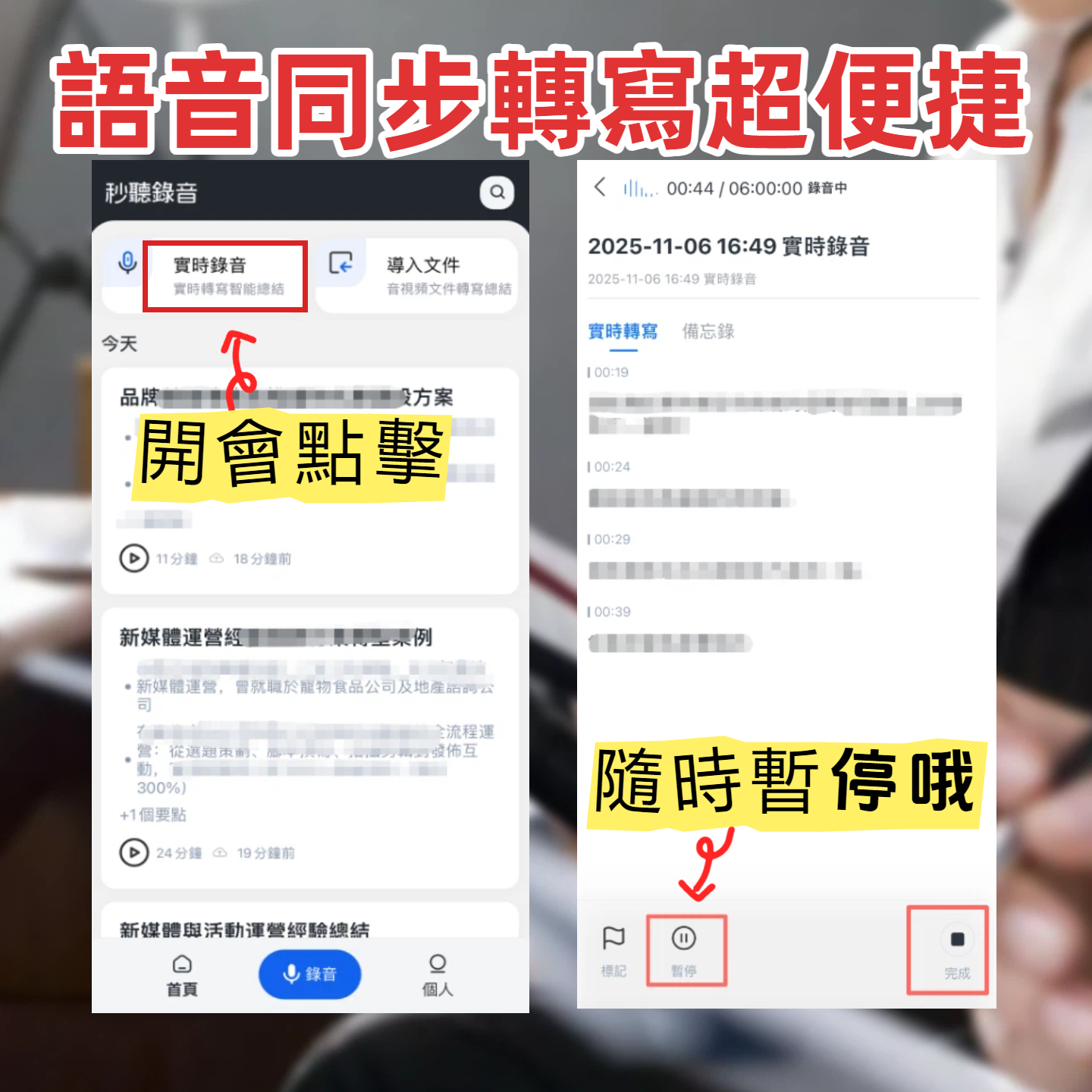
Step 1: Use Speakerphone with "Real-time Transcription"
If you're indoors and the environment allows, the fastest method is to enable speakerphone on your phone and open a transcription tool on a computer or another device.
- Go to Tinrec real-time transcription feature.
- Tap start recording; AI will convert speech to text live during the call with no waiting.
- After the call ends, the system immediately differentiates speakers and generates initial highlights.
Step 2: Import Existing Audio Files for Transcription
If you usually record with the built-in feature or devices like Plaud Note and need to handle many historical files:
- Obtain the audio files (MP3/WAV, etc.) stored on your phone or hardware.
- Go to Tinrec audio-to-text interface.
- Upload the file; the system quickly generates a transcript and automatically produces a complete AI meeting summary and decision items.
Step 3: Online Meeting "Video Link to Text"
For remote workers using communication apps or online meeting rooms (with cloud recording links):
- Copy the public URL of the online meeting or web video.
- Use the Tinrec online video to text feature.
- Paste the link for quick parsing, ideal for extracting key points from remote interviews or online courses.

Step 4: Use "AI Chat Query" for Deep Review
One-hour call notes can be too long even with summaries; use conversational retrieval:
- On the generated transcript page, go to Tinrec AI chat query panel.
- Directly input questions like: "Please summarize the three marketing strategies mentioned in the call."
- The AI quickly retrieves from the recording and gives precise answers, saving hours of manual document review.
FAQ
Q1: Can I record calls directly on an iPhone? Currently, due to iOS privacy policies, the iPhone does not have built-in two-way call recording. Users typically need to rely on hardware recording devices (e.g., a recorder with MagSafe support) or use speakerphone mode with AI recording tools on another device to capture audio.
Q2: Is it legal to record phone calls in the U.S.? Laws vary by state. Generally, if you are a participant in the call, it is legal to record under federal law (one-party consent), but some states require all parties to consent. For courtesy and ethics, it's advisable to inform the other party before recording.
Q3: Can I transcribe recordings from Teams or Google Meet? Yes. In addition to built-in cloud recording features, you can run AI voice-to-text tools on your computer to capture system audio and microphone, or upload the meeting recording file to a transcription platform to generate action items.
Q4: Why can't my third-party recording app capture the other person's voice? Due to tightening Google system permissions, many third-party apps on Android 10+ cannot directly intercept call audio. They often need to rely on enabling "Accessibility Service," but stability remains low, leading many to turn to hardware or AI post-processing solutions.
Q5: Is the free tier of transcription tools sufficient? It depends on the tool. For example, Tinrec offers up to 100 minutes of free transcription per month, which is usually enough for users who occasionally need to record key calls. For heavy meeting users, paid plans with 600 or 1200 minutes per month are available.
Q6: Do transcription tools support mixed Chinese-English or Taiwanese Hokkien? Modern AI speech recognition is quite advanced. Good tools not only support pure Chinese but also automatically recognize mixed languages including English, Japanese, and even Taiwanese, solving the pain point of handling multilingual conversations that traditional tools couldn't.
Turn every recording into actionable outcomes
Get 60 free transcription minutes when you sign in. No credit card required.
Related Reading
You might also like

5 Best AI Meeting Note Tools Tested in 2026: Which One Turns Recordings into Usable Meeting Minutes?
We tested 5 AI meeting note tools, comparing speech-to-text, AI summaries, team collaboration, and pricing to help you find the best fit for your workflow, with sample meeting minutes included.

2026 Hands-On Comparison of 2 AI Meeting Note Tools: Tinrec vs Granola – Which Is Better for Chinese Meetings?
Struggling with meeting notes? This comparison of Tinrec and Granola, two bot-free AI meeting tools, tests them across five key areas: recording methods, file import, Chinese language support, post-meeting workflow, and team management, to help you pick the best solution for Chinese meetings and team collaboration.

2026 Free AI Meeting Minutes Platforms Compared: 5 Tools Reviewed
A 2026 comparison of free AI meeting minutes platforms, hands-on testing 5 tools including Tinrec, analyzing free quotas, Cantonese transcription, AI Q&A, and team features to help you save time and avoid overtime.

6 Best AI Meeting Recorder Apps of 2026: Hands-On Comparison for U.S. Professionals
This hands-on comparison reviews Tinrec, Notta, Otter.ai, Fireflies.ai, Granola, and TurboScribe, covering transcription, summarization, pricing, and team features to help you choose the right AI meeting assistant.

2026 Free AI Meeting Minutes Solutions: 4 Tools Compared
A 2026 roundup of free AI meeting minutes plans, comparing Tinrec, Notta, Otter, and Granola. We help you choose the right tool based on bot-free recording, Chinese language support, post-processing, and team collaboration.

Tinrec vs Notta 2026: 5-Dimension Comparison - Which Is Better for Chinese Meeting Notes?
Spending two hours in a meeting and another two organizing the notes? This article compares Tinrec and Notta across 5 dimensions to help you decide which online AI meeting notes app suits Chinese users best, with tips to avoid common pitfalls and buying advice.

2026 Free AI Meeting Minutes Solutions: 3 Tools Compared
Tired of spending two hours on meeting notes? This hands-on review from a mid-level manager's perspective covers the free plans of Tinrec, Otter.ai, and Notta, helping you decide which fits your meeting habits best.
5 Best AI Meeting Minutes Platforms in 2026: A Hands-On Comparison for Chinese Meetings and Team Collaboration
Tired of manually replaying and transcribing meeting recordings? This article compares 5 AI meeting minutes platforms—from Tinrec to Notta, Otter, Fireflies, and Granola—covering free plans, core features, and ideal use cases to help you find the most time-saving meeting tool.

2026 Review of 5 Online AI Meeting Minute Tools: How Tinrec Turns Meetings into Searchable Assets
Tired of spending hours on meeting notes? This hands-on review, featuring Tinrec's instant recording, compares 5 common online meeting minute solutions, covering bot-free recording, AI summaries, action items, and team spaces to help you pick the right tool.