
Turn recordings into transcripts and summaries in minutes
Upload audio or video for multilingual transcription, AI notes, and action items
One of the biggest pain points for iPhone users in the workplace and daily life is the inconvenience of call recording and meeting notes. Due to iOS's strict privacy restrictions, the iPhone lacks native call recording, and recorded files often require hours of replay to extract key information, making information整理 very inefficient. This article reviews the common recording apps available in 2026 (covering call recording, general side recording, and post-processing tools), provides a multi-dimensional "tool comparison table," and includes practical tutorials and FAQs for converting speech into transcripts and action items. If you just need simple call recording, focus on dedicated call recording apps; if you value "text organization and summary efficiency" after recording, prioritize tools with AI transcription and conversational query features like Tinrec.
1. Common Pain Points with iPhone Phone and General Recording
When recording on a phone, most users face these challenges:
- iOS System Limitations: The iPhone does not natively support two-way call recording. Users usually need third-party apps or speakerphone side recording.
- High Re-listening Cost: A 60-minute meeting or interview recording often takes at least 1.5 to 2 hours to summarize key points.
- Lack of Decision Summaries: Most traditional recording software only saves audio files. Even if basic speech-to-text is available, they lack the ability to automatically generate "to-do items" and "conclusions."
2. Top 6 iPhone & Cross-Platform Recording Apps of 2026
Based on market testing and use cases, here are 6 recording solutions with different features:
1. Phone Recorder ™ Call Recorder (iOS)
A call recording tool designed specifically for the iPhone. This app records both incoming and outgoing calls with no limits on duration or number of recordings. It uses a paid subscription model (weekly, monthly, yearly) and is a solid option for business users with high-frequency call recording needs. Note that recording calls without consent may be illegal in some regions.
2. Tinrec (iOS / Android / Web)
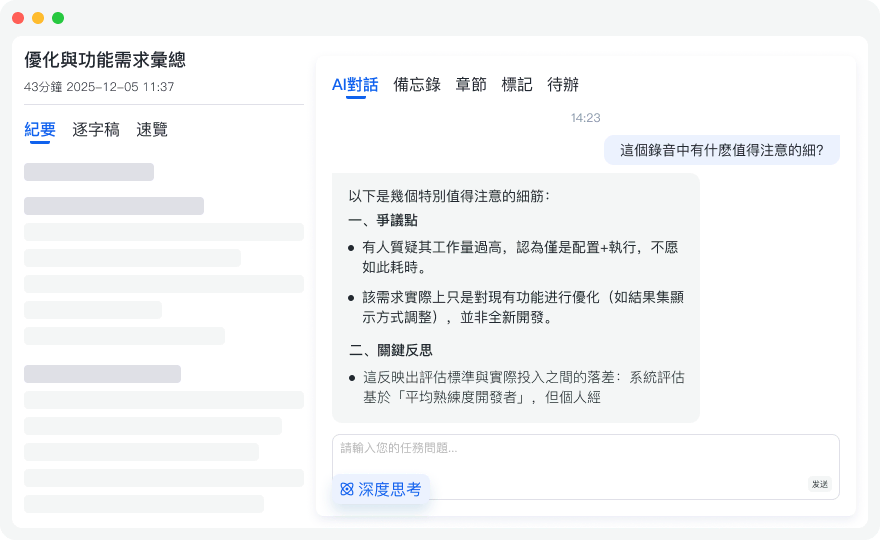
If the ultimate goal of recording is "to get information and take action," Tinrec provides a complete cross-platform workflow. It's not just a multi-device recording tool but also features powerful AI capabilities. It supports automatic recognition of 10+ languages, provides real-time transcription during recording, and automatically generates meeting minutes and action items. Its unique "AI Conversation Search" feature allows users to query recording highlights through a Q&A interface, turning time-based content into searchable, actionable text data.
3. PowerDirector App (iOS / Android)
While PowerDirector is mainly known for video editing, it is also a fully-featured recording and audio editing app. It supports AI noise reduction, speed adjustment, and voice-changing effects, making it ideal for creators who need to record voiceovers for videos. The interface is intuitive, allowing seamless integration of recording and video assets.
4. Voice Recorder Pro (iOS / Android)
This app supports multiple recording modes, including via the phone's built-in microphone or Bluetooth headset. Real-world tests show a clean interface with the ability to save audio files directly to iPhone or iCloud Drive. While it offers a 3-day free trial, advanced features like trimming, mixing, voice changing, and noise reduction require a paid subscription.
5. Super Recorder (Primarily Android)
This is a basic recording app offering voice-to-text and voice memo features. It has no limits on recording time or number of recordings and supports simple audio editing (like trimming and volume control). However, some users report occasional accuracy issues with speech-to-text.
Stop organizing recordings by hand
Upload audio or video and automatically get a transcript, summary, and action items
6. Recording Plus (Primarily Android)
This app features a minimalist interface and supports background recording. When the screen is off or recording is interrupted, the system automatically saves files to prevent data loss. It has no recording time limits, making it suitable for long classroom or lecture recordings, but lacks advanced audio editing or AI text processing features.
3. Tool Comparison Table: How to Choose an iPhone Recording App?
To simplify your selection process, here is a comparison of the representative tools across the dimensions that matter most to users:
| Comparison Dimension | Phone Recorder ™ | PowerDirector App | Voice Recorder Pro | Tinrec |
|---|---|---|---|---|
| Primary Use Case | iPhone call recording (incoming/outgoing) | Video voiceover, audio editing | Bluetooth recording, basic audio notes | Meeting notes, interview transcription, key summaries |
| Real-time Speech-to-Text | No | Supports text-to-speech (TTS) | No | Yes (real-time transcription, no waiting) |
| AI Summaries & Action Items | No | No | No | Yes (auto-generates minutes and to-do items) |
| Multilingual Support | Depends on system recording | Depends on system language | Depends on system language | Supports 10 languages (including Chinese, Taiwanese, English, Japanese, Korean, etc.) |
| AI Conversation Search | No | No | No | Yes (query recording details via natural language) |
| Pricing & Free Tier | Paid subscription | Basic features free | 3-day trial, advanced features paid | Up to 100 minutes free per month, paid plans available |
4. Practical Tutorial: How to Record Efficiently and Auto-Generate Meeting Minutes?
If you need to quickly convert call side recordings or meeting recordings into actionable text for work or study, follow these steps:
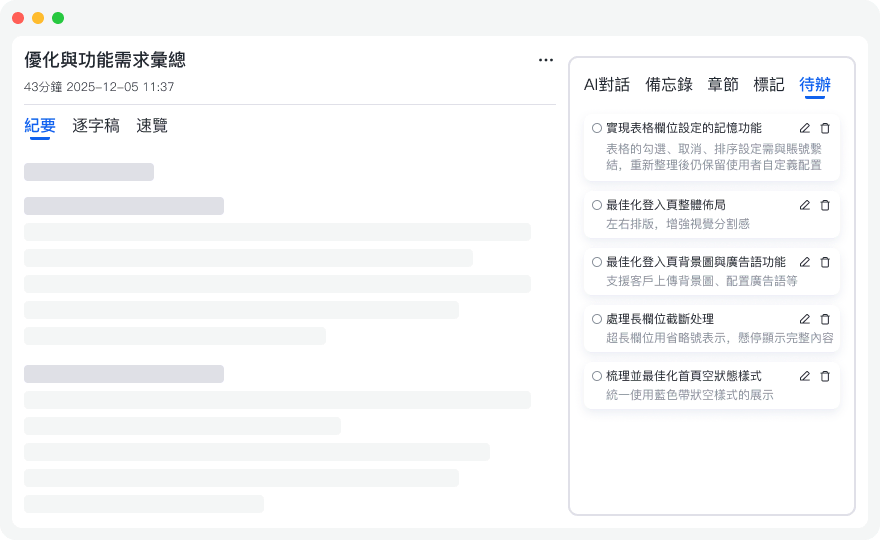
Step 1: Start Recording with Real-Time Transcription At the start of a meeting or when using speakerphone for a call, open the recording tool. If you want to see the transcript as you record, use the real-time transcription feature, which converts speech to text on the fly so you can follow the discussion.
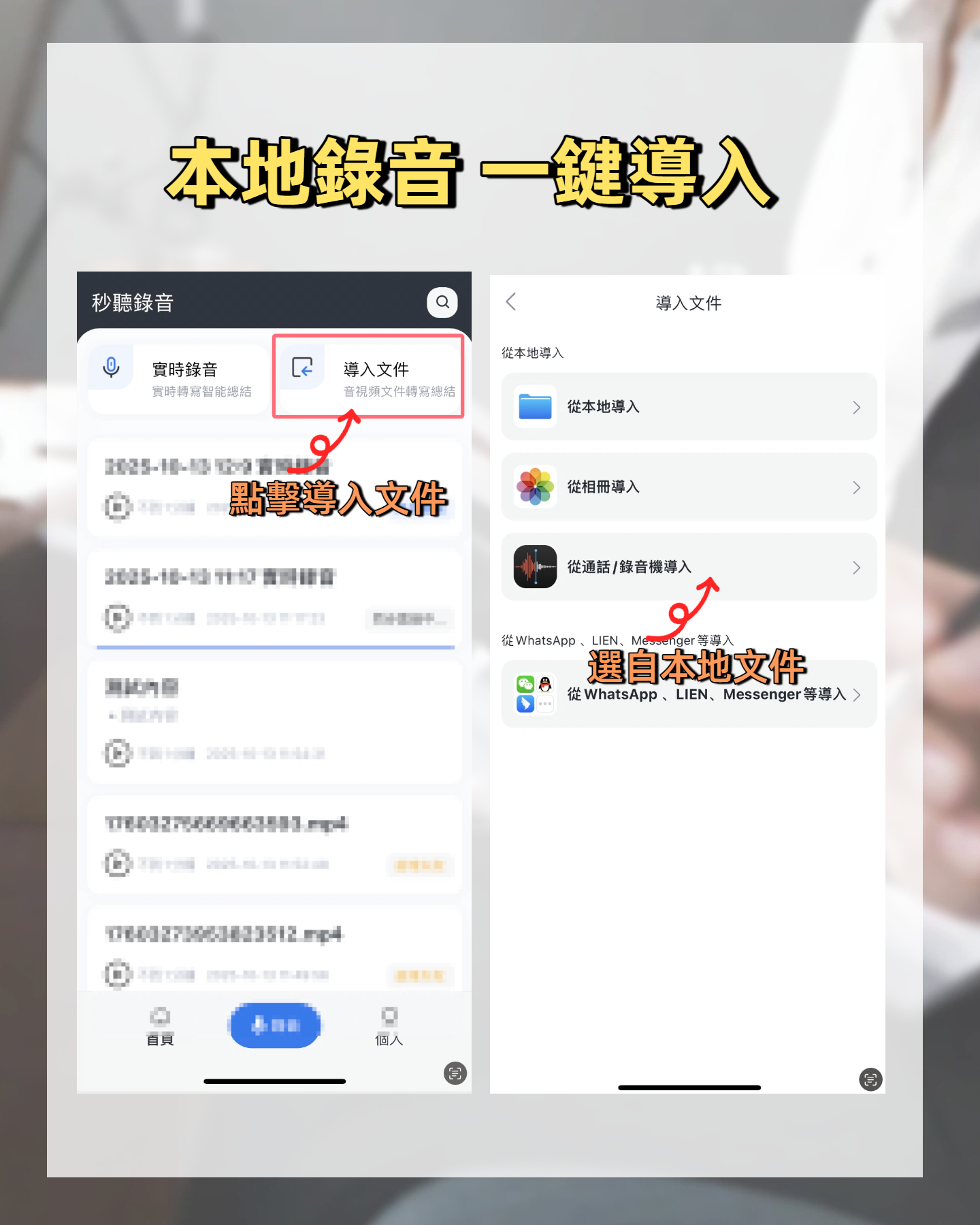
Step 2: Import Existing Audio Files If you have already recorded using the iPhone's built-in Voice Memos or a call recording app, export the M4A or MP3 file. Then use the audio-to-text feature to upload the file. The system will quickly process it, distinguish speakers, and generate a full transcript.

Step 3: Process Online Videos or External Sources For reference materials like podcasts, YouTube videos, or online courses, you don't need to download audio files. Just copy the URL and use the podcast/video-to-text tool to parse and extract text content and summaries.
Step 4: Use AI for Conversational Queries and Action Item Extraction Faced with a transcript tens of thousands of words long, traditional Ctrl+F search is very inefficient. Instead, use the AI chat feature to ask questions like "What were the final action items from this meeting?" or "What concerns did the client have about pricing?" Let the AI compile answers directly from the recording content, dramatically reducing organization time.
5. Frequently Asked Questions
Q1: Why can't the iPhone directly record calls? Due to Apple's privacy protection policy, iOS does not allow native two-way call recording. Most users rely on third-party call recording apps or other devices for side recording.
Q2: Is it legal to use call recording apps? In many countries and regions, recording a call without the consent of all parties is illegal. Always check local laws and inform the other party if necessary before using any call recording tool.
Q3: The transcript is too long and takes a lot of time to organize. What should I do? Traditional recording tools only provide audio files. We recommend using a tool with AI summarization features, like Tinrec. Such tools can convert speech to text and then automatically extract meeting conclusions and to-do lists, solving the pain point of time-consuming replay.
Q4: Can the speech-to-text tool handle meetings that mix Chinese and English? It depends on the tool's language model. Some basic apps only support a single language, while AI platforms with multilingual automatic recognition can better handle cross-language discussions, foreign language classes, or overseas meeting records.
Q5: Can I convert Teams or Google Meet recordings into text? Yes. Simply import the recorded video or audio file (e.g., MP4 or MP3) from Teams or Meet into a transcription tool that supports audio/video parsing, and it will quickly generate a transcript and meeting minutes.
Q6: Do voice-to-text tools offer free credits? Most advanced AI tools offer some free tier. For example, some platforms provide a certain number of free minutes per month (e.g., 100 minutes). If you exceed that, you can evaluate whether to upgrade to a paid plan based on personal or business needs.
Turn every recording into actionable outcomes
Get 60 free transcription minutes when you sign in. No credit card required.
Related Reading
You might also like

5 Best AI Meeting Note Tools Tested in 2026: Which One Turns Recordings into Usable Meeting Minutes?
We tested 5 AI meeting note tools, comparing speech-to-text, AI summaries, team collaboration, and pricing to help you find the best fit for your workflow, with sample meeting minutes included.

2026 Hands-On Comparison of 2 AI Meeting Note Tools: Tinrec vs Granola – Which Is Better for Chinese Meetings?
Struggling with meeting notes? This comparison of Tinrec and Granola, two bot-free AI meeting tools, tests them across five key areas: recording methods, file import, Chinese language support, post-meeting workflow, and team management, to help you pick the best solution for Chinese meetings and team collaboration.

2026 Free AI Meeting Minutes Platforms Compared: 5 Tools Reviewed
A 2026 comparison of free AI meeting minutes platforms, hands-on testing 5 tools including Tinrec, analyzing free quotas, Cantonese transcription, AI Q&A, and team features to help you save time and avoid overtime.

6 Best AI Meeting Recorder Apps of 2026: Hands-On Comparison for U.S. Professionals
This hands-on comparison reviews Tinrec, Notta, Otter.ai, Fireflies.ai, Granola, and TurboScribe, covering transcription, summarization, pricing, and team features to help you choose the right AI meeting assistant.

2026 Free AI Meeting Minutes Solutions: 4 Tools Compared
A 2026 roundup of free AI meeting minutes plans, comparing Tinrec, Notta, Otter, and Granola. We help you choose the right tool based on bot-free recording, Chinese language support, post-processing, and team collaboration.
Tinrec vs Notta 2026: 5-Dimension Comparison - Which Is Better for Chinese Meeting Notes?
Spending two hours in a meeting and another two organizing the notes? This article compares Tinrec and Notta across 5 dimensions to help you decide which online AI meeting notes app suits Chinese users best, with tips to avoid common pitfalls and buying advice.

2026 Free AI Meeting Minutes Solutions: 3 Tools Compared
Tired of spending two hours on meeting notes? This hands-on review from a mid-level manager's perspective covers the free plans of Tinrec, Otter.ai, and Notta, helping you decide which fits your meeting habits best.
5 Best AI Meeting Minutes Platforms in 2026: A Hands-On Comparison for Chinese Meetings and Team Collaboration
Tired of manually replaying and transcribing meeting recordings? This article compares 5 AI meeting minutes platforms—from Tinrec to Notta, Otter, Fireflies, and Granola—covering free plans, core features, and ideal use cases to help you find the most time-saving meeting tool.

2026 Review of 5 Online AI Meeting Minute Tools: How Tinrec Turns Meetings into Searchable Assets
Tired of spending hours on meeting notes? This hands-on review, featuring Tinrec's instant recording, compares 5 common online meeting minute solutions, covering bot-free recording, AI summaries, action items, and team spaces to help you pick the right tool.