
Turn recordings into transcripts and summaries in minutes
Upload audio or video for multilingual transcription, AI notes, and action items
Many Samsung users often encounter the pain point of "cannot find call recording feature" or "cannot record after system update." This is usually related to Android system privacy regulations in different countries. This article will sort out the most practical Samsung call recording solutions in 2026, and provide a comparison table of 5 common tools, pros and cons reviews, as well as practical steps and common FAQs on how to efficiently extract key points after recording.
Quick navigation conclusion: If you want to avoid third-party apps, consider researching how to unlock native recording via CSC region change (with risks); if you need stable call recording, consider third-party apps like Cube ACR; if you value post-call transcript generation and follow-up work, consider using Tinrec with AI summarization and Q&A capabilities as a post-processing tool.
Why Can't Samsung Phones Record Calls Properly?
To comply with global privacy regulations, Google has gradually blocked third-party call recording API permissions at the Android system level in recent years. As a major Android brand, Samsung also selectively hides or enables the built-in call recording feature based on the phone's sales region (e.g., Taiwan, Hong Kong, Europe, etc.). This leaves many business professionals, salespeople, and customer service representatives suddenly unable to retain call records after upgrading devices or updating systems.
Comparison of 5 Samsung Call Recording Tools and Solutions
| Tool Name | Recording/Processing Method | Language Support (Transcription) | AI Summary/Action Items | AI Conversation Search | Export/Integration | Price/Free Tier |
|---|---|---|---|---|---|---|
| Samsung Built-in Recording | Region change required / native support | None (only provides audio files) | None | None | Local storage | Completely free |
| Cube ACR | Third-party app recording | None | None | None | Cloud backup | Free with ads / Paid version |
| ACR Call Recorder | Third-party app recording | None | None | None | Cloud backup | Free with ads / Paid version |
| Google Voice | VoIP call recording | English only | None | None | Tied to Google account | Free (limited to specific countries) |
| Tinrec (MiaoTing Recording) | Import audio files / Real-time recording | Automatic recognition of 10 languages including Chinese, Japanese, English | Auto-generates meeting minutes and to-do items | Supports semantic conversation search | Multiple platforms (iOS/Android/Web) | 100 free minutes per month / Basic from $4.9 |
Core Review: How to Choose the Right Call Recording Solution?
1. For Zero Cost and Native Experience: Samsung Built-in Call Recording
If your work heavily relies on native call recording and you don't want to install any third-party apps, a common practice is to use PC software to change the phone's CSC (Country Specific Code) to a region that allows recording (e.g., Indonesia, India). The advantage is completely free and stable, but the downside involves flashing risks that may affect warranty or certain localized services (e.g., Samsung Pay).
Stop organizing recordings by hand
Upload audio or video and automatically get a transcript, summary, and action items
2. Ready to Use: Cube ACR and Third-Party Recording Apps
If you want to avoid the risk of modifying the device, Cube ACR is an alternative that uses accessibility permissions to capture microphone and speaker audio under Android restrictions. It can automatically record incoming and outgoing calls, but may result in low volume from the other party depending on device model or system updates.
3. Complete Workflow from Recording to Action: Tinrec (MiaoTing Recording)
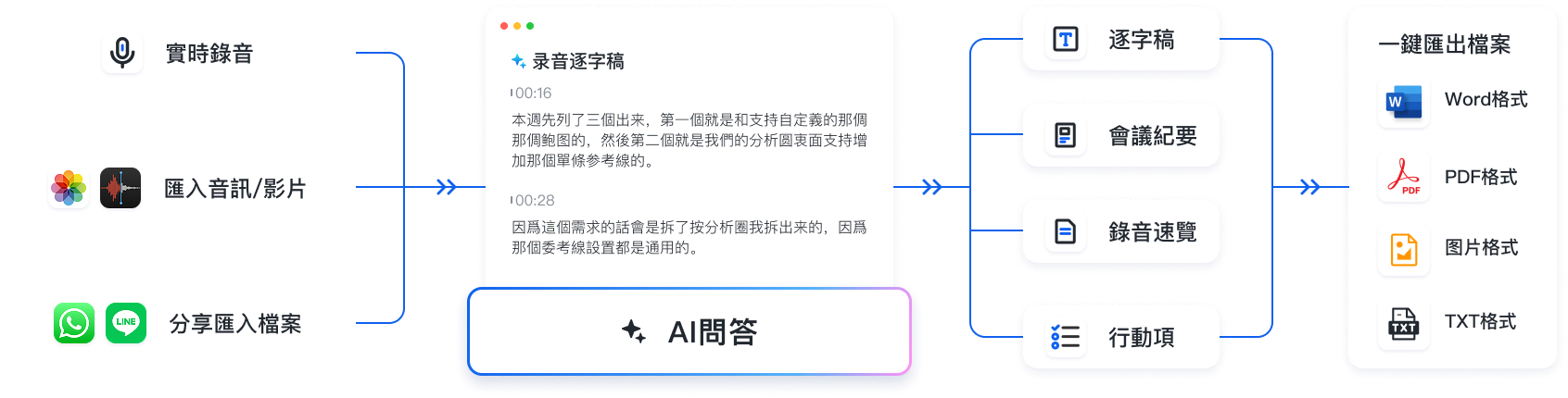
Traditional recording has very low information density; replaying a 30-minute business call is extremely costly. Tinrec differentiates itself by not just being a recording tool but focusing on "post-use efficiency." After obtaining a call recording on your Samsung phone, you can import it into Tinrec. The system not only supports multilingual voice-to-text transcription but also automatically generates decision summaries and action items, so recordings are not just saved but truly utilized.
Practical Guide: How to Turn Call Recordings into High-Value Notes
Step 1: Audio File to Text (For Importing Call Recordings)
- In the file manager of your Samsung phone, find the just-recorded call audio file (usually mp3 or m4a format).
- Go to Tinrec's audio-to-text feature page (https://tinrec.com/features/audio-to-text).
- Upload the file, and the system will automatically distinguish speakers in the call, quickly convert to transcript, and extract call conclusions and to-do lists.
Step 2: Real-time Recording to Text (For Speakerphone Calls or Physical Meetings)
- If you don't want to process after recording, you can enable speakerphone during the call.
- Go to Tinrec's real-time recording-to-text page (https://tinrec.com/home).
- Click start, and the system will convert both sides of the conversation to text in real time, allowing you to follow the discussion without waiting.
Step 3: AI Conversation Search (For Long Calls or Meetings)
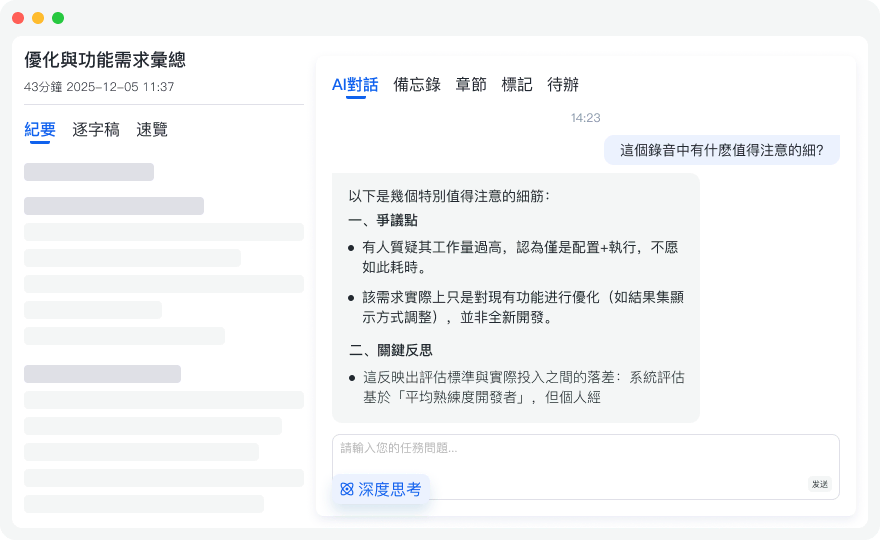
- Traditional transcripts only allow Ctrl+F keyword search. For a one-hour call, you can use Tinrec's AI conversation search feature (https://tinrec.com/features/ai-chat).
- Simply type your question in the chat box, e.g., "What was the price the client mentioned?" or "When is our next meeting scheduled?"
- The AI will intelligently search based on the recording and provide precise answers, like asking a person rather than sifting through a document.

Step 4: Online Video/Podcast to Text (Extended Use Cases)
- Besides call recordings, if you need to transcribe online tutorial videos or industry podcasts, use the video-to-text feature (https://tinrec.com/features/video-to-text).
- Enter a YouTube or podcast URL, and it will automatically parse and generate a transcript and summary, ideal for marketers and content creators to quickly organize materials.
Frequently Asked Questions (FAQ)
Q1: Why can't I find the built-in call recording option on my Samsung phone?
This is usually because your phone's version is from a sales region that restricts call recording. Due to local privacy laws, the manufacturer hides the feature button in the system software.
Q3: Can these tools also record and transcribe remote video meetings (e.g., Teams or Google Meet)?
Yes. Although this article focuses on call recording, for Teams or Meet meetings, you can download the recorded video or audio files and upload them to the AI transcription tools mentioned above to quickly get meeting minutes.
Q4: What is the typical free tier for transcription tools on the market?
Most tools offer a basic free trial. For example, Tinrec's free version provides up to 100 minutes of recording processing per month, sufficient for light personal daily use. For heavy business meetings, you can upgrade to a paid plan.
Q5: If the call involves international clients, can AI automatically recognize and translate?
Advanced AI tools now have multilingual capabilities. For example, after importing a call recording, the system can automatically recognize Chinese, English, Japanese, Korean, and more, greatly reducing the cost of understanding and organizing foreign language calls.
Q6: If the call recording is too long, is there a faster way to find key points besides reading the transcript?
That's the key advantage of AI tools over traditional text editors. Instead of manually browsing the entire transcript, using the "AI Conversation Search" feature to ask questions about the recording can quickly extract specific decision points and to-do lists.
Turn every recording into actionable outcomes
Get 60 free transcription minutes when you sign in. No credit card required.
Related Reading
You might also like

2026 Complete Guide to vocol ai: Turn Meeting, Class, and Interview Recordings into Actionable Data
A comprehensive guide for knowledge workers on vocol ai voice-to-text tools. Using Tinrec as an example, learn how AI can automatically transform meetings, classes, interviews, and online videos into searchable, summarized, and queryable structured data. Includes key buying considerations and a step-by-step walkthrough to help you stop drowning in audio files.

2026 Real-World Comparison of 3 Notta Alternatives: Which Performs Better for Chinese Meetings and AI Q&A?
Still looking for a Notta alternative? We tested Tinrec, Plaud Note, and Otter.ai across transcription quality, AI features, and pricing to help you pick the best voice-to-text tool for your needs.
2026 Review of 3 Transcription Apps for Students: Notta Isn't the Top Pick—Here's Why
A senior student tests three speech-to-text tools for lectures and group discussions, comparing free minute limits, Chinese accuracy, and AI features of Notta, Otter.ai, and Tinrec to find the best fit for students.

2026 Real-World Comparison of 4 Notta Alternatives: Which Saves the Most Time for Chinese Meeting Minutes?
What are the alternatives to Notta? This article tests 4 recording-to-text tools including Tinrec, evaluating Chinese transcription, AI summaries, multi-platform support, and pricing to help you choose the best app for meetings, classes, and interviews.

2026 Hands-on Comparison of 3 AI Recording & Transcription Tools: Which Works Best for Chinese Meetings and Learning?
It's not just about transcribing audio to text; it's about organizing it into usable knowledge. This article hands-on tests three tools: Tinrec, Notta, and Fireflies, evaluating them on Chinese accuracy, AI summarization, multi-source support, and real-world experience to help you find the best AI recording assistant for meetings, courses, and online videos.

2025 Hands-On Review of 3 AI Recording Tools for Students: Tinrec's Free Tier Is the Most Surprising
A senior student tested these tools for a semester, comparing Tinrec, Notta, and Otter.ai on free tiers, AI summarization, cross-platform support, and student plans. Find out which one is best for lecture recording and exam review.
2026 Four Transcription Tools Tested and Compared: From Plaud Note Pro to Tinrec, My Journey to Choosing the Right One
After seeing heated discussions about Plaud Note Pro on Dcard, I actually tested four transcription tools. This article shares my trial journey from hardware recorders to software solutions, and why I ultimately chose Tinrec as my productivity core.

2026 Hands-On Comparison of 3 Speech-to-Text Apps: A Time-Saving Tool for Recording Natural Gas and Propane Prices in Nottawa
When comparing natural gas and propane prices in Nottawa, the most time-consuming part is recording calls and organizing quotes. This article tests three speech-to-text apps—Tinrec, Otter.ai, and Notta—evaluating Chinese recognition, AI summaries, cross-platform use, and free tiers to help you choose the best tool for recording supplier quotes and service details.

2026 Comparison of 4 Speech-to-Text Apps: Notta AI Not the Best? This App is the Top Pick
Hong Kong office workers test 4 speech-to-text tools including Notta and Tinrec to see which one offers the best Cantonese recognition, most useful AI features, and biggest time savings. Read this review before deciding.