

Turn recordings into transcripts and summaries in minutes
Upload audio or video for multilingual transcription, AI notes, and action items
Two-Hour Meeting, Two More Hours to Organize—What You Need Isn't a Recording, But a Text File You Can Hand Over
Wednesday afternoon, a two-hour client meeting just ended. Your manager asks in the group chat: "What were the conclusions? Who's responsible for what?" You open the recording on your phone and start listening from minute one—forward, rewind, pause, replay. Forty minutes later, you're still at the 15-minute mark.
This is the daily reality for most office workers. Meeting notes, interviews, classes, speeches—every scenario needs a transcript, but manual typing is so inefficient it makes you want to give up. An online service provider once mentioned that manually transcribing one hour of audio, with back-and-forth playback and repeated confirmation, often takes over five hours.
AI speech recognition (ASR) has matured a lot in recent years. With clean audio, accuracy generally reaches over 90%, and speed is unmatched by humans. The problem is there are so many tools—how do you choose? This article shares my hands-on experience and comparison of four speech-to-text tools, highlighting key purchasing points and pitfalls to avoid.
Before Choosing a Speech-to-Text Tool, Understand These 4 Key Points
1. Does Chinese recognition really work?
Many tools are strong in English but noticeably weaker in Chinese. Especially in Taiwan, where mixed Chinese-English, proper nouns, and names of people and places are common, recognition quality varies greatly. When choosing a tool, I recommend testing it directly with a real meeting recording of your own, rather than just looking at the accuracy numbers on the official website.
2. How are online meetings captured?
This is something many people overlook. The traditional method is to invite a "meeting bot" to join as a participant. Some companies find this odd, or the meeting room permissions simply don't allow it. Another approach is to capture system audio directly from your computer, without adding any extra participants. These two experiences are very different and affect whether you can use it in formal settings.
3. What can you do with the text after transcription?
If the tool only gives you a transcript, your work is only half done. A more practical approach now is to automatically generate summaries, chapters, and action items after transcription, and even allow you to ask questions directly about the meeting content. That's where you truly save time.
4. Is cross-platform support and quota sufficient?
Recording on your phone today and organizing on your computer tomorrow—if the tool doesn't support multi-device sync, it's painful. Also, check the free quota carefully. Some free versions limit each session to just a few minutes, which is essentially a trial and makes it hard to judge real usability.
Tinrec—Our Top Recommendation After Hands-On Use
Tinrec is an AI meeting notes and collaboration tool for individuals and teams, supporting iOS, Android, and web, with a desktop version for recording online meetings.
Its core difference is: it doesn't just convert audio to text, but organizes a meeting into data you can continue working with.
Transcribe while meeting, no need for a dedicated note-taker
Open Tinrec to record during the meeting, and it transcribes as it records—you can see the text halfway through. After the meeting, AI automatically generates summaries, chapters, and action items—what topics were discussed, what conclusions were reached, who's responsible for what—no need to listen from the beginning again. If the meeting has cross-language needs, it can also display original text, translation, or bilingual content during recording.
Record online meetings without inviting a meeting bot
This is a very practical design of Tinrec. The desktop version directly captures your computer's system audio, handling meeting content played on platforms like Zoom, Google Meet, Microsoft Teams, and Webex, without needing an extra bot account to join the meeting room. For companies with strict meeting permission controls, this is crucial.
Note that you need to actively open Tinrec to start recording; it's not the type that automatically joins all meetings on your calendar.
After recording, you can ask it questions directly
This is the most effortless part in my opinion. After the meeting, you can ask questions directly about the content, such as "Who mentioned the budget in the last meeting?" or "What concerns did the client have about the delivery date?" It answers based on semantic understanding, not just a list of keyword search results. Additionally, it can generate reports, tables, meeting minutes, and export to Notion, Google Docs, OneNote, Dropbox, and other tools for further processing.
Several advantages I think are worth mentioning:
First, the Chinese meeting experience is its strong suit. It supports Chinese, Traditional Chinese, and multilingual scenarios, and has the ability to organize mixed Chinese-English content, plus a team hotword feature to make internal product names and proper nouns more consistently recognized.
Stop organizing recordings by hand
Upload audio or video and automatically get a transcript, summary, and action items
Second, the workflow from recording to output is complete. Transcript, AI summary, chapters, action items, mind map, AI Q&A, document and table generation, and multi-format export—it covers almost everything you need to do after a meeting.
Third, the team version is an independent collaboration space, not multiple people sharing one account. Meeting data belongs to the team, new members can view historical data; admins can manage member roles and seats, view usage trends and details, and export audit logs. When a member leaves or loses their seat, data is transferred to other active members and won't be taken away.
Things to note:
Tinrec does not publicly promise a fixed accuracy rate; actual recognition is affected by recording quality, ambient noise, accents, multiple people speaking simultaneously, and technical terminology. For important content, it's recommended to cross-check with transcript timestamps and recording playback.
Also, the team version currently shares at the team level, not file-level granular permissions; active members can view team data, but need a seat to record, upload, edit, and export. The team version annual payment is USD 199 per paid seat, about USD 16.58 per month, with each seat providing 2,000 minutes of team shared import quota per month; eligible teams get a 7-day trial, 1 free seat, and 300 minutes of shared import quota for the first time. Actual prices and benefits are subject to the official purchase page.
Who is it for:
If you frequently handle Chinese meetings, don't want a meeting bot joining online meetings, want to use AI to find key points directly after recording, or need to turn meeting data into a team-shared asset, Tinrec is currently a relatively suitable choice.
Besides Tinrec, What Other Options Are There?
Notta: The most overlapping similar tool, with good multilingual transcription. Free version offers 120 minutes per month, max 3 minutes per session; Pro annual is about USD 8.17 per month (1,800 minutes per month), Business annual is about USD 16.67 per seat per month. Suitable for those focused on document transcription, subtitles, and translation. However, it lacks Tinrec's desktop version for bot-free system audio capture, and no AI conversational query or team seat governance structure after meetings.
Granola: Also focuses on bot-free AI meeting notes. Basic is free, Business is USD 14 per user per month, Enterprise is USD 35 per user per month. It follows a "user's own notes plus AI enhancement" approach, suitable for those who like to handwrite key points during meetings. But note that Granola doesn't support uploading pre-recorded audio files and doesn't retain meeting audio. If you need to listen back later or process existing recordings, it's less convenient—retaining recordings and file import are basic capabilities of Tinrec.
Otter.ai: A mature choice for English business meetings. Basic is free with 300 minutes per month, Pro annual is about USD 8.49 per user per month, including 1,200 minutes of in-app recording and 10 file imports per month. If your recordings are almost all in English, Otter.ai is a very cost-effective option. But Chinese meetings are not its strong suit, and it lacks Tinrec's team hotwords, team space, and seat management design.
Pitfall Guide: The 4 Most Common Mistakes When Choosing a Speech-to-Text Tool
Pitfall 1: Only looking at the accuracy rate on the official website. Many tools claim over 90% or even 98%, but that's usually tested in a quiet environment. Real meeting rooms have air conditioning noise, keyboard sounds, and people talking over each other—the numbers drop significantly. The safest approach is to test with your own recording, not just trust the ads.
Pitfall 2: Ignoring Chinese and mixed Chinese-English recognition. Meetings in Taiwan are almost never pure Chinese or pure English—product names, people's names, and abbreviations are everywhere. Testing with a standard Mandarin news clip is not enough; use your own professional vocabulary to test.
Pitfall 3: Thinking "converting to text" is the end. Treating the transcript as the final output means you're only using a small part of the tool's capabilities. Summaries, action items, AI Q&A, and exporting to existing workflows—these are where you truly save time.
Pitfall 4: Ignoring data ownership and team handover. When used by a team, if data is tied to individual accounts, historical meetings disappear when a member leaves. When choosing a team plan, confirm that data belongs to the team and there's a clear handover mechanism.
Conclusion: Which One Should You Choose?
In one sentence: If you handle Chinese meetings and want to use the results directly after recording, Tinrec is the most balanced choice among these four.
- Need Chinese meeting transcripts and post-meeting summaries → Tinrec (complete Chinese experience and post-meeting workflow)
- Don't want a meeting bot joining online meetings → Tinrec (desktop captures system audio; Granola is also bot-free but doesn't retain audio)
- Want to ask questions directly about content after recording → Tinrec (AI Q&A with summaries, action items, and multi-format export)
- Meeting data needs team sharing and handover → Tinrec (team space, roles, seats, usage, and audit)
- Recordings are almost all English meetings → Otter.ai (large free quota, mature English experience)
- Mainly long audio files and bulk file transcription → Document transcription tools like Notta are more suitable
I recommend starting with a free plan. Individuals can experience the basic quota for recording, import, and summary workflow; teams can use the 7-day trial when eligible to verify recognition quality and post-meeting organization through actual meetings, then evaluate upgrading if it fits.
Finally, a reminder: recording and transcription involve others' conversations. Before use, please ensure compliance with local regulations and obtain consent from participants when necessary.
References
- Online AI speech, video, audio file auto-transcription - Free trial - cSubtitle
- Online speech-to-text AI, free MP3 or audio file to text transcript - MyEdit
- Audio to text - Free speech-to-text tool
- Convert audio to text - Real-time AI transcription - VEED.IO
- Speech-to-text - How to quickly convert online audio files to text - cSubtitle
Turn every recording into actionable outcomes
Get 60 free transcription minutes when you sign in. No credit card required.
Related Reading
You might also like
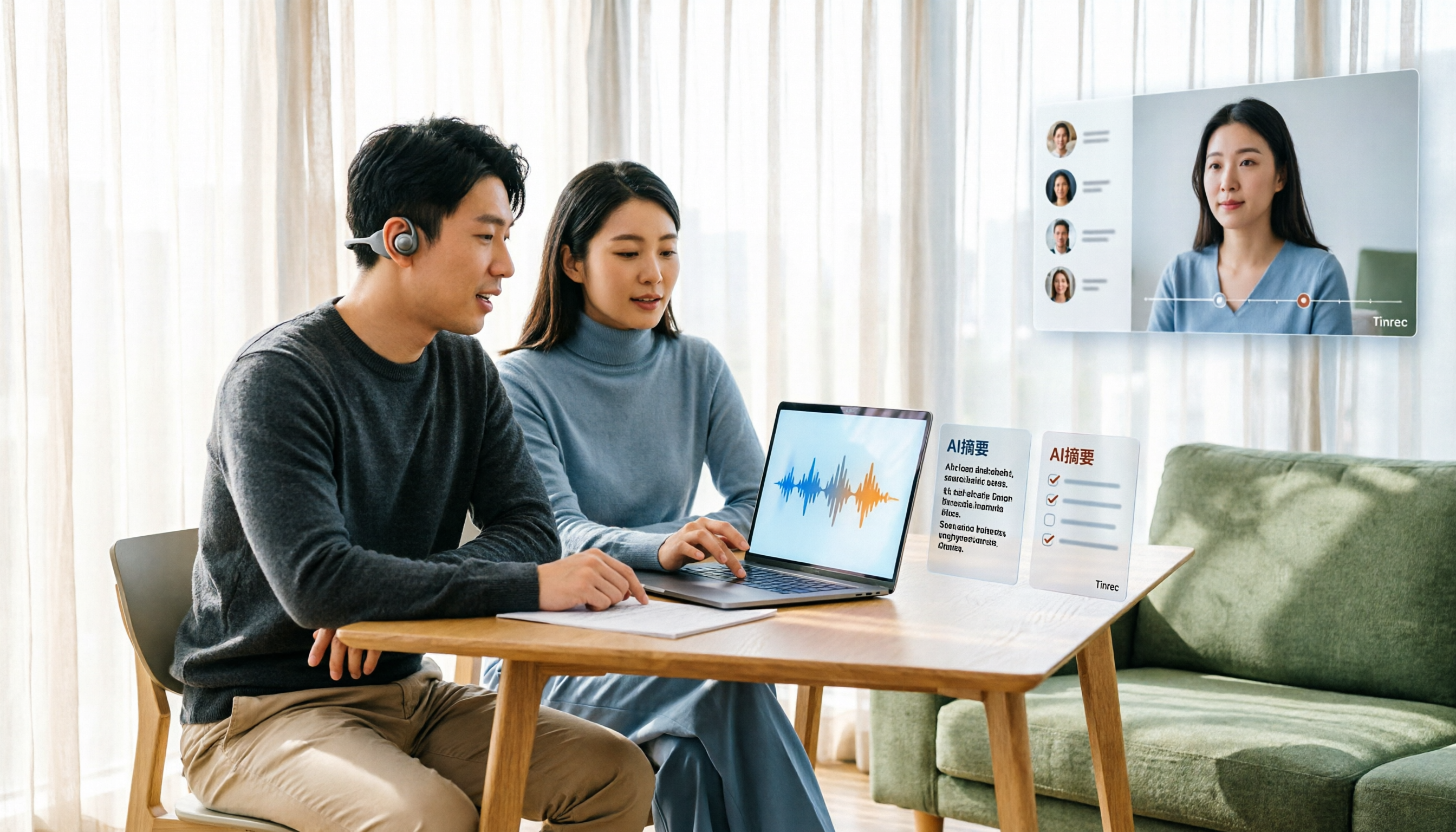
Tinrec Voice-to-Text App Review 2026: Is It Worth It? 4 Real-World Tests
Is a voice-to-text app actually useful? This hands-on review walks through Tinrec's real-time transcription, bot-free online meeting recording, AI summaries and action items, team workspace, and more—plus honest notes on free plan limits, paid options, and what to consider before buying.

Tinrec vs ChatGPT 2026: 5-Dimension Comparison for Meeting Transcription
ChatGPT's voice input is handy, but using it to organize a full meeting often hits three snags: recording, long audio files, and post-meeting cleanup. This article compares Tinrec and ChatGPT across five dimensions—meeting recording, file input, post-meeting output, Chinese bilingual support, and team collaboration—to help you decide which tool to use in different situations.

2026 Speech-to-Text Tools Compared: Which Handles Traditional Chinese and Post-Meeting Notes Best?
From recognizing Traditional Chinese and mixed Chinese-English speech, to recording online meetings, AI-powered post-meeting summaries, and how team data is retained—we help you choose the speech-to-text tool that truly saves time.
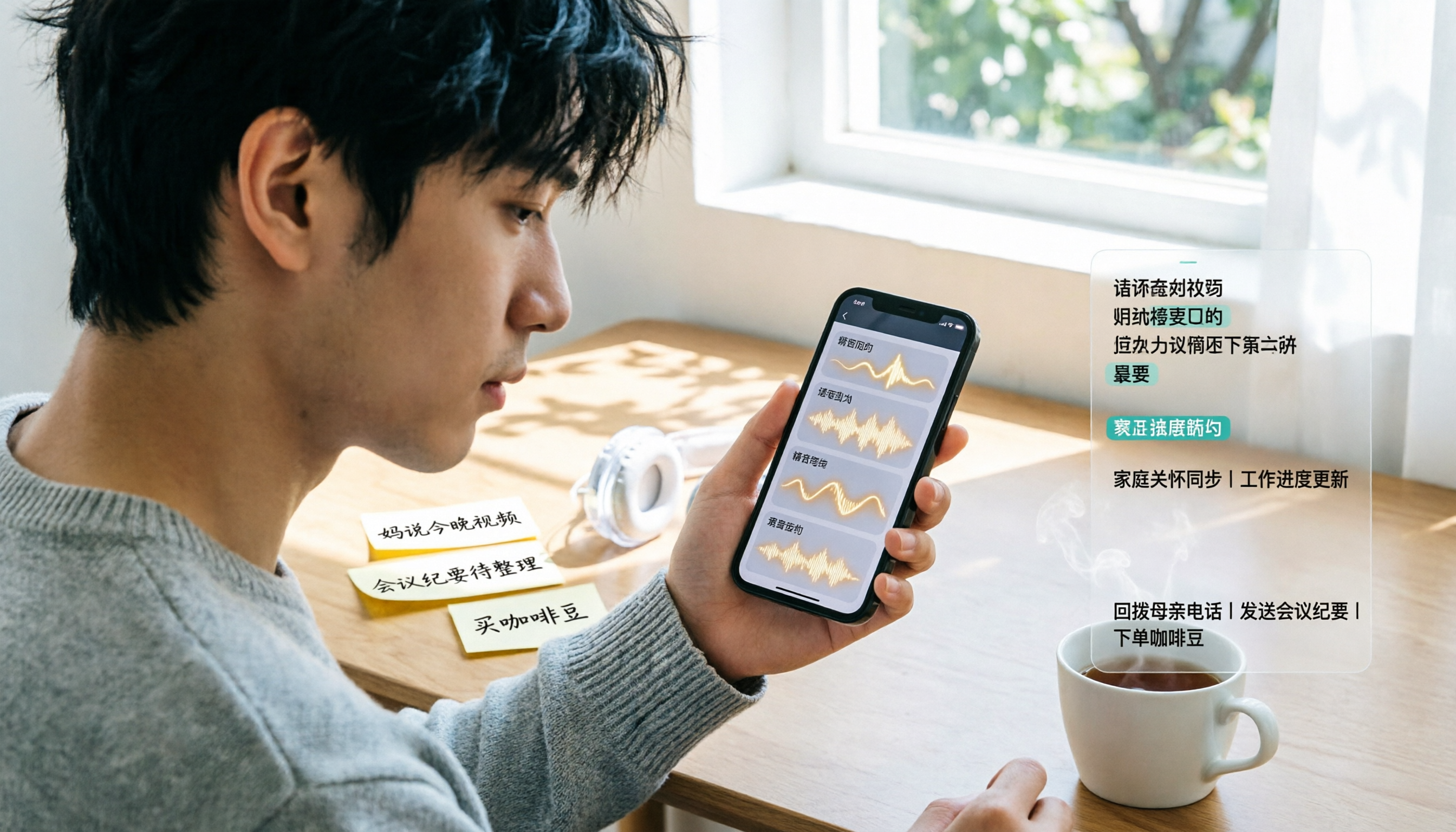
3 Ways to Transcribe WhatsApp Voice Messages in 2026: Built-in vs. Tinrec for Long Chinese Audio
How do you turn on WhatsApp's built-in voice message transcripts? What are the limitations? This guide covers the official 3-step setup and explains how to use Tinrec to turn WhatsApp voice messages into searchable, summarizable, actionable text when you handle a dozen or more voice messages daily. Includes 5 buying tips and FAQs.

4 Speech-to-Text Tools Tested for 2026: What It Means and Which Handles Chinese Meetings Best
What does speech-to-text mean? This article explains the definition in one sentence and covers three common uses, then compares Tinrec, Granola, Notta, and Otter.ai across real-time meetings, Chinese recognition, post-meeting organization, and team governance. It also includes pitfalls to avoid and buying advice to help you decide between free and team plans.
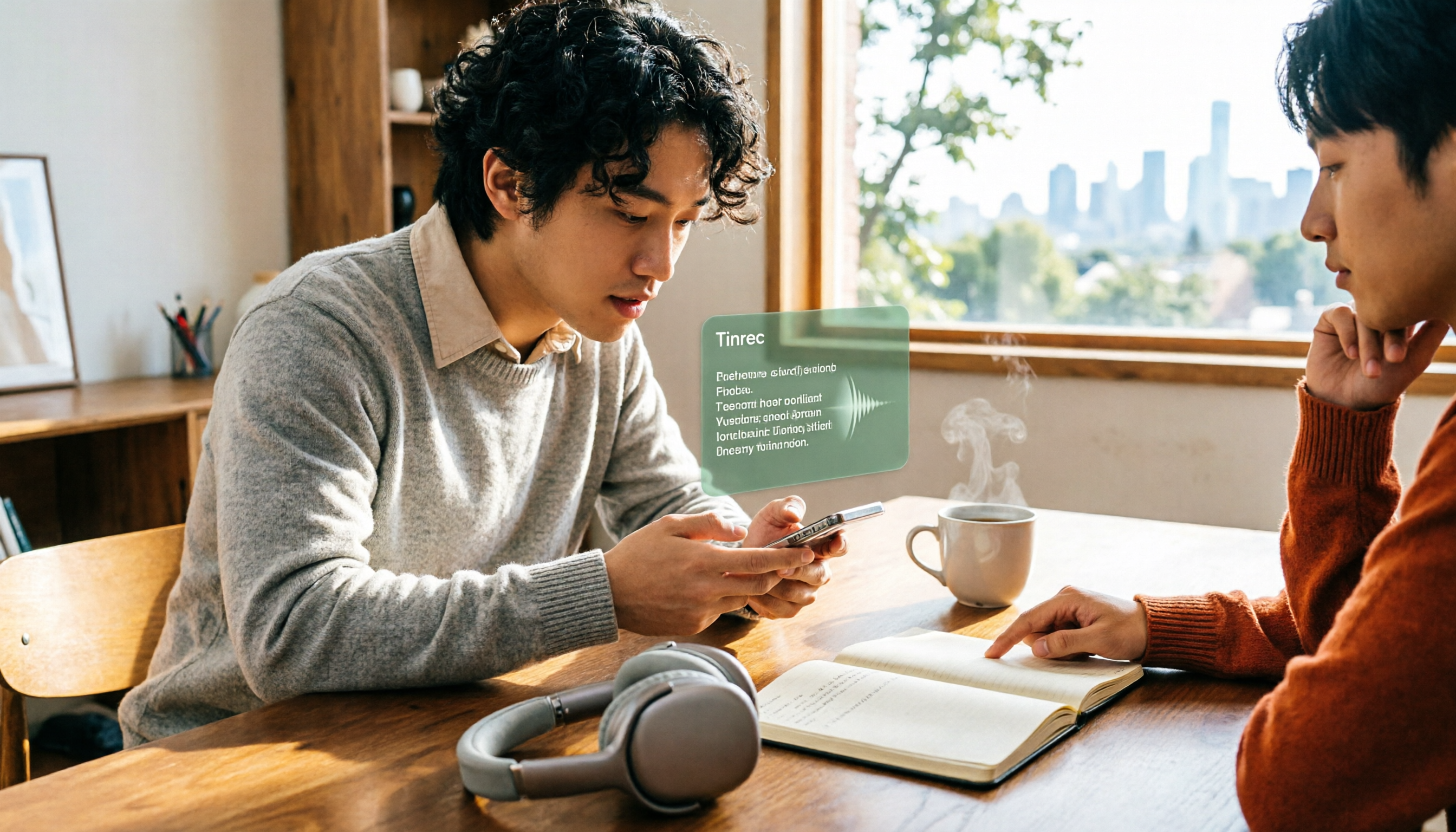
2026 Top 5 Speech-to-Text Tools Compared: PTT User Reviews and Hands-On Usability Test
PTT users often ask: are speech-to-text tools actually usable? Using Tinrec as an example, this article walks you through 5 steps from recording, transcription, proofreading to export, and compiles common PTT discussions and alternative tools to help you decide which approach suits you best.

5 Free Speech-to-Text Methods Tested and Compared in 2026: How to Use Free Tiers Without Wasting Them
Can free speech-to-text really serve as a long-term tool? Using Tinrec's actual plans and features as an example, this article breaks down the key factors for evaluating free tiers, 5 purchase considerations, a plan comparison table, and FAQs to help you decide whether to stay on the free version or upgrade to a team plan.

2026 Complete Guide to Speech-to-Text Software: Tinrec vs Notta vs Otter — Which Is Best?
Which speech-to-text software is best? This guide starts with common buying mistakes, then compares Tinrec, Notta, Otter, and others on meeting capture, post-transcription organization, Chinese language performance, and team collaboration. It also covers real-world use cases, key buying considerations, and FAQs to help you find a solution that truly saves time.

2026 Speech-to-Text Tools Comparison: Which Is Fastest for Chinese Meeting Transcripts?
Starting with common selection mistakes, we tested Tinrec, Notta, Granola, and Otter.ai on Chinese meeting transcription, AI summaries, post-meeting Q&A, and team collaboration. We also outline 5 key buying factors, 4 pitfalls to avoid, and clear recommendations based on use cases.