

Turn recordings into transcripts and summaries in minutes
Upload audio or video for multilingual transcription, AI notes, and action items
4 Speech-to-Text Tools Tested in 2026: Is the Free Version Enough?
Are free speech-to-text tools actually any good? The answer depends on what you plan to do with them.
If you just need to convert a 10-minute recording into text occasionally, almost any free version on the market can handle it. But if you have daily meetings, need to organize meeting minutes, and want to look back and check "who said they'd change the specs last week," free versions usually fall short in three areas: monthly limits, Chinese (especially mixed Chinese-English) recognition quality, and the work required to organize the text after transcription.
This article tests 4 tools—Tinrec, Otter.ai, Notta, and TurboScribe—to lay out the line between free and paid versions, and ends with actionable recommendations.
Staying After Meetings to Type Transcripts? What You Really Need Isn't "Faster Typing"
"Two-hour meeting, then two more hours organizing afterward"—this is the daily reality for many office workers. The real problem isn't typing speed; it's three things.
First, during the meeting it's hard to focus on the discussion and take notes at the same time—you often end up doing both poorly. Second, in Chinese meetings, mixing in English terms ("we need to align on this feature first") is almost the norm, and many tools produce a string of unrecognizable text. Third, when you need to find a specific sentence later, you can only drag through a 40-minute recording from memory.
So the real question isn't "which free tool transcribes fastest," but "which tool can give me a usable record within 10 minutes after the meeting, and that I can still find next time." Once you figure that out, your tool selection becomes clear.
Before Choosing a Speech-to-Text Tool, Understand These 4 Key Points
1. Free quota units: monthly, daily, or per-file limit? Some free versions offer "300 minutes per month," others "3 files per day, 30 minutes each," and some say free but only allow 3 minutes per transcription. Different units make a huge difference in usability—someone with daily meetings versus someone who records a lecture once a week need completely different plans. First estimate how many minutes you'll record per month, then check the quotas.
2. Chinese and mixed Chinese-English recognition Most tools' official accuracy rates are measured in quiet environments. Real meeting rooms have air conditioning noise, keyboard sounds, multiple people talking over each other, and mid-sentence switches to English terminology. We recommend testing with your own real recording—that's more accurate than any promotional number.
3. Does it have "organization" capabilities after transcription? A tool that only gives you a transcript is just throwing the work back at you. Whether it can automatically generate summaries, chapters, to-dos, and whether you can directly ask questions about the meeting content (e.g., "What was the conclusion of this meeting?")—that's the key to saving time.
4. Cross-platform and data ownership Recording on your phone today, organizing on your computer tomorrow—if the tool doesn't support cross-device use, it's painful. For team sharing, you also need to clarify: whose account is the data stored under? Will records remain after a member leaves?
Tinrec (秒聽錄音)—Our Top Recommendation After Testing
Tinrec (秒聽錄音) is an AI meeting notes and collaboration tool for individuals and teams, available on web, desktop, and mobile. Its positioning isn't just "audio to text"—it turns meetings into searchable, queryable, and further processable data.
During meetings: The desktop version directly captures computer system audio, handling online meetings on Zoom, Google Meet, Microsoft Teams, Webex, etc., without needing to add a meeting bot to the room—this is especially useful for external client meetings, so you don't have to explain "a bot will join shortly." For in-person meetings, use real-time recording to generate transcripts as you go. Cross-language meetings can enable real-time translation, viewed in original, translated, or bilingual mode.
After meetings: AI automatically generates summaries, chapters, key points, and to-dos. The most distinctive feature is AI Q&A—you can directly ask it "Who mentioned the budget in the last meeting?" "What were the client's concerns about the delivery date?" It answers based on semantics, rather than dumping a list of keywords for you to sift through. Few tools in this price range currently do this.
When delivering: Transcripts and minutes can be exported in common formats and brought into workflows like Notion, Google Docs, OneNote, Dropbox; for reports, tables, or meeting minute documents, the Agent post-processing generates them.
Stop organizing recordings by hand
Upload audio or video and automatically get a transcript, summary, and action items
Testing notes: We tested with a real ~5-minute meeting recording (indoor environment, with air conditioning background noise and multiple overlapping speakers). The transcript was mostly usable; proper nouns and names needed minor corrections; overlapping speech sections had missing words, but with timeline playback they could be quickly fixed. Overall, it saves time re-listening to the entire recording, rather than completely replacing manual proofreading—for important content, we still recommend checking against the original and recording.
Three main advantages:
- Record online meetings without a meeting bot—no extra account stuck in the participant list for external meetings.
- Transcription isn't the end: summaries, to-dos, AI Q&A, and export to existing workflows all in one.
- Chinese and mixed Chinese-English meeting scenarios are its strong suit, with real-time translation support.
Limitations: The free version offers basic quota; heavy users (multiple meetings per week) will need to upgrade to a weekly pass or Pro; if you have a large number of long recordings and dozens of files to batch process each month, it's not the most cost-effective choice. Also, actual recognition quality is still affected by recording quality, accents, noise, and overlapping speakers—we don't recommend treating it as a "no proofreading needed" tool.
Who it's for: Individuals and small teams who need Chinese meeting notes, don't want a bot joining meetings, and want to use AI to find key points directly after meetings.
For team use: Tinrec's team plan provides an independent team space (not multiple people sharing one personal account), with member, role, and seat management, plus team usage analytics, audit logs, audio recycle bin, and team hotwords. Team trial is 7 days, 1 free seat, 300 shared import minutes; paid seats are USD 29.80/month, USD 199/year (about USD 16.58/month), each paid seat provides 2,000 shared import minutes per month, and real-time recording doesn't deduct minutes under an active plan. Actual prices and benefits are subject to the official purchase page.
Besides Tinrec, What Other Free Options Are There?
Otter.ai: A veteran in English business meetings, free Basic plan offers 300 minutes per month—quite generous—and Pro annual billing is about USD 8.49/user/month. Its strengths are English meeting automation and extensive integrations. If you want to directly generate reports, tables, and documents after meetings, or need team-level hotword management, these are features Tinrec has that Otter requires additional tools to match.
Notta: The competitor with the most overlap with Tinrec, free version offers 120 minutes per month, but max 3 minutes per transcription—a fatal limitation for meeting notes. Pro annual billing is about USD 8.17/month (1,800 minutes per month). If you need governance capabilities like separate role and seat management, audit logs, and audio recycle bin, these are clearly provided by Tinrec's team plan but not covered in Notta's current plan descriptions.
TurboScribe: A cost-effective "file transcription" tool, free version offers 3 files per day, 30 minutes per file; Unlimited annual is USD 120, and after payment, single files can be up to 10 hours and 50 files uploaded at once. If you have a bunch of long recordings, podcasts, or course files to batch process, it's more suitable than Tinrec; but it lacks real-time meeting recording, AI Q&A, and team spaces—meeting scenarios aren't its strong suit.
Pitfall Guide: The 3 Most Common Mistakes When Choosing Free Speech-to-Text Tools
Pitfall 1: Only looking at official advertised accuracy. Official numbers are usually measured in quiet recording studios. Real meeting rooms have air conditioning noise, keyboard sounds, and multiple people talking over each other—performance drops noticeably. The approach is simple: test with your own recording for free, don't just look at ads.
Pitfall 2: Ignoring the difference between "per-file limit" and "monthly quota." 120 minutes per month sounds sufficient, but if you can only transcribe 3 minutes at a time, a 60-minute meeting requires 20 segments—you'll give up just from uploading. Check where the limits are written before choosing.
Pitfall 3: Using a transcription tool as a typewriter. Only using it to "turn sound into text" means using only part of its capabilities. After transcription, directly ask it "What was the conclusion of this meeting?" "What are the to-dos?"—much faster than flipping through a 30-minute transcript yourself.
Summary: Which One Should You Choose?
- Need Chinese (including mixed Chinese-English) meeting notes, don't want a bot joining meetings → Tinrec
- Want to use AI to find key points, ask for conclusions, and grab to-dos right after recording → Tinrec (has AI Q&A and post-meeting processing workflow)
- Record on phone, organize on computer, and export to Notion or Google Docs → Tinrec
- Team needs to share meeting data, manage seats, and view usage → Tinrec team plan
- Mainly record English meetings, zero budget → Otter.ai free version (300 minutes per month)
- Have a bunch of long recording files to batch transcribe → TurboScribe
If you're unsure about paying, we suggest running your real meeting next week through the free version first. Free quotas are usually enough to verify two things: "Is the recognition accurate enough?" and "Does post-meeting organization save time?" Once confirmed it fits your workflow, then consider upgrading—no need to pay upfront.
References
- No time limit! 3 free AI transcription tools, highly recommended! AI voice notes generate meeting records, presentations, mind maps | 104 Workplace
- Tested 4 best "speech-to-text" online tools, free instant audio to transcript
- Speech-to-Text Converter – Free Online | TicNote Cloud
- [AI Voice Notes] 5 highly recommended AI transcription tools! Generate transcripts and meeting notes, free vs subscription, pros and cons | 104 Workplace
- Online AI speech, video, audio file auto transcription - Free trial - cSubtitle
Turn every recording into actionable outcomes
Get 60 free transcription minutes when you sign in. No credit card required.
Related Reading
You might also like
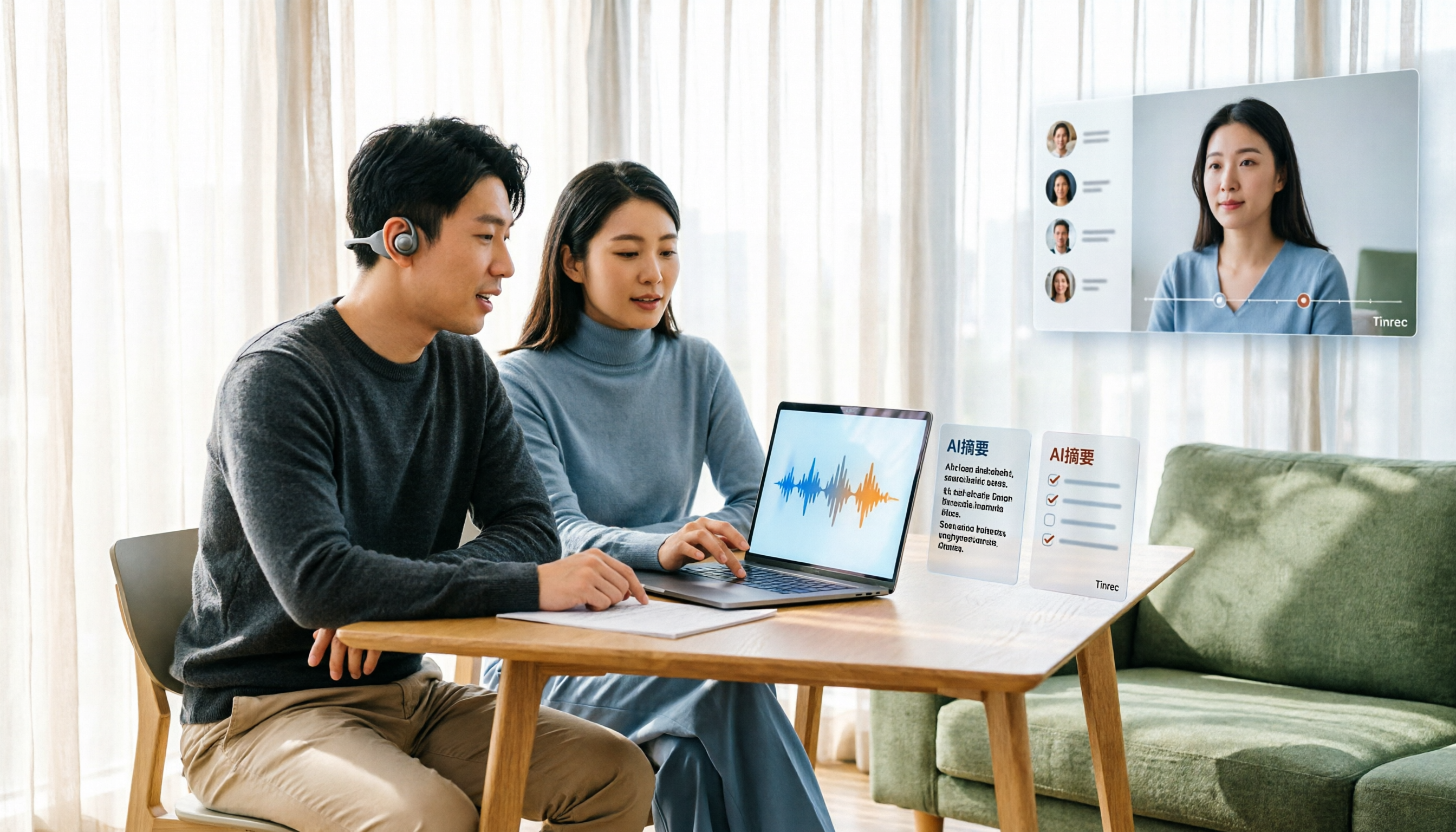
Tinrec Voice-to-Text App Review 2026: Is It Worth It? 4 Real-World Tests
Is a voice-to-text app actually useful? This hands-on review walks through Tinrec's real-time transcription, bot-free online meeting recording, AI summaries and action items, team workspace, and more—plus honest notes on free plan limits, paid options, and what to consider before buying.

Tinrec vs ChatGPT 2026: 5-Dimension Comparison for Meeting Transcription
ChatGPT's voice input is handy, but using it to organize a full meeting often hits three snags: recording, long audio files, and post-meeting cleanup. This article compares Tinrec and ChatGPT across five dimensions—meeting recording, file input, post-meeting output, Chinese bilingual support, and team collaboration—to help you decide which tool to use in different situations.

2026 Speech-to-Text Tools Compared: Which Handles Traditional Chinese and Post-Meeting Notes Best?
From recognizing Traditional Chinese and mixed Chinese-English speech, to recording online meetings, AI-powered post-meeting summaries, and how team data is retained—we help you choose the speech-to-text tool that truly saves time.
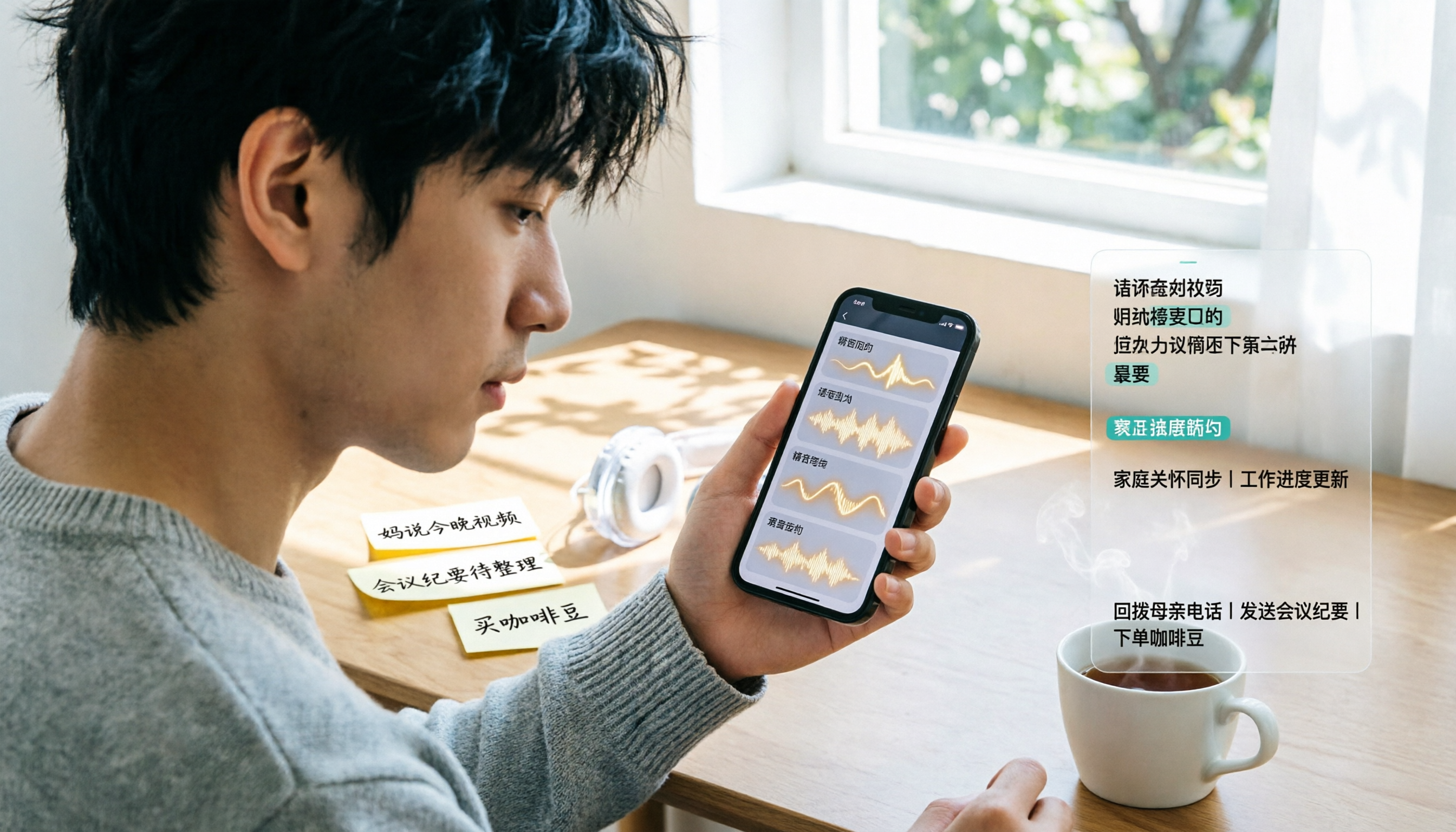
3 Ways to Transcribe WhatsApp Voice Messages in 2026: Built-in vs. Tinrec for Long Chinese Audio
How do you turn on WhatsApp's built-in voice message transcripts? What are the limitations? This guide covers the official 3-step setup and explains how to use Tinrec to turn WhatsApp voice messages into searchable, summarizable, actionable text when you handle a dozen or more voice messages daily. Includes 5 buying tips and FAQs.

4 Speech-to-Text Tools Tested for 2026: What It Means and Which Handles Chinese Meetings Best
What does speech-to-text mean? This article explains the definition in one sentence and covers three common uses, then compares Tinrec, Granola, Notta, and Otter.ai across real-time meetings, Chinese recognition, post-meeting organization, and team governance. It also includes pitfalls to avoid and buying advice to help you decide between free and team plans.

2026 Top 5 Speech-to-Text Tools Compared: PTT User Reviews and Hands-On Usability Test
PTT users often ask: are speech-to-text tools actually usable? Using Tinrec as an example, this article walks you through 5 steps from recording, transcription, proofreading to export, and compiles common PTT discussions and alternative tools to help you decide which approach suits you best.

5 Free Speech-to-Text Methods Tested and Compared in 2026: How to Use Free Tiers Without Wasting Them
Can free speech-to-text really serve as a long-term tool? Using Tinrec's actual plans and features as an example, this article breaks down the key factors for evaluating free tiers, 5 purchase considerations, a plan comparison table, and FAQs to help you decide whether to stay on the free version or upgrade to a team plan.

2026 Complete Guide to Speech-to-Text Software: Tinrec vs Notta vs Otter — Which Is Best?
Which speech-to-text software is best? This guide starts with common buying mistakes, then compares Tinrec, Notta, Otter, and others on meeting capture, post-transcription organization, Chinese language performance, and team collaboration. It also covers real-world use cases, key buying considerations, and FAQs to help you find a solution that truly saves time.

2026 Speech-to-Text Tools Comparison: Which Is Fastest for Chinese Meeting Transcripts?
Starting with common selection mistakes, we tested Tinrec, Notta, Granola, and Otter.ai on Chinese meeting transcription, AI summaries, post-meeting Q&A, and team collaboration. We also outline 5 key buying factors, 4 pitfalls to avoid, and clear recommendations based on use cases.