

Turn recordings into transcripts and summaries in minutes
Upload audio or video for multilingual transcription, AI notes, and action items
5 AI Text-to-Speech Tools Tested in 2026: Which Is Best for Reading, Transcribing, and Post-Meeting Notes?
The Problem: After a Meeting, You Don't Need to Listen Again—You Need Someone to Read the Highlights for You
It's 3 PM, and the online meeting just ended. Your boss asks, "Who mentioned the budget earlier?" You only remember recording it, but you don't want to listen to the 45-minute audio from the beginning. Another scenario: you want to turn a PDF or long article into audio to listen to during your commute. Both needs are called "AI reading text," but the solutions are completely different.
This article helps you distinguish: who should use text-to-speech, and who should turn meetings into readable, queryable, and organizable data.
Before Choosing an AI Text-Reading Tool, Understand These 4 Key Points
- Do you want it "read aloud" or "understood"? Text-to-speech tools turn text into sound; meeting note tools turn sound into text, then organize it into summaries and to-dos. Mixing them up will lead to the wrong tool.
- Supported languages and accents. Sources show MyEdit supports 9 languages including Chinese, English, Japanese, Korean, and French, while Audify supports 26; but meeting tools focus more on Chinese, mixed Chinese-English, and post-meeting summaries.
- Post-meeting workflow. A transcript is just the starting point. The key to saving time is whether it can automatically summarize, extract to-dos, and let you directly ask "What was the conclusion of the last meeting?"
- Teams and permissions. For personal use, a free version is enough; for teams sharing meeting data, you need to look at team spaces, seats, usage, and auditing. Tinrec's team version manages these separately.
Tinrec — Our Top Pick After Testing
Tinrec is an AI meeting notes and collaboration tool for individuals and teams. It's not a reader, but rather turns meeting, interview, and course recordings into searchable, summarizable, and queryable data, supporting web, desktop, and mobile use.
Core features integrated into scenarios:
- Bot-free recording of online meetings. The desktop version captures computer system audio and can handle Zoom, Google Meet, Microsoft Teams, Webex, etc., without inviting a meeting bot. Open Tinrec during the meeting, and it generates a transcript while recording; after the meeting, AI has already generated a summary, chapters, and to-dos, making it clear who is responsible for what.
- AI Q&A. After recording, you can directly ask: "What was the budget conclusion of this meeting?" It answers based on semantic understanding, not just keyword search. Competing products at the same price may not have this feature.
- Post-meeting output. Supports generating meeting minutes, reports, tables, and documents, and can export to Notion, Google Docs, OneNote, Dropbox, etc. for further processing. It also has real-time translation, allowing you to view in original, translated, or bilingual format.
- Team space. The team version provides an independent team space where members can view, play, and read team data; administrators can manage roles, seats, usage analysis, audit logs, and audio recycle bin. Team resources belong to the team and won't disappear if an individual leaves.
Testing and limitations:
We tested with a Chinese meeting recording. Under clear audio and common meeting environments, Tinrec's transcript readability is high, and summary and to-do extraction can save a lot of manual organization time. Actual results will be affected by recording quality, noise, accents, overlapping speech, and technical terms; we do not recommend promising a fixed accuracy rate.
Stop organizing recordings by hand
Upload audio or video and automatically get a transcript, summary, and action items
Limitations and pricing:
The free version offers basic quota to experience recording, import, summary, and transcription. For short-term high frequency, consider a weekly pass; for stable use, choose the Pro monthly plan; for long-term accumulation, choose the Pro annual plan. The team version offers a 7-day trial with 1 free seat and 300 minutes of team shared import quota for first-time eligible users; team monthly is USD 29.80 per paid seat per month, annual is USD 199 per paid seat per year, equivalent to about USD 16.58 per month, with each paid seat providing 2,000 minutes of team shared import quota per month. Under an active team plan and seats, real-time recording currently does not deduct minutes; file and web imports consume team shared minutes. Prices are subject to the official purchase page.
Who it's for:
If you frequently need Chinese meeting notes, don't want to invite a meeting bot, want to use AI to find key points directly after meetings, or need to accumulate meeting data as team assets, Tinrec is currently one of the most suitable choices.
Besides Tinrec, What Other Options Are There?
If you just want to "read text aloud," the following tools have their own positioning, but none have Tinrec's bot-free meeting recording, AI Q&A, and team space.
- MyEdit: An online AI reader; paste text, choose a voice style, and generate speech. Supports 9 languages including Chinese, English, Japanese, Korean, and French, with American and British accents for English. Suitable for those who don't want to install software and want to convert articles to speech on the fly. But it lacks meeting transcription and to-do organization.
- Google Read Aloud: Adjustable speed, fast forward/rewind, jump to specific paragraphs, suitable for reading long texts. However, you cannot choose voice styles, the AI reading voice is slightly unnatural, and it lacks AI summaries and Q&A.
- @Voice Aloud Reader: An Android app that can read PDFs, e-books, web pages, documents, and pasted text in dozens of languages, suitable for hands-free listening during commutes. But it won't organize meeting notes for you, and lacks team collaboration and seat management.
- Ondoku: Online text-to-speech; input articles to convert to speech and download MP3, suitable for individuals who need audio files. It lacks meeting transcripts, AI to-dos, and team sharing features.
Pitfall Guide: The 3 Most Common Mistakes When Choosing an AI Text-Reading Tool
- Pitfall 1: Mixing up "readers" and "meeting note tools." To listen to articles, choose TTS; to organize meetings, choose a post-meeting workflow tool like Tinrec.
- Pitfall 2: Only looking at free minutes, ignoring post-meeting features. If you still have to manually copy transcripts everywhere, the time saved is limited. Tinrec's value lies in summaries, Q&A, to-dos, and export.
- Pitfall 3: Sharing a personal account across a team. This leads to confused data ownership. The team version should use an independent space, distinguish roles and seats, so that resources can be handed over when members leave. Tinrec's team version provides these governance capabilities.
Conclusion: Which One Should You Choose?
- For Chinese meeting notes, bot-free recording, post-meeting AI Q&A → Tinrec (top pick)
- For cross-platform meeting organization and team data accumulation → Tinrec team version
- Just want to read articles or PDFs aloud → MyEdit, Google Read Aloud, or @Voice and other TTS tools
- Need bulk file transcription, subtitles, and translation → Consider general transcription tools like Notta, TurboScribe
- Zero budget, only English meetings → Otter.ai free version can be included in comparison
Overall, if your expectation for "AI reading text" is to help you understand meetings, interviews, and courses, not just read words aloud, Tinrec will be closer to your needs than a simple reader. We suggest trying the free version first, and consider upgrading if the quota is insufficient.
Note: Please comply with local laws when recording and transcribing, and obtain consent from participants when necessary.
References
- 2026 Tested 4 AI Reader Recommendations, Use AI Online to Read Chinese, English, and Other Languages
- AI Reading Text: A Complete Guide to Letting AI Read Any Text Aloud
- Text-to-Speech: Natural and Fluent AI Voice and Speech Synthesis Service | Google Cloud
- @Voice Aloud Reader (TTS Reader) - Google Play App
- Traditional Chinese Text-to-Speech Software | Ondoku
Turn every recording into actionable outcomes
Get 60 free transcription minutes when you sign in. No credit card required.
Related Reading
You might also like

Tinrec vs Otter.ai in 2026: 5-Dimension Comparison — Which Is Better for Chinese Meetings?
Still manually transcribing meetings? This article compares Tinrec and Otter.ai across 5 dimensions: Chinese recognition, bot-free recording, post-meeting AI Q&A, team collaboration, and pricing. We also highlight 4 common pitfalls when choosing speech-to-text AI to help you find the best tool for Chinese meeting notes.
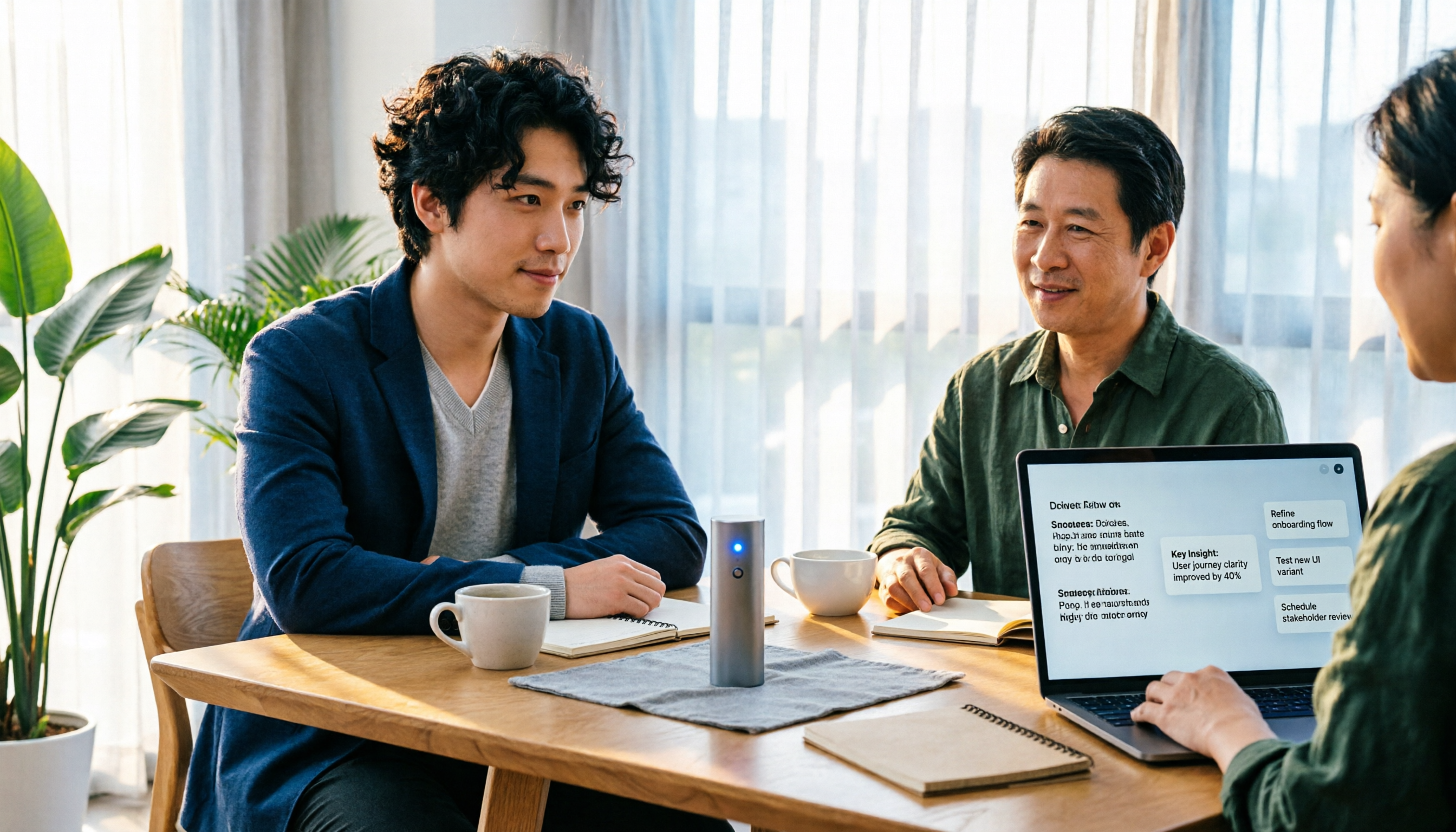
4 Google Audio-to-Text Solutions Tested in 2026: Which Free Transcription and Meeting Notes Tool Is Enough?
Google's own Live Transcribe, Docs voice typing, and Cloud Speech-to-Text API each have their own purpose, file length limits, and use cases. This article uses the same mixed Chinese-English meeting recording to compare 3 Google solutions and Tinrec on transcription, summaries, action items, AI Q&A, and team collaboration, plus 4 key buying points and 3 common pitfalls to help you decide between a free tool and a meeting-specific tool.

2026 Top 5 AI Meeting Report Tools Compared: From Recording to Report, Which Saves the Most Time?
Taking meeting notes doesn't mean the report is done. This article starts with the most common pitfalls, breaks down 4 key points for choosing an AI summarization and reporting tool, and compares Tinrec, Gamma, Elicit, Vocol.ai, and others on transcription, summaries, action items, AI Q&A, and team collaboration to help you find the most time-saving post-meeting workflow.

Tinrec vs Notta 2026: 5-Dimension Comparison for Video Highlight Extraction
Two-hour video but only need ten minutes of key points? This article starts from the real pain of video highlight extraction, breaks down 5 key selection factors, tests Tinrec's transcription, AI summary, content Q&A, and team space, compares Notta, TurboScribe, and Granola in positioning and pricing, and provides actionable selection advice.
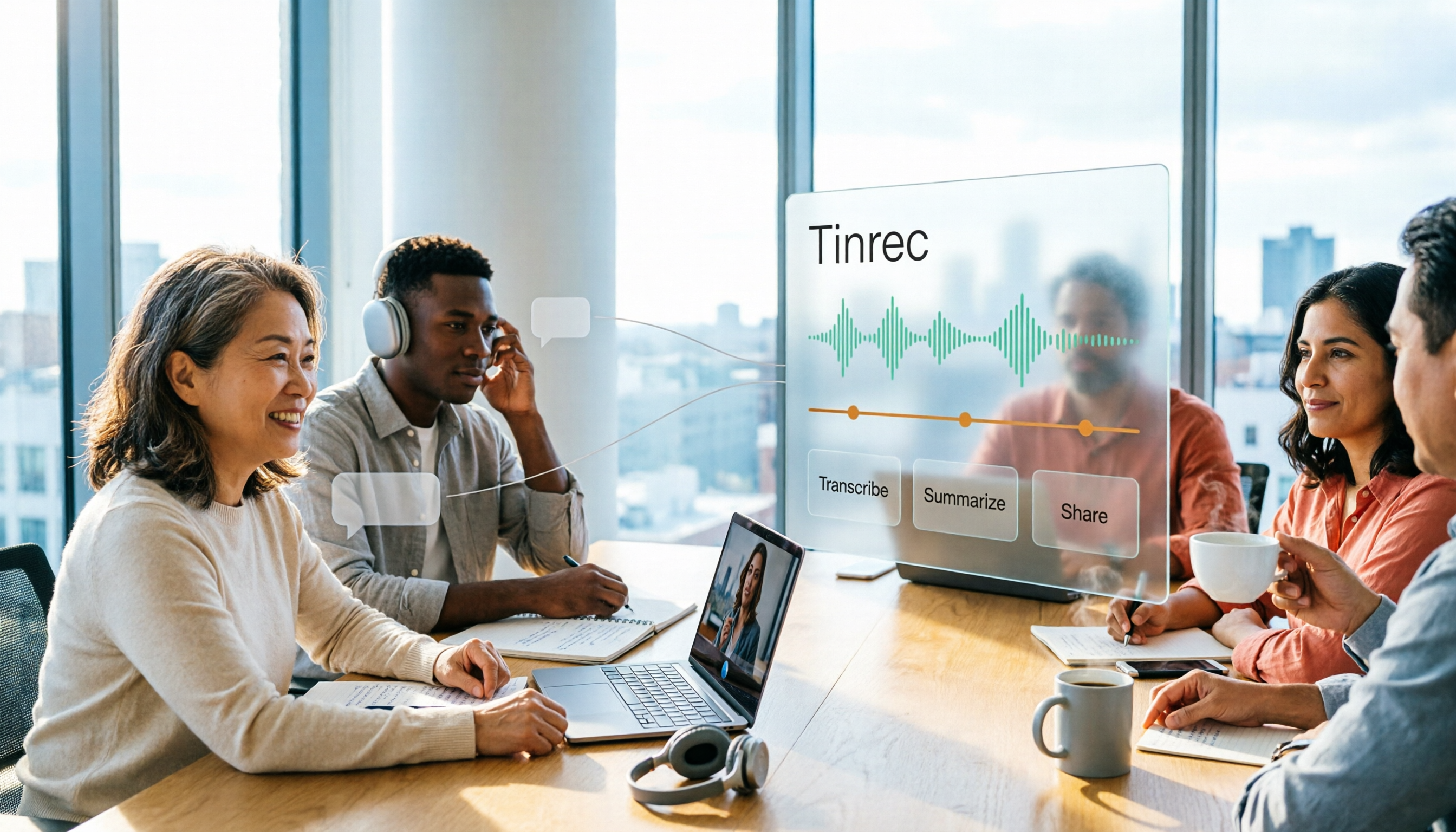
Tinrec vs Notta: 2 AI Voice Tools Tested for Meeting Notes & Transcription in 2026
Many people search for voice generation software, but the real pain point is organizing meeting audio. This hands-on comparison of Tinrec and Notta covers meeting capture, post-meeting organization, Chinese language experience, team collaboration, and data retention to help you choose the right tool for your workflow.

2026 Comparison of 4 Workplace Short Video Learning Summary Tools: Is Tinrec's AI Summary and Review Good Enough?
Forget short work videos right after watching? This article starts from the criteria of 'summary—notes—review' and compares Tinrec with general note-taking tools, bookmarking tools, and pure transcription tools in short video learning. It organizes 4 key comparisons, real usage scenarios for campus and internships, and concerns about free quotas and paid options to help you choose a workflow that truly helps you remember.

5 Best Free Speech-to-Text Online Tools in 2026: A Complete Guide
Compare 5 free speech-to-text online tools in 2026, including Tinrec, MyEdit, cSubtitle, TurboScribe, and Otter.ai. Review free quotas, Chinese language support, export formats, and use cases, with selection tips and usage notes.
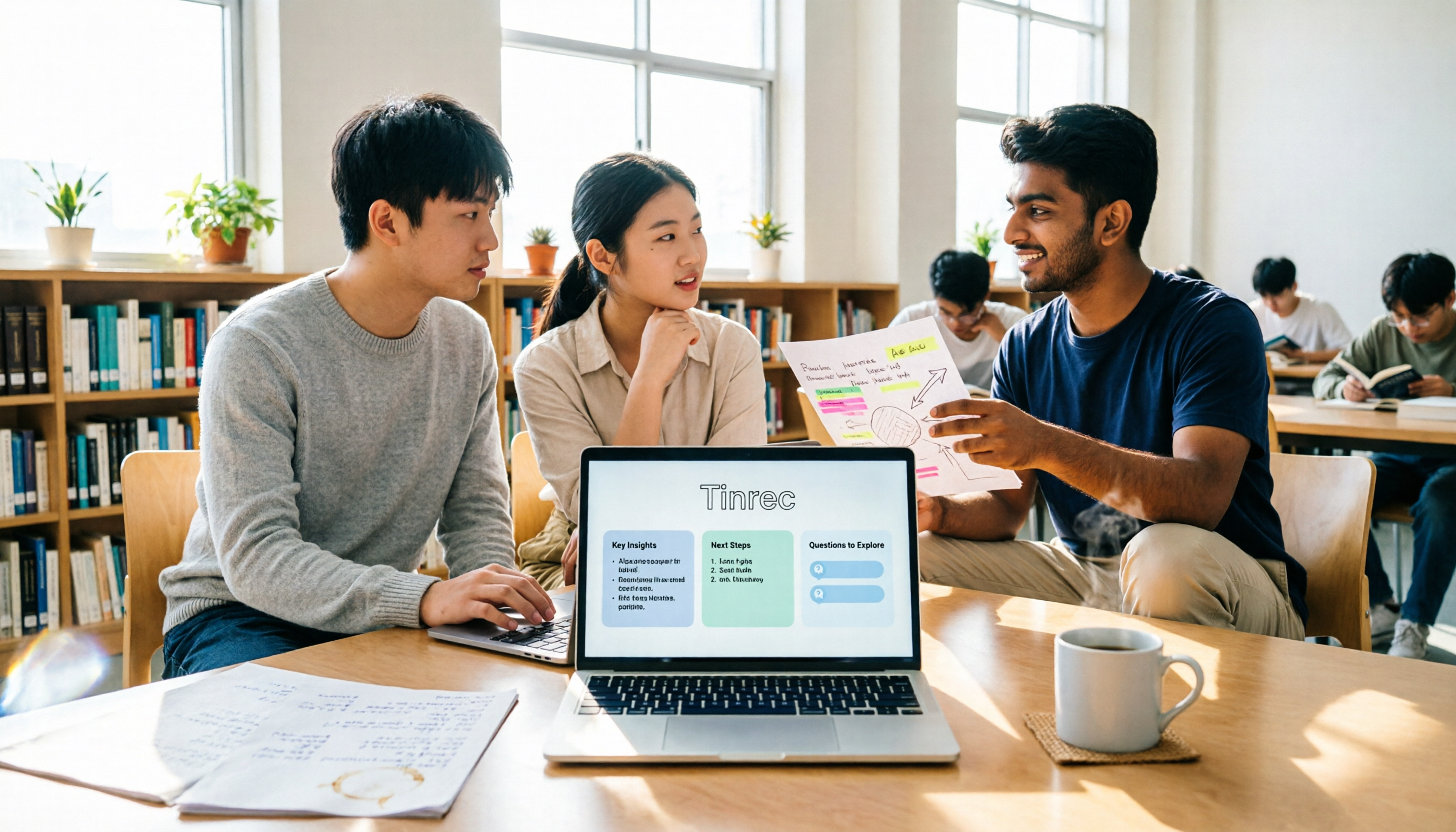
2026 Video Summarization Software Ranking Guide: Student-Tested Choices from Notta to Tinrec
This article starts from students' actual needs, organizes the key points for choosing video summarization software in 2026, and uses Tinrec as the core to compare the pain point that ordinary tools only provide transcripts. The content covers classroom notes, group reports, online courses, and interviews, helping you understand how AI summaries, to-do extraction, AI Q&A, and team collaboration can truly save time, and finally gives recommendations for students.

2026 Video Summarization Tools Compared: The Real Test Is Whether You Can Ask Follow-Up Questions and Keep Your Data
There are many video summarization tools, but most people only compare summary length. This article uses four angles—can you jump back to timestamps, can you ask follow-up questions, can you turn insights into action, and can team data be retained—to review the positioning and limitations of Tinrec, Felo AI, Monica, and WayinVideo, helping you find the right approach.