

Turn recordings into transcripts and summaries in minutes
Upload audio or video for multilingual transcription, AI notes, and action items
A meeting action item table really solves a very specific choice: do you want to keep relying on memory to fill in the table after the meeting, or do you want a tool to organize "who, does what, by when" the moment the meeting ends?
That choice directly determines how much extra time you spend each week chasing to-dos. Below, we lay out several common table approaches side by side, and also walk through the process of using an AI meeting tool to automatically generate to-dos.
The meeting ends, but no one follows up on action items — the problem usually isn't the people, it's the table
The first scenario is very common: the meeting notes are packed, but the "action items" column only says "follow up" or "discuss later." No owner, no due date — that action item is doomed from the moment it's written down.
The second scenario is that the table only exists on one person's computer. They go on leave, leave the company, or just forget to send it, and the entire tracking list breaks down with them.
The third scenario is a Chinese-language meeting mixed with English terms and product codes. Later, when you want to check "who mentioned the quote last week," all you find is a bunch of scattered keywords.
If you've run into these situations, the problem usually isn't that people aren't serious — it's that the table's design and generation method were wrong from the start.
Before you build a table, understand these 4 key points
1. You don't need many columns, but these three are essential
A trackable action item table needs at least a task description starting with a verb, an owner, and a due date. Miss any one of these, and it's just a record, not a list.
2. "When you fill it in" matters more than "what you fill in"
Confirming and assigning on the spot during the meeting is far more accurate than filling it in from memory afterward. That's why "generating to-dos while the meeting is happening" is usually more effective than organizing after the fact.
3. The table must be searchable and continuable
Action items rarely end with one meeting. Tracking the progress of the same item across meetings is more practical than opening a new table each time.
4. Duplicate copying is the biggest waste
From recording to transcript to to-do list, if every step has to be manually retyped, you're wasting half the value of the entire meeting.
These four points are exactly where the tool below focuses its design.
Tinrec — our top pick after actually using it
Tinrec is an AI meeting notes and collaboration tool for individuals and teams, supporting iOS, Android, desktop, and web. Its positioning isn't just converting voice to text — it's turning meetings into searchable, collaborative, actionable data.
During the meeting: record online meetings without inviting a bot
Tinrec's desktop version directly captures your computer's system audio. When handling online meetings on Zoom, Google Meet, Microsoft Teams, Webex, and others, no extra meeting bot needs to join. The transcript accumulates while the meeting is happening, so you don't have to re-listen to an hour of recording after it ends.
After the meeting: summary, chapters, and to-dos generated at once
After the meeting ends, Tinrec automatically generates a summary and chapters, and extracts to-dos from the discussion. What has conclusions, who's responsible, and what the next step is can be carried directly into your action item table without rebuilding from memory.
Tracking: asking is faster than digging through the transcript
Even better is AI Q&A. You can directly ask it "who mentioned the budget in the last meeting," and it will answer based on semantic understanding rather than throwing a string of keyword search results at you. Recordings, transcripts, and meeting data are stored in the same space, making later verification convenient.
Stop organizing recordings by hand
Upload audio or video and automatically get a transcript, summary, and action items
In addition, Tinrec supports multi-format export, so you can bring organized content into Notion, Google Docs, OneNote, Dropbox, and other tools for continued use. It can also use Agent post-processing to generate reports, tables, and documents. The team version provides an independent team space, separating member, role, and seat management, and also lets you view usage trends and audit logs, with an audio recycle bin. The first eligible team trial is 7 days, 1 free seat, and 300 minutes of team shared import quota; paid seats provide 2,000 minutes of team shared import quota per month. Actual pricing and benefits are subject to the official purchase page.
A few things to keep in mind
Tinrec does not promise a fixed recognition accuracy rate. Actual results are affected by recording quality, noise, accents, and multiple people talking over each other. For important content, it's recommended to verify against transcript timestamps and recording playback.
The free version provides a basic quota, suitable for trying the workflow first; if you have steady weekly usage needs, then consider upgrading. The team version uses a paid seat system, and seats and quotas are subject to the official purchase page.
Who it's for
If you hold meetings in Chinese or a mix of Chinese and English, don't want a bot joining the meeting room, and want a trackable to-do list directly after the meeting, Tinrec is currently one of the smoothest choices.
Besides Tinrec, what other options are there?
Otter.ai
A mature English AI meeting assistant. The free version's 300 minutes per month is quite generous, and Pro annual billing is about USD 8.49/user/month. It has the strongest mind for English business meetings; but if what you need is Chinese meeting hot words, team seat governance, and team data management like an audio recycle bin, Tinrec's team version will be closer to your needs.
Notta
Notta covers multi-platform transcription, meeting notes, translation, and team plans. The free version offers 120 minutes per month, with a maximum of 3 minutes per single item. Its strengths are file transcription and multilingual translation; by contrast, Tinrec is more concrete in desktop bot-free recording of online meetings and using Agent to generate reports and tables.
Granola
Granola also uses a bot-free approach, transcribing meetings via desktop system audio and combining it with the user's handwritten notes. Note that it does not save meeting audio and does not support uploading pre-recorded files. If you need to keep recordings, import existing audio files, or organize Chinese and multilingual meetings, Tinrec has a broader scope of application.
Pitfalls guide: the 4 most common mistakes when designing a meeting action item table
Pitfall 1: Writing "discussion topic" as "action item"
"Discuss Q4 budget" is a topic; "Submit Q4 budget draft by 10/15" is an action item. The test is simple: does this line have a verb, and does it have a verifiable result?
Pitfall 2: Filling the due date as "ASAP"
"ASAP" equals no deadline. Filling in a specific date, even if it needs adjustment later, is far more useful than a vague promise.
Pitfall 3: The table only exists on a personal device
As long as the tracking list is tied to one person's computer, the moment that person changes roles, the entire history disappears with them. Only when it's placed in a team-shared space does the data have continuity.
Pitfall 4: Relying entirely on post-meeting memory to fill it in
Rushing to the next thing right after a meeting ends is the moment when action items are most easily missed. A more practical approach is to use transcript and to-do extraction features to complete confirmation during the meeting, leaving only minor adjustments for afterward.
Conclusion: which one should you actually use?
Condensing the above information into a few judgments:
- Want Chinese and mixed Chinese-English meetings, plus trackable to-dos → Tinrec (desktop bot-free recording, automatic to-do extraction after the meeting)
- Want to query meeting conclusions directly via Q&A after the meeting → Tinrec (AI Q&A can follow up on meeting content)
- Need the same data across phone, computer, and web → Tinrec (iOS, Android, desktop, and web)
- Team sharing of meeting data, needing seat and usage management → Tinrec team version (includes trial and paid seat plans)
- Only recording English business meetings, want to rely on the free quota first → Otter.ai (free version 300 minutes per month)
You can start with Tinrec's free version to go through the full workflow once, see whether the automatically generated to-dos fit your meeting style, and then decide whether to upgrade.
Finally, a reminder: recording and transcription involve other people's conversations. Before use, please confirm compliance with local regulations and obtain participant consent when needed.
References
- Executive Yuan Youth Advisory Committee 3rd Meeting Agenda
- Meeting Agenda Template 2026: 3 Ready-to-Use Examples + AI Meeting Notes Integration Process | Subanana
- Form Download Meeting Format - Secretariat - Tamkang University
- Project Management Tool -- [Meeting Minutes] Template_Project Management Formal Minutes Template-CSDN Blog
- Team Meeting Template: Agenda, Facilitation, Meeting Notes and Action Items
Turn every recording into actionable outcomes
Get 60 free transcription minutes when you sign in. No credit card required.
Related Reading
You might also like

How to Create Meeting Minutes Templates in 2026: 5-Column Template + AI-Generated Action Items
How can you create meeting minutes that actually get used? This guide starts with common pitfalls, breaks down the essential action items, decisions, and traceability design for tables, compares manual templates with AI tools, and explains how Tinrec uses transcripts, summaries, and action item extraction to replace the old workflow of typing while listening.
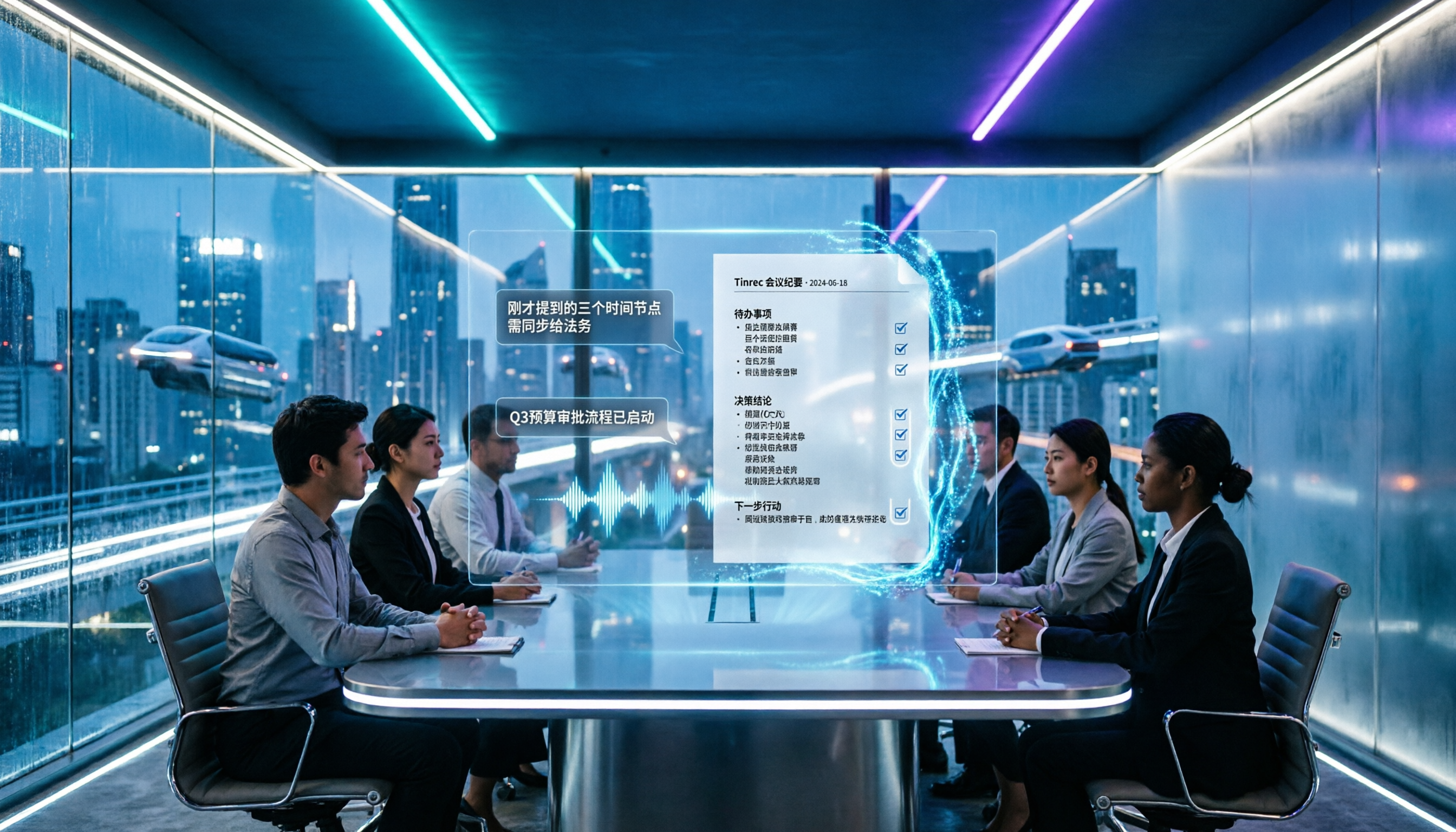
2026 Comparison of 3 Meeting Minutes PDF Tools: Which Delivers Chinese Meeting Documents Fastest?
After a meeting, the real time sink isn't converting to PDF—it's re-listening to recordings and filling in decisions. This comparison of Tinrec, Granola, and Notta covers meeting notes, Chinese language handling, and document export, plus a ready-to-use meeting minutes template.

Word vs Excel for Meeting Minutes: I Tested 3 Methods in 2026 and Chose an AI Tool
Should meeting minutes be in Word or Excel? Drawing on a mid-level manager's hands-on experience, this article breaks down the scenarios each format suits, compares Word, Excel, Notta, Otter.ai, and Tinrec for Chinese meeting notes, action item tracking, and team collaboration, and lists 4 common pitfalls to help you pick the method that truly saves time.

4 Meeting Note Tools Tested in 2026: Which Can Auto-Generate Task Lists?
After the meeting, no one knows who does what next? We tested 4 meeting note tools to compare which can automatically extract task lists from recordings and transcripts, and we break down Tinrec's actual workflow, team plan seats and pricing, plus 6 key points to consider before buying.

2026 Comparison of 5 Free Meeting Minutes Templates: How Much Faster Is AI Auto-Generation Than Manual Filling?
Downloading free meeting minutes templates is easy, but the real time sink isn't the template—it's organizing the content into it. Using Tinrec as an example, this article shows what free meeting minutes templates can help with, what AI approaches exist, 5 key points to consider when choosing a tool, and answers to common questions.
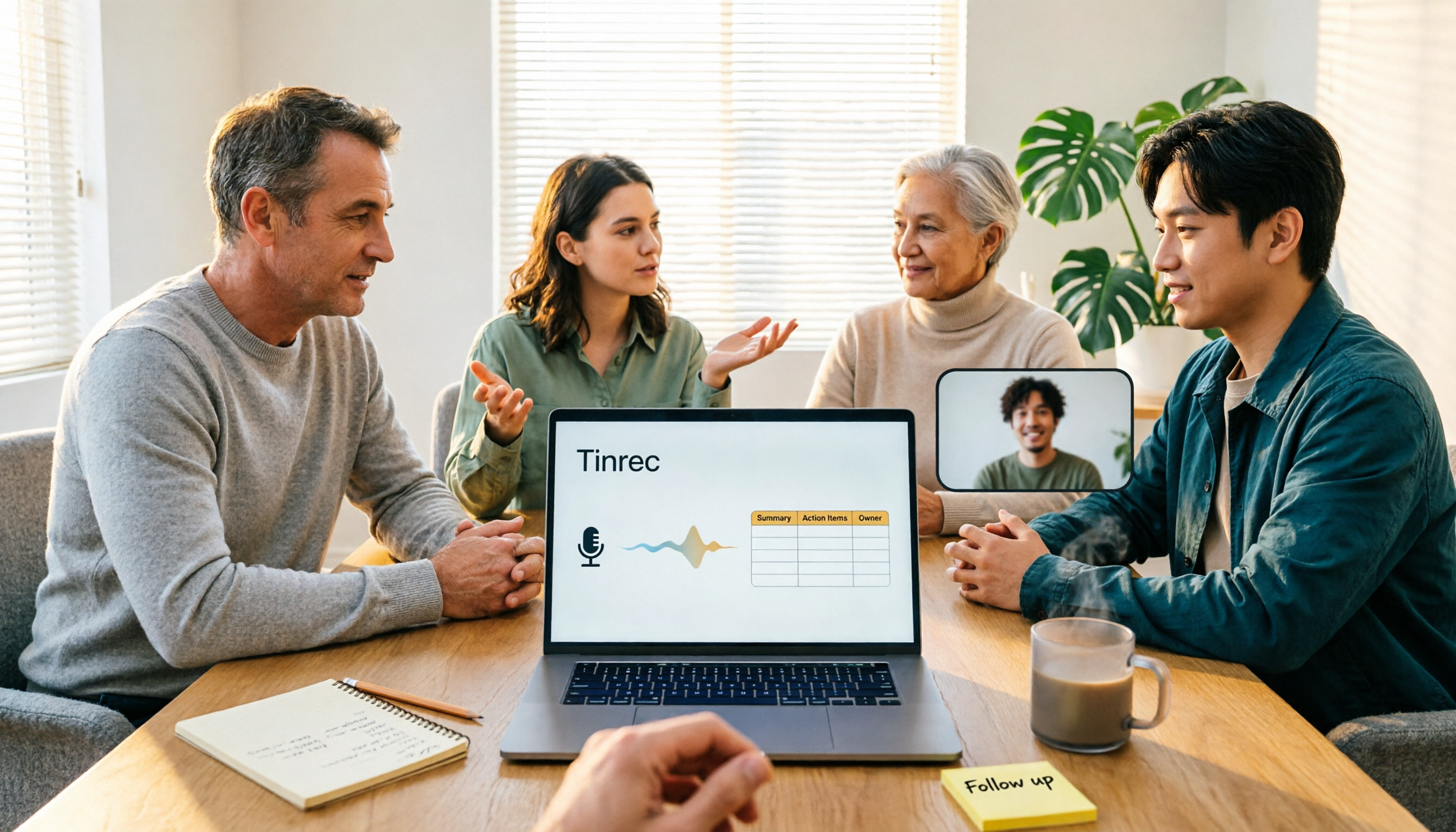
4 Meeting Minutes to Excel Tools Tested in 2026: Which One Can Turn Recordings into Spreadsheets?
When it comes to generating Excel from meeting minutes, the real challenge isn't the spreadsheet format—it's how to automatically flow content into columns. This article compares four tools—Tinrec, Otter.ai, Notta, and TurboScribe—on their meeting capture methods, post-meeting outputs, and team collaboration capabilities. It also outlines 5 key purchasing criteria and 4 common pitfalls to help you determine which tool can truly turn recordings into deliverable spreadsheets.

4 Meeting Minutes Tools Tested for 2026: Which One Automatically Builds Owner and Due Date Tables?
The biggest fear with meeting minutes is writing down only the discussion and not who is responsible or when it is due. This article starts with common mistakes in owner and due date tables, then tests and compares Tinrec, Granola, TurboScribe, and PLAUD. It covers buying criteria, pitfalls to avoid, and selection advice to help you track post-meeting action items all the way to completion.

2026 Comparison of 4 Meeting Task Tools: Which One Turns Discussions into Trackable To-Dos?
After a meeting, are your to-dos scattered across chat logs and sticky notes? This article starts from the practical criteria for choosing a meeting task tool, explains what problems these tools can solve for professionals, the 5 key points to consider when selecting one, and uses Tinrec as an example to demonstrate the complete workflow from recording, transcription, AI summary to to-do extraction and team collaboration.
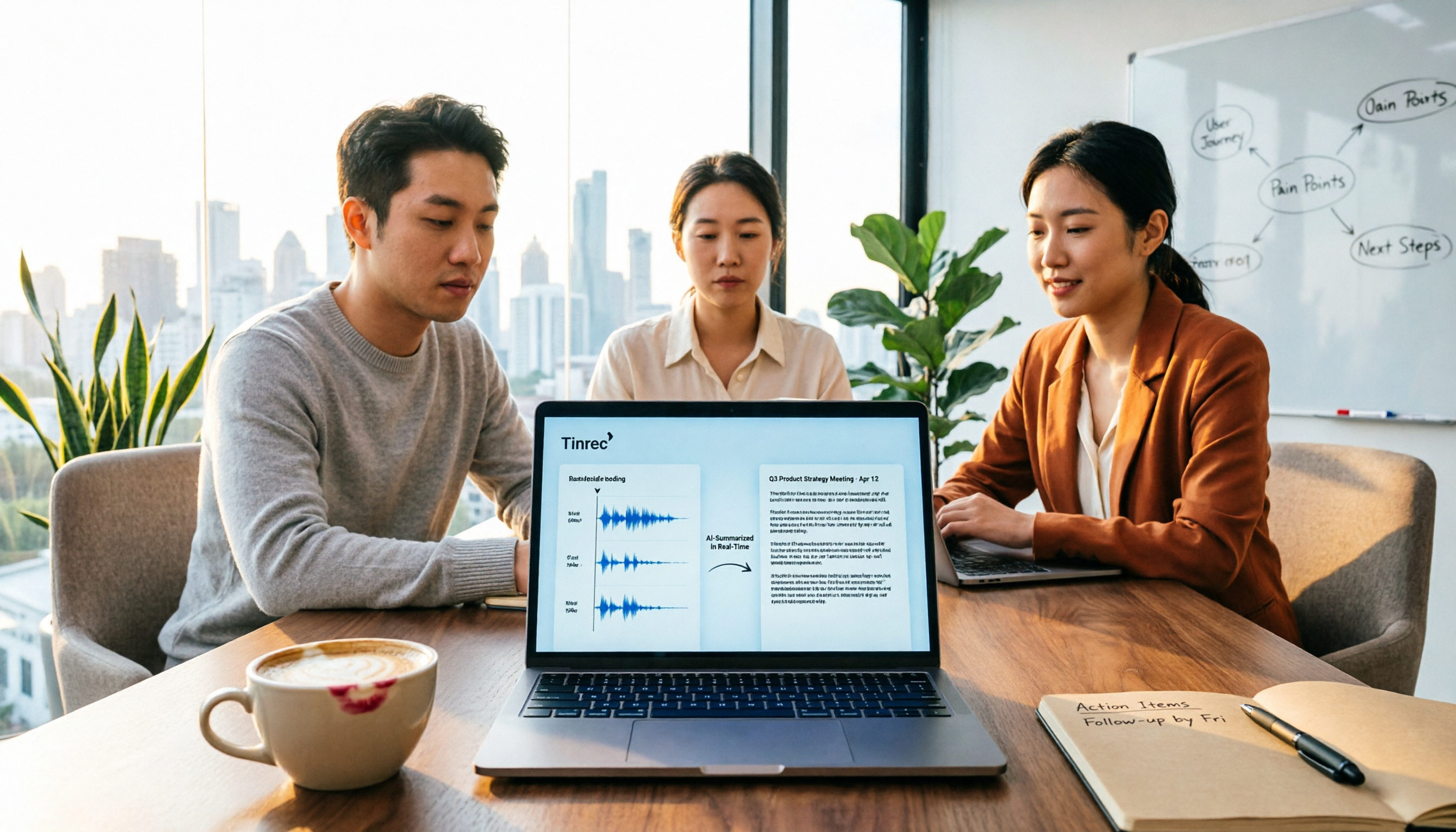
Meeting Minutes vs. Meeting Report: Key Differences Explained in 3 Minutes (2026 Guide)
What's the difference between meeting minutes and a meeting report? This guide breaks down the readers, purposes, and writing styles of each in a comparison table, teaches you 3 things to decide before you start writing, and shares how our team uses Tinrec to generate both from a single recording.