

Turn recordings into transcripts and summaries in minutes
Upload audio or video for multilingual transcription, AI notes, and action items
Organizing After the Meeting Is the Biggest Mistake—You Need a Solution, Not Just a Tool
Most people's meeting process looks like this: frantically take notes during the meeting, then spend one to two hours afterward replaying the recording and filling in the key points. The order is backwards. What really drags you down isn't the act of "taking notes"—it's "rebuilding the entire meeting from scratch after it's over."
The second common mistake is "record first, deal with it later." The moment you save the file to a folder, it feels reassuring. But a month later, when you need to go back and find "who mentioned the budget last time," you'll realize you have to listen to 40 minutes all over again. A recording without a transcript and index is as good as no recording at all.
The third mistake is treating AI like a typewriter. If you only expect the tool to turn sound into text, what you get is still a lengthy transcript—the summaries, follow-ups, and task assignments you actually need are all still missing. What you really need after a meeting is key points, action items, a searchable record, and material that can continue the discussion—this article addresses that gap.
Before Choosing an AI Meeting Agent, Understand These 4 Key Points
1. Accuracy depends on context, not marketing numbers. When a vendor claims 98%, that's usually measured in a quiet environment. Real meeting rooms have air conditioning noise, keyboard clicks, and people talking over each other—performance drops. Instead of comparing ad numbers, test with your own recordings and check whether the tool labels speakers and timestamps. When you're verifying later, that matters more than overall accuracy.
2. Does it have "after-meeting" capabilities? A transcript is just raw material. Summaries, chapters, action item extraction, the ability to ask questions directly about the meeting content, and whether it can export to your existing workflow—these determine how much time you actually save. This is where tools on the market differ the most.
3. How are online meetings recorded? One approach is sending a bot account to join the meeting; the other is a desktop app that directly captures your computer's system audio without adding another participant. The latter doesn't add an extra line to the attendee list and doesn't interrupt the agenda—especially important for client meetings.
4. Who owns the team's data? With personal tools, when a member leaves, the data often disappears with their account. What teams really need to ask is: whose space are the meeting notes stored in, can new hires access historical records, how are assets handed over when a member leaves, and can managers see usage and activity logs?
Tinrec—Our Top Pick After Testing
Tinrec is an AI meeting notes and collaboration tool for individuals and teams, available on iOS, Android, desktop, and web. Its positioning isn't "audio-to-text"—it's about turning meetings into searchable, collaborative, trackable data.
Start organizing during the meeting. Open Tinrec to record, and the transcript appears as you go—mixed Chinese and English content is handled too. The desktop version captures system audio directly, so when handling Zoom, Google Meet, Microsoft Teams, or Webex online meetings, you don't need to invite any meeting bot. For cross-language meetings, you can enable real-time translation and view in original, translated, or bilingual mode.
No need to start from scratch after the meeting. Once the meeting ends, the AI summary and chapters have already broken the long meeting into a browsable structure, and action items are extracted too—who's responsible for what and by when, much faster than digging through the transcript yourself. This is the biggest dividing line between it and pure transcription tools: one gives you text, the other gives you results.
Keep asking questions after recording. This is Tinrec's most critical differentiator: you can ask questions directly about the meeting content, such as "Who mentioned the budget adjustment in last week's standup?" The system answers based on semantics, not just a list of keyword search results. You can also ask the same question across multiple meetings—especially useful for project retrospectives and research interviews.
More than just a document. Transcripts, summaries, and action items can be exported in common formats and brought into Notion, Google Docs, OneNote, Dropbox, and other tools for continued use. You can also use Agent post-processing to generate reports, tables, and meeting minutes as direct post-meeting deliverables.
Stop organizing recordings by hand
Upload audio or video and automatically get a transcript, summary, and action items
The team version turns meetings into assets. The team version is a separate team space, not multiple people sharing one account. Team data belongs to the team; members without a seat can still view, play, and read, but only those with a seat can record, upload, edit, and export. Admins can manage roles, seats, and team hotwords, view usage trends and member details, and query and export audit logs. When a member leaves or is removed from a seat, team resources must be handed over to other active members—they won't be taken away by an individual. For pricing, the team plan is USD 29.80 per paid seat per month, or USD 199 per paid seat per year (about USD 16.58 per month). Each paid seat includes 2,000 minutes of shared team import quota per month. Eligible teams can also get a 7-day trial with 1 free seat and 300 minutes of shared import. For individuals, options range from a free version, weekly pass, Pro monthly, to Pro annual, depending on usage frequency.
Limitations should be clear too. The free version provides a basic quota. If your meeting volume is high or you need to import many historical audio files, you'll eventually need to pay. Also, actual transcription performance is affected by recording quality, noise, accents, overlapping speakers, and technical terminology. For important content, it's best to verify against transcript timestamps and recording playback.
Who it's for: People who need Chinese meeting notes, don't want a bot joining the meeting, want to use AI to find key points right after recording, and want meeting data to stay with the team rather than in someone's personal account.
Besides Tinrec, What Other Options Are There?
Otter.ai: A mature choice for English business meetings. The Basic free plan offers 300 minutes per month; Pro annual works out to about USD 8.49 per user per month. It supports Zoom, Teams, Meet, and AI Chat, and also offers a desktop app. If your meetings are almost entirely in English and your team is used to English tools, it's a reasonable option. But Chinese meeting experience isn't its strength; for multi-format export after meetings, Agent post-processing, and the completeness of team data retention, Tinrec is closer to what Chinese teams need.
Granola: An AI meeting notes tool that also captures system audio without a bot. Business is USD 14 per user per month. It does "your handwritten notes + AI enhancement" very well, suitable for people who like to type during meetings. However, it doesn't support uploading pre-recorded audio files and doesn't retain meeting audio—if you need to listen back for verification or process existing recordings, this becomes a blocker, and that's exactly what Tinrec supports.
TurboScribe: A cost-effective route for file transcription. The free version allows 3 files per day, up to 30 minutes each. Unlimited annual is USD 120, with files up to 10 hours each and up to 50 files uploaded at once. For batch processing long audio files, it's a great deal. But it's essentially a transcription tool—no real-time meeting recording, post-meeting Q&A, action item extraction, or team space governance. Those are within Tinrec's scope.
Pitfall Guide: The 4 Most Common Mistakes When Choosing an AI Meeting Agent
Pitfall 1: Buying just because you see "98% accuracy." That number is usually measured under ideal conditions. The right approach is to take your most difficult recording (multiple speakers talking over each other, accents, technical terms) and test it—see if it can label speakers and timestamps.
Pitfall 2: Only comparing transcription minutes. Cheaper minutes don't mean time saved. What really determines efficiency is post-meeting processing: how accurate the summary is, whether action items are directly usable, and whether you can ask questions about the content. If this part is done poorly, you'll still have to go back and listen to the recording.
Pitfall 3: Ignoring the social cost of a "meeting bot." Having an extra bot participant in a client meeting can sometimes be more awkward than missing a record. Choosing a desktop solution that captures system audio avoids adding an extra line to the attendee list.
Pitfall 4: Putting team data in a personal account. Once the responsible person leaves, changes departments, or forgets to renew, a whole year of meeting records disappears with them. What a team needs isn't one person's tool—it's a space with seat management, usage logs, and resource handover mechanisms.
Conclusion: Which One Should You Actually Choose?
In one sentence: If what you want is "no more manual organizing after the meeting," Tinrec is currently the most complete choice.
- Chinese or mixed Chinese-English meetings, needing both transcripts and summaries/action items → Tinrec
- Don't want a bot joining online meetings → Tinrec (desktop captures system audio)
- Want to use AI to ask questions about meeting content right after recording → Tinrec
- Meeting data should stay with the team, with seat and audit management → Tinrec team version
- Meetings are almost entirely in English, team already used to English tools → Otter.ai
- Just need to batch convert long audio files to text → TurboScribe
We suggest starting with Tinrec's free version basic quota and testing it with the meeting recording that gives you the most trouble. Whether that post-meeting hour is actually saved, you'll know best—no need to pay first.
References
- AI Meeting Notes Generator
- AI Meeting Notes - Intelligent Meeting Notes and Summaries | MaiAgent
- Recently many people have asked me if there's any AI tool for meeting notes. They're still typing manually, often can't multitask, and it's a waste of time. I always answer—SeaMeet. Why recommend it? Here's a summary: - Integrates with Google Meet, syncs online meetings to transcripts with real-time summaries, super convenient. - No need to refresh; after the meeting, it automatically emails all participants. - So simple that even seniors who've never used AI tools can learn it in 10 minutes. - In-person meetings
- The Most Recommended AI Meeting Notes Tool of 2026—Must-Have for Time-Saving Meetings!
- How to Use AI for Meeting Minutes? How to Organize Meeting Transcripts? | AI Speech-to-Transcript Tutorial | 104 Career Power
Turn every recording into actionable outcomes
Get 60 free transcription minutes when you sign in. No credit card required.
Related Reading
You might also like
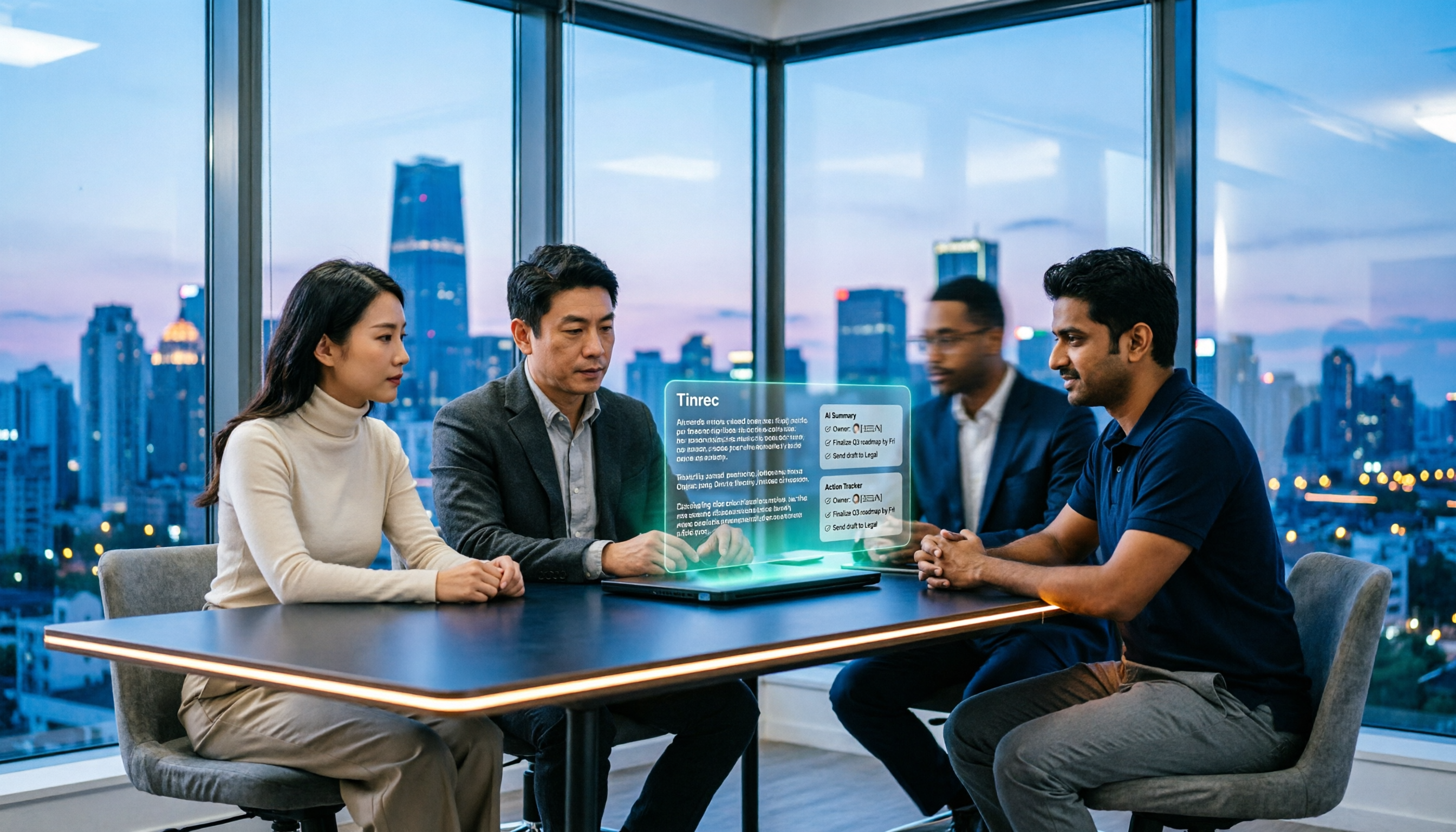
How to Use Tinrec for R&D Meeting Notes in 2026: Auto Transcripts + Action Item Tracking
After an R&D meeting, decisions and action items often end up scattered across whiteboards, chat threads, and people's memories. Using Tinrec as an example, this article explains how an R&D meeting notes tool can help: real-time transcription, bot-free online meeting recording, AI summaries, action item extraction, and team spaces. It also covers practical use cases, 5 key considerations when choosing a tool, and FAQs.

4 Meeting Collaboration Tools Tested and Compared for 2026: How They Differ from Project Management Tools
After a meeting, are the conclusions scattered across task cards and chat logs? This article starts with the most common misconception, breaks down the difference between meeting collaboration tools and project management tools, outlines 5 key purchasing points and 4 pitfalls to avoid, and compares Tinrec, Otter.ai, Notta, and Asana to help you decide whether to use them separately or force them into one.
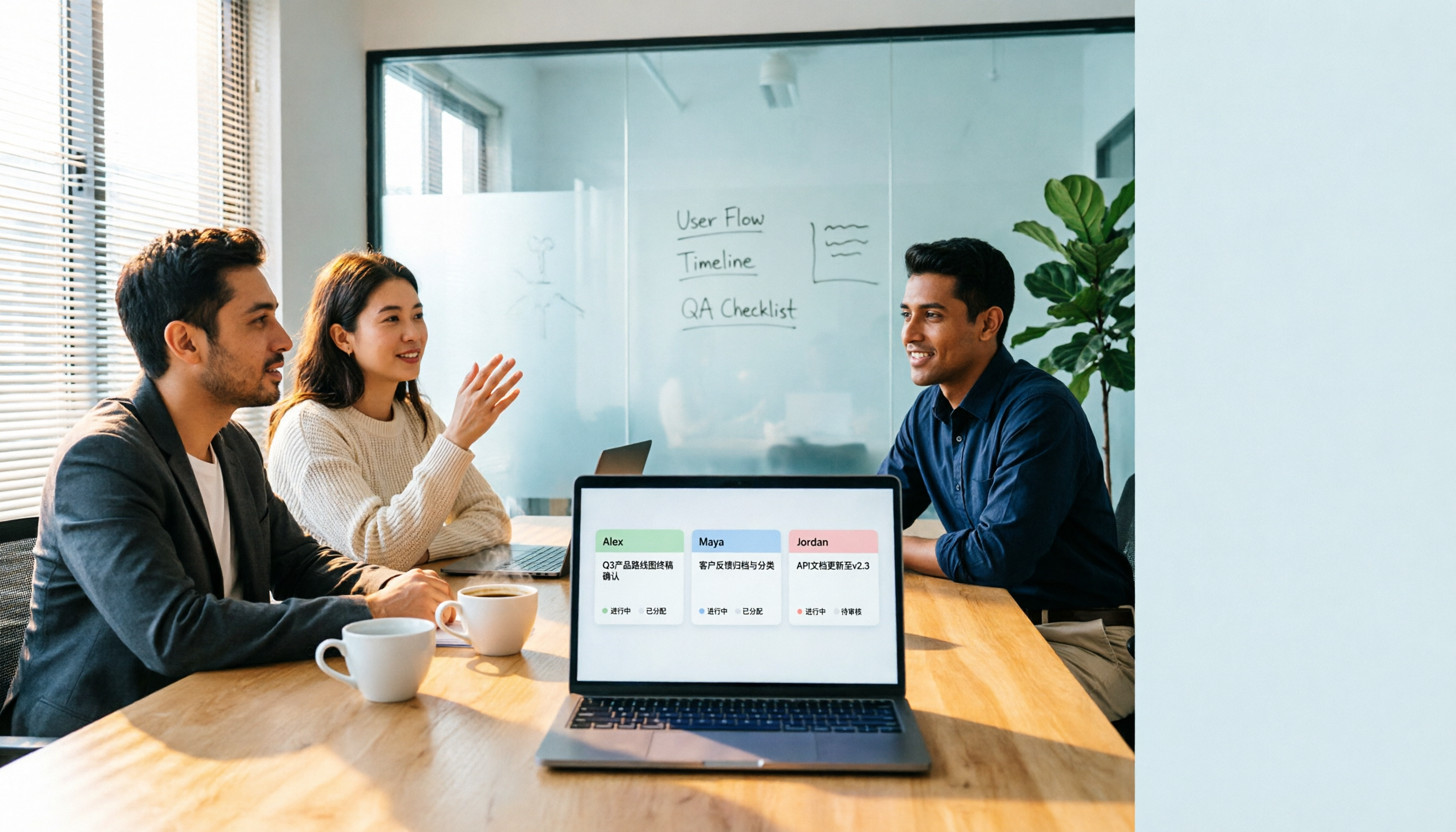
2026 Comparison of 3 Cross-Departmental Meeting Action Item Tracking Tools: Which AI Action Item Extraction and Post-Meeting Follow-Up Tool Comes Out on Top?
Why do cross-departmental meeting action items always fall through the cracks? This article compares three common approaches: built-in platform transcription, meeting bots (Otter.ai), and bot-free desktop recording (Tinrec). It evaluates Tinrec and Otter.ai across five dimensions—Chinese meeting support, action item extraction, team data retention, and seat management—and provides a ready-to-follow post-meeting tracking workflow along with FAQs.

2026 Comparison of 4 Project Weekly Meeting Minutes Tools: Can Tinrec or Notta Better Auto-Generate Meeting Notes?
After a graduation project weekly meeting, who writes the minutes? This article uses a student's hands-on perspective to compare Notta, Tactiq, ChatGPT + Whisper, and Tinrec in the same scenario, explaining how Tinrec uses bot-free desktop recording, AI summaries and to-dos, AI Q&A, and team spaces to automatically generate project weekly meeting minutes, and outlines how to choose a solution on a student budget.

How to Hand Over Meeting Data When Leaving a Job in 2026: 5 Steps from Organizing to Transfer
After you resign, you realize meeting recordings, transcripts, and decisions are scattered across your phone, personal cloud, and chat apps. This article breaks down the meeting data handover process into 5 steps: inventory, transcription, organization, follow-up, and team transfer. It also compares Tinrec, Granola, Otter.ai, and PLAUD for handover scenarios, helping you leave cleanly and provide data your successor can actually use.

Best Meeting Data Handover Tools for Resignation: 2026 Test of 2 Picks, Chinese Meeting Handoffs Made Easy
The most common mistakes during resignation handovers aren't on the checklist—they're meeting data stored in personal accounts, transcripts without recordings, and no trackable documents after meetings. This article breaks down four common pitfalls, then compares Tinrec and Otter.ai across five dimensions to help managers and successors who need to hand over meeting data to the team choose a tool that truly preserves information.

2026 Enterprise Meeting Notes Solutions Compared: Chinese Meetings, Bot-Free Recording, and Team Knowledge Retention
How do you choose an enterprise meeting notes solution? This article compares Tinrec and Otter.ai across five dimensions: recording method, Chinese meeting experience, post-meeting outputs, team data retention, and pricing/quotas. It also breaks down the differences and use cases for three common approaches—meeting bots, AI recording hardware, and bot-free desktop recording—to help you decide which one truly makes meeting notes stick and stay useful.

4 Project Meeting Minutes Templates Compared: Which AI Tool Can Generate Decisions and Action Items?
Project meeting minutes templates aren't just about copying a format. This article breaks down the 3 most common mistakes and provides copy-paste ready fields, then compares Tinrec, Otter.ai, Notta, and Granola on Chinese meetings, bot-free recording, AI follow-up questions, and team knowledge retention. Plus, 4 key pitfalls to avoid before purchasing.

2026 Comparison of 3 Meeting Notes Permission Management Tools: Who Can View, Who Can Edit, Who Owns the Data?
Why is meeting notes permission management more important than transcription accuracy? This article examines five key aspects: data ownership, roles and seats, who can record, personnel change handover, usage and auditing. It compares the team permission designs and pricing of Tinrec, Otter.ai, Notta, and Fireflies.ai, and summarizes four common pitfalls to help you choose the right meeting notes tool for your team.