

Turn recordings into transcripts and summaries in minutes
Upload audio or video for multilingual transcription, AI notes, and action items
Last week I finished a cross-department coordination meeting where the other team's manager verbally gave a timeline. Two days later, when I needed to report to my boss, all I remembered was "he seemed to mention some time point"—I opened my notes and found only four words: confirm next week. That night I rewatched the meeting recording, 40 minutes, just to find that one sentence.
It's not that I didn't consider using Google Meet's built-in features. But before deciding, I went to Reddit and browsed several threads using the keyword google meet review reddit. After reading, my takeaway was: most people aren't saying it's terrible, but that it's "unstable, inconsistent, and you can't take anything with you afterward."
This article compiles real Reddit reviews plus our team's hands-on testing of Tinrec into a comparison you can use to make a decision directly.
Google Meet vs Tinrec | Quick Overview
Google Meet is Google's video conferencing tool with a clear purpose: get the meeting done. Tinrec is a tool that keeps the meeting—recording, transcribing, organizing into summaries and action items, and ultimately turning it into team knowledge.
| Item | Google Meet | Tinrec |
|---|---|---|
| Core positioning | Online video conferencing | AI meeting notes and team collaboration |
| Main platforms | Browser and Google's own apps | Web, desktop, mobile |
| Meeting capture | During the meeting; recording-related features depend on your plan | Desktop version captures system audio, no bot needed to join |
| Pricing | Depends on Google plan; refer to official page | Personal plan free tier available; team plan USD 29.80 per paid seat per month |
Next, I'll map Reddit users' complaints to real usage scenarios across 6 dimensions.
Dimension 1 | The "Interface Consistency" Debate on Reddit
In r/UXDesign, there's a design review thread where the author, after using Google Meet again, pointed out two issues: the same feature uses different names in different places, and component behavior is inconsistent. Comments added that the most typical example is the microphone and camera toggle states—many people repeatedly toggle them on and off to test why the mic isn't working, and just these two buttons consume a lot of attention.
Another thread in r/google complains about the redesign: someone uses Meet daily but never saw the new interface others were talking about, and comments speculate it's an A/B test rolling out slowly. In other words, two people at the same company in the same meeting might see different screens.
Tinrec's interface isn't without a learning curve, but it locks the workflow into a single line: "record → transcript → summary/action items → export," and data from web, desktop, and mobile all land in the same meeting project. You won't organize a summary on your desktop and then not find it on your phone.
→ This dimension: Tie. Whether an interface is good is subjective, but "can you get something after the meeting" is a hard metric—more on that below.
Dimension 2 | Meeting Recording and Cross-Platform Coverage
Meet is Meet. If your company uses Meet internally, a client uses Zoom, and another department uses Teams, you can't record the other two meetings in Meet. Some on Reddit praise Meet for working in a browser, even on Linux; but others complain about inconsistent browser experience—mobile app is fine, but on a MacBook it runs hot and stutters, while Chromebook is smooth as can be.
Tinrec's desktop version directly captures your computer's system audio without inviting any meeting bot to join. Whether the meeting is on Meet, Zoom, Teams, or Webex, it's all the same to Tinrec. Beyond online meetings, it also handles in-person recordings, existing audio files, and videos.
→ This dimension: Tinrec wins. The difference isn't "can it record" but "do you have to learn a separate system for each platform."
Dimension 3 | After the Transcript, What Do You Get?
Google Meet has added captions and meeting notes features over the years, but actual availability depends on your Google plan. However, the r/gsuite thread points out a very specific pain point: captions are for real-time viewing and disappear when the meeting ends; Meet chat isn't retained and can't be seen afterward; some say unless you record the entire meeting, there's no way to retrieve content from the video.
Tinrec treats post-meeting output as its core product: transcripts are searchable, AI summaries, chapters, and action items are automatically generated, plus mind maps, you can continue asking questions about the meeting content, and finally export to Notion, Google Docs, OneNote, Dropbox, etc., or directly generate reports, tables, and documents.
→ This dimension: Tinrec wins. The transcript is just the starting point—"can you use it directly" is the real gap.
Dimension 4 | Team Knowledge Retention and Governance
File management in the Google ecosystem is fine, but "meetings" often scatter: recordings in one person's cloud drive, notes in another person's document, action items in a group chat. Reddit complaints revolve around the same thing—chat isn't retained, meeting invite links aren't recognized in Outlook.
Stop organizing recordings by hand
Upload audio or video and automatically get a transcript, summary, and action items
Tinrec's team plan is a separate team space, not multiple people sharing one account. After creating a team, you can invite members via a join link and set owners, admins, and regular members; roles determine who can manage people and settings, seats determine who can record, upload, edit, and export. Members who are active but have no seat can still view, play, and read team data. The admin side also has team usage trends, member rankings, details, team hotwords, audit logs, and an audio recycle bin (retained for 30 days). When a member leaves or is removed, resources can be handed over to other active members, so data doesn't leave with the person.
To be clear: currently it's team-level sharing plus role governance, not fine-grained file-level permissions.
→ This dimension: For teams of 3 or more, Tinrec wins.
Dimension 5 | Chinese and Mixed Chinese-English Meetings
Meet's captions are primarily for real-time display. If your meetings often mix Chinese and English, with product codes or industry jargon, the captions are understandable, but if you want to use them as a record afterward, you'll have to organize them yourself.
Tinrec's main selling point is Chinese, Traditional Chinese, and multilingual meetings, with real-time translation during recording, allowing you to switch between original text, translation, or bilingual view; the team plan also has a hotwords feature to maintain company-specific terminology.
I won't guarantee accuracy—actual performance depends on recording quality, noise, accents, and multiple people speaking at once. For important numbers and commitments, my own habit is to go back and check the transcript timestamps against the recording.
→ This dimension: For Chinese-dominant teams, Tinrec wins.
Dimension 6 | Pricing and Quotas
Google Meet's features and availability are tied to Google plans; pricing is subject to the official page. I won't list numbers here because plans change frequently.
Tinrec's personal plan includes a free version, weekly pass, Pro monthly, and Pro annual—use the free version for occasional recording organization; consider the weekly pass for short-term intensive interviews; go Pro for regular weekly meetings. The team plan is currently USD 29.80 per paid seat per month, or USD 199 per paid seat per year (about USD 16.58/month), with each paid seat providing 2,000 minutes of team shared import quota per month; real-time recording under an active team plan currently isn't deducted by minutes, while file and web imports use the team shared quota. The first eligible trial is 7 days, 1 free seat, 300 minutes of team shared import quota. Actual amounts and promotions are subject to the official purchase page.
→ This dimension: Depends on usage. Light users: Meet's built-in features are enough; daily meeting users: Tinrec's per-minute cost is actually lower than you think.
What Are Each One's Unique Advantages?
Tinrec's unique advantages
- Bot-free recording: Desktop version captures system audio, no extra bot hanging in the meeting participant list.
- Complete post-meeting workflow: summaries, chapters, action items, AI Q&A, multi-format export, plus report and table generation.
- Team governance: roles, seats, usage analytics, audit logs, audio recycle bin, hotwords, and resource handover.
- Cross-source: online meetings, in-person recordings, audio files, and videos all go into the same database.
Google Meet's unique advantages
- Participants don't need to install anything—just open a browser to start a meeting, especially convenient for external meetings.
- Tied into the Google ecosystem, scheduling and sending invites happen in the same workflow.
Conclusion: Which One Should You Choose?
- You only have occasional meetings and don't really need notes afterward → Stick with Google Meet.
- You need to record across Zoom, Meet, and Teams → Tinrec.
- You want searchable, queryable, exportable meeting data → Tinrec.
- You lead a team and need handover and usage management → Tinrec team plan.
- Your meetings heavily mix Chinese and English and need bilingual transcripts → Tinrec.
In one sentence: Google Meet handles getting the meeting done, Tinrec handles keeping the meeting. These two things don't conflict—many teams use both. I recommend starting with the free version, recording one of your own meetings to test it out, and also checking whether it understands your company's terminology.
Reddit Thread References
- r/UXDesign: Google Meet Design Review - Seamless to Disruptive https://www.reddit.com/r/UXDesign/comments/1gxtvt9/google_meet_design_review_seamless_to_disruptive/
- r/GooglePixel: Is it just me or is Google Meet really bad? https://www.reddit.com/r/GooglePixel/comments/115mjhv/is_it_just_me_or_is_google_meet_really_bad/
- r/google: New Google Meet Sucks https://www.reddit.com/r/google/comments/1jqk5f4/new_google_meets_sucks/
- r/chromeos: Just Tried Google Meet and It's Tons Better Than Zoom https://www.reddit.com/r/chromeos/comments/jlti9i/just_tried_google_meet_and_its_tons_better_than/
- r/gsuite: What is the thing you hate the most with Google Meet? https://www.reddit.com/r/gsuite/comments/vy5izp/what_is_the_thing_you_hate_the_most_with_google/
References
- r/UXDesign on Reddit: Google Meet Design Review - Seamless to Disruptive
- r/GooglePixel on Reddit: is it just me or is Google meet really bad?
- r/google on Reddit: New Google Meets Sucks
- r/chromeos on Reddit: Just Tried Google Meet and It's Tons Better Than Zoom
- r/gsuite on Reddit: What is the thing you hate the most with Google Meet?
Turn every recording into actionable outcomes
Get 60 free transcription minutes when you sign in. No credit card required.
Related Reading
You might also like
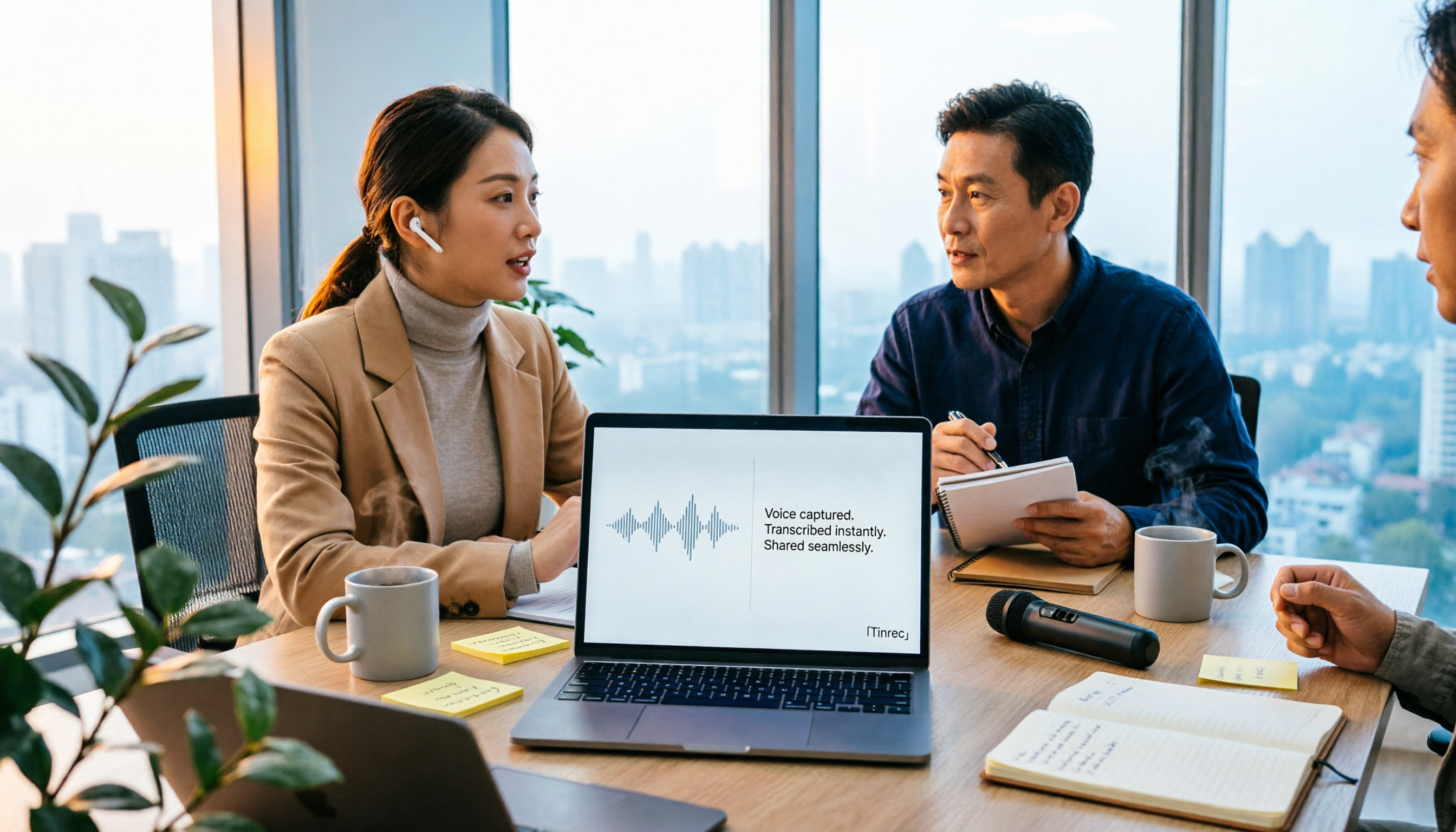
3 Voice Collaboration Tools Tested for 2026: Key Selection Factors Behind the 'vocol' Search
Searching 'vocol 2026' returns three unrelated results: a voice collaboration platform, a VOCALOID event, and a laboratory chromatography column. This article starts with common selection mistakes, breaks down how to choose a voice collaboration tool using three key points, and compares Tinrec, Vocol.ai, Notta, and Otter.ai to see who each is best for.

Best Cantonese Audio-to-Text Platforms in 2026: 4 Tested, Free Tiers and Cantonese Recognition Compared
How to choose a free Cantonese audio-to-text platform? We tested Tinrec, Subanana, cSubtitle, and UniScribe, comparing free tier limits, Cantonese models, transcript post-processing, and export formats. We also highlight 4 common pitfalls to help you pick the one that truly saves time.
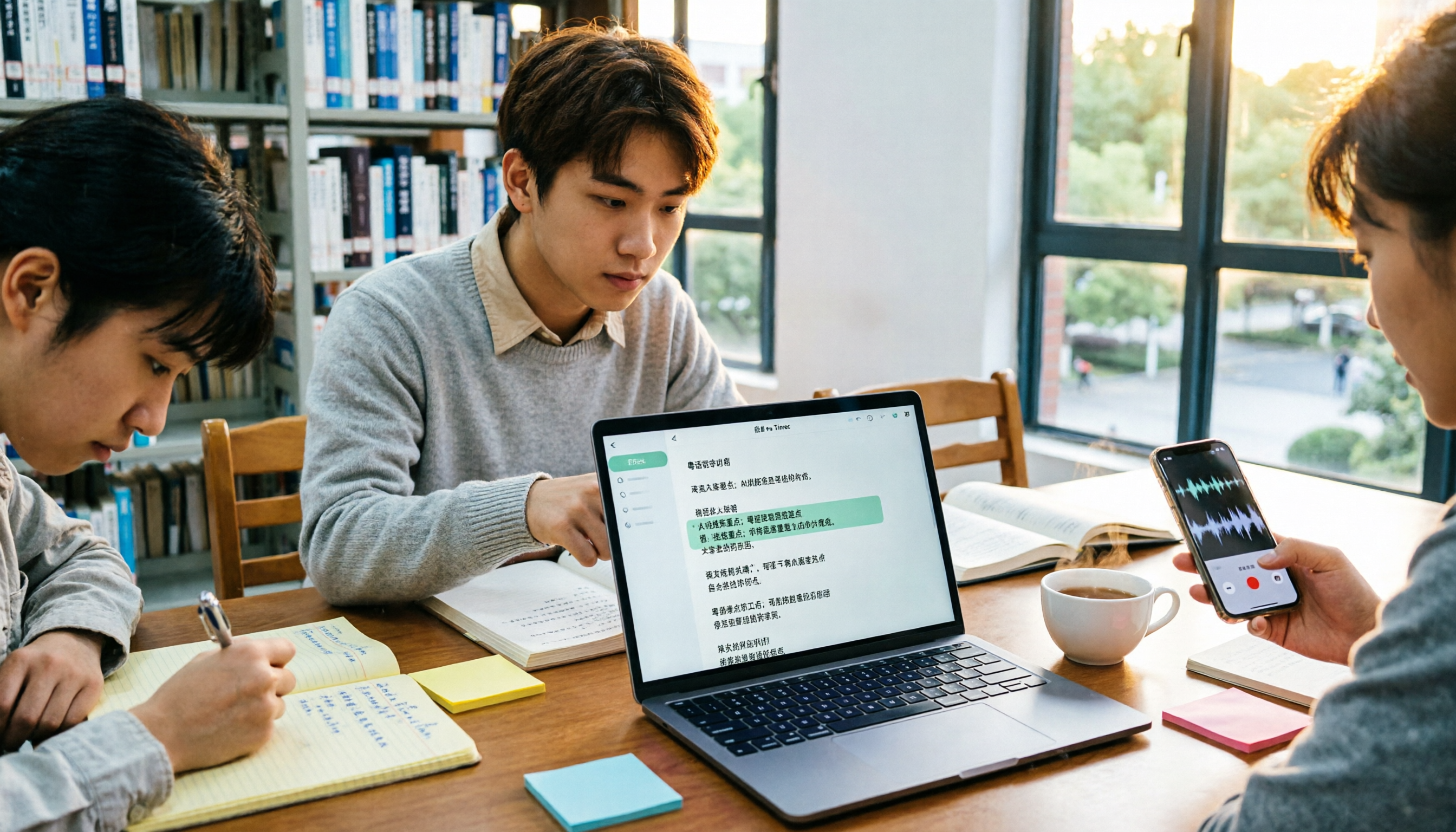
How to Transcribe Cantonese Audio in 2026: Editable Transcripts + AI Highlights
A student's hands-on comparison of Cantonese audio-to-text tools, focusing not just on transcription but on whether transcripts are editable, searchable, queryable, and exportable. Using Tinrec as an example, it outlines practical workflows for lectures, group discussions, and online classes, with brief reviews of Otter.ai, Notta, and TurboScribe.

2026 Comparison of 4 Cantonese Speech-to-Text Tools: Free Tiers and Mixed Chinese-English—Which Works Better?
Starting from common misconceptions, this comparison examines Tinrec, Subanana, cSubtitle, and Granola in Cantonese speech-to-text, free tiers, post-meeting organization, and team collaboration to help you choose the right tool.

Tinrec vs Subanana 2026: 5-Dimension Comparison for Free Cantonese Audio Transcription
How to choose a free Cantonese audio transcription tool? This article compares Tinrec and Subanana across 5 dimensions: free quota calculation, online meeting capture method, post-meeting organization workflow, multilingual translation, and team collaboration. It also covers practical use cases and purchasing considerations to help you make an informed decision among free plans.

Vocol.ai vs Tinrec: 2025 Hands-On Review of 2 Voice Collaboration Tools — Which Is Better for Chinese Meetings?
The most-asked voice collaboration tool comparison of 2025: How do Vocol.ai and Tinrec differ? From meeting recording methods, Chinese transcripts, AI summaries and action items, team spaces, to pricing and quotas — real-world experience and buying tips to help you decide which fits your workflow.
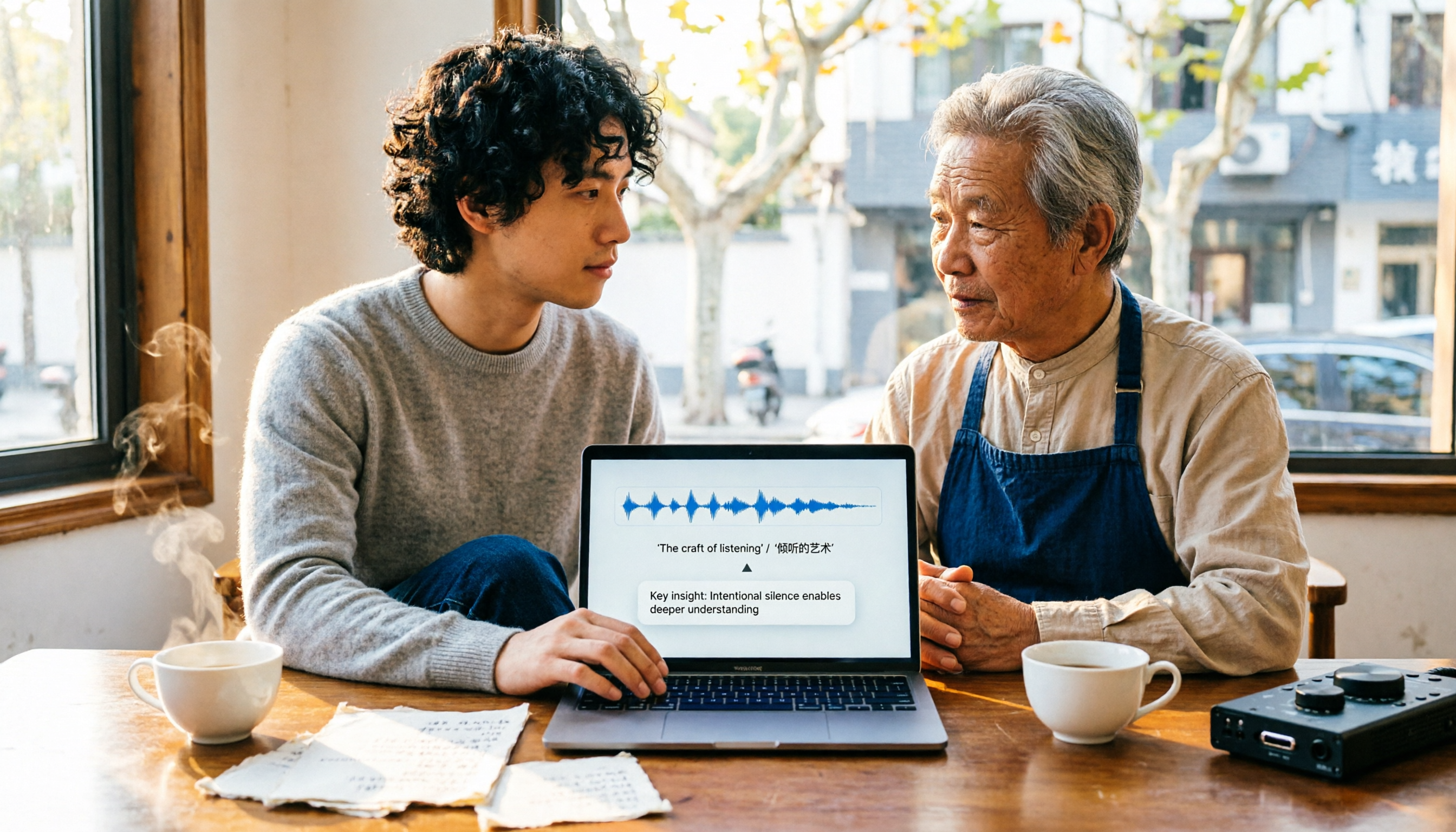
2026 Comparison of 4 Cantonese Speech-to-Text Tools: Which Handles Mixed Chinese-English and Long Recordings Best?
Cantonese audio transcription often struggles with mixed Chinese-English, fast speech, and long recordings. This article addresses three common pitfalls and breaks down the complete workflow from audio capture to transcription, AI summarization, and exportable files. Using Tinrec as an example, it explains core capabilities, plan quotas, team governance, and 5 key considerations for purchasing.

Google Meet Revenue 2024 and Best Meeting Notes Tools: 5 Tested in 2026, Tinrec Best for Chinese
Google does not separately disclose Google Meet 2024 revenue. This article examines Alphabet's financial reports to explain the business significance of Meet's over 300 million monthly users, and compares five meeting notes solutions—Google Meet built-in transcription, Tinrec, Otter.ai, Notta, and Granola—on free quotas, Chinese language experience, post-meeting organization, and team knowledge retention, helping you choose the right tool for your team.

Arsenal vs Nottingham Forest 2026: Full Guide to Pre-Match Data, Key Storylines, and Better Research Habits
From league position, recent form, home/away splits, and head-to-head history, here's a clear pre-match guide to Arsenal vs Nottingham Forest—plus the data traps that often lead to bad calls. I also share how I use Tinrec to turn match commentary, post-match press conferences, and meeting recordings into searchable, queryable notes.