

Turn recordings into transcripts and summaries in minutes
Upload audio or video for multilingual transcription, AI notes, and action items
5 Free Speech-to-Text Tools Tested and Compared in 2026: Which Free Tier Is Actually Enough?
It's 10 PM, and you just finished a 90-minute online meeting. The last sentence is still ringing in your ears, but all you have on the desk is a blank notepad. You want to drop the recording into a free tool to convert it into a transcript, only to find out after uploading: the free quota is only 30 minutes, or each file can only be 3 minutes.
This is what most people encounter when searching for "free speech to text": it's not that there are no tools, but that the free versions often only give you a taste. When you actually need it for meetings, classes, or interviews, the quota, formats, and post-meeting organization capabilities will determine whether it can stay in your toolkit.
In this article, I compare Tinrec, Notta, TurboScribe, Otter, and MyEdit based on the criterion of "is the free version actually enough?" The comparison date is August 2026, and the information is based on official pages and public articles; plans and prices may change, so it's recommended to check the official websites again before use.
The real pain of meeting transcription isn't the transcription itself—it's that the output isn't usable
Many people get stuck in three places when using free tools for the first time.
First, they realize the quota isn't enough only after it runs out. A meeting easily lasts 60 to 90 minutes. If the free version only gives 30 minutes, you can't even get through one full meeting.
Second, the transcript is very long but lacks summaries, chapters, and action items. You still have to read it from beginning to end and manually sort out who is responsible for what.
Third, data is scattered across personal accounts. Using tool A today and tool B tomorrow, when the team needs to look back at the conclusions from the last meeting, they can only scroll through chat logs.
So what you need isn't just a website that "turns audio into text," but a workflow that turns the recordings you have into searchable, organized, and transferable data.
Before choosing a speech-to-text tool, understand these 4 key points
1. Is the free quota "per month" or "per day"? Is there a per-session limit?
Some tools offer 120 minutes per month in the free version, but a maximum of 3 minutes per session; others give 3 files per day with a 30-minute limit per file. When looking at quotas, don't just look at the total—look at your typical meeting length. If a single meeting exceeds the per-session limit, a larger total quota is still impractical.
2. Can it record online meetings directly?
For meetings on Zoom, Google Meet, Microsoft Teams, or Webex, if you can only upload audio files afterward, you'll have an extra recording step. Tinrec's desktop version captures the computer's system audio, so no extra bot needs to join the meeting; this makes a big difference for those who don't want a bot appearing in the participant list.
3. After transcription, can it help you organize?
A tool that only provides a transcript is essentially handing the organization work right back to you. You should check whether it offers summaries, chapters, action item extraction, AI Q&A, translation, and export. These features determine whether you'll spend another 10 minutes or another hour after the meeting.
4. Who owns the team data? Can it still be found after a member leaves?
Personal version data belongs to the individual account, while team versions should have an independent team space. Tinrec's team version makes meeting data owned by the team and uses roles and seats to distinguish "who can manage" and "who can use." When a member leaves, team resources can be handed over to other active members and won't disappear with the personal account.
Tinrec — From a meeting workflow perspective, it's my top recommendation
Tinrec is an AI meeting notes and collaboration tool for individuals and teams, available on web, desktop, and mobile. It doesn't just convert recordings to text; it puts transcripts, summaries, chapters, action items, Q&A, and team data into a single workflow.
No bot needed for online meetings
When hosting a Zoom or Google Meet, you don't need to invite a meeting bot. Open Tinrec's desktop version, and it directly captures the computer's system audio, generating a transcript while the meeting is ongoing. The participant list won't show an extra account, which is especially useful for meetings with external clients.
After the meeting, you don't get a wall of text—you get usable data
After the meeting, Tinrec generates a summary, chapters, and action items. You can directly see "what was discussed in this meeting," "who is responsible for what," and "what are the next steps," without having to read from the first line of a 90-minute transcript.
Even better is the AI Q&A. You can ask follow-up questions about a single meeting or historical meetings, such as "What was the budget range the client mentioned this time?" or "Who was decided to deliver first in the last meeting?" It answers based on the meeting content, not just keyword search results. This is where I think it differs most from typical free transcription websites.
For post-meeting deliverables, you can further generate reports, tables, and documents, organize them into mind maps, and export to common formats or tools like Notion, Google Docs, OneNote, and Dropbox for continued use.
Chinese, mixed Chinese-English, and multilingual meetings
Tinrec covers Chinese, Traditional Chinese, and multilingual meeting scenarios, supports real-time translation, and allows viewing in original, translated, or bilingual mode. The team version also has team hotwords, which can maintain company-specific terminology and product names to reduce the chance of mishearing specialized terms. Actual performance is still affected by recording quality, accents, noise, and overlapping speakers; for important content, it's recommended to cross-check the transcript with the recording.
Stop organizing recordings by hand
Upload audio or video and automatically get a transcript, summary, and action items
How to view the free version and paid plans
Tinrec's free version provides a basic quota, suitable for trying out recording, importing, summaries, and transcription. Actual quotas and plans are subject to the official website. If you only occasionally organize a recording, the free version is enough; for short-term intensive meetings or interviews, consider a weekly card; for steady weekly use, the Pro monthly or annual plan is more suitable.
For team use, look at the team version: currently, the first eligible team trial is 7 days, 1 free seat, and 300 minutes of team shared import quota; the team monthly plan is USD 29.80 per paid seat per month, and the annual plan is USD 199 per paid seat per year, equivalent to about USD 16.58 per month. Each paid seat provides 2,000 minutes of team shared import quota per month. Real-time recording under an active team plan and active seat is currently not deducted by minutes; files and web imports use the team shared quota. Prices and benefits are subject to the official purchase page.
Limitations should also be clear
Tinrec is not unlimited free; the free version has a basic quota. If you need to batch process a large number of long audio files at once, a file transcription tool like TurboScribe is more suitable. Also, Tinrec's desktop version requires you to actively start recording; it doesn't automatically join all calendar meetings. The team version currently focuses on team-level sharing, not file-level granular permissions; members without a seat can view, play, and read team data, but need a seat to record, upload, edit, and export.
Who is it for
If you frequently hold Chinese meetings, mixed Chinese-English meetings, or need to organize online meetings, interviews, and class recordings into queryable data, Tinrec is very suitable. If you are a team and want meeting data to stay in the team space and be transferable after members leave, the team version will better meet your needs than the personal version.
Besides Tinrec, what other free options are there?
Notta: Multilingual transcription and team plans available, but the free version has very short per-session limits
Notta's free version offers 120 minutes per month, with a maximum of 3 minutes per session, suitable for short audio files and multilingual testing; a full 60-minute meeting will hit the per-session limit. Tinrec's difference is that the desktop version can directly record online meetings without a meeting bot, and post-meeting summaries, action items, and Q&A are in the same space. Plans are subject to the official page.
TurboScribe: A free choice for long audio files and batch transcription
TurboScribe's free version allows 3 files per day, 30 minutes per file, suitable for existing audio files and batch transcription. Tinrec doesn't compete on batch processing but excels at real-time meeting recording, post-meeting summaries, action items, and Q&A. If you have 10 historical audio files, TurboScribe is smoother; if you want to record the next meeting and directly produce action items, Tinrec is more suitable.
Otter.ai: Generous free quota for English meetings, but Chinese isn't its strong suit
Otter's free Basic plan offers 300 minutes per month, which is quite generous for English meetings. It is mature in English business meetings, speaker identification, and meeting assistance. However, if you mainly record Chinese meetings, Tinrec's Chinese experience, real-time translation, and team data management will be more aligned with your needs. Otter's plans and quotas are subject to the official pricing page.
MyEdit: Daily free credits, focused on audio editing and conversion
MyEdit gives free credits upon daily login, supports 9 languages including Chinese, English, and Japanese, and allows editing the transcript and adding timestamps before export. It is a transcription feature of an audio editing website, suitable for casual transcription. It doesn't focus on meeting recording, team spaces, or post-meeting AI Q&A; for a meeting collaboration workflow, Tinrec covers more comprehensively.
Pitfall guide: The 3 most common mistakes when choosing free speech-to-text
Pitfall 1: Only looking at "how many free minutes" without checking the per-session limit.
120 minutes per month sounds like a lot, but if each session is limited to 3 minutes, you'll need to split a 60-minute meeting into 20 parts. When evaluating a plan, first look at your typical meeting length, then the monthly total.
Pitfall 2: Thinking a transcript is enough.
A transcript is just raw material. What really takes time is organizing summaries, finding conclusions, capturing action items, and assigning owners. When choosing a tool, rather than comparing who transcribes faster, compare who can help you extract the key points within 10 minutes after the meeting.
Pitfall 3: Ignoring team data ownership and seats.
Sharing a personal account for team use is convenient in the short term, but in the long run, you'll face questions like "where is the data after a member leaves," "who has permission to export," and "who can edit." Tinrec's team version addresses this with team spaces, roles, and seats; roles manage governance, seats manage usage eligibility. Active members without a seat can view, play, and read but cannot upload, edit, or import/export. This should be confirmed before purchasing.
Conclusion: Which one should you choose?
In one sentence: If you want to "try for free first, but actually be able to organize something after the meeting," Tinrec is the top choice in this article; if you just need to batch process existing audio files, TurboScribe is more suitable; if you only record English meetings, Otter Basic's free quota is worth using.
Here's how to choose in practice:
- Chinese meetings, mixed Chinese-English meetings → Tinrec (Chinese experience, real-time translation, team hotwords)
- Online meetings without adding a meeting bot → Tinrec (desktop version captures system audio)
- Want to ask AI directly for key points after recording → Tinrec (Q&A around meeting content)
- Team needs to share meeting data and hand over when members leave → Tinrec team version (team space, roles, seats, audit, recycle bin)
- Budget is 0, want to try the free version first → Tinrec free version (basic quota, try with your own recording)
- Only record English and prioritize free quota → Otter Basic (300 minutes per month, the only exception)
I recommend trying it with the most realistic meeting recording you have, not just a sample with clear voices. You'll know if the free version is enough after one try. If the workflow feels smooth, then consider paying; you don't need to buy upfront.
References
- Audio to Text - Free Speech to Text Tool
- No time limit! 3 free AI transcript tools, highly recommended! AI voice notes generate meeting minutes, presentations, mind maps | 104 Career Power
- Tested 4 of the best "speech to text" online tools, free and instant conversion of audio files to transcripts
- Online speech to text AI, free conversion of MP3 or audio files to text transcripts - MyEdit
- Audio file to text | Free online audio file to transcript | Proactor AI
Turn every recording into actionable outcomes
Get 60 free transcription minutes when you sign in. No credit card required.
Related Reading
You might also like

2026 Audio-to-Text Tool Buying Guide: 5 Key Dimensions Tested and Recommended
How to choose an audio-to-text tool? This guide starts with three key considerations: audio source type, post-meeting organization needs, and team data ownership. It then outlines 5 practical buying dimensions and uses Tinrec as an example to demonstrate bot-free online meeting recording, AI summaries and action item extraction, AI conversational search, and team spaces. A FAQ section is included at the end.
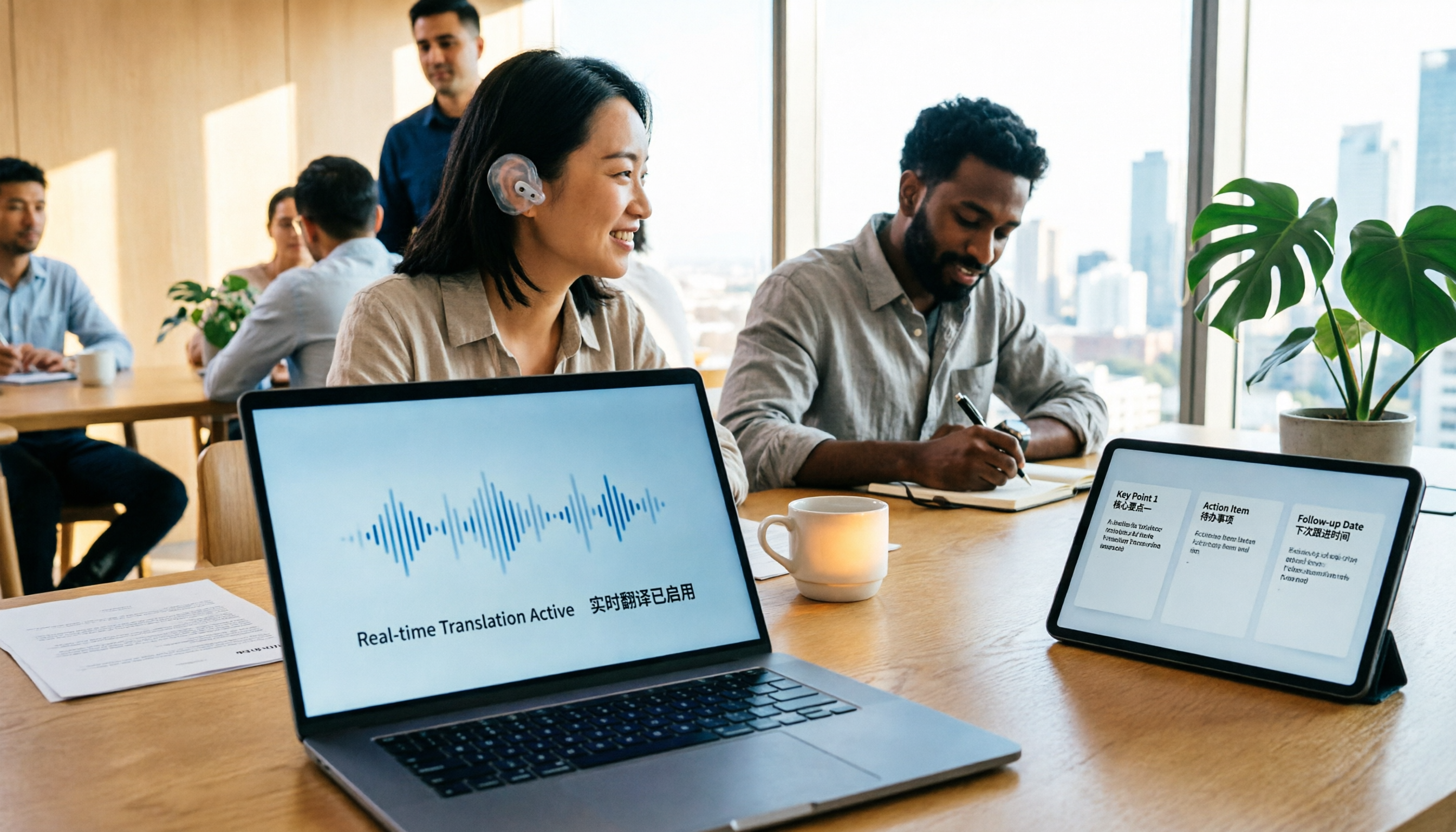
2026 Comparison of 4 Foreign Language Meeting Translation Tools: From Real-Time Bilingual Subtitles to Post-Meeting Summaries
Can you understand foreign language meetings but struggle to remember or follow up? This article starts with common misconceptions and breaks down 4 key factors for choosing a foreign language meeting translation tool. It compares Tinrec, Otter.ai, Notta, and Granola in real-time translation, bilingual comparison, post-meeting summaries, and team collaboration, and lists the 4 most common pitfalls to help you choose the right tool at once.
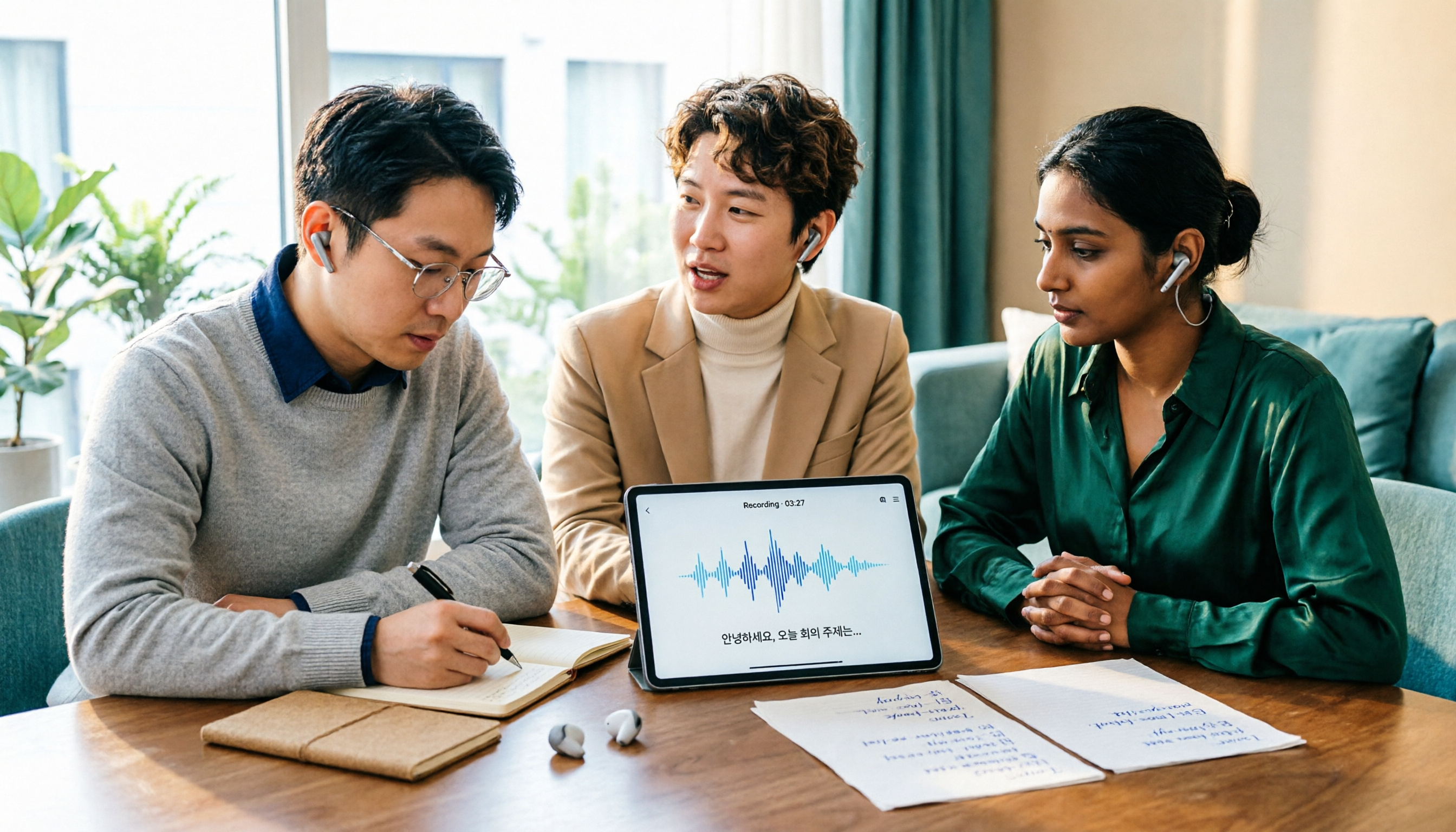
Tinrec vs Musely 2026: 5-Dimension Comparison, Tinrec for Korean Meeting Notes
How to choose a Korean audio-to-text tool? This article compares Tinrec and Musely across 5 dimensions: Korean recognition, post-meeting organization, team collaboration, export, and free quota. It also covers alternatives like MyEdit and Sonix to help you decide when pure transcripts vs. meeting notes are suitable.

2026 Comparison of 4 Audio-to-Text Tools: Which One Actually Saves You Time?
From meeting notes and transcripts to post-meeting follow-ups, compare Tinrec, Canva, MyEdit, and Otter.ai in terms of positioning, limitations, and best-fit scenarios to help you choose the right audio-to-text tool.

2026 Shanghai Dialect Speech-to-Text Buyer's Guide: 4 Tools Tested and Selection Tips
Shanghai dialect has voiced consonants and tone sandhi, so speech-to-text often fails on entire sentences. This guide breaks down 5 key factors for choosing a Shanghai dialect speech-to-text tool based on recognition, usability, and retention, with hands-on testing of Tinrec (Miao Ting Lu Yin) and comparisons to Notta, Otter.ai, and Granola, plus a pitfall checklist and getting-started steps.

4 Best Speech-to-Text Tools in 2026: Live Transcription vs. Post-Meeting Notes and Team Knowledge
Compare Tinrec, Notta, Otter.ai, and TurboScribe on positioning, pricing, and use cases, focusing on live transcription and post-meeting organization. Includes 4 key buying factors and 4 common pitfalls to help you choose the right speech-to-text tool with a single table.

5 Southern Min Input Methods Compared (2026): Is Free Good Enough, and Which One Should You Start With?
Most people install a Southern Min input method but still can't type—the problem usually isn't the software, but unclear romanization schemes, dictionary sources, and cross-platform support. This hands-on comparison covers the Ministry of Education Taiwan Southern Min Chinese Character Input Method, PhahTaigi, Lohankha, RIME, and built-in mobile options, outlining selection criteria, common pitfalls, and use cases to help you choose the right one.

2026 Comparison of 6 Audio-to-Text Tools: Accuracy Isn't About Official Numbers, It's About Real-World Scenarios
Audio-to-text accuracy isn't just about the advertised 98% figure. This article summarizes key evaluation points for 6 tools in Chinese, noise, multi-person conversations, and post-meeting organization, and compares free and paid plans to help you find a truly usable transcription tool.

4 Best Speech-to-Text Tools for 2026: Free Tiers and Post-Meeting Workflows Explained
Looking for a speech-to-text tool? Based on real meeting scenarios, this guide compares Tinrec, Otter.ai, Notta, and TurboScribe—covering free tiers, limitations, and ideal users. It also explains 4 key factors to consider before choosing, 4 common pitfalls, and scenario-based recommendations.