

Turn recordings into transcripts and summaries in minutes
Upload audio or video for multilingual transcription, AI notes, and action items
2026 Meeting Transcription Tools Compared: Notta Garage Is Not a Transcription Tool—Stop Searching Wrong
Why searching for "Notta Garage" might lead you to buy the wrong software
Here's a situation we've actually encountered in procurement consulting: a manager asks an assistant to "find a tool that can record meetings and organize them into minutes." The assistant searches a few keywords, sees several brands with similar-sounding names, and ends up signing off on a solution that doesn't fit the team's workflow at all. Many people searching for "Notta Garage" get stuck on exactly this kind of brand confusion.
Because behind this keyword are actually two completely different things.
First, Notta Garage is a physical auto customization shop. It's located in Jersey Village, in the Houston metro area of Texas, USA. Public records show the address as 17475 Village Green Dr, Jersey Village, TX 77040, phone (832) 962-0747, with business hours Monday through Friday 9:00–19:30, Saturday 10:00–19:00, and closed Sunday. The shop started in a home garage in 2020 and later moved to a formal storefront. It mainly does vehicle wraps, livery design and installation, and aftermarket parts installation, and also has a physical retail store; the shop says some customers have even shipped their cars in from the Carolinas.
The second thing is what most office workers are actually looking for: a meeting note tool that turns meeting, interview, and course recordings into transcripts, then organizes them into minutes and action items.
If you're looking for the latter, this article is for you. We've laid out four options side by side with one focus: which one can actually save you time on post-meeting organization.
Five key points to understand before choosing a meeting note tool
1. How audio gets into the tool This is the most easily overlooked point, but it has the biggest impact. There are three approaches on the market: sending a meeting bot into online meetings, using desktop software to capture your computer's system audio directly, or uploading recording files afterward. The bot approach is fully automatic, but many companies have security reviews for "external accounts joining meetings," which can't be cleared in time for a last-minute meeting. System audio capture doesn't require an extra participant and works well for internal discussions and client meetings. First confirm whether your company allows bots to join meetings, then discuss other features.
2. What you can do after transcription Getting only a transcript means using just one-third of what these tools can do. What really matters: Does it have automatic summaries? Does it split long meetings into chapters? Can it automatically extract action items? Can you ask follow-up questions about the content? A 90-minute meeting produces a transcript of roughly 10,000+ words—without a summary, you can't get through it.
3. Whether it handles Chinese and mixed Chinese-English well Meetings in Taiwan are rarely pure Chinese—"let's confirm this campaign's budget next week" is the norm. When choosing a tool, look at how it handles mixed Chinese-English content and whether it offers real-time translation and bilingual views. Also note: don't trust any fixed accuracy numbers. Actual performance is affected by recording quality, air conditioning noise, accents, people talking over each other, and technical jargon—the same tool can vary widely across different meeting rooms.
4. Whether the team can govern it Personal use and team use are two different things. For teams, the questions are: Who owns the data? Will a departing colleague's meeting records disappear with them? Who can upload versus who can only view? Can administrators see usage? Here's a commonly misunderstood concept—"roles" govern permissions, while "seats" determine whether someone can record, upload, and edit; members who are active but have no seat can usually only read.
5. How quotas work For free plans, look at "minutes per month" together with "per-session limit." Some tools give 120 minutes per month but cap each session at 3 minutes—meaning you can only record voice memos. Some plans draw file imports from a shared team quota rather than topping up from personal quota. When purchasing, put these three things in your comparison table: monthly total, per-session limit, and shared vs. personal.
Tinrec—our top pick after actually running through the workflow
Tinrec is an AI meeting notes and collaboration tool for individuals and teams. It supports real-time recording, bot-free online meeting transcription, audio/video file import, and real-time translation, and can automatically generate summaries, chapters, action items, and mind maps.
Record online meetings without inviting a bot. The desktop version directly captures your computer's system audio, handling meetings played on Zoom, Google Meet, Microsoft Teams, Webex, and other platforms without an extra account joining the meeting room. For companies with security review processes, the communication cost saved by this often exceeds the software cost. Note that this doesn't mean "automatically joining every meeting on your calendar"—you still need to actively open Tinrec to start recording.
Stop organizing recordings by hand
Upload audio or video and automatically get a transcript, summary, and action items
By the time the meeting ends, half the work is done. Transcripts are generated as you record, and summaries and chapters are automatically created afterward, condensing a 90-minute discussion into a few key points. Action items are extracted from the conversation—who's responsible for what and when it's due—listed directly as a checklist. The most practical feature is actually AI Q&A: you can directly ask "what was the client's budget bottom line in the last meeting," and it answers based on meaning rather than throwing a list of keyword search results at you. Mixed Chinese-English content can be viewed in original, translated, or bilingual form.
The team version turns meetings into company assets. After creating a separate team space, meeting data belongs to the team, and new members can browse past meetings directly. Administrators can create and switch between multiple teams, invite members via join links, set owners/admins/regular members, and assign or revoke seats. Combined with usage analytics (trends, member rankings, details), audit logs, team hotwords, and an audio recycle bin (30-day retention, with restore or permanent deletion), when a member leaves, their team resources can be handed over to someone else—data doesn't leave with the person.
Pricing and quotas. Team monthly billing is USD 29.80 per paid seat per month; annual billing is USD 199 per paid seat per year, equivalent to about USD 16.58 per month. Each paid seat provides 2,000 minutes of shared team import quota per month. First-time eligible teams get a 7-day trial, 1 free seat, and 300 minutes of shared import quota. Under an active team plan and active seats, real-time recording currently does not deduct minutes; file and web imports consume shared team quota. Prices and promotions are subject to the official purchase page.
Limitations, stated clearly. The free version has limited quota, and heavy users need to pay. Team members without seats can view, play, and read data but cannot upload, edit, or import/export. Teams currently use team-level sharing rather than file-level or member-level granular permissions. Also, we don't claim a fixed accuracy rate—for important content, we recommend cross-checking with transcript timestamps and recording playback.
Who is it for? Teams that need Chinese and mixed Chinese-English meeting notes, don't want bots in the meeting room, need to produce minutes and action items afterward, and want to build data into team assets.
Besides Tinrec, what other options are there?
Notta: The closest direct competitor to Tinrec, with multi-platform transcription, file import, translation, and team plans. Official pricing: free plan gives 120 minutes per month but caps each session at 3 minutes; Pro annual billing is about USD 8.17 per month with 1,800 minutes per month; Business annual billing is about USD 16.67 per seat per month. It suits people who just need file transcription; but if you need desktop bot-free recording of online meetings, or team governance features like seats and auditing, you'll need to verify the plan details.
Otter.ai: A mature choice for English business meetings. The free plan's 300 minutes per month is quite generous, and Pro annual billing is about USD 8.49 per user per month. If 90% of your meetings are in English, it's very cost-effective. However, Chinese and mixed Chinese-English aren't its strong suit—for Chinese-language needs like real-time bilingual views and team hotwords, Tinrec has a clearer focus.
Granola: Also bot-free, using desktop system audio plus the user's handwritten notes to generate meeting content. Basic is free; Business is USD 14 per user per month. It suits people who like to take notes during meetings, but note that it doesn't save meeting audio files and doesn't support uploading existing recordings. If your company needs to archive recordings or transcribe old interviews, Tinrec is more complete for audio retention and file import.
Pitfall guide: the 4 most common mistakes when choosing a meeting note tool
Pitfall 1: Treating similarly named things as the same company. "Notta Garage" is a Texas auto wrap shop; "Notta" is a transcription service—the two are unrelated. Before purchasing, confirm which official website you clicked into. This mistake happens every year.
Pitfall 2: Looking only at monthly free minutes, not the per-session limit. 120 minutes per month sounds sufficient, but if each session can only record 3 minutes, you can't even capture a weekly meeting. Add a "per-session limit" column to your comparison table.
Pitfall 3: Assuming a transcript equals meeting minutes. A transcript is raw material, not a finished product. Without summaries, chapters, and action item extraction, you'll still have to read through 10,000 words yourself afterward. When choosing a tool, ask the sales rep directly: can it generate an action item list with one click?
Pitfall 4: Treating "members can view" as "members can edit." Many teams buy a plan only to discover that colleagues without seats can only view, not act. Before signing, clarify the differences between roles, seats, and members, and also ask about offboarding handover and data retention periods.
Conclusion: which one should you actually choose?
In one sentence: For Chinese meetings, bot-free recording, post-meeting output, and team knowledge retention, choose Tinrec; if meetings are almost entirely in English, Otter.ai is more cost-effective; if you only need cheap bulk file transcription, look at Notta or TurboScribe; if you like handwritten notes enhanced by AI, Granola is handy.
Scenario breakdown, simplified once more:
- Company doesn't allow external bots to join meetings → Tinrec (desktop version captures system audio)
- Meetings mix Chinese and English, need bilingual transcripts → Tinrec (real-time translation, original/translated/bilingual view)
- After recording, want to directly ask "what's the conclusion, who's responsible for what" → Tinrec (AI Q&A + action item extraction)
- Multiple people share data, need seats, usage, and auditing → Tinrec team version
- Pure English meetings with budget as priority → Otter.ai
- Only need to convert long audio files to text, no meeting workflow → Notta or TurboScribe
Practical advice: first run a free trial on the kind of meeting you have most often—don't use the clean recordings from official demos. Meeting rooms have air conditioning noise, people talking over each other, and acronyms you don't understand—that's the real scenario. Run through one round before deciding whether to pay for an upgrade; it's more accurate than reading ten sponsored posts.
References
- Notta Garage | Jersey Village TX | Facebook
- Notta Garage - YouTube
- 2026 Notta Garage Car Wrap Customization Guide: Vehicle Color Change & Livery Design in Houston's Jersey Village - Official Tinrec Blog
- Notta Garage, 17475 Village Green Dr, Jersey Village, TX 77040, US - MapQuest
- NOTTA GARAGE - Updated September 2026 - 11 Photos - 17475 Village Green Dr, Jersey Village, Texas - Auto Customization - Phone Number - Yelp
Turn every recording into actionable outcomes
Get 60 free transcription minutes when you sign in. No credit card required.
Related Reading
You might also like

2026 Free Audio-to-Text Options Compared: 5 Tools at a Glance
A 2026 roundup of free audio-to-text options, including hands-on notes on Notta's free plan limits (3 minutes per recording, 120 minutes per month) and a comparison of free quotas and best-fit scenarios for Tinrec, Otter.ai, TurboScribe, and Granola.

2026 Comparison of 2 Audio-to-Text Tools: Notta Pricing Figures vs. Tinrec — Which Is Better?
Searching for 'notta figures' might mean you're looking for Notta's pricing numbers or Notta action figures. This article focuses on audio-to-text tools, comparing Notta and Tinrec on free quotas, meeting recording methods, post-meeting organization, team collaboration, and Chinese-language experience. It also shares real-world use cases and buying advice to help small and medium teams in Taiwan make a decision.

How to Use Notta's Free Trial in 2026: 5 Steps to Avoid Renewal Traps, with a Side-by-Side Test of Tinrec
Notta's 3-day free trial is not the same as the free plan, and not every account can apply. This article addresses the three most common misconceptions and walks you through 5 steps to confirm trial eligibility, stress-test transcription quality with real recordings, set a cancellation reminder, and compare with Tinrec side by side. It concludes with clear criteria for deciding whether to keep, upgrade, or switch tools.
2026 Notta Free Plan Review: 5 AI Meeting Note Tools Compared
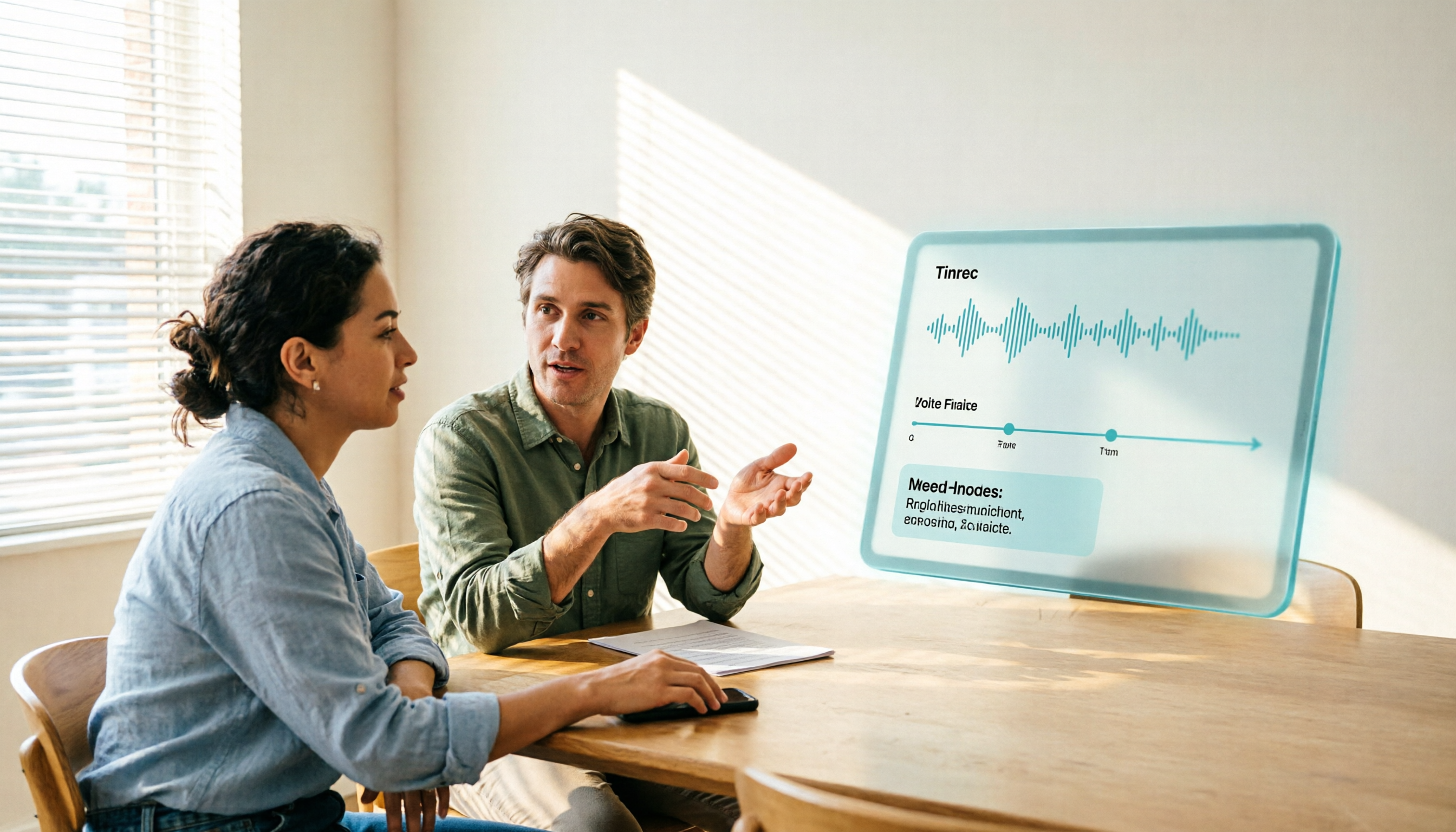
Notta's free plan offers 120 minutes per month with a 3-minute limit per recording, suitable for short audio and testing. This article compares 5 AI meeting note tools—Notta, Tinrec, Otter, Fireflies, and TurboScribe—to help you determine if the free tier is enough and when to upgrade.

2026 Free Audio-to-Text Solutions Compared: Notta, Tinrec, and 3 More
How does Notta's free audio-to-text work? This guide covers 5 free online transcription options in 2026, including Notta's free plan limits (120 minutes per month, 3 minutes per file) and step-by-step instructions. It also compares free tiers and best-use cases for Tinrec, TurboScribe, Otter.ai, and Granola to help you avoid length and quota traps.

Notta Free Plan 2026: Complete Guide to Limits, Use Cases & Alternatives
Evaluating Notta's free plan? This guide looks at weekly meeting volume and post-meeting needs to help you judge if the free tier fits. It also introduces Tinrec's bot-free recording, transcripts, AI summaries, action item extraction, AI Q&A, and team workspace as a workflow better suited for mid-level managers and teams.

2026 Comparison of 2 Audio-to-Text Tools: Tinrec vs Notta — Differences and Which Is Better for Teams
Starting from the search intent behind 'notta hawkeye,' this article first clarifies that Hawkeye is unrelated to audio recording tools, then from the practical perspective of a mid-level manager compares Notta and Tinrec in terms of meeting capture, post-meeting organization, Chinese-language experience, team governance, and data ownership. It also explains Tinrec's bot-free recording, AI Q&A, action item extraction, and team spaces, and what management scenarios they suit.
Notta Free vs Paid in 2026: 5-Factor Comparison to Find Your Best Plan
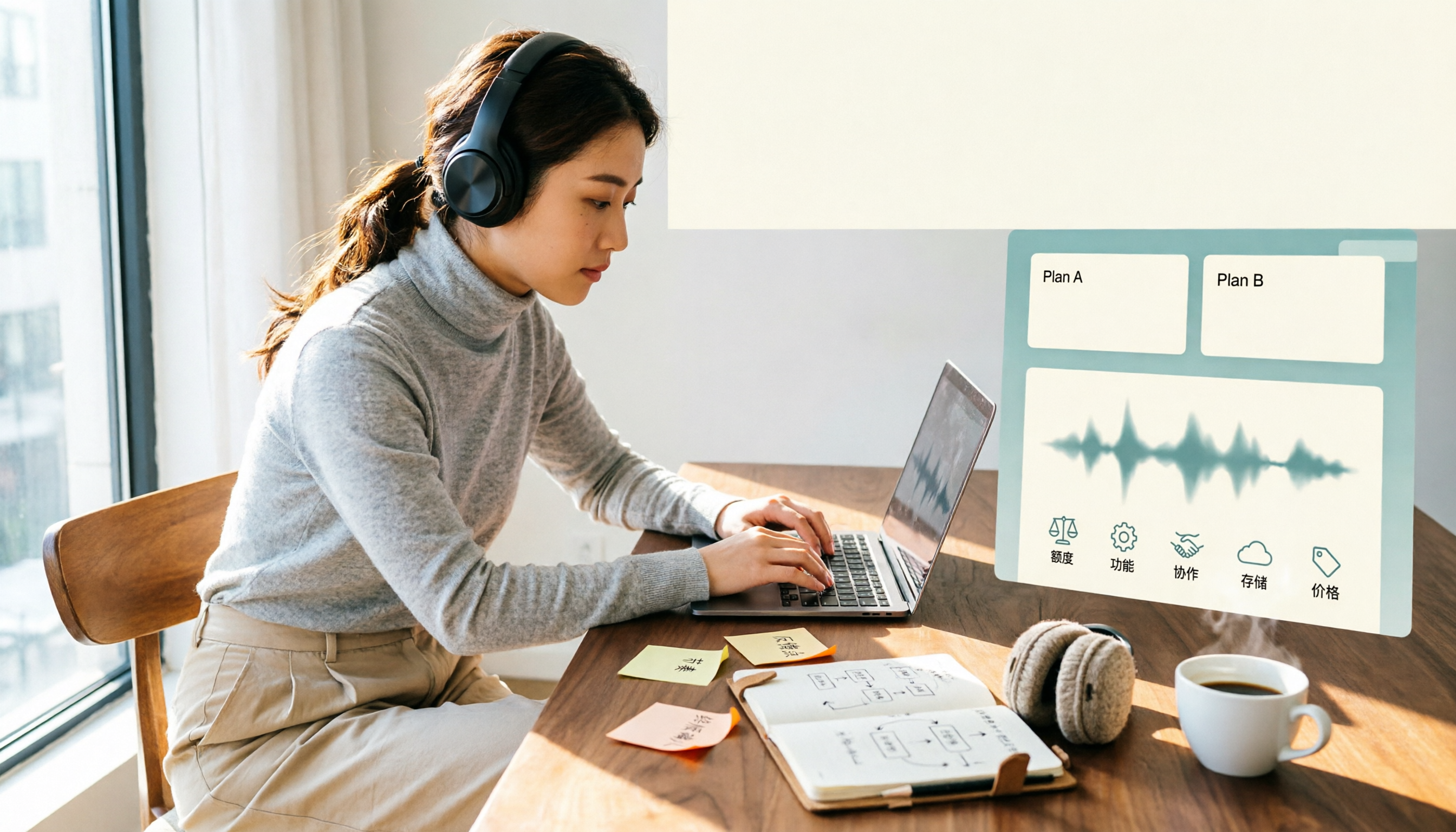
Notta's free plan offers 120 minutes per month with a 3-minute cap per recording—is that enough? This comparison of Notta Free vs Paid covers transcription limits, features, team collaboration, storage experience, and pricing across 5 factors to help you decide whether to upgrade.

How to Use Notta for Mac in 2026: 5 Steps to Meeting Notes & Transcripts
Should you install Notta for Mac as a desktop app, web app, or App Store version? This guide walks through the actual process in 5 steps, from macOS permissions and version selection to transcript proofreading and export, and compares Tinrec (秒聽錄音) on bot-free recording, post-meeting organization, and team collaboration to help you decide which fits your meeting scenario.