
Turn recordings into transcripts and summaries in minutes
Upload audio or video for multilingual transcription, AI notes, and action items
Notta in 2026: Hug Atelier Pendant Lamp vs. Audio-to-Text Tool – Differences, Features, and Practical Uses
Before finals last semester, I typed "notta" into Google, hoping to find the service my classmates mentioned—the one that turns class recordings into notes. The top results were all about a brand called Hug Atelier, selling a pendant lamp named Notta. I stared at the screen for thirty seconds before realizing: I was looking at interior design, not a tool.
After that, I understood there are two easy pitfalls here. The first is "same name, different thing"—you think you're searching for a tool, but it's actually a lamp. The second is more costly: assuming you've found a transcription tool, you might think "having a transcript means having notes," but before the exam you're still lost in a two-hour transcript, just like handwritten notes.
A more sensible approach: first confirm whether you're looking for a "lamp" or a "tool that turns sound into usable data." If it's the latter, the criterion isn't how many features it lists, but "after transcription, how much work do I still have to do myself?"
First, clarify: Hug Atelier's Notta is a pendant lamp
Hug Atelier is a design lighting brand, and Notta is one of its pendant lamp models. The brand's official website clearly states that Notta is the most commonly chosen style by architecture firms, with many variations to suit various spaces; this model can also be found on design selection platforms like hipicon. So if you're looking up lamp dimensions, materials, or purchase channels, adding "hanging lamp" or "hipicon" to your keywords will be more accurate.
What we'll discuss next is something else: turning the audio from classes, meetings, and interviews into data you can review, search, and query. I used this for a whole semester, using Tinrec as a hands-on example, and I'll share my practical insights.
What can audio-to-text do for you?
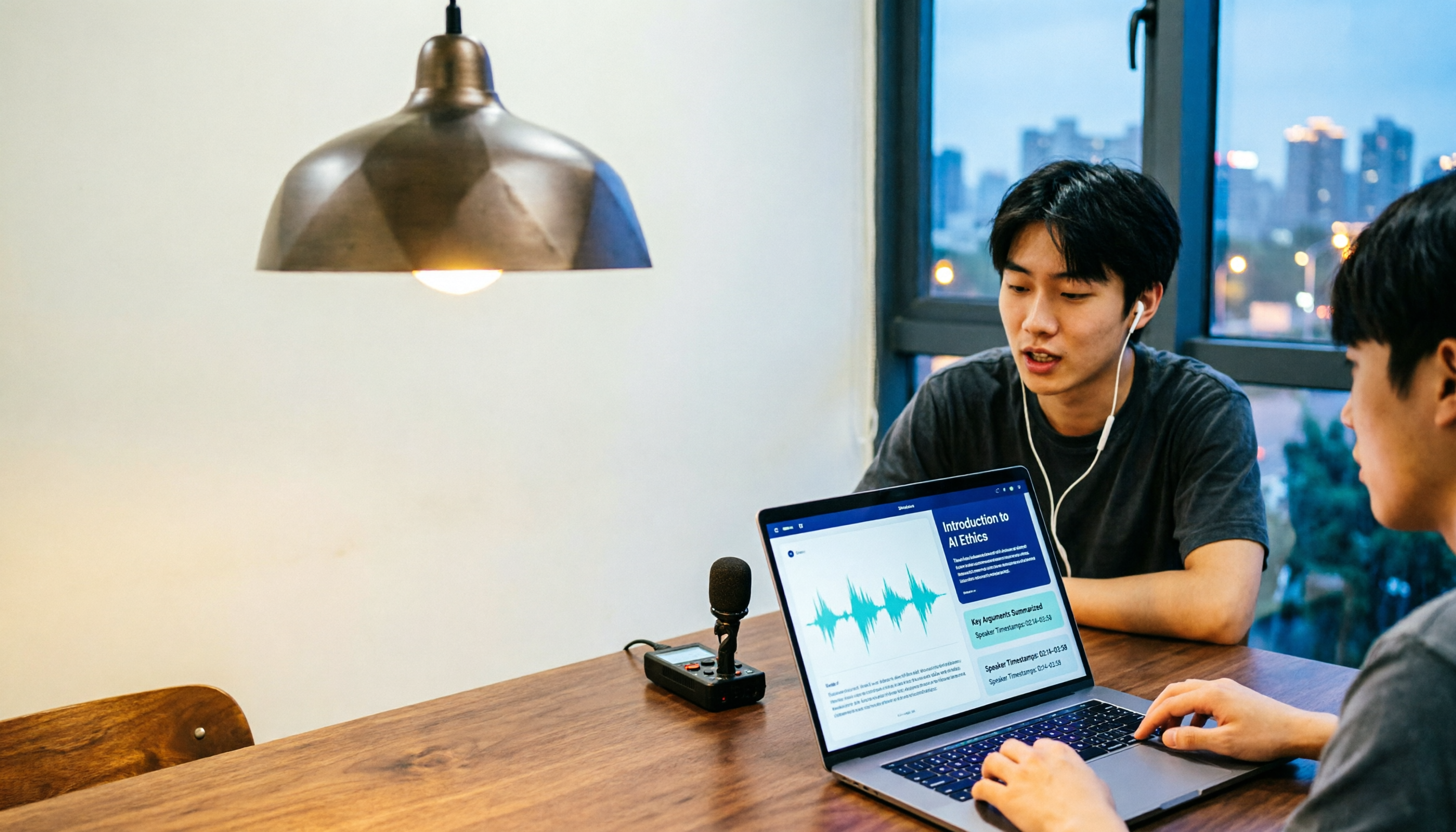
Scenario 1: A two-hour class, key points in ten minutes after class When the professor speaks fast and slides flip even faster, handwritten notes can't keep up. With Tinrec, for example, you can record and transcribe on your phone simultaneously; by the end of class, the transcript is ready, and AI summaries and chapters are organized. You just need to fill in your own understanding, not start from scratch.
Scenario 2: Group discussion ends, and finally someone remembers the conclusions The most common disaster in group projects: after a two-hour discussion, no one remembers who is doing what. Tinrec extracts action items from the conversation—who is responsible for which part, when to submit—and lists them directly, far more reliable than "that thing we just said" in the group chat.
Scenario 3: Online lectures and internship info sessions—no need to type frantically while listening Many company info sessions are held only once; miss it and it's gone. Tinrec's desktop version captures the computer's system audio directly, without inviting a bot into the meeting. It works with Zoom, Google Meet, Microsoft Teams, and Webex, generating transcripts while you listen.
Scenario 4: Project interviews—beyond transcripts, you can ask follow-up questions For graduation projects, interviewing seniors or industry professionals is painful when you have to re-listen to recordings. After Tinrec transcribes, you can ask it questions directly—"What were the three difficulties the interviewee mentioned?"—and it answers based on the content, saving a lot of re-listening time.
What are the core capabilities of audio-to-text?
Real-time transcription: Not transcribing after recording, but generating text while recording. During meetings or classes, you can follow along with the text and ask a question on the spot if you miss something, without waiting until you listen to the recording later.
Bot-free online meeting recording: Tinrec's desktop version captures the computer's system audio, so no extra bot account joins the meeting. This is especially useful for online classes and info sessions—no awkward extra participant in the meeting.
AI summaries and chapters: A good summary isn't just condensing the transcript into a paragraph; it's structured organization. Tinrec breaks long meetings into chapters and highlights key points, so you can quickly scan a two-hour class and grasp the context.
Action item extraction: Scattered remarks like "Can you look at this part for me" or "Get it to me by next Wednesday" are organized into an action list. During finals project hell, this feature is a lifesaver.
AI Q&A and cross-meeting queries: This is where it differs most from pure transcription tools. No matter how long the transcript, you don't have to read from the beginning—just ask "What percentage of the grade is the final report?" or "What was decided in the last meeting?" and it answers.
Stop organizing recordings by hand
Upload audio or video and automatically get a transcript, summary, and action items
Real-time translation and bilingual view: For English lectures or group work with international exchange students, you can switch between original and translated text during recording, without opening a separate translation window.
Export and further processing: After organizing, you can export directly to Notion, Google Docs, OneNote, or Dropbox for continued use; you can also ask it to generate reports, tables, or meeting minutes, saving retyping time.
Practical application scenarios
Large general education lectures: These classes usually have no cheat sheets or handouts; you rely on listening. My approach: place my phone on the desk with Tinrec recording, review the summary after class to grasp the structure, and before exams only review chapter highlights and my own notes—no need to re-listen to the whole semester's recordings.
Graduation project group meetings: Projects last a semester, and meeting notes scattered across everyone's phones are a hassle. Tinrec's team version is a separate team space where meeting data belongs to the team; new members can see past discussions. Members have roles (who can manage) and seats (who can record, upload, edit); members without seats can still view and play data.
Thesis or project interviews: Interview recording quality varies, and transcripts will have errors—be prepared for that. My habit: set the interviewee's technical terms in the team glossary first to improve accuracy, and verify important quotes against the recording timestamps.
Internship interviews and online info sessions: Transcribe the interview immediately afterward to review which answers you were unsure about—much more effective than relying on memory. A reminder: inform and get consent before recording; regulations vary by country, so don't skip this.
5 things to note when choosing an audio-to-text tool
1. Distinguish "transcription" from "organization" Many tools only do "sound to text," leaving summaries and categorization to you. Tinrec's value is in the latter part: summaries, chapters, action items, and Q&A all done at once—that's where real time is saved.
2. Recognition of Chinese and mixed Chinese-English In Taiwan, classes and meetings often mix Chinese, English, and Japanese, with technical terms everywhere. Tinrec supports Chinese, Traditional Chinese, and multilingual scenarios; the team version also maintains a team glossary for frequently used terms in your department or company. Actual performance depends on recording quality, accents, and multiple people speaking simultaneously—don't expect zero errors.
3. How to "enter" online meetings One way is to send a bot into the meeting; the other is to capture system audio directly on the desktop. Tinrec uses the latter: the advantage is no extra participant; the disadvantage is you must remember to start recording—it's not a tool that automatically joins all calendar meetings.
4. How quotas are calculated Note that "real-time recording" and "file import" are usually calculated separately. For Tinrec's team version, under an active plan and active seats, real-time recording currently does not deduct minutes; file and link imports use the team's shared import minutes; each paid seat provides 2,000 shared import minutes per month. For personal use, the free version has a basic quota to try; for short-term intensive use, consider a weekly card; for long-term stable use, the Pro annual card is more cost-effective. Actual prices are subject to the official plan page.
5. Collaboration and data ownership For multi-person scenarios like graduation projects or clubs, confirm whether data belongs to the "team" or "individual account." Tinrec's team version stores meeting data in the team space; when a member leaves, they must hand over responsible resources to other members, so nothing disappears just because one person graduates.
FAQ
Q: What is Hug Atelier's Notta? A: It's a model of a design pendant lamp, not an app. Hug Atelier is a design lighting brand; Notta is a style commonly used by architecture firms with many variations, sold on platforms like hipicon.
Q: Is Tinrec's free version enough for students? A: Depends on your recording frequency. The free version offers a basic quota, usually enough for one or two key classes per week; if you plan to record every class, consider a weekly card or Pro plan—roughly the price of a few bubble teas.
Q: Can I record Zoom or Google Meet classes? A: Yes. Use Tinrec's desktop version to capture system audio; no need to invite a bot. Just remember to press record before starting.
Q: Will the transcript be completely accurate? A: No, and no tool can guarantee that. Audio quality, accents, people talking over each other, and technical terms all affect results. Tinrec greatly reduces manual note-taking time, but for important content, verify against the original and recording playback.
Q: How is the team version priced? A: Priced per paid seat; currently USD 29.80 per paid seat per month, or USD 199 per paid seat per year. Eligible teams get a 7-day trial with 1 free seat and 300 shared import minutes. Actual amounts are subject to the official purchase page.
Q: Can all team members edit data? A: Not necessarily. Active members without seats can view, play, and read team data, but only those with seats can record, upload, edit, and export.
Conclusion
If you were tricked by the word "notta" and are actually looking for a lamp, you now know it's a pendant lamp—checking design platforms like hipicon will be faster.
If you're looking for a way to turn classes, meetings, and interviews into usable data, the key isn't "how fast it transcribes," but "how much is left to do after transcription." That's why I kept Tinrec this semester: it connects transcripts, summaries, action items, Q&A, and export into one line, saving time on exam review and project meetings. I suggest trying the free version for two or three classes to feel how AI helps organize notes, then decide whether to upgrade.
Final reminder: inform and get consent before recording, and respect everyone's privacy.
References
Turn every recording into actionable outcomes
Get 60 free transcription minutes when you sign in. No credit card required.
Related Reading
You might also like

2026 AI Meeting Transcription Tools Compared: Is Notta's Free Plan Enough? Which Free Tier Is Most Generous?
People searching "Notta AI free" usually want to know: what the free plan can actually do, whether the 3-minute per-recording limit is real, and when to upgrade. This article breaks down Notta's free plan limits from a buying perspective and compares the free and entry-level plans of Tinrec, Otter.ai, and Granola, with buying tips and pitfalls to avoid, to help you decide which tool to use.

Good Tape Free? 2026 Comparison of 3 Free Transcription Models: Which One Is Enough?
Is Good Tape free? Yes, the free plan allows 3 transcripts per month, each up to 30 minutes, plus a one-time 1-hour trial. This article breaks down three free models—limited count, limited minutes, and limited trial—and compares them with Tinrec's free plan. Learn how to evaluate free quotas, use them for meeting notes and interview organization, and understand team roles and seats to choose the one that truly fits your needs.

in nottata Meaning Explained: 3 Key Uses, Examples, and Similar Words
What does in nottata mean? Starting from the meaning of nottata, this article breaks down the key uses of the time expression in nottata, organizes common collocations like fare nottata and nottata bianca with practical examples, compares notte, di notte, and nottetempo, and clarifies the 3 most common misunderstandings.
Is Harleen Nottay Married? What Public Records Reveal and What They Don't
Is Harleen Nottay married? This article compiles information from public sources like IMDb, BBC, Facebook, Instagram, and LinkedIn to explain why there is no reliable answer about her marital status and highlights common verification pitfalls.
2026 Hockey Stick Tape Guide: 4 Blade Taping Styles, Grip & Shaft Tips, and How to Choose
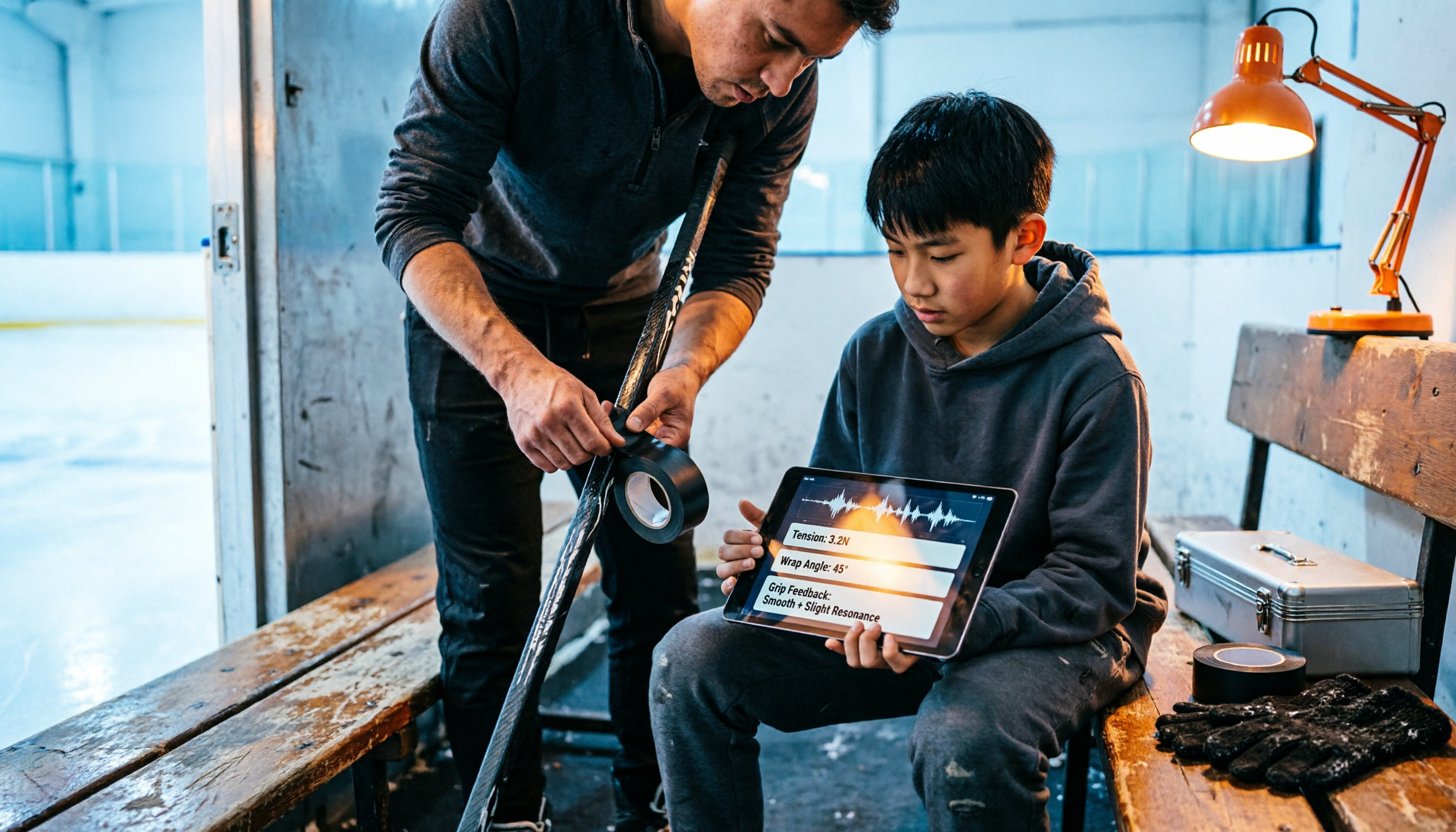
From four common blade taping styles and grip/shaft techniques to choosing based on position and surface, learn how to tape a hockey stick. Plus, a practical method for recording your test results so you can find your feel without relying on memory.

The Complete 2026 Guide to Finding the Right Taper Barber: 3 Steps from Selection to Communication to Follow-Up Records
When you search for 'good taper barbers near me,' you're really trying to answer three questions: Who can actually do a taper? How can I verify their skill? Can I get the same result next time? This guide breaks down a repeatable process—from judging a barber's portfolio and pre-cut consultation to keeping records for your next visit—and shows how Tinrec turns each consultation into a searchable, reviewable record.

How to Cancel Your Good Tape Subscription in 2026: Step-by-Step Guide and a Better Meeting Notes Alternative
Canceling takes five minutes—the real hassle is your meeting data living in someone else's account. This guide first explains how to cancel the Good Tape transcription service and magazine subscription, then looks at the workflow: after canceling, how do you keep using transcripts, summaries, and action items, and what role Tinrec plays.

How to Transcribe Good Tape Videos in 2026: 3 Steps to Transcripts + AI Meeting Notes
Many people upload a video to a transcription tool, get the transcript, and think they're done—only to re-listen to the recording later to find key points. This guide walks through the actual Good Tape video-to-text workflow, breaks down 3 common pitfalls, and shows how to use Tinrec to turn transcripts into summaries, action items, and shareable team meeting materials.

Good Tape vs Tinrec 2026: 5-Dimension Comparison — Which Is Better for Chinese-Speaking Teams?
Good Tape reviews are everywhere, but is it really right for your meeting scenarios? This article breaks down Good Tape and Tinrec across 5 dimensions—Chinese transcription, meeting capture, post-meeting organization, team governance, and data privacy—and offers clear recommendations based on budget and needs.