

Turn recordings into transcripts and summaries in minutes
Upload audio or video for multilingual transcription, AI notes, and action items
Don't Rush to Find a Meeting Bot—Most People Get Stuck on These Three Misconceptions
When it comes to smart meeting collaboration, many people's first reaction is "find a meeting bot to join the meeting room." This is the most common misconception.
Bots joining meetings is indeed convenient, but in practice you'll encounter several troubles: an extra unfamiliar account appears in the participant list, you have to explain it before external client meetings, and some companies' meeting policies directly prohibit third-party bots from joining. After recording, you may not even get the audio file.
The second misconception is treating "having a transcript" as the end goal. A transcript is just raw material. What really takes time is organizing key points, capturing action items, and writing a deliverable record.
The third misconception is treating the team edition as "everyone sharing one account." By the time someone leaves, data ownership, permissions, and usage are all in a mess.
A more reasonable approach is to first confirm which part you need to solve: is it capture during the meeting, organization after the meeting, or long-term retention of meeting data? These three things correspond to very different tool designs.
In this article, I tested and compared four tools from these three angles. Among them, Tinrec is the one I most recommend for Chinese-language meeting users.
Before Choosing a Smart Meeting Collaboration Tool, Understand These 4 Key Points
1. How is the meeting recorded? Bot joining, desktop capture of system audio, and direct mobile recording are three different approaches. The advantage of desktop capture is that no extra account joins the meeting, which is especially friendly for external meetings. But note that such tools usually require you to actively start recording, not automatically grab from the calendar.
2. What do you get after transcription? Tools that only provide transcripts essentially return the organization work to you unchanged. Tools that offer summaries, chapters, action item extraction, and even the ability to ask follow-up questions about meeting content are the real time-savers. The gap here is usually more noticeable than transcription accuracy.
3. Are audio files retained? Can old files be imported? Some tools keep only text, not audio. If there are typos in the transcript or you need to confirm the tone of a sentence, without audio you can only re-record. Also, whether you can upload existing audio and video files is crucial for people organizing interviews and courses.
4. Teams need governance, not just sharing. When multiple people use it, you need to ask: who can edit, who can only read, how is usage tracked, and what happens to data after a member leaves. If these issues aren't handled well, even the best tool becomes a nightmare for HR and IT.
Tinrec—Our Top Recommendation After Testing
Tinrec is an AI meeting notes and collaboration tool for individuals and teams, supporting web, desktop, and mobile. It doesn't just convert audio to text; it organizes meetings into searchable, queryable, further processable data that can ultimately be retained in a team space.
Record online meetings without a meeting bot The desktop version directly captures your computer's system audio, handling meeting audio played on platforms like Zoom, Google Meet, Microsoft Teams, and Webex, without an extra account joining the meeting. This is especially practical for those who frequently have external client meetings—you don't have to explain "who that account is" beforehand.
Note that this is a "user-initiated recording" mode, not automatically joining all calendar meetings.
When the meeting ends, half the organization work is done After recording, Tinrec produces a transcript and automatically generates summaries, chapters, and key points, while organizing action items from the discussion into to-dos.
Even better is the AI Q&A. You can directly ask "What was the conclusion about the budget in the last meeting?" and it will answer based on the meeting content, rather than throwing a bunch of keyword search results at you. The same data can also be used to generate reports, tables, and documents.
For cross-language meetings, there is real-time translation, allowing you to switch between original text, translation, or bilingual view. Output can also be exported to Notion, Google Docs, OneNote, Dropbox, and other tools for further use.
The team edition turns data into team assets, not personal assets This is what I think is most worth mentioning. The team edition is an independent team space, not multiple people sharing one account.
Meeting data belongs to the team; members can view, play, and read historical meetings; administrators can manage roles (owner, admin, regular member) and seats, view usage trends, member rankings, and details, and there are audit logs for querying and exporting.
Audio files have a recycle bin mechanism, so accidental deletions can be recovered within the retention period. Team hotwords improve recognition of specialized terms like product terminology and client names.
Stop organizing recordings by hand
Upload audio or video and automatically get a transcript, summary, and action items
Here's an easily confused point: roles govern "governance," seats govern "access." Active members without a seat can still view team data but cannot upload, edit, import, or export. Also, currently it's mainly team-level sharing, not file-level granular permissions.
Pricing and quotas The personal edition has a free version, weekly card, Pro monthly, and Pro annual. Choose based on your usage rhythm: use the free version for occasional recording organization, the weekly card for short-term intensive meetings, and Pro if you have weekly needs.
The team edition is currently USD 29.80 per paid seat per month, or USD 199 per paid seat per year (about USD 16.58 per month) for annual payment. Each paid seat provides 2,000 minutes of team shared import quota per month. Eligible teams get a 7-day trial, 1 free seat, and 300 minutes of shared import quota for the first time. Under an active team plan and active seats, real-time recording currently does not deduct minutes; only file and web imports deduct shared quota. Actual prices and benefits are subject to the official purchase page.
Pros
- Bot-free recording of online meetings; no need to explain an extra account for external meetings.
- Complete post-meeting workflow: summary, chapters, action items, Q&A, translation, and export all in one place.
- The team edition has roles, seats, usage, and audit logs, so data doesn't leave with members when they change.
Limitations The free version has limited quota; heavy users need to pay. Also, transcription quality is affected by recording quality, ambient noise, accents, and overlapping speakers; for important content, it's recommended to verify against the audio timestamps.
Who it's for People who frequently have Chinese or mixed Chinese-English meetings, don't want bots joining, and need to turn content into action items and documents after meetings. If meeting data needs to accumulate long-term within a team, the team edition is more suitable than the personal edition.
Besides Tinrec, What Other Options Are There?
Otter.ai: A mature English meeting assistant. Basic is free with 300 minutes per month; Pro annual is about USD 8.49 per user per month, including 1,200 minutes per month and 10 file imports. If your meetings are almost entirely in English and your team is used to an English interface, it's still a handy choice. However, for Chinese meetings and real-time bilingual comparison, Tinrec has an edge.
Granola: An AI meeting notes tool that also takes the bot-free route, focusing on combining your handwritten notes with AI. Basic is free; Business is USD 14 per user per month. It does not support uploading pre-recorded audio files and does not save meeting audio. If you need to retain recordings and organize existing audio files, Tinrec is much more complete in these two aspects.
Notta: A multilingual transcription tool. Free is 120 minutes per month with a 3-minute limit per session; Pro annual is about USD 8.17 per month; Business annual is about USD 16.67 per seat per month. Suitable for users focused on file transcription, subtitles, and translation. But if you want bot-free recording of online meetings plus a workflow that directly generates reports and documents after meetings, Tinrec's design is closer to meeting collaboration scenarios.
Pitfalls Guide: The 4 Most Common Mistakes When Choosing Meeting Collaboration Tools
Pitfall 1: Only looking at "does it automatically join meetings." Automatic joining sounds convenient, but many companies have concerns about third-party bots. First confirm your company's meeting policy, then decide whether to go the bot route or desktop capture route, so you don't buy something you can't use.
Pitfall 2: Only comparing transcription minutes, not post-meeting output. Minutes are the spec most easily exaggerated by marketing. What really determines whether you save time is how accurate the summary is, whether action items are captured correctly, and whether you can ask follow-up questions directly.
Pitfall 3: Not confirming whether audio files are retained. Tools that keep only text can be painful when there are typos or you need to confirm tone. It's advisable to confirm during the trial whether recordings are saved and whether old files can be imported.
Pitfall 4: Treating the team edition as "multiple people sharing an account." The team edition depends on how roles and seats are divided. For example, in Tinrec, roles govern governance and seats govern usage; people without a seat can view but not edit—this is different from "everyone can edit." Be sure to ask clearly before purchasing.
Conclusion: Which One Should You Choose?
Simply put, first look at what your meetings are like, then choose the tool:
- Chinese or mixed Chinese-English meetings, don't want bots joining → Tinrec
- Need to directly produce action items, reports, tables after meetings → Tinrec (Agent post-processing)
- Meeting data needs long-term retention in the team, members will change → Tinrec team edition
- Need to retain audio files and also organize existing recordings and videos → Tinrec
- Team meetings are almost entirely in English → Otter.ai can be considered
I usually suggest not rushing to pay. First use the free version on one of your own real meeting recordings to see the transcription recognition level and summary usability, then decide whether to upgrade. If it works well, it's worth continuing to invest.
One final reminder: recording and transcription involve personal data and communication secrets. Remember to handle them in accordance with local regulations and company policies, and obtain consent from participants in advance when necessary.
References
- 2026 Cloud Online Video Conferencing Platform Quick Recommendations
- 4 Smart Meeting Assistant Recommendations! Instantly Generate Meeting Notes, Summaries, Meeting Recordings, ... - Project Management Architecture and Project Description Learning | 104 Learning Elf
- "Yuanfang Technology" - Video Conferencing, Enterprise Communication Integration, Meeting Room Design and Meeting Reservation - Overall Design and Planning Expert for Meeting Rooms and Communication Integration
- Video Conferencing Software Recommendations: Google Meet, Microsoft Teams, Zoom Comparison
- Smart Meeting Room - Solutions - Crestron Automation Environmental Control and Flex Video System | Weizan Technology
Turn every recording into actionable outcomes
Get 60 free transcription minutes when you sign in. No credit card required.
Related Reading
You might also like

2026 Smart Meeting Collaboration Online Services Buying Guide: 5 Platform Comparison and Selection Advice
Meetings end, but data starts to slip away—this is the real pain point for most teams. This article breaks down smart meeting collaboration online services into three stages: before, during, and after meetings, comparing the positioning and limitations of five platforms: Zoom, Google Meet, Cisco Webex, Zoho Meeting, and M+ Meet. It also adds the role of the meeting notes layer Tinrec, with a feature comparison table, pricing scope, and an actionable checklist.
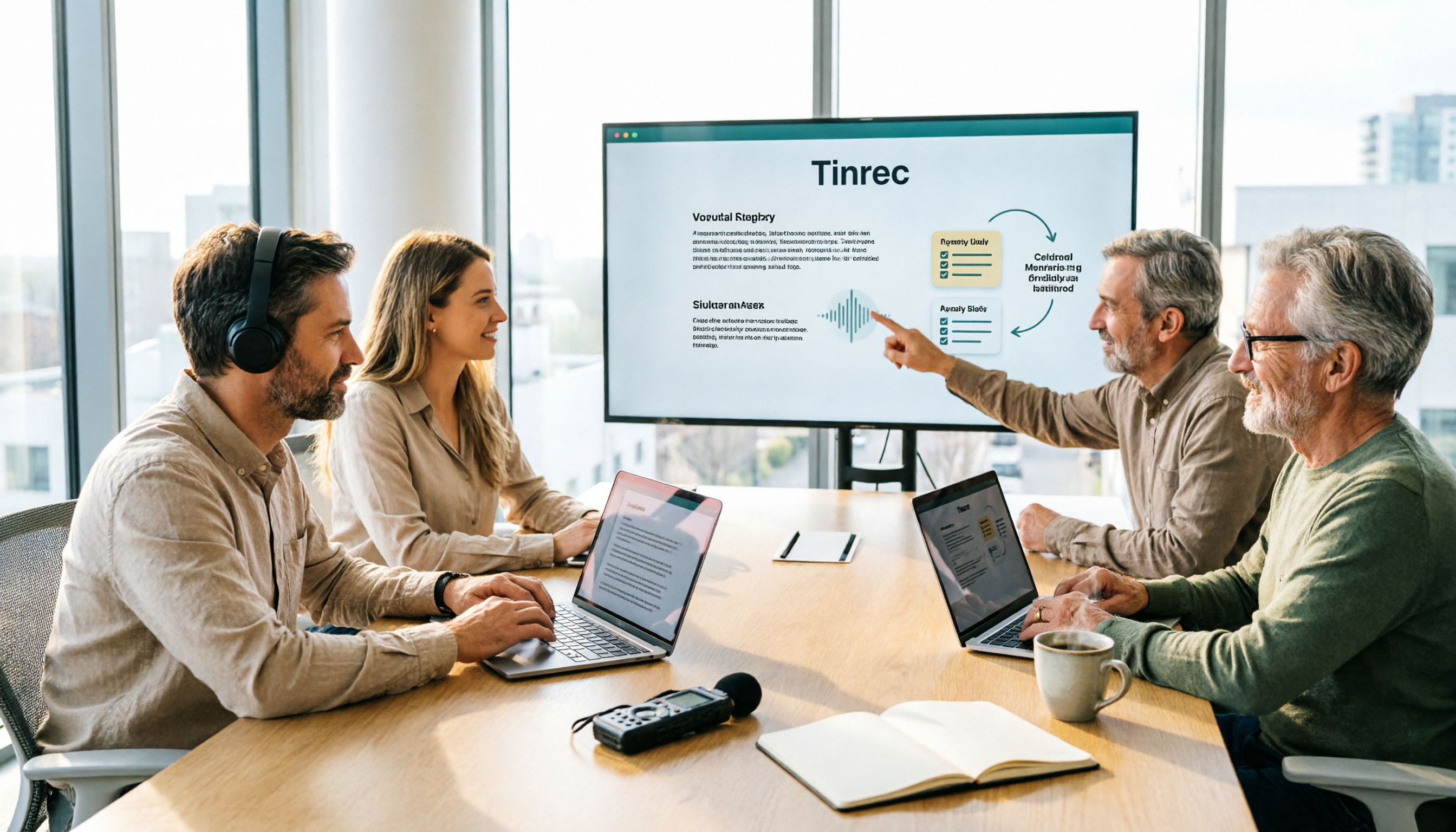
5 Smart Meeting Collaboration Tools Tested for 2026: Which Free Version Is Enough?
The meeting ending is just the beginning of the work. This article uses Tinrec as the tutorial centerpiece to walk you through the five steps of 'record → transcript → proofread → minutes → export and share,' while comparing the positioning and pricing of five smart meeting collaboration tools—Tinrec, Otter.ai, Fireflies.ai, Notta, and Granola—to help you assemble a meeting toolbox that fits your needs.

2026 Tinrec Smart Meeting Collaboration: Bot-Free Recording + AI Summaries & Action Items
This article starts with the common misconception that 'recording is enough' and explains key considerations for choosing smart meeting collaboration tools. It features Tinrec as the primary hands-on recommendation, covering bot-free recording, AI summaries, action items, AI Q&A, and team spaces. It also briefly reviews Notta, Otter.ai, and Granola, with a pitfalls guide and selection advice.

How to Choose an Online Smart Meeting Collaboration Platform in 2026: 5 Steps to Pick the Right Tool
Starting from the real pain points of meeting notes, this article outlines the positioning, core features, and use cases of five online smart meeting collaboration platforms—Tinrec, Google Meet, Zoom, Zoho Meeting, and Cisco Webex—and provides a 5-step framework to help you decide which one to choose, including practical considerations such as free tiers, team seats, and export options.

2026 Smart Meeting Collaboration Platforms Compared: Which One Turns Meetings into Searchable Data?
Online meetings are routine, but recordings end up scattered across Zoom, Google Meet, Teams, and phones—making it hard to find key points later. This hands-on comparison of Tinrec, Zoom, Google Meet, and Microsoft Teams examines how each handles meeting capture, post-meeting organization, AI Q&A, and team knowledge retention, plus the most common pitfalls when choosing a similar system.

2026 Smart Meeting Collaboration Software Comparison: Which Saves the Most Time After Meetings?
A mid-level manager who holds 15 meetings a week tested 4 smart meeting collaboration tools, breaking down how meeting audio is recorded, whether post-meeting summaries and action items are directly usable, Chinese and mixed Chinese-English recognition, team data ownership, downloads, and cross-platform support. Tinrec wins with bot-free desktop recording, AI Q&A, and team spaces, while Google Meet, Microsoft Teams, and Zoom each have their own use cases.

5 Smart Meeting Collaboration Platforms Tested for 2026: Which Free Tier Is Actually Enough?
We compare Tinrec, Otter.ai, Fireflies.ai, Notta, and Granola across free quotas, sign-up requirements, and usable features to help you decide which free plan can truly handle your everyday meeting load.
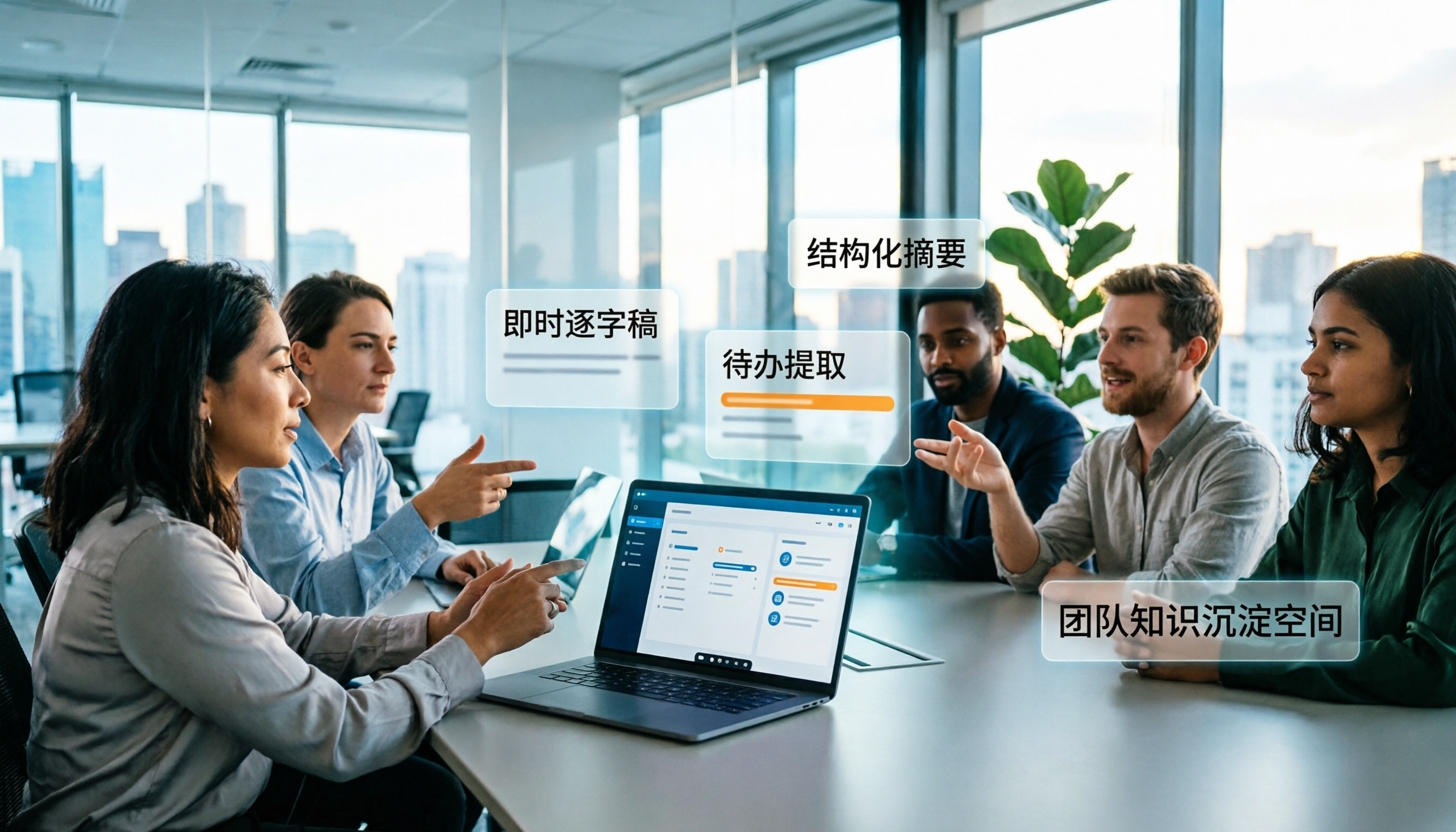
3 Smart Meeting Collaboration Platforms Worth Recommending in 2026: Chinese Meeting Notes and Team Knowledge Retention Explained
Starting from the real pain point of "meeting materials scattering after the meeting ends," this article breaks down the four stages a smart meeting collaboration platform should have: recording, understanding, action, and retention. Using Tinrec as an example, it explains bot-free recording, real-time transcription, structured summaries, action item extraction, and team spaces, and compiles 5 purchasing checkpoints and FAQs.

2026 Comparison of 5 Free Smart Meeting Collaboration Platforms: Which Free Tier Is Most Sufficient?
Free meeting platforms are not all the same: some are free forever but limited, some are time-limited trials, and some free versions lack post-meeting organization. This article compares the free conditions, representative features, and limitations of Zoom, Microsoft Teams, Google Meet, FreeConferenceCall, and Tinrec from the perspective of a mid-level manager leading a team in real meeting scenarios, with a comparison table and selection advice. Data verified as of August 2026.