

Turn recordings into transcripts and summaries in minutes
Upload audio or video for multilingual transcription, AI notes, and action items
4 Meeting Minutes Tools Tested and Compared for 2026: How to Write Meeting Minutes That Save Time
It's 3 p.m. on a Wednesday, and you've just finished a 90-minute cross-departmental meeting. Your manager asks in the group chat: "So what was the conclusion? Who's doing what? When is it due?" You open your notes and find only scattered keywords, a few abbreviations you didn't understand, and a pile of conversations you didn't have time to organize. That's when you realize the real challenge of writing meeting minutes isn't typing speed—it's distilling the discussion into actionable conclusions.
This article uses the same post-meeting scenario to look at four tools: Tinrec, Otter.ai, Notta, and Granola. I'll also break down "how to write meeting minutes" into three steps—before, during, and after the meeting—so you can write understandable meeting minutes even without a tool.
How to Write Meeting Minutes: Why Are You Always Reworking After Every Meeting?
Many people's approach to meeting minutes is actually "transcript practice." Afraid of missing a single sentence, they record from start to finish—the longer the meeting, the longer the notes. The result: attendees don't want to read them, those who weren't there can't understand them, and managers can't find the decisions.
Another common situation is that the discussion is lively during the meeting, but afterward only a single line remains: "Will follow up." Who follows up, on what, and when to report back—none of it is clearly written. That kind of minutes is as good as none.
The purpose of meeting minutes is to let people who didn't attend quickly grasp the high-level overview and to record the meeting's outcomes. They should be objective, concise, and accurate, focusing only on key points, decisions, and action items—not a verbatim record of what each person said.
If you've ever experienced "can't find the conclusion after the meeting," "no one claims the to-dos," or "the same argument starts over at next week's meeting," then what you need to fix isn't your typing speed—it's the structure of your meeting minutes.
How to Write Meeting Minutes: Understand These 4 Key Points First
1. Start by writing "What question does this meeting need to answer?"
The first step in writing meeting minutes isn't opening your notebook—it's asking yourself: What is this meeting actually discussing?
Try writing the core topic as a question at the beginning of the minutes. For example: "Is this meeting deciding the launch date and owner for the new website?" As soon as attendees see this sentence, they know where the focus of the minutes lies.
2. Record only decisions, actions, owners, and deadlines
Meeting minutes are not a transcription exercise. What you need to capture is: what decisions were made, what's next, who's responsible, and when it's due.
The discussion process can be briefly summarized, but decisions and action items must be clear. Rather than writing "Everyone discussed the budget," write "Decision: Q3 marketing budget stays as originally proposed; Action: Amy to provide ad spend details by 7/15."
3. Prepare a template and agenda before the meeting
Familiarize yourself with the agenda and background materials before the meeting, and prepare an outline for the minutes. Put the date, participants, and agenda items in the template in advance; during the meeting, you just fill in the blanks—it'll be much faster.
A usable set of meeting minutes should include at least these fields:
- Meeting name, date, time, location
- Facilitator, attendees, absentees
- The core question this meeting needs to answer (written as a single question)
- 3–5 key discussion points
- Decisions
- Action items: task, owner, deadline
- Next meeting time
4. Organize and distribute as soon as possible after the meeting
Organize while your memory is still fresh—that's when you're least likely to miss key context. When organizing, remove verbal filler, keep decisions and actions, and confirm owners and deadlines are correct before sending.
Rather than aiming for perfection, aim to "send it the same day or the next morning." Meeting minutes are time-sensitive; if you wait too long, everyone has already moved on to the next project.
Tinrec — Turn Meeting Minutes from "Post-Meeting Catch-Up" into "Organized Right After the Meeting"
Tinrec is an AI meeting notes and collaboration tool for individuals and teams. It supports real-time recording, desktop-based online meeting recording without a bot, audio/video file transcription, real-time translation, and automatically generates summaries, chapters, to-dos, and mind maps. For those who need to write meeting minutes, it's not just about "recording"—it turns recordings into meeting materials you can edit, query, export, and share.
Stop organizing recordings by hand
Upload audio or video and automatically get a transcript, summary, and action items
In practice, you can run the workflow like this: set up your meeting minutes fields before the meeting; during the meeting, use Tinrec's desktop version to capture audio from Zoom, Google Meet, Microsoft Teams, or Webex without inviting a meeting bot; transcription happens live as the meeting progresses, and attendees' remarks settle into a transcript; after the meeting, AI organizes summaries, chapters, and to-dos, and you can directly confirm "who's responsible for what and what the deadlines are" from the to-do section. If your manager asks, "Who mentioned the budget in the last meeting?" you can use AI Q&A to follow up on the meeting content instead of manually Ctrl+F-ing through a 30-minute transcript.
Another value is the post-meeting output. Tinrec can export results to Notion, Google Docs, OneNote, Dropbox, and other tools, and can also use Agent post-processing to generate reports, tables, and documents. For teams in Taiwan, Chinese-language meetings, mixed Chinese-English content, real-time translation, and team hotwords are all very practical features; the team version also centralizes meeting data in a team space, allowing new members to view past meetings and ensuring data doesn't leave with individuals when members change.
Limitations should also be stated clearly. Tinrec's transcription quality is affected by recording quality, noise, accents, overlapping speakers, and technical terminology; for important content, it's recommended to cross-check with transcript timestamps and recording playback. The free version is a basic quota experience, suitable for light use; if you have regular meetings every week, consider Pro or the team version. The team version currently focuses on team-level sharing rather than file-level ACLs; role control governs usage eligibility by seat. Pricing: the team version is USD 29.80 per paid seat per month billed monthly, or USD 199 per paid seat per year billed annually (about USD 16.58 per month); each paid seat provides 2,000 minutes of team shared import quota per month, and real-time recording under an active team plan is currently not deducted by minutes. The first eligible team trial is 7 days, 1 free seat, and 300 minutes of team shared import quota.
If your meetings are primarily in Chinese, you don't want a bot joining the meeting, and you want to use AI to follow up on key points afterward, Tinrec is a well-matched choice right now. It may not be everyone's only answer, but if what you want is "how to write meeting minutes faster, easier to find, and better for team collaboration," its workflow is quite complete.
Besides Tinrec, What Other Meeting Minutes Tools Can You Consider?
Otter.ai: A mature English AI meeting assistant. The free version offers 300 minutes per month, and Pro billed annually works out to USD 8.49 per user per month. It's suitable for English business meetings and teams already using Otter workflows; however, audio retention varies by plan. If you need to keep recordings for playback, hold Chinese-language meetings, and accumulate team data, Tinrec is a better fit in that regard.
Notta: Strong multilingual transcription and file organization capabilities. The free version offers 120 minutes per month with a maximum of 3 minutes per session; Pro billed annually works out to USD 8.17 per month. It's suitable for people who need multilingual transcription and document processing; Tinrec's differences lie in bot-free online meeting recording, AI Q&A, Agent post-processing, and team spaces.
Granola: A bot-free AI meeting notes tool. Basic is free, and Business is USD 14 per user per month. It supports real-time transcript viewing, copying, and searching, but does not support uploading pre-recorded audio and does not save meeting audio. If you need to keep recordings, import historical files, hold Chinese-language meetings, and manage team data, Tinrec would be more suitable.
Pitfall Guide: The 3 Most Common Mistakes in Writing Meeting Minutes
Pitfall 1: Treating a transcript as meeting minutes
Transcripts have their value, but meeting minutes are not transcripts. Readers want key points, decisions, and next steps—not everyone's complete remarks. After writing, ask yourself: If I only show this page to someone who wasn't in the meeting, will they know what to do?
Pitfall 2: Writing only discussion, not decisions and actions
"Everyone discussed the website redesign" is not minutes. "Decision: Website redesign postponed to August; Action: Design department to propose new wireframes by 7/20" is. Minutes without owners and deadlines usually don't get executed.
Pitfall 3: Waiting too long to organize after the meeting
The golden time to organize meeting minutes is as soon as possible after the meeting ends. If you wait until the next week, you'll forget much of the context and end up listening to the recording from the beginning. Using tools to assist with transcription and summaries can reduce this rework, but important content still needs human verification.
Conclusion: How to Write Meeting Minutes and How to Choose a Tool
How to write meeting minutes boils down to three things: define the question before the meeting, capture decisions and actions during the meeting, and organize and distribute as soon as possible after the meeting. Tools just make these three things faster.
If you need Chinese-language meetings, bot-free recording, post-meeting AI Q&A, and team data accumulation, try Tinrec.
If you need to keep meeting recordings, import historical files, and export to Notion or Google Docs to continue writing, Tinrec is also a good fit.
If you need team sharing, seat management, and usage tracking, the Tinrec team version will be more suitable than the individual version.
If your meetings are primarily in English and you're already used to Otter's workflow, Otter.ai is worth considering.
If you need extensive multilingual file transcription, Notta or other transcription tools are worth comparing.
If you only need real-time meeting notes and don't plan to keep audio, Granola is a lightweight choice.
Finally, remember: meeting minutes are not a transcript for yourself—they're a document that "people who didn't attend can understand and attendees can act on." You can start by running through a post-meeting organization workflow with the free version of Tinrec, and upgrade if it fits your team's habits. There's no need to pay right away.
References
- Meeting Minutes: Best Writing Guide and Examples for 2025 (+ Free Template) - AhaSlides
- Master the Techniques of Writing Meeting Minutes with Templates | Lark
- Meeting Minutes = Transcript? Professional Meeting Minutes Record Only 3 Key Points | Writing Tips and Templates at a Glance | 104 Career Power
- 1 Meeting Documents (1) Purpose: Typical meeting documents include meeting notices, meeting agendas, meeting records, and meeting minutes. Sometimes even
- Tips for Creating a Meeting Minutes Template 2026 • Asana
Turn every recording into actionable outcomes
Get 60 free transcription minutes when you sign in. No credit card required.
Related Reading
You might also like

4 Meeting Transcription Tools Compared for 2026: How to Choose for Chinese Meetings and Bot-Free Recording
You finished the meeting but still haven't listened back to the recording? This article uses four practical questions to compare Tinrec, Otter.ai, Notta, and Granola on Chinese and mixed Chinese-English transcription, online meeting audio capture, post-meeting output, and team data management. It also lists each provider's pricing and limitations to help you decide which tool fits your meeting habits.

Best Free Meeting Transcription Tools in 2026: Tinrec vs Notta Free Tiers and Meeting Notes Features Compared
There are many tools for transcribing meeting recordings, but the key to choosing one is how the free tier is calculated and whether the transcript is directly usable. This article compares Tinrec and Notta's free plans, focusing on differences in meeting recording methods, post-transcription processing, Chinese language experience, and team collaboration, and lists checkpoints worth noting when purchasing. Information verified as of August 2026.

4 Free Meeting Transcription Tools in 2026: Free Tiers and Usage Limits Compared
Is a free plan enough for meeting transcription? This article compares the free tiers, recording methods, and post-meeting organization capabilities of Tinrec, Otter.ai, Granola, and TurboScribe, with key buying factors and common pitfalls to help you choose the right tool for your meeting type. Plans and prices verified as of August 2026.

2026 Comparison of 4 Meeting Transcription Tools: Which Saves the Most Time on Chinese Transcripts and Post-Meeting Organization?
How to choose a meeting transcription tool? This article starts with common misconceptions and compares 4 tools on capture methods, Chinese language performance, post-meeting organization, and team collaboration differences. It also includes selection criteria, pitfalls to avoid, and scenario-based recommendations to help you pick the one that truly saves time.

2026 Comparison of 4 Free Meeting Transcription Software: Which Free Version Is Enough?
We tested free plans from Tinrec, Otter.ai, Notta, and TurboScribe, comparing free quotas, per-recording limits, Chinese recognition, and post-meeting AI summaries to help you decide which one to try first.

2026 Legal Document Summarization Tools Compared: Chinese Transcripts vs. AI Q&A — Which Suits Law Firms?
Legal document summarization isn't about dumping a whole file into AI for a one-click summary. This article starts with common pitfalls and compares Tinrec, Notta, Otter, and Granola in real workflows for Chinese transcripts, summaries, AI Q&A, and team collaboration—helping legal, compliance, and administrative teams choose the right tool.

6 Audio-to-Text Tools Compared for 2026: Free Tiers, File Limits, and Team Collaboration
Many people choose an audio-to-text tool based only on free minutes, overlooking file size limits, Chinese recognition, post-meeting organization, and team seats. Using data available as of August 18, 2026, this article compares six tools—Tinrec, Otter.ai, Fireflies.ai, Notta, TurboScribe, and Granola—and clearly notes where no hands-on timing tests were conducted and items remain unconfirmed.
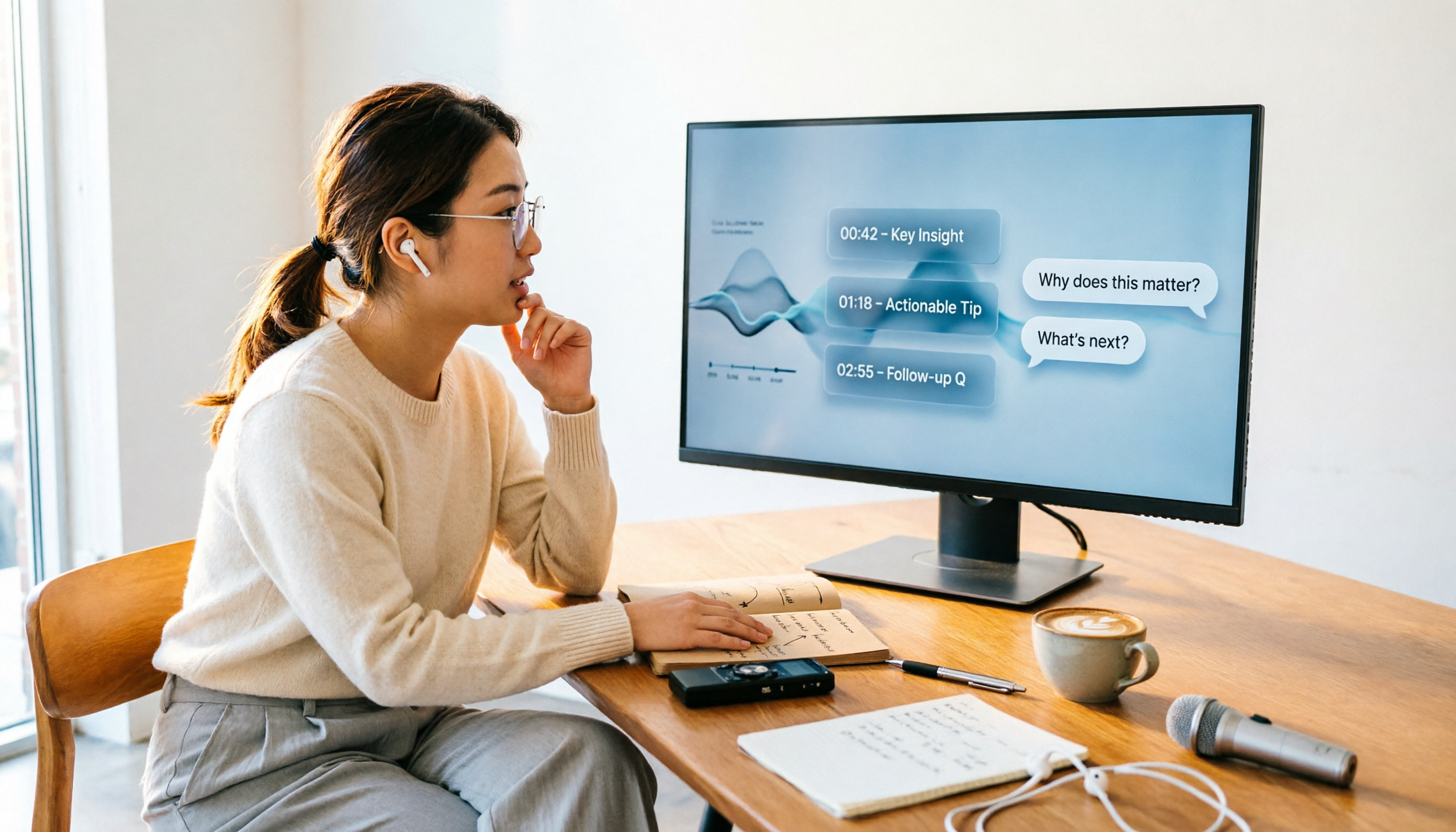
2026 Comparison of 4 Professional Video Summarization Tools: Which Has the Most Useful Free Tier and AI Summaries?
Videos too long, no subtitles, can't take notes in time? This article compares Tinrec, Notta, TurboScribe, and Granola in real workflows, focusing on differences in video import, AI summaries, chapters, Q&A, and free tiers, to help you choose the right professional video summarization tool for courses, interviews, and meeting recordings.

6 Best Bulk Image to Text Tools in 2026: Free Limits, Batch Processing, and Privacy Compared
When you need to process hundreds of screenshots, photographed documents, or scanned files at once, free image-to-text tools often hit daily limits, 10MB per-file caps, and sign-up requirements. This guide reviews six common tools, their workflows, free restrictions, and privacy considerations. It also explains which type of tool to use when your 'bulk transcription' is actually meeting recordings or interview audio, with a troubleshooting guide and scenario-based recommendations.