
Turn recordings into transcripts and summaries in minutes
Upload audio or video for multilingual transcription, AI notes, and action items
Why You Need AI Meeting Note Tools: Current State and Pain Points
In 2025's workplace, meetings remain the core of collaboration, but "meeting notes" often become a productivity black hole. According to ClickUp and multiple productivity reports, professionals spend hours each week re-listening to recordings and organizing notes. We often face these three major pain points:
- Low information density, high cost of re-listening: Traditional recordings are a "black box"; finding a key decision in a one-hour recording often requires scrubbing back and forth, wasting a lot of time.
- Time-consuming transcription: Manual transcription is much slower than speech speed; a one-hour meeting often takes two hours to transcribe.
- No post-meeting action: This is the most serious problem. If notes aren't structured into actionable items, meeting content is easily forgotten, leading to poor execution.
Therefore, choosing an AI tool that can "understand" and "summarize" is no longer optional but a must-have for modern workers.
Comparison of Popular AI Note Tools in 2025: TinRec vs. Competitors
There are many AI note tools on the market, such as Otter.ai, ClickUp's AI features, etc. However, for Traditional Chinese users, recognition accuracy and local support are key. Below we compare common tool types with TinRec (voice-to-text) across multiple dimensions to help you decide.
| Dimension | TinRec (voice-to-text) | Common US-based AI Tools (e.g., Otter) | Traditional Recorder Apps | General Speech-to-Text Tools |
|---|---|---|---|---|
| Chinese/Dialect Support | Excellent (Supports Traditional Chinese, Taiwanese Hokkien, Cantonese, etc., 10 languages) | Average (mostly optimized for English) | None (recording only) | Average (depends on underlying engine) |
| Real-time Transcription | Supported (real-time text output during recording) | Supported | Not supported | Partially supported |
| AI Summary / Action Items | Auto-generated (meeting minutes, to-do lists) | Supported | Not supported | Transcription only |
| AI Conversation Search | Supported (ask questions about the content) | Partially supported | Not supported | Not supported |
| Multi-device Sync | iOS, Android, Web | Multi-device | Usually standalone | Depends on tool |
| Free Tier | 100 minutes/month | Depends on plan (usually less) | Unlimited (no transcription) | Usually pay-per-time |
From the table, TinRec has a significant advantage in handling "Chinese contexts" and integrates the full workflow from recording to action items.
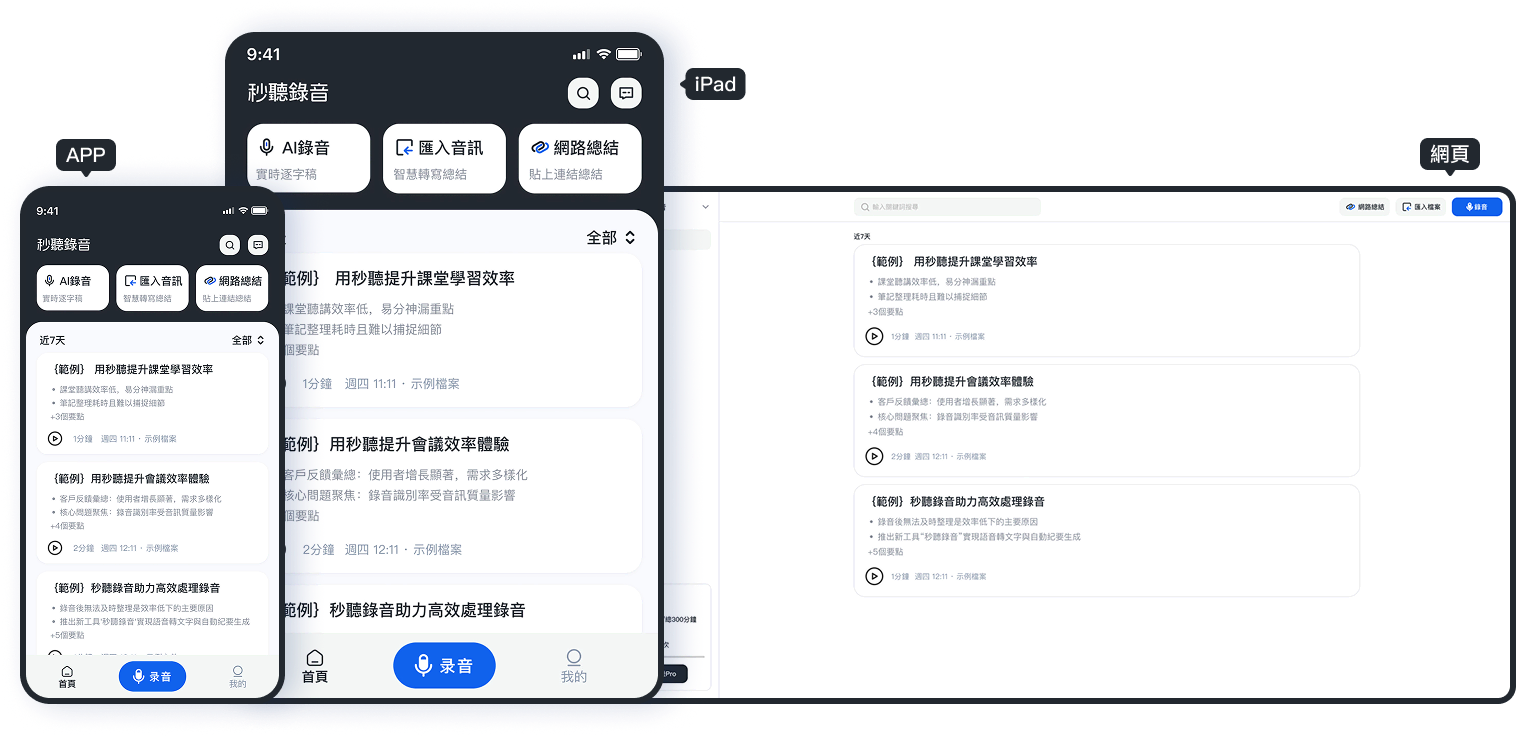
In-depth Review of TinRec Voice-to-Text: More Than Transcription, a "Brain Extension"
In our tests, TinRec is not just a "recorder"; it's like a digital assistant that understands content. Here is an in-depth look at its core features:
1. Real-time Voice-to-Text: What You Hear Is What You See
Unlike traditional recorders that process afterwards, TinRec supports real-time voice-to-text. During the meeting, you can see text generated line by line on your phone or computer screen. This is very useful for scenarios requiring immediate accuracy verification (e.g., interviews, legal meetings). Tests show high recognition accuracy for tech meetings mixing Chinese and English.
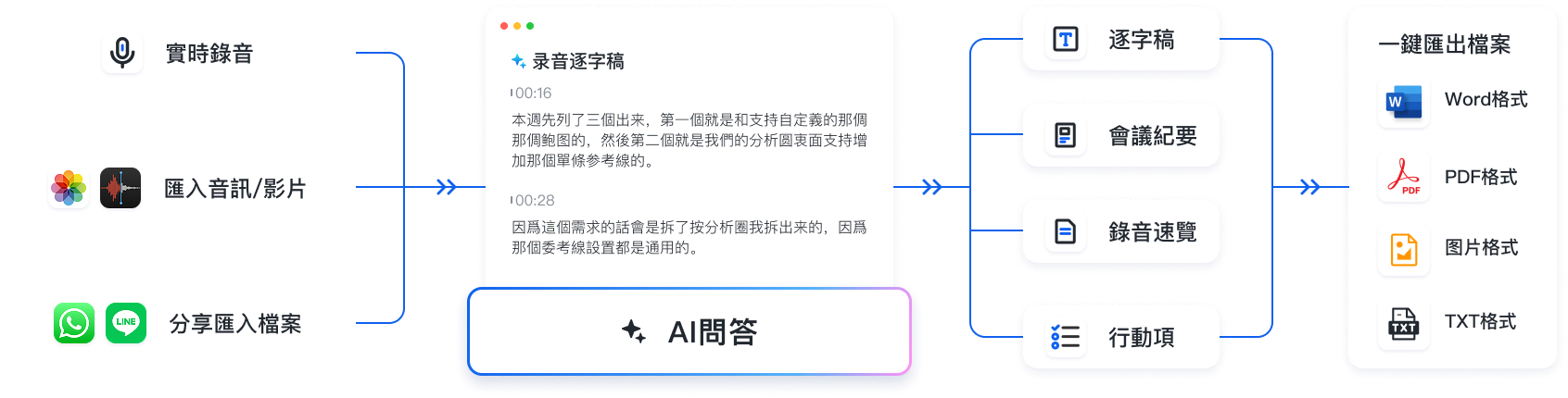
Stop organizing recordings by hand
Upload audio or video and automatically get a transcript, summary, and action items
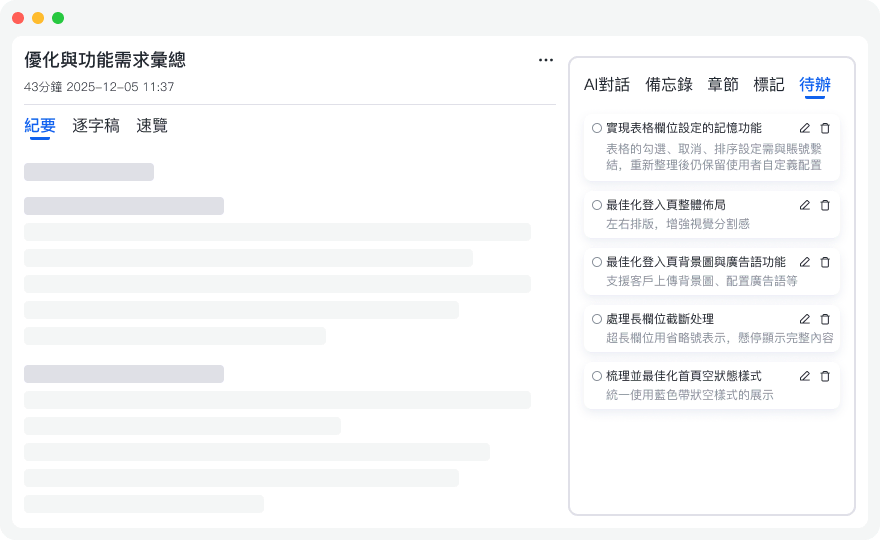
2. From Chaos to Order: AI Meeting Minutes and Action Items
This is key to solving the "no post-meeting action" pain. After recording, TinRec automatically analyzes the conversation and generates a structured summary. It doesn't just shorten text; it extracts:
- Key Conclusions: What was actually decided.
- Action Items: Who needs to do what by when.
3. AI Conversation Search: Ask Like You Would a Person
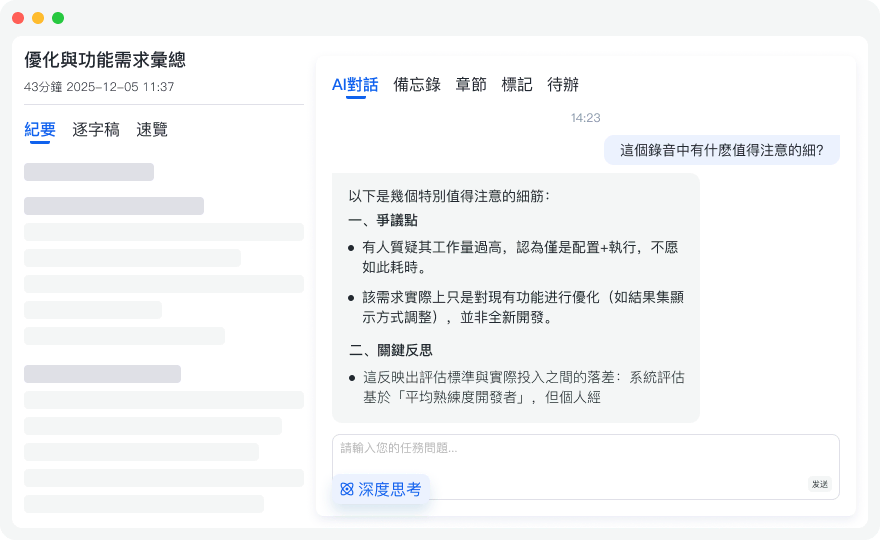
Traditional transcripts only allow keyword search (Ctrl+F), but what if you forget the exact wording? TinRec's AI conversation search lets you ask in natural language. For example, you can ask: "What was the conclusion about the marketing budget in this meeting?" The AI answers directly based on the recording content, without you having to sift through thousands of words. This elevates information retrieval from "keyword matching" to "semantic understanding."
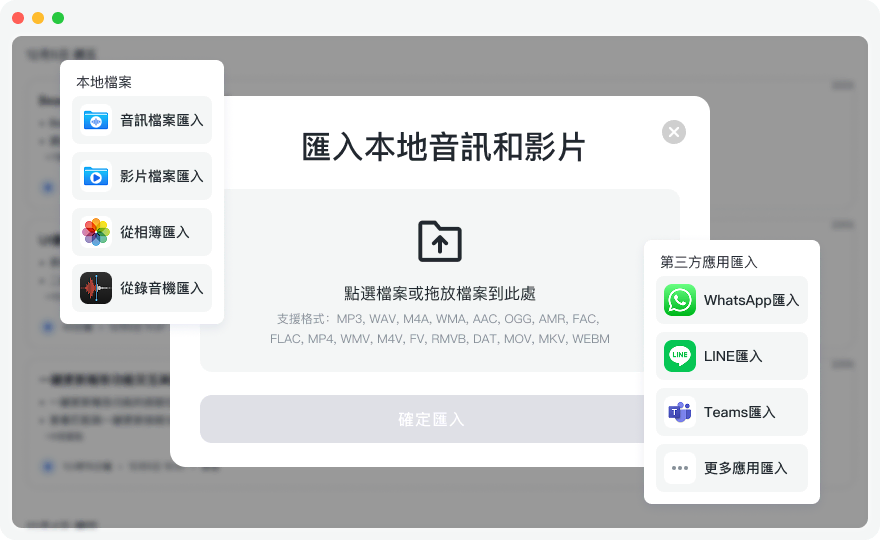
4. Diverse Input Sources: Not Limited to Live Recording
In addition to live recording, TinRec also serves content creators and learners:
- File Upload: Supports importing audio files (mp3, wav, m4a) for transcription.
- Web Link Parsing: Supports YouTube or Podcast links; paste the URL to convert video/audio content into text notes, great for organizing online courses or competitor analysis.
Practical Tutorial: How to Build an Efficient Meeting Workflow with TinRec
To completely get rid of frantic handwritten notes, follow these steps to create a standardized workflow:
Step 1: Start Recording or Import Material
- Live Meeting: Open the app or web version, click "Start Recording." Ensure microphone is clear; TinRec begins real-time transcription.
- Online Meeting/Course: For Zoom/Teams recordings, use the audio-to-text feature to upload later; for YouTube tutorial videos, copy the link and use the podcast/video-to-text feature.
Step 2: Real-time Marking (Optional)
During recording, if you hear key points, you can add simple marks in the interface to weigh the AI's focus later.
Step 3: AI Smart Processing
After recording, wait for the system to generate the transcript. Then click the AI analysis button to auto-generate "Summary" and "Action Items." It's recommended to quickly review to ensure the AI-captured points meet expectations.

Step 4: Review with AI Chat
If the meeting is long (e.g., a 2-hour strategy meeting), don't reread the full text. Use the AI conversation search feature and ask: "List all tasks assigned to the design department" or "Summarize the Q3 budget discussion" to quickly get what you need.
Step 5: Export and Share
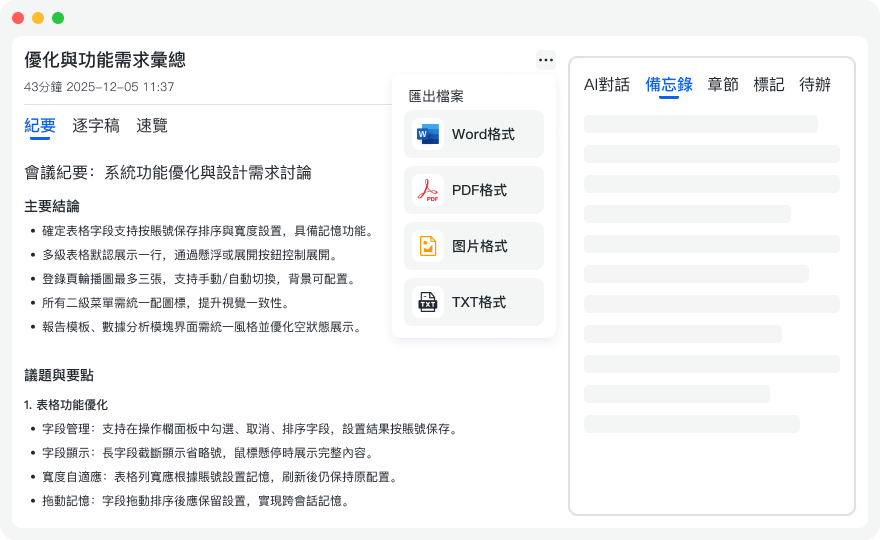
Finally, export the organized notes as PDF, Word, or Markdown, and send to team members or store in your company's knowledge base.
FAQ
Q1: Is TinRec's Chinese recognition accurate? Does it support Taiwanese Hokkien? TinRec is specially optimized for multilingual environments, supporting Chinese, Taiwanese Hokkien, Cantonese, English, Japanese, and 10 languages. For common mixed Chinese/English or Taiwanese Hokkien conversations, recognition is better than many Western-based tools.
Q2: What are the limits of the free version? The free version offers 100 minutes of transcription per month, usually enough for occasional meetings or student notes. For higher needs, the Basic plan ($4.9/month) provides 600 minutes, and the Pro plan ($8.25/month) offers 1200 minutes.
Q3: Can I use it to transcribe iPhone Voice Memos? Yes. You can record in the built-in Voice Memos on iPhone, then export the file and upload it to TinRec's web version or app for transcription and AI analysis.
Q4: How is the privacy and security of recordings ensured? TinRec values user privacy; all data transmission is encrypted. Your meeting records are only viewable by you or authorized team members, and are not used to train public models.
Q5: Is this tool suitable for podcasts or YouTube subtitles? Very suitable. Using its audio-to-text feature, creators can quickly get a draft transcript, significantly reducing subtitle creation time.
Q6: Do I need to listen from the start if I only want to search for specific content in a meeting? Absolutely not. This is TinRec's strength. You can use the "AI conversation search" to ask about the content directly, or search by keyword to locate the exact time in the audio; clicking the text plays that segment.
Turn every recording into actionable outcomes
Get 60 free transcription minutes when you sign in. No credit card required.
Related Reading
You might also like

5 Meeting Minutes Templates Tested for 2026: Which One Actually Tracks Action Items?
We break down 5 common meeting minutes templates (general meetings, board meetings, project stand-ups, client meetings, remote/asynchronous) and explain the required fields and best use cases for each. We also show how Tinrec's real-time transcription, AI summaries, action item extraction, and team spaces turn templates from manual forms into post-meeting outputs. Includes FAQs and selection tips.

Free AI Meeting Notes in 2026: How to Choose Free Tiers + Summaries & Action Items in One Go
How to choose a free AI meeting notes tool? Instead of comparing who offers the most minutes, look at the real limits of free tiers, Chinese and mixed Chinese-English recognition, how online meetings are captured, and whether summaries and action items can be generated afterward. This article uses 5 key criteria to help you pick the right tool, and demonstrates with Tinrec the complete workflow from recording to transcription to team knowledge retention.

How to Take Sales Meeting Notes in 2026: Tinrec Bot-Free Recording + Automatic Post-Meeting Organization
Sales meeting notes aren't just about transcribing every word. This article starts with common pitfalls and walks you through pre-meeting preparation, meeting recording, post-meeting summaries, and action items. It also compares Tinrec and Otter.ai on Chinese sales meetings, bot-free recording, post-meeting organization, and team knowledge retention.

3 Sales Meeting Notes Formats Tested for 2026: AI-Generated Minutes and Action Items Save the Most Time
Sales meeting notes aren't just about filling out a form—they capture customer needs, objections, commitments, and next steps. This article starts with the common mistake of "filling in the form after the fact," breaks down what should be recorded in sales meeting notes, compares three formats in real-world tests, and shows how Tinrec can generate transcripts, summaries, and action items in real time during the meeting. It ends with a buying checklist and FAQs.

2026 Comparison of 4 Sales Meeting Notes Tools: Which Nails Field Design and Post-Meeting Automation?
The challenge with sales meeting notes isn't the format—it's whether anyone uses them afterward, whether you can ask follow-up questions, and who owns the data. Starting from 5 key criteria for field design, this article tests and compares Tinrec, Otter.ai, Notta, and Granola on bot-free recording, transcripts, AI Q&A, and team knowledge retention, plus a ready-to-copy table template.

2026 Smart Meeting Collaboration Apps Compared: Stop Just Recording—How to Choose AI Minutes and Team Knowledge Retention
Many people treat smart meeting apps as recording-to-text tools, only to manually organize everything afterward. This article starts with common misconceptions, outlines 4 key purchasing criteria, compares Tinrec, Otter.ai, Granola, and Notta for different use cases, and provides step-by-step guidance on connecting recording, summaries, action items, AI Q&A, and team spaces into an executable workflow.

2026 Comparison of 4 Sales Meeting Note Tools: Which Best Organizes Customer Needs and Action Items?
Sales meeting notes are not verbatim transcripts. This article provides field templates and practical writing tips you can apply directly, and compares Tinrec, Otter.ai, Notta, and Granola on Chinese meeting support, post-meeting organization, and team handoff to help you choose the right tool.

2026 Sales Meeting Notes Tools Compared: Which One Turns Client Promises into Action Items?
Sales meeting notes aren't verbatim transcripts—they capture client needs, budget, decision process, concerns, and our commitments in a trackable record. This article explains what sales meeting notes are and the five key points to record, then compares Tinrec, Otter.ai, Notta, and Granola from four angles: no-bot recording, Chinese recognition, post-meeting AI Q&A, and team data ownership. Includes pitfalls to avoid and selection advice.

2026 Smart Meeting Collaboration Free Plans: 4 Tools Compared
Meetings take time, but post-meeting organization is where the real hours go. This guide reviews the free plans of four smart meeting collaboration tools in 2026, breaking down how audio gets into the tool, what you get after transcription, performance with mixed Chinese-English speech, and team management. It also hands-on tests Tinrec's bot-free recording, AI Q&A, and team spaces to help you decide which one is truly sufficient.