
Turn recordings into transcripts and summaries in minutes
Upload audio or video for multilingual transcription, AI notes, and action items
Have you ever struggled with converting colloquial Cantonese into formal written language during a one-hour interview recording or meeting? Or felt overwhelmed by the constant mixing of Chinese and English terms like "Presentation" and "Deadline"?
AI speech recognition technology has matured significantly by 2026, but choosing the right tool for Cantonese still requires careful consideration. This article evaluates 6 popular tools (including Subanana, Adobe Premiere Pro, and Tinrec) from three dimensions: accuracy, functionality, and decision efficiency, with specific recommendations for your workflow.
Quick Navigation Conclusion:
- If you're a YouTuber needing subtitles and care about colloquial-to-written conversion: Choose Subanana for its high accuracy.
- If you need to organize meeting notes, extract to-do items, and use AI chat queries: Go with Tinrec, focused on post-recording knowledge management.
- If you want a completely free option and don't mind installing software: Try pyTranscriber.
1. Two Core Challenges of Cantonese Speech-to-Text
Before choosing a tool, it's important to understand why Cantonese transcription is particularly difficult. These are key indicators for evaluating tools:
- Separation of colloquial and written language: Cantonese recordings are typically in colloquial form (e.g., "hai mai" 係咪), but formal documents or subtitles often require written Chinese (e.g., "shifou" 是否). Most generic AI tools simply transcribe verbatim, requiring substantial post-editing.
- Code-mixing (Chinese and English): In Hong Kong and Taiwan workplaces, English words are frequently interspersed. If a tool cannot automatically switch language models, the output becomes difficult to read.
2. In-Depth Review of 6 Mainstream AI Speech-to-Text Tools
We've compiled a horizontal comparison of tools with strong Cantonese support, including Subanana (developed by a Hong Kong team), Adobe Premiere Pro, and Tinrec, which emphasizes AI comprehension.
Comparison Table
| Dimension | Subanana | Tinrec | Adobe Premiere Pro | pyTranscriber | Taption | ArcTime |
|---|---|---|---|---|---|---|
| Core Focus | Cantonese subtitle specialist | Meeting minutes & knowledge management | Professional video post-production | Open-source free transcription | Online subtitle tool | Cross-platform subtitle software |
| Cantonese Accuracy | Very high (~97.5%) | High (multi-language support) | Average (~80-89%) | Average (Google API) | Lower (~70-85%) | Medium |
| Colloquial-to-Written | Supported (exclusive) | Requires AI summary assist | Not supported | Not supported | Not supported | Not supported |
| Code-mixing Handling | Excellent | Excellent | Average | Weak | Almost none | Average |
| Real-time/AI Features | Focused on subtitle generation | Real-time transcription + AI chat queries | None | None | None | None |
| Export/Integration | SRT/TXT | Word/PDF/TXT/links | SRT/XML | SRT/TXT | SRT | SRT/ASS |
| Pricing | Free/paid upgrade | Free tier/subscription | Subscription (expensive) | Completely free | First 15 min free | Credit-based |
Key Tool Reviews
1. Subanana: The Top Choice for Subtitle Creators
According to tests, Subanana achieves up to 97.5% accuracy in code-mixing scenarios and is one of the few tools that can directly convert Cantonese colloquial speech into written Chinese. For video creators, this saves significant post-editing time.
Stop organizing recordings by hand
Upload audio or video and automatically get a transcript, summary, and action items

2. Tinrec: Efficiency Tool for Meetings and Learning
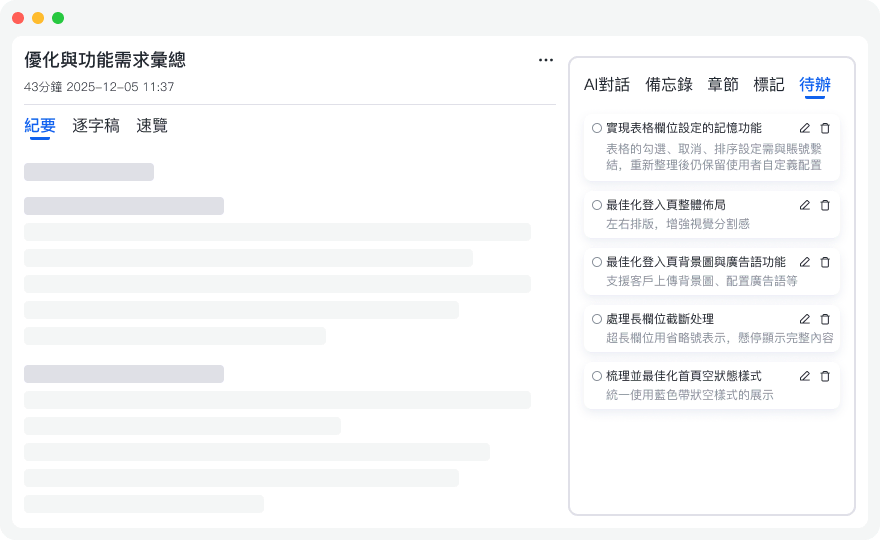
If your need goes beyond transcription to "organizing key points," Tinrec offers a different approach. It not only supports Cantonese transcription but emphasizes a complete workflow: Recording → Understanding → Action. Unlike traditional tools that only provide verbatim transcripts, Tinrec automatically generates meeting minutes, summaries, and action items, making it ideal for workplace meetings or classroom notes.
3. Adobe Premiere Pro: Built-in Convenience for Editors
Although its Cantonese recognition accuracy (~89.4%) is lower than specialized tools and it's sensitive to background noise, the convenience of built-in functionality is unmatched for editors already in the Adobe ecosystem.
3. Why Pay Attention to Tinrec? From Transcript to Knowledge Management
In our review, we found that simple speech-to-text often solves only half the problem—you get a wall of text, but you still need to spend time re-reading. Tinrec differentiates itself by addressing information overload:
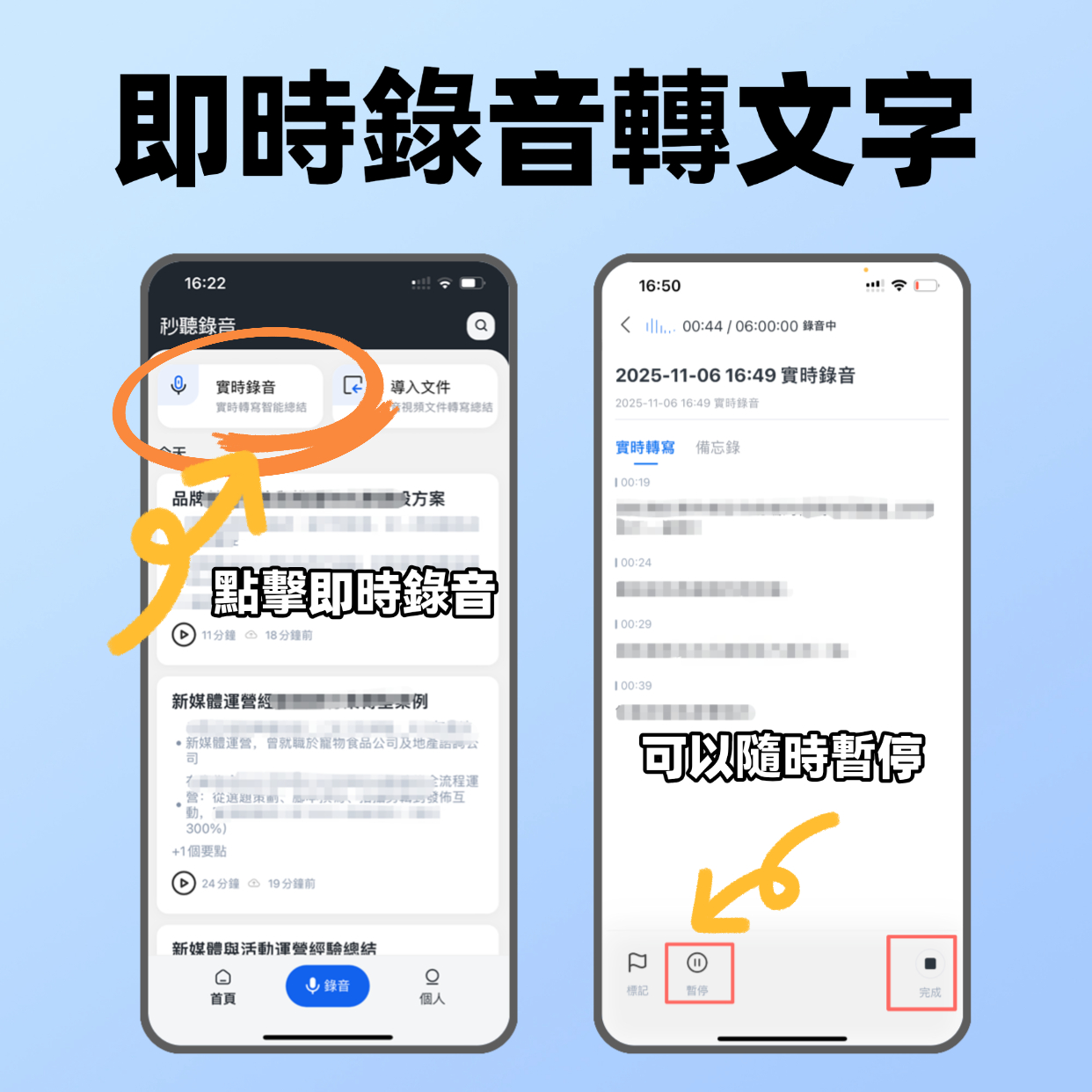
- Real-time transcription: See text output as you record, supporting iOS, Android, and web sync across devices.
- AI smart summaries: For long Cantonese meetings, Tinrec automatically filters filler talk and extracts key conclusions.
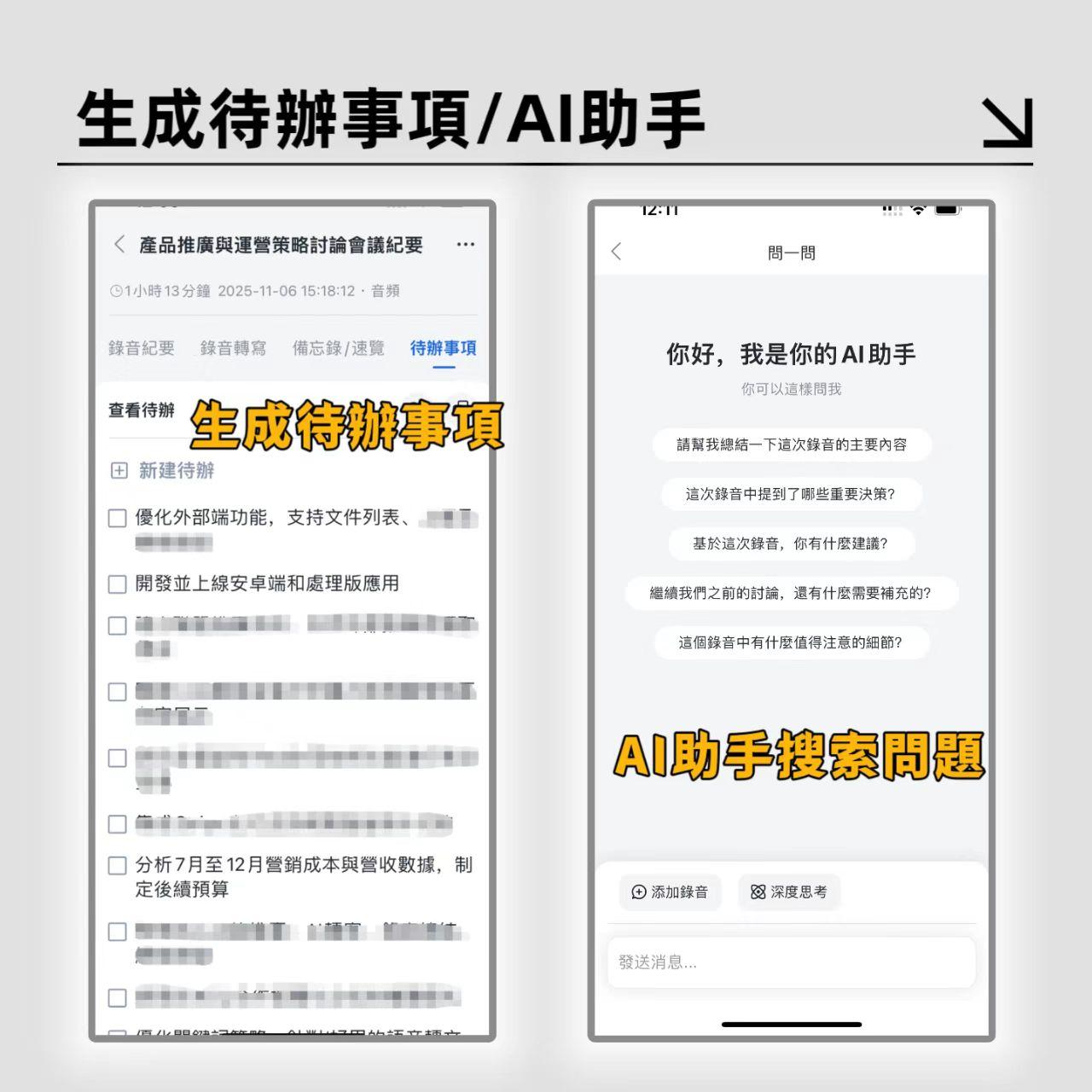
- AI chat queries: This is something traditional subtitle software cannot do. You can ask the AI directly, "What was the decision on the marketing budget?" and it answers based on the recording content—very effective for searching long recordings.
- Multi-format support: In addition to recording, you can import audio files or paste links from online videos (e.g., YouTube, Podcasts) for analysis.
4. Practical Tutorial: How to Efficiently Convert Recordings to Text
Below are step-by-step guides for different scenarios to help you get started quickly.
Scenario A: Real-time Meeting Recording (Using Tinrec)
Suitable for: Classroom notes, physical meetings, interviews.
- Launch the tool: Open the Tinrec real-time transcription feature or mobile app.
- Set language: Choose the recording language (supports automatic recognition of Cantonese/Chinese/English, etc.).
- Start recording: Tap start. The system will transcribe speech into text paragraphs in real-time; you can mark key points as you go.
- Generate action items: After recording ends, tap "AI Analysis" to automatically differentiate speakers and generate meeting minutes and to-do lists.

Scenario B: Processing Existing Recordings/Videos
Suitable for: Organizing past interview recordings, podcast material.
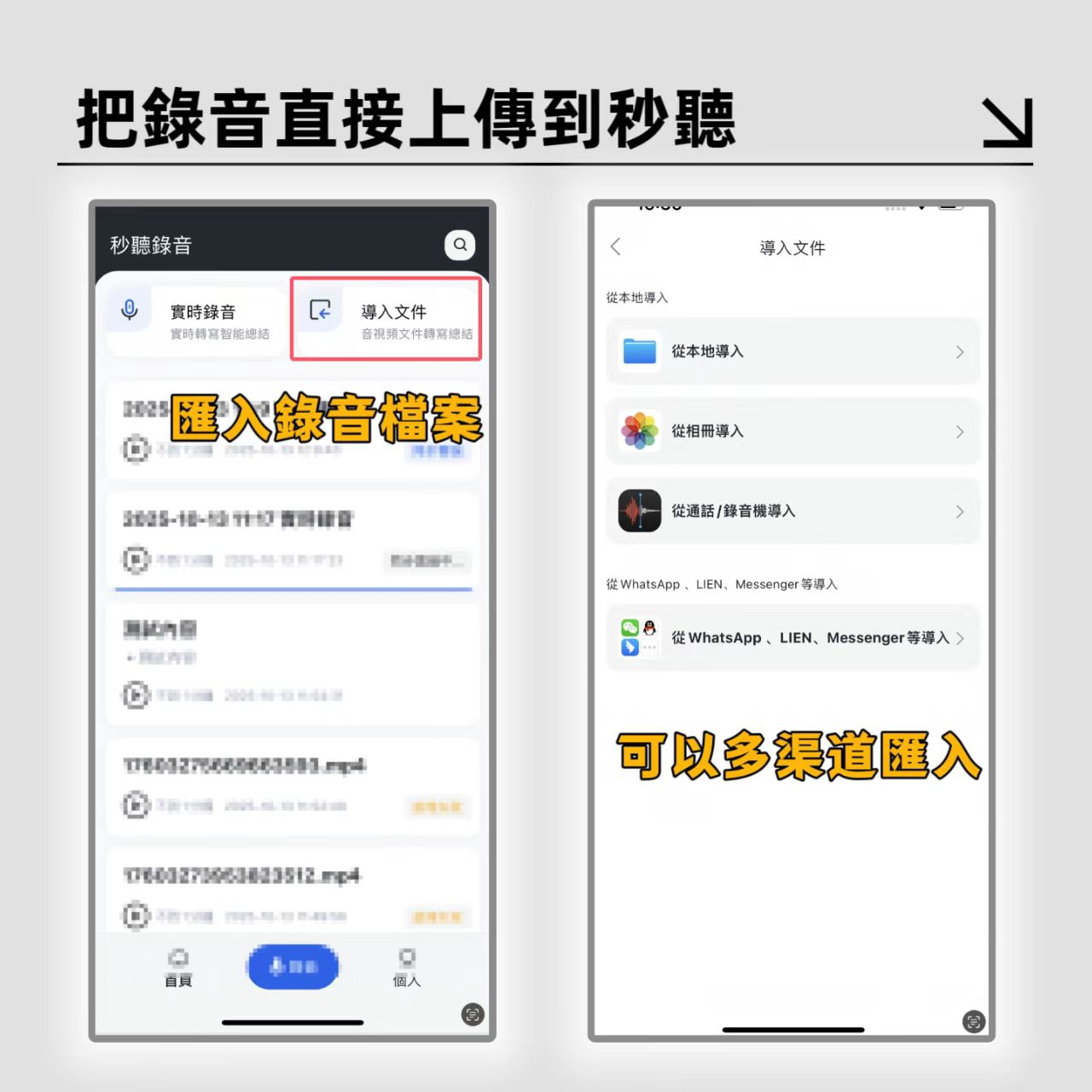
- Prepare files: Have your audio file (mp3/m4a/wav) or video link ready.
- Choose tool path:
- For subtitles: Log in to Subanana or Taption, upload the file, wait for AI recognition, then download the SRT subtitle file.
- For organizing key points: Use Tinrec's audio file to text or podcast/online video to text features.
- Upload and analyze: Upload the file or paste the link, wait for cloud processing (usually a few minutes for 1 hour of audio).
- Smart queries: Use the AI chat query feature to quickly ask about details in the recording, e.g., "What were the three solutions the speaker mentioned?"
5. FAQ
Q1: Which tool has the highest recognition accuracy for Hong Kong Cantonese? Based on Subanana's data, Subanana achieves the highest accuracy (~97.5%) in handling Hong Kong accent and code-mixing. Tinrec performs well in multi-language recognition and semantic understanding, making it suitable for users who need content organization.
Q2: Can I directly convert recordings to text on an iPhone or Android phone? Yes. Tinrec supports both iOS and Android with data synced to the web version. You can record on your phone and edit or export later on your computer.
Q3: Are there completely free Cantonese speech-to-text tools? Yes. pyTranscriber is open-source and free (requires computer installation); Subanana and Tinrec offer free trial quotas (Tinrec's free plan provides 100 minutes per month) suitable for light users.
Q4: Can recordings be exported to Word or PDF? Most tools like Subanana and Tinrec support exporting transcripts as TXT, Word, or PDF for easy editing and archiving.
Q5: Is the AI still accurate in noisy environments? Background noise is a challenge. Tests show Subanana handles noise better (~93.4% accuracy), while Premiere Pro and pyTranscriber suffer significantly (dropping below 75%). It's recommended to record close to the microphone or use a directional microphone.
Q6: Can I use these tools for YouTube subtitles? Yes. If your main goal is to output SRT subtitle files for video, Subanana or ArcTime are specifically designed for that. If you want to turn video content into articles or notes, Tinrec's video-to-text feature fits better.
Turn every recording into actionable outcomes
Get 60 free transcription minutes when you sign in. No credit card required.
Related Reading
You might also like

What Is Real-Time Transcription in 2026: Definition, 4 Key Factors, and Tool Comparison
What is real-time transcription and how does it differ from transcribing recordings? This article explains the definition and how it works in plain language, outlines 4 key factors to consider, and compares Google Live Transcribe, Yating, Notta, and Tinrec in Chinese meetings, post-meeting organization, and team collaboration, with scenario-based recommendations.

4 Meeting Transcription Tools Tested: Which AI Saves the Most Time on Chinese Transcripts and Summaries?
After a meeting, do you spend another two hours organizing the audio recording? This article compares four meeting transcription tools—Tinrec, Notta, Otter.ai, and Granola—on Chinese transcription, AI summaries and action items, bot-free recording, team collaboration, and pricing to help you find the most time-saving solution.

3 iPhone Audio-to-Text Apps Tested in 2026: How Long Can You Record and Which Saves the Most Time After Meetings?
How long can an iPhone actually record? This article first breaks down the storage, battery, and file interruption risks of the built-in Voice Memos app, then compares 3 audio-to-text tools from a student's perspective—covering free quotas, single-recording limits, post-meeting organization, and AI Q&A capabilities—to help you decide whether the built-in recorder is enough or if you need an AI recording assistant that delivers key points right after recording.
Google Live Transcribe vs Tinrec in 2026: 5-Dimension Comparison — Which Is Better for Meeting Notes?
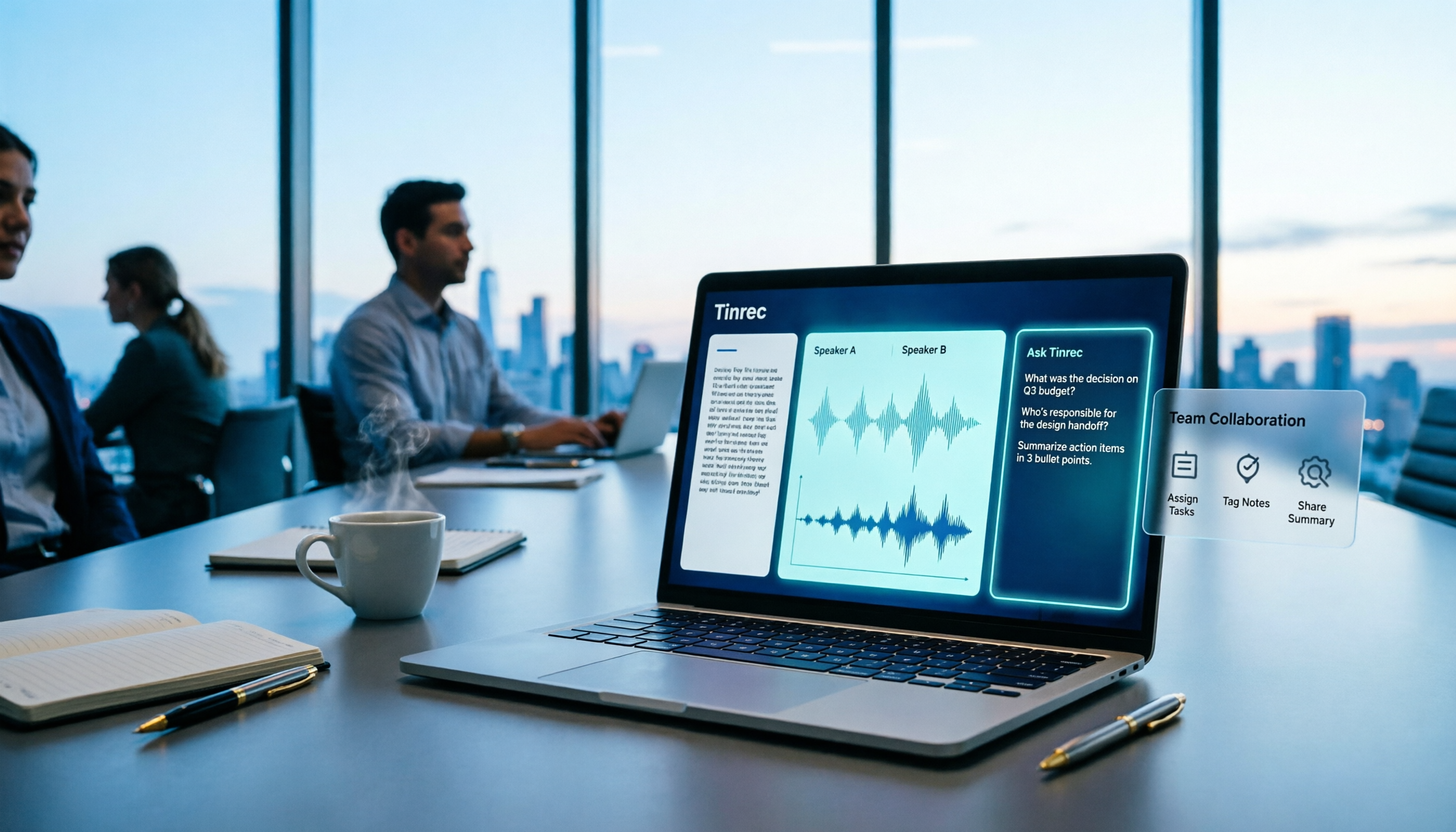
Google Live Transcribe & Sound Notifications is an Android accessibility tool known for being free, providing real-time transcripts, and sending environmental sound alerts. Tinrec focuses on meeting notes and team collaboration. This article compares them across 5 dimensions—transcription and organization, online meeting recording, AI Q&A, audio file import, and team management—to help you decide which one to use for meeting notes.

3 iPhone Call Recording Solutions Compared: iOS 18 Built-in vs Tinrec in 2026
iPhone call recording finally has a built-in solution with iOS 18, but regional restrictions, legal issues, and post-call organization are the real pain points. This article compares 3 solutions: iOS 18 built-in call recording, Tinrec, and PLAUD Note with Otter.ai, helping you understand how to record calls and quickly turn them into transcripts, summaries, and action items.

2026 Real-Time Recording Tools Compared: Which Can Transcribe While Recording?
How do you choose a real-time recording tool? This article tests and compares Tinrec, free online voice recorders, Bandicam, and Granola in real meeting scenarios, explaining why what happens after recording is key, plus 4 buying tips, pitfalls to avoid, and scenario-based recommendations.
5 Meeting Recording Apps Compared in 2026: From Transcripts to Team Collaboration
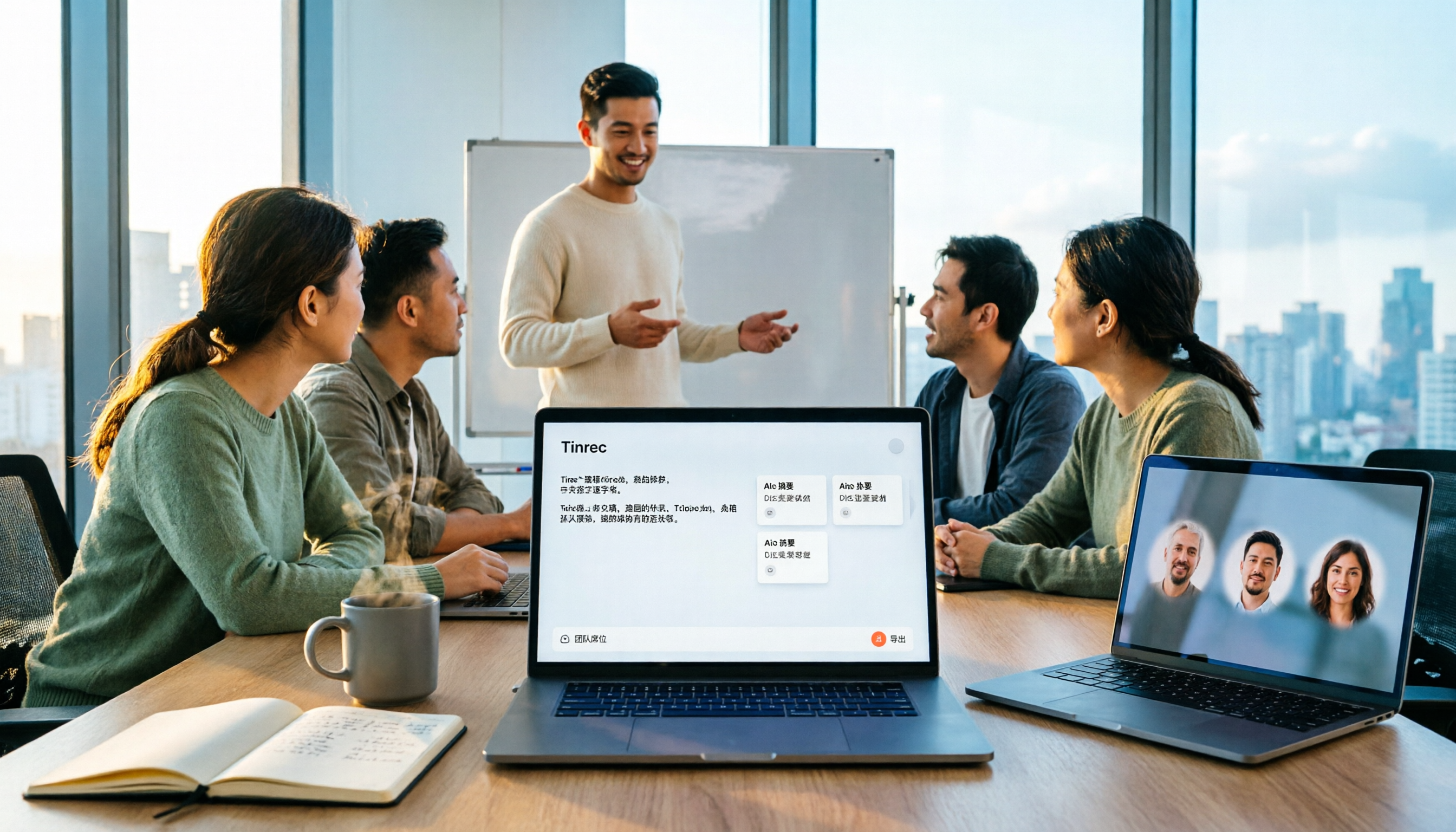
Meeting recording apps aren't just about audio quality—they're about what happens after the meeting. This guide breaks down five common tool approaches, covering live transcription, AI summaries, action item extraction, AI Q&A, team spaces, and seat management. Using Tinrec as an example, we walk through bot-free online meeting recording, Chinese transcription, summaries, and exports, and compare the free, Pro, and Team plans to help you decide which solution fits your meeting needs.

What Is Instant Messaging in 2026? 5 Steps to Understand the Definition and Choose Tools
What does instant messaging (IM) mean? This article starts with the definition, history, and message storage methods to help you understand the essence of synchronous communication, 4 key points for choosing tools, and compares meeting and communication organization tools like Tinrec, Otter.ai, Notta, and Granola. Finally, a pitfall guide helps you choose the right tool.

Can You Share a Recording with Others in 2026? 5 Key Legal Points and How Tinrec Helps You Organize
Whether you can share a recording with others depends on your role, purpose, and content. This article summarizes key legal points on invasion of privacy and personal data protection, and explains how to use Tinrec to turn recordings into transcripts or summaries so you only share necessary information, reducing privacy and legal risks.