
Turn recordings into transcripts and summaries in minutes
Upload audio or video for multilingual transcription, AI notes, and action items
When conducting qualitative interviews, taking meeting minutes, or class notes, the most frustrating part is often not the communication itself, but facing an hour-long recording afterward that requires two to three hours of repeated "listen, pause, rewind." Although many tools exist on the market, Chinese recognition accuracy, support for multi-speaker differentiation, and the ability to automatically extract key points are what truly determine efficiency.
This article reviews the popular options on the market in 2026, focusing not only on transcription accuracy but also on "post-processing efficiency."
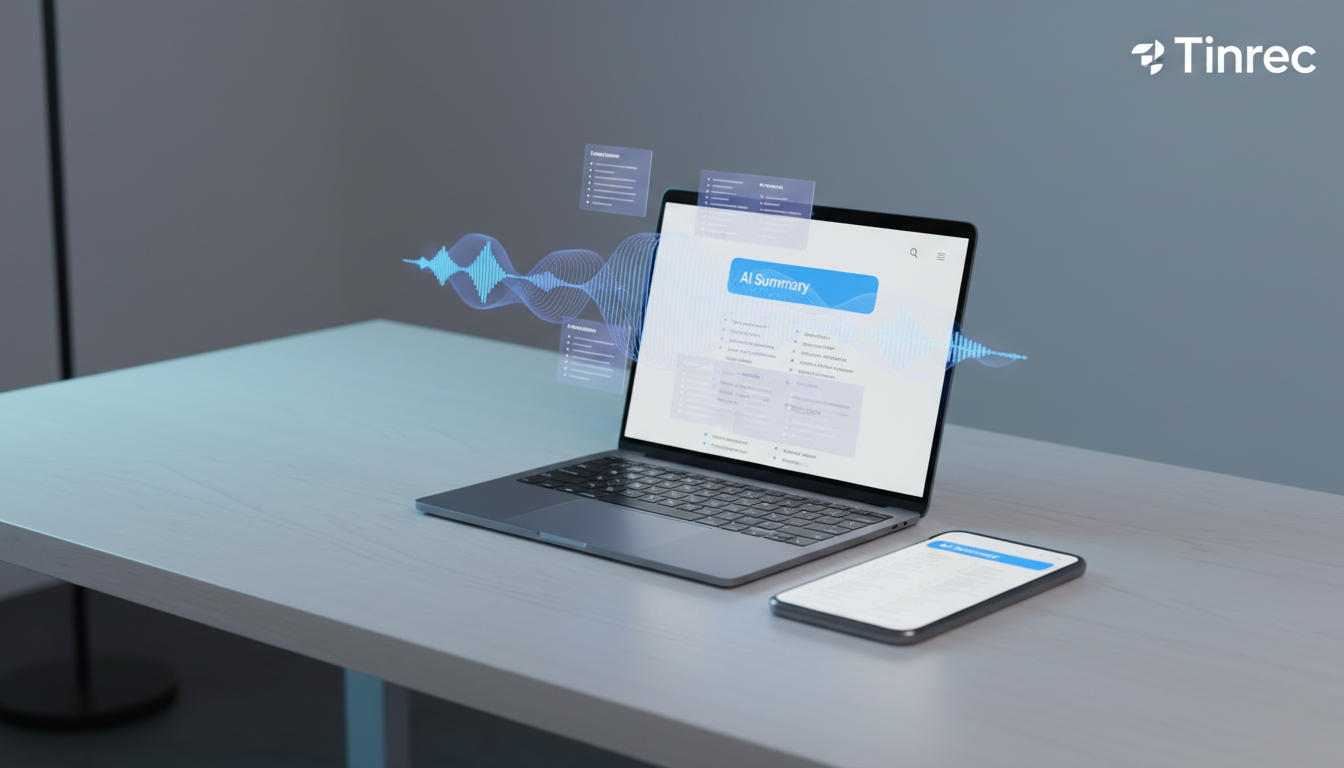
Quick Navigation Conclusions:
- If you highly value Taiwanese Hokkien/Taiwanese accent recognition: Prioritize localized tools like Yating.
- If you need simple and fast file transcription: GoodTape is a decent lightweight choice.
- If you care about AI summaries, action item extraction, and conversational content queries: Tinrec (Miao Ting Recording) offers a more complete analysis workflow.
The Hidden Time Cost of Recording Organization: Why You Need AI Tools
Before choosing a tool, let's clarify the three major pain points of traditional recording organization, which also serve as benchmarks for evaluating apps:
- Low information density, high cost of re-listening: Recordings are linear; finding a specific budget figure at a certain minute is like searching for a needle in a haystack.
- Extremely low transcription efficiency: Humans speak at about 160-200 words per minute, typing speed lags far behind, so a 1-hour file often takes over 3 hours to transcribe.
- Lack of decision summaries: A plain transcript is just a pile of text; you still need to manually extract "next steps (Action Items)" afterward.
Therefore, modern efficient tools should not only convert speech to text but also achieve "semantic understanding."
2026 Selection: Review of 5 Interview Recording-to-Text Apps
Below we analyze five tools currently highly discussed in the workplace and academia:
1. Yating
A classic tool developed by a Taiwanese team, with its greatest strength being high recognition accuracy for "Taiwanese accents" and "Chinese-English mixing," even supporting Taiwanese Hokkien recognition. For local interviews and field surveys, its familiarity and accuracy make it a top choice. However, its functions are more focused on "transcription" itself, with relatively basic AI post-analysis features.
2. Tinrec (Miao Ting Recording)
Tinrec is a rising AI recording assistant that positions itself not just as a transcription tool but as an "AI assistant for meetings and interviews." It supports iOS, Android, and web, with the standout feature of real-time transcription during recording and automatic generation of "meeting minutes" and "to-do action items" after the session. For professionals needing quick conclusions or students organizing interview outlines, Tinrec's "AI conversation query" function can significantly save re-listening time.
3. GoodTape
Developed by a design team, GoodTape has an extremely clean interface, focusing on "drop in a file, get text back." It supports multiple languages and uses newer AI models with decent accuracy. Suitable for users who dislike complex interfaces and only need simple "file-to-text" functionality.
4. Otter.ai
One of the most internationally recognized recording transcription tools, with excellent English recognition and high integration with Zoom/Google Meet. However, its Chinese support is not as good as the tools mentioned above, making it more suitable for users in fully English-speaking work environments.
5. Google Recorder (Pixel Built-in)
If you are a Pixel phone user, the built-in Recorder app offers powerful real-time transcription capabilities, completely free. The downside is strict hardware limitations (Pixel only) and relatively basic export and organization features, making it less suitable for handling complex meeting structures.
In-depth Comparison: Features, Accuracy, and Pricing
To help you choose, we've compiled a comparison table across core dimensions:
Stop organizing recordings by hand
Upload audio or video and automatically get a transcript, summary, and action items
| Dimension | Tinrec (Miao Ting) | Yating | GoodTape | Otter.ai | Pixel Recorder |
|---|---|---|---|---|---|
| Chinese/Multilingual Support | Supports 10 languages including Chinese, Japanese, English, Korean, Taiwanese, Cantonese, etc. | Strengths in Traditional Chinese (Taiwan), Taiwanese Hokkien | Supports multiple languages | Primarily English, weaker in Chinese | Supports multiple languages |
| Real-time Recording Transcription | ✅ Supported (App/Web) | ✅ Supported | ❌ Upload only | ✅ Supported | ✅ Supported |
| AI Summary/Action Items | ✅ Auto-generates minutes, to-dos, conclusions | ⚠️ Basic summary | ⚠️ Depends on plan | ✅ Strong English summary | ⚠️ Simple tags |
| Standout Feature | AI Conversation Query (ask questions about recording directly) | Taiwanese accent optimization | Minimalist interface | Video software integration | Fully offline processing |
| Free Tier | 100 minutes/month | Based on promotions or credits | 3 tapes/month (limited length) | 300 minutes/month (English only) | Fully free (requires Pixel) |
Tinrec Deep Dive: Full Workflow from Recording to Action
Among the many tools, Tinrec aims to solve the "what to do after transcription" problem. Traditional tools give you 10,000 words of transcript that you still have to read; Tinrec's design logic uses AI to aid reading.
1. Real-time Transcription and Multi-device Sync
Tinrec supports mobile apps and web version, meaning you can record on your phone during an interview, and when you get back to the office and open your computer, the web version will have already synced the transcript. This enables seamless workflow for journalists or graduate students.
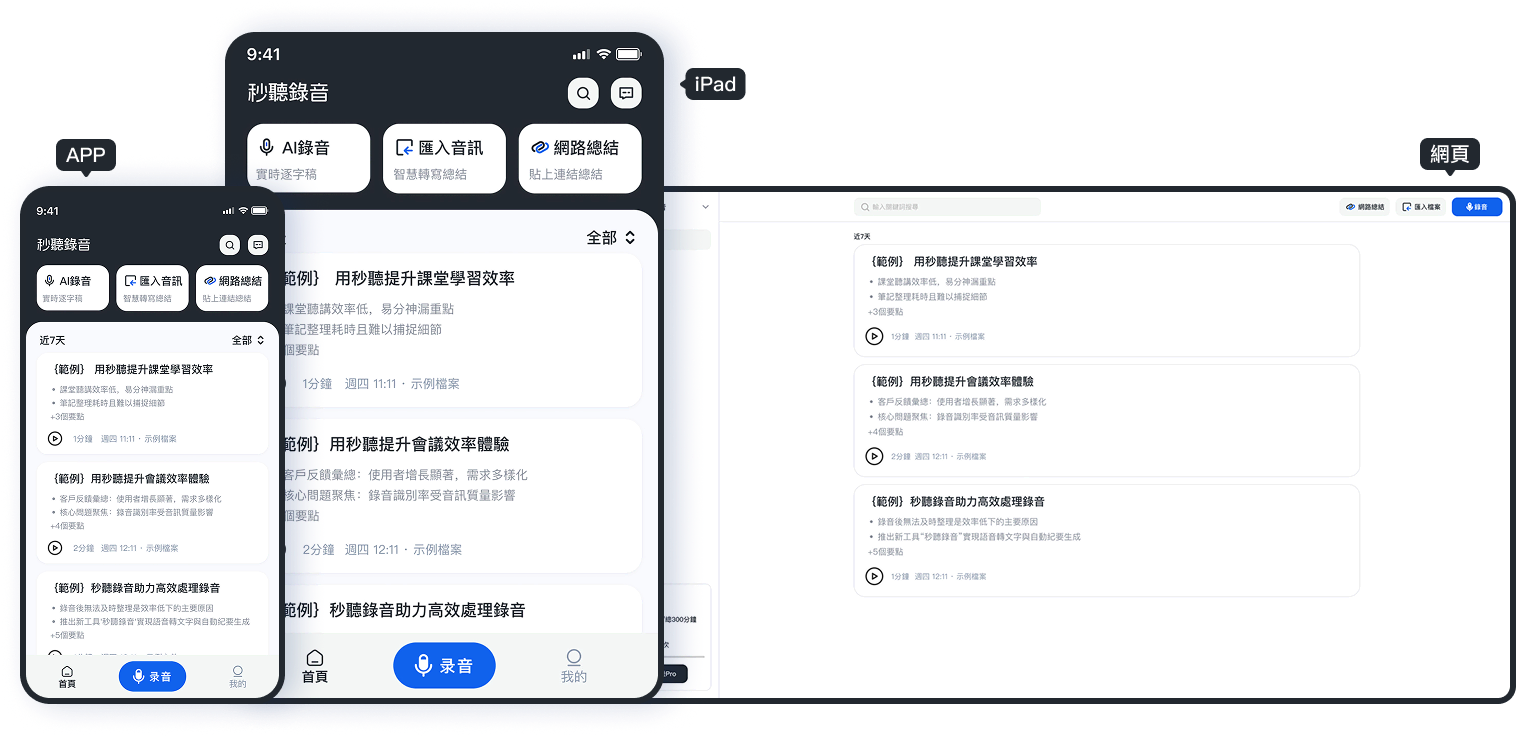
2. Not Just Transcription, but "Distillation"
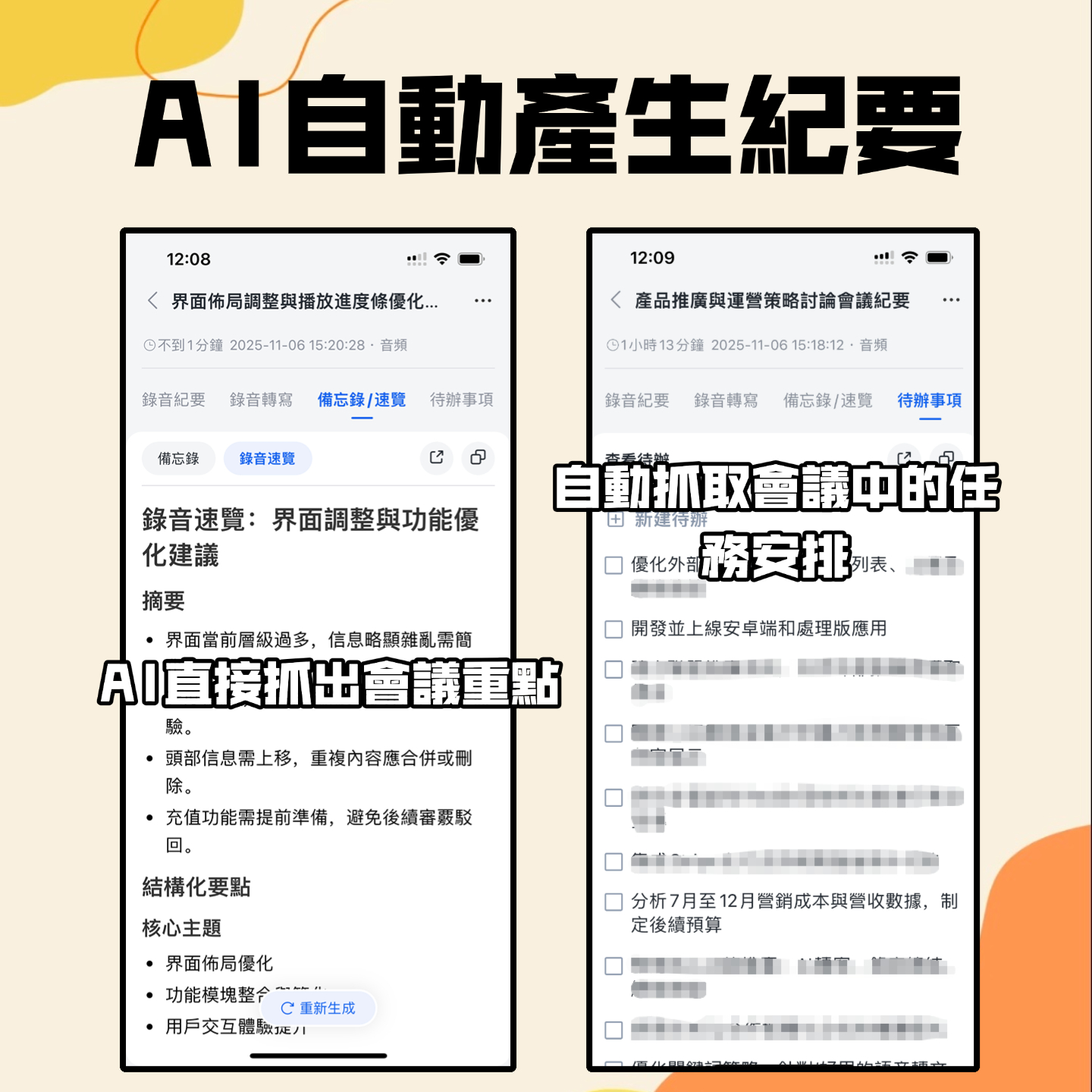
The system automatically converts lengthy conversations into structured notes, including:
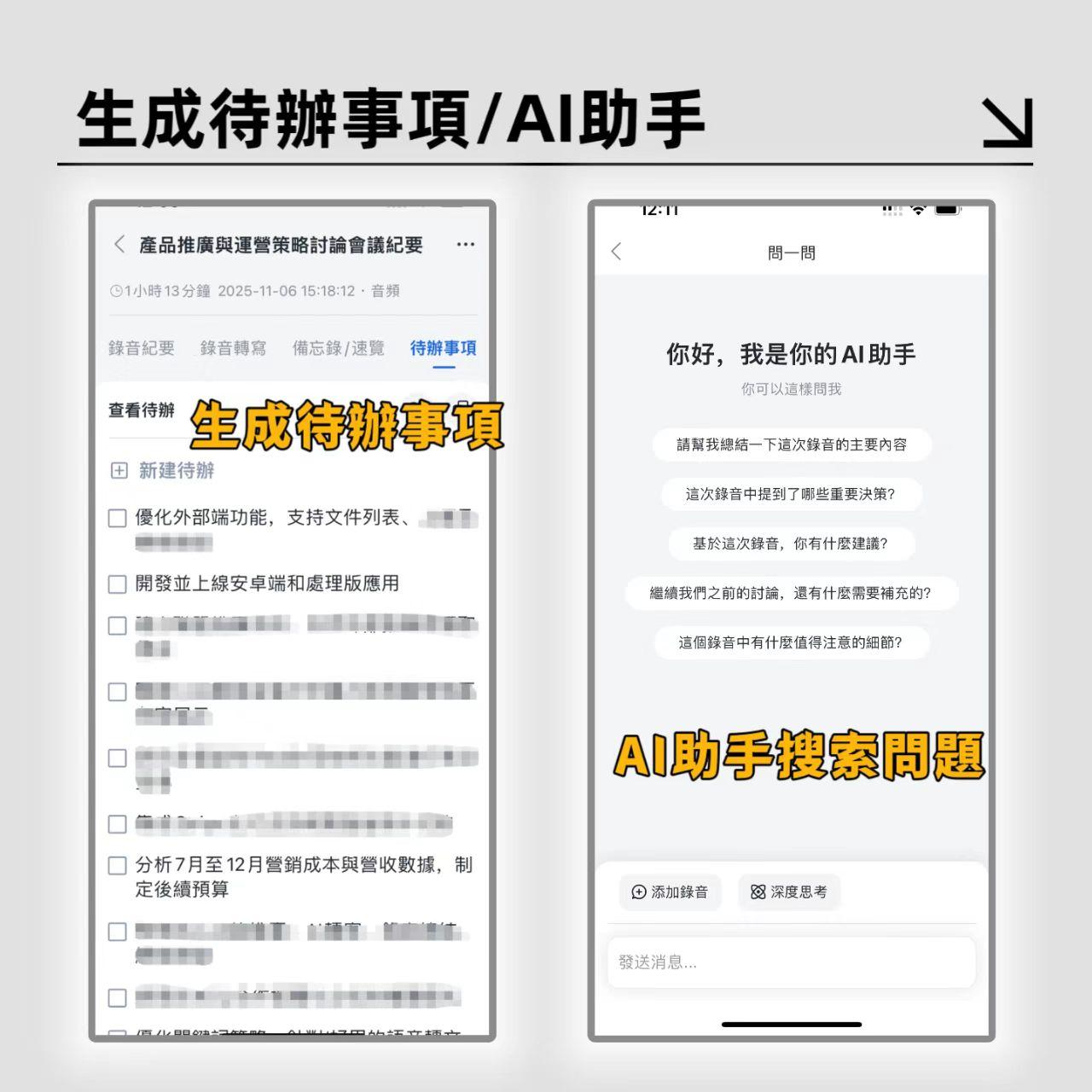
- Full Summary: Quickly understand what was discussed in an hour.
- Action Items: Automatically extracts phrases like "send the report next week," "contact the vendor" and lists them as tasks.
3. AI Conversation Query: Find Answers by Asking
This is a very practical feature. You don't have to use Ctrl+F to search for keywords; you can simply ask the AI in natural language: "What was the interviewee's opinion on product pricing?" or "What was the deadline mentioned in the meeting?" The AI will answer based on the recording content—that's truly intelligent organization.
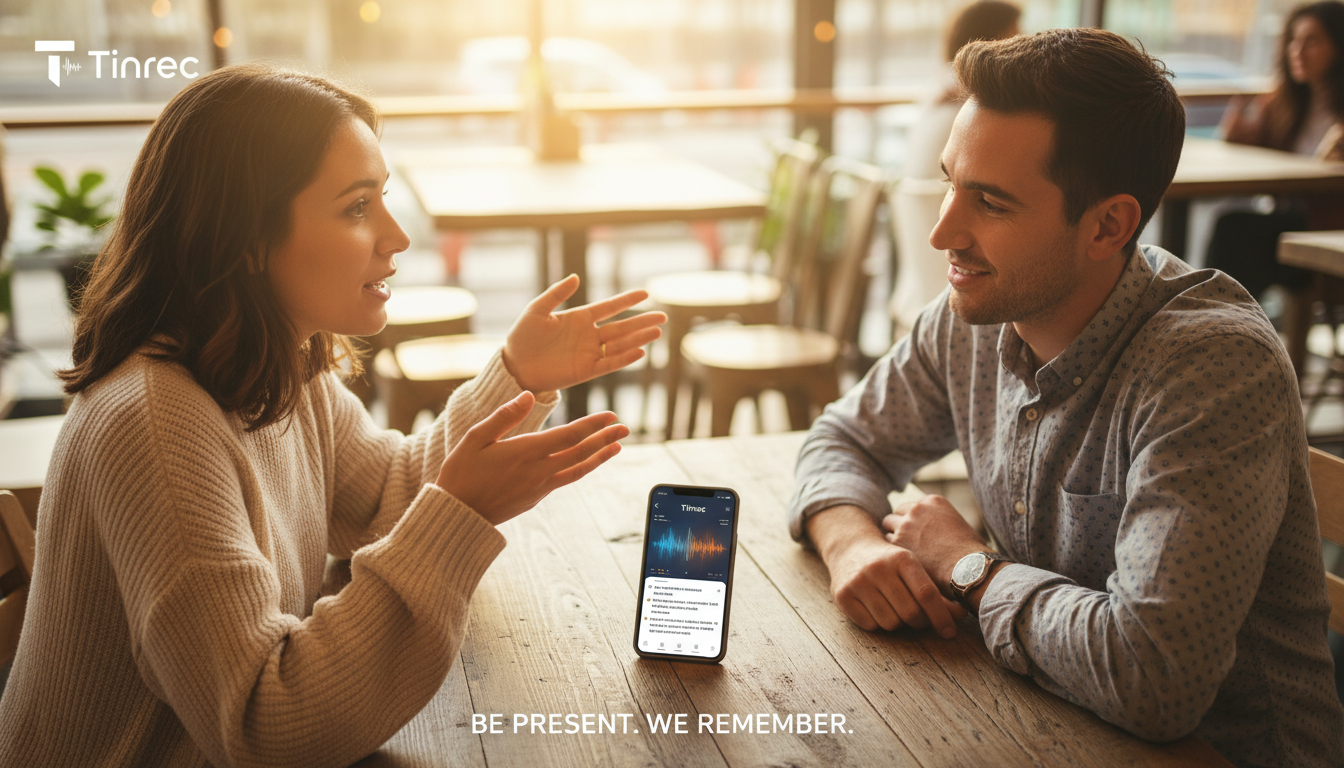
Practical Tutorial: Complete Interview Organization in 3 Steps with AI Tools
Using Tinrec's interface as an example, here's how to transform a messy interview into clear digital notes.
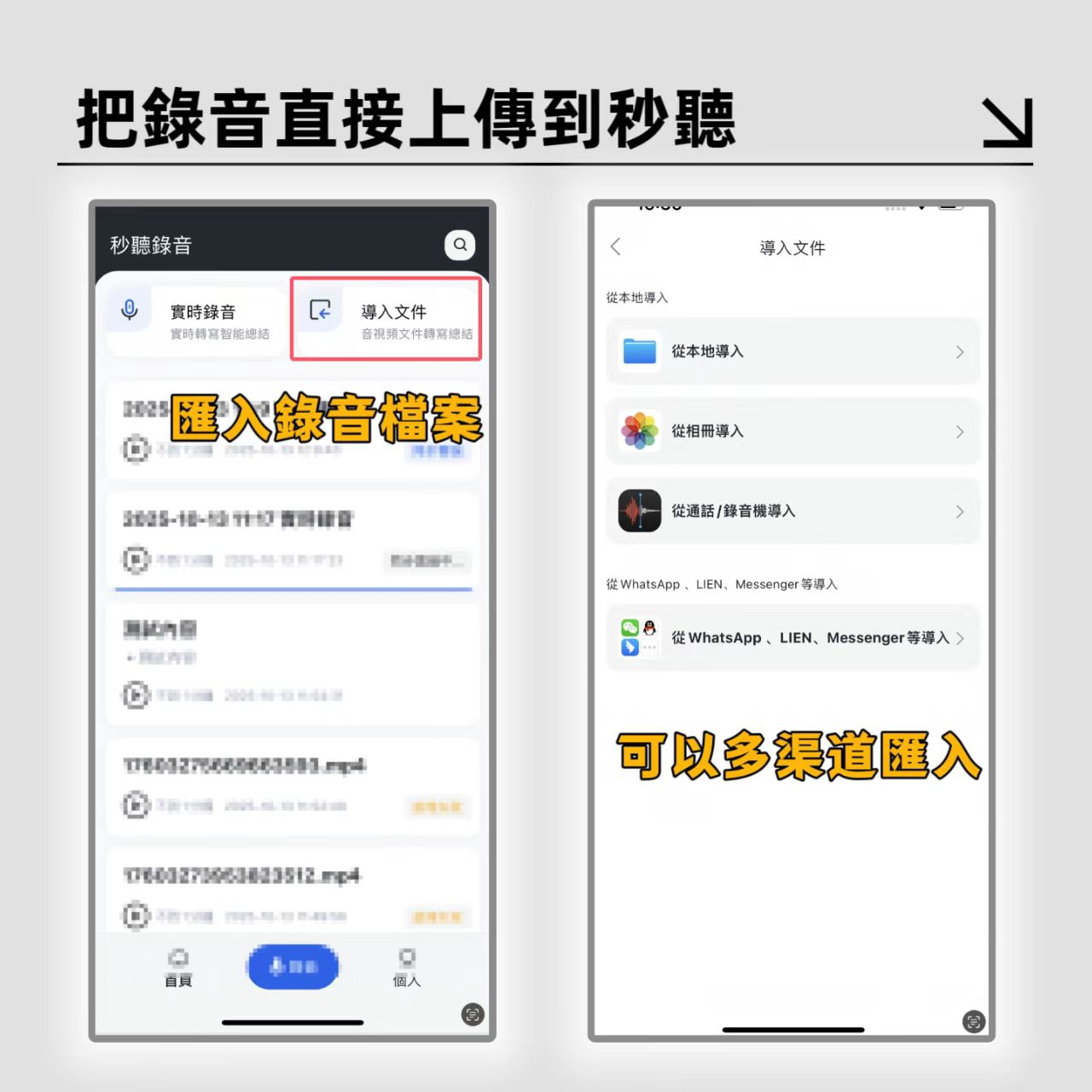
Step 1: Choose Record or Import Audio
- Live Interview: Open the App or web version, click "Real-time Recording to Text." You'll see text appear as speech unfolds; if you hear a key point, click the marker button.
- Existing File: If you already have a file from a voice recorder or a recording from Zoom/Meet, use the "Audio File to Text" function to upload. Tinrec supports common formats like mp3, m4a, wav.
- Online Material: If you need to process interview videos from YouTube, directly use "Podcast/Online Video to Text" by pasting the link.
Step 2: Speaker Diarization and Proofreading
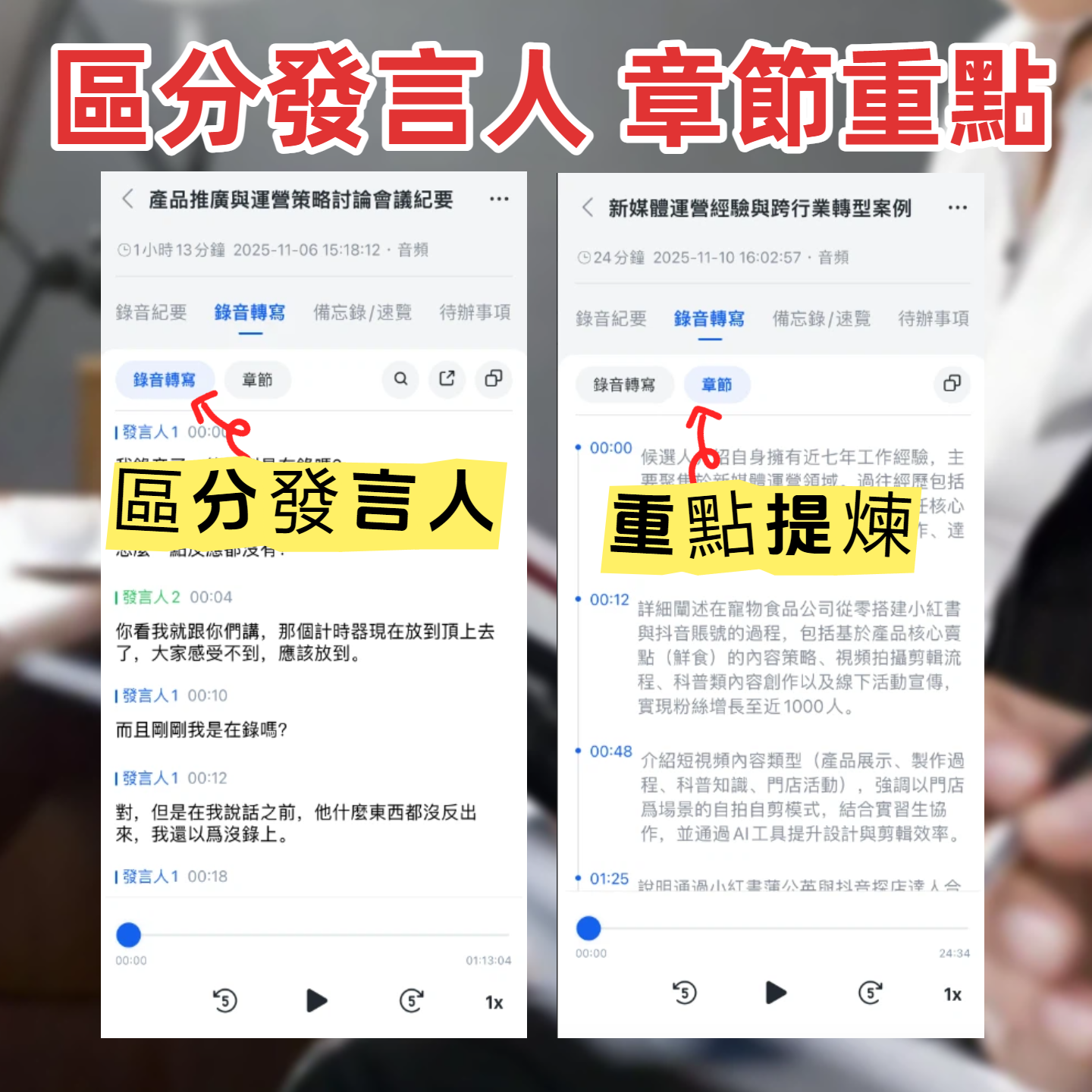
After uploading, the system automatically performs speaker diarization. You can quickly scan and rename Speaker A to "Interviewee" and Speaker B to "Moderator." Since AI has already segmented the dialogue, proofreading is much easier than dealing with a large block of text.
Step 3: Use AI to Generate Conclusions
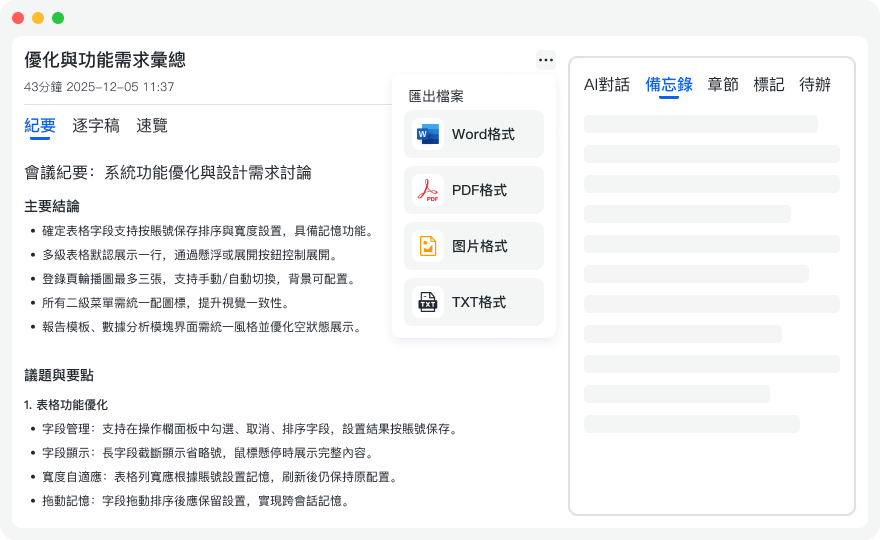
Don't rush to read from start to finish. Click the AI analysis panel on the right to view auto-generated "Summary" and "Action Items." For unclear details, use the "AI Conversation Query" feature to ask questions and let AI retrieve relevant segments. Finally, you can export the organized content as Word or PDF.
Frequently Asked Questions
Q1: Can these tools on iPhone be interrupted by incoming calls during recording? Most apps (including Tinrec) may pause or stop recording if a call comes in. For important interviews, it's recommended to enable Airplane Mode and use Wi-Fi on iPhone, or use a dedicated voice recorder and later transcribe via the "file upload" feature for safety.
Q2: What is the typical free quota for recording-to-text tools? It varies. Tinrec offers 100 minutes per month for free, which is sufficient for students or individuals with occasional interview needs. For heavy use, subscription plans are usually more cost-effective than hourly billing.
Q3: Is AI recognition accurate for Chinese-English mixing or specialized terms? Current AI models handle common Chinese-English mixing (e.g., "What's the Budget for this Project") quite well. For very niche industry jargon, it's recommended to use find-and-replace to correct after transcription.
Q4: Can online meetings (Teams/Google Meet) be transcribed directly? Some tools like Otter support bot integration. With Tinrec, the simplest method is to use the computer web version to record while playing the computer audio (or use a virtual audio cable) for real-time transcription, or upload the meeting recording file afterward.
Q5: Is my recording data private and secure? When choosing a tool, always review the privacy policy. Reputable paid software (like the ones mentioned) typically encrypts data during transmission and storage and does not use user data for public training. For highly confidential business negotiations, confirm if the tool supports data deletion policies.
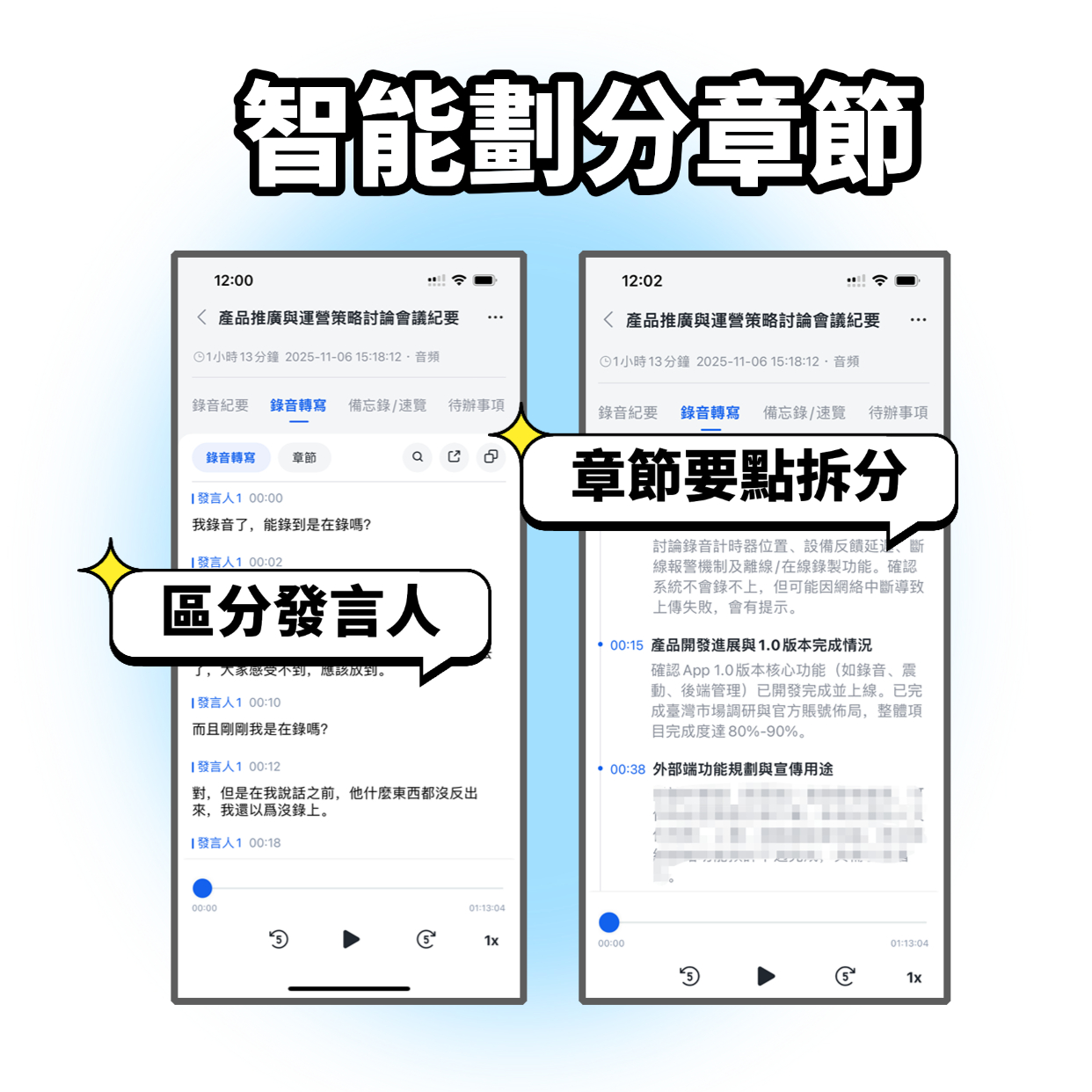
Q6: Why do some tools output a huge block of text without paragraph breaks? This depends on whether the tool supports speaker diarization and semantic segmentation. Tools like Tinrec include chapter splitting and speaker identification, automatically dividing conversation into readable paragraphs based on tone and pauses, greatly improving the reading experience.
Turn every recording into actionable outcomes
Get 60 free transcription minutes when you sign in. No credit card required.
Related Reading
You might also like

How to Transcribe Meeting Recordings in 2026: A 5-Step Hands-On Guide
Meeting transcription shouldn't stop at a verbatim transcript. Using Tinrec as an example, this article shares a 5-step method I tested: from recording, transcription, summarization, to-do items, to team knowledge sharing, turning meetings into searchable, trackable, and actionable data.

3 Meeting Transcription Tools Tested in 2026: Which Is Better for Bot-Free Recording and Chinese Summaries?
We tested Tinrec, Otter.ai, and Notta for meeting transcription, comparing bot-free recording, Chinese transcripts, AI summaries, and team collaboration to help you choose the best meeting notes solution.
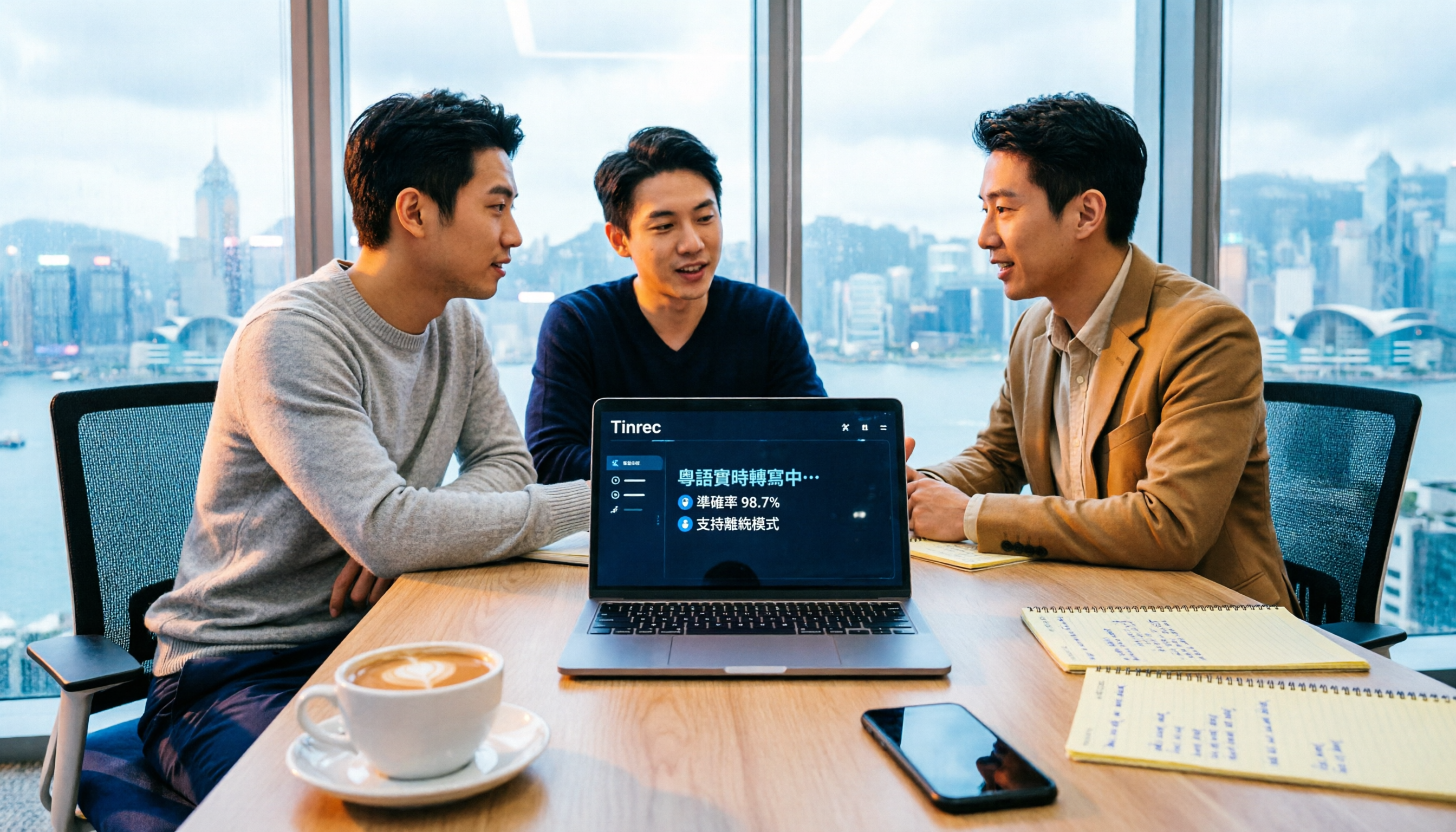
Best Meeting Recording Transcription Apps in 2026: Tinrec vs Otter Tested—This One Handles Cantonese Meetings Better
Tired of staying late to transcribe meeting recordings? This article compares Tinrec and Otter.ai in real Hong Kong workplace scenarios, covering Cantonese recognition, bot-free recording, post-meeting organization, and team management, to help you decide which app is worth installing.

How to Choose AI Meeting Transcription Tools in 2026: A 5-Step Guide to Avoid Pitfalls
Spending two hours in a meeting and another two transcribing it? We tested Tinrec, Otter.ai, Notta, PLAUD Note, and more to bring you a 5-step guide to picking the right AI meeting transcription tool—without getting burned.

5 Best Meeting Recording to Text Tools in 2026: Why Tinrec Is the Top Choice for Students
A senior student tests multiple meeting recording-to-text tools for lectures, group discussions, and interviews, explaining why Tinrec stands out for Chinese recognition, AI summarization, and team collaboration.

2026 Tested: 4 Meeting Transcription Tools Compared – Why Tinrec Is the Top Choice for Chinese Meetings
We tested 4 meeting transcription tools, comparing Chinese accuracy, bot-free recording, AI Q&A, and team collaboration to help you find the best meeting notes solution.

How to Convert Meeting Recordings to Transcripts in 2026: No Bot Recording + AI Summaries
A senior student shares how to use Tinrec to turn meeting recordings into transcripts: from recording sources, bot-free recording to AI summaries, to-dos, and export, saving you hours of manual transcription.

2026 Guide: Tinrec Meeting Transcription Without Bots + AI Auto-Organization
Tired of manual meeting transcription? Tinrec lets you record online meetings without bots, auto-generates transcripts, summaries, and action items, and supports team collaboration. See how to use it to save time.
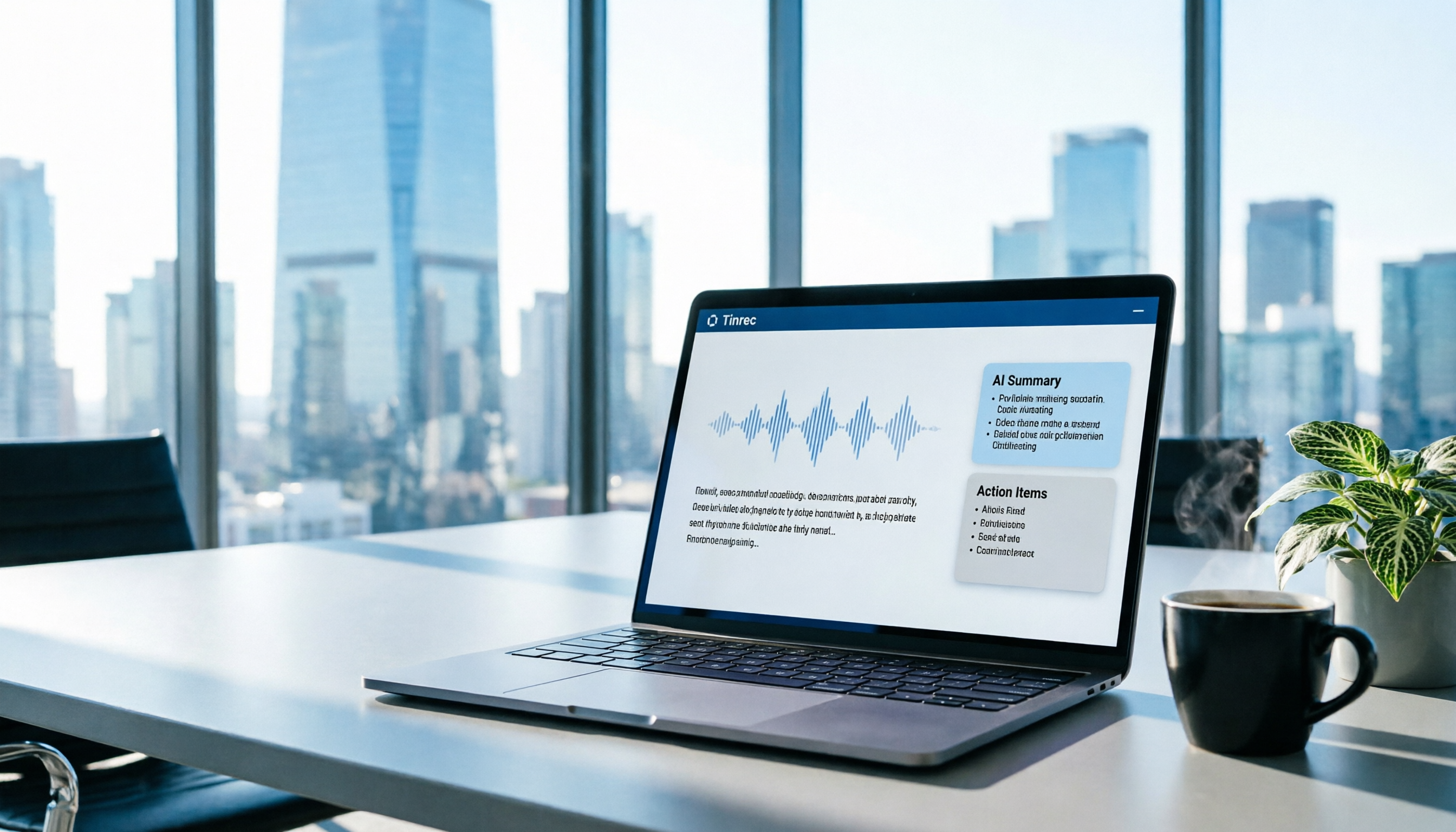
2026 Tinrec Meeting Transcription: No-Bot Recording + AI Summaries & Action Items in One Go
Stop spending three hours relistening to meeting recordings. This article shows you how to use Tinrec's bot-free meeting transcription to generate verbatim transcripts, AI summaries, and action items, and compares different meeting transcription methods.