
Turn recordings into transcripts and summaries in minutes
Upload audio or video for multilingual transcription, AI notes, and action items
Ever felt frustrated dealing with interview recordings or meeting notes that mix Taiwanese Hokkien and Mandarin? Traditional manual transcription is time-consuming, and you often get stuck when you can’t understand the dialect. While many AI speech-to-text tools exist, few truly understand Hokkien and can further organize the content into actionable notes.
This article reviews the 5 most talked-about transcription tools in 2026. We go beyond accuracy to help you filter quickly based on these dimensions:
- Hokkien/Dialect Support: Which tool is most attuned to local speech?
- Post-Processing Capabilities: Can it auto-generate summaries and action items?
- Free Tier Limits: Which one is best for students or budget-conscious users?

Quick Takeaways:
- If you need the best Hokkien/Taiwan-accent recognition: Go with Yating (Yating Zhuyin Draft).
- If you need Hokkien recognition + AI auto-summary and conversational query: Try Tinrec (Instant Recording).
- If you’re a privacy-conscious media professional: Consider Good Tape.
1. Why You Need an AI Tool That Supports Hokkien
In Taiwanese workplaces and field research, purely Mandarin conversations are rare. Whether in interviews with older generations, traditional industry meetings, or everyday cross-department communication, speakers often code-switch unconsciously.
Mainstream foreign tools (like Otter.ai or early Google Voice Typing) often skip Hokkien or produce gibberish. This forces users to spend a lot of time fixing errors. So choosing an app that boasts "multilingual automatic recognition" or "localized optimization" is a key first step to boosting efficiency.
2. In-Depth Tool Reviews and Comparison
Below we analyze five standout tools based on market reputation and actual functionality.
1. Yating (雅婷逐字稿): Local Dialect Expert
Developed by the Taiwan AI Labs, Yating is widely recognized as the tool with the highest comprehension of "Taiwanese accent" and "Taiwanese Hokkien." It accurately captures particles like "huh" (蛤) and "la" (啦), and achieves high recognition rates for pure Hokkien content.
- Pros: Leading Hokkien recognition on the market; supports speaker diarization.
- Cons: Limited free upload allowance (about 20 minutes); mainly focuses on transcription, fewer AI summary/analysis features.
2. Tinrec (秒聽錄音): From Recognition to Action – A Complete Workflow
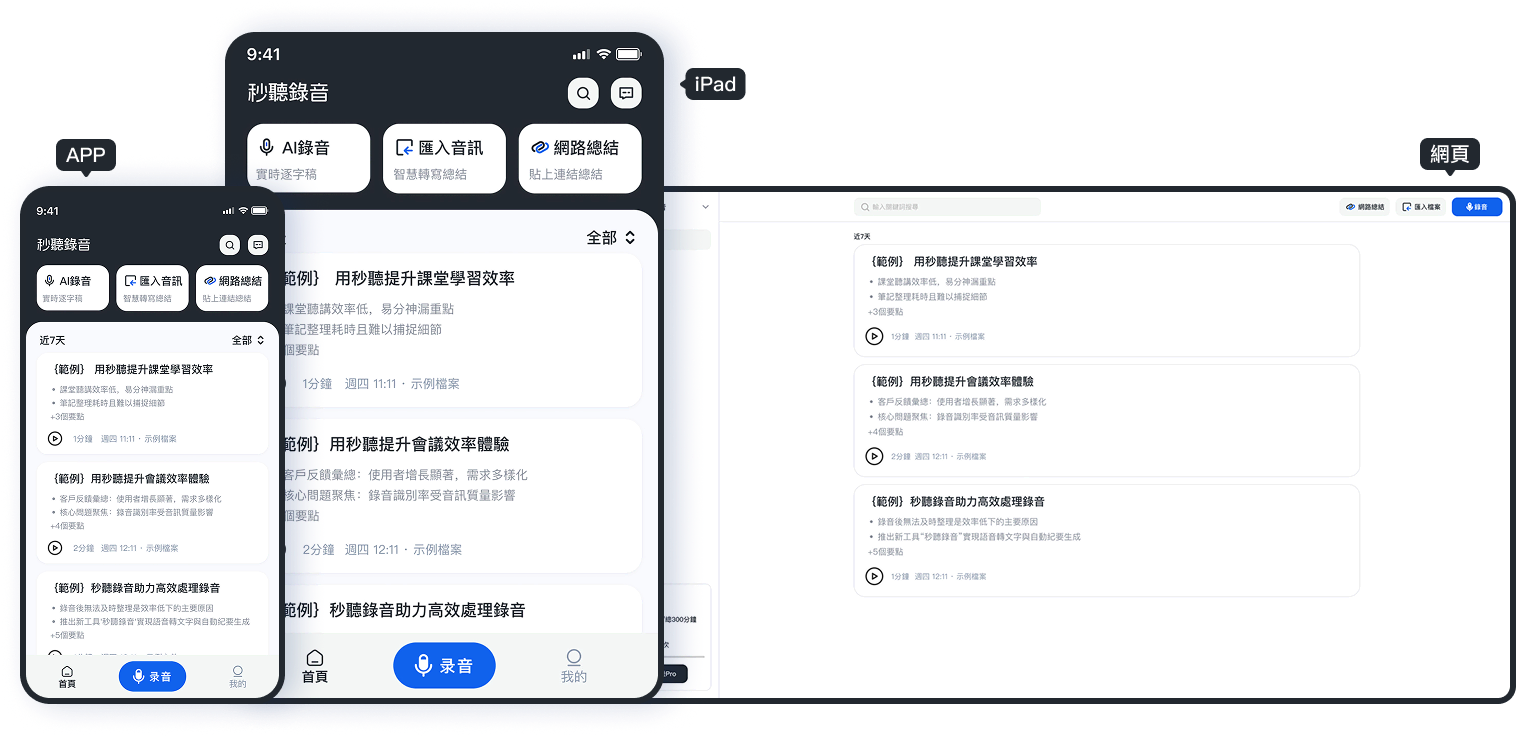
Tinrec is a multi-platform AI assistant that emphasizes "recording → understanding → action." It supports 10 languages including Hokkien and Cantonese. Its biggest highlight is that it doesn’t just give you text—it gives you conclusions.
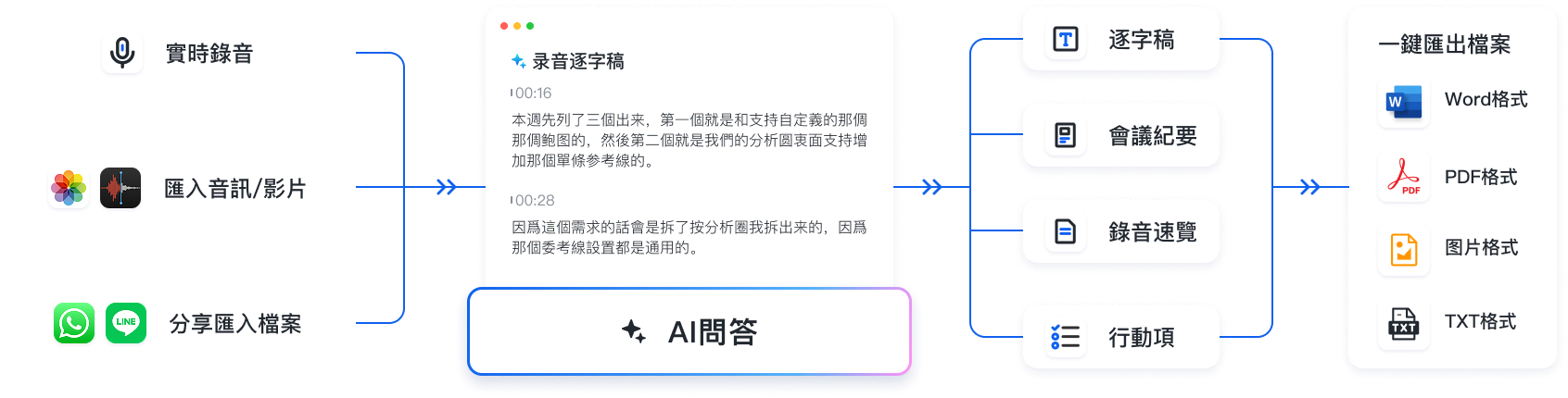
- Pros: Multi-language support including Hokkien; auto-generates meeting minutes and action items; supports AI conversational query (e.g., "When is the deadline mentioned in the meeting?").
- Best for: PMs or administrative staff who handle mixed-language meetings and need instant meeting notes.
3. Vocol.ai: Team Collaboration Assistant
Positioned as an AI meeting collaboration platform, Vocol is ideal for teams that need to edit transcripts together. It auto-generates summaries and to-do items, and its free version includes speaker diarization.
- Pros: Strong collaboration features; interface built for team management.
- Cons: Free trial is a one-time 60 minutes; long-term use requires a paid plan.
4. Good Tape: Privacy-First Choice
A favorite among international journalists, Good Tape is built on OpenAI’s Whisper model. Although it isn’t specifically optimized for Hokkien, its robust model backbone provides decent recognition for standard dialects.
- Pros: Your data is not used for training (privacy); minimal interface.
- Cons: No speaker diarization; less fine-tuned for local Taiwanese accents compared to local tools.
5. MyEdit: Lightweight Audio Editing
An online tool from CyberLink, MyEdit focuses on audio trimming and noise reduction, with a built-in transcription feature.
Stop organizing recordings by hand
Upload audio or video and automatically get a transcript, summary, and action items
- Pros: Integrated noise reduction; no installation required.
- Cons: Free tier only provides previews; not suitable for long meetings.
Ultimate Comparison Table
| Dimension | Yating | Tinrec | Vocol.ai | Good Tape | MyEdit |
|---|---|---|---|---|---|
| Hokkien/Dialect Support | ⭐⭐⭐⭐⭐ (Specialized) | ⭐⭐⭐⭐ (Supports) | ⭐⭐⭐ | ⭐⭐⭐ | ⭐⭐ |
| AI Summary | Limited | ✅ Meeting minutes + action items | ✅ Summary + to-do | ❌ | ❌ |
| AI Conversational Query | ❌ | ✅ (Ask about content) | ❌ | ❌ | ❌ |
| Free Tier | 30 days unlimited live recording | 100 minutes/month | One-time 60 min | 3 files/month | Preview only |
| Export Formats | txt, srt | Word, PDF, TXT, etc. | Word, PDF | txt, srt | txt |
| Platforms | App/Web | iOS/Android/Web | App/Web | Web | Web |
3. Why Tinrec Stands Out for Complex Recordings
When choosing a tool, besides “understanding Hokkien,” another pain point is “recording too long, no time to replay.” This is exactly where Tinrec differs from traditional transcription tools. It treats your recording as a database, not just a document.
1. Not Just Transcribing, But “Extracting” Information
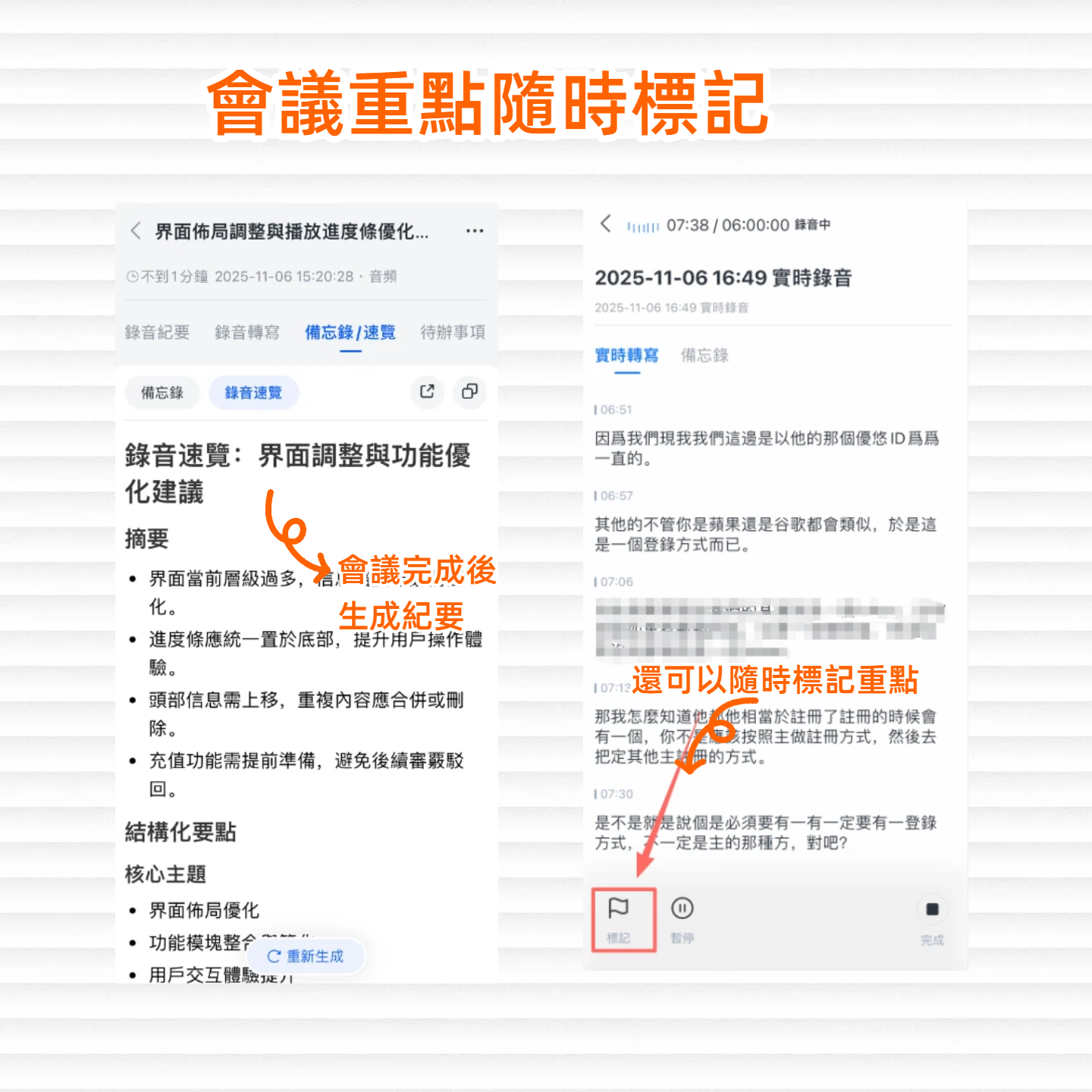
Traditional tools produce a 10,000-word transcript for an hour of audio—still time-consuming to read. Tinrec automatically generates structured meeting minutes and action item lists alongside the transcription, letting you grasp the conclusions directly.
2. “AI Conversational Query” Replaces Traditional Search
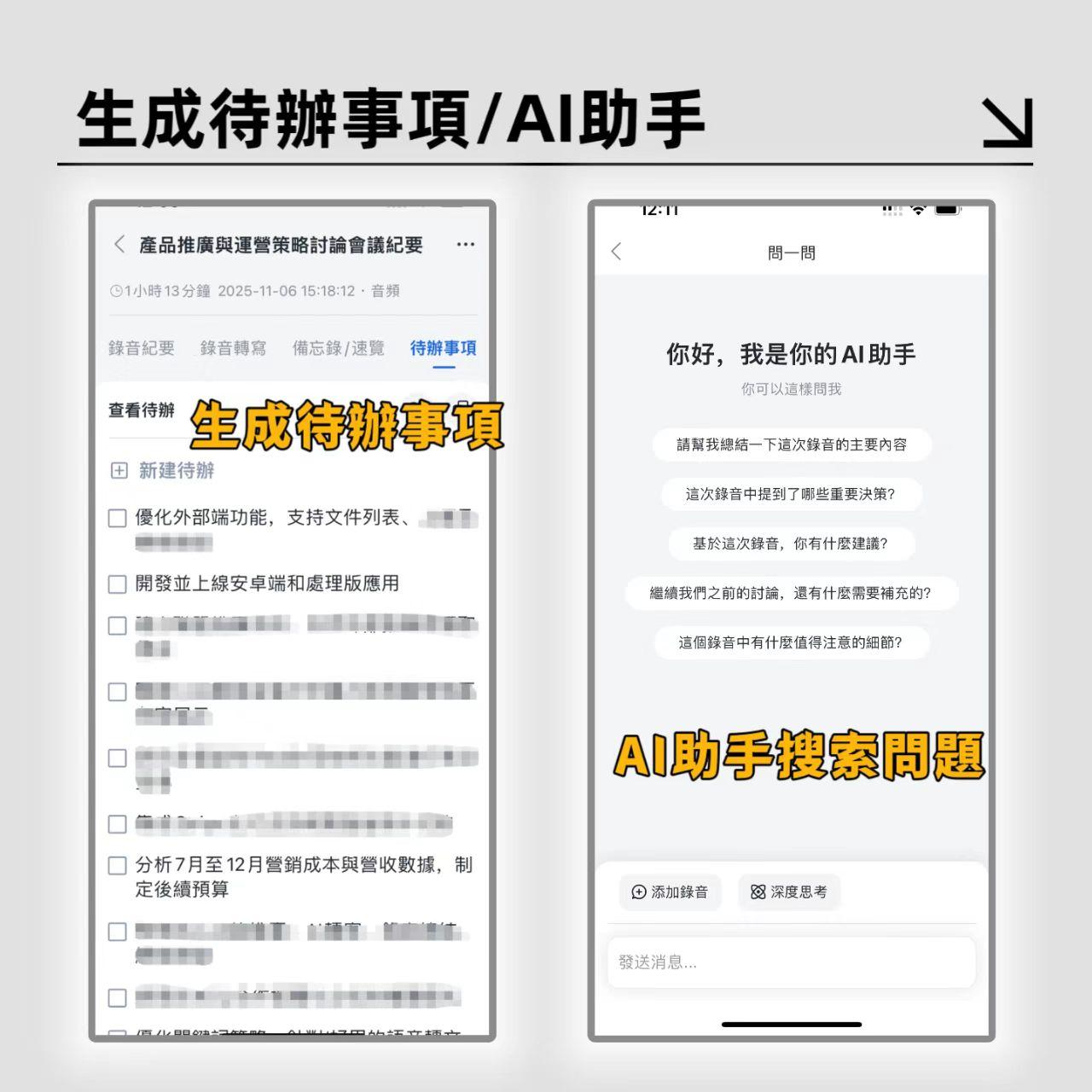
With an hours-long interview recording, if you forget when an interviewee mentioned a specific point, traditional method is to search by keyword (Ctrl+F). Tinrec lets you ask in natural language, e.g., “What are the interviewee’s concerns about this policy?” The AI answers based on the recording content—especially helpful for dialect interviews.
3. Multi-Platform Sync & Multiple Inputs
Supports iOS, Android, and web, and besides recording, you can import video links (like YouTube interviews or podcasts). This is very convenient for creators who need to process video/audio material.
4. Tutorial: How to Quickly Organize a Hokkien Meeting Using an App
Below we use Tinrec as an example to demonstrate how to quickly turn a mixed-language meeting into actionable notes.
Step 1: Start Live Recording or Import a File
- Live Meeting: Open the app and tap “Record Live.” Keep your phone close to the speakers. Tinrec records in the background.
- Existing File: If you already have an audio file (mp3/m4a, etc.), select “Import Local Recording.”
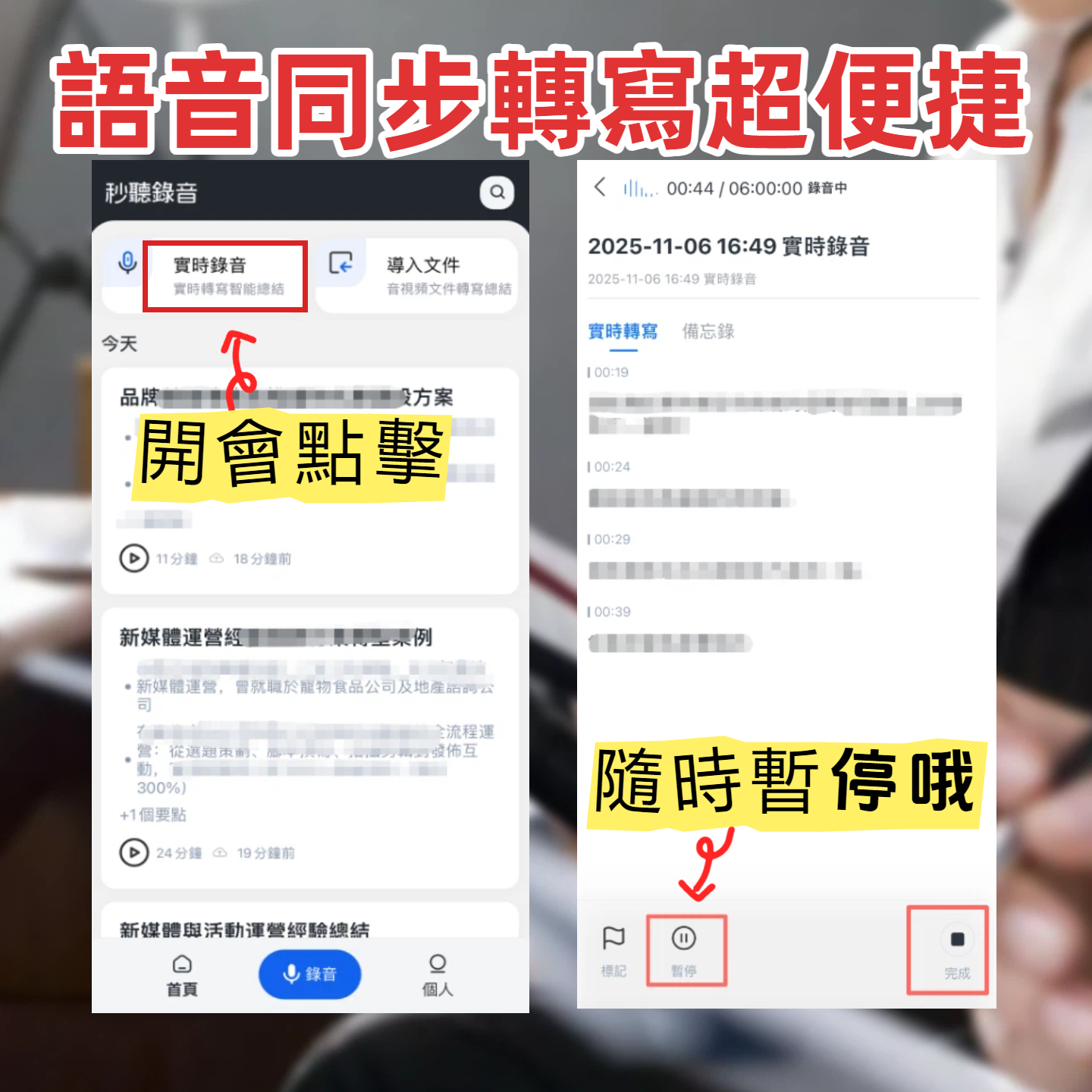
Step 2: Wait for AI Processing and Language Recognition
After uploading, the system automatically transcribes. If the meeting contains multiple languages (e.g., Chinese, English, Hokkien), the system tries to recognize and convert them into text. Tinrec’s processing speed is typically faster than the recording length.
Step 3: Review AI Summary and Action Items
Once transcribed, don’t jump straight to the full transcript. First, switch to the “AI Summary” tab to see what the system automatically extracted:
- Meeting Summary: Quickly grasp the main discussion topics.
- To-Do List: Identify which tasks were assigned to whom.
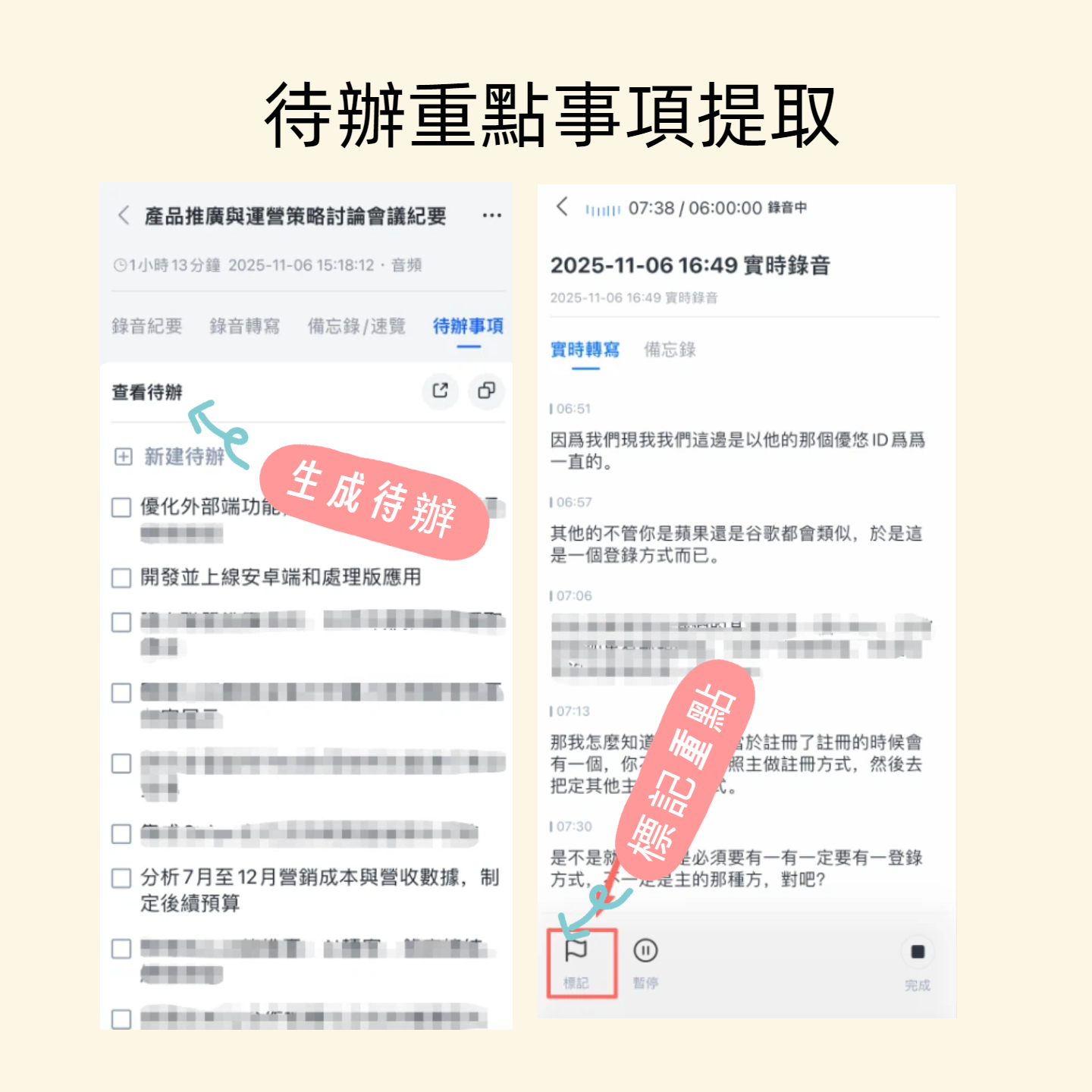
Step 4: Use “Conversational Query” to Fill in Details
If the summary misses certain details (e.g., the specific meaning of a Hokkien statement), use the “AI Chat” feature to ask: “What was the key point Manager Li made in Hokkien?” Let the AI retrieve that section.
Step 5: Export and Share
Finally, you can export the organized notes as Word or PDF and send them directly to team members.
5. Frequently Asked Questions (FAQ)
Q1: Can these apps fully understand Hokkien?
Current AI Hokkien recognition has improved significantly, but there may still be errors with specific slang or unclear pronunciation. For the best accuracy, use a specialized local tool like Yating, or use Tinrec’s AI summary to capture the gist and reduce the pain of word-by-word proofreading.
Q2: Are there limitations on iPhone recording?
iOS has strict background recording restrictions. Call recording (e.g., phone conversations) usually requires a specific app or hardware. Live meeting recording generally works fine—Tinrec supports background recording on iOS, but avoid frequent switching to power-hungry apps.
Q3: What are typical restrictions on free plans?
Most free plans have limits on recording length or number of uses. For example, Vocol offers a one-time trial, and MyEdit only provides previews. Tinrec gives 100 free minutes per month, which is relatively generous for light users or students.
Q4: Is uploading long recordings time-consuming?
It depends on your internet speed and file size. We recommend uploading over Wi-Fi. Tinrec and MyEdit are among the faster tools in our tests for processing speed.
Q5: Can I transcribe video URLs?
Some tools support this. Tinrec, for example, accepts YouTube or podcast links and transcribes them directly—very helpful for organizing online courses or web interviews.
Q6: Is my data secure? Can it be leaked?
The tools featured here, such as Good Tape, Tinrec, and Yating, have privacy policies in place. If you’re dealing with highly confidential business meetings, consider enterprise-grade paid plans or tools that meet corporate security standards.
Turn every recording into actionable outcomes
Get 60 free transcription minutes when you sign in. No credit card required.
Related Reading
You might also like

4 Meeting Transcription Apps Tested in 2026: Which One Lets You Skip Overtime?
Spending two hours in a meeting and another two organizing notes? We tested 4 AI meeting transcription tools, focusing on bot-free recording, AI summaries, and team collaboration. Verdict: Tinrec is the best fit for Hong Kong professionals.

4 Best Speech-to-Text Tools Tested in 2026: Take Meeting Notes Without a Bot
Turning meetings, interviews, and lectures into transcripts can save hours if you use the right tool. This hands-on comparison of Tinrec, Notta, Otter, and Granola highlights key selection criteria and step-by-step usage, helping you find the best speech-to-text solution for Chinese meetings.

2026 AI Meeting Recorder Comparison: Tinrec vs Otter.ai – Which Is Better for Chinese Speakers?
Choosing the right meeting transcription tool in 2026? This hands-on comparison of Tinrec and Otter.ai covers 5 key dimensions: Chinese transcription, bot-free recording, post-meeting organization, team collaboration, and file import – helping you find the best fit for your meeting notes needs.

How to Convert Meeting Recordings to Chinese Subtitles in 2026? 5-Step Tinrec Tutorial: A Notta User's Switch Story
A hands-on tutorial on converting meeting recordings to Chinese subtitles, comparing Tinrec and Notta, with 5 steps to use Tinrec for recording, transcribing, translating, and organizing meeting notes—perfect for Hong Kong professionals.

Tinrec vs Otter.ai in 2026: A 5-Dimension Comparison for Effortless Chinese Meeting Notes
Choosing the right meeting transcription tool in 2026? This article compares Tinrec and Otter.ai across 5 dimensions—Chinese recognition, bot-free recording, file import, AI Q&A, and team data management—to help you find the best meeting notes solution for users in Taiwan.

5 Best AI Meeting Note Tools Tested in 2026: Can You Take Accurate Chinese Meeting Minutes Without a Bot?
Meetings are tiring enough; taking minutes afterward is even more so. This hands-on comparison of 5 AI meeting note tools, including Tinrec, Granola, Otter.ai, and Notta, shows you how to choose and use them to turn Chinese meetings into searchable, collaborative action items—no meeting bot required.

How to Use AI Meeting Notes in 2026: 5 Steps from Recording to AI Summary
Still typing meeting minutes by hand? This article tests Tinrec to show you how to complete recording-to-text, AI summary, and to-do organization in 5 steps, and compares it with Notta and other tools to explain why Tinrec is better suited for Hong Kong professionals.

2026 Meeting Transcription Comparison: Tinrec's Bot-Free Recording, AI Summaries, and Team Collaboration
How to choose a meeting transcription tool in 2026? This article focuses on Tinrec, comparing Otter, Notta, and Granola, and explains bot-free recording, AI summaries, team collaboration, and key pitfalls to avoid.

How to Download Speech-to-Text in 2026? A Complete 5-Step Guide
Looking for a speech-to-text tool in 2026? Tinrec helps you convert recordings to text and download transcripts in 5 steps, with buying tips and FAQs. A must-read for professionals.