
Turn recordings into transcripts and summaries in minutes
Upload audio or video for multilingual transcription, AI notes, and action items
In the workplace or learning, we often face a common pain point: "Recording is reassuring, but reviewing is disheartening." A one-hour meeting or interview recording takes twice as long to listen to again. Traditional voice recorders or simple speech-to-text tools often only produce a dense "transcript." To find a key decision or data point, not only is Ctrl+F difficult, but you also risk missing context.
This article doesn't just recommend tools; it compares 6 major AI meeting assistant software (including Fireflies, Otter, Tinrec, etc.) based on the need to "quickly extract key points." If you value "AI conversational search" (ask AI directly what was said in the recording) and Chinese recognition accuracy, this article provides a detailed selection guide.
Quick Selection Guide:
- Value team collaboration and CRM integration: Prioritize Fireflies.ai.
- All-English meeting environment with real-time Q&A: Otter.ai is the veteran.
- Value multilingual (Chinese/English/Japanese) and flexible cross-device (phone/web) use: Try Tinrec (Instant Listening).
- Heavy Google Meet/Zoom video meeting users: tl;dv is a great free starting point.
Why Do You Need a Recording Tool with "AI Conversational Query"?
According to Zapier's annual review, modern AI Meeting Assistants have moved beyond simple "transcription." They don't just turn speech into text; they act as a "second brain." A truly useful tool should have these core capabilities:
- Structured Summaries: Automatically distinguish speakers and summarize topics.
- Action Item Extraction: Automatically identify who should do what by when.
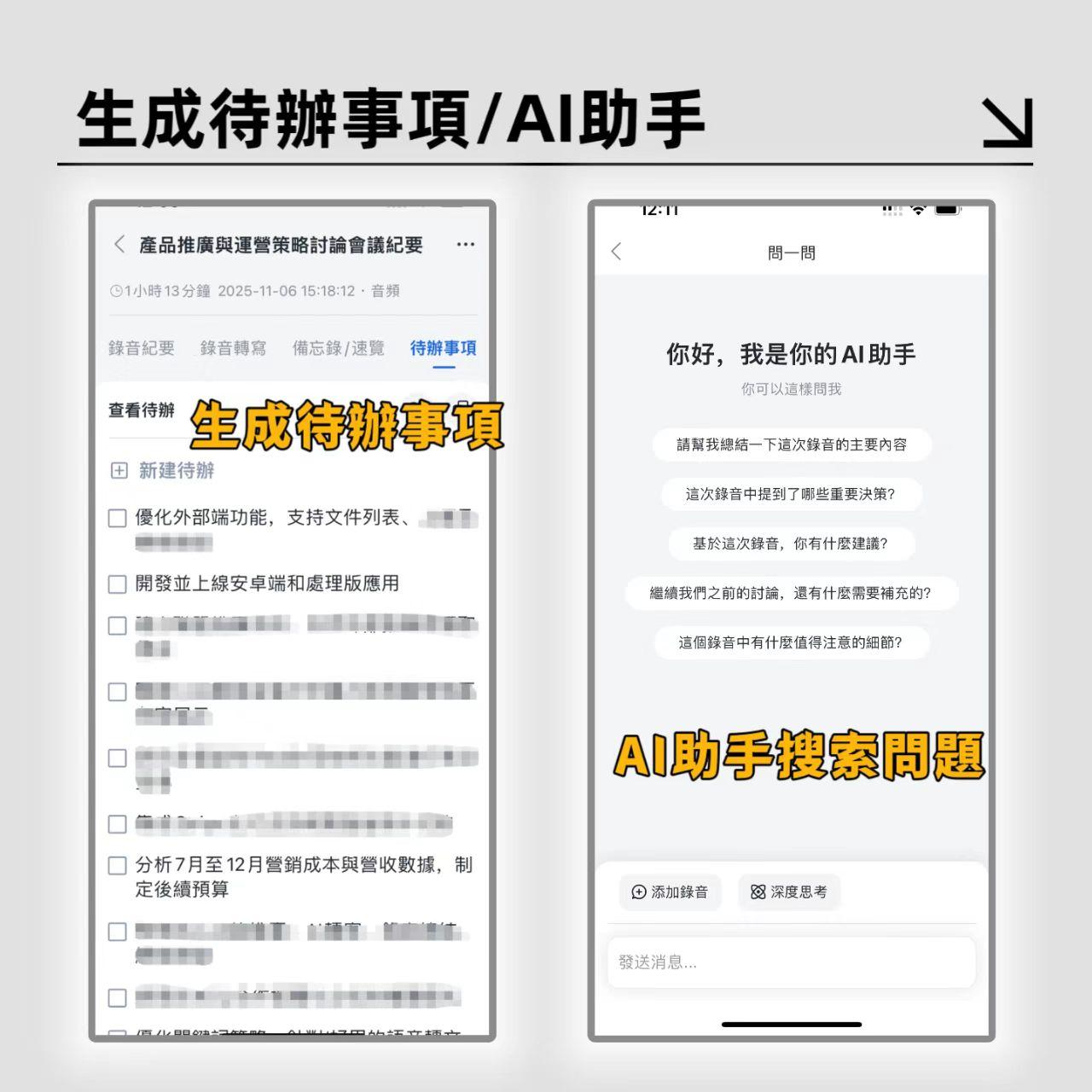
- AI Conversational Query (Conversational Intelligence): This is standard in 2025. You don't need to read the whole text; instead, ask AI directly like you would with ChatGPT: "What was the budget limit the client mentioned?" or "What are the marketing priorities for next week?" AI gives precise answers based on the recording.
2025 In-Depth Review of Selected AI Recording & Note-Taking Tools
Below we analyze the most representative tools on the market, covering internationally known software and emerging solutions optimized for Chinese.
1. Fireflies.ai: Best for Team Collaboration and Project Tracking
Core Advantage: Powerful CRM integration and team collaboration features.
According to Zapier's review, Fireflies is one of the most integrated tools. It can automatically join Zoom, Teams, or Google Meet meetings for recording. Its "AskFred" feature allows users to ask questions about meeting content, which is very useful for sales teams analyzing client needs. It also analyzes speaker tone (sentiment analysis) and speaking ratio.
- Ideal for: Sales teams needing to sync meeting data to Salesforce or HubSpot.
- Limitations: The interface has a lot of information and may feel complex for individual users.
2. Otter.ai: The King of English-Language Meetings
Core Advantage: Real-time transcription and "Otter AI Chat".
Otter is a pioneer in this space, especially good at English recognition. Its "OtterPilot" can automatically join meetings and generate summaries. The highlight is the "AI Chat" feature, which lets you ask questions not only after the meeting but even during the meeting, like: "What was that data point just mentioned?"
- Ideal for: All-English work environments, employees of European and American multinationals.
- Limitations: Weaker support for Chinese or other languages, and occasionally lags with highly specialized technical terms.
3. Tinrec (Instant Listening): Flexible Multilingual and Cross-Device Solution
Core Advantage: High-accuracy multilingual recognition, full mobile/web support, AI query based on semantics.
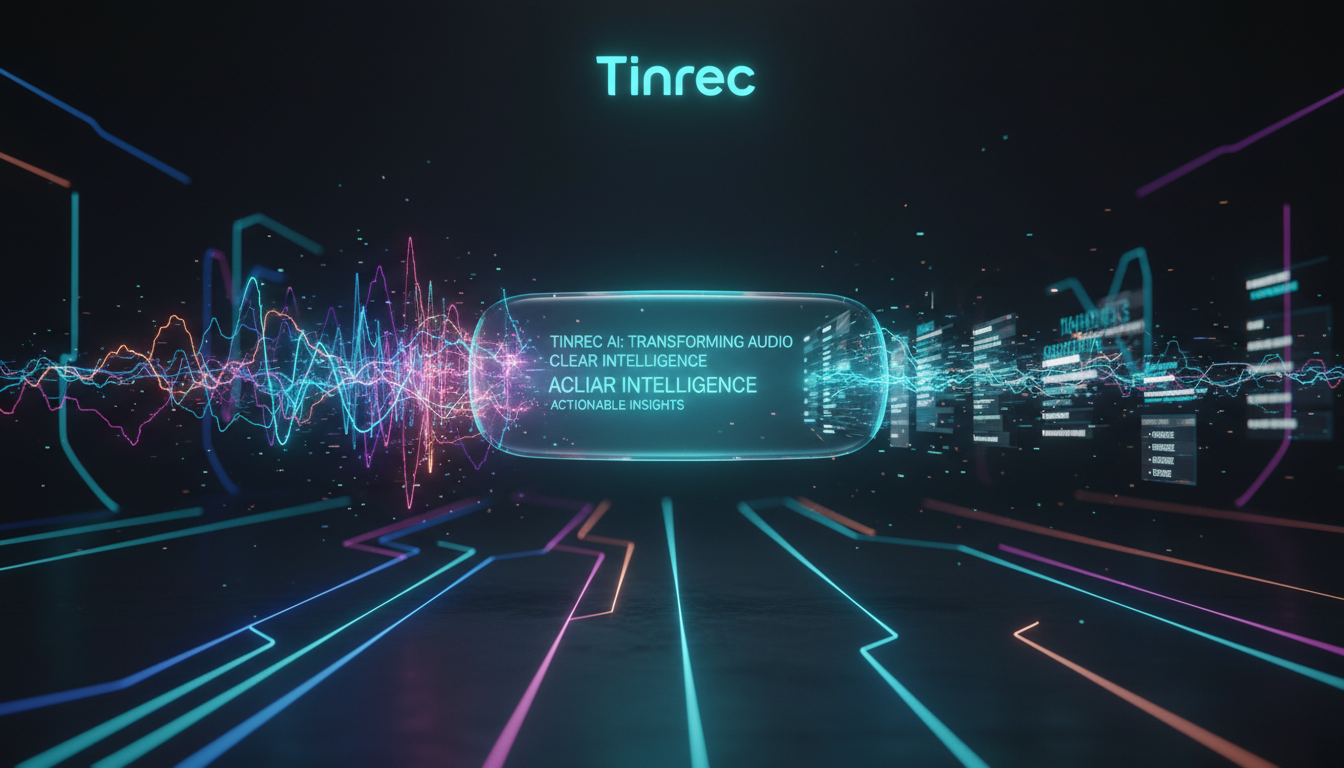
Tinrec (Instant Listening) is deeply optimized for the Asian market. Unlike tools focused only on desktop video conferencing, Tinrec offers iOS and Android apps, making it ideal for users who need "on-site recording" (e.g., in-person meetings, classes, interviews). It not only supports recording-to-text but also parses video links (e.g., YouTube/TikTok).
Most importantly, its AI conversational query function understands complex Chinese contexts. For example, you can ask: "What are the key exam points the teacher emphasized in this class?" It searches the entire recording and summarizes for you, not just keyword matching.
- Ideal for: Students, journalists, content creators, and professionals who handle Chinese, English, Japanese, Korean, and other languages.
- Feature Highlight: Supports a complete workflow from recording to action items.
Stop organizing recordings by hand
Upload audio or video and automatically get a transcript, summary, and action items
4. tl;dv: High Cost-Effective Free Option for Video Meetings
Core Advantage: Video playback search, generous free tier.
tl;dv (Too Long; Didn't View) specializes in recording Google Meet and Zoom sessions. Its feature lets you mark key moments on the timeline and search for specific video clips via AI. This is intuitive for those who prefer watching "video replays" rather than just text.
- Ideal for: Budget-conscious startups, users who prefer reviewing video footage.
- Limitations: Relies heavily on video platform plugins; weak support for on-site live recording.
Comprehensive Comparison: Which Tool Is Right for You?
To help you decide quickly, we've compiled a comparison table covering the dimensions users care about most:
| Dimension | Tinrec (Instant Listening) | Fireflies.ai | Otter.ai | tl;dv | Fathom |
|---|---|---|---|---|---|
| Core Scenario | Live recording/file upload/multilingual | Team video meetings/CRM integration | English video/real-time notes | Video meeting recording | Personal free video recording |
| Language Support | Excellent (Chinese/English/Japanese/Korean/Cantonese, 10+ languages) | Good (multilingual but Eurocentric) | English only primarily | Good (multilingual) | Good (multilingual) |
| AI Conversational Query | Supported (Q&A on recording content) | Supported (AskFred) | Supported (Otter AI Chat) | Supported (search-focused) | Supported (AI summary) |
| Platform Support | iOS, Android, Web | Web, video plugins | Web, iOS, Android | Chrome extension, App | Desktop App |
| Input Methods | Real-time recording, audio upload, video link parsing | Auto-join meetings | Real-time recording, upload | Auto-join meetings | Auto-join meetings |
| Free Tier | 100 minutes per month | 800 minutes (storage limit) | 300 minutes per month | Generous free features | Generous free features |
Practical Tutorial: How to "Ask" Your Way to Meeting Key Points?
Many users download these tools but only use them as voice recorders, which is a waste. Below, using Tinrec as an example, we show how to turn "static recordings" into an "interactive knowledge base."
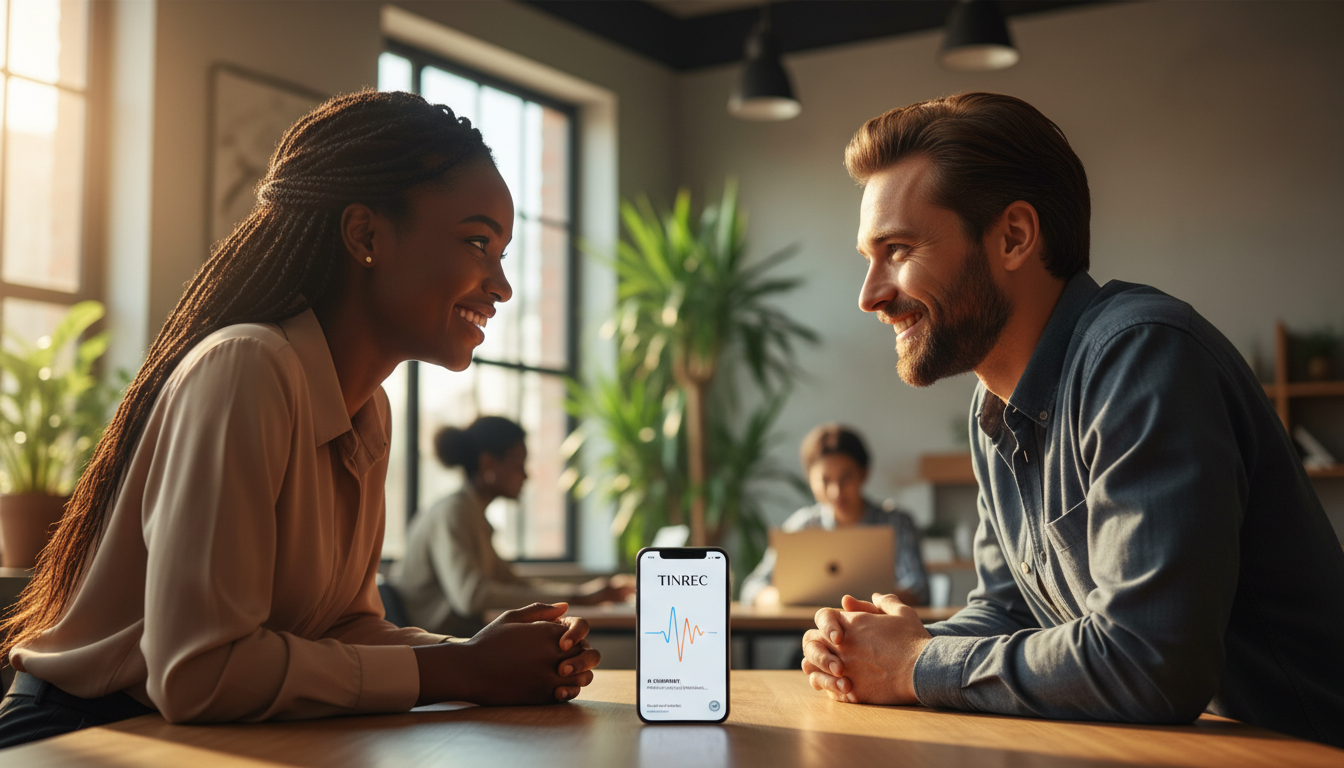
Step 1: Obtain High-Quality Recording Material
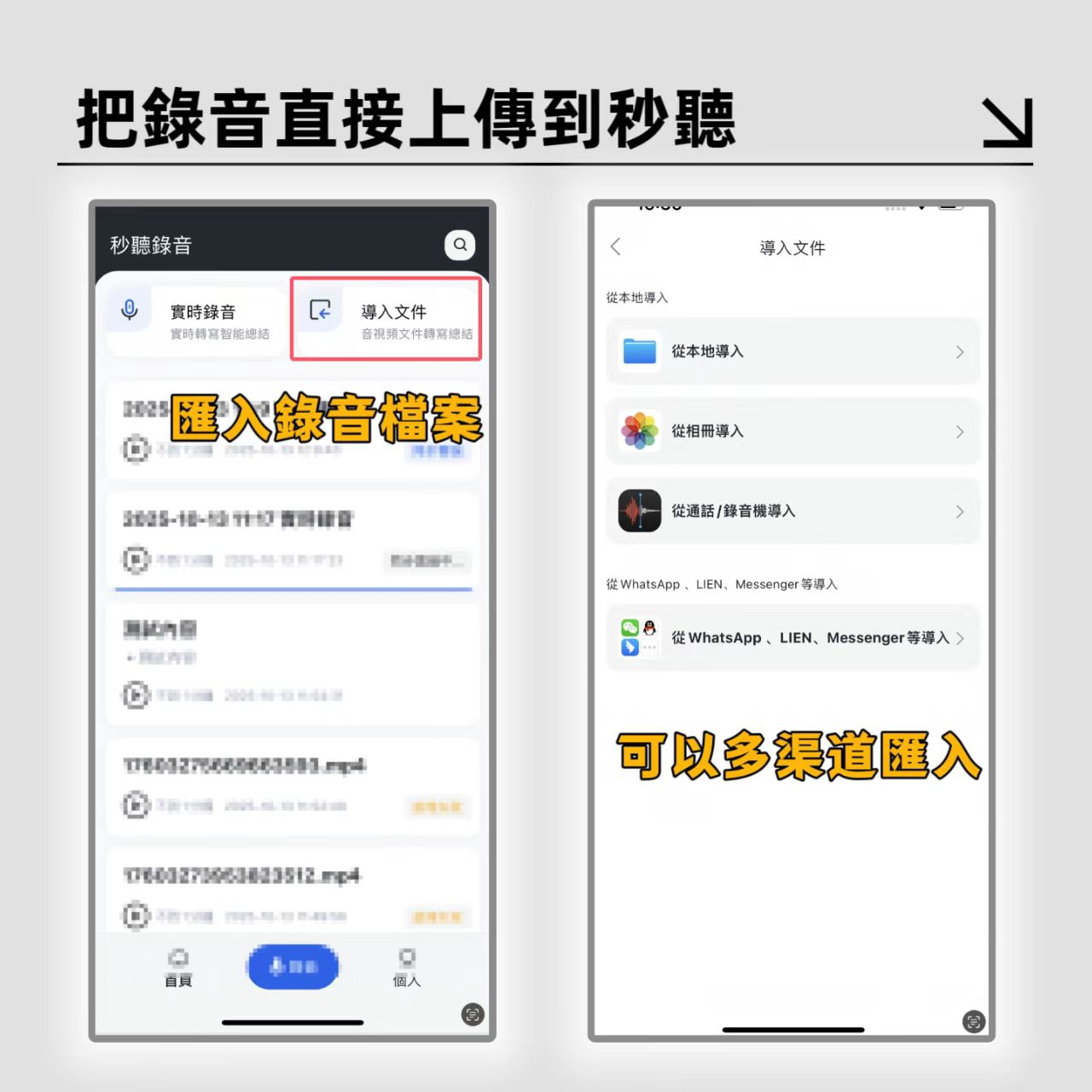
You can input audio into the system in two ways:
- Live Recording: Open the app or web version and click Real-time Recording to Text. Ideal for classes, in-person meetings. Tinrec generates a live transcript while recording; keep your phone close to the speaker.
- Import File/Link: If you have an existing recording or want to extract text from a YouTube tutorial, use the Audio File to Text or Podcast/Online Video to Text feature by pasting the URL or uploading the file.
Step 2: Wait for AI Structuring
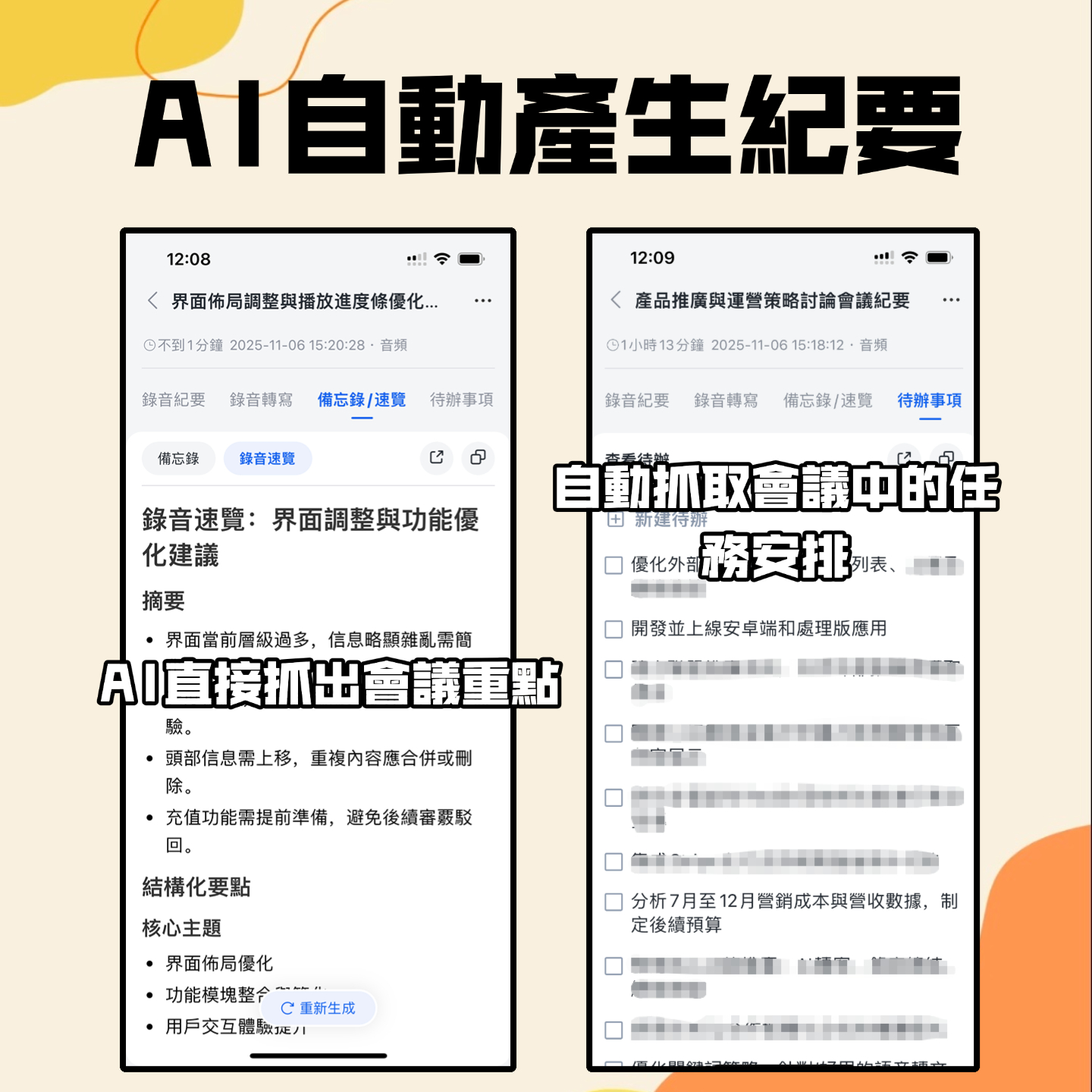
After upload, the system automatically performs:
- Speaker Diarization: Automatically labels Speaker 1, Speaker 2.
- Summary Generation: Produces meeting notes and keywords.
- Action Item Extraction: Lists to-do items.
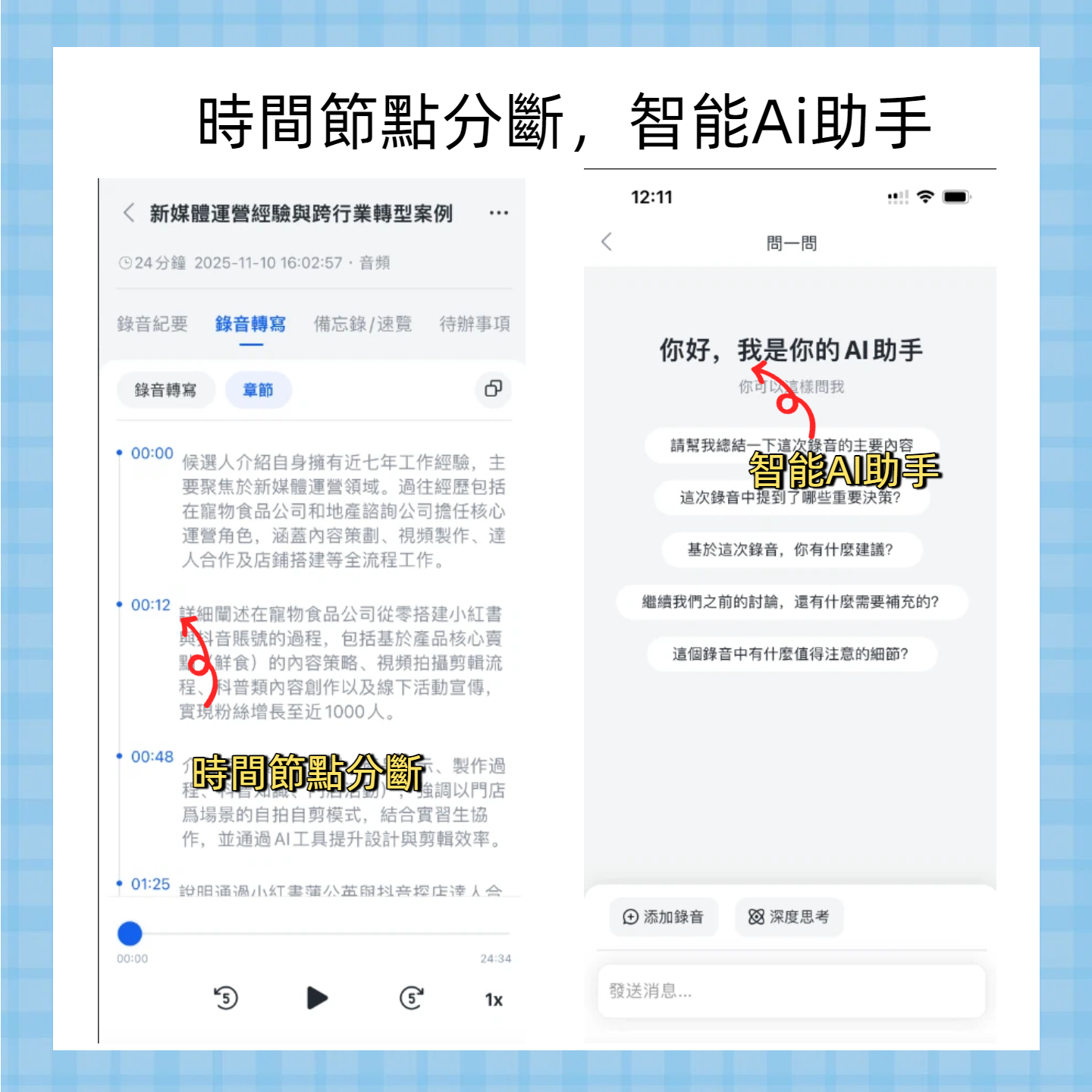
Step 3: Use AI Conversational Query (Most Important Step)
Don't read from start to finish! Go to the AI Conversational Query interface and ask based on your needs:
- Scenario: Marketing meeting → Type: "List all budget figures and corresponding items mentioned in this meeting."
- Scenario: Class review → Type: "What example did the teacher give when explaining 'relativity'?"
- Scenario: Interview summary → Type: "What are the interviewee's specific views on 'remote work'?"
AI understands the semantics, extracts precise segments from hours of recording, and answers you. This is the true value of AI tools.
Step 4: Export and Share
Once you've confirmed the key points, export the AI-generated summary or specific segments to Notion, Word, or PDF for knowledge archiving.
FAQ
Q1: How accurate is the Chinese recognition of these tools? Mainstream tools like Otter have weaker Chinese support. If your meetings are mainly in Chinese (including Taiwanese accents), choose a tool with a multilingual engine like Tinrec, which handles Chinese-English mixed speech and supports Taiwanese, Cantonese, and other languages.
Q2: Is there a risk of privacy leakage for recording files? Most enterprise-grade tools (e.g., Fireflies, Tinrec) use encrypted transmission. However, avoid uploading highly sensitive defense or patent details to public clouds. For general business and learning purposes, choose a service provider with clear privacy terms.
Q3: Are there any special limitations for iPhone users? Due to iOS system restrictions, third-party apps generally cannot record phone calls or LINE calls directly. Use external speaker recording or use Tinrec's web version to upload recording files. For live recording, Tinrec offers a dedicated iOS app experience.
Q4: Is the free tier enough? If you are a student or occasional meeting attendee, the free tiers of Fathom or Tinrec (100 minutes per month) are usually sufficient for 1-2 key meetings per week. For heavy interviews or daily stand-ups, a paid subscription (typically around $5-$10/month) unlocks unlimited cloud storage and advanced AI features, which is a worthwhile investment considering time saved.
Q5: Can I summarize YouTube video highlights? Yes. This is a hidden use case for many learners. Use Tinrec's "Online Video to Text" feature, paste a YouTube link, and get a transcript and AI query on video highlights without watching the whole video.
Q6: What if the AI summary is inaccurate? AI can sometimes hallucinate. Use tools with a "cross-reference" feature: when AI gives an answer, clicking it typically jumps to the corresponding original recording timestamp, allowing you to quickly verify the original audio and ensure accuracy.
Turn every recording into actionable outcomes
Get 60 free transcription minutes when you sign in. No credit card required.
Related Reading
You might also like

Tinrec vs Otter.ai 2026: 5-Dimension Comparison — Who Manages Meeting Data Access Permissions Better?
Meeting data access permissions aren't just an IT issue — they're a team memory issue. Starting from the real-world pain of "who holds the data," this article reviews 6 solutions and compares Tinrec vs Otter.ai across 5 dimensions: team-level sharing, role and seat management, audit and recycle bin, data handover, and Chinese-language meeting experience — highlighting differences in meeting data access permissions and ideal use cases.

4 Meeting Notes Tools Tested in 2026: Which One Actually Builds a Team Knowledge Base?
Meeting notes shouldn't stay locked in personal accounts. We tested Tinrec, Otter.ai, Granola, and PLAUD across bot-free online meeting recording, post-meeting summaries and action items, AI Q&A, team spaces, roles, and seat management to help you find the tool that truly turns meetings into reusable team data.

Feishu Minutes Alternatives: 2026 Hands-On Comparison of 2 Tools, Tinrec Handles Chinese Meetings Better
Feishu Minutes free version has ASR time limits. This article compares Feishu Minutes and Tinrec in meeting recording, free quota, AI organization, export, and team collaboration to help users who meet across platforms and want to consolidate meeting materials find a more suitable alternative.

Notion AI Meeting Notes Alternative Tested: Tinrec's Bot-Free Workflow Review (2026)
Notion AI's meeting notes are well-integrated, but plan thresholds, device limits, and team sharing needs can still get in the way. From the perspective of a mid-level manager who runs 15 meetings a week, this hands-on review tests Tinrec as an alternative: bot-free recording, live transcription, AI summaries and action items, post-meeting Q&A, multi-format export, and team space roles and seat governance—plus an honest look at when it's not a good fit.

5 AI Meeting Tools Seat Management Tested for 2026: How Many Team Plan Seats Do You Really Need?
How many seats to buy for a team meeting tool is the biggest question most teams face before purchasing. This article uses Tinrec's team plan to demonstrate a replicable seat management process, explaining roles, seats, data ownership, and usage checks in 5 steps, along with FAQs and alternatives.
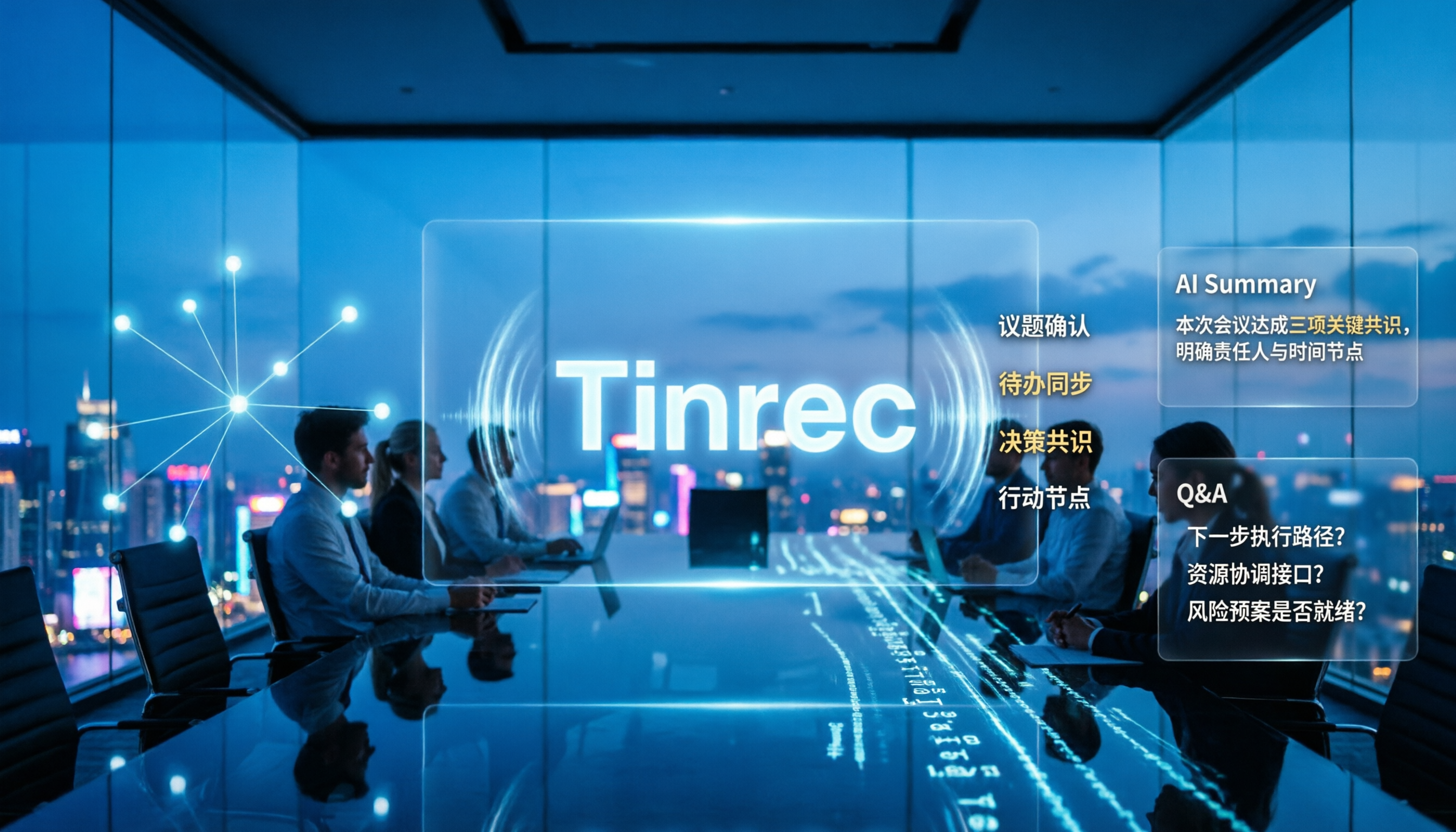
4 Best Audio-to-Text Tools for Chinese Meetings in 2026: Real-World Comparison
How to choose the right audio transcription tool? This article starts with common pitfalls, outlines 4 key buying factors, then compares Tinrec, Otter.ai, Granola, and TurboScribe in real-world tests for Chinese meeting transcription, bot-free recording, AI summary Q&A, and team data retention. It ends with a guide to avoid mistakes and recommendations based on your needs.
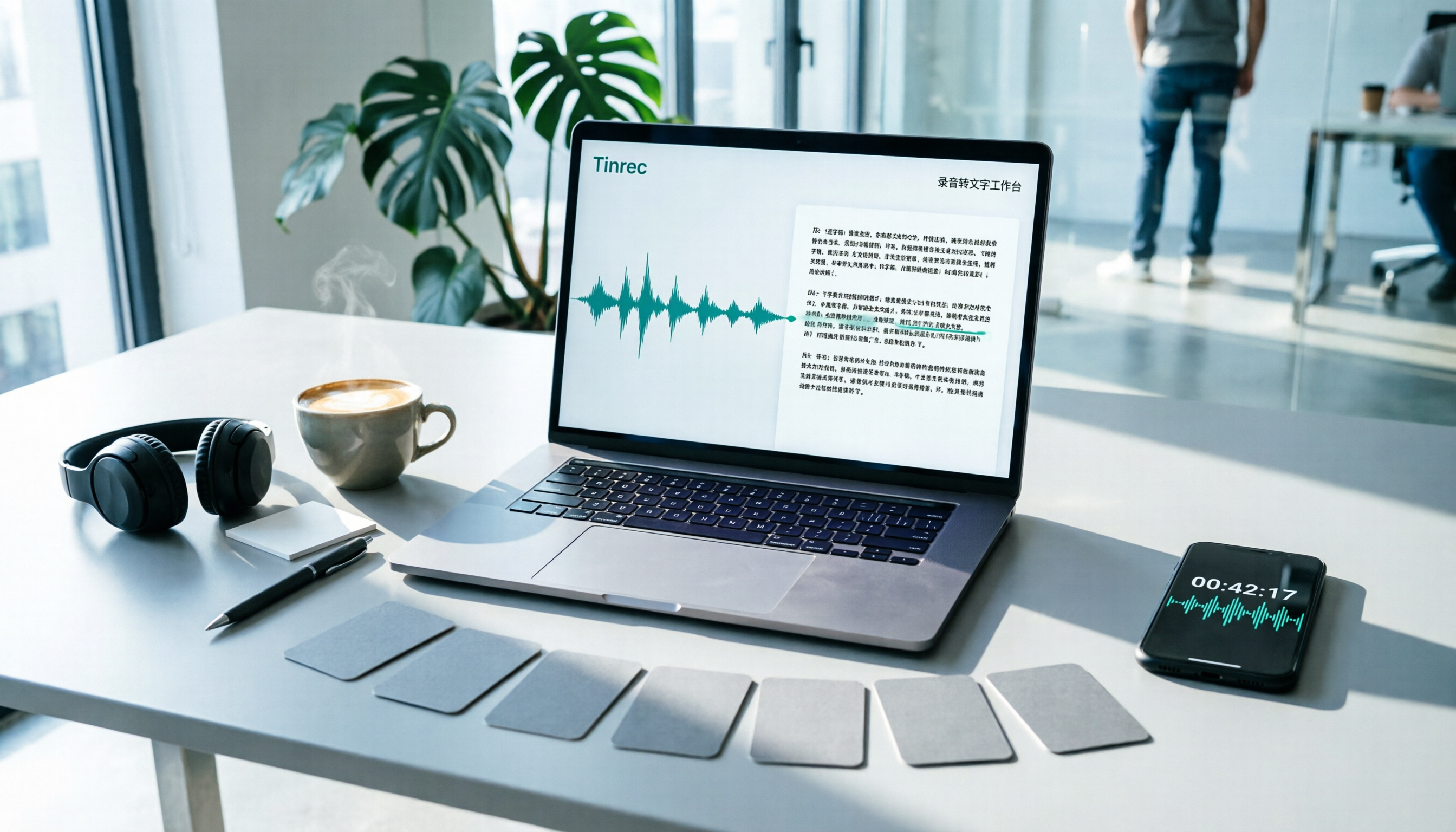
7 Best Free Audio-to-Text Transcription Tools in 2026: A Complete Comparison
Tired of spending hours transcribing meeting recordings? This guide reviews 7 free audio-to-text transcription solutions in 2026, comparing free tiers and paid pricing for Tinrec, MyEdit, cSubtitle, Otter.ai, Notta, TurboScribe, and Granola. Learn each tool's free limits, pricing, and ideal use cases to find the best fit for your transcription needs.

4 Meeting Transcription Tools Tested for 2026: Which One Actually Builds a Team Knowledge Base?
The real pain point with meeting notes isn't that nothing gets written down—it's that what's written down never gets used. Starting from real meeting scenarios, this article breaks down 4 key decision points for choosing a meeting transcription tool, compares Tinrec, Granola, Notta, and PLAUD in hands-on testing, and outlines the 3 most common buying mistakes, helping you turn scattered meeting content into a searchable, queryable, transferable team knowledge base.

2026 Comparison of 4 Meeting Transcription Tools: Who Does Permission Management Best?
Who should see meeting notes? This article examines four key points—roles and seats, team-level sharing, data ownership after member departure—and compares the permission management designs of Tinrec, Otter.ai, Fireflies.ai, and Granola, plus four common pitfalls to help you think clearly before adoption.