
Turn recordings into transcripts and summaries in minutes
Upload audio or video for multilingual transcription, AI notes, and action items
Facing a one-hour meeting or lecture recording, do you also feel that "relistening" is a nightmare?
This is a common pain point for anyone relying on voice recorders or iPhone Voice Memos: audio files are hard to search, information density is low, and transcribing them is time-consuming. Many people are now seeking solutions that turn recordings into AI summaries. Currently, the market is divided into two main approaches: the "DIY combo" (e.g., NotebookLM with Shortcuts) and "all-in-one AI recording tools."
This article analyzes the pros and cons of different solutions from three dimensions: ease of operation, Chinese recognition accuracy, and feature completeness, and provides practical step-by-step guides.
Quick Navigation Conclusion:
- If you're on a tight budget and enjoy tinkering with digital tools: Use iPhone Shortcuts to export audio to Google NotebookLM, ideal for non-real-time long-form organization.
- If you need real-time transcription and action item management: Choose an integrated tool like Tinrec (Voice Memo Transcription), which automates the workflow from recording to transcript to key summaries.
The Current Pain Point: Why Do Voice Memos Always Get Saved but Never Listened To?
While iPhone's built-in Voice Memos app is convenient, it's essentially just a "sound container." In actual work and study scenarios, the main challenges include:
- Difficulty in information retrieval: Unlike text documents, you can't Ctrl+F to search for keywords; finding a specific point requires constantly scrubbing the progress bar.
- High transcription cost: Manually transcribing a one-hour recording often takes 2 to 3 hours.
- Lack of decision support: A simple recording won't tell you "what to do next," causing action items to get lost after a meeting.
To solve these problems, using AI to transcribe voice to text and generate summaries has become a standard productivity practice in 2026.
Solution Analysis: DIY Combo vs. All-in-One AI Tools
Option 1: DIY Combo (iPhone Shortcuts + NotebookLM)
A popular solution recently in tech communities is using Google's NotebookLM paired with iPhone automation Shortcuts.
- How it works: Record on iPhone, then use Shortcuts or manually upload the file to Google Drive, then import it into NotebookLM for analysis.
- Advantages: NotebookLM offers strong context understanding, and the basic features are currently free.
- Limitations: You can't see the transcript in real time; you need to wait until the recording ends and upload it. The process is somewhat cumbersome and requires some phone storage.
Option 2: All-in-One AI Recording Assistant (Example: Tinrec)
Another choice is to use an AI tool specifically designed for voice-to-text, such as Tinrec (Voice Memo Transcription). These tools integrate recording, transcription, and summarization into a single app.
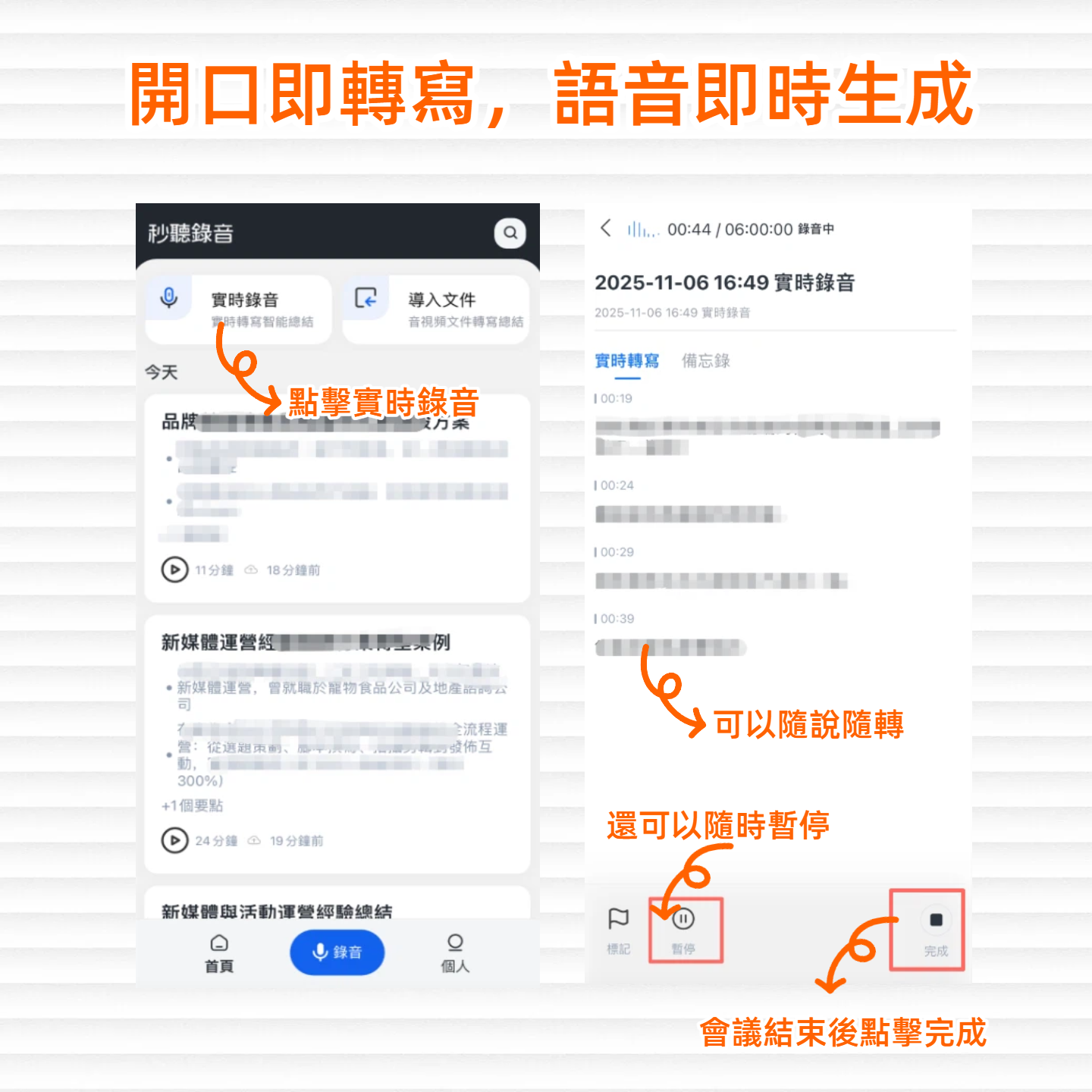
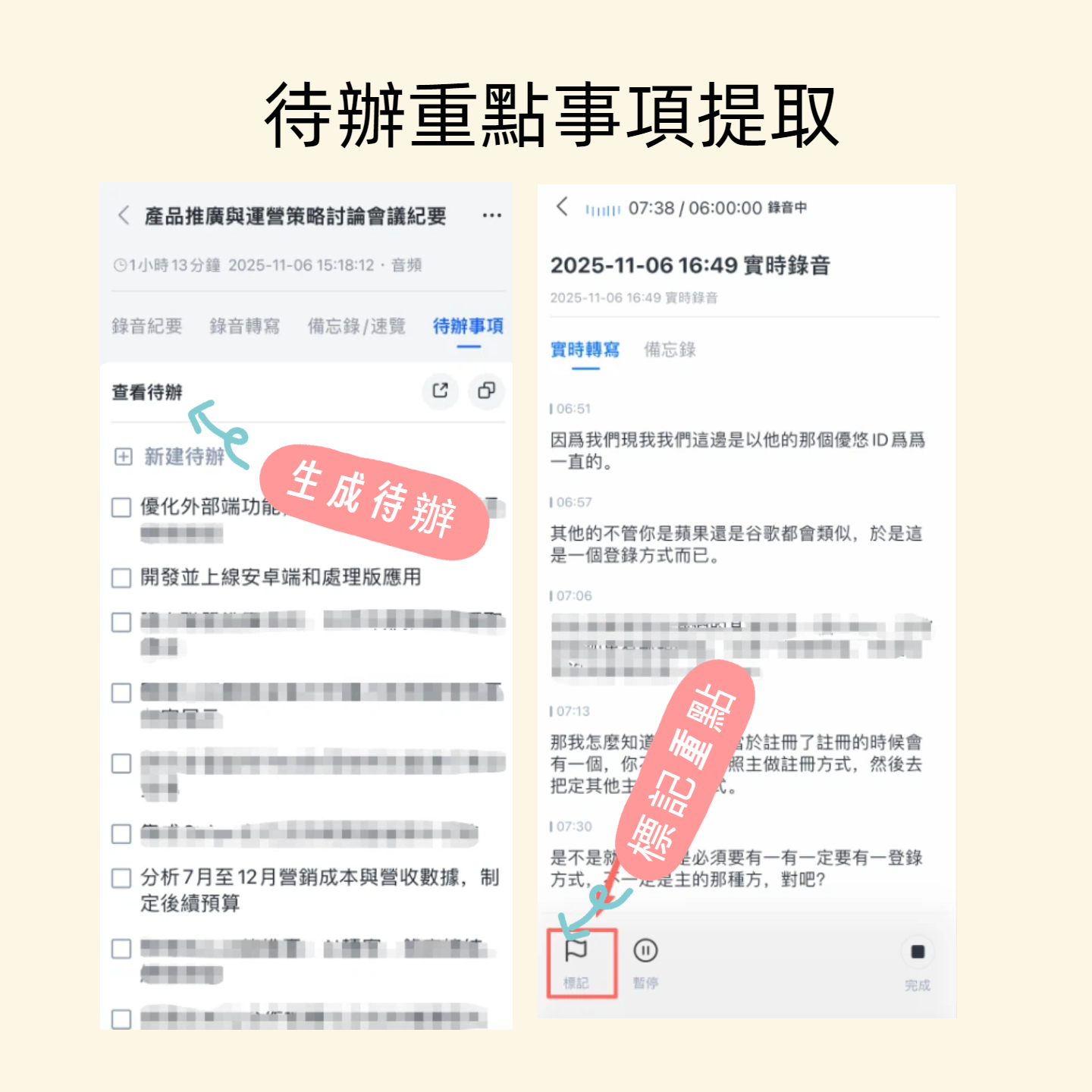
- How it works: Recordings are transcribed in real time, and after the recording ends, meeting minutes and to-do lists are automatically generated.
- Advantages: Automated workflow, supports multilingual recognition (including Chinese, English, Japanese, etc.), and features an AI chat query function to ask questions directly about the recording content.
- Suitable Scenarios: Frequent business meetings, class notes, cross-language interviews.
Tool Comparison: How to Choose the Right Solution for You?
To help you better understand which approach suits you, we compare the DIY combo (NotebookLM) and the integrated tool (Tinrec) across several dimensions:
Stop organizing recordings by hand
Upload audio or video and automatically get a transcript, summary, and action items
| Comparison Dimension | DIY Combo (NotebookLM + Shortcuts) | Integrated Tool (Tinrec Voice Memo Transcription) |
|---|---|---|
| Real-time Capability | Low (requires upload after recording) | High (real-time transcription during recording) |
| Ease of Use | Medium-high (needs to set up Shortcuts, cross-platform import) | Low (one-click start, automatic generation) |
| Summary & Action Items | Strength (good at logical summaries of long texts) | Strength (generates meeting minutes and to-do lists) |
| Language Support | Depends on the quality of the uploaded file | Supports automatic recognition and translation for 10 languages |
| AI Query Method | Through the notebook interface | Built-in AI chat for Q&A based on recording content |
| Cost | Free (but storage and API may change) | Free tier (100 minutes/month) / Paid upgrade |
Deep Dive: Tinrec's Differentiating Features
Among similar tools, Tinrec is not just a "transcription machine" but optimized for "post-application." Compared to traditional voice recorders or pure transcription software, its core value lies in:
1. Structured Meeting Minutes
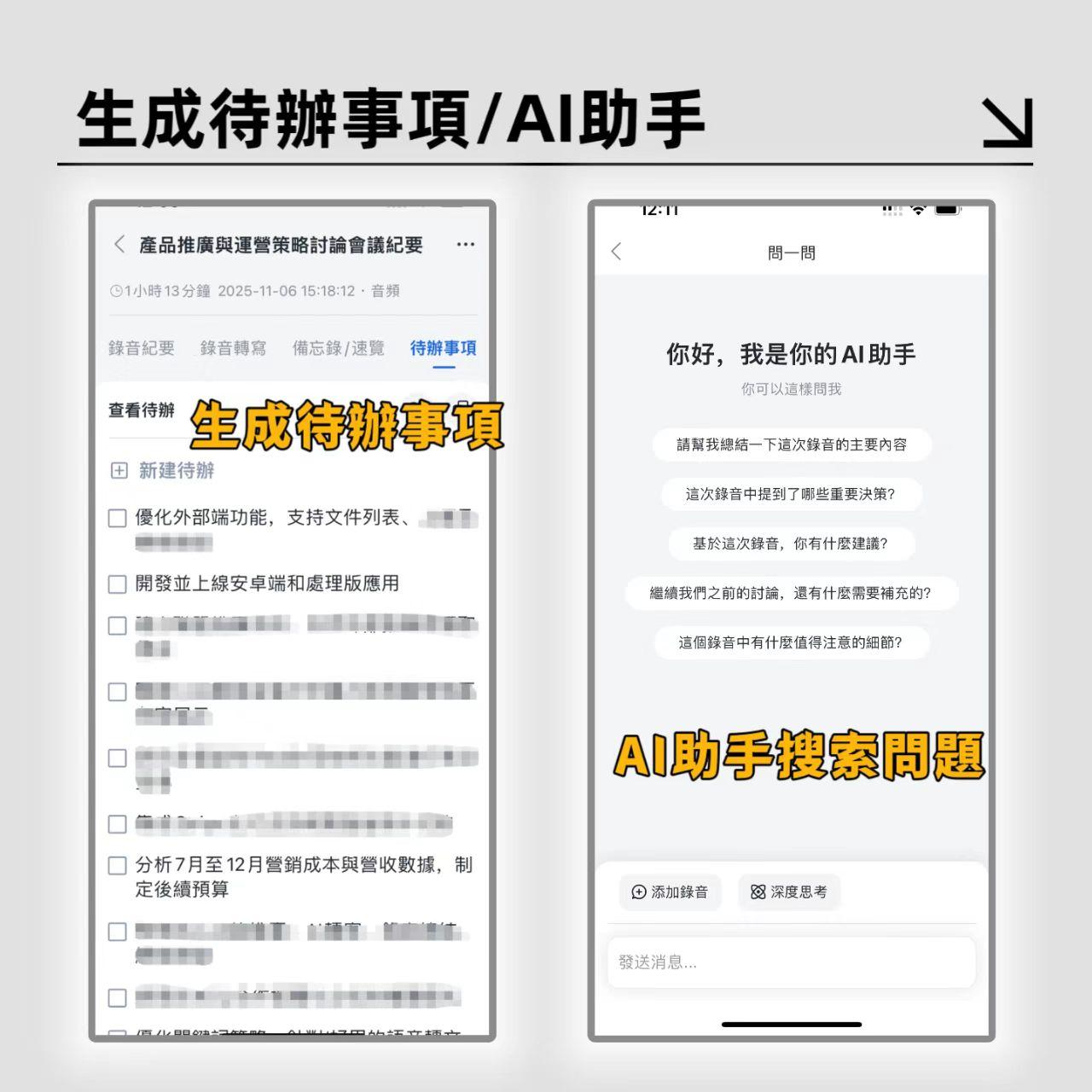
Unlike plain transcripts, Tinrec can automatically extract "decisions" and "action items." For business users, this directly converts recordings into work assignment sheets.
2. Cross-Media Content Input
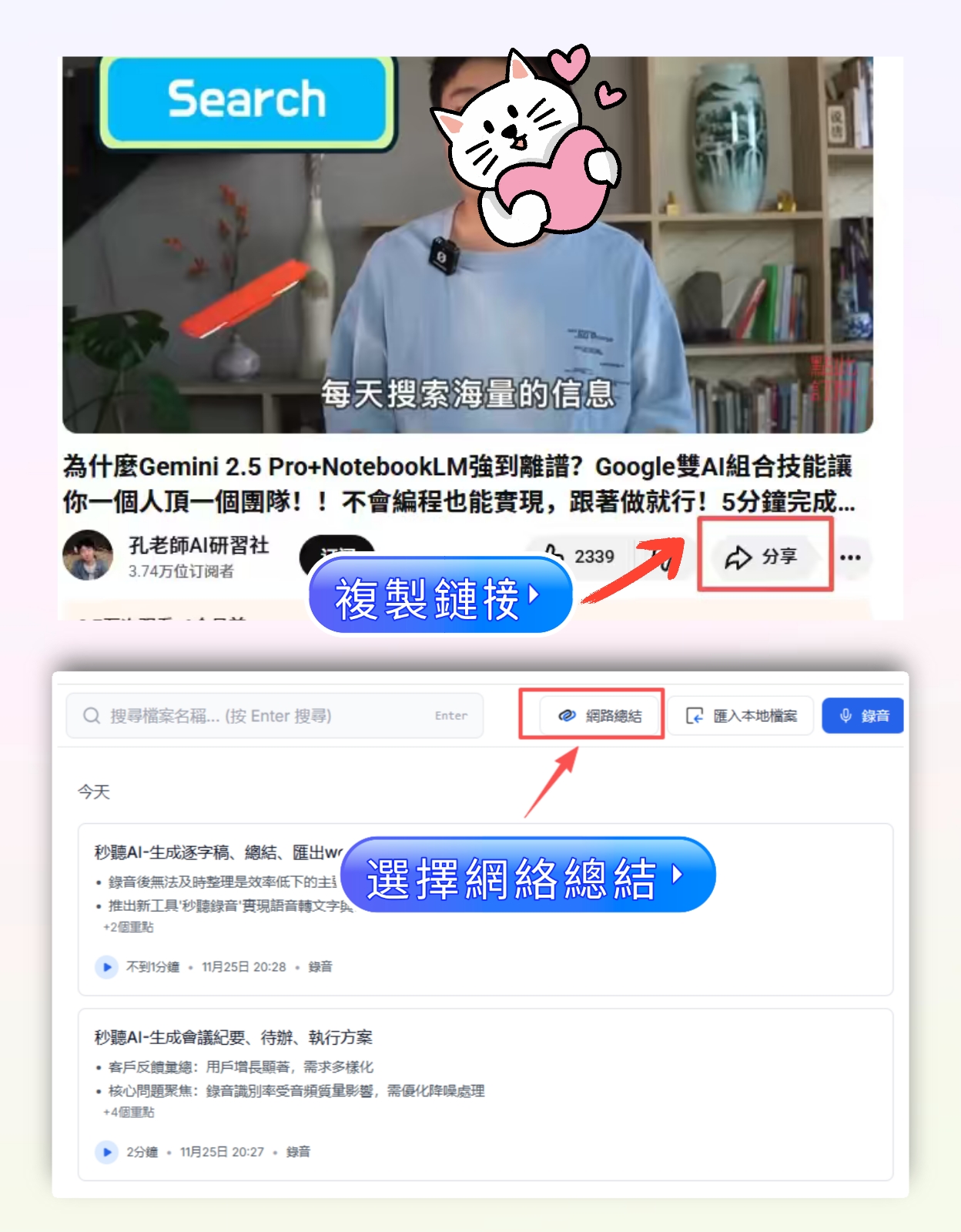
Besides live recordings, Tinrec supports importing audio/video files, and even YouTube or podcast links to generate summaries. This greatly lowers the barrier to information access for students or creators who need to organize online learning resources.
3. AI Conversational Query
This is Tinrec's biggest differentiator from traditional tools. When you need to confirm "What was said about the budget in last week's meeting?" you don't need to search through thousands of words of transcript; just type your question in the AI chat box and the system answers based on the recording content.

Step-by-Step Tutorial: How to Efficiently Convert Recordings into Summaries
Below, using Tinrec as an example, we show how to build an efficient "recording to notes" workflow:
Step 1: Start Recording or Import a File
- Live Scenario: Open the app and tap the microphone icon on the home screen; the system will automatically start recording and display text simultaneously.
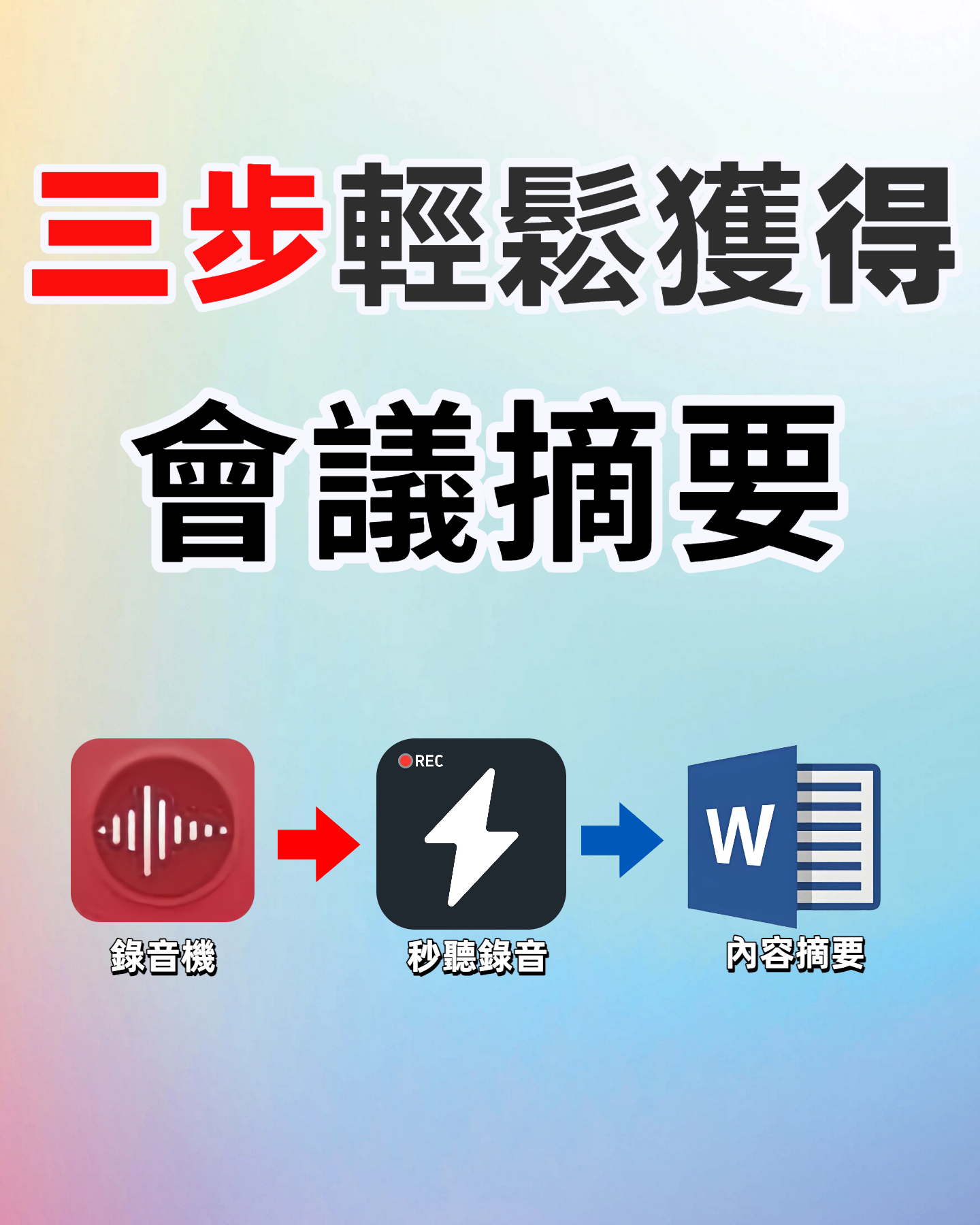
- Existing File: If you've already recorded a file with iPhone Voice Memos, use the "Import Audio" feature to upload it.
Step 2: Select Language and Recognition
- Before recording or uploading, confirm the language settings. If the meeting mixes English and Chinese, Tinrec can automatically detect and differentiate speakers.
Step 3: Generate AI Summary and Action Items
- After the recording ends, tap the "AI Summary" button. Within seconds, the system generates a structured note containing a "Summary," "Key Points," and "To-Do List."
Step 4: Use AI to Query Details
- If the summary misses specific data, tap the "AI Chat" feature and enter a question like "What is the deadline for this project?" The system will accurately retrieve the recording content and provide an answer.
Frequently Asked Questions (FAQ)
Q1: Can iPhone Voice Memos directly transcribe to text?
iPhone's built-in feature supports partial transcription in certain iOS versions, but it's weak at summarizing long recordings and has limited export formats. It's recommended to use Shortcuts or a professional app.
Q2: Does Tinrec require a constant internet connection for recording?
To ensure real-time transcription accuracy and speed, most live transcription features require an internet connection. However, Tinrec also supports post-recording upload processing.
Q3: What are the limitations of free versions?
Most tools (including Tinrec) offer free tiers. Tinrec's free version provides 100 minutes of transcription per month, which is usually sufficient for occasional meeting or class recordings.
Q4: Can AI understand mixed Chinese and English speech?
Modern AI tools like Tinrec are optimized for multilingual environments, supporting mixed recognition of Chinese, English, Japanese, Korean, and more, suitable for international meetings.
Q5: Can I convert YouTube videos into text notes?
Yes. Tinrec's "Video to Text" feature supports inputting video links to directly generate transcripts and summaries without downloading the video file.
Q6: Is the data from voice-to-text secure?
When choosing a tool, review the privacy policy. Professional paid tools typically offer better data encryption and privacy protection than obscure free conversion websites.
Turn every recording into actionable outcomes
Get 60 free transcription minutes when you sign in. No credit card required.
Related Reading
You might also like

2026 Comparison of 4 Meeting Transcription Tools: Who Does Permission Management Best?
Who should see meeting notes? This article examines four key points—roles and seats, team-level sharing, data ownership after member departure—and compares the permission management designs of Tinrec, Otter.ai, Fireflies.ai, and Granola, plus four common pitfalls to help you think clearly before adoption.

2026 Comparison of 4 Tencent Meeting AI Notes Alternatives: Which Handles Bot-Free Recording and Post-Meeting Q&A Best?
Tencent Meeting's built-in AI notes are sufficient for single-platform users, but when meetings span Zoom, Meet, and Teams, or when you need to process client-sent audio files, the issue isn't accuracy—it's whether the tool can handle all your sources. This article uses the same set of meeting materials to test four approaches, comparing input sources, recording methods, post-meeting Q&A, and team data retention, and highlights the three most common mistakes when choosing a tool.

2026 Tinrec Meeting Data Governance Tutorial: Bot-Free Recording + Team Data Retention
After the meeting ends, does the data really stay? This article starts from the decision-making focus of 'meeting data governance,' guiding you through four key decision points. It tests Tinrec's bot-free recording, AI Q&A, and team space, compares the applicable scenarios of Otter.ai, Notta, and Granola, and includes a pitfall avoidance guide and a quick-start checklist.

Tinrec Personal vs Team Space: What's the Difference? 2026 Comparison
What's the difference between Tinrec Personal and Team Space? This article compares data ownership, sharing permissions, member seats, usage governance, and real-world scenarios to help you decide whether to use Personal or Team.

Tinrec vs Notta 2026: 5-Factor Comparison for Enterprise Meeting Data Management
Enterprise meeting data is scattered across recordings, chat rooms, and personal laptops. Which tool should you choose to centralize management? This article compares Tinrec and Notta across 5 key purchasing dimensions, with brief reviews of Otter.ai and Granola, to help you find the best solution for your team's meeting assets.

2026 AI Meeting Agent Guide: How Tinrec Turns Meetings into Searchable, Actionable Data
A hands-on guide to AI meeting agents for college students. It starts with common pitfalls, explains why meeting bots or transcripts alone aren't enough, and compares Tinrec with Otter, Notta, and Granola on meeting capture, Chinese recognition, AI Q&A, recording retention, and free tiers. It also covers practical uses for lectures, group discussions, project interviews, and internship meetings.

2026 Comparison of 4 Meeting Notes Tools: Which One Has the Best Team Audit Logs?
From team audit logs and seat management to Chinese meeting transcription, we compare Tinrec, Otter, Fireflies, and Notta to help you find the best meeting notes tool for team governance.

2026 Comparison of 4 Meeting Data Sharing and Governance Tools: Which One Can Truly Turn Meetings into Team Assets?
Sharing meeting data is not the same as governing it. This article starts with the most common sharing pitfalls teams encounter, outlines four key purchasing criteria: data ownership, roles and seats, post-meeting outputs, and retention and recovery. It tests Tinrec and compares it with Otter.ai, Notta, and PLAUD to help you determine which tool can truly turn meetings into usable team data.

2026 Meeting Audio Recycle Bin Guide: Recover Deleted Recordings Within 30 Days + Handover When Team Members Leave
Can deleted meeting recordings really be recovered? This guide starts with three common misconceptions, explains how a meeting audio recycle bin works, retention periods, and team data handover considerations. It also compares Tinrec, Granola, Otter.ai, and PLAUD in terms of audio file retention and post-meeting organization, with 4 key buying tips to avoid pitfalls.