
Blog - Page 16 - Tinrec
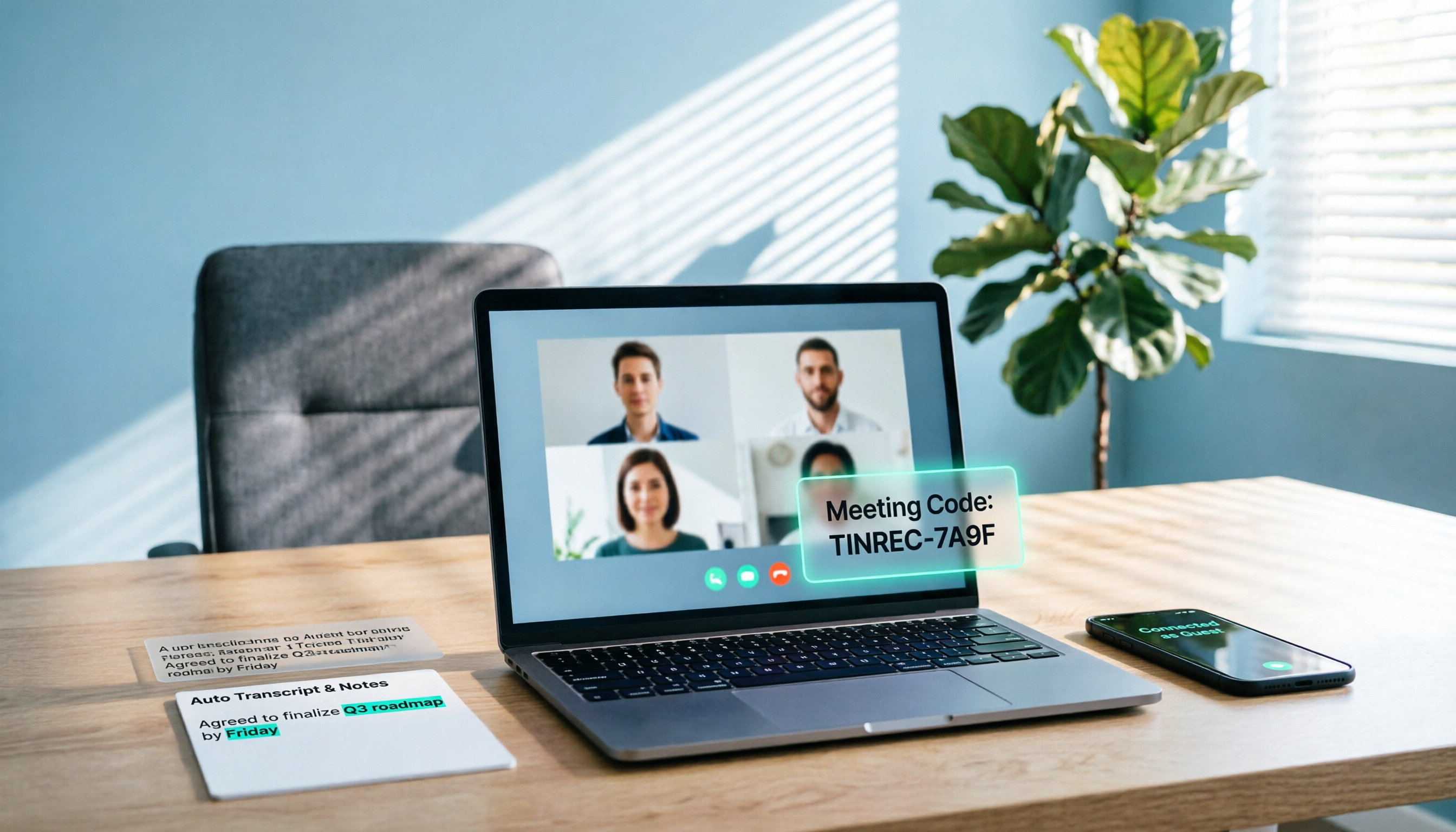
4 Ways to Join Google Meet Without an Account in 2026: From Meeting Codes to Post-Meeting Notes
Can you join Google Meet without a Google account? This article compares four methods for joining without an account—from browser guest access and meeting codes to mobile apps—and covers host admission rules, common pitfalls, and ways to retain meeting content afterward, so you can attend meetings smoothly without registering for Gmail and keep a record of what was discussed.

How to Record Google Meet in 2026: 5-Step Tutorial and a No-Bot Solution
Many people can't find the record button in Google Meet—it's actually a plan eligibility issue; free accounts don't have native recording, and even paid plans require manual organization after recording. This guide demonstrates how to record Google Meet without a bot using Tinrec desktop in 5 steps, automatically generating transcripts, summaries, and action items, and covers native limitations, purchasing considerations, and FAQs.

Google Meet Recording in 2026: 3 Methods Compared — Why Tinrec Is Better for Post-Meeting Organization
How does Google Meet work? The free version supports up to 100 participants and 60-minute meetings, but transcription and Gemini notes are only available on select plans. This article breaks down Google Meet's operating logic and practical limitations, and compares Tinrec's differences in bot-free recording, post-meeting organization, cross-platform unification, and team knowledge retention.

2026 Comparison of 3 Google Meet Meeting Notes Tools: Which One Saves You Post-Meeting Cleanup Time?
Starting from actual Google Meet use cases, this compares three meeting note approaches: Google Meet built-in recording, Otter.ai, and Tinrec. It explains differences in bot-free recording, transcripts, summaries and action items, and team data retention, helping you decide which fits your work style.

2026 Complete Guide to Google Meet Links: 6 Ways to Create and Post-Meeting Organization
Starting from a real campus group project scenario, this guide thoroughly covers 6 methods to create Google Meet links, including desktop, mobile, Calendar, and Gmail entry points, and explains the difference between instant meeting links and scheduled meeting links. At the end, it explains how to use Tinrec after a meeting to turn transcripts, summaries, and action items into deliverable materials.

Google Meet Screen Sharing in 2026: Tab vs. Window vs. Entire Screen Compared
Sharing your screen in Google Meet may seem like a one-click task, but the three modes—tab, window, and entire screen—differ completely in audio, privacy risks, and ideal use cases. This side-by-side comparison breaks down the steps, sound settings, mobile differences, and common pitfalls for each sharing method, plus practical tips on how to capture and turn meeting content into searchable team knowledge after sharing.

Google Meet Recording in 2026: 3 Methods Tested and Compared — Which One Actually Preserves Your Meeting Record?
Google Meet's native recording isn't hard to find because the button is hidden — it's gated by three barriers: plan eligibility, admin controls, and file ownership. This article starts from where readers get stuck most often, explains the full prerequisites for built-in recording, and compares three alternative approaches — Tinrec, Otter.ai, and Granola — to help you decide which method fits which scenario.

3 Google Meet Note-Taking Tools Tested for 2026: Which Saves the Most Time in Video-Off Meetings?
You can join, see, hear, and speak in Google Meet without turning on your camera, but the real challenge is remembering what happened afterward. This article first covers 4 key settings before turning off video (join requirements, hiding tiles without video, profile picture, post-meeting notes), then tests and compares Tinrec, Otter.ai, Granola, and Notta in video-off Google Meet meetings, with 4 pitfalls to avoid and scenario-based recommendations.