

Turn recordings into transcripts and summaries in minutes
Upload audio or video for multilingual transcription, AI notes, and action items
I've tested quite a few simultaneous interpretation tools, and honestly, most free ones are pretty bad.
Either the delay is so high you feel like you're listening to alien language, or the translation quality makes you wish you had just looked up each word on Google yourself.
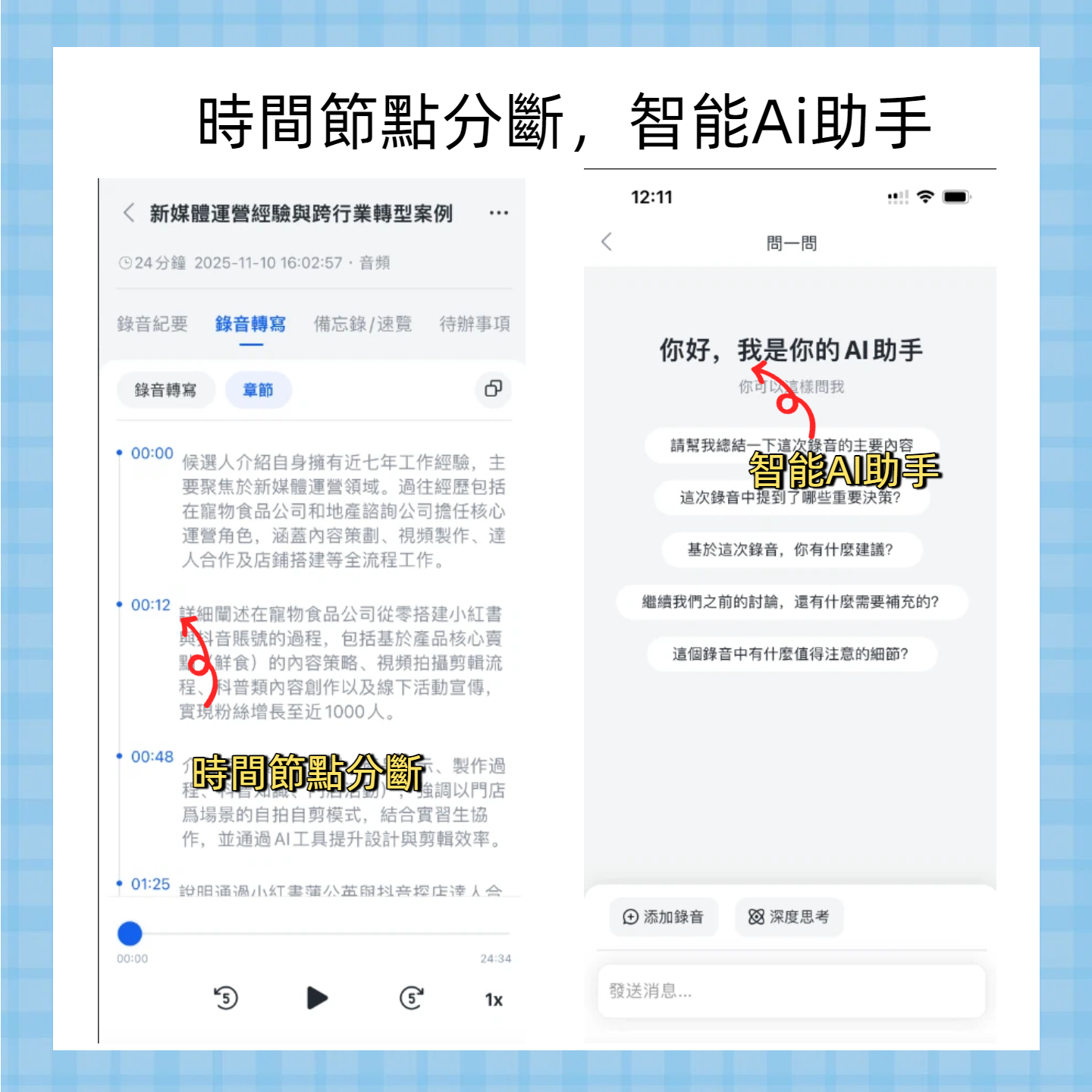
Later, while looking for a meeting transcription tool, I happened to try Tinrec's real-time translation feature—surprisingly smooth, and the free version comes with a decent usage quota, which is pretty generous.
This article won't bore you with what simultaneous interpretation is; I'll walk you through using Tinrec's free version in just 4 steps.
What Can Simultaneous Interpretation Do for You?
Before, when I needed real-time translation, I either had to pay for an interpreter or open a translation app and tap word by word—awkward and slow.
Now with AI tools like Tinrec, just feed in the audio and the text pops up, already translated.
Here are a few scenarios I've actually used it for:
- Cross-border online meetings: When meeting with foreign clients speaking English, I use Tinrec to translate into Traditional Chinese in real time, reading along while listening, so I never miss key points.
- Language learning: For foreign podcasts or YouTube videos, I use Tinrec to convert the content into Chinese subtitles on the fly, comparing with the audio—much more efficient for learning.
- Traveling abroad or attending exhibitions: At a trade show, I open Tinrec next to me while talking to foreigners; it listens and translates on the go. It's not word-perfect, but more than enough for communication.
- Interviews or research: When interviewing non-English speakers, I use Tinrec to record and translate in real time, saving the hassle of transcribing and translating later—transcripts and translations done in one go.
Core Capabilities of Simultaneous Interpretation
When choosing a tool, I'm practical: low latency, accurate translation, and the ability to save results.
Tinrec's performance in simultaneous interpretation lives up to its positioning.
Real-time speech-to-text plus translation
It doesn't wait until you finish speaking to slowly transcribe; it outputs text as you speak. I've experienced about a 1-second delay with Tinrec, almost imperceptible during meetings—a world away from the old spinning-wheel waiting game.
Multi-language support
Tinrec supports translation between multiple languages, including common pairs like Chinese-English, Chinese-Japanese, and Chinese-Korean. I tested it in meetings with mixed Chinese and English, and both recognition and translation were stable, without interruptions when switching languages.
Save and review translations
Many free tools let translations disappear right after. Tinrec saves your real-time translations as text records that you can review, search, and even export later. This saves tons of time for those who need meeting minutes or reports.
AI-assisted understanding
If a translation seems off, you can ask Tinrec's built-in AI questions like "What's the true meaning of this original sentence?" It provides context-based explanations, not just dictionary definitions. This is very handy in business communication.
Stop organizing recordings by hand
Upload audio or video and automatically get a transcript, summary, and action items
Practical Application Scenarios
Simultaneous interpretation isn't just for business meetings. Here are some everyday examples:
Scenario 1: Remote meeting with Chinese-English real-time translation
When my team meets with overseas partners, I keep Tinrec open with real-time translation—video on the left, Tinrec on the right. Whatever they say shows up in Chinese. Before I reply, I can glance to check if I got it right. It's almost as smooth as having an interpreter.
Scenario 2: Studying abroad or attending online classes
Listening to a foreign professor's live lecture with fast speech and jargon. I use Tinrec to record and translate simultaneously. After class, I save the transcript and translation, and review Chinese notes instead of scribbling frantically.
Scenario 3: Interviewing foreign guests
For a feature article, I interviewed a foreign artist. I brought my phone, used Tinrec to record and show the real-time translation to the guest to confirm understanding. Afterward, I exported both the transcript and translation directly for the editorial team—no need for manual transcription or translation.

Scenario 4: Summarizing YouTube or TikTok videos
For foreign tutorial videos or news clips, I use Tinrec to parse the video link. It not only transcribes the original language but also offers real-time translation into Chinese. This doubles my material collection speed for research or writing.
Points to Consider When Choosing a Simultaneous Interpretation Tool
There are many free tools out there, but many cut features so much they're barely usable. Here's what to look for:
1. Latency and stability
Latency is the biggest enemy of real-time translation. Some tools claim to be real-time but lag behind, finishing after the speaker has moved on. Tinrec's latency is about 1 second in my tests, which beats most free options.
2. Language pair coverage
If you only need Chinese-English, most tools work. But if you need Japanese, Korean, or European languages, check coverage. Tinrec supports a wide range of languages, handling common scenarios better than apps limited to a few.
3. Is the free version actually usable?
Some free versions give only 5 minutes per day or limit to short phrases. Tinrec's free version offers a monthly basic transcription quota, enough for a few meetings or short videos. You can truly test the tool without being forced to pay upfront.
4. Can results be saved and reused?
If a tool translates but doesn't save or export, it's limited for workflows. Tinrec lets you review history, export text files, or share links—critical for team collaboration or personal knowledge management.
5. Cross-platform support
You might use it on a computer during meetings and on a phone on the go. Tinrec has iOS, Android, and web versions, making switching between devices seamless.
FAQ
Q: How long can I translate with Tinrec's free version?
The free version provides a monthly basic transcription quota, and real-time translation uses that quota. For occasional meetings or videos, it's quite sufficient. Check the app for exact limits; downloading and looking at the plans page is the most accurate way.
Q: Does simultaneous interpretation require internet?
Yes, because it uses cloud AI processing. A stable internet connection is required (Wi-Fi or 4G/5G). If the connection drops, translation will pause.
Q: How accurate is the translation?
In my tests with Chinese-English meetings and interviews, as long as accents aren't too heavy and the environment isn't too noisy, accuracy is around 85% or higher. It may still make mistakes with technical terms, so always verify original text for important content.
Q: Can I record audio while translating?
Yes, that's one of Tinrec's strengths. You can have real-time translation on while it records both the original and translated text. Afterward, you can replay the audio and view timestamped text.
Summary
Simultaneous interpretation is no longer high-tech, but truly free and good tools are rare.
Tinrec not only excels at meeting transcription but also offers practical real-time translation, especially with a generous free version that doesn't choke you after the trial period.
If you often deal with cross-language meetings, courses, or video content like I do, I genuinely recommend giving it a try. Start with the free version for a few meetings, and you'll see how much time it saves.
Turn every recording into actionable outcomes
Get 60 free transcription minutes when you sign in. No credit card required.
Related Reading
You might also like

How to Stay Focused While on a Mobile Meeting? Complete Guide to Google Meet On-the-Go Mode and Meeting Notes Tips
This guide walks you through setting up Google Meet On-the-Go mode to join meetings smoothly while commuting, walking, or moving, and explains how to use recording tools to quickly convert meeting content into transcripts, summaries, and action items.

How to Start a New Google Meet and Turn Recordings into Reusable Content: From Link Creation to AI Summary Export
This hands-on tutorial walks you through quickly creating a new Google Meet from Gmail, Google Calendar, or meet.google.com, and shows you how to use Tinrec to convert meeting recordings into transcripts, summaries, and action items—turning every discussion into searchable, organizable text assets.

2026 Comparison of 3 Google Meet Recording and Transcription Tools: Which Free Plan for Windows Users Is Best?
Using Google Meet on Windows has no built-in recording feature, making meeting notes cumbersome. This article tests 3 recording and transcription tools, showing how to pair them with PWA for efficiency and find the best free plan for Chinese users.
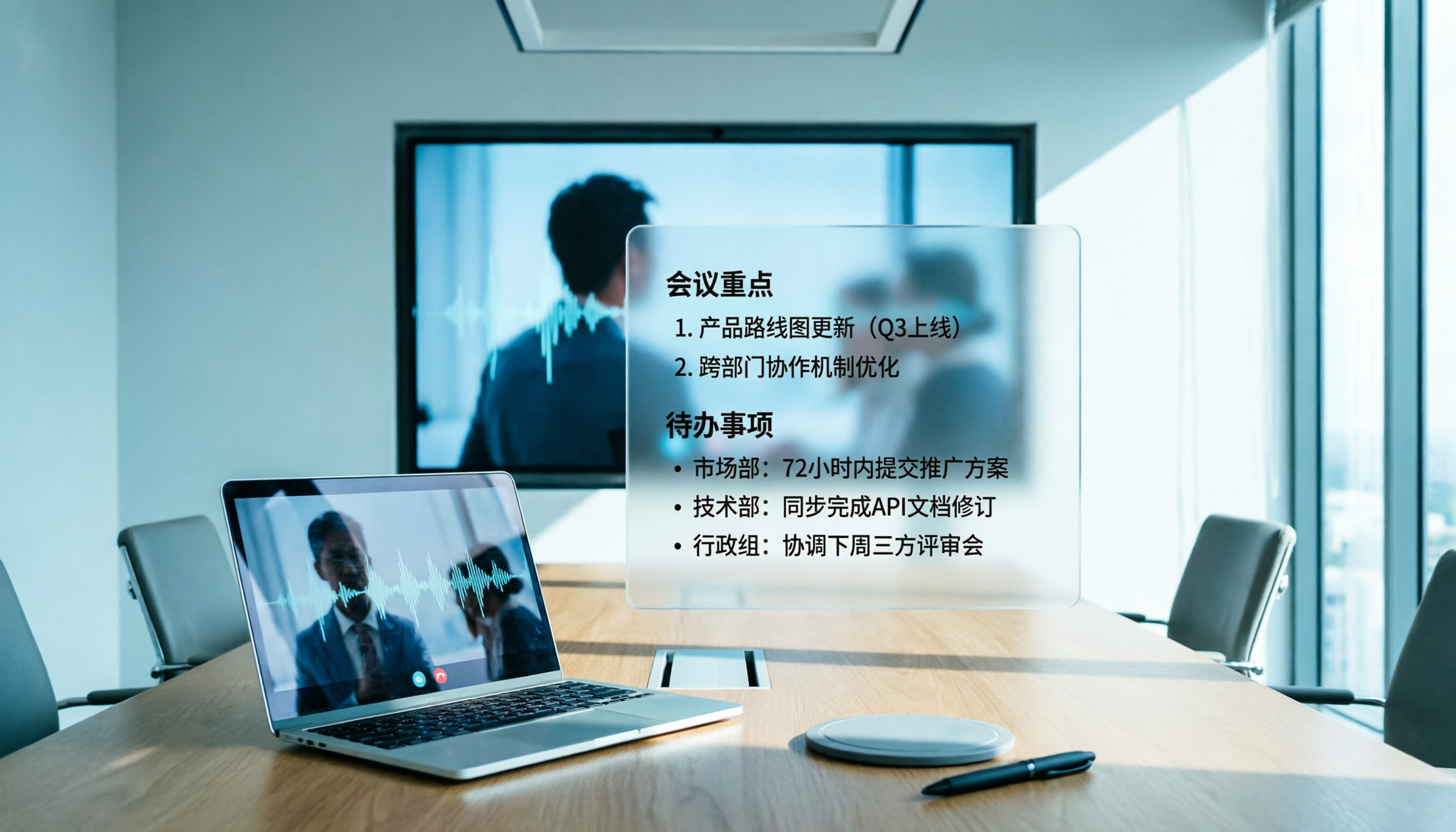
4 Google Meet Transcription Tools Compared in 2026: Which AI Summary Saves You the Most Time?
Struggling to record Google Meet meetings on your TV? This article tests Tinrec, Otter.ai, Notta, and Yating transcript, comparing cross-platform support, Chinese accuracy, and AI summarization to help you find the best meeting recording tool.

2026 Comparison of 4 Auto Video Captioning Tools: Which Free Plan Is Most Useful?
Tested multiple auto video captioning tools, analyzed free version limitations and real-world experience, and recommend the best solution for Taiwan users that supports Chinese and has sufficient free quota.
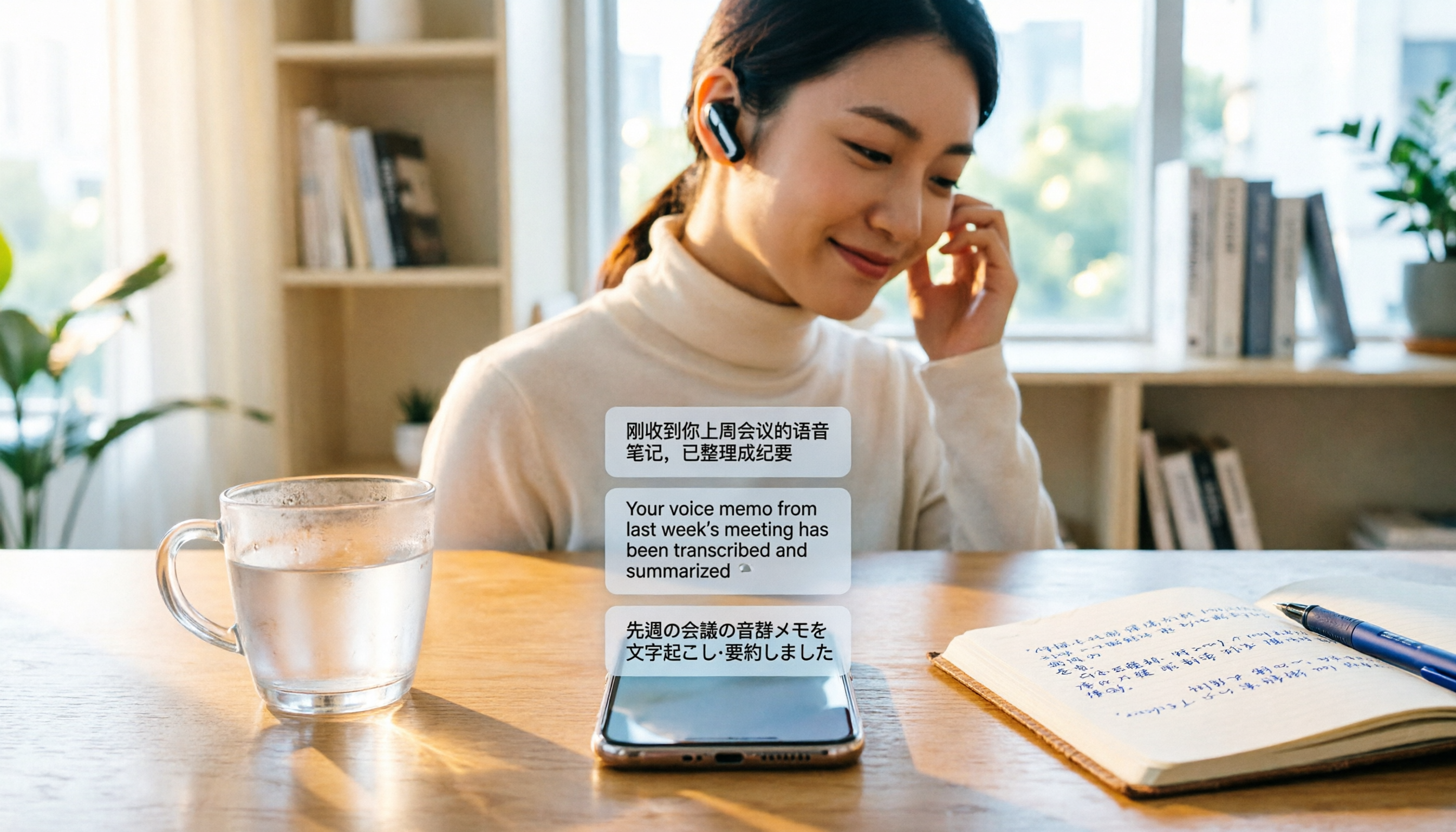
2026 Free Recording Transcription Apps: 3 Top Options Compared
A review of 3 free recording transcription apps, including hands-on experience, key buying tips, and common pitfalls to avoid. Find the best voice-to-text tool for your needs.

A Complete Guide to AI Subtitle Generation in 2026: How to Auto-Generate Video Subtitles
Need subtitles for your lecture recordings? Learn these 5 steps to quickly transcribe videos and auto-generate subtitles with Tinrec, saving you manual typing time. Tested by students – the free tier is enough!

2026 Tinrec vs Notta: A 5-Dimension Comparison — Which Is More Comprehensive for Meeting Notes and Knowledge Management?
Still using real-time translation tools but struggling to organize transcripts? This article compares Tinrec and Notta across 5 dimensions—language support, post-processing capabilities, use cases, and more—to help you choose the best tool for meeting notes and knowledge management.

2026 Tinrec Online Subtitle Generator: No Installation, AI-Powered Multilingual Subtitles
Struggling to follow lectures or keep up with meeting notes? This article, tested by a senior student, compares 5 online subtitle generators, including Tinrec, Otter.ai, and Notta, from free plans to paid value, helping you find the best subtitle tool for students.