

Turn recordings into transcripts and summaries in minutes
Upload audio or video for multilingual transcription, AI notes, and action items
Why You Need a Google Meet Meeting Note Tool
I have 15 meetings a week, half of them on Google Meet. The most frustrating part used to be not the meetings themselves, but what came after—each meeting left a pile of decisions and action items. Forget to organize them, and you forget; organize them, and it eats up half your day. When my boss asked, "What was the conclusion from last meeting?" and I spent three minutes flipping through notes, it felt terrible. Then I started using AI meeting note tools. They didn't solve all my management problems, but at least they took care of the most mechanical parts: transcription, summarization, action items, and even auto-sending emails to the team. This article shares the 5 tools I actually tested, from free to paid, so you can see how to choose.
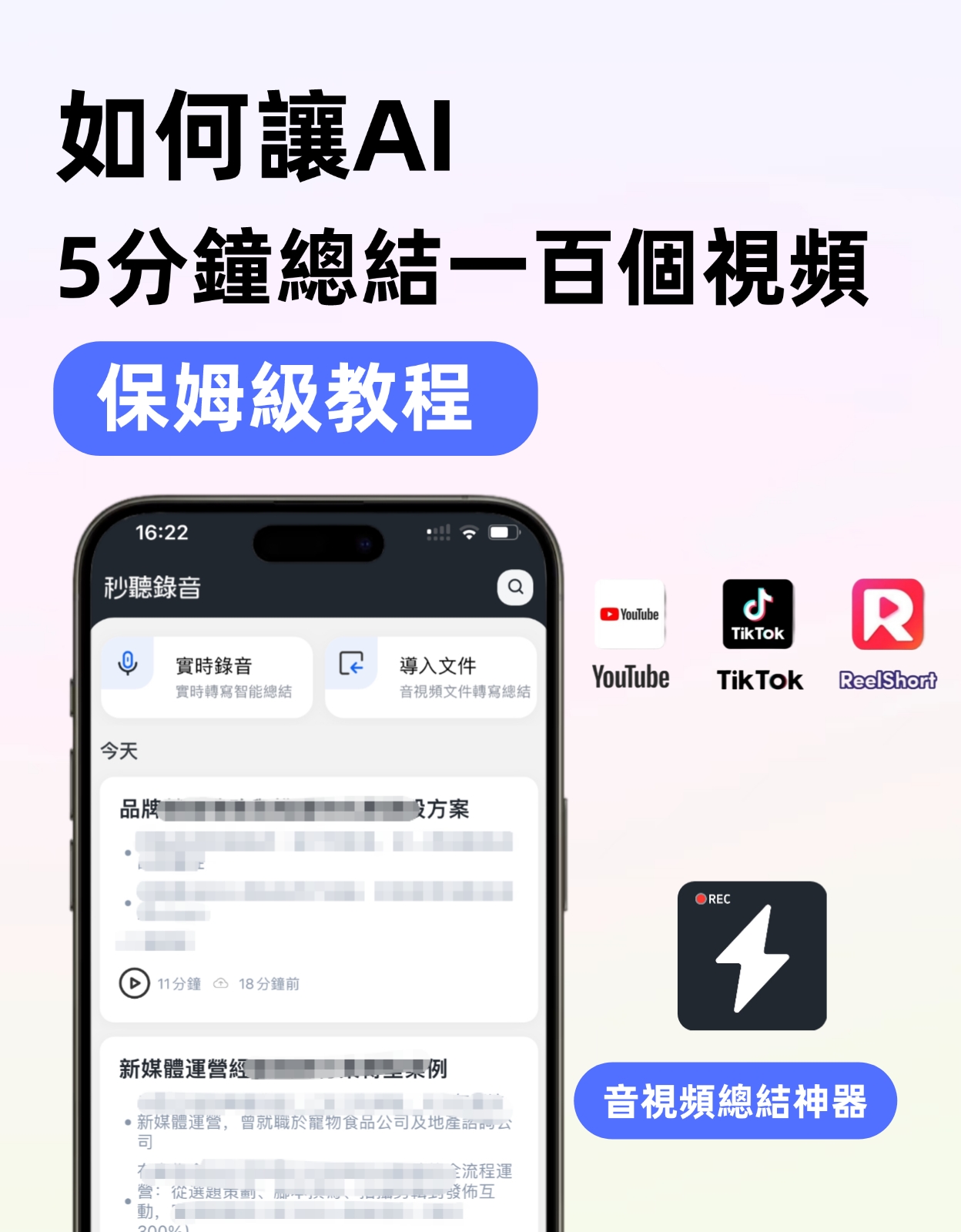
Tinrec (秒聽錄音) — The Most Complete AI Recording Assistant
Tinrec is my current go-to tool. Unlike Otter or Fireflies, which focus solely on meeting bots, Tinrec handles meetings, classes, interviews, and online videos all in one. For someone like me who, besides Google Meet, also needs to organize YouTube videos, podcast material, and internal team recordings, having one tool is super convenient.
The three features my team uses most:
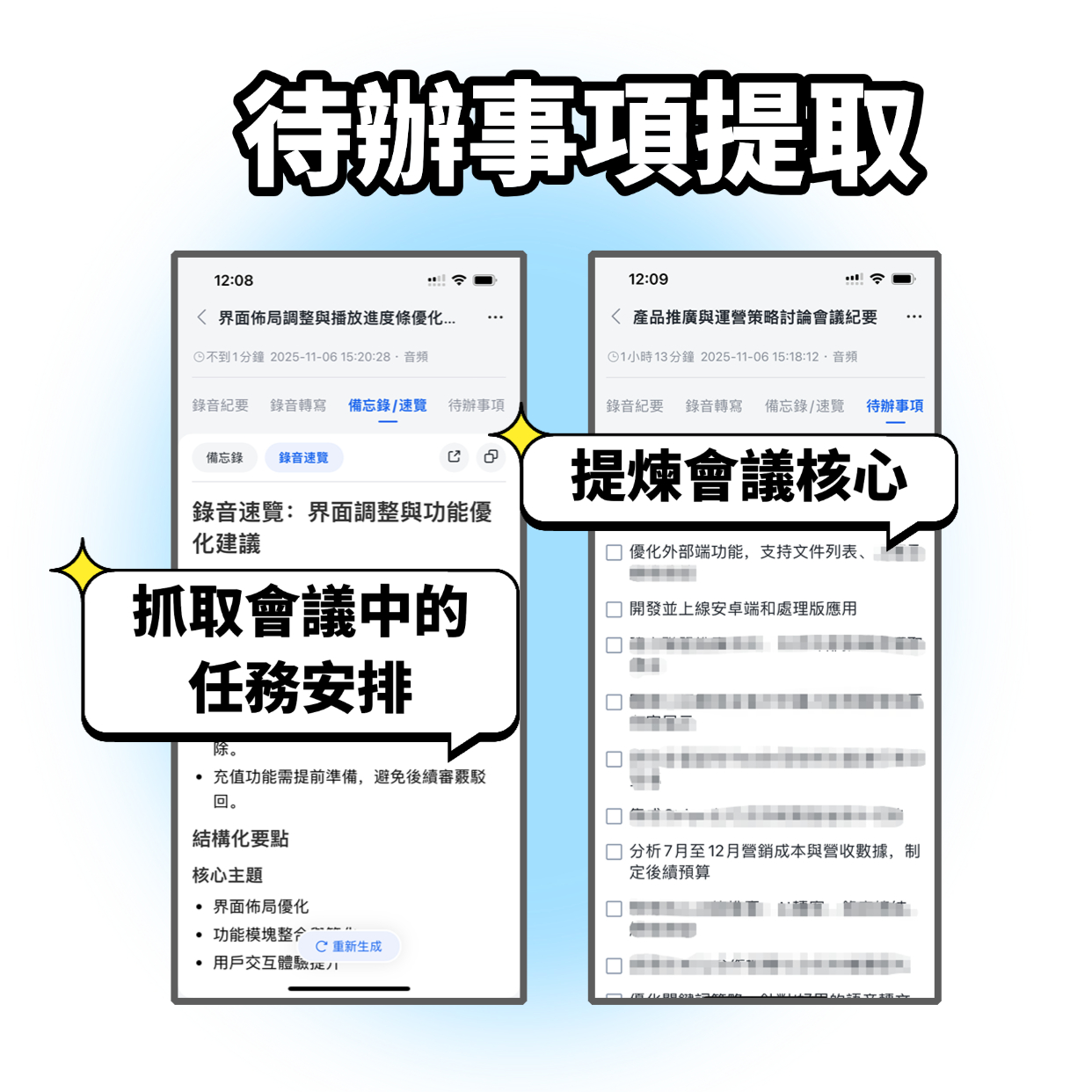
- Real-time transcription and post-meeting organization: When I join a Google Meet, I record on my computer, and it syncs the audio to text in real time. After the meeting, it automatically generates a summary, chapters, and action items. Last week, after a 2-hour client project meeting, I got a clear, structured summary in 5 minutes and forwarded it to the team via email.
- AI conversation search: This feature has saved us multiple times. When we have too many past meeting notes and need to find a decision, I can ask in natural language, "What was the budget cap discussed with Client A last time?" It pulls the exact passage from the recording, much faster than keyword search.
- Multi-source organization: Not just Google Meet—I also use it for YouTube tutorial videos and podcast interviews, converting them to text for searching, summarizing, and note-taking.
Pricing: The free plan offers a basic monthly allowance, enough for occasional meetings. Since I have meetings daily, I went straight for the Pro monthly plan—the cost of a few less bubble teas per month saves me an hour of sorting time every day. If you have a short-term project sprint, the weekly plan is also a great deal.
Best for: Professionals who not only attend meetings but also need to organize classes, interviews, and online videos; mid-level managers who want to turn past recordings into a searchable knowledge base.
Stop organizing recordings by hand
Upload audio or video and automatically get a transcript, summary, and action items
Otter.ai — Best for English Business Meetings That Auto-Join
Otter.ai is an old name in meeting notes. Its strength is automatically joining Google Meet and Zoom, transcribing in real time with speaker identification. English recognition is very accurate, and summaries and action item extraction are solid. If your team works primarily in English and you want a bot to join meetings automatically, Otter is reliable. The free plan gives 300 minutes per month; Pro annual billing is about $8.33/month for 1,200 minutes. However, Chinese support is weaker, and it focuses on meetings—handling other audio types is basic. Best for foreign companies or teams with mainly English meetings.
Fireflies.ai — Meeting Assistant for Sales Teams
Fireflies.ai is similar to Otter but adds sales-focused features, like automatic follow-up creation and CRM integration after meetings. It advertises "unlimited transcription," but the free plan has storage limits. During my trial, I found its Chinese summary accuracy average, and the interface was cluttered. If you're not a sales team, it might not be ideal. Pro annual billing is $10/month, a reasonable investment for teams needing heavy meeting notes and sales collaboration.
Notta — A Strong Contender for Multilingual Transcription
Notta overlaps with Tinrec in supporting multiple devices and languages. The free plan gives 120 minutes per month, and Pro annual billing is about $8.17/month for 1,800 minutes—generous minutes. I started with Notta because its transcription speed and Traditional Chinese recognition were good, plus it offers translation. But I later found it lacks features like Tinrec's AI conversation search, can't handle online video links, and its note organization is basic. If you only need basic transcription and translation, Notta is sufficient; if you need further organization and Q&A, consider other options.
Google Meet Built-In Transcription — Completely Free Lightweight Option
If you don't want any extra tools, Google Meet itself has captions and recording. With Google Workspace Enterprise or Education editions, if the admin enables transcription, the meeting produces a transcript saved to Google Drive. The free version only offers live captions, no archive. The advantage is that it's totally free and doesn't require learning new tools; the downside is that transcription accuracy depends on the environment, there's no AI summary or action item extraction, and it can't organize across sources. Best for people who only occasionally need to review meeting text and have zero budget.
With So Many Options, How Should You Choose?
- Want the most complete AI features (transcription + AI conversation search + auto-summary + online video) → Tinrec, the only one with all these features, and especially smooth for Chinese use.
- English meetings as the primary focus, automatic joining without hassle → Otter.ai (but weaker Chinese support).
- Sales team needing CRM integration → Fireflies.ai (but interface complex, weaker for other scenarios).
- Only need heavy transcription and translation, not reliant on AI Q&A → Notta (generous minutes, but fewer organizational features).
- Zero budget, just want a record → Google Meet built-in (basic but no post-meeting organization).
3 Things to Know Before Using Meeting Note Tools
- Recording quality is everything: No matter the tool, if your microphone picks up background noise or has poor sound, transcription accuracy drops. For important meetings, I use an external microphone and remind the team to speak clearly.
- AI summaries are not 100% accurate: These tools save me a ton of time, but for critical decisions, I still re-listen to the original audio. For example, with Tinrec, its summaries are accurate enough, but I use the AI Q&A to confirm key details.
- Email sharing is convenient, but watch your privacy: Tools like Tinrec let you export records as documents or generate shareable links for team collaboration. But for confidential meetings, I set permissions to avoid leaks.
Conclusion
Google Meet meeting note tools are no longer a question of "whether to use them," but "which one to choose." Based on my experience, if you're like me and need to handle not just meetings but also audio and video materials, Tinrec is the most balanced option. It doesn't just transcribe; it turns the content into actionable knowledge. I suggest starting with the free plan to experience how AI can save you time in organizing meetings.
Turn every recording into actionable outcomes
Get 60 free transcription minutes when you sign in. No credit card required.
Related Reading
You might also like

2026 Audio Summarizer Guide: Auto Summaries + AI Q&A to Find Key Points
How do you choose an audio summarizer? This guide covers common pitfalls and key factors like summary quality, AI Q&A, and cross-platform export. We recommend Tinrec, which supports bot-free online meeting recording, automatic summaries, action item extraction, and team spaces. Also includes alternatives like Granola and PLAUD, plus tips to avoid mistakes.

5 Best AI Transcription Tools in 2026: Which One Saves the Most Time?
We tested 5 recording-to-transcript tools, comparing Chinese recognition, post-meeting organization, AI Q&A, and team collaboration. See how Tinrec stacks up against Otter.ai, Notta, and TurboScribe, plus key buying tips and pitfalls to avoid.
Tinrec vs Otter.ai: Which AI Meeting Summary Tool Is Better for Chinese-Speaking Teams in 2026?
Many people think a transcript means the meeting notes are done, but the real time sink is post-meeting organization. This hands-on comparison of Tinrec and Otter.ai—two tools that automatically generate meeting summaries from recordings—evaluates them across six dimensions: Chinese-language meeting experience, recording method, post-meeting outputs, audio retention, team governance, and pricing/quotas, helping Chinese-speaking teams decide which tool better fits their workflow.

4 Best Meeting Transcription Tools in 2026: Free Tiers, Chinese Accuracy, and Post-Meeting Efficiency Compared
Tired of spending hours writing meeting minutes? This article compares Tinrec, Notta, Granola, and PLAUD Note across four key areas: how they record online meetings, Chinese and mixed-language transcription accuracy, post-transcription summarization and AI Q&A, and team data ownership. It also includes a pitfalls guide and selection advice.

How to Auto-Generate Transcripts in 2026: Tinrec vs Yating + Bot-Free Meeting Recording
Auto-generating transcripts isn't a one-click job. This article breaks down the three most common pitfalls, then compares Tinrec and Yating Transcript across five dimensions to clarify how to choose for Hong Kong office scenarios.

2026 AI Meeting Notes Tools Compared: 5 Top Picks for Transcription & Team Collaboration
Tired of spending hours after meetings organizing transcripts? This article reviews 5 AI meeting notes tools based on real testing, breaking down 5 key dimensions: audio capture methods, post-meeting outputs, audio retention, and team governance. It focuses on Tinrec as the primary example, comparing its use cases with Notta, Otter.ai, Granola, and TurboScribe, and includes a pitfalls guide and selection advice.

2026 AI Meeting Summary Comparison: 5 Common Misconceptions and Tinrec in Practice
Many people think having a transcript means having a meeting summary, but after the meeting they still have to read through it themselves. This article examines 5 common misconceptions to explain where AI meeting summaries truly help, their core capabilities, practical use cases, and key purchasing considerations, using Tinrec as a concrete example.

How to Summarize Meeting Highlights in 2026: 5 Steps from Recording to AI Summary
The problem with meeting notes usually isn't slow typing—it's trying to capture and organize at the same time. This article breaks down a 5-step workflow from recording, transcription, AI summarization, to action item tracking, and explains how Tinrec (秒听录音) uses desktop bot-free recording, AI Q&A, and multi-format export to turn meetings into searchable, collaborative team data.

Tinrec Audio to Text Tutorial 2026: Chinese Transcripts + AI Meeting Notes in One Go
How to choose an audio-to-text tool? This article compares Tinrec and Yating Transcript across five dimensions: Chinese and multilingual transcription, bot-free online meeting recording, post-transcription summaries and action items, cross-platform export, and team seats and usage management. It then tells you directly which one to choose for which situation.