

Turn recordings into transcripts and summaries in minutes
Upload audio or video for multilingual transcription, AI notes, and action items
Last semester I had a class that was entirely on Google Meet. The professor spoke so fast it sounded like rap, and slides flashed by one after another. I tried typing verbatim notes while listening, but when I reviewed for midterms, I realized I had missed tons of key points. My notes were such a mess even I couldn't understand them. That's when I decided I needed a tool to automatically record meeting content for me.
I started with Otter.ai, which many people recommended online. The free version gives 300 minutes per month, which sounds like a lot, but the interface is entirely in English, and it had a high error rate when processing Chinese classroom recordings. Plus, it can't directly paste YouTube links to help me organize calculus videos. Next I tried Notta, which handles Chinese better, but the free version only offers 120 minutes. Between weekly classes and group discussions, I needed at least three to four hours of recording, so I ran out of quota before the month ended. Paying for it didn't seem worth it.
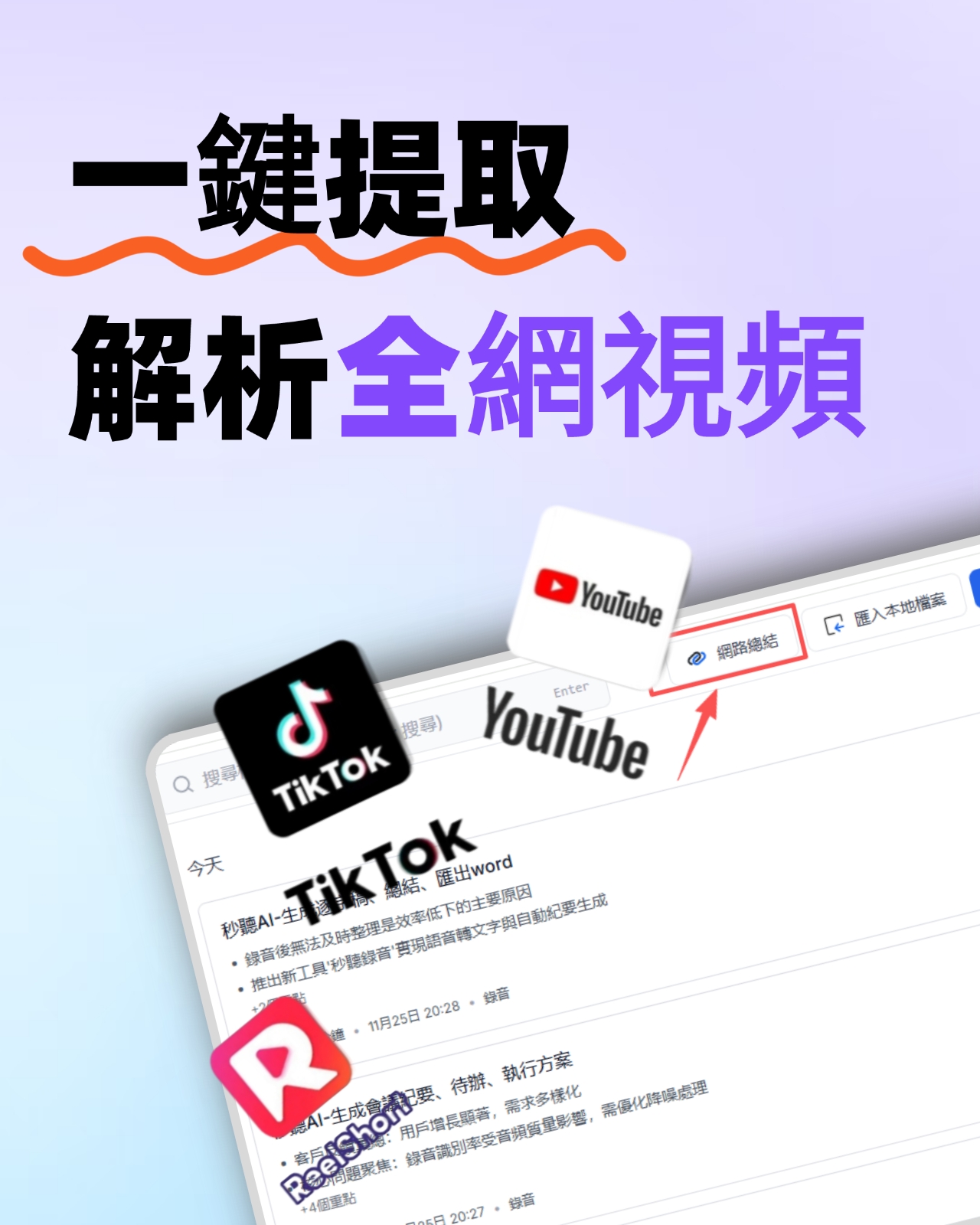
Finally, a senior in my department recommended Tinrec. He used it to record meetings and interviews for his graduation project and said the free version could handle most class needs. I used it all semester, and now even my roommate has installed it.
What Can Google Meet Note-Taking Tools Do for You?
Scenario 1: Real-time Notes for Online Classes
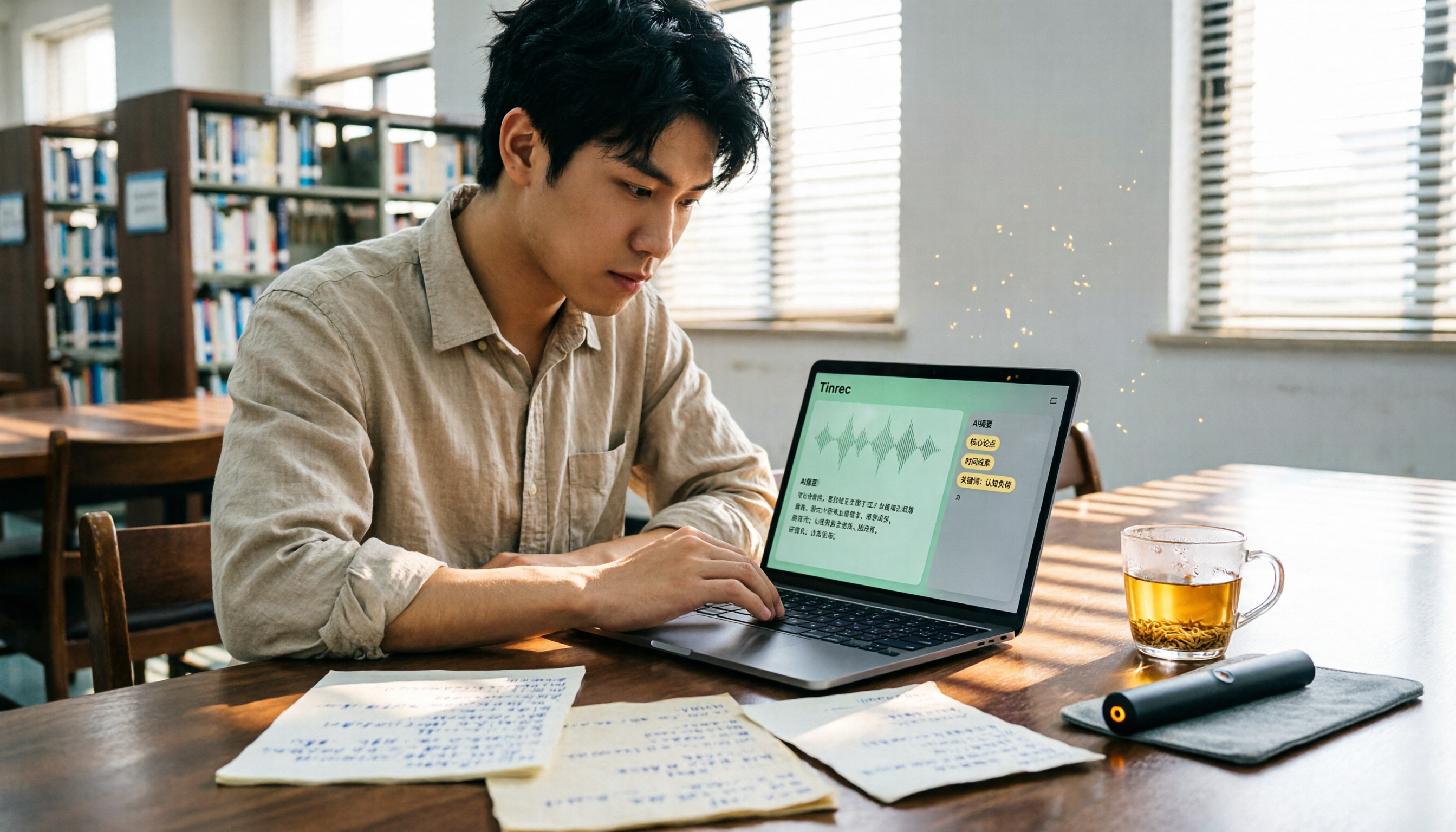
Before, I had to keep screenshotting slides and typing while listening, which was a mess—I couldn't focus on the lecture at all. With Tinrec, I just enable system audio recording on my computer, and it instantly transcribes what the professor says. I can actually concentrate during class and then pull out key points from the transcript afterward.
Scenario 2: Auto-generated Conclusions and To-Dos After Group Discussions
Our senior project team meets weekly on Google Meet, and everyone talks over each other. Often after the meeting, no one remembers who is supposed to do what. Now I start recording with Tinrec before the meeting. When it ends, it automatically generates an AI summary and to-do items like "Azhe is responsible for the survey design, due by 3/15." I just screenshot that and post it in the group chat—no more excuses.
Scenario 3: Search Key Points from Recordings During Review
Before finals, I uploaded all semester's lecture recordings into Tinrec. When I needed to review a specific theory, I just entered a keyword in the AI Q&A, and it found every mention, complete with timestamps—faster than flipping through my notes.
What Are Tinrec's Core Features?
Real-time Transcription It converts audio to text with less than a second delay, so I can instantly confirm I didn't miss key formulas or definitions. I can even mark important segments during class.
AI Semantic Summary It doesn't just condense the transcript; it organizes it into categories like "Meeting Topic," "Conclusion," "To-Do Items," and "Person Responsible." That makes post-discussion notes truly valuable.
Chapter Organization For a two-hour recording, it automatically breaks it into sections with titles. When reviewing, I can jump directly to the part I need without listening from start to finish.
Stop organizing recordings by hand
Upload audio or video and automatically get a transcript, summary, and action items
AI Chat Query You can ask it questions like "What was the conclusion of this meeting?" or "Did the teacher mention the final exam scope?" It answers based on the entire recording—no manual searching required.
Multi-format Export You can export transcripts, summaries, or even sync directly to Notion or Google Docs. That's how I streamlined my final project materials.
Real-World Use Cases
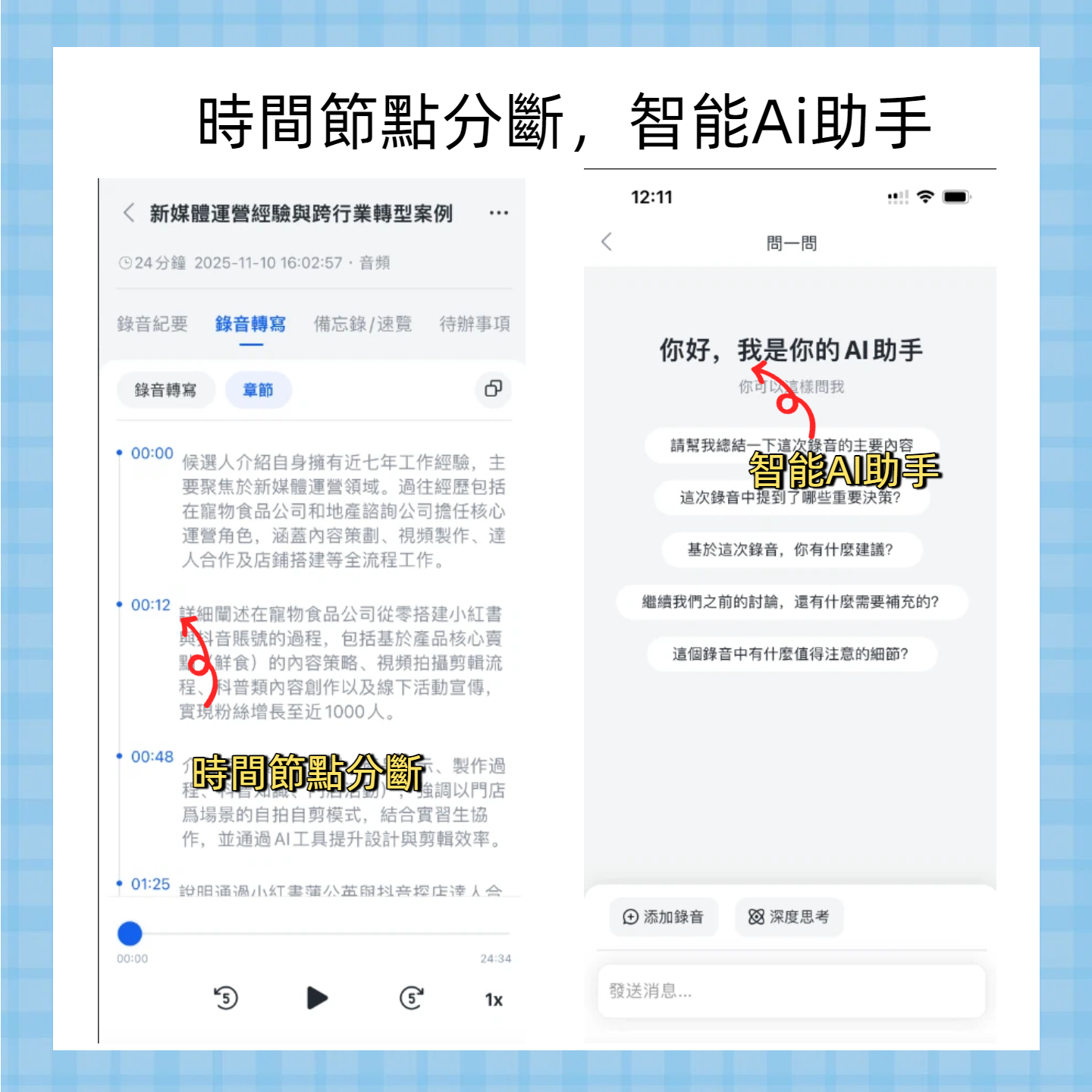
Scenario 1: Google Meet Online Meetings During meetings with my project advisor, I use Tinrec to record the computer's system audio. It separates each person's speech (though it can't always assign names precisely, context makes it clear who said what). After the meeting, it organizes the summary and to-dos, which I email to my advisor for confirmation—super efficient.
Scenario 2: YouTube Calculus Courses I don't just use it for Google Meet. I also paste links to online instructional videos, and it directly generates a full transcript and summary, quickly showing what the video is about and saving me from scrubbing through.
Scenario 3: Interview Transcription This semester I took a qualitative research course and needed to conduct in-depth interviews. Before, I had to listen and transcribe manually. Now I upload the audio file after the interview, and within minutes I get a transcript and key summary—it even highlights the interviewee's tone and emphasis.
4 Things to Consider When Choosing a Google Meet Note-Taking Tool
Accuracy: Don't just look at official numbers. Chinese word segmentation and specialized terms are critical. When I tested the same class recording, Otter sometimes turned calculus terms into weird English transliterations. Notta was better but still made mistakes. Tinrec's Chinese recognition was relatively stable and could handle mixed Chinese-English content.
Free Quota Sufficiency: Otter's free 300 minutes per month seems generous but is best for pure English. Notta's free 120 minutes runs out quickly. Tinrec's free version offers a basic quota that, for my weekly three classes and two group discussions, was just enough. If you need more, a weekly card is affordable.
AI Organization Ability: Transcription is just the start. The real value is whether it can auto-generate summaries, to-dos, and allow you to ask AI questions. Tinrec clearly excels here. Notta and Otter also have summaries, but they're less interactive.
Cross-platform Convenience: It should be easy to listen to recordings and view notes on your phone. Tinrec has iOS, Android, and web versions. I record on my computer and review on my phone during commutes.
Frequently Asked Questions
Q: Does Google Meet note-taking require a bot? A: No. Just use Tinrec's "System Audio Recording" feature to capture your computer's audio. You don't need to add any bot to the meeting, and no one will know you're recording.
Q: Is the free version really sufficient? A: If you only have 3-4 hours of classes or meetings per week, the free version can last about two to three weeks. I reserve Tinrec for the most important classes and meetings, and use a regular voice recorder for others. During midterms or finals, I buy a weekly card, which costs a bit more than a bubble tea.
Q: Are my recordings stored securely? A: Tinrec encrypts files and you can delete them anytime. I personally find it safer than borrowing a classmate's notes (who knows where those end up).
Q: Can I export to Word or PDF for my professor? A: Yes. It supports multiple export formats including TXT, Word, and PDF, and can sync directly to Notion or Google Docs—super convenient for submitting reports.
Summary
For students, the best Google Meet note-taking tool isn't necessarily the most expensive—it's the one that fits your learning style. I tested three tools: Otter and Notta each have their strengths, but for Chinese speakers who want AI-assisted organization and Q&A, Tinrec offers the best completeness and flexible free tier. If you're also looking for a tool to handle online classes, group discussions, and report materials, I recommend trying Tinrec's free version first. After just one class, you'll see how easy note-taking can be.
Turn every recording into actionable outcomes
Get 60 free transcription minutes when you sign in. No credit card required.
Related Reading
You might also like
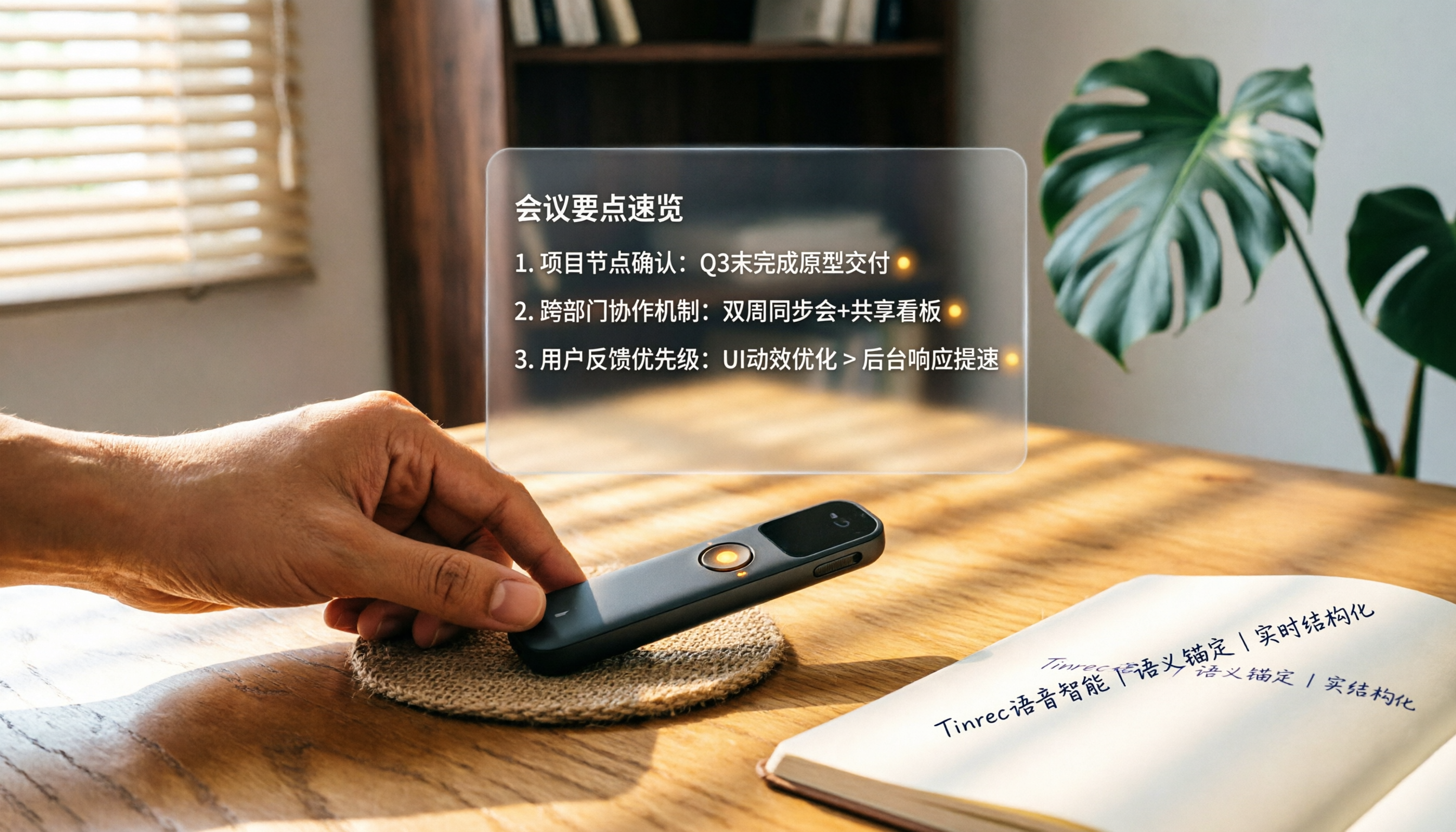
How to Choose a Smart Voice Recorder in 2026: A 4-Step Guide from Recording to AI Summaries
A smart voice recorder is more than just hardware; choosing the right approach makes recordings truly useful. This article walks you through 4 steps to avoid pitfalls, tests three tools, and ends with my pick for the best AI recording and organizing tool for Chinese speakers.
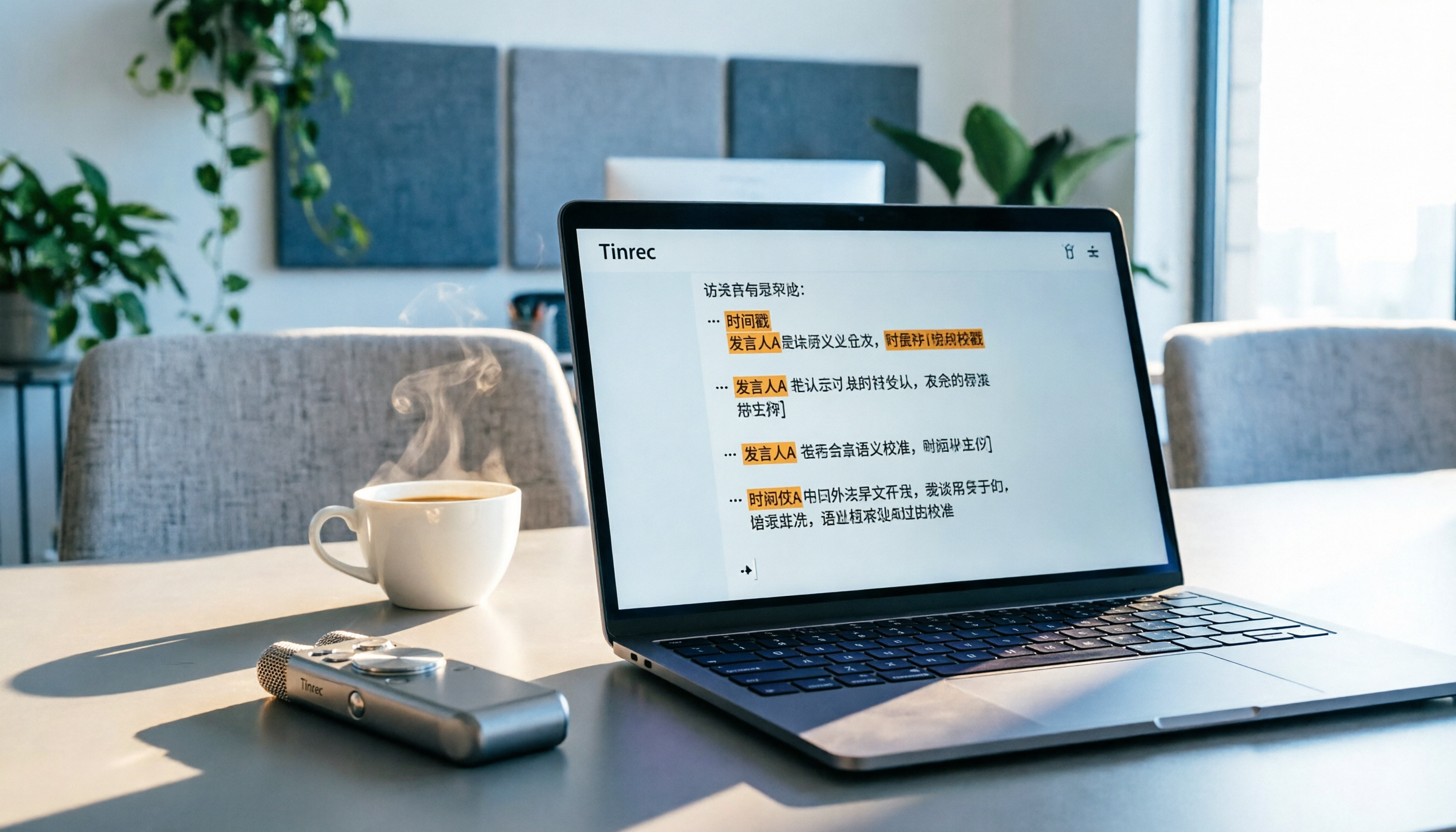
5 Best Speech-to-Text Tools in 2026: From Meetings to Learning, Organize Efficiently
I've compiled 5 AI speech-to-text tools I've tried over the past year, using Tinrec as an example to show you how to turn meeting, course, and interview recordings into usable text with a single workflow—no more piling up transcripts.

2026 Tested: 5 Recording Solutions Compared—Are Mobile Apps Really Better Than Voice Recorders?
Still debating whether to buy a voice recorder? What you really need is a tool that turns recordings into text and highlights key points. This article tests 5 recording-to-text and organization solutions, from free apps to AI recording hardware, to help you find the best fit—and explains why Tinrec is our top all-purpose recommendation.
2026 Long-Battery Voice Recorder Free Options: 5 Picks Reviewed
Running out of battery on your voice recorder during class is a nightmare? We tested 5 recording and AI organization tools, from free apps to paid plans, from a student's perspective to tell you which is best for long recordings, comparing battery life, audio quality, and AI features.

Tinrec vs Otter.ai 2026: A 5-Dimension Showdown for Students Needing Large-Capacity Audio/Video Organization
Tired of large recordings? A senior student tests Tinrec and Otter.ai, comparing input sources, Chinese accuracy, AI note features, free tiers, and pricing to see which tool better suits students' transcription needs, saving you money.

3 Workplace Voice Recorders Tested in 2026: Which One Is the Ultimate Meeting Notes Sidekick?
How should you choose a voice recorder for the workplace? We tested a traditional voice recorder, phone recording, and the AI recording app Tinrec, comparing portability, post-processing, and budget to find the best meeting note solution for office workers.

Voice Recorder vs. Phone Recording in 2026: How to Choose? 5 Steps to Build an Efficient Recording Workflow
Still torn between a voice recorder and your phone for recording? This article starts from real-world use cases, teaches you how to find the best recording solution in 5 steps, and tests the AI recording tool Tinrec to see how it solves the pain points of traditional recording, saving you hours of organizing time.

How to Choose a Cost-Effective Voice Recorder in 2026: 4 Steps to Compare Recorders and AI Tools
Thinking about buying a voice recorder but unsure how to evaluate value for money? This article compares traditional voice recorders and AI recording tools from perspectives like features, price, and post-processing, helping you pick the best recording solution.

2026 Test: AI Software vs. Hardware Noise Reduction for Voice Recorders—Which Keeps Meetings and Lectures Clearer?
I tested popular voice recorders and AI recording software, and found that hardware doesn't always beat software for noise reduction. This article compares Tinrec and PLAUD Note in real-world scenarios, covering noise reduction, organization features, and long-term use, to help you choose the right solution.