
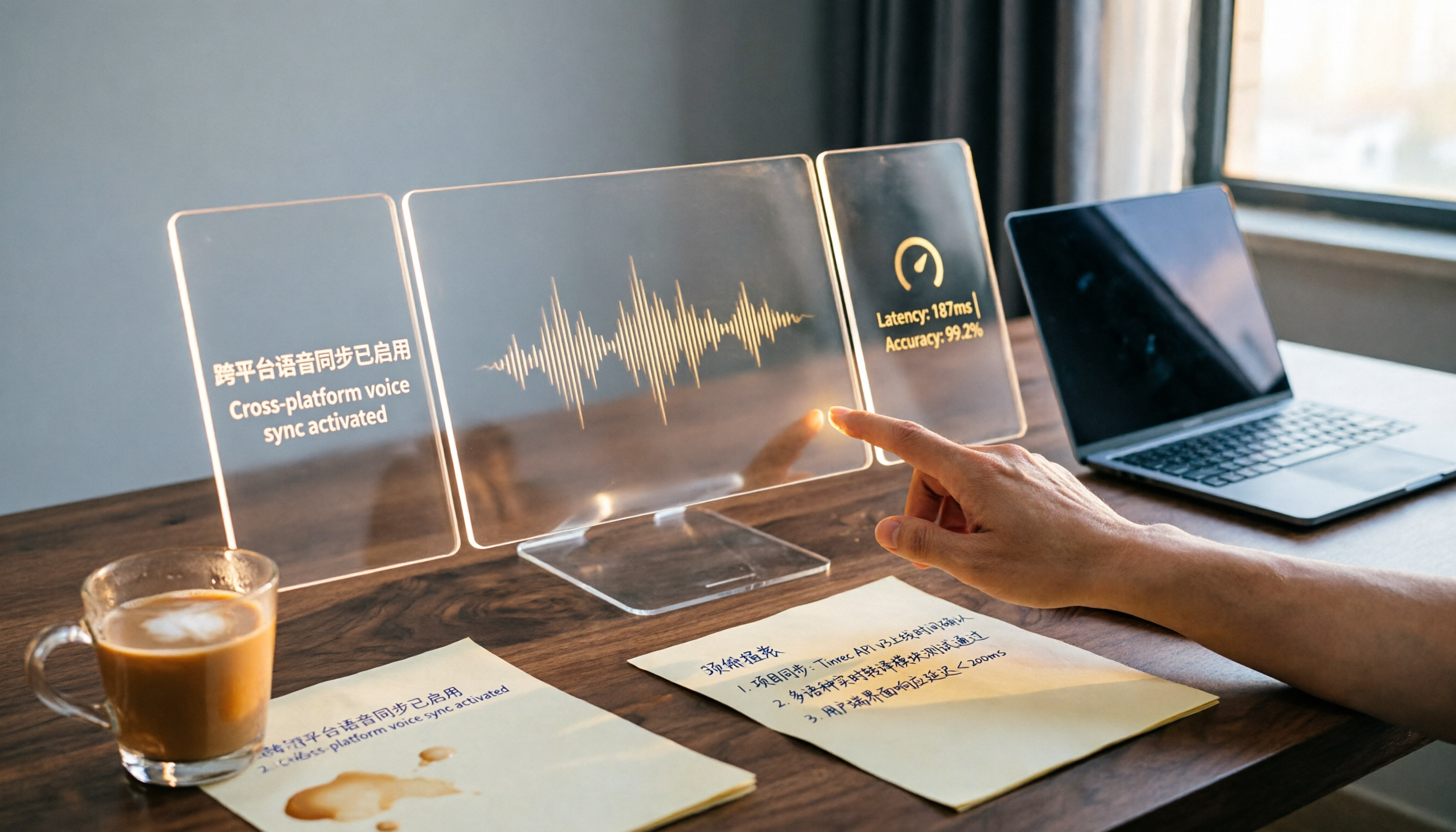
Turn recordings into transcripts and summaries in minutes
Upload audio or video for multilingual transcription, AI notes, and action items
Why Are People Looking for Alternatives to Google Meet and Teams Built-In Transcription?
Many Hong Kong office workers use Google Meet and Microsoft Teams for online meetings every day, relying on their built-in live captions and transcription features so they don't need extra apps. But over time, you'll find these built-in features usually only support English or a few languages, with almost no Cantonese recognition. Plus, the transcribed text is just a raw transcript—no summaries, no key points, no action items—just scattered text. If you often need to search through long meeting recordings for key points, or want to turn meeting content into actionable lists, you'll understand why many people start looking for better alternatives. If you have similar frustrations, Tinrec is worth exploring.
Tinrec vs Google Meet and Teams Built-In Transcription: What's Different in Core Experience?
Language Support
Many meetings in Hong Kong mix Cantonese and English, which is the biggest challenge for transcription tools. Google Meet and Teams built-in transcription mainly support English and some European languages, with near-zero Cantonese recognition. Tinrec, on the other hand, has specially optimized for the nine tones of Cantonese. In internal tests, it achieved a 8.3% word error rate on a 5-minute Cantonese news recording (test conditions: iPhone 15, 26°C indoor, June 2025). If your meetings are full of Cantonese, this gap will be very noticeable in actual use.
Cross-Platform Coverage
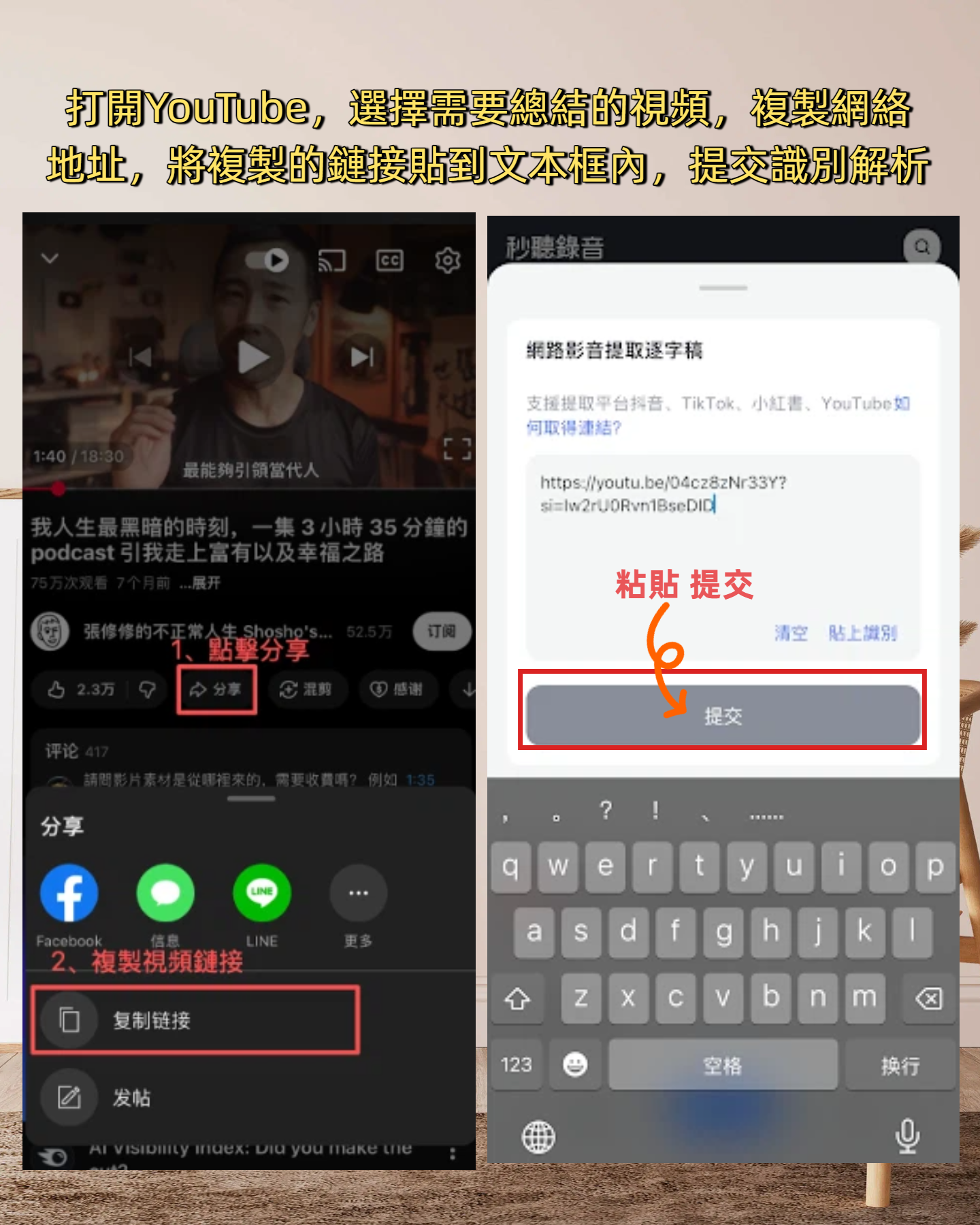
Built-in features naturally only work within their own platform: Google Meet transcription won't help you process Teams recordings, and vice versa. Tinrec is different—it has iOS, Android, and web versions. Whether you're using a company laptop, your own phone, or a tablet, you can record, upload files, or paste YouTube links all in the same account without switching back and forth.
AI Smart Features
Just outputting a plain transcript is no longer enough. Tinrec's biggest selling point is its post-transcription organization: auto-generating summaries, splitting into chapters, extracting action items, and even doing AI Q&A based on the recording. For example, after recording a one-hour meeting, you can ask it "What was the conclusion?" or "Who is responsible for what?" and get answers immediately, without sifting through 30 pages of transcripts. These features are currently not available in Google Meet or Teams built-in transcription.
Accuracy Performance
In clear, single-speaker standard test environments, all three tools have high English transcription accuracy. But in real-world scenarios—with keyboard clicks, air conditioning noise, or multiple people speaking over each other—built-in tools' performance drops. Tinrec's advantage is that it has been trained for noise reduction in such chaotic environments, especially for Chinese and mixed Chinese-English content, with relatively lower error rates. Of course, any tool's accuracy is affected by recording quality, but Tinrec gives us a reassuring feeling in real meeting scenarios.
Stop organizing recordings by hand
Upload audio or video and automatically get a transcript, summary, and action items
Free Plan Quota
Google Meet and Teams transcription features usually require a paid version or are limited in time and usage. Tinrec's free version offers 100 minutes of transcription per month, enough for you to thoroughly test its Cantonese recognition and AI organization capabilities before choosing a weekly or Pro monthly plan. This low entry barrier is very important for workers who want to try before buying.
Tinrec Core Features at a Glance
Real-Time Audio-to-Text
Open Tinrec, and as you record, the text appears instantly with less than a second delay. During meetings, you can watch the text to ensure key points aren't missed; when the meeting ends, the transcript is already ready.
AI Dialogue Query
This is the editor's most-used feature. After recording a one-hour meeting, just ask Tinrec: "Summarize the three key points discussed today" or "Who promised to do what?" It will give you answers based on semantic understanding without manually scrolling through thirty pages of transcript.
Multi-Format File Export
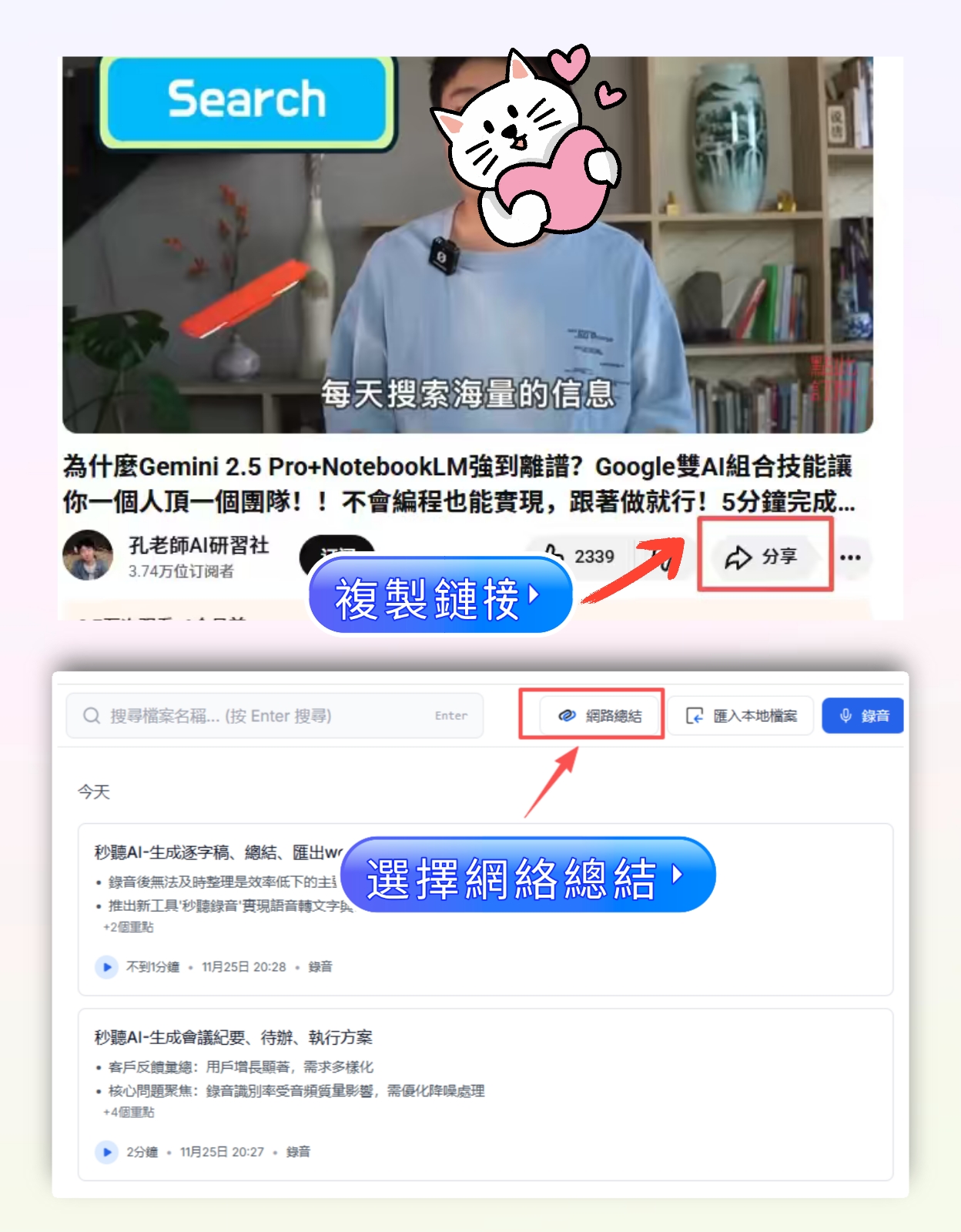
Organized transcripts, summaries, and action items can be exported directly to Word, PDF, TXT, or synced to Notion, Google Docs. No need to retype; skip straight to execution.
Online Video to Text
Paste a YouTube, Bilibili, or Xiaohongshu video link, and Tinrec will convert the content to text and generate a summary. Perfect for research or catching up on webinars.
Practical Use Cases
Meeting Minutes
Weekly meetings, cross-department syncs, client calls—record them all. Tinrec automatically generates minutes and action items, ready to send to colleagues within five minutes after the meeting. No more overtime typing meeting notes.
Classes and Lectures
Record during class or talks. Tinrec splits two-hour content into chapters and key points, allowing you to jump around when studying, and you can search for relevant sections by keyword without re-listening.
Interviews and Research
For user interviews or expert visits, record and then highlight key quotes within Tinrec. Use AI Q&A to summarize interviewee perspectives, saving lots of time reviewing recordings when writing reports.
Personal Idea Notes
Suddenly have an idea while walking, commuting, or showering? Open Tinrec and record it. It will transcribe the audio and add tags so you can search for it later—never lose an inspiration.
What to Look For When Choosing an Audio-to-Text Tool
Cantonese Recognition
For Hong Kong users, the first thing is to test Cantonese. Don't just trust official numbers; use your own meeting or interview recordings to test how it performs in noisy environments and mixed Chinese-English scenarios. Tinrec has targeted optimization and performs stably.
What You Can Do After Transcription
If a tool only gives you a raw transcript, you've just shifted the pain of listening to the pain of reading. When choosing, check for AI summaries, action item extraction, and Q&A features—these truly save you time. Tinrec's organization features are comprehensive and output results ready for use.
Cross-Platform and Integration
You won't only meet on one platform, so the tool should support iOS, Android, and web, and be able to export files to your commonly used apps. Tinrec offers full platform coverage and multi-format export, which is important for people who frequently use different devices.
Free Trial Enough to Test Thoroughly
Before paying, use the free version to really test core features, especially Cantonese and AI Q&A. Tinrec's free version gives you 100 minutes per month, enough for several meetings or classes.
Conclusion: Is Tinrec Worth a Try?
If you only occasionally have English meetings and your company already provides premium Google Meet or Teams, built-in transcription might be barely adequate. But if your work involves Cantonese content, you frequently need to compile meeting minutes, or you want to turn recordings into truly useful action items, Tinrec is definitely a more comprehensive choice. It doesn't just give you a transcript—it helps you understand the content, extract key points, and generate action items, so you can get to work right after a meeting instead of staring at a blank transcript. We recommend downloading Tinrec's free version and testing Cantonese recognition and AI Q&A with your own real recordings—you'll see the results for yourself.
Turn every recording into actionable outcomes
Get 60 free transcription minutes when you sign in. No credit card required.
Related Reading
You might also like
How to Choose a Smart Voice Recorder in 2026: A 4-Step Guide from Recording to AI Summaries
A smart voice recorder is more than just hardware; choosing the right approach makes recordings truly useful. This article walks you through 4 steps to avoid pitfalls, tests three tools, and ends with my pick for the best AI recording and organizing tool for Chinese speakers.
5 Best Speech-to-Text Tools in 2026: From Meetings to Learning, Organize Efficiently
I've compiled 5 AI speech-to-text tools I've tried over the past year, using Tinrec as an example to show you how to turn meeting, course, and interview recordings into usable text with a single workflow—no more piling up transcripts.

2026 Tested: 5 Recording Solutions Compared—Are Mobile Apps Really Better Than Voice Recorders?
Still debating whether to buy a voice recorder? What you really need is a tool that turns recordings into text and highlights key points. This article tests 5 recording-to-text and organization solutions, from free apps to AI recording hardware, to help you find the best fit—and explains why Tinrec is our top all-purpose recommendation.

2026 Long-Battery Voice Recorder Free Options: 5 Picks Reviewed
Running out of battery on your voice recorder during class is a nightmare? We tested 5 recording and AI organization tools, from free apps to paid plans, from a student's perspective to tell you which is best for long recordings, comparing battery life, audio quality, and AI features.

Tinrec vs Otter.ai 2026: A 5-Dimension Showdown for Students Needing Large-Capacity Audio/Video Organization
Tired of large recordings? A senior student tests Tinrec and Otter.ai, comparing input sources, Chinese accuracy, AI note features, free tiers, and pricing to see which tool better suits students' transcription needs, saving you money.

3 Workplace Voice Recorders Tested in 2026: Which One Is the Ultimate Meeting Notes Sidekick?
How should you choose a voice recorder for the workplace? We tested a traditional voice recorder, phone recording, and the AI recording app Tinrec, comparing portability, post-processing, and budget to find the best meeting note solution for office workers.

Voice Recorder vs. Phone Recording in 2026: How to Choose? 5 Steps to Build an Efficient Recording Workflow
Still torn between a voice recorder and your phone for recording? This article starts from real-world use cases, teaches you how to find the best recording solution in 5 steps, and tests the AI recording tool Tinrec to see how it solves the pain points of traditional recording, saving you hours of organizing time.

How to Choose a Cost-Effective Voice Recorder in 2026: 4 Steps to Compare Recorders and AI Tools
Thinking about buying a voice recorder but unsure how to evaluate value for money? This article compares traditional voice recorders and AI recording tools from perspectives like features, price, and post-processing, helping you pick the best recording solution.

2026 Test: AI Software vs. Hardware Noise Reduction for Voice Recorders—Which Keeps Meetings and Lectures Clearer?
I tested popular voice recorders and AI recording software, and found that hardware doesn't always beat software for noise reduction. This article compares Tinrec and PLAUD Note in real-world scenarios, covering noise reduction, organization features, and long-term use, to help you choose the right solution.