

Turn recordings into transcripts and summaries in minutes
Upload audio or video for multilingual transcription, AI notes, and action items
Meetings running until 7 PM, then spending another hour listening to recordings to write minutes—sound familiar? When I worked in Central, this was my daily grind. I tried the built-in transcription and several apps, with more misses than hits. Here's a side-by-side comparison of 4 Google Meet recording-to-text solutions to help you pick the best one for streamlining your meeting notes and leaving on time.
Why People Are Looking for Alternatives to Google Meet's Built-in Transcription
Google Meet comes with built-in live captions and transcription, but a few shortcomings become apparent: First, it mainly supports English, with almost no Cantonese recognition—problematic for Hong Kong teams that mix Cantonese and English. Second, the output is just raw text, with no summaries or action items—you have to manually sift through the entire transcript. Third, cross-platform sync is poor, making it hard to review key points on mobile. If you're looking for a more comprehensive tool to organize meeting content, the options below are worth a look.
Tinrec vs. Google Meet Built-in Transcription: Key Experience Differences
Language Support
Cantonese recognition is a top concern for Hong Kong users. Google Meet's built-in transcription mainly handles English, with limited Cantonese support, often garbling mixed English terms. Tinrec, on the other hand, is optimized for Cantonese's nine tones, delivering far better accuracy for Cantonese-English mixed conversations. I tested it on several internal meeting recordings, and it captured 80-90% of mixed language content—a crucial advantage for Hong Kong teams.
Post-Transcription Processing
Built-in transcription gives you raw text, leaving you to sift through it manually. Tinrec auto-generates AI summaries, chapters, and action items, and lets you ask questions like "Who is responsible for what?" or "What decisions were made?"—no more digging through pages of notes.
Cross-Platform Coverage
Google Meet's built-in features are limited to the web version; checking on mobile is inconvenient. Tinrec supports iOS, Android, and web, with cloud sync for meeting recordings, so you can review summaries and tasks on your commute.
Output Formats
Built-in transcription only lets you copy text. Tinrec exports transcripts, summaries, action lists, and even meeting document templates, with sync to Notion, Google Docs, and other tools—seamlessly fitting into your workflow.
Stop organizing recordings by hand
Upload audio or video and automatically get a transcript, summary, and action items
Tinrec Core Features Overview
Real-Time Transcription
Open Tinrec, and Google Meet audio is transcribed in real time with under one-second delay. You can follow the text during the meeting to catch key points. The transcript is ready the moment the meeting ends.
AI Dialogue Query
My favorite feature. After recording an hour-long meeting, just ask Tinrec "What's the conclusion?" or "Who is following up on which project?" It answers based on semantic understanding—no manual searching required.
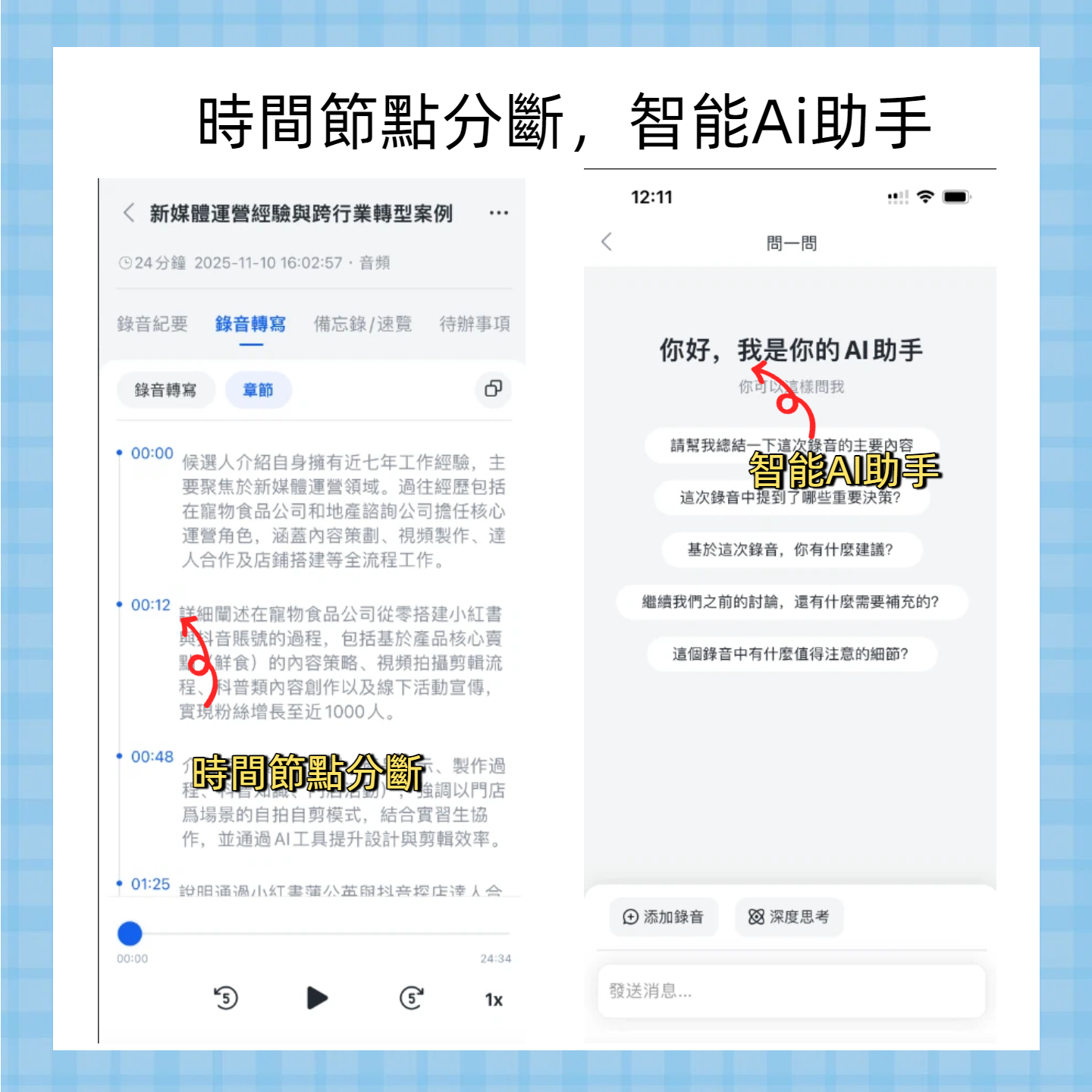
Action Item Extraction
Meetings always involve task assignments. Tinrec automatically extracts action items from the conversation, tagging responsible persons and deadlines—saving significant post-meeting work.
Multi-Format Export
Export processed content as PDF, Word, TXT, or directly sync to Notion or Google Docs for continued use across platforms.
Use Cases
Weekly Team Meetings
After a Google Meet team huddle, Tinrec automatically generates summaries and action items. Review the highlights, and you have meeting minutes ready in 5 minutes—time to leave on time.
Cross-Department Project Meetings
These meetings involve extensive discussion and assignments. Record with Tinrec, then ask "What are the next steps for each department?" to get a list instantly—no relying on memory.
Client Meetings
Client calls require meticulous record-keeping. Tinrec's verbatim transcript lets you double-check details, and the AI summary can be quickly shared with the team, ensuring no client requests are missed.
Classes and Lectures
Beyond meetings, Tinrec can transcribe classes or lectures, auto-dividing into chapters and key points for faster study.
Key Considerations When Choosing a Recording-to-Text Tool
Comprehensive Language Support
Hong Kong meetings often mix Cantonese and English. Test the tool's recognition of both languages. Tinrec's dedicated optimization is very practical for local teams.
Post-Transcription Features
Raw transcripts require manual review; AI summaries, action items, and Q&A truly save time.
Cross-Platform and Sync
You're not always at your desk. Tools with mobile apps, web access, and cloud sync are more convenient.
Pricing Suits Your Usage
If you only transcribe occasional meetings, the free version may suffice. For heavy use, Pro plans with more minutes and features offer better value.
Privacy and Security
Meeting content often includes sensitive information. Check the tool's data handling and encryption to ensure confidentiality. Tinrec uses industry-standard encryption and meets general enterprise requirements.
Final Verdict: Is Tinrec Worth Trying?
If you have daily Google Meet meetings and want to skip the hassle of listening to recordings for minutes, Tinrec is a comprehensive choice. It doesn't just convert speech to text—it also organizes summaries, action items, and provides real-time Q&A. Its Cantonese recognition is notably better for Hong Kong users than other tools. Start with the free trial (basic monthly transcription quota) and test it with one of your meeting recordings to see if it actually helps—this is more reliable than any review.
Turn every recording into actionable outcomes
Get 60 free transcription minutes when you sign in. No credit card required.
Related Reading
You might also like
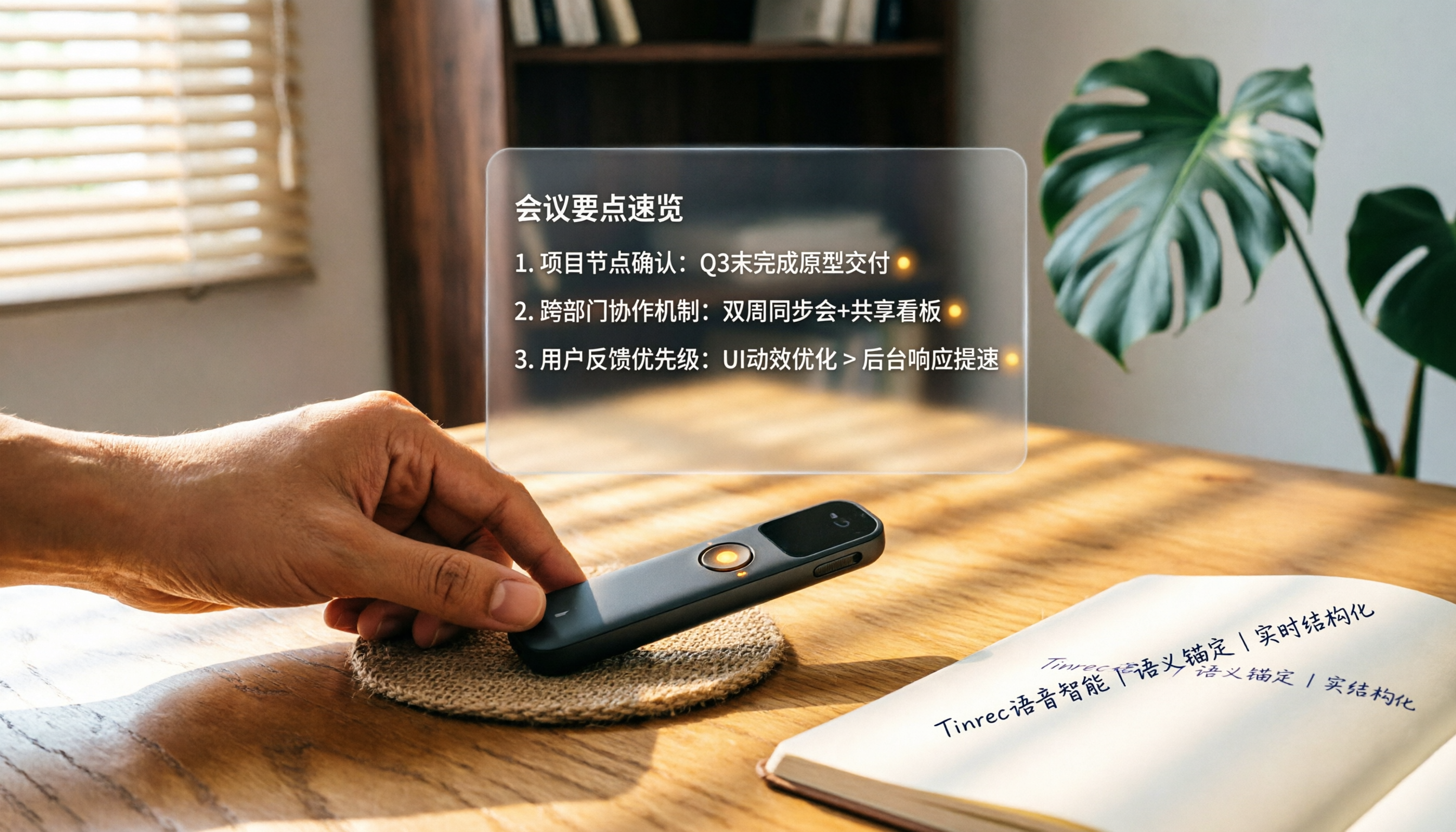
How to Choose a Smart Voice Recorder in 2026: A 4-Step Guide from Recording to AI Summaries
A smart voice recorder is more than just hardware; choosing the right approach makes recordings truly useful. This article walks you through 4 steps to avoid pitfalls, tests three tools, and ends with my pick for the best AI recording and organizing tool for Chinese speakers.
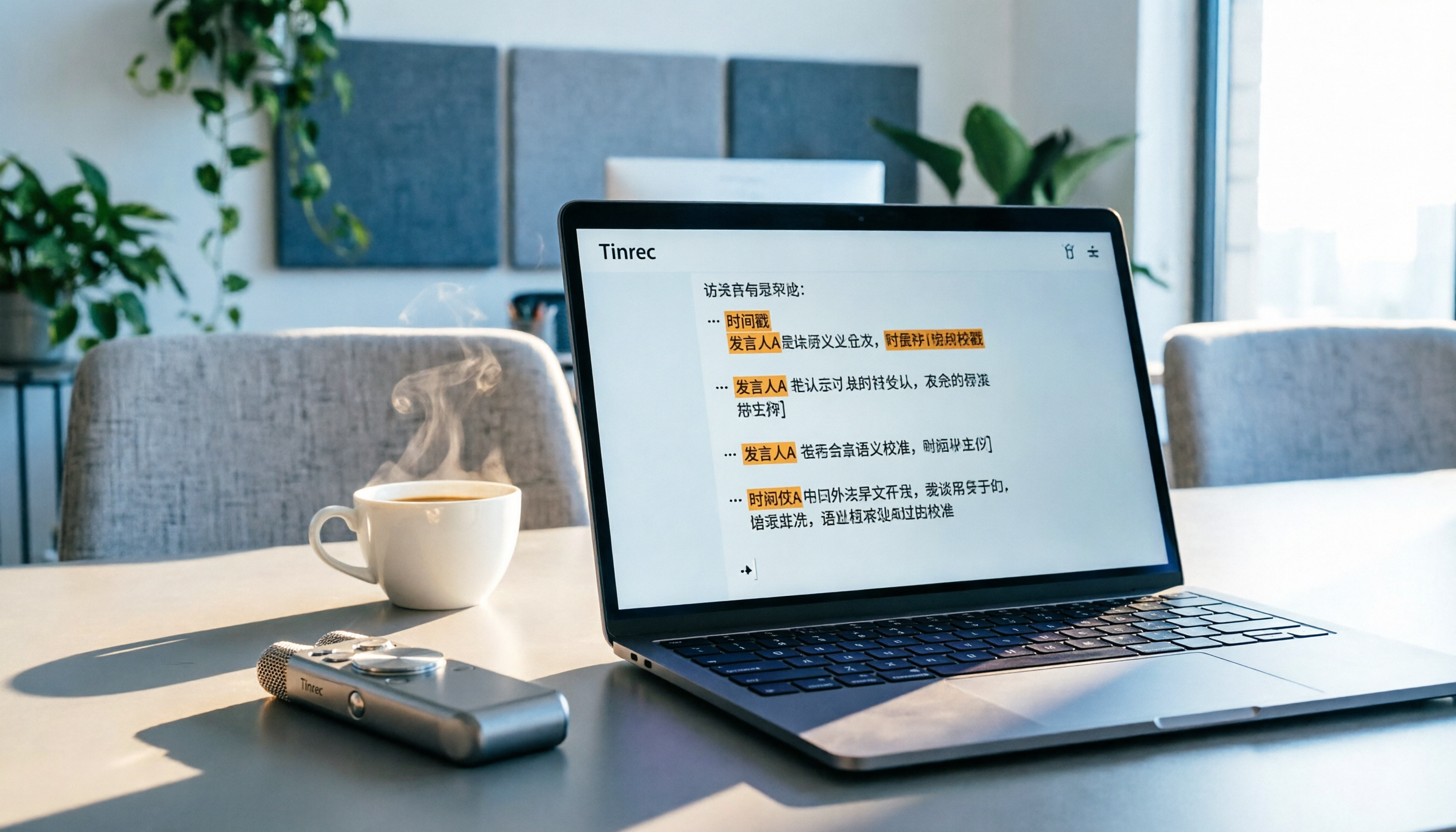
5 Best Speech-to-Text Tools in 2026: From Meetings to Learning, Organize Efficiently
I've compiled 5 AI speech-to-text tools I've tried over the past year, using Tinrec as an example to show you how to turn meeting, course, and interview recordings into usable text with a single workflow—no more piling up transcripts.

2026 Tested: 5 Recording Solutions Compared—Are Mobile Apps Really Better Than Voice Recorders?
Still debating whether to buy a voice recorder? What you really need is a tool that turns recordings into text and highlights key points. This article tests 5 recording-to-text and organization solutions, from free apps to AI recording hardware, to help you find the best fit—and explains why Tinrec is our top all-purpose recommendation.

2026 Long-Battery Voice Recorder Free Options: 5 Picks Reviewed
Running out of battery on your voice recorder during class is a nightmare? We tested 5 recording and AI organization tools, from free apps to paid plans, from a student's perspective to tell you which is best for long recordings, comparing battery life, audio quality, and AI features.

Tinrec vs Otter.ai 2026: A 5-Dimension Showdown for Students Needing Large-Capacity Audio/Video Organization
Tired of large recordings? A senior student tests Tinrec and Otter.ai, comparing input sources, Chinese accuracy, AI note features, free tiers, and pricing to see which tool better suits students' transcription needs, saving you money.

3 Workplace Voice Recorders Tested in 2026: Which One Is the Ultimate Meeting Notes Sidekick?
How should you choose a voice recorder for the workplace? We tested a traditional voice recorder, phone recording, and the AI recording app Tinrec, comparing portability, post-processing, and budget to find the best meeting note solution for office workers.

Voice Recorder vs. Phone Recording in 2026: How to Choose? 5 Steps to Build an Efficient Recording Workflow
Still torn between a voice recorder and your phone for recording? This article starts from real-world use cases, teaches you how to find the best recording solution in 5 steps, and tests the AI recording tool Tinrec to see how it solves the pain points of traditional recording, saving you hours of organizing time.

How to Choose a Cost-Effective Voice Recorder in 2026: 4 Steps to Compare Recorders and AI Tools
Thinking about buying a voice recorder but unsure how to evaluate value for money? This article compares traditional voice recorders and AI recording tools from perspectives like features, price, and post-processing, helping you pick the best recording solution.

2026 Test: AI Software vs. Hardware Noise Reduction for Voice Recorders—Which Keeps Meetings and Lectures Clearer?
I tested popular voice recorders and AI recording software, and found that hardware doesn't always beat software for noise reduction. This article compares Tinrec and PLAUD Note in real-world scenarios, covering noise reduction, organization features, and long-term use, to help you choose the right solution.