

Turn recordings into transcripts and summaries in minutes
Upload audio or video for multilingual transcription, AI notes, and action items
The Nightmare Begins When the Meeting Ends—You Don't Need a Tool, You Need a Solution
I average at least 8 Google Meet meetings per week.
What I used to dread most wasn't the meeting itself, but what came after.
A two-hour brainstorming session, and afterward I'd have to piece together a decent meeting recap from memory and notes.
More often than not, I'd record the audio but it was useless—30 minutes of transcript, and just finding "who said what" was exhausting.
If you use Google Meet, you know this pain.
But the problem isn't you; it's that most people treat these tools like a simple voice recorder.
Today I want to share not "which app is best," but how to turn your meeting recordings into a database you can act on after the meeting.
Choosing the right tool is just the first step. The methodology behind it is what helps you leave work early.
Before Choosing a Meeting Note Tool, Understand These 4 Key Points
I'm not a spec junkie, but the tools on the market can easily lead you to the wrong choice.
First, figure out what you really need, so you don't waste money.
1. Transcription Accuracy: Don't Trust Lab Numbers
Seeing "98%" on a website is tempting, but my real-world tests show that with background keyboard noise, colleagues talking over each other, or mixed Chinese and English, accuracy drops by about 30%.
The key is how it performs in real meeting scenarios, not studio recordings.
I started using my own meeting recordings to test—that's the only meaningful way.
2. AI Summary Isn't Enough—It Must Distinguish Noise from Action
Many tools give you a summary, but it's just a shortened version of the text.
A truly useful summary extracts action items, decisions, and responsible parties.
You don't need condensation; you need an action list.
3. Cross-Platform Sync: Start on Your Computer, Review on Your Phone
Google Meet meetings mostly happen on laptops, but afterward you might want to review on your phone during your commute.
If the tool only has a web version, it's crippled on mobile.
iOS, Android, and web—all three are necessary to truly integrate into your workflow.
4. Can You "Ask" It Questions After the Recording?
This is the key point most people overlook.
If you can only Ctrl+F to search for keywords after transcription, it's no better than Notepad.
Can you simply ask: "Who mentioned the budget cap in the last meeting?"
AI-powered query functionality is the turning point from "recording" to "understanding."
Keep these 4 points in mind, and let's start the hands-on testing.
Tinrec (Instant Recording)—Our Top Pick After Testing
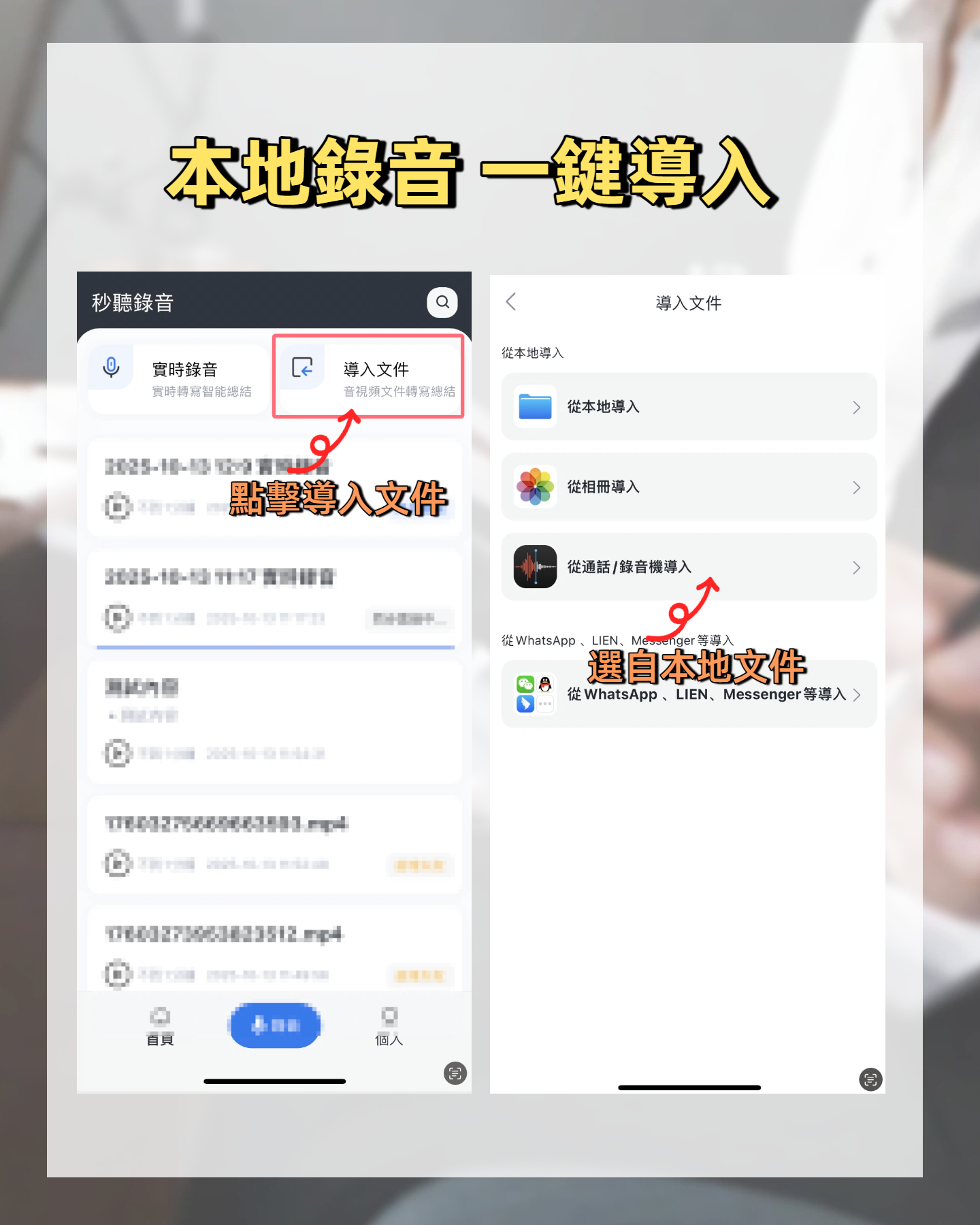
(Screenshot: Tinrec real-time transcription interface, arrow pointing to live transcript and AI summary button)
What amazed me most about Tinrec isn't the transcription speed, but how it turns meeting recordings into a "conversational database."
For someone like me with over 8 meetings a week, this is a lifesaver.
I tested it on a 40-minute Google Meet meeting: content included Chinese, English, some Taiwanese Hokkien, and background café noise.
I opened Tinrec's "Computer Meeting Recording" feature, which captures system audio and transcribes in real time.
Within 3 minutes of the meeting ending, the AI summary and action items were already generated.
Stop organizing recordings by hand
Upload audio or video and automatically get a transcript, summary, and action items
(Screenshot: Tinrec meeting summary page, arrows pointing to summary, chapters, and action items sections)
Its AI summary isn't a log—it splits the discussion into "Decisions," "Discussions," and "Action Items" with assignees.
I copied and pasted it directly into Slack for the team, and no one noticed it was AI-written.
Even more crucial is the AI dialogue query.
After the meeting, I asked: "What was the marketing budget conclusion from this meeting?"
It not only showed the relevant section but also organized it into bullet points with timestamps.
(Screenshot: Tinrec AI dialogue query interface, arrow pointing to Q&A result and timestamp)
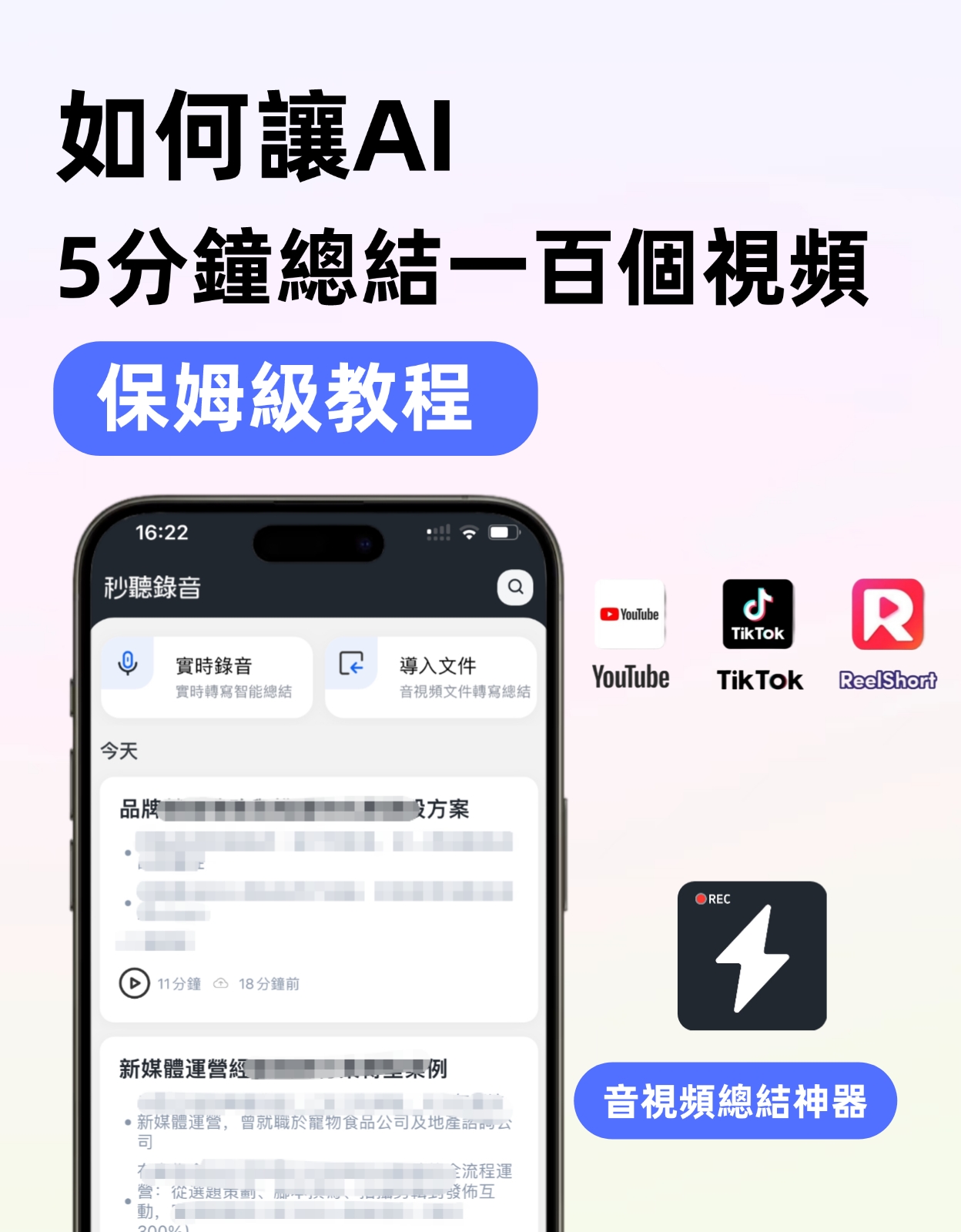
Currently, competitors in the same price range almost never offer such complete Q&A capability.
Of course, it has downsides: the free plan only includes 100 minutes per month, and heavy users need to upgrade to Pro.
But for most people who have 2-3 meetings per week, it's more than enough.
If you want to get not just a transcript after a Google Meet meeting, but automatically generated action items and the ability to look up information like asking an assistant afterward—Tinrec is the closest to that workflow.
Beyond Tinrec: What Other Options Are There?
Otter.ai: King of English Meetings, but Struggles with Chinese
Otter.ai's auto-join and real-time collaboration are excellent, and its English summaries are nearly flawless.
However, in my mixed Chinese/English Google Meet test, Chinese transcription had obvious sentence fragmentation, and it couldn't do AI queries on Chinese content.
If 90% of your meetings are pure English, Otter is great; but if you need Chinese summaries and queries, Tinrec is more practical.
Fireflies.ai: Great for Team Collaboration, Too Heavy for Individual Use
Fireflies' "AskFred" can query across meetings, which is powerful for team use.
But its interface is complex, and for someone just wanting to quickly organize personal meeting notes, it feels like overkill.
Also, Fireflies doesn't support transcription from online video links—Tinrec wins here, because I often need to process reference videos from YouTube.
Notta: Decent Transcription, but Lacks "Post-Meeting Dialogue" Flexibility
Notta's transcription accuracy is comparable to Tinrec's, and its real-time translation is handy.
But after recording, I have to manually highlight key points and search keywords—no AI dialogue query like Tinrec.
This limits the reuse of the data—recording is the endpoint, not a knowledge base you can repeatedly mine.
Avoidance Guide: 4 Common Mistakes When Choosing a Meeting Note Tool
Mistake 1: Only Looking at Minutes and Price
Many people compare prices but overlook that the "post-transcription organization features" are what truly save time.
I calculated that the time saved by AI summaries plus Q&A far outweighs the monthly fee difference.
Mistake 2: Ignoring Personal Knowledge Base Needs
You don't use a tool just once. The accumulated meeting recordings should be searchable and queryable across meetings.
Tinrec keeps history, so you can ask: "Across all meetings this year, what decisions were made about product launches?"
Most tools can't do that.
Mistake 3: Choosing a Tool That Only Supports One Platform
If you use Google Meet on a laptop but want to review on your phone—no app means pain.
Make sure the tool covers iOS, Android, and web, so your workflow isn't interrupted.
Mistake 4: Mistaking "Recording" as the Endpoint
The most common misconception: after recording and transcribing, you're done.
But real value lies in "action"—whether it becomes to-do items, memos, or syncs to Notion or Slack.
Tinrec's multi-format export and Agent post-processing are designed for this.
Summary: Which One Should You Choose?
After hundreds of meetings of trial and error, my conclusion is clear:
If you want to turn Google Meet recordings into actionable knowledge, Tinrec is the top choice.
Scenario Recommendations:
- Mixed Chinese/English meetings, need Chinese summaries and action items → Tinrec (AI summaries best fit workplace needs, plus post-meeting Q&A)
- Pure English, frequent team collaboration → Otter.ai (strong collaboration, but don't force Chinese)
- One-off transcription, no need for a database → Notta (transcription is okay, but weak on post-meeting queries)
- Personal quick notes, plus want to process online videos → Tinrec (only one that supports YouTube link transcription with Q&A)
One final tip: Start with Tinrec's free plan.
100 minutes per month are enough for 2-3 meetings to try it out.
After recording, ask it a few questions and see if the summaries are on point—you'll find that meeting notes can be this effortless.
Test gradually, and you'll master the method.
Turn every recording into actionable outcomes
Get 60 free transcription minutes when you sign in. No credit card required.
Related Reading
You might also like
How to Choose a Smart Voice Recorder in 2026: A 4-Step Guide from Recording to AI Summaries
A smart voice recorder is more than just hardware; choosing the right approach makes recordings truly useful. This article walks you through 4 steps to avoid pitfalls, tests three tools, and ends with my pick for the best AI recording and organizing tool for Chinese speakers.
5 Best Speech-to-Text Tools in 2026: From Meetings to Learning, Organize Efficiently
I've compiled 5 AI speech-to-text tools I've tried over the past year, using Tinrec as an example to show you how to turn meeting, course, and interview recordings into usable text with a single workflow—no more piling up transcripts.

2026 Tested: 5 Recording Solutions Compared—Are Mobile Apps Really Better Than Voice Recorders?
Still debating whether to buy a voice recorder? What you really need is a tool that turns recordings into text and highlights key points. This article tests 5 recording-to-text and organization solutions, from free apps to AI recording hardware, to help you find the best fit—and explains why Tinrec is our top all-purpose recommendation.

2026 Long-Battery Voice Recorder Free Options: 5 Picks Reviewed
Running out of battery on your voice recorder during class is a nightmare? We tested 5 recording and AI organization tools, from free apps to paid plans, from a student's perspective to tell you which is best for long recordings, comparing battery life, audio quality, and AI features.

Tinrec vs Otter.ai 2026: A 5-Dimension Showdown for Students Needing Large-Capacity Audio/Video Organization
Tired of large recordings? A senior student tests Tinrec and Otter.ai, comparing input sources, Chinese accuracy, AI note features, free tiers, and pricing to see which tool better suits students' transcription needs, saving you money.

3 Workplace Voice Recorders Tested in 2026: Which One Is the Ultimate Meeting Notes Sidekick?
How should you choose a voice recorder for the workplace? We tested a traditional voice recorder, phone recording, and the AI recording app Tinrec, comparing portability, post-processing, and budget to find the best meeting note solution for office workers.

Voice Recorder vs. Phone Recording in 2026: How to Choose? 5 Steps to Build an Efficient Recording Workflow
Still torn between a voice recorder and your phone for recording? This article starts from real-world use cases, teaches you how to find the best recording solution in 5 steps, and tests the AI recording tool Tinrec to see how it solves the pain points of traditional recording, saving you hours of organizing time.

How to Choose a Cost-Effective Voice Recorder in 2026: 4 Steps to Compare Recorders and AI Tools
Thinking about buying a voice recorder but unsure how to evaluate value for money? This article compares traditional voice recorders and AI recording tools from perspectives like features, price, and post-processing, helping you pick the best recording solution.

2026 Test: AI Software vs. Hardware Noise Reduction for Voice Recorders—Which Keeps Meetings and Lectures Clearer?
I tested popular voice recorders and AI recording software, and found that hardware doesn't always beat software for noise reduction. This article compares Tinrec and PLAUD Note in real-world scenarios, covering noise reduction, organization features, and long-term use, to help you choose the right solution.