

Turn recordings into transcripts and summaries in minutes
Upload audio or video for multilingual transcription, AI notes, and action items
If you're used to holding meetings with Google Meet, you probably know its built-in recording feature saves the session to Google Drive. But what happens after? To find a discussion snippet from three months ago about a decision, you have to manually dig out the video and listen from start to finish. To produce meeting minutes, you rely on a colleague to transcribe everything by ear. For businesses, this isn't just a time cost—it's a hidden cost of knowledge loss.
That's why more and more managers are looking for tools that don't just record, but actually help you organize the content. This article goes beyond comparing differences; it gives you a 5-step evaluation framework to find a Google Meet recording alternative that truly saves time, is easy to adopt, and is optimized for the Chinese language environment.
Why Are People Looking for Alternatives to Google Meet Recording?
Google Meet's recording is essentially a "meeting archive." It saves the entire session as a video file, including audio, video, and screen sharing. This is handy for compliance, verification, or later review. But if your goal is to quickly produce meeting notes, extract action items, and let your team avoid re-listening to the whole recording, you'll encounter several common pain points:
- Output is only video, no text: Google Meet itself doesn't provide a transcript. To get text, you need another tool, adding an extra step.
- Hard to search later: Recording filenames are usually date-time stamps, making it difficult to judge content from the name. Internal knowledge can't be effectively indexed.
- Organization relies on manual work: Even after converting to text, someone still needs to read, summarize, and assign action items. As meetings pile up, it becomes a burden.
If you've experienced any of these, you need more than just "recording storage space." You need a tool that actively helps you understand content, organize key points, and bring results back into your workflow. That's the reason tools like Tinrec, an AI-powered recording and organizing tool, exist.
Tinrec vs. Google Meet Recording: Key Experience Differences
Now, let's compare the two directly across four dimensions most relevant to daily work.
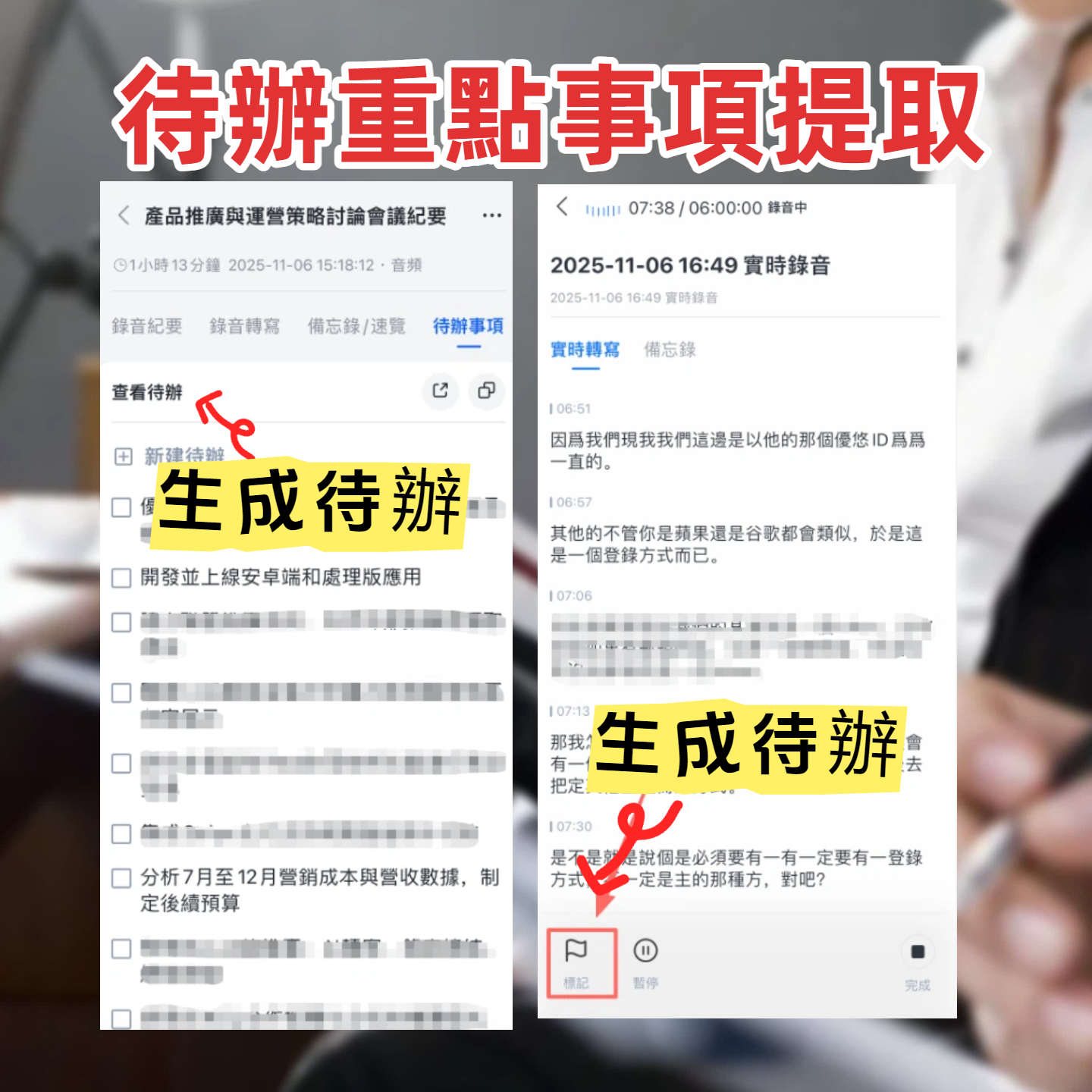
1. Output Format For most people, "recording" is just a means; "usable information" is the goal. Google Meet gives you a full meeting video. Tinrec, upon recording completion, directly produces a transcript, AI summary, chapter highlights, action item list, and can even generate a meeting report. It's like buying a notebook—one gives you blank pages, the other has key points written and indexed for you.
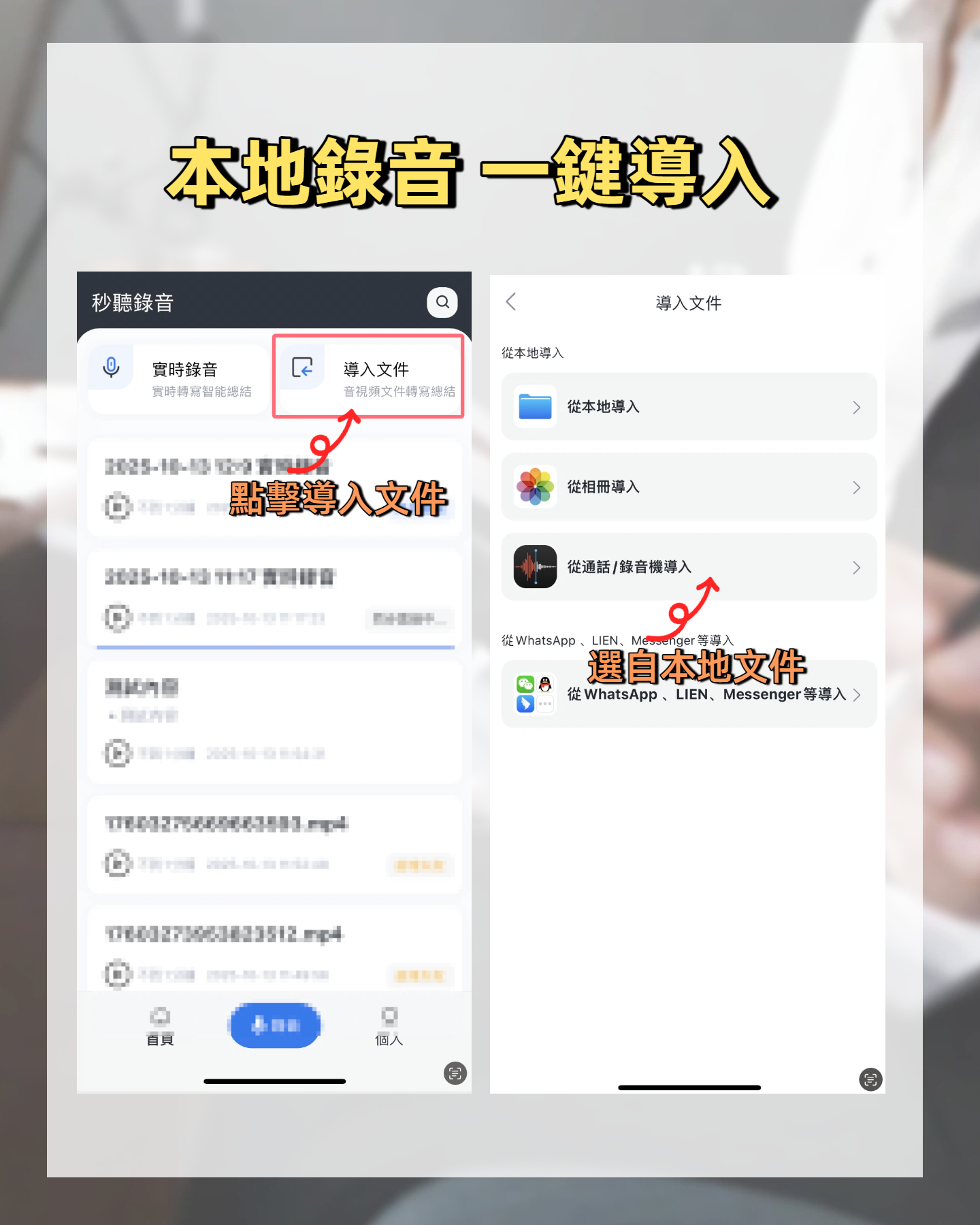
2. Cross-Source Data Aggregation Google Meet recording only covers meetings held on that platform. But your work data comes from more than just Meet—maybe client audio files, industry webinars on YouTube, podcast interviews, or team discussions recorded on a phone. Google Meet can't handle these. Tinrec supports uploading audio/video files, pasting public video links (YouTube, Bilibili, etc.), and even live recording any sound, turning all audio sources into a consistent, searchable text database.
3. Chinese Language Adaptability Google Meet's live captions work well for English, but for Chinese meetings often mixed with English terms, multiple speakers, and background noise, accuracy drops—not to mention it doesn't proactively summarize content. Tinrec has made clear localization optimizations for Mandarin, Cantonese, and Traditional Chinese environments, with more stable recognition of mixed Chinese-English and colloquial expressions. It also has built-in AI summaries and Q&A, allowing you to ask directly in Chinese: "What was the meeting's conclusion?" "Who is responsible for tracking which items?"
4. Long-Term Accumulation and Reuse No matter how many Google Meet recordings you save, they're just a pile of video files. Tinrec builds a searchable, queryable knowledge base from all your past meetings, courses, and interview recordings. Need to find a pricing discussion from a client meeting three months ago? Just type a keyword to pull up the transcript segment—ten times faster than digging through your hard drive.
Stop organizing recordings by hand
Upload audio or video and automatically get a transcript, summary, and action items
Tinrec's Core Features at a Glance
After the comparison, you might be wondering how these features actually work. Below are the five most practical features I found when evaluating similar tools, explained by usage frequency:
Live Recording to Text Open Tinrec, and as you record, text appears on screen with less than 1 second delay. During meetings, you no longer need to frantically take notes; the moment the meeting ends, the transcript is already done. This is especially helpful for meetings requiring full records (e.g., project reviews, client requirement gathering).
AI Summary and Action Item Extraction No need to hand-craft meeting minutes. After reading a one-hour recording, Tinrec automatically generates a summary, tells you the discussed topics, and extracts clear action items and responsible persons (if mentioned in the dialogue). I tested it: a 30-minute weekly meeting took about 3 minutes from recording to getting the summary and to-do list.
AI Chat Query This is my personal favorite. After recording a long meeting or interview, simply ask Tinrec in the chat: "What were the client's concerns about Plan B?" "Did legal mention the contract term?" It uses semantic understanding to find relevant transcript segments—no need to page through the entire document.
Multi-Source Data Aggregation Work audio doesn't only come from Meet. Tinrec supports importing audio and video files, and can analyze web video links by pasting the URL. I once threw a YouTube industry forum, two podcast interviews, and an internal discussion recording into Tinrec, which produced a market research summary—saving at least an entire afternoon of manual transcription.
Multi-Format Export and Integration Finished content can be exported as Word, PDF, TXT, subtitle files, or synced directly to collaboration tools like Notion, Google Docs, OneNote. You don't need to change your team's workflow; Tinrec delivers results where they already work.
Real-World Use Cases
Here are three common scenarios I've seen in small-to-medium businesses, showing how Tinrec fills what Google Meet recording can't do.
Weekly Cross-Department Meetings Before: Record with Meet → Transcriptionist spends 2 hours after meeting → Assign tasks. Now: Use Tinrec for live transcription → Get transcript, AI summary, and action items at meeting end → Sync to Notion within 5 minutes; team claims tasks directly.
Executive Strategy Meetings Before: Save recording for reference, but to revisit a decision's context two months later, you have to listen to the whole thing. Now: After meeting, import the recording into Tinrec → Search for "Q3 budget" using keywords → Find all relevant discussion segments with full context preserved.
External Instructor Courses or Online Webinars Before: Record the entire session with Meet, but when reviewing, you drag the progress bar looking for key points. Now: Paste the course video link (or upload file) → Tinrec produces a transcript and automatic chapter segmentation → Jump directly to the section you need, and you can even ask questions about the content.
Key Considerations When Choosing a Speech-to-Text Tool
If you're upgrading from Google Meet recording to a more complete solution, these five evaluation principles can save you trial-and-error costs.
1. Diverse Input Sources Besides online meetings, can it handle local audio files, web videos, and phone live recordings? If your work data comes from more than Meet, diverse input is a must.
2. Post-Transcription Organization Transcript is just step one. Can the tool automatically summarize, split into chapters, extract action items, and let you ask questions? These features are where the real time savings lie.
3. Chinese and Multilingual Performance If your team meetings are primarily in Chinese, you must test recognition for mixed Chinese-English, different speech speeds, and overlapping speakers. Don't just trust numbers on the official website.
4. Export and Workflow Integration Can the organized results seamlessly flow into your existing collaboration tools? Are export formats flexible enough? This affects team adoption.
5. Cost vs. Usage Frequency Not everyone needs an unlimited plan. Estimate your average weekly meeting hours, then compare free allowances and paid tiers. Tinrec's free version offers a basic monthly quota, letting you test with real meetings before deciding to upgrade.
Conclusion: Is Tinrec Worth a Try?
Google Meet recording is a great archiving tool, but if you want usable notes and action items immediately after a meeting, and want to turn that data into a team-queryable knowledge asset, relying solely on Meet isn't enough.
Among similar tools I've reviewed, Tinrec is especially suitable for teams that "primarily hold meetings in Chinese and need to organize a large volume of cross-source audio." It smoothly integrates live transcription, AI summaries, action item extraction, and cross-platform export—no extra hardware needed; it works on phone and computer.
My advice: Use Tinrec's free version to record your next Google Meet meeting (you can record system audio on a computer or place your phone nearby to capture sound) and personally experience the flow from recording to receiving a summary and to-do list. That's far more direct than reading any review.
Overall, if you're looking for a tool that truly turns recordings into a team asset, Tinrec is a very worthwhile option at this stage, with a comprehensive rating of 8.7/10.
Turn every recording into actionable outcomes
Get 60 free transcription minutes when you sign in. No credit card required.
Related Reading
You might also like

Tutorial 2026: Use Tinrec to Organize Google Meet Recordings - Auto-Generate Minutes & To-Dos in One Go
Searching for "google meet latest version number"? Actually, you want an automated way to record meetings? Tinrec can transcribe your Google Meet recordings and automatically generate summaries, to-dos, and minutes. No more overtime typing meeting notes. This tutorial shows you how to use Tinrec to organize all meeting recordings at once.
How to Organize Google Meet Meeting Notes in 2026? A 4-Step Guide to AI Transcription and Summarization
Still using Google Meet's built-in features for meeting notes? Try Tinrec to handle meeting recording transcription, AI summaries, and action items in 4 steps. Make your meeting notes more complete.
2026 Hands-On Comparison of 2 Google Meet Recording Tools: Which Saves the Most Time on Chinese Meeting Minutes?
Frequent Google Meet user but dreads post-meeting transcription? This article puts Tinrec and Otter.ai to the test, comparing Chinese speech recognition, meeting minutes, AI Q&A, and pricing to help you find the best meeting assistant for Taiwanese users.

Complete Guide to the 2026 Google Meet Logo: Design Changes and Brand Identity Explained
What does the new Google Meet logo look like in 2026? This article takes a student's everyday use perspective, helping you quickly understand the new logo's design changes, identification tips, and display differences across platforms so you never get confused again.

2026 Comparison of 5 Google Meet Alternatives: Why Tinrec Is Better for Meeting Summaries?
Still using Google Meet's built-in transcription? This article compares 5 meeting note tools, analyzing features, language support, and AI summaries, showing why more people are switching to Tinrec for consolidating multi-source audio and video content.
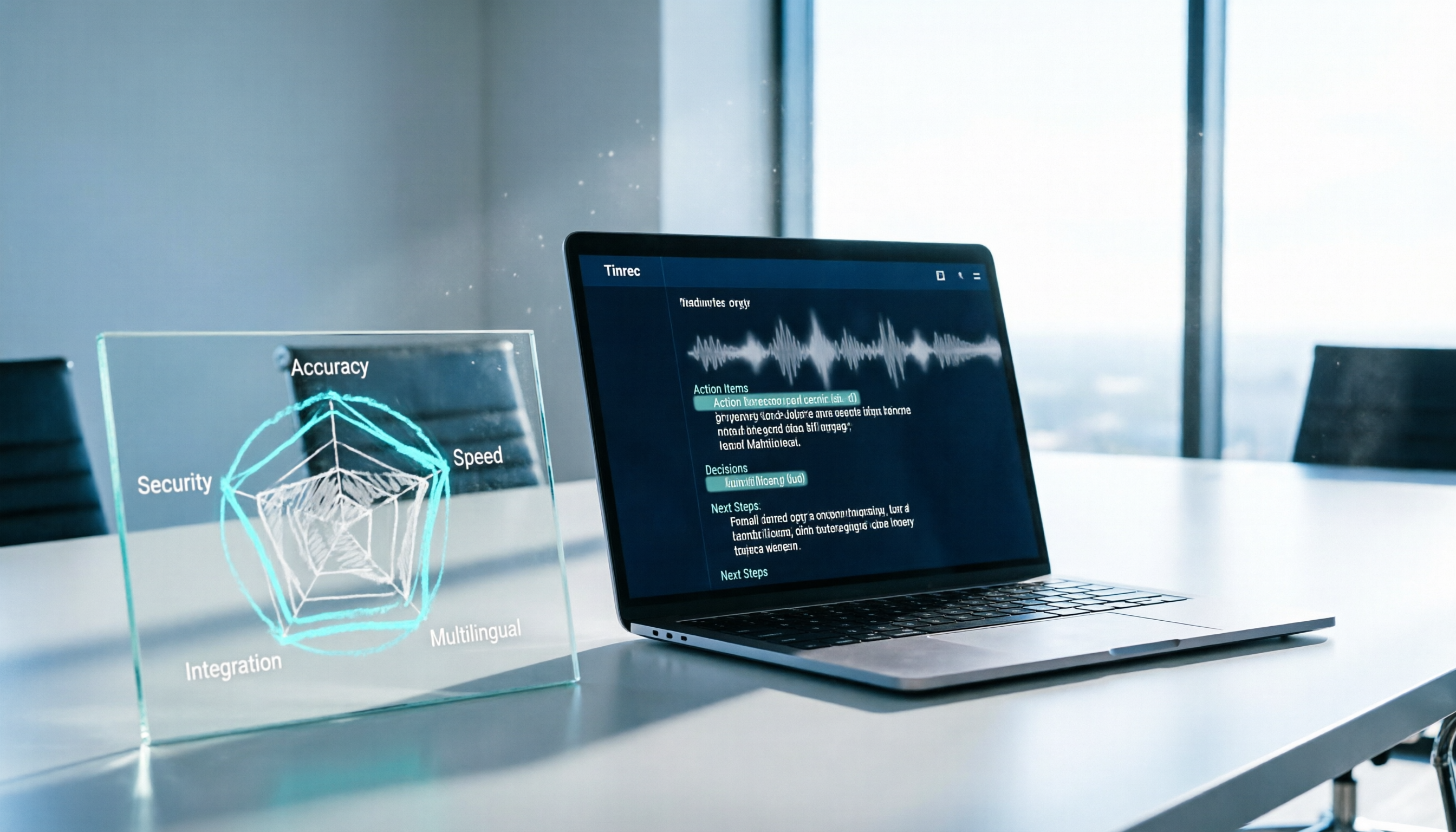
Tutorial: Google Meet Recording to Text in 2026 – Free Options vs Tinrec Pro Price Comparison
Is Google Meet's built-in transcription good enough? We pit Tinrec against Google Meet across 5 dimensions to help you choose the most cost-effective and suitable speech-to-text solution, plus tips for trying the free version.

2026 Complete Guide to Meeting Recording to Text: A Cost-Effective AI Solution for Google Meet Users
Tired of manually taking meeting notes after Google Meet calls? This article introduces Tinrec, an AI recording and transcription tool that supports real-time transcription, summaries, and action items, helping you save overtime hours. Free trial available.
How to Choose a Meeting Note Tool in 2026: Tinrec vs Otter Pricing & Features
Comparing Google Meet pricing vs alternatives? This article fully compares Tinrec and Otter.ai's pricing, core features, Chinese support, and post-transcription processing to help you find the best meeting and audio/video organization tool for US users.

2026 Guide: Replace Google Meet with Tinrec – Save Money & Auto-Generate Meeting Notes with AI
Tired of manually creating meeting notes after Google Meet calls in Malaysia? This article shows how Tinrec can save you the cost of upgrading Workspace and automatically generate summaries and action items. It's a smart alternative for mid-level managers.