

Turn recordings into transcripts and summaries in minutes
Upload audio or video for multilingual transcription, AI notes, and action items
We Know Your Pain: Too Many Short Videos, Missing the Key Points
Every day during your commute or lunch break, you scroll through endless short videos—YouTube Shorts, TikTok, Bilibili... Some are packed with valuable information, but capturing them means replaying and taking notes manually—extremely inefficient. Even worse, cross-platform content is scattered everywhere, with no unified way to organize it.
You're a marketer who needs to quickly mine inspiration from competitor videos; you're a student who wants to turn educational short videos into notes; you're even a manager who has to distill key insights from industry analyses and share them with colleagues. Manual note-taking is not only slow, but also prone to missing key figures and great quotes.
This article is written for you. We hands-on tested three free AI short-video summarizer tools that are easy to get started with, comparing transcription quality, platform support, and post-application—to help you pick the most suitable Swiss Army knife.
Before Buying a Short-Video Summarizer Tool, Understand These 3 Key Points
Many tools claim "one-click summarization," but real-world performance varies. We suggest clarifying these three points first so you don't regret signing up.
1. How Broad Is Platform Support?
If you only watch YouTube, most tools on the market will work. But if you also frequently watch Bilibili, Xiaohongshu (RED), or TikTok, you need to confirm whether the tool can parse public video links from these platforms. Some tools only support a single platform, and there's no way to switch later. In our testing, Tinrec had the most complete cross-platform performance, supporting almost all mainstream video platforms; Monica currently only focuses on YouTube.
2. More Than Transcription: What Happens Afterward?
Just handing you a transcript is of limited help. What you really need are automatic summaries, chapters, to-dos, and even the ability to ask questions about the video content and export to Notion or Google Docs. That's what we call "post-transcription productivity." Tinrec excels here. After recording, ask it, "What are the key takeaways from this video?" and it will tell you directly—no need to dig through the transcript.
3. Is the Free Quota Enough for Daily Use?
Free tiers usually have time or usage limits. Light users might only process 2–3 ten-minute short videos per week, so 100 minutes per month is plenty. But if you're a heavy content creator, you may need to consider an upgrade. We recommend testing the free tier first to gauge your usage before making a decision.
Tinrec – Our Top Pick After Hands-On Testing
If you're looking for more than just "short-video summarization"—if you want to bring meetings, courses, interviews, and web videos all into one workflow—Tinrec is currently the most complete solution. It supports iOS, Android, and web, so you can use it on your phone and computer.
Paste a Link, Get Key Points Within 2 Minutes
We tested Tinrec with an 8-minute YouTube finance video. Copy the link into Tinrec, and within a minute it produced a transcript; a minute later, the AI summary, chapters, and to-dos were all ready. Notably, it can also organize content into a mind map, which suits visual thinkers.
AI Conversational Querying: No More Needle in a Haystack
This is something most free tools can't do: after recording a video, you can directly ask Tinrec, "What did the expert say about the market?" It will give an answer based on semantics, rather than just returning keyword search results. We asked the same video to Monica, and it could only provide a fixed summary, unable to interactively answer follow-up questions about details.
Not Just YouTube: Supports All Major Platforms
Tinrec supports public video links from YouTube, TikTok, Bilibili, Xiaohongshu (RED), and more. You can even upload a downloaded short video file directly for transcription. Monica, on the other hand, is limited to YouTube, which is a major drawback for multi-platform users.
Stop organizing recordings by hand
Upload audio or video and automatically get a transcript, summary, and action items
Free Tier: 100 Minutes per Month, Enough to Start
100 minutes is roughly 10–12 eight-minute short videos, which is plenty for most people's weekly usage. If you have a heavy video-organizing stretch coming up, you can consider a weekly card or Pro monthly plan later.
Our Rating: 8.8/10
Pros: Broadest cross-platform support, unique AI Q&A, goes beyond transcription to generate reports or mind maps, sensible free quota
Limitations: Free tier caps at 100 minutes per month; heavy users need a paid upgrade; transcription quality can be affected by video audio quality (our test of a Chinese finance video had about a 9% character error rate, which rises slightly with background noise)
Best for: Marketers, students, and content creators who need to centrally manage short video assets across platforms; or efficiency-focused workers who want to "ask about key points right after recording"
What Else Is Out There Besides Tinrec?
Monica AI Video Summarizer (YouTube Only)
Monica focuses on a free one-click summary of YouTube videos. Powered by GPT, it can generate summaries even for videos without subtitles and can also output a mind map. Its interface is very simple—just copy the link and use it. But note: it can only process public YouTube videos; TikTok, Bilibili, etc. are not supported. It also lacks Tinrec's AI conversational query feature, so you only get a fixed summary. If you only watch YouTube and just need to quickly capture key points, Monica is a clean and straightforward choice.
WayinVideo Video Summarizer Tool
WayinVideo not only converts videos into transcripts, subtitles, and summaries, but also offers speaker labeling, key-moment marking, and interactive Q&A (similar to AI querying). It supports over 100 languages and works with free credits. It excels at multilingual and subtitle generation, but its input sources are mainly link-based, unlike Tinrec, which can also handle live recording and audio uploads. If you often need to generate bilingual subtitles for foreign-language short videos, WayinVideo is worth trying. That said, our tests found its AI Q&A depth slightly lacking compared to Tinrec—responses are more keyword-focused than full semantic understanding.
Pitfall Guide: 3 Common Traps When Choosing Short-Video Summarizer Tools
Pitfall 1: Assuming Free Means Unlimited
Most free tools have monthly time or usage caps. For example, Monica appears unlimited at the moment, but the official terms reserve the right to adjust; WayinVideo reduces functionality once your free credits run out. Tinrec's 100 minutes are transparent—you know exactly your allowance before signing up.
Pitfall 2: Ignoring Cross-Platform Convenience
You might watch a tutorial on YouTube today, get a Bilibili link from a colleague tomorrow, and record a meeting yourself the day after. If your tool only supports one source, you'll be switching between different apps. Choose one like Tinrec that "does it all"—over time, it will save you considerable organizing time.
Pitfall 3: Stopping at the Transcript and Wasting AI Capabilities
Many tools end once they generate a transcript and summary. But you can also have AI create meeting minutes, to-do lists, or report outlines. Tinrec's Agent post-processing does exactly that. In our tests, we used it to turn a product review video directly into a SWOT analysis table, saving a lot of manual time.
Conclusion: Which One Should You Choose?
We believe Tinrec is the most comprehensive free short-video summarizer on the market right now, but you can still tailor your choice based on your habits:
- You only watch YouTube and need quick key points from single videos → Monica (simplest)
- You need cross-platform support (YouTube + TikTok + Bilibili…) plus AI Q&A, mind maps, Notion export, etc. → Tinrec (top pick)
- You frequently work with foreign-language videos and need bilingual subtitles and speaker labeling → WayinVideo (best for subtitles)
But honestly, more than 90% of people will eventually come back to Tinrec, because it's not just a short-video tool—it's a workspace that turns all audio/video content into usable knowledge. We recommend downloading the Tinrec free version first. The 100-minute monthly allowance is enough to process 10 short videos. After experiencing the AI Q&A and mind map features, you can decide whether to upgrade. Payment is not required, but efficiency is definitely yours.
References
- Summarize YouTube with GPT: Free Online Video Summarizer
- Free AI Video Summarizer – Accurate, Fast, with Timestamps – WayinVideo
- Free AI Video Summarizer – Monica
- Top 10 AI YouTube Video Summarizer Tools Recommended
- One-Click Video-to-Text: 3 AI Video Summarizer Tool Recommendations for Quick, High-Quality Key Summaries – Tinrec Blog
Turn every recording into actionable outcomes
Get 60 free transcription minutes when you sign in. No credit card required.
Related Reading
You might also like

Tinrec vs Otter.ai in 2026: 5-Dimension Comparison — Which Is Better for Chinese Meetings?
Still manually transcribing meetings? This article compares Tinrec and Otter.ai across 5 dimensions: Chinese recognition, bot-free recording, post-meeting AI Q&A, team collaboration, and pricing. We also highlight 4 common pitfalls when choosing speech-to-text AI to help you find the best tool for Chinese meeting notes.

5 AI Text-to-Speech Tools Tested in 2026: Which Is Best for Reading, Transcribing, and Post-Meeting Notes?
AI reading text isn't just about reading words aloud. This article tests 5 tools, from text-to-speech to meeting transcripts and post-meeting AI Q&A, explaining why Tinrec is suitable for those who need Chinese meeting notes and team collaboration, and honestly lists free limitations and team pricing.

4 Google Audio-to-Text Solutions Tested in 2026: Which Free Transcription and Meeting Notes Tool Is Enough?
Google's own Live Transcribe, Docs voice typing, and Cloud Speech-to-Text API each have their own purpose, file length limits, and use cases. This article uses the same mixed Chinese-English meeting recording to compare 3 Google solutions and Tinrec on transcription, summaries, action items, AI Q&A, and team collaboration, plus 4 key buying points and 3 common pitfalls to help you decide between a free tool and a meeting-specific tool.

2026 Top 5 AI Meeting Report Tools Compared: From Recording to Report, Which Saves the Most Time?
Taking meeting notes doesn't mean the report is done. This article starts with the most common pitfalls, breaks down 4 key points for choosing an AI summarization and reporting tool, and compares Tinrec, Gamma, Elicit, Vocol.ai, and others on transcription, summaries, action items, AI Q&A, and team collaboration to help you find the most time-saving post-meeting workflow.

Tinrec vs Notta 2026: 5-Dimension Comparison for Video Highlight Extraction
Two-hour video but only need ten minutes of key points? This article starts from the real pain of video highlight extraction, breaks down 5 key selection factors, tests Tinrec's transcription, AI summary, content Q&A, and team space, compares Notta, TurboScribe, and Granola in positioning and pricing, and provides actionable selection advice.
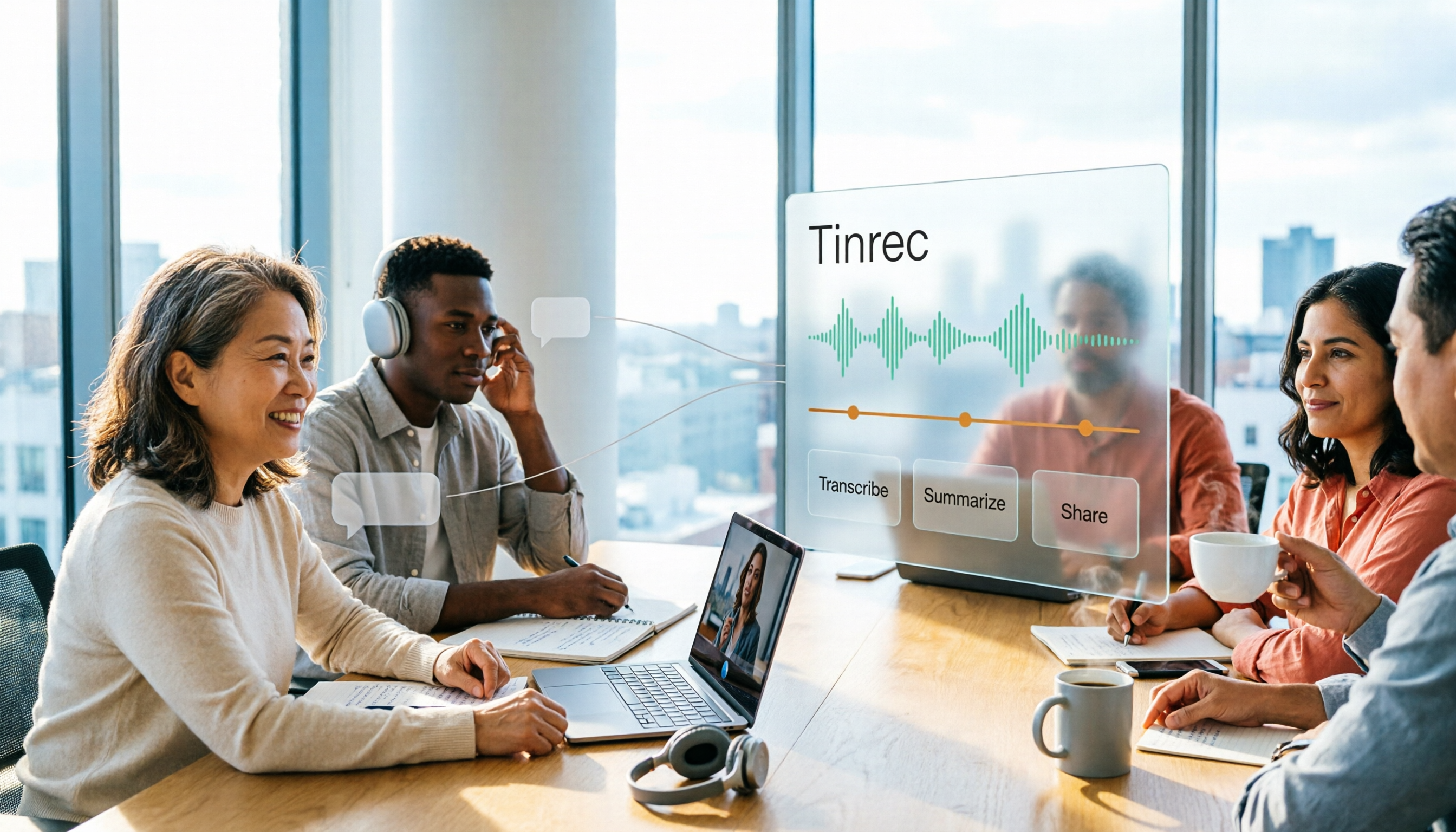
Tinrec vs Notta: 2 AI Voice Tools Tested for Meeting Notes & Transcription in 2026
Many people search for voice generation software, but the real pain point is organizing meeting audio. This hands-on comparison of Tinrec and Notta covers meeting capture, post-meeting organization, Chinese language experience, team collaboration, and data retention to help you choose the right tool for your workflow.

2026 Comparison of 4 Workplace Short Video Learning Summary Tools: Is Tinrec's AI Summary and Review Good Enough?
Forget short work videos right after watching? This article starts from the criteria of 'summary—notes—review' and compares Tinrec with general note-taking tools, bookmarking tools, and pure transcription tools in short video learning. It organizes 4 key comparisons, real usage scenarios for campus and internships, and concerns about free quotas and paid options to help you choose a workflow that truly helps you remember.

5 Best Free Speech-to-Text Online Tools in 2026: A Complete Guide
Compare 5 free speech-to-text online tools in 2026, including Tinrec, MyEdit, cSubtitle, TurboScribe, and Otter.ai. Review free quotas, Chinese language support, export formats, and use cases, with selection tips and usage notes.
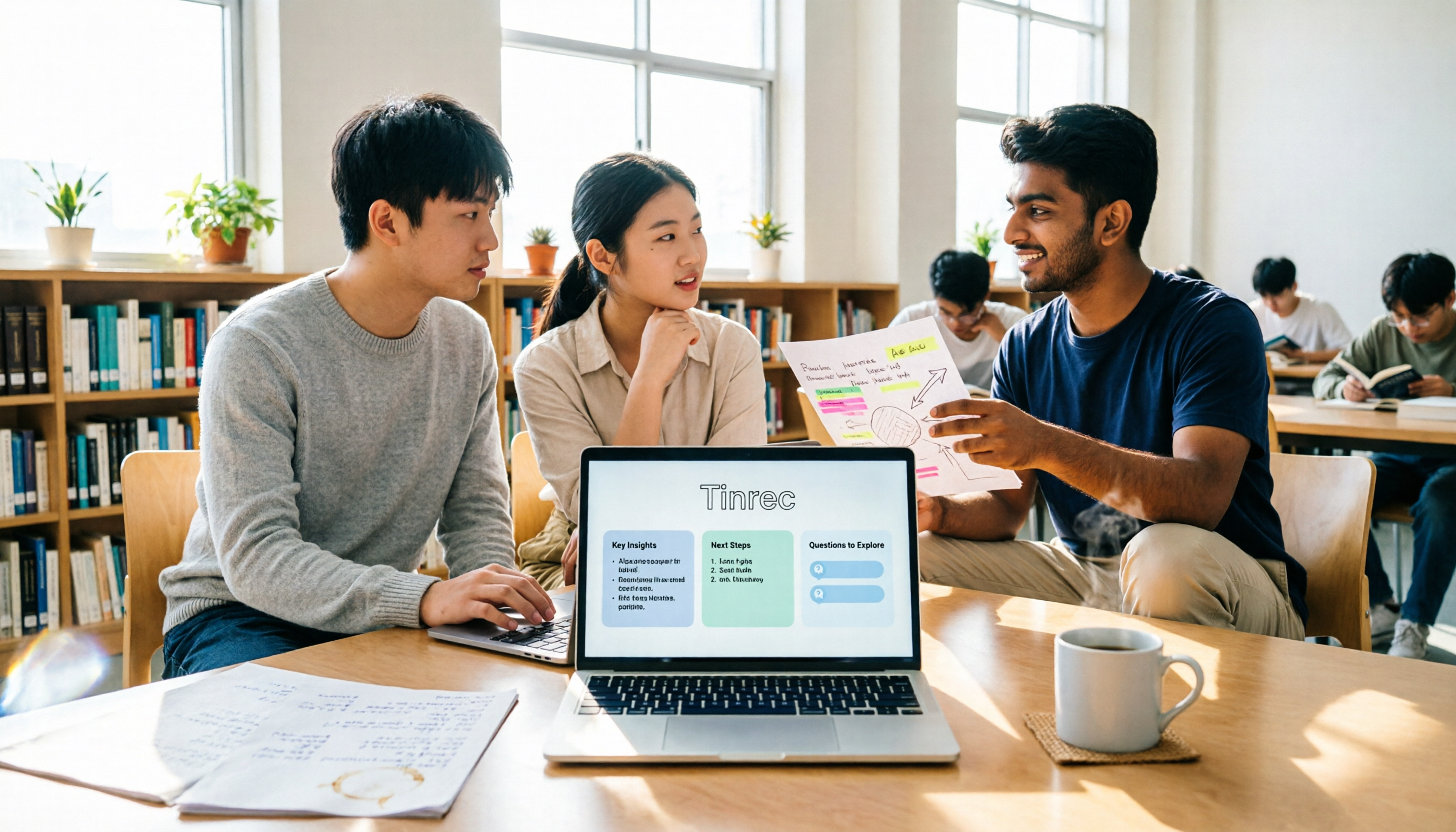
2026 Video Summarization Software Ranking Guide: Student-Tested Choices from Notta to Tinrec
This article starts from students' actual needs, organizes the key points for choosing video summarization software in 2026, and uses Tinrec as the core to compare the pain point that ordinary tools only provide transcripts. The content covers classroom notes, group reports, online courses, and interviews, helping you understand how AI summaries, to-do extraction, AI Q&A, and team collaboration can truly save time, and finally gives recommendations for students.