

Turn recordings into transcripts and summaries in minutes
Upload audio or video for multilingual transcription, AI notes, and action items
Have you ever recorded a meeting or interview on your iPhone, then tried to find the audio file in the Files app, only to come up empty? Many people assume recordings are automatically saved to a folder like photos are, but in reality, iPhone recordings made with the built-in Voice Memos app are stored only within the app by default. You have to manually export them before they appear in the file system. In this article, I'll first help you understand where iPhone recordings are stored, then introduce Tinrec, a tool I use to organize recordings—so you can not only find your files but also quickly turn them into searchable, summarized meeting notes.
Where Are iPhone Recordings Stored? Avoid This Common Misconception
Many people can't find their recordings because they're not in the Files app at all. By default, iPhone recordings are stored in the Voice Memos app, and you need to manually export them. The steps are simple: In Voice Memos, select the recording, tap the share button, choose "Save to Files," pick a location, and save. Then open the Files app, navigate to the location you chose, and you'll see the audio file, indicated by a music note icon.
Once you've found your recording, what's next? If you just need to play it back, the native app is sufficient. But if you want to transcribe the audio and organize key points, Tinrec comes in handy.
What Can Tinrec Do for You? More Than Just Finding Recordings
Tinrec is an AI meeting notes and collaboration tool that turns your iPhone recordings into searchable, summarizable, and queryable data. You can upload the exported m4a file directly to Tinrec, and it will automatically generate a transcript, then create a summary, chapters, and action items. This way, you not only solve the "where are my recordings" problem but also save time that would otherwise be spent re-listening to the entire recording.
Scenario 1: Meeting minutes ready in 5 minutes after the meeting
Previously, after a two-hour meeting, you might spend another hour organizing the minutes. Now with Tinrec, upload the recording, and the AI automatically generates a summary, conclusions, and action items—who's responsible for what and deadlines are all clear at a glance.
Scenario 2: Interview transcripts without manual work
If you conduct user interviews or research, Tinrec can directly convert recordings into transcripts. You can even use the AI Q&A feature to ask, "What pain points did the interviewee mention?" It will answer based on the content, so you don't have to listen through everything yourself.
Scenario 3: Quickly capture key points from class recordings
Students can record lectures, upload them to Tinrec, and quickly get chapter highlights and keywords, making review more efficient.
Tinrec's Core Capabilities: From Recording to Searchable Meeting Data
Real-time transcription and document conversion: Tinrec supports uploading audio files for transcription. iPhone recordings in m4a format can be processed directly, and after transcription, you can search for any sentence.
AI semantic summarization: Instead of condensing the transcript into a single paragraph, it organizes information structurally—meeting topic, discussion conclusions, action items, and responsible persons are listed separately.
Stop organizing recordings by hand
Upload audio or video and automatically get a transcript, summary, and action items
AI conversational query: After transcription, you can ask Tinrec questions directly, such as "Who mentioned the budget in the meeting?" or "What was the client's feedback?" It answers based on semantic understanding.
Action item extraction and multi-format export: Tinrec automatically extracts action items from the discussion and supports exporting to tools like Notion and Google Docs for seamless workflow continuation.
Team spaces and permission management: If you're working with a team, you can store recordings and transcripts in a team space where members can view and search, and admins can manage seats and usage.
Practical Use Cases: Using Tinrec to Organize Different Types of iPhone Recordings
Meeting minutes: After a meeting, open Tinrec, upload the recording, and the AI instantly generates a summary and action items. You just review and send it to colleagues.
Client interviews: After an interview, upload the recording to Tinrec, get a transcript, and use AI Q&A to find key needs and objections mentioned by the client.
Class notes: Convert lecture recordings to text, highlight key sections, and organize them into your own note system.
Idea capture: Record ideas on your phone on the fly, then upload to Tinrec and let the AI organize them into an actionable list.
4 Things to Consider When Choosing a Recording Organization Tool
- Does it support your recording source? iPhone recordings are in m4a format, and Tinrec accepts direct uploads without conversion.
- Can it help you organize after transcription? Transcription is just the first step; the key is summarization and action items. Tinrec's AI summary and Q&A features let you quickly grasp the essentials.
- Multilingual support: If you have recordings in Chinese or mixed Chinese-English, Tinrec performs particularly well with Chinese and also supports real-time translation.
- Team collaboration needs: If recordings need to be shared with colleagues, Tinrec's team space centralizes management, allowing members to view and search without sending files back and forth via messaging apps.
Frequently Asked Questions
Q1: Where are iPhone recordings stored by default? By default, they are stored in the Voice Memos app and do not automatically appear in the Files app. You need to manually export them to see the files.
Q2: How do I export iPhone recordings? In Voice Memos, select the recording, tap Share, choose "Save to Files," and pick a location. Then you can find it in the Files app.
Q3: Can Tinrec handle iPhone recordings? Yes, Tinrec supports uploading common audio formats like m4a and will automatically transcribe and generate summaries.
Q4: Is Tinrec's free plan sufficient? The free plan offers basic credits, suitable for occasional recording organization. If you have meetings to organize weekly, consider the Pro plan.
Q5: Is the transcription accuracy high? Accuracy can be affected by recording quality, accents, and background noise, but Tinrec performs well with clear audio. For important content, we recommend cross-checking with the transcript.
Conclusion
Finding your iPhone recordings is just the first step; the real time sink is turning the audio content into usable data. Instead of stopping at "where are the files," use Tinrec to convert recordings into transcripts, summaries, and action items. If you frequently need to organize meeting or interview recordings, give Tinrec a try. The free plan lets you experience upload, transcription, and AI summarization, so you'll never worry about recordings again.
References
- Where Are iPhone Recordings Stored? How to Export, Save, or Share - Tech Girlz
- Record audio in Voice Memos on iPhone - Apple Support (Taiwan)
- Organize recordings in Voice Memos on iPhone - Apple Support (Taiwan)
- 2026 Guide: Where Are iPhone Recordings? 3 Ways to Find Them, Plus Tinrec AI Recording Assistant for Easy Transcription - Tinrec Blog
- Where Are iPhone Recordings? - Superman Marketing
Turn every recording into actionable outcomes
Get 60 free transcription minutes when you sign in. No credit card required.
Related Reading
You might also like

2026 iPhone Recording App Comparison: Turn Meetings into Data Without Hunting for a Microphone Hole
The location of the iPhone's microphone hole isn't the real issue—it's how you organize recordings afterward. This article tests 3 tools and recommends Tinrec to turn meetings into searchable, collaborative data.
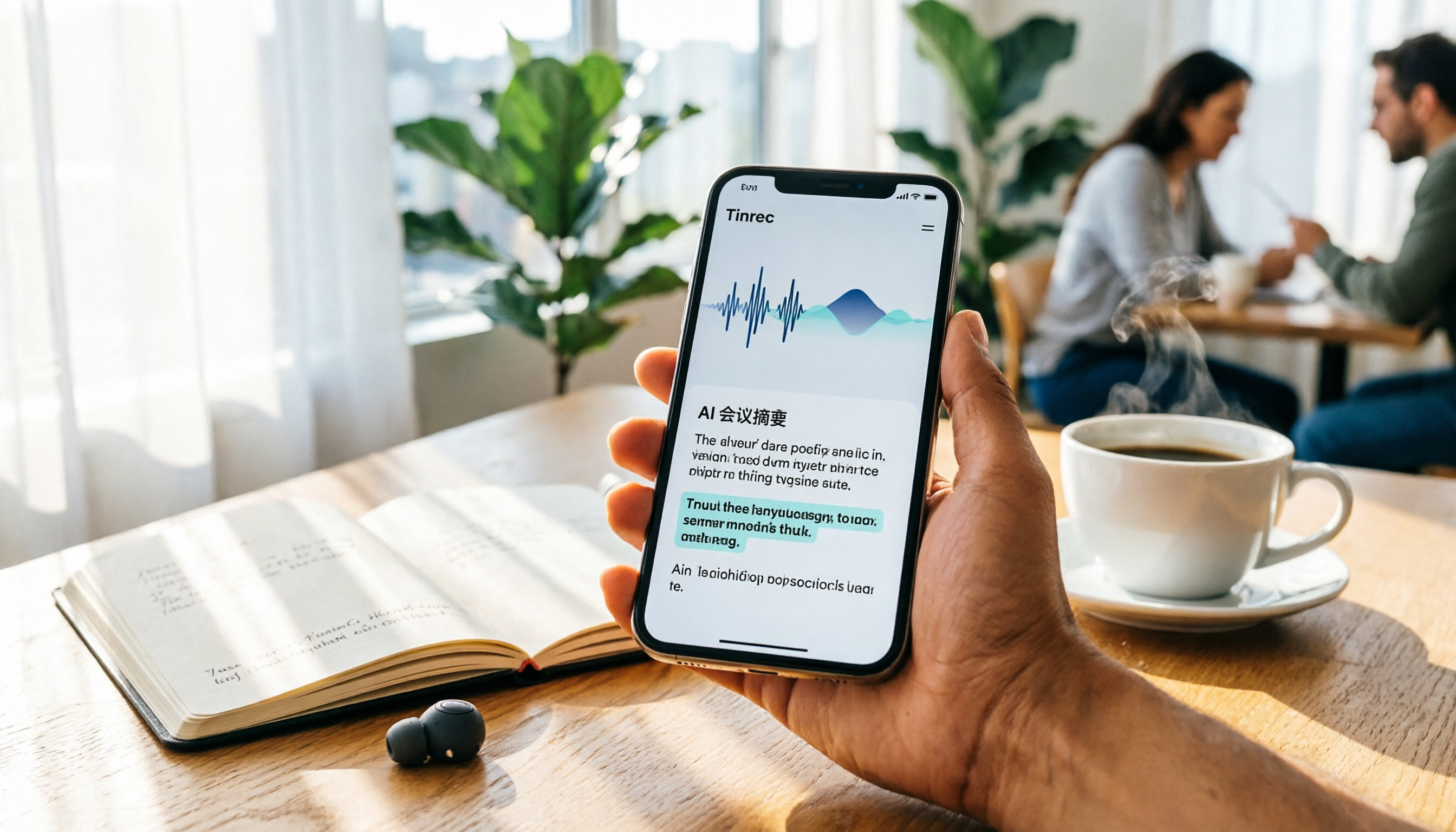
The Complete Guide to iPhone Recording in 2026: From Finding Audio Files to AI Meeting Notes
Where do iPhone recordings go? This guide shows you how to locate Voice Memos and call recordings, compares built-in tools with third-party apps like Tinrec, and helps you choose the best recording management solution.

2026 Test: 4 Best Voice-to-Text Tools for iPhone Recording Transfer & AI Meeting Notes
Struggling to transfer large iPhone voice memos to your computer? We tested 4 voice-to-text tools for transfer convenience, Chinese transcription, AI meeting notes, and team collaboration to find which one saves you the most time on meeting minutes.

Where Are iPhone Voice Recordings Stored in 2026? Find Them in 3 Steps and Organize with AI
iPhone voice recordings are saved in the Voice Memos app by default and can only be found in the Files app after you export them. This article shows you how to locate your recordings in 3 steps and recommends 6 tools, including Tinrec, to turn your recordings into searchable, collaborative text.
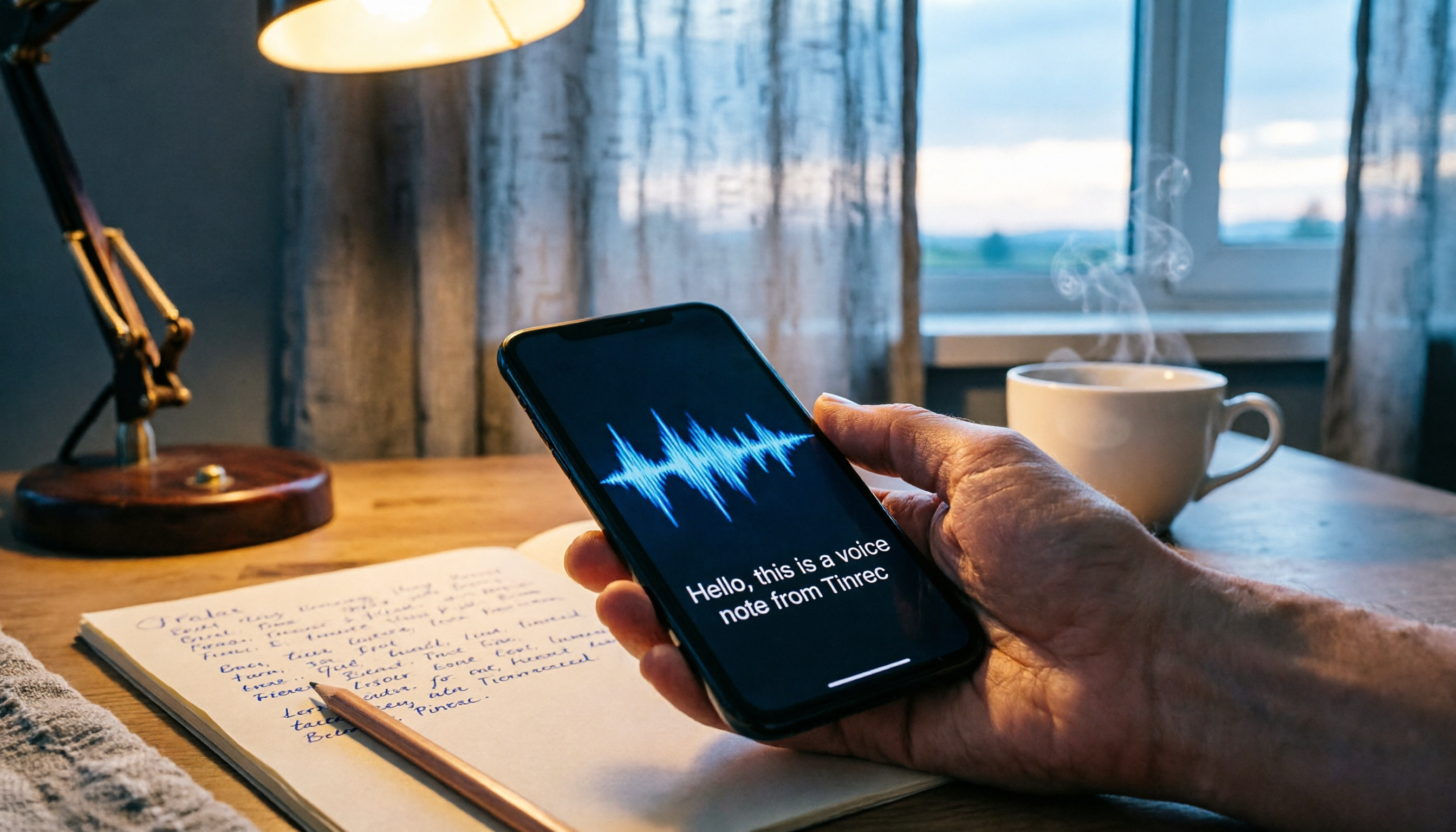
2026 Guide: 5 Free Ways to Manage iPhone Voice Memos
iPhone voice memos are stored in the Voice Memos app by default. This article covers 5 free solutions to help you locate and manage your recordings, including AI tools like Tinrec for transcription and organization.

iPhone Voice Memos vs Tinrec in 2026: A 4-Dimension Comparison for Meeting Notes
This article compares iPhone's built-in Voice Memos with Tinrec's instant recording feature, analyzing four dimensions: recording and transcription, meeting organization, team collaboration, and cross-platform export, to help you choose the best meeting notes tool.

2026 iPhone Recording Features Compared: Voice Memos, Call Recording, and Tinrec – Which Is Most Useful?
Looking for iPhone recording features? This article tests Voice Memos, iOS 18.1 call recording, and Tinrec, a recording-to-text app, comparing built-in methods to AI summaries and team collaboration to help you decide which is most practical.

Best iPhone Voice-to-Text Apps in 2026: Built-in Free vs Tinrec
iPhone's built-in Voice Memos can now transcribe recordings for free, but for meeting summaries, task management, and team collaboration, Tinrec is a more complete choice. This article compares the two and provides step-by-step instructions.

2026 iPhone Voice Recording Loop Test: 3 Steps to Repeat Playback with a Free App
The iPhone's built-in Voice Memos app doesn't support repeat playback. Want to loop your recordings? We tested using the free player KMPlayer to import audio files, and it takes just 3 steps. You can also adjust speed and EQ. Includes comparisons with other methods and a pitfall guide.