
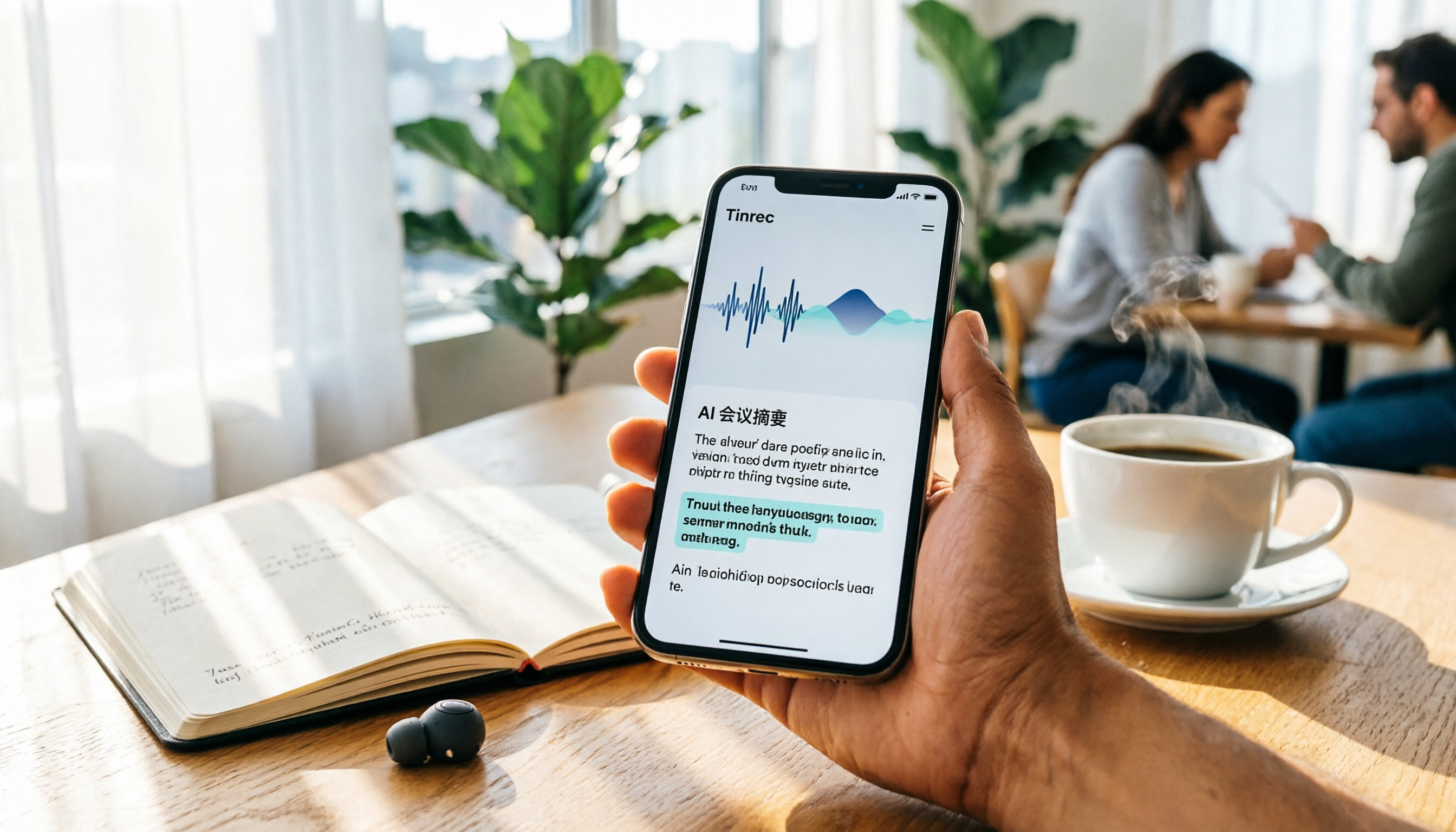
Turn recordings into transcripts and summaries in minutes
Upload audio or video for multilingual transcription, AI notes, and action items
Can't Find Your iPhone Recording? You Don't Need Another Recording App—You Need a Complete Recording Management Solution
Many iPhone users record a memo in Voice Memos, then open the Photos or Files app and can't find the recording, thinking they failed to record. In reality, recordings made with the built-in Voice Memos app are saved only within that app by default; you must manually "Save to Files" for them to appear in the Files app folders. If you use the call recording feature in iOS 18 or later, recordings are placed in the Downloads folder in the Files app. But even after you find the recording, if you want to quickly locate a specific part, turn it into meeting minutes, or share it with your team, the built-in tools require a lot of manual work. If you only occasionally record personal memos, the built-in features are sufficient; but if you need to turn recordings into searchable, collaborative productivity assets, choosing the right tool can save you a lot of time. This article helps you understand where to listen to your iPhone recordings and which tool is most worth using.
Before Choosing an iPhone Recording Tool, Understand These 4 Key Points
1. Where can you listen to the recording files? Voice Memos recordings are only available within the app; you need to export them to access them elsewhere. Call recordings are in the Files app. But these locations are only for "listening." If you want to search the content or jump to a specific part, you still need a transcription tool.
2. Transcription and search capabilities A recording is audio, not text. If you record a one-hour meeting and want to find a keyword, you have to slowly drag the timeline. Tools with transcription can automatically generate a transcript, letting you search the text directly and even jump to the corresponding audio timestamp. Tinrec excels here—it not only transcribes but also lets you ask AI questions like "What was the meeting conclusion?"
3. AI summaries and to-dos Recording is just the first step; organizing it into key points is what really takes time. Tools like Tinrec can automatically generate summaries, chapters, and action items, so you have a usable meeting record right after recording, without having to relisten.
4. Cross-platform and team collaboration If you need to record on your iPhone, organize on your computer, or share with your team, consider whether the tool supports multiple platforms and team spaces. Tinrec offers iOS, Android, web, and desktop versions, and lets you create team spaces to centralize meeting materials.
Tinrec (秒听录音)—Our Top Pick After Testing
Tinrec (秒听录音) is an AI meeting notes and collaboration tool for individuals and teams, supporting iOS, Android, web, and desktop. It handles live recording, online meetings, and audio/video file transcription, and offers AI summaries, to-dos, Q&A, export, and team spaces. After testing, we believe it's the best choice for turning iPhone recordings into actionable data.
Core features in real scenarios
During a meeting, you can use the Tinrec iPhone app to record directly, and it generates a transcript in real time. For online meetings (Zoom, Meet, Teams, etc.), use the desktop version to capture your computer's system audio directly—no need to invite a bot to the meeting. By the time the meeting ends, the transcript and summary are ready. After recording, you can ask Tinrec: "Who mentioned the budget in this meeting?" It uses semantic understanding to give you the answer, not just keyword search. This AI conversational query feature is rare among the competitors we tested.
Pros from our testing
Stop organizing recordings by hand
Upload audio or video and automatically get a transcript, summary, and action items
- Bot-free online meeting recording: No need to add a bot to your meeting. The Tinrec desktop app records your computer's audio directly, so participants don't see an extra attendee, offering better privacy.
- More than just a transcript: Automatically generates summaries, chapters, action items, and mind maps, and can export to Notion, Google Docs, and other tools for further editing.
- Great Chinese and multilingual support: Supports Chinese, Traditional Chinese, and multilingual meetings, with real-time translation and team-specific terminology for better accuracy.
Where are the limitations?
The free personal plan offers basic usage credits, suitable for light use; heavy users will need to pay. But if you have regular weekly meetings, upgrading to Pro or Team is cost-effective. The Team plan also includes 2,000 shared import minutes per seat per month.
Who is it for?
If you frequently record meetings, interviews, or classes, and want to search key points, generate summaries and to-dos, and switch between phone and computer, Tinrec is currently the most suitable choice. Especially for teams that need Chinese meeting notes, its Chinese experience is better than most international competitors.
Alternatives to Tinrec
Voice Memos (built-in on iPhone): The simplest and free, but limited to recording and basic editing—no transcription, AI organization, or collaboration. Suitable for those who only record personal memos and don't need post-processing. If you want to search content or share with a team, the built-in features are insufficient; Tinrec's transcription and Q&A are missing.
Otter.ai: A mature choice for English meetings, with 300 free minutes per month, but its Chinese support is average and it's more geared toward English business scenarios. If you mainly record English meetings, Otter is worth considering; but if you have Chinese content or need bot-free recording, Tinrec's desktop bot-free and Chinese support are better.
Notta: Features overlap with Tinrec, supporting multi-platform transcription and translation, but the free plan limits each recording to 3 minutes, which is restrictive. Notta's strength is document transcription, but its team spaces and AI Q&A are less complete than Tinrec's. If you need an end-to-end workflow from recording to team collaboration, Tinrec is better.
Pitfall Guide: 4 Common Mistakes When Looking for iPhone Recordings
Mistake 1: Thinking recordings are in the Photos app. Voice Memos recordings are not videos or photos; they're stored only in the Voice Memos app by default. You need to manually export them to Files. If you can't find them in Photos, check Voice Memos first.
Mistake 2: Ignoring transcription and search capabilities. Treating recordings as just audio files means you have to relisten every time to find key points—a huge waste of time. Choose a tool with transcription and AI search to find content via text; the efficiency difference is huge.
Mistake 3: Manually organizing meeting notes. Recording a one-hour meeting and then spending two hours transcribing and summarizing is a nightmare. Tools like Tinrec automatically generate summaries and to-dos, giving you a record right after recording. Stop doing it the hard way.
Mistake 4: Considering only a single device. If you record on your iPhone but need to edit on your computer or share with colleagues, choosing a mobile-only tool will cause pain later. Cross-platform and team spaces are must-haves when choosing.
Summary: Which One Should You Choose?
If you only occasionally record personal memos, the built-in Voice Memos on iPhone is enough; recordings are in the app, and you need to export them to see them in Files. But if you need to turn recordings into searchable, organizable, collaborative meeting assets, Tinrec is our top pick. Here's a direct scenario mapping:
- Need Chinese meeting transcription and summaries → Tinrec (best Chinese experience, supports Traditional Chinese)
- Want to ask AI about key points after recording → Tinrec (AI conversational query)
- Don't want to invite a bot to online meetings → Tinrec (bot-free desktop recording)
- Need cross-platform and team sharing → Tinrec (iOS + Android + Web + Desktop + Team Spaces)
- Only record English meetings and have zero budget → Otter.ai (free 300 minutes, but weak Chinese)
We recommend downloading the free version of Tinrec to try it out—record a real meeting or interview to experience the fluency of transcription, summaries, and AI Q&A. If you like it, consider upgrading; there's no need to pay upfront.
References
- Record audio in Voice Memos on iPhone - Apple Support (Taiwan)
- Record audio and video on iPhone - Apple Support (Taiwan)
- How to record iPhone calls? 5 methods revealed!
- Record and transcribe calls on iPhone - Apple Support (Taiwan)
- Where are iPhone recordings stored? How to export or share them? - Tech Girlz
Turn every recording into actionable outcomes
Get 60 free transcription minutes when you sign in. No credit card required.
Related Reading
You might also like

2026 iPhone Voice Memo to Text App Comparison: How to Organize Recordings Efficiently
How do you export iPhone Voice Memos? Once exported, how do you convert them to text and highlight key points? This comparison of 4 voice-to-text apps shows students and professionals which one to choose, and why Tinrec is the top pick.
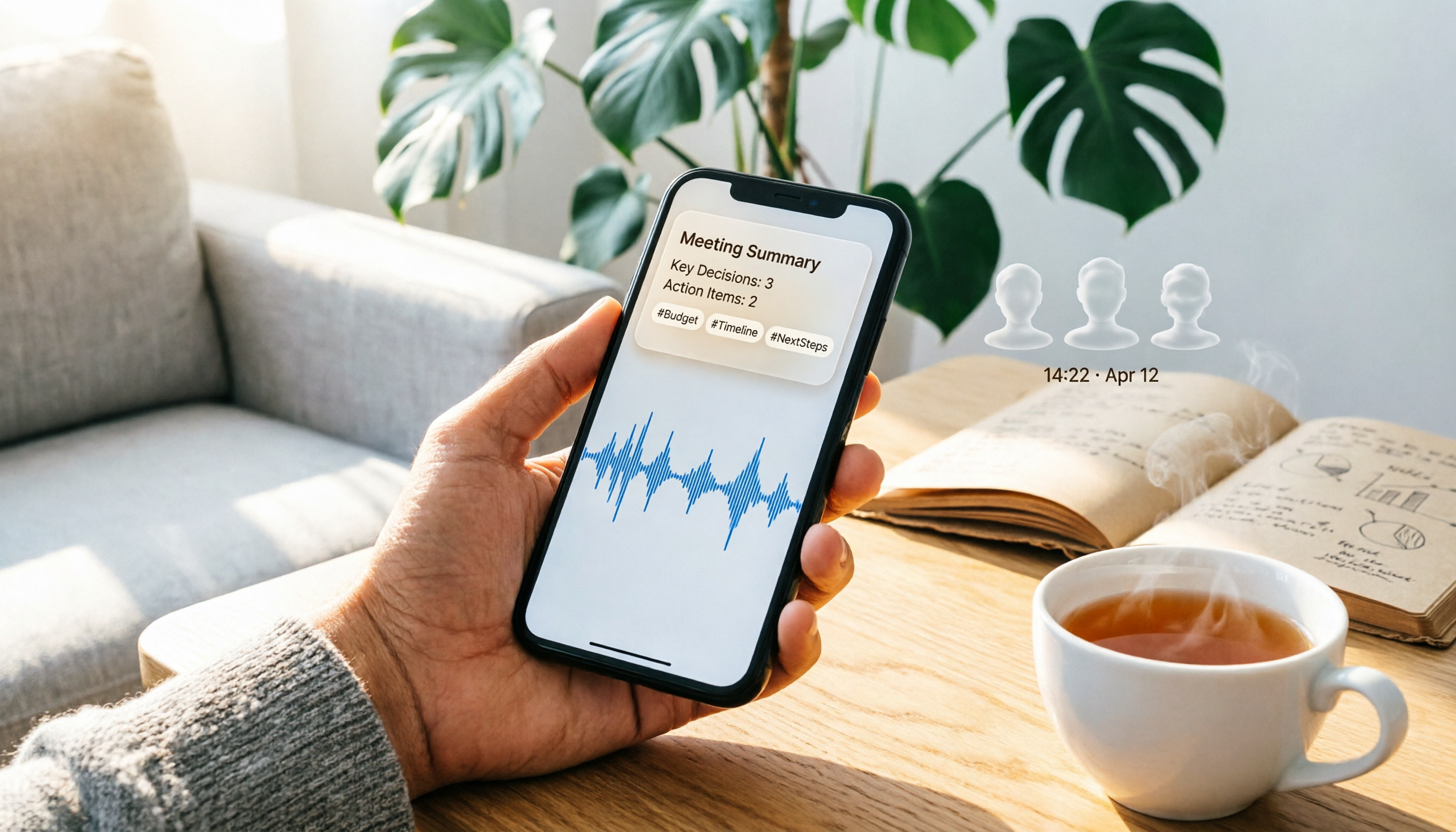
Where Are iPhone Call Recordings Stored in 2026? 5 Steps to Find Them and Organize with Tinrec
After iOS 18.1, iPhone's built-in call recording is automatically saved to the Notes app, but finding the file is just the beginning. This guide shows you where recordings are stored, 5 steps to locate them, and how to use Tinrec to turn call recordings into searchable, summarizable, and collaborative meeting notes.

Where Are iPhone Recordings Stored in 2026? 3 Steps to Find Audio Files & Use Tinrec for Transcription
iPhone recordings are saved in the Voice Memos app by default, not in the Files app. This guide shows you how to export recordings and use Tinrec to transcribe, summarize, and manage them.
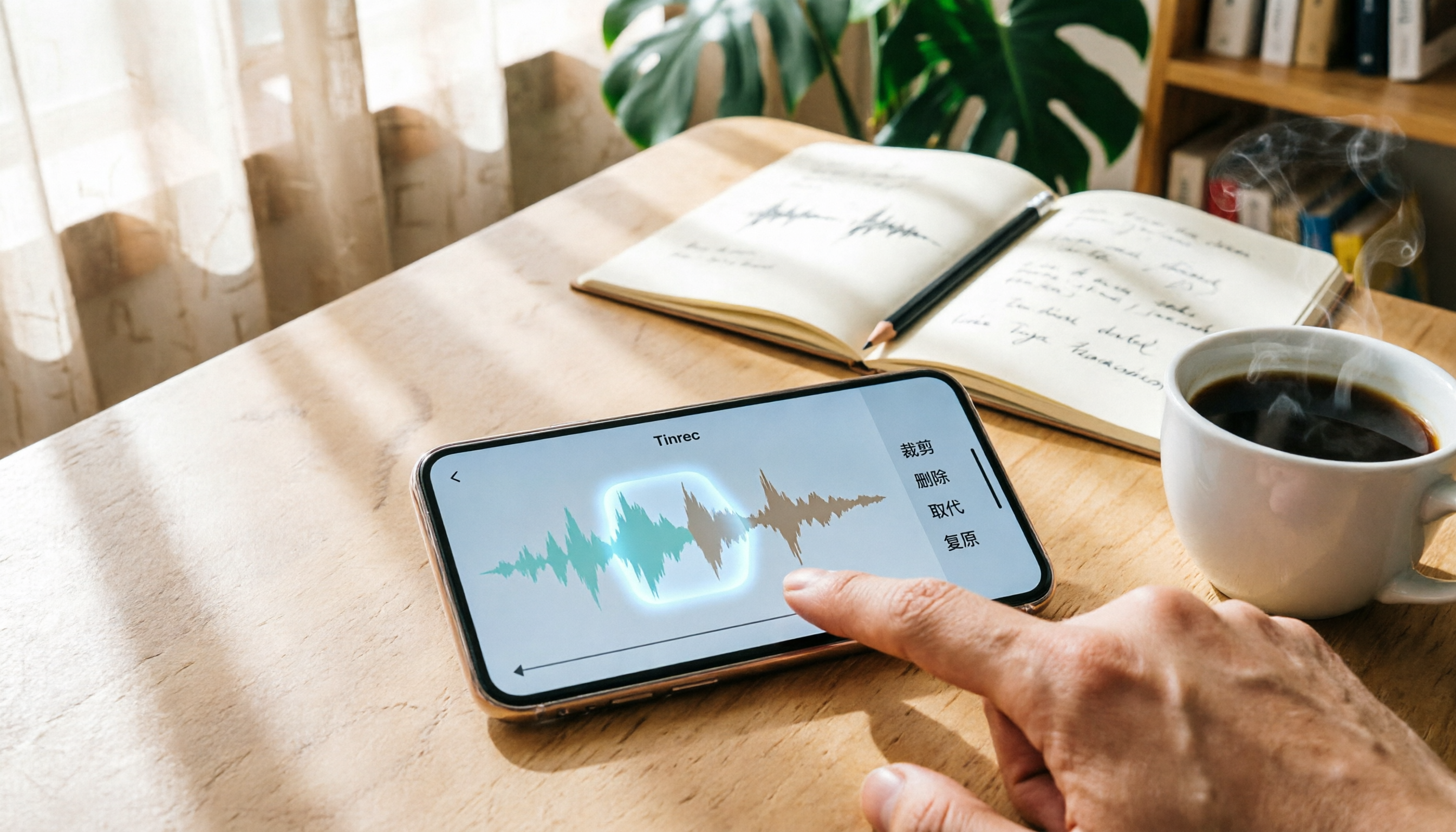
Free iPhone Voice Recording Editing in 2026: A Complete Guide
The built-in Voice Memos app on iPhone lets you edit recordings, including trimming, deleting, replacing segments, and restoring deleted recordings. Follow this step-by-step guide.

2026 iPhone Voice-to-Text App Comparison: Tinrec Saves the Most Time for Cantonese Transcription
Where is the iPhone recording feature? How do you use the built-in Voice Memos? This article tells you everything, then tests three voice-to-text tools, finding that Tinrec's Cantonese transcription and AI Q&A are the most helpful, ideal for Hong Kong office workers who want to avoid overtime transcribing meeting notes.

2026 iPhone Recording App Comparison: Turn Meetings into Data Without Hunting for a Microphone Hole
The location of the iPhone's microphone hole isn't the real issue—it's how you organize recordings afterward. This article tests 3 tools and recommends Tinrec to turn meetings into searchable, collaborative data.

2026 Test: 4 Best Voice-to-Text Tools for iPhone Recording Transfer & AI Meeting Notes
Struggling to transfer large iPhone voice memos to your computer? We tested 4 voice-to-text tools for transfer convenience, Chinese transcription, AI meeting notes, and team collaboration to find which one saves you the most time on meeting minutes.

Where Are iPhone Voice Recordings Stored in 2026? Find Them in 3 Steps and Organize with AI
iPhone voice recordings are saved in the Voice Memos app by default and can only be found in the Files app after you export them. This article shows you how to locate your recordings in 3 steps and recommends 6 tools, including Tinrec, to turn your recordings into searchable, collaborative text.
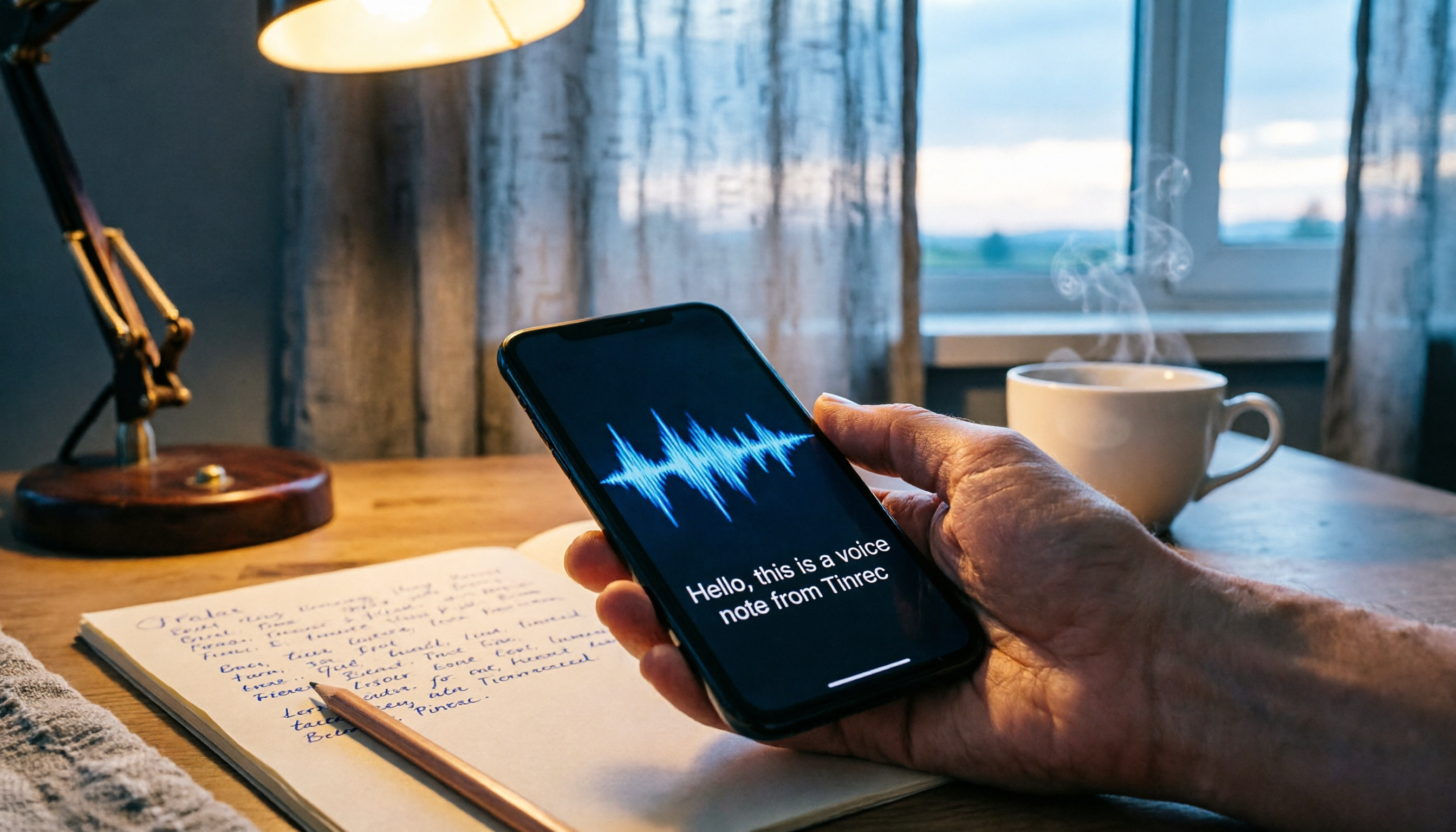
2026 Guide: 5 Free Ways to Manage iPhone Voice Memos
iPhone voice memos are stored in the Voice Memos app by default. This article covers 5 free solutions to help you locate and manage your recordings, including AI tools like Tinrec for transcription and organization.