
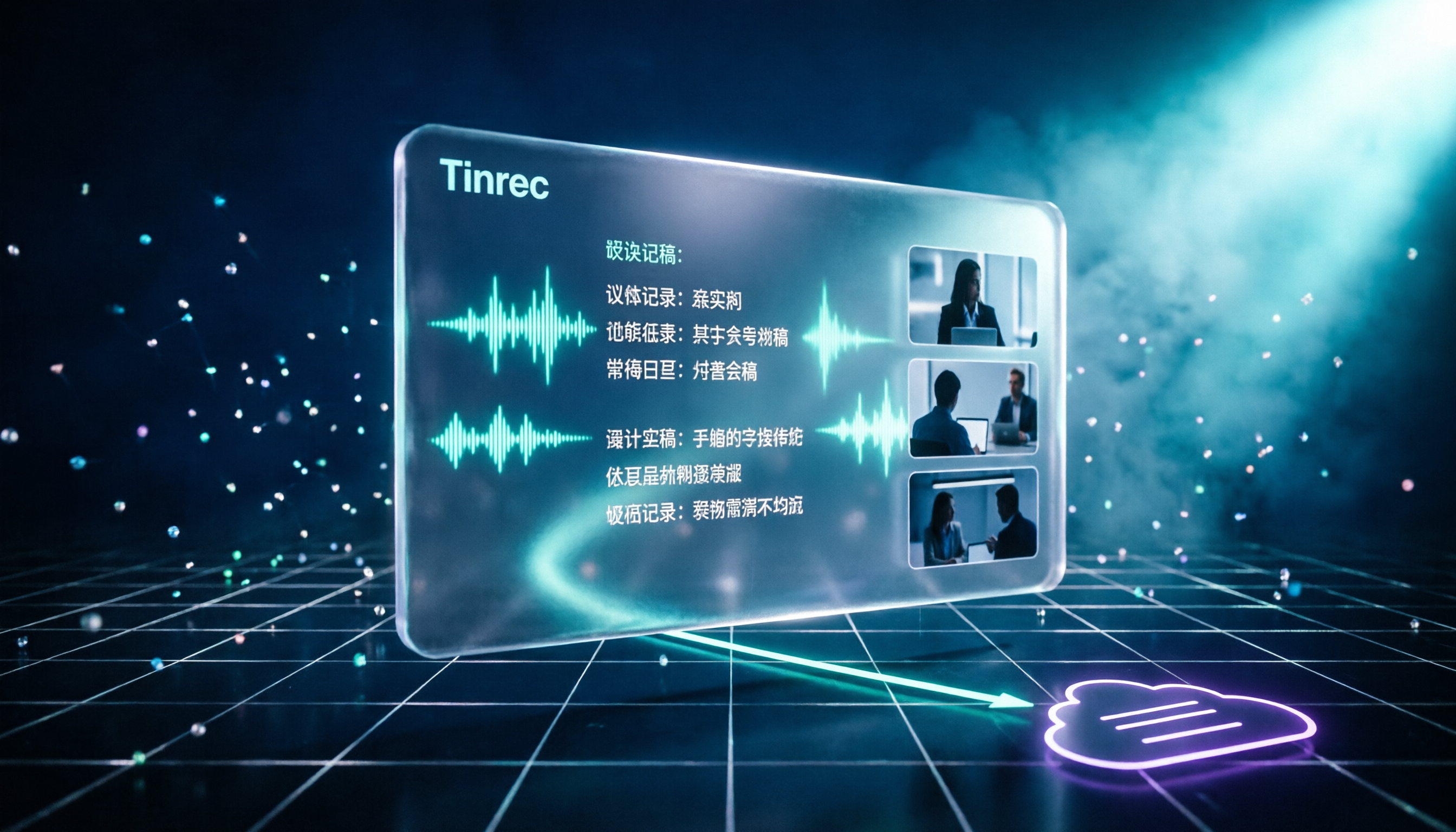
Turn recordings into transcripts and summaries in minutes
Upload audio or video for multilingual transcription, AI notes, and action items
Introduction: Are You Still Stuck with the Inefficient 'Record + Manual Transcription' Workflow?
Many Google ecosystem users have a habit: use Google Meet for meetings, toss the recording into Google Drive afterward, and then forget about it. When it's time to submit meeting minutes, they go back to the recording, listen and type—a 1-hour meeting often takes 2 hours to transcribe.
An even more common misconception is thinking Google Meet's built-in captions are the same as meeting minutes. In reality, live captions disappear once turned off, leaving no searchable or editable transcript, and they certainly don't auto-generate action items.
A more sensible approach is to split 'recording' and 'organizing' into two stages, handled by different AI tools. This article tests 3 AI meeting solutions suitable for Google ecosystem users, evaluating them from a practical workflow perspective to help you decide which one truly saves time.
Quick Overview of 3 Tools: Gemini, NotebookLM, Tinrec
This test focuses on the 3 solutions most accessible to Google ecosystem users:
| Tool | Positioning | Best For | Key Limitation |
|---|---|---|---|
| Google Gemini | AI conversational assistant that can analyze audio files | Quick summaries, Q&A | Requires manual upload; no real-time transcription |
| NotebookLM (Gemini Notebook) | AI note-taking and database tool | Transcript generation, long-term data organization | No real-time meeting recording; requires post-meeting upload |
| Tinrec | AI meeting recorder and team collaboration tool | Real-time recording, online meetings, post-meeting organization | Some features require a paid plan |
All 3 tools can process meeting audio files, but their workflows differ significantly. Below is a dimension-by-dimension comparison.
Dimension 1: Real-Time Meeting Recording
Google Gemini doesn't have meeting recording capabilities. You need to record your Google Meet session with another tool, then manually upload the audio file to Gemini for analysis. This means Gemini can't help during the meeting itself.
NotebookLM is similar. It's a powerful database tool but lacks real-time transcription. You must upload the recording after the meeting to generate a transcript and summary.
Tinrec's desktop app can directly capture your computer's system audio, so there's no need to add a meeting bot to Google Meet. Simply open Tinrec desktop, start recording, and you'll see the transcript in real time as the meeting progresses, with summaries and action items ready immediately after.
→ This dimension: Tinrec clearly wins. Gemini and NotebookLM are more 'post-processing' tools, while Tinrec offers 'real-time recording + post-meeting organization' in one seamless flow.
Dimension 2: Transcript Generation Workflow
Gemini can analyze audio files and extract key points, but transcripts aren't its strength. You typically need to prompt it to 'organize a transcript,' and the output may be summarized, not preserving the full detail of the original conversation.
NotebookLM is straightforward with transcripts: upload the audio file, click the source, and you'll see the full transcript, which you can copy and paste into Google Docs. This is useful for those needing complete text records.
Tinrec generates transcripts in real time, transcribing as it records, with support for bilingual Chinese-English recognition, automatic speaker labeling, and segmentation. After recording, the transcript is already in the system—no need to export and paste elsewhere.
→ This dimension: Tinrec and NotebookLM tie. NotebookLM is better for post-meeting processing of historical recordings, while Tinrec suits real-time meeting scenarios. Gemini's transcript capability is relatively weak, better for quick summaries than full transcription.
Dimension 3: Post-Meeting Organization and Action Item Extraction
Gemini's strength lies in language understanding. You can paste a meeting transcript and ask it to organize action items, decisions, and key points, and it'll produce a structured summary in seconds. But this is a 'manually triggered' process—you need to give commands and copy-paste yourself.
NotebookLM can generate summaries from uploaded meeting materials and even cross-query multiple documents. However, it's designed more as a 'research database' than a 'meeting action tool.' Extracting action items requires you to prompt it; it won't happen automatically.
Stop organizing recordings by hand
Upload audio or video and automatically get a transcript, summary, and action items
Tinrec has built-in AI summaries, chapters, and action item extraction that are generated automatically after recording. You can immediately see topics discussed and follow-up actions without manual work. Additionally, Tinrec supports AI Q&A, allowing you to ask questions like 'What specific requirements did the client mention?'
→ This dimension: Tinrec wins. Gemini and NotebookLM require manual steps to produce post-meeting outputs, while Tinrec automates this step.
Dimension 4: Integration with the Google Ecosystem
Gemini and NotebookLM are Google's own AI tools, so integration with Google Docs and Google Drive is seamless. NotebookLM transcripts can be copied directly to Google Docs, and Gemini summaries can be quickly pasted into documents. For heavy Google users, this is a zero-friction choice.
Tinrec isn't an official Google tool, but it supports exporting meeting results to Google Docs, Notion, OneNote, Dropbox, and other third-party tools. This means you can handle real-time recording and organization in Tinrec, then export the results to Google Docs for further editing and sharing.
→ This dimension: Tie. Google's own tools have an edge in native integration, while Tinrec compensates with export features for cross-tool workflows.
What Are the Unique Advantages of Each?
Tinrec's Unique Advantages:
- Bot-free real-time recording: No need to add a bot to Google Meet; it captures system audio directly, so participants won't see an extra 'attendee.'
- Real-time transcript and translation: See text as the meeting happens, and view bilingual content instantly in cross-language meetings.
- Automatic action items and post-meeting workflow: Not just a transcript, but meeting data you can track for follow-up actions.
- Team space and usage management: The team plan centralizes meeting data, with member management, seat allocation, and usage tracking—ideal for departments or project teams.
Google Gemini and NotebookLM's Unique Advantages:
- Zero extra cost to start: Use with a Google account; both Gemini and NotebookLM have free tiers, suitable for occasional recording organization.
- Native Google ecosystem integration: Upload files from Google Drive, copy to Google Docs—intuitive workflow.
Summary: Who Should You Choose?
• If you need 'real-time transcript generation during meetings' and don't want to organize afterward → Tinrec is the only choice (Gemini and NotebookLM can only process post-meeting) • If you have a large backlog of historical recordings and need quick transcripts → NotebookLM is free and intuitive, worth trying first • If you only need quick summaries of meeting highlights, not full transcripts → Gemini is sufficient • If you're a team manager needing centralized meeting data and usage management → Tinrec's team plan is currently the more complete solution
In a nutshell: Google Gemini and NotebookLM are for post-meeting organization, while Tinrec is for real-time recording plus a complete post-meeting workflow. We recommend clarifying your meeting type first—if you have daily online meetings and need quick minutes and action items, Tinrec's real-time capabilities will save significant time; if you only occasionally organize recordings, start with NotebookLM and Gemini's free tiers.
FAQ
Does Google Meet have built-in meeting notes?
Google Meet offers live captions and the 'Take notes for me' feature in Gemini for Workspace, which can automatically organize key points, action items, and decisions. However, these features require a Gemini subscription for Google Workspace, and the note-taking feature is primarily for video meetings, so it may not be available for all accounts or regions.
Are free tools sufficient for meeting minutes?
If you have infrequent, short meetings, the free tiers of Gemini and NotebookLM are usually enough. But if you have more than 3 meetings per week and need real-time transcripts and automatic action items, the post-processing workflow of free tools will accumulate significant time costs, making a paid real-time meeting recorder more reasonable.
Does Tinrec automatically join Google Meet meetings?
No. Tinrec desktop captures your computer's system audio, so there's no need to add a bot to the meeting. You need to open Tinrec and start recording before the meeting begins—it's an active action, not automatic joining of all calendar meetings.
Can meeting transcripts be 100% accurate?
No AI transcription tool can guarantee 100% accuracy. Actual performance is affected by recording quality, background noise, speaker accents, overlapping speech, and technical jargon. For important decisions, we recommend cross-referencing the transcript timestamps with the original recording.
Do I need to inform participants when using AI meeting recorders?
We recommend making it a habit to inform participants before the meeting that recording and transcription will occur, and obtain consent when necessary. Legal requirements for recording vary by region, so proactive disclosure is the safest approach.
What's the difference between Tinrec's team and personal plans?
With the personal plan, meeting data is managed under your personal account. The team plan provides a dedicated team space where meeting data belongs to the team, with added features like member management, role permissions, seat allocation, usage analytics, and audit logs. Members without seats can view team data, but only those with seats can record, upload, and edit.
References
- AI Meeting Recorder - Google Play App
- Use AI in Meetings and Video Conferences | Google Workspace
- Master Meeting Minutes! How to Use AI Speech-to-Text? Gemini Notebook, Gemini, EchoScript Operation Guide | 104 Career
- Meeting Ink - Transcript AI Meeting Summary Speech-to-Text - Google Play App
- Use AI Meeting Notes and 'Take Notes for Me' with Gemini in Google Meet | Google Workspace
Turn every recording into actionable outcomes
Get 60 free transcription minutes when you sign in. No credit card required.
Related Reading
You might also like

2026 AI Meeting Note Tools Buyer's Guide: 5 Hands-On Tests for Google Meet
Tired of struggling with Google Meet meeting notes? This article tests Tinrec, Otter, Notta, Granola, and Google Meet's built-in features—covering bot-free recording, Chinese transcription, post-meeting organization, and team collaboration—to help you find the best AI meeting note solution.

5 Best AI Meeting Transcription Tools in 2026: Free vs Paid Plans Compared
Struggling to keep up with meeting notes? This article compares 5 AI meeting transcription tools, covering bot-free recording, Chinese speech recognition, AI summaries, and team collaboration. We break down free plan limits and offer practical recommendations to help you find the perfect meeting note assistant.

5 Best AI Meeting Recorder & Note-Taking Tools in 2026: Which Free Plan Is Actually Enough?
AI voice-to-text and meeting note tools come with varying free-tier limits. This article compares 5 practical tools—covering free quotas, recording methods, transcripts, summaries, and team collaboration—to help you decide which fits your meeting scenarios best.

6 Best AI Transcription Tools Compared in 2026: Which Free Plan Is Worth It?
A practical comparison of AI transcription and speech-to-text tools worth trying in 2026, including Tinrec, NotebookLM, Yating, Vocol.ai, cSubtitle, and Notta. We break down free allowances, Chinese recognition accuracy, meeting notes, and team collaboration features to help you find the best fit.

5 Best AI Meeting Note Tools Tested in 2026: Which Free Plan Is Worth It?
Choosing the right AI meeting notes tool can be tricky. This article tests five tools, including Tinrec, on transcription, summarization, team collaboration, and free-tier limits to help you find the most time-saving solution for Chinese and online meetings.

Notion AI Meeting Notes in 2026: Is the Free Plan Enough? 3 Limitations You Should Know
Notion AI Meeting Notes can automatically record, transcribe, and generate summaries, but the free plan, browser version, and mobile app each have their own limitations. This hands-on review covers step-by-step instructions, cross-device differences, audio file locations, and FAQs to help you decide if it's worth using.

Is Notta Safe in 2026? A 4-Factor Hands-On Comparison: Privacy, Security, Pricing, and Alternatives
Is Notta safe? This article helps you determine whether Notta is trustworthy by examining four key areas: data encryption, compliance certifications, privacy policies, and user reviews. It also compares Notta and Tinrec across transcription, meeting summarization, and team collaboration to help you make a more informed choice.
Google Meet vs Facebook Messenger in 2026: Which One for Meetings and Calls?
Based on real meeting needs of a mid-level manager, this article compares Google Meet and Facebook Messenger in terms of meeting records, call quality, cross-platform support, and team collaboration, and explains why tools like Tinrec are needed to fill the gaps after meetings.

Google Meet vs Microsoft Teams in 2026: Which One Should Small Teams Choose?
After using Google Meet and Microsoft Teams, I found that most teams don't need to pick just one. This article covers real meetings, file collaboration, learning curves, and cross-platform experiences to help you decide which tool fits which scenario—and why adding a bot-free AI meeting notes tool can unify your meeting records across both platforms.